REVIEW · CAIRNS AND THE TROPICAL NORTH
4-Day PADI Open Water Dive Course – Learn to Dive on the Great Barrier Reef
Book on Viator →Operated by Down Under Cruise and Dive · Bookable on Viator
A reef course turns nerves into skill. This 4-day PADI Open Water scuba course in Cairns takes you from classroom and pool drills to outer-reef time on the Great Barrier Reef. I love the tight max 8 student setup, because first-timers get the coaching they need, not a rushed handoff.
I also like that your basics are covered: hotel transfers run each day, and you don’t have to pack or source equipment. One more plus is the kind of instructor support you feel in the details, like how Frankie explains the course in plain language and keeps things light with humor while staying patient.
The main thing to weigh is that you need to be ready for the real-world side of reef training: you’ll do a swimming and floating test, and the program requires good weather. If you’re over 45, plan for extra medical clearance rules too.
In This Review
- Key things to know before you go
- Cairns and the Great Barrier Reef: why this course starts in the right place
- The 4-day flow in plain terms: theory, pool control, then outer-reef sessions
- Days 1–2: classroom lessons plus pool sessions that build real confidence
- Day 3–4 on the Evolution catamaran: what’s really happening on the outer reef
- Instructor energy matters: small-group coaching and Frankie’s approach
- Gear, transfers, and what you must bring yourself
- PADI Open Water certification: what you earn and what it enables
- Price and value: is $677.79 a good deal for this package?
- Safety and health checks: the unglamorous parts that matter most
- Who should book this course (and who should plan differently)
- Quick tips for a smoother Cairns course
- Should you book this PADI Open Water scuba course?
- FAQ
- How long is the PADI Open Water scuba course?
- What happens on the first part of the course?
- Are the outer-reef experiences included?
- Do I need to bring scuba equipment?
- What certificate do I earn, and how deep can I go afterward?
- Is accommodation included, and what should I bring?
Key things to know before you go
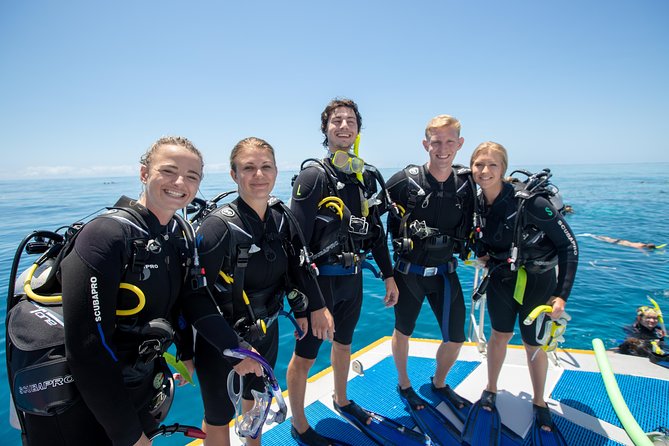
- Small group (max 8) means more one-to-one attention when skills feel tricky
- Classroom + pool first helps you build control before the outer reef
- Two outer-reef cruises on Evolution include onboard BBQ lunch on days 3 and 4
- 4 guided outer-reef underwater descents are included, plus an extra free fun underwater session
- Transfers are included daily from Cairns accommodation, starting with a 7:30am meetup
- PADI Open Water certification is issued on completion, valid for scuba to 60 feet / 18 meters
Cairns and the Great Barrier Reef: why this course starts in the right place
Cairns is one of Australia’s easiest cities to use as a base for reef learning. You’re close to day trips, and the whole schedule is built around getting you onto the outer reef once you’ve practiced the core skills.
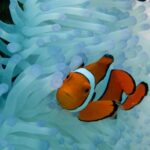
This is also a UNESCO World Heritage area, so the goal isn’t just meeting a checklist. Your instructor stays with you while you’re underwater, aiming to maximize your chances of seeing reef fish, reef sharks, stingrays, and sea turtles. That matters for a beginner course, because the best memories often come when you feel calm enough to look around instead of fighting your gear.
You can also read our reviews of more tours and experiences in Cairns and the Tropical North.

The 4-day flow in plain terms: theory, pool control, then outer-reef sessions

The structure is very sensible: you learn the ideas first, you practice the movements next, then you move into the open-water setting once you’re ready.
Days 1 and 2 focus on learning and repeating core skills. Days 3 and 4 are the big reef days, both built around full-day catamaran cruises to the outer reef. You’ll come away with internationally recognized PADI Open Water scuba certification, which lets you go deeper on future trips with other certified divers.
If you like schedules you can mentally prepare for, this one is easy: two training days on land and in the pool, then two dedicated reef days.
Days 1–2: classroom lessons plus pool sessions that build real confidence
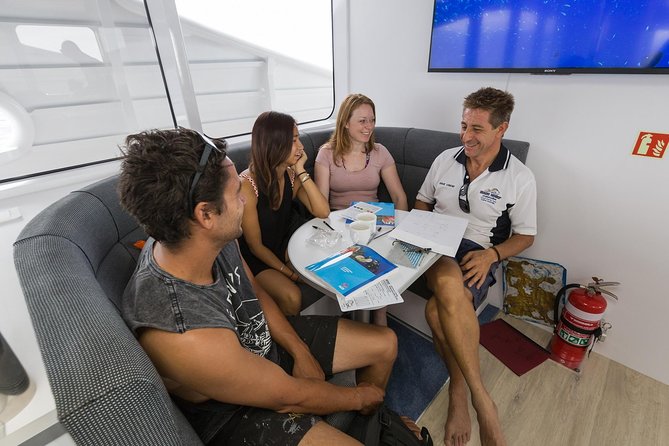
On the first two days, you’ll spend time in the classroom learning scuba theory. The course also includes swimming-pool practice where you refine basic scuba skills, safety drills, and the controlled technique of ascending and descending.
For many people, that’s where fear usually shows up. The pool work helps you get your body used to buoyancy, breathing, and the rhythm of safe movements. It’s also the moment you learn what “good” feels like—before you ever have to manage the added distractions of open water.
You should go in knowing you need a basic swimming and floating test to complete the course. You don’t need to be an athlete, but you do need comfort in the water and the ability to follow instructions quickly.
Day 3–4 on the Evolution catamaran: what’s really happening on the outer reef
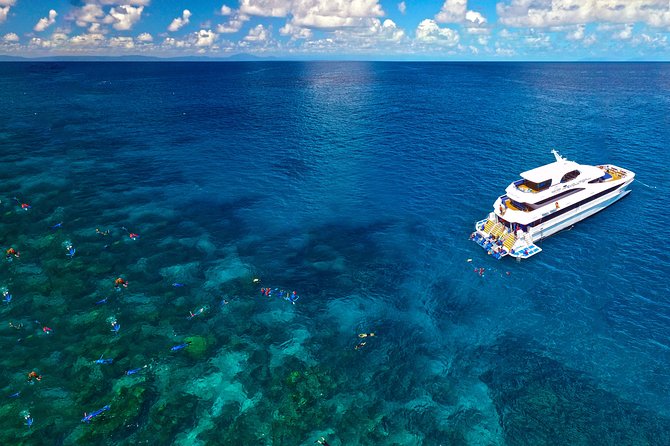
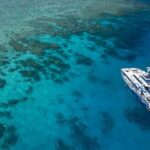
Once you’ve done the classroom and pool steps, you move into the real thing: two full-day cruises to the outer Great Barrier Reef. Each cruise includes two guided underwater descents, for four outer-reef underwater descents total.
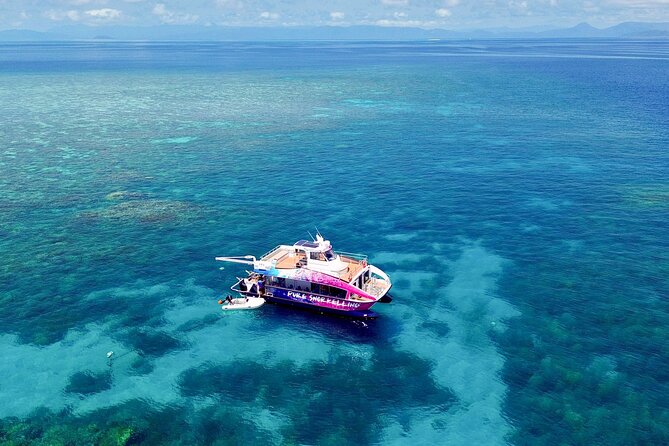
The operator runs these trips on a catamaran called Evolution. This matters because catamarans are typically stable for day trips, and that stability helps beginners focus. Your instructor stays with you every step of the way, which is a big deal when you’re learning how to stay calm and breathe steadily.
Both reef days include onboard BBQ lunch served on the catamaran. It’s a practical advantage: you can keep your energy up without trying to hunt down food in between long stints on the water.
And yes, there’s an extra perk built in. In addition to the four guided outer-reef underwater descents, the package includes one free fun underwater session. That’s the kind of inclusion that can turn certification into a more memorable trip.
Instructor energy matters: small-group coaching and Frankie’s approach
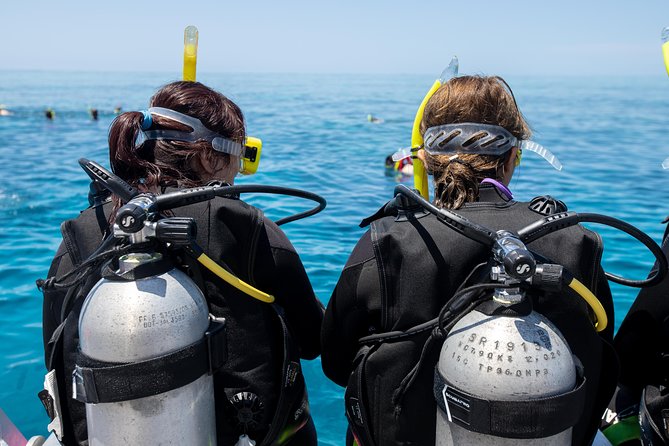
A great course is about more than equipment and schedules. It’s about how the instructor turns scary, technical tasks into something you can actually do.
The standout pattern in the feedback is how instructors like Frankie combine deep experience with a teaching style that makes the steps feel manageable. He’s described as funny, patient, and able to simplify complicated ideas. That combo is exactly what you want when you’re still figuring out buoyancy and safety drills.
Since the group size is limited to a maximum of 8 travelers, the instructor can watch you closely and correct problems early. For a beginner, those small corrections are often the difference between feeling overwhelmed and feeling in control.

Gear, transfers, and what you must bring yourself
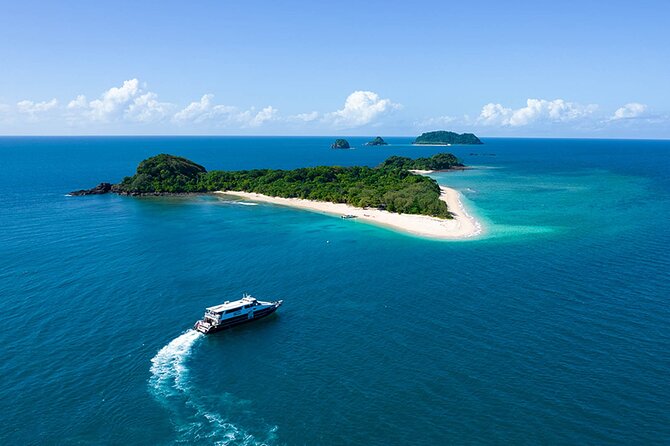
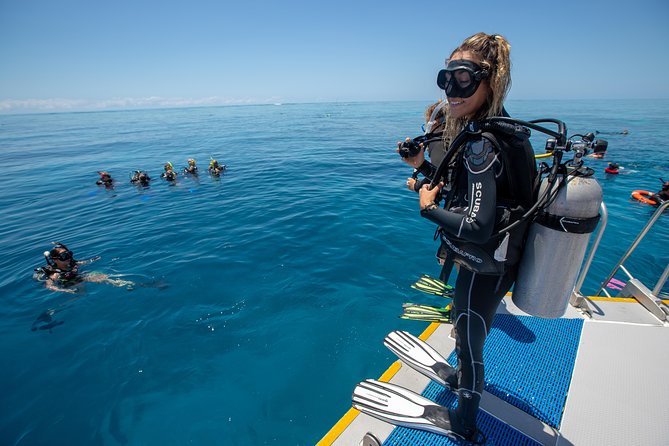
Good news: you don’t need to pack scuba kit. The course provides what you need for training, which removes one of the most stressful parts of trying something new.
What you do need to bring is straightforward:
- Sunscreen and a hat
- Change of clothes, plus your swimsuit
- A towel
- Cash or a credit card for onboard purchases (things like soft drinks, chocolates, and optional items such as underwater cameras or T-shirts)
Transfers are part of the deal too. The program includes Cairns accommodation transfers every day, aiming to make your morning routine smoother. The start time is 7:30am, with the meetup at 287 Draper St, Parramatta Park QLD 4870.
Since the location is near public transportation, you’re not locked into a single method of getting there. Still, you’ll likely find the included transfers the easiest option.
PADI Open Water certification: what you earn and what it enables
At the end of the course, you receive your PADI Open Water scuba certificate. This is the credential that opens doors to future scuba experiences.
Your certification allows scuba to a maximum of 60 feet / 18 meters. It also means you can join certified scuba tours, rent equipment, and take part in advanced PADI courses.
This is a key value point: you’re not only paying for the reef day. You’re paying for a legitimate international certification pathway that can carry forward into future trips, as long as you keep practicing and diving with proper guidance.
Price and value: is $677.79 a good deal for this package?
At $677.79 per person, the headline price looks specific. The real question is what’s bundled into that number.
Here’s what you get included:
- Classroom theory and pool practice
- Two full-day outer-reef cruises aboard the Evolution
- All applicable PADI training material
- 4 x outer-reef underwater descents, plus a free fun underwater session
- Cairns daily accommodation transfers
- Lunch onboard Evolution on days 3 and 4
- All fees and taxes
What’s not included:
- Accommodation
- Lunch on days 1 and 2
So the value comes from the combination of training time, certification materials, two major boat days, onboard meals, and transfers. If you had to arrange those pieces separately, it’s usually the boat components and instruction hours that make costs jump.
Also note the booking timing: this sort of course tends to sell well, with an average booking window of about 50 days. If reef schedules are important to your trip, earlier planning reduces the chance you’ll be stuck with a less convenient date.
Safety and health checks: the unglamorous parts that matter most
This course includes a few safety rules you should take seriously before you show up.
You’ll need to complete a health/medication questionnaire prior to any underwater training. Certain medical conditions and any prescription medications require a letter or email from a doctor clearing you for the specific medication or condition. If you’re over 45 for PADI dive courses, you’ll need medical clearance from a physician stating you’re fit for the activity.
There’s also a flight rule. You should not do scuba activity within 24 hours before your flight. If your travel plans are tight, plan flight times carefully so you’re not forced to skip training or scrambling for adjustments.
If you have asthma, heart disease, diabetes, or any prescription meds, treat the medical paperwork as part of your preparation—not a last-minute chore.
Who should book this course (and who should plan differently)
This program fits best if you:
- Are a complete beginner or early-stage student
- Want a clear step-by-step pathway from theory to pool skills to outer-reef experience
- Prefer a small-group learning setup
- Can handle moderate physical fitness and meet the swimming and floating test requirement
You might want to think twice or plan extra ahead if you:
- Are worried about the water itself rather than the depth (work on basic comfort first)
- Have medical conditions or prescriptions that could require clearance
- Need to fly soon after training, since scuba activity within 24 hours of flying isn’t permitted
- Are traveling during periods where weather disruption could be a problem, since the experience requires good weather
The minimum age is 12 years, so it’s not aimed at tiny kids.
Quick tips for a smoother Cairns course
- Start your packing list with the basics you’ll actually use on reef days: sunscreen, hat, swimsuit, towel, and a change of clothes.
- Keep money handy for onboard extras like drinks and optional gear, since cash or card is needed for purchases.
- Use the daily transfers to simplify mornings. A 7:30am start is easier when you aren’t coordinating transport yourself.
- If you need medical paperwork (especially if you’re over 45), get it sorted early so you’re not dealing with delays.
Should you book this PADI Open Water scuba course?
If you want the most reliable beginner route to reef experience, this is the kind of program that makes sense. It’s built around a logical progression—classroom to pool to outer reef—and it removes common beginner headaches by supplying equipment and offering transfers.
I’d book it if you value close instruction, want to leave with a recognized certification, and are excited about seeing reef wildlife while you learn safe technique. If you’re not sure whether you can handle the water skills test, consider a swim refresher first so your course time stays focused on scuba learning rather than survival-level anxiety.
If you’re ready to put in the work for a real credential and a pair of outer-reef days, this course is a strong choice from Cairns.
FAQ
How long is the PADI Open Water scuba course?
The course runs for 4 days.
What happens on the first part of the course?
You’ll learn scuba theory in classroom lessons and then practice core skills, safety drills, and controlled ascents and descents in a swimming pool.
Are the outer-reef experiences included?
Yes. The package includes two full-day cruises to the outer Great Barrier Reef. Each cruise includes guided underwater descents, for four in total, and it also includes onboard BBQ lunch on those days.
Do I need to bring scuba equipment?
No. The course provides the equipment you need for the training.
What certificate do I earn, and how deep can I go afterward?
You receive a PADI Open Water scuba certificate. It allows scuba activity to a maximum depth of 60 feet (18 meters).
Is accommodation included, and what should I bring?
Accommodation is not included. You should bring sunscreen, a hat, change of clothes, swimsuit, and a towel. You’ll also want cash or a credit card for onboard purchases.