REVIEW · MELBOURNE
Entermission Melbourne – 60min Virtual Reality Escape Rooms
Book on Viator →Operated by Virtual Reality Escape Rooms - Entermission Melbourne · Bookable on Viator
Puzzles feel like sci-fi here. Entermission Melbourne turns the usual escape-room scramble into a 60-minute VR mission right on Bourke Street. You and your group put on the headset, move through an alternate universe, and work your way toward the finish while your team solves puzzles together.
I like two big things about it. First, the Mission Control team is there with headsets and guidance, so you are not stuck staring at a problem forever. Second, it feels more personal than a big public attraction because it is a private game for only your group.
One consideration: VR tech is great when it behaves. If you run into glitchy controls (it can happen with VR setups), the experience can feel more frustrating than fun—especially with a larger group.
In This Review
- Key things to know before you go
- Finding Entermission Melbourne on Bourke Street
- Choosing Your VR Adventure: Free Roam Arena vs Maui’s Treasure
- The 60-Minute Mission: How the gameplay flows
- The team factor: communicating, solving, and staying sharp
- Mission Control support: a safety net that still feels like a challenge
- About the VR tech: what to expect from controls and movement
- The 3D photo wall and the take-home souvenir moment
- Price and value: is $28.88 per person worth it?
- Who should book this VR escape room?
- Should you book Entermission Melbourne?
- FAQ
- How long is the Entermission Melbourne VR escape room experience?
- Where does the experience start?
- How much does it cost?
- Is it a private experience?
- What do I need to bring?
- Do I need a minimum number of people to book?
- Can I choose how I play, like moving freely versus seated?
- Are there photo moments during or after the mission?
- Is this recommended for people with epilepsy or photosensitive seizure history?
- Is confirmation provided after booking?
Key things to know before you go

- Two adventure styles: free-roam wireless movement or a seated option where you use your hands to navigate
- Team-first gameplay: you communicate through headsets and solve puzzles as avatars
- Mission Control support: clues are available during the mission, not just at the end
- Take-home photo moment: a 3D photo wall creates a souvenir at the finish
- Private session setup: only your group participates, with a minimum booking of two people
Finding Entermission Melbourne on Bourke Street
Entermission Melbourne is in a very workable part of the city: 164 Bourke St, right where you can pair this with other CBD plans. You do not need to plan a complicated route. It is also listed as near public transportation, which matters in Melbourne, where rideshare can get pricey fast during peak hours.
Check-in is straightforward, and you will get set up for your chosen adventure. One practical note: your ticket is a mobile ticket, so have it ready on your phone. The experience is designed to get you into the action quickly, and that helps if you are squeezing it between meals or shopping.
If your group has people who hate waiting, this is a point in its favor. The whole event is built around a tight 60-minute window, so you are not committing to an all-day block.
You can also read our reviews of more tours and experiences in Melbourne.



Choosing Your VR Adventure: Free Roam Arena vs Maui’s Treasure
The biggest difference you should plan for is how you are going to play.
Option 1: Free Roam Arena (wireless movement). This is the “walk around inside the game” style. You move around in the VR space without cables, which makes the whole thing feel more physical and more fun. When you can move, puzzles and combat-style moments feel less like you are watching and more like you are acting.
Option 2: Seated VR option (hand navigation). If you prefer something steadier, there is also a seated setup where you use your hands to navigate the world. This can be a good choice if your group wants less movement, or if someone gets uneasy with full motion.
Then there is a second layer for people who want a more classic escape-room vibe. The Maui’s Treasure experience is described as Moana inspired and an in-person escape room option you must try. So if your group wants one foot in VR and one foot in the traditional puzzle rush, you have that pathway available.
Pick based on your group’s comfort level. If everyone is curious and energetic, go for the free-roam style. If you have mixed ages or anyone worried about movement or motion comfort, seated play can be the calmer win.
The 60-Minute Mission: How the gameplay flows
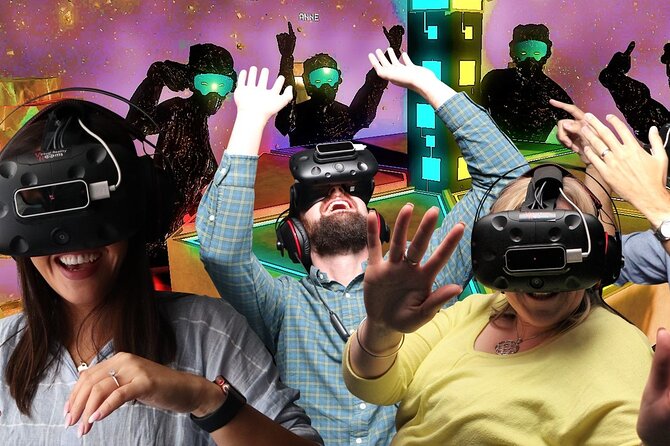
The core experience is simple to explain: you have about one hour to complete your mission as a team. You will be wearing a VR headset for the VR portion, and the goal is to defeat enemies, find secrets, and solve mysteries using teamwork and quick thinking.
Here is what that typically means in real terms:
First, you are oriented. You need to understand how to move or interact in VR, and the staff are there to help you get going. A good VR escape room should get you past the “what buttons do I press?” phase fast. This one is designed that way, and the mission clock is always the main character.
Next comes the puzzle and action blend. You and your group will communicate through headsets, and you will see each other as avatars. That matters more than it sounds. When you can point, call out clues, and coordinate actions, the whole experience turns into a live team sport instead of a solo brain grind.
Finally, you wrap up with Mission Control support and the photo moment. Mission Control is not just a spectator. During the mission, they are on hand to provide guidance or clues if your team gets stuck.
One small but important detail: the time limit makes you act under pressure. That is part of the thrill. If you like timed challenges, this should feel like a good fit. If you hate rushing, you may wish the mission ran longer.
The team factor: communicating, solving, and staying sharp
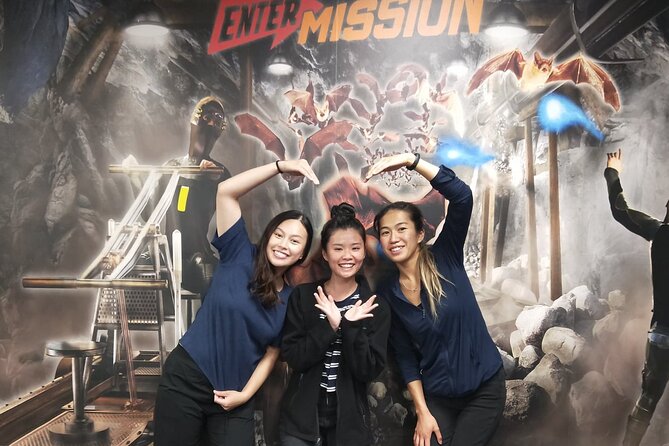
This experience lives or dies on group dynamics. And Entermission leans hard into that.
You are encouraged to collaborate, and the headsets are the glue. You are solving puzzles with other people right there in the same room, but you are also working in a shared VR world where your actions affect the whole team. When your communication is clear, you make faster progress. When it is not, you feel it.
I also like the avatar interaction piece. It adds a layer of fun and makes it easier to coordinate who is doing what. It can turn moments that would normally feel awkward—like asking someone to try something again—into a normal part of the game.
In terms of difficulty, the mission is described as a good level of challenge. Not mindless. Not impossible either. That balance is where escape rooms shine: you leave thinking you worked hard, not that you got tricked.
Mission Control support: a safety net that still feels like a challenge
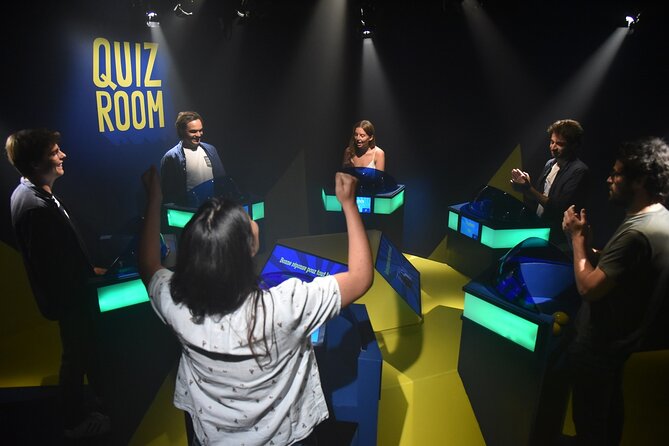
A standout feature is the support system. Mission Control is on hand throughout your mission. That usually means you can ask for help, or you can get subtle guidance when things stall.
This is a big value point for two reasons:
- It keeps momentum. You do not lose 20 minutes to one puzzle.
- It makes the experience more friendly for mixed groups. If one person is great at puzzles and another is new to VR, support helps everyone stay engaged.
One review detail that you should take seriously: customer service is described as enthusiastic and helpful, with hosts like Adam and Sam named in the feedback. That matters. In VR, small setup hiccups can break the mood. A good host helps you move past that fast.
That said, Mission Control support is not the same thing as “handing you the answer.” The mission is still meant to be solved by your team. The help is there so you can recover and keep playing.



About the VR tech: what to expect from controls and movement
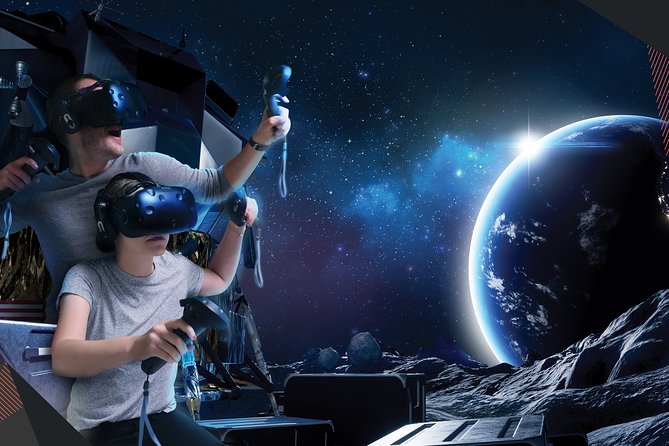
VR escape rooms are always a dance with technology. When it works, the world feels real enough to make you grin. When it does not, you spend mental energy fighting the headset instead of solving puzzles.
The experience is described as immersive, and the tech is praised for being impressive and making the hour feel like it goes quickly. That matches what you want from VR: you should feel pulled into the world, not stuck in a training video.
At the same time, there is one clear caution from a less positive note: games can be glitchy, and controls can be buggy. That does not mean it is the norm. But it does mean you should go in with realistic expectations: VR is cutting-edge, and sometimes it can act up.
If you are bringing grandparents, kids, or a group where everyone is excited and invested, I would recommend keeping your expectations flexible. Also, choose the seated option if movement comfort is a concern. It is listed as an option, and it is a practical way to reduce variables.
The 3D photo wall and the take-home souvenir moment
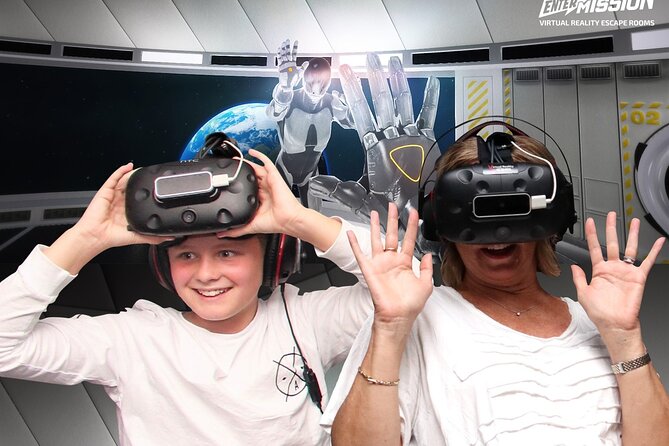
You do not just leave empty-handed. There is a 3D photo wall and Mission Control will show photos of you during the action. Then you can take home a photo in front of that wall.
This is a small thing that still matters. Escape rooms can be forgettable if you do not have proof you did something fun. Having a photo souvenir turns it into an actual memory instead of a “we played a game” blur.
It is also a nice group moment at the end, when you are buzzing from finishing. If your group likes goofy photos, this is the perfect final stop.
Price and value: is $28.88 per person worth it?
At $28.88 per person for about 60 minutes, this sits in the “mid-range fun” category for Melbourne. The question is what you are really buying.
You are not just paying for puzzles. You are paying for:
- VR hardware and software
- headset setup and staff guidance
- Mission Control support during gameplay
- a take-home photo souvenir
The private session detail helps too. It is a private tour/activity, meaning only your group participates. That generally improves the feel of the experience because you are not competing for attention or waiting for strangers.
So the value math works best if:
- your group enjoys teamwork games
- you want something more active than a standard escape room
- you will actually use the photo souvenir and remember it
If you only want a simple puzzle hour with minimal tech, you might prefer a traditional escape room. But if your group is curious about VR and wants a real-world reason to team up, this price is easier to justify.
Also, remember transportation is not included. Since it is on Bourke Street and near public transport, you can plan it without a big logistical headache.
Who should book this VR escape room?
This is a good fit when your group likes a mix of action and puzzle solving and does not mind working fast under a time limit.
It is also listed as suitable for most travelers, with a key exception: it is not recommended for people with epilepsy. If you have a history of photosensitive seizures, anxiety disorders, post-traumatic stress, or heart conditions, you should consult a doctor before playing.
That means you should think about the group’s health and comfort up front. VR is not a low-sensory experience for everyone.
It can work well for varied groups. One positive detail mentions ages ranging from 21 to 50, and kids enjoying it too. So if you have a mixed family group, this can be a solid way to get everyone involved—just be sure the VR comfort box is checked.
Should you book Entermission Melbourne?
I would book it if your group wants a fun, challenging escape-room style hour with VR, team communication through headsets, and live support from Mission Control. The combination of free-roam wireless movement (if you choose it), puzzle variety, and the take-home 3D photo makes it a complete package, not just a one-off game.
I would hesitate if your group hates VR tech risks, gets easily motion uncomfortable, or includes someone who should not use VR due to seizure risk. Also, if your group is expecting flawless controls every time, keep in mind that one past experience included glitchy controls and buggy interactions.
If you match the vibe—teamwork, puzzles, quick decisions—this is one of the more memorable ways to spend an hour in Melbourne’s CBD.
FAQ
How long is the Entermission Melbourne VR escape room experience?
It runs for about 1 hour.
Where does the experience start?
It starts at 164 Bourke St, Melbourne VIC 3000, Australia, and it ends back at the meeting point.
How much does it cost?
The price is $28.88 per person.
Is it a private experience?
Yes. It is listed as private, so only your group participates.
What do I need to bring?
You get a mobile ticket, and you should bring that on your phone. Transportation to and from the venue is not included.
Do I need a minimum number of people to book?
Yes. A minimum of two people is required for booking.
Can I choose how I play, like moving freely versus seated?
Yes. The experience notes a wireless free-roam style where you can move around in the VR environment, and there is also a seated option where you use your hands to navigate.
Are there photo moments during or after the mission?
Yes. Mission Control will show photos during the action, and there is also a 3D photo wall where you take home a photo.
Is this recommended for people with epilepsy or photosensitive seizure history?
No. It is not recommended for people with epilepsy. If you have a history of photosensitive seizures, you should consult a doctor before playing.
Is confirmation provided after booking?
Yes. Confirmation is received at the time of booking.