Twenty quick stops can still feel relaxed. This private Melbourne walk shows the CBD through a local’s lens, mixing big landmarks with small, street-level stories you’d miss on your own. You’ll cover 20 stops over about 3 hours, so your first day in town gets a useful structure fast.
Two things I really like: you get a private tour with only your group (so you can ask questions without merging into a crowd), and you also get a complimentary local drink and food tasting to break up the walking. The main thing to consider is that it’s a walking tour built for a moderate physical fitness level, with lots of short transfers on foot rather than sit-down time.
In This Review
- Key things to know before you go
- Why a 3-hour CBD walk is a smart first move in Melbourne
- Crown Melbourne, the Yarra River, and that first skyline hit
- A quick practical note
- Two Yarra crossings: Southbank to Flinders Street Station energy
- Arts Centre Melbourne and the National Gallery of Victoria: culture stops that don’t feel heavy
- The trade-off
- Fed Square, Flinders Street Station, and Young and Jacksons: classic Melbourne in motion
- St Paul’s Cathedral to street art lanes: the city’s opinions in plain sight
- A tip for your photos
- The Block Arcade and Bourke Street Mall: shopping, but with a city-planning brain
- Chinatown, Meyers Place Bar, Parliament House, and Princess Theatre
- Price and value: what $148.99 gets you (and what it doesn’t)
- Who should book this private Melbourne tour
- Should you book this private Melbourne tour?
- FAQ
- How long is the Melbourne private tour?
- Where does the tour start and end?
- Is this a private tour?
- What’s included in the price?
- Is hotel pick-up or drop-off included?
- Are there any admissions or tickets needed for the stops?
- Is the tour suitable for people who don’t walk much?
- Is the meeting point easy to reach by public transportation?
- Is there a cancellation option if plans change?
Key things to know before you go
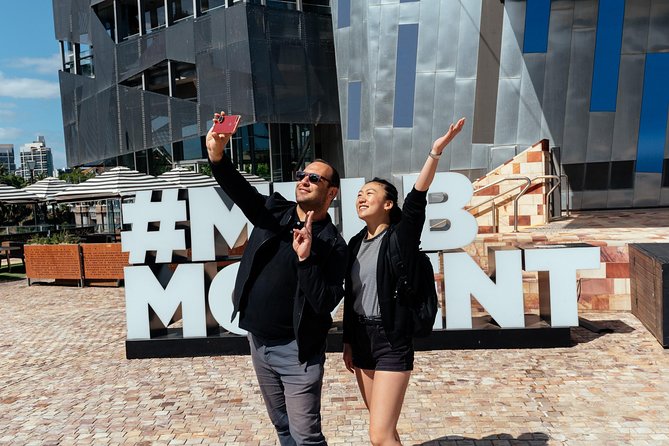
- Private, just your group with a local guide, so the pacing can match your comfort level.
- Local drink + food tasting is included, giving you an easy taste moment right in the middle of sightseeing.
- Many stops are ticket-free or quick-entry, which helps you keep moving through the CBD.
- Street art and rock-history lanes (like Hosier Lane and AC/DC Lane) are built into the route, not treated like extras.
- Ends back at the start point near Crown Melbourne, so you’re not hunting for where the tour finishes.
- Mobile ticket + public-transport access make this simple to slot into a day plan.
Why a 3-hour CBD walk is a smart first move in Melbourne
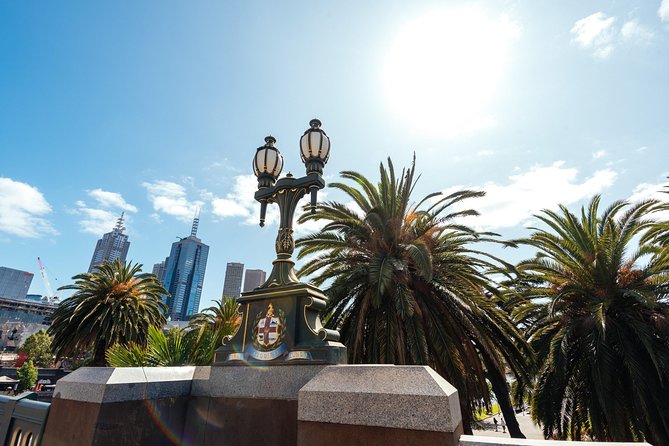
Melbourne rewards people who slow down and look up. This tour is designed for that exact goal: you get a clear sense of the city’s layout and personality without spending your whole day on long rides.
At $148.99 per person, it can feel pricey compared with generic group tours. But the math changes when you compare what’s included: a local guide, a private setup for your group, and that complimentary drink and food tasting. Also, the route hits a lot of major sights in a short window, so you can decide what’s worth a second visit later.
You can also read our reviews of more private tours in Melbourne

Crown Melbourne, the Yarra River, and that first skyline hit
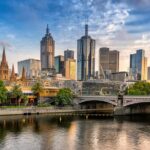
You start at Crown Melbourne on Whiteman Street in Southbank, then head toward the Yarra River. Walking along the Crown Riverwalk is a great opener because it immediately frames Melbourne’s skyline and gives you that “okay, I get where I am” feeling.
From here you’re not just taking photos. Your guide’s commentary is built around how the river shaped the city’s growth, plus the art installations you’ll spot along the way. If you like history but don’t want a lecture, this is the right kind of intro.
A quick practical note
Wear shoes you can handle on city pavements. This is a nonstop stroll with frequent turns, and you’ll want your feet to feel good by stop two.
Two Yarra crossings: Southbank to Flinders Street Station energy
Next you head through Southbank and cross the river toward Flinders Street Station. This part of the walk works because you get two bridge views in the same broader area—easy to compare, easy to remember.
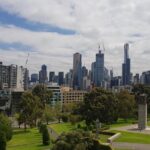
You also pass near Melbourne Skydeck, with Eureka Tower nearby. Even if you don’t go up, it helps to see how Melbourne stacks its modern skyline beside older layers.
One of the better “look closer” moments is the Southbank Footbridge. The curved beam design isn’t just a visual quirk—it’s the kind of structure Melbourne quietly does well, where architecture becomes part of the walking experience.
Then you roll into Princes Bridge, a historic piece built in the late 1800s. It’s a nice reset after modern viewpoints because it reminds you that the city’s big public spaces have been designed and redesigned for well over a century.
Arts Centre Melbourne and the National Gallery of Victoria: culture stops that don’t feel heavy
Melbourne can feel arts-forward in a way that’s easy to miss if you only do museums by yourself. Here, you get two culture anchors close together.
At Arts Centre Melbourne, you’ll see a complex of distinct venues, including Hamer Hall, Playhouse Theatre, State Theatre, Fairfax Studio, and galleries. The value isn’t only the buildings—it’s how your guide helps you connect what you’re seeing to how Melbourne performs, celebrates, and sells ideas through theater and music.
From there, the Australian Music Vault is the next stop. If you’re the kind of traveler who likes music as a clue to national identity, this is a great breather. The focus is on Australian music memorabilia, so it gives you that “this is what people loved and built” angle.
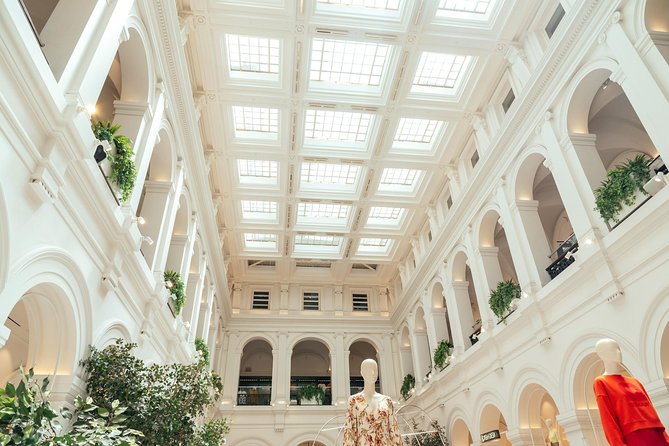
Then you reach the National Gallery of Victoria for a brief visit. One highlight is the world’s largest stained glass ceiling by Simon Fieldhouse. Even with limited time, this is the kind of visual you’ll remember later, especially when your guide points out what makes the ceiling a standout.


The trade-off
These culture stops are brief. If you love museums and want a slow, detailed viewing, you’ll likely want to come back on your own after the tour.
Fed Square, Flinders Street Station, and Young and Jacksons: classic Melbourne in motion
Federation Square (Fed Square) is your next pivot point. It’s a lively crossroads area where you can orient yourself toward several major areas of the CBD, and it also sits near Kings Domain and the Sidney Myer Music Bowl.
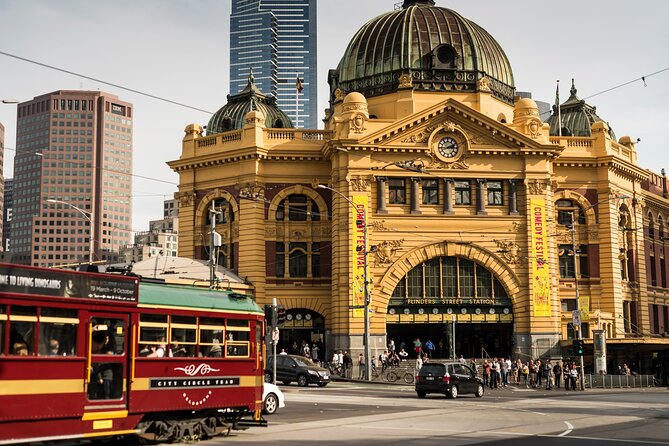
After that comes Flinders Street Station. The first time you see it in person, it feels like a movie set—part due to the French Renaissance architecture, and part because the station is built to handle real crowds. It opened in 1910 and covers two city blocks, and it’s known as an early major railway station in an Australian city, plus a very busy passenger station in the late 1920s.
This is where a guide adds value beyond architecture facts. You’ll get context about why this kind of station matters in daily city life, not just as a photo.
Just a bit further, you’ll pass Young and Jacksons, a heritage-listed building that survived demolition connected to metro works. It’s a reminder that Melbourne’s modern changes happen alongside older structures, not instead of them. If you like tracing “old meets new,” this stop is a solid payoff.
St Paul’s Cathedral to street art lanes: the city’s opinions in plain sight
St Paul’s Cathedral is next. This Gothic-style cathedral, built from 1880 to 1891, is an Anglican cathedral and the seat of the Archbishop of Melbourne. The point of including it on this route is simple: it gives you a historic, human scale moment right when the walk has moved into busy urban intensity.
Then the tour turns into Hosier Lane. This bluestone laneway is known for its high-quality urban street art, often political or controversial, and it changes frequently. Even if you’ve seen photos online, it’s worth seeing it in person because the texture and layering look different up close. It also gives you a Melbourne “voice”—street art here is not treated as decoration.
Right after that is AC/DC Lane, named as a tribute to the rock band AC/DC. It’s one of those fun stops that helps you understand how pop culture gets woven into local identity, then turned into a destination.
A tip for your photos
Move a step sideways before you shoot. The lanes often look best when you aren’t centered, because the walls and angles create depth.
The Block Arcade and Bourke Street Mall: shopping, but with a city-planning brain
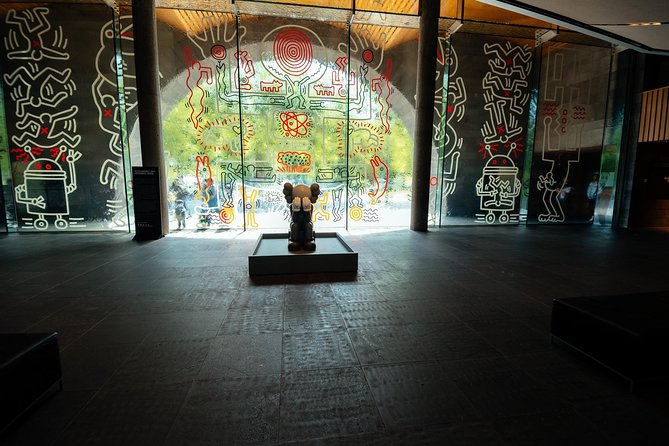
Melbourne’s shopping areas aren’t just for retail. They’re also about how pedestrians move and how public life spills into covered spaces.
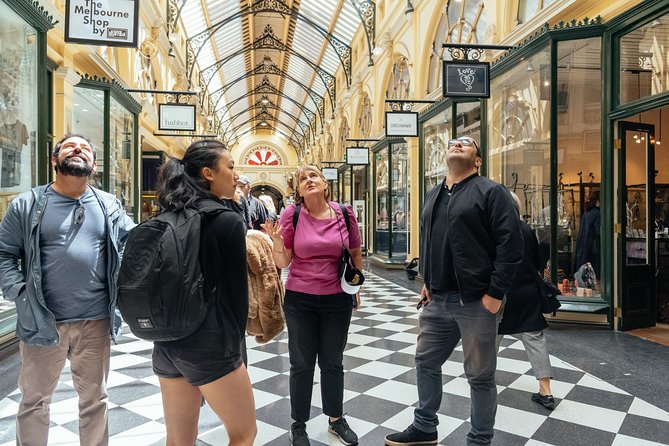
The Block Arcade is a prime example. It opened in 1892 and is considered one of the finest late Victorian-era shopping arcades. The best way to experience it is slowly, because the details are the point—design lines, arcade structure, and that “historic interior street” feel.
Then you move to Bourke Street Mall, a pedestrian-only mall and no-smoking area. It’s described as the heart of Melbourne, with major department stores David Jones and Myer anchoring the ends. What I like about this stop is that it feels like a shared city room: you can grab a quick look, reset your energy, and still keep the tour moving.
If your travel style is active, this section feels practical. If you prefer quiet, you can still find a calmer pocket just off the main flow.
Chinatown, Meyers Place Bar, Parliament House, and Princess Theatre
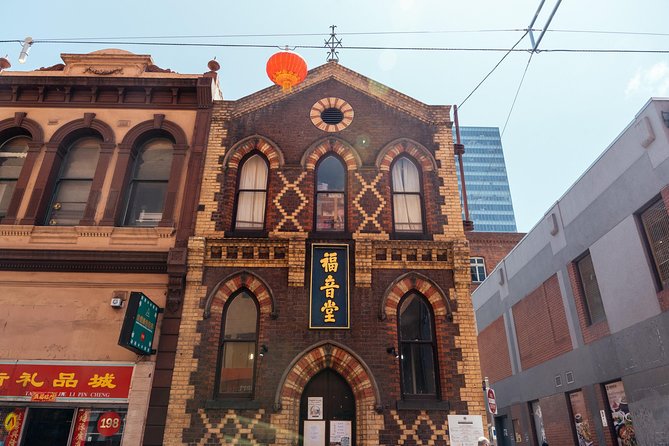
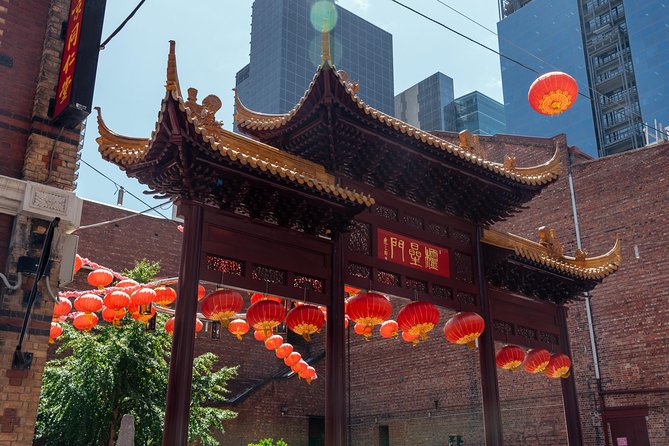
After Bourke Street, you head into Chinatown. This area dates back to the gold rush days of the 1850s, so it’s not just a themed district—it has a long connection to Melbourne’s migration and economic history.
Next is a walking segment that takes you over Russell and Exhibition Streets, then right at Crossley Lane. You head back toward Pellegrini’s Bar, via Meyers Place Bar. This is one of those “pause and look” stretches where the tour feels local rather than touristy. The guide’s storytelling here matters, because you’ll hear how these classic venues fit into the city’s everyday rhythm.
Then you reach Parliament House of Victoria at Spring Street. It’s one of the city’s best-known landmarks and the meeting place for Victoria’s parliament. Even if you don’t have a strong political interest, the architecture and civic role make it a meaningful checkpoint in a CBD tour like this.
Finally, you end at Princess Theatre. You’ll hear stories, including one about a friendly ghost named Federici. The theatre has hosted some world-famous productions, including Phantom of the Opera. It’s a fitting last stop because it adds charm and imagination right as your walk finishes.
Price and value: what $148.99 gets you (and what it doesn’t)
This tour costs $148.99 per person and runs about 3 hours. You’re paying for a private local guide, a route with many major sights, and one included local drink and food tasting.
What’s not included is hotel pickup and drop-off. That matters because you’re expected to start at the meeting point near Crown Melbourne and then return there at the end. If your accommodation is far from public transport, factor in the time to get to Whiteman Street in Southbank.
Also, most stops are built around short visits. That’s a strength if you want an overview and orientation, but it’s not for you if you want long museum time or deep dives into one building.
One more value point that’s easy to overlook: the tour is marked CO2 neutral, with carbon emissions offset. If that’s important to how you travel, it’s a nice extra checkbox.
Who should book this private Melbourne tour
I’d put this high on your list if you want:
- A first-day orientation to Melbourne’s CBD
- A walk that mixes landmarks with street-level culture
- A manageable time commitment (about 3 hours)
- A private setup where you can ask questions and adjust pace
It may not fit as well if you:
- Hate walking or need frequent long breaks
- Want a slow, museum-style itinerary
- Are looking for hotel pickup convenience
Should you book this private Melbourne tour?
If your goal is get your bearings fast and still feel like you saw the city’s real personality, I think this is a good booking. The route covers the biggest “I’m in Melbourne” landmarks plus the small creative corners—street art lanes, heritage arcades, and civic buildings—without turning your day into a logistics puzzle.
Just plan smart for walking days: bring comfortable shoes, meet at the start location on time, and accept that the stops are quick. If you do that, you’ll come away with a stronger mental map of Melbourne and a short list of places you’ll want to revisit later.
FAQ
How long is the Melbourne private tour?
It runs for about 3 hours (approx.).
Where does the tour start and end?
The tour starts at Crown Melbourne, 8 Whiteman St, Southbank VIC 3006, Australia. It ends back at the same meeting point.
Is this a private tour?
Yes. It’s a private tour, meaning only your group will participate with the local guide.
What’s included in the price?
The tour includes a local guide and 1 local drink/tasting. It also includes a mobile ticket.
Is hotel pick-up or drop-off included?
No. Hotel pick-up and drop-off are not included.
Are there any admissions or tickets needed for the stops?
The stop details provided list many places as Admission Ticket Free, and the National Gallery of Victoria is included for a brief visit.
Is the tour suitable for people who don’t walk much?
The tour is for travelers with a moderate physical fitness level. Since it’s a walking route with multiple stops, comfortable walking shoes help.
Is the meeting point easy to reach by public transportation?
Yes. The meeting point is listed as near public transportation.
Is there a cancellation option if plans change?
Yes. You can cancel for a full refund up to 24 hours before the experience’s start time.