REVIEW · JERVIS BAY
Jervis Bay Beach Stargazing Tour with our Astronomer
Book on Viator →Operated by Blue Mountains Stargazing · Bookable on Viator
A dark beach and a sky full of stars.
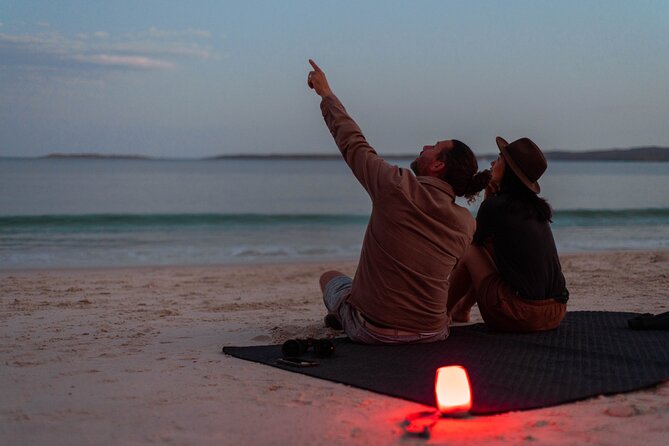
That combo is why this Jervis Bay stargazing tour works so well: you get out of city glare and into proper southern-hemisphere darkness, with a real astrophysicist calling the shots. I also like that it starts on the sand at Nelsons Beach with wave sound and a laser-guided, no-stress way to find what you’re looking at.
One of my favorite parts is the way you learn while you’re watching. The guide (Dimitri, PhD astrophysicist) uses simple star-hunting tips plus constellation storytelling so the sky stops feeling random and starts feeling navigable. I also love the practical setup for comfort, with chairs and blankets arranged so you can actually pay attention for 90 minutes without freezing or fiddling.
The main thing to consider is weather. When skies are overcast, the tour may be cancelled and you’ll need to work with the reschedule or refund rules, and refunds can be reduced by non-refundable fees.
In This Review
- Key things to know before you go
- Jervis Bay and the Southern Sky: why this area works
- The first step: meeting at Moona Moona Beach and easing into the night
- Nelsons Beach stargazing: naked-eye astronomy with wave sound
- Learning constellations fast: what the guide’s stories actually do
- Telescope time: the targets you can expect to see
- Bioluminescence check: glowing water, when conditions line up
- Shooting stars and the rhythm of a short night out
- Price and value: is $60.97 worth it?
- Small group energy: why max 20 travelers matters
- Weather reality check: what happens if clouds roll in
- Who this tour suits (and who might want a simpler option)
- Should you book the Jervis Bay stargazing tour?
- FAQ
- Where do I meet for the Jervis Bay Beach Stargazing Tour?
- How long is the tour?
- How much does the tour cost?
- Is a mobile ticket used?
- What can I expect to see through the telescope?
- Do we only use telescopes, or do we learn with the naked eye first?
- Is there a chance to see bioluminescence?
- What happens if the sky is overcast?
- Can I get a refund if I cancel myself?
- How big is the group?
Key things to know before you go
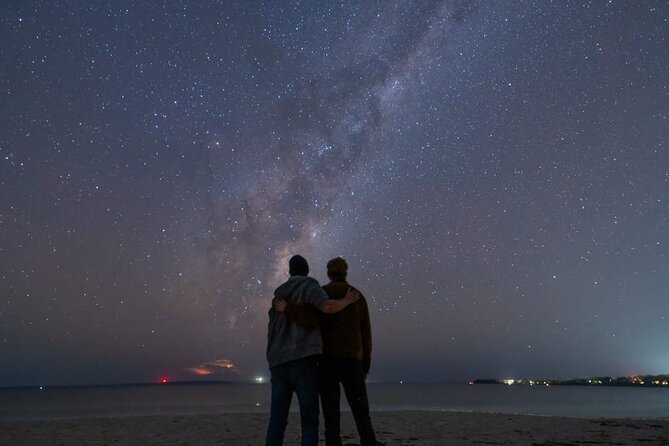
- Dark-sky location: Jervis Bay’s skies are described as very dark, which matters for seeing the Milky Way and faint deep-sky objects.
- Begin with your eyes first: You start with naked-eye astronomy, then switch to a telescope for the targets your eyes can’t easily catch.
- Laser-guided star finding: You’ll get tips and hacks to identify stars and constellations fast.
- You might check for glowing water: The tour includes a chance to see bioluminescence in the sea if conditions allow.
- Small-group feel: Maximum 20 travelers, so questions during the Q&A are easier to get answered.
- Seasonal observing: What you view through the telescope changes with the time of year, including likely favorites like the Orion Nebula and star clusters.
Jervis Bay and the Southern Sky: why this area works
If you want the night sky to feel big and real, you need darkness. Jervis Bay is built for that. The tour specifically leans into the idea that this is one of the clearest-sky options away from city lights in the region, and it’s hard to argue with the payoff once your eyes adjust.
You’re also in the Southern Hemisphere, which changes what the sky looks like compared to what many people are used to. You’ll be focusing on a Southern sky view, including targets like the Milky Way and southern deep-sky objects that are much easier to enjoy from here than from most northern locations.
The other quiet win is the beach setting. Being on sand with ocean sound makes the whole thing feel less like a lecture and more like a shared nighttime experience. It’s a good match for date nights, families, and groups because it’s social and visual at the same time.
You can also read our reviews of more tours and experiences in Jervis Bay.
The first step: meeting at Moona Moona Beach and easing into the night
You’ll meet at Moona Moona Beach Playground, 7 Tapalla Ave, Huskisson NSW 2540. The tour ends back at the meeting point, so you’re not stuck figuring out transport at the end while it’s late and dark.
The experience runs about 1 hour 30 minutes. That’s long enough to get your bearings and see telescope targets, but not so long that you’ll start losing patience when it’s chilly out.
Once you’re there, the flow matters. You’re not thrown into astronomy with zero context. You start with beach-based naked-eye observing, and that gives you a foundation before the telescope portion starts. It’s a smart pacing choice for beginners.
Nelsons Beach stargazing: naked-eye astronomy with wave sound
The tour’s opening happens on the beach at Nelsons Beach, and it’s designed to feel calm and focused. Expect an early phase built around naked-eye astronomy, starting with what you can see right away after your eyes adjust.
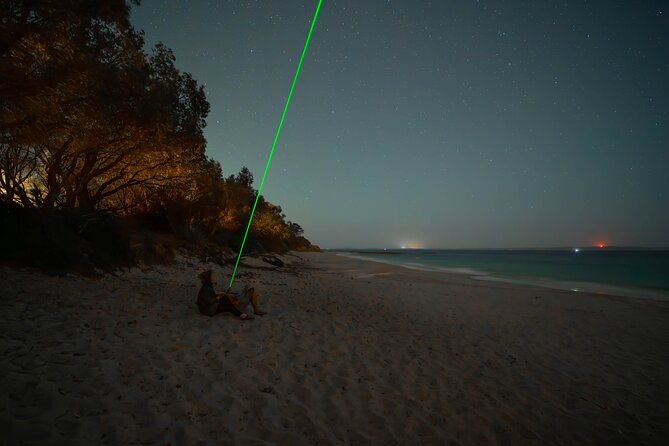
The guide uses a laser-guided approach, pointing out key points in the sky so you’re not stuck doing guesswork for 90 minutes. This matters because stargazing can turn into a frustration session if you keep hunting for the same bright dot over and over.
You’ll also get tips and “hacks” for identifying stars and constellations. These aren’t vague motivational statements. They’re the kind of practical cues that help you build a mental map while you’re watching.
And yes, you’ll hear waves. That sounds like a small detail until you realize it changes the whole feel of the night. It makes the quiet parts easier to tolerate and keeps the experience grounded in the place you’re standing.
Learning constellations fast: what the guide’s stories actually do
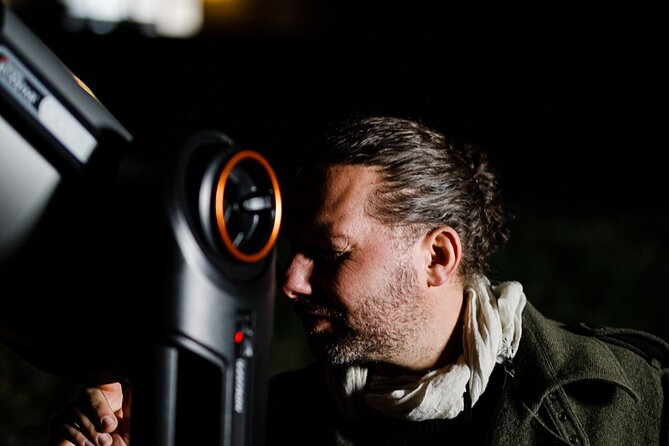
The goal here isn’t to memorize star charts. It’s to give you enough structure to understand what you’re seeing as it changes. During the naked-eye segment, you’ll hear constellation storytelling plus navigation tips alongside the pointing-out.
That combination is what keeps it from being only “look here, it’s bright.” You’ll be connecting the stars to patterns, then using that to anchor the next things you spot.
It also helps that the guide is Dimitri, an astrophysicist PhD with 10+ years of experience that includes places like Sydney Observatory, Mt John Observatory (Lake Tekapo, New Zealand), and Emirates One & Only Wolgan Valley. That background shows up in how the tour explains the sky without making it sound like a class assignment.
If you’ve ever felt nervous asking questions in a group, this format helps. You’re watching something in real time, so your questions usually come from a specific moment, not from a general confusion.
Telescope time: the targets you can expect to see
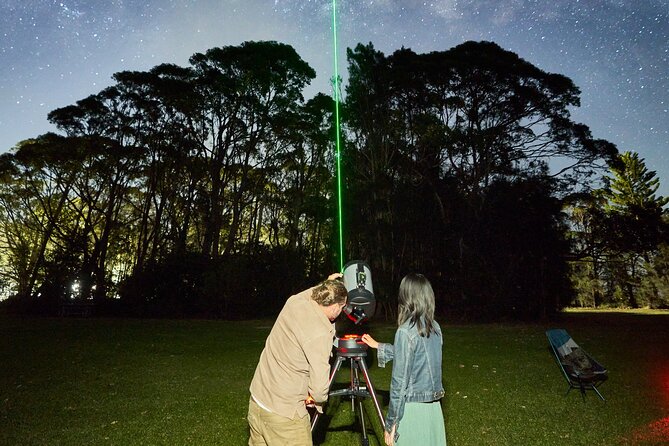
After the naked-eye session, the tour shifts to a state-of-the-art telescope. The key is that what you see depends on the time of year and the night’s conditions, so you should treat it as “likely highlights,” not a guaranteed checklist.
The tour includes observing targets such as:
- the Moon
- planets
- the Orion Nebula
- star clusters
- deep sky objects
- the Milky Way
Even if you’ve seen some of these names before, the telescope part is where the tour becomes truly memorable. Your eyes can only do so much with faint objects, especially when you’re still learning the patterns overhead. The telescope acts like a translation tool, turning “somewhere out there” into a view you can actually follow.
One practical note: the Moon can make your sky brighter, and sometimes that affects how easy it is to see faint details. If you’re sensitive to glare, just know that the Moon is part of what may be scheduled, so the guide is using the night’s best options.
Bioluminescence check: glowing water, when conditions line up
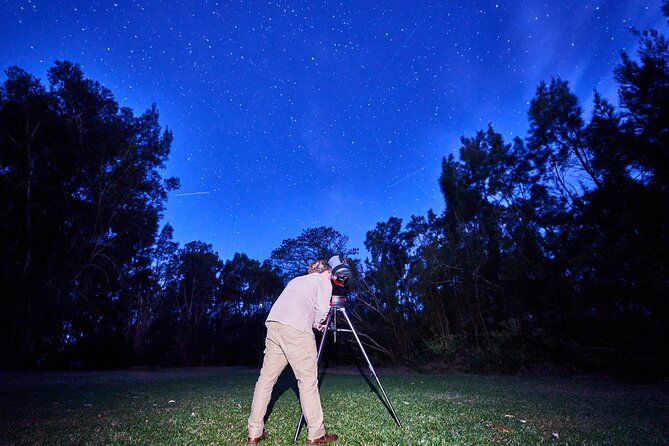
This tour includes a chance to check for bioluminescence in the sea, which is one of those wow-factor possibilities that feels very local. On paper, it sounds simple: you look at the water and see if it’s glowing.
In practice, bioluminescence can depend on conditions, and this tour treats it as an opportunity rather than a promise. Still, it’s built into the experience for a reason. On a dark night, even subtle glowing effects can look dramatic against the waves.
That also explains why the beach setting is so important here. The water and the dark sky work together. If you care about “living” natural phenomena rather than only looking at space, this adds variety.
Shooting stars and the rhythm of a short night out
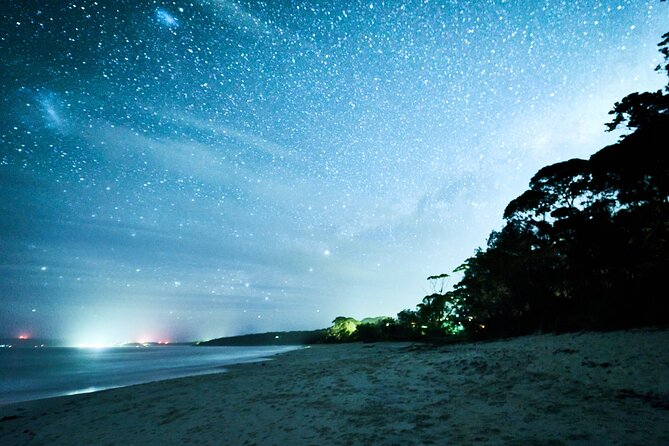
The tour encourages you to look up for shooting stars. That’s not the same thing as a guaranteed meteor shower, but it’s a great example of the tour’s mindset: you’re not only there for the planned objects. You’re also there for what the night naturally offers.
Because the whole thing runs about 1.5 hours, the rhythm matters. You get:
1) setup on the beach
2) naked-eye learning with laser guidance
3) telescope observing
4) a Q&A with the astronomer
Short tours often feel rushed. This one is built to feel structured, which helps beginners relax. You’ll know what’s coming next, and you can focus your attention instead of wondering whether you’re doing astronomy correctly.
Price and value: is $60.97 worth it?
The price is $60.97 per person, and the tour is typically booked around 25 days in advance. I’d call that mid-range for an experience that includes an astrophysicist and a telescope session, especially in a small-group format capped at 20 travelers.
Here’s why the cost makes sense for many people:
- You’re paying for specialized interpretation, not just telescope time.
- You get a structured “learning + viewing” flow, which is more useful than wandering in the dark alone.
- You’re likely to see multiple targets, not just one object through a scope.
The value also depends on what you want. If you only care about one quick look through a telescope, you may feel like you could do something cheaper. If you want the bigger picture—how to identify constellations, what you’re seeing, and what makes the southern sky different—this tour is a solid way to get it in one night.
Also, since it’s designed for all ages, it’s a practical family option. Not everyone wants a long adult-only night, and this offers an experience that can work across ages.
Small group energy: why max 20 travelers matters
The group size cap of 20 travelers is a big part of why the tour feels friendly and not chaotic. You’re not shoulder-to-shoulder in the dark, which makes it easier for the guide to keep pointing and for you to keep seeing.
It also helps during the Q&A. The tour ends with questions for an astronomer, and with a smaller group, you’re less likely to feel like you’re shouting into the void. That matters because stargazing can trigger personal curiosity—how to find something again, what a particular shape means, or what to do when the sky looks different on another night.
If you’re the type who likes to understand the why behind what you’re seeing, this format fits you well.
Weather reality check: what happens if clouds roll in
This experience depends on good weather. If it’s overcast, you’ll get a notification by 3 pm on the day of the tour. The plan is to offer a chance to reschedule with a credit valid for 3 years in Jervis Bay and the Blue Mountains, with the ability to extend validity and transfer it to other people as a gift card.
A refund is also an option, but not always a full one. The policy notes that 5% may be non-refundable due to merchant and service fees. So if you’re planning around a tight schedule, it’s worth keeping a little flexibility in your itinerary.
Also remember the policy on changes for cancellations you initiate. It says the experience is non-refundable and can’t be changed for any reason, which is the kind of detail that can sting if you book and then your plans shift.
Who this tour suits (and who might want a simpler option)
This is a great fit if:
- you’re new to stargazing and want an organized path to seeing the sky
- you want a guide with real astronomy credentials, like Dimitri’s PhD background
- you enjoy beach nights and want your “outdoor time” to come with a purpose
- you’re traveling as a couple, family, or group and want it to feel welcoming
It’s also smart if you’re short on time. In about 1.5 hours, you get naked-eye learning plus telescope observing plus a Q&A.
You might choose something else if:
- you’re not flexible with weather and can’t handle a possible same-day cancellation
- you hate waiting in the cold outdoors without a lot to do (the tour does include seating and blankets, but you’ll still be outside looking up)
Should you book the Jervis Bay stargazing tour?
I think you should book if you want one well-led night that teaches you how to read the southern sky and not just stare at it. The mix of beach learning, telescope observing of targets like the Orion Nebula and star clusters, and the chance to check for bioluminescence gives you variety in a short window.
If you’re trying to decide between a “stand around and hope” stargazing night and a structured one, this tour leans structured. The laser-guided start, the comfort setup, and the end Q&A are the kind of details that turn first-time stargazers into confident night-sky spotters.
If you have a strict calendar with no slack, keep the weather factor in mind. This is an outdoor, sky-dependent experience, so it rewards flexible travelers.
FAQ
Where do I meet for the Jervis Bay Beach Stargazing Tour?
You meet at Moona Moona Beach Playground, 7 Tapalla Ave, Huskisson NSW 2540, Australia.
How long is the tour?
The tour duration is about 1 hour 30 minutes.
How much does the tour cost?
The price is $60.97 per person.
Is a mobile ticket used?
Yes, the tour uses a mobile ticket.
What can I expect to see through the telescope?
Depending on the time of year and night conditions, the telescope viewing may include the Moon, planets, the Orion Nebula, star clusters, deep sky objects, and the Milky Way.
Do we only use telescopes, or do we learn with the naked eye first?
You’ll start with naked-eye astronomy on the beach, with laser-guided tips to help you identify stars and constellations, before moving to telescope viewing.
Is there a chance to see bioluminescence?
The tour includes a chance to check for bioluminescence in the sea, if conditions allow.
What happens if the sky is overcast?
If it’s overcast, you’ll receive an email cancellation notification at 3 pm on the day of the tour, and you’ll be offered a reschedule with a credit valid for 3 years or a refund option with non-refundable merchant and service fees.
Can I get a refund if I cancel myself?
This experience is non-refundable and cannot be changed for any reason if you cancel or request an amendment.
How big is the group?
The tour has a maximum of 20 travelers.