REVIEW · ADELAIDE
Learn to Surf at Middleton Beach
Book on Viator →Operated by Surf & Sun Middleton · Bookable on Viator
Surf lessons at Middleton feel surprisingly doable.
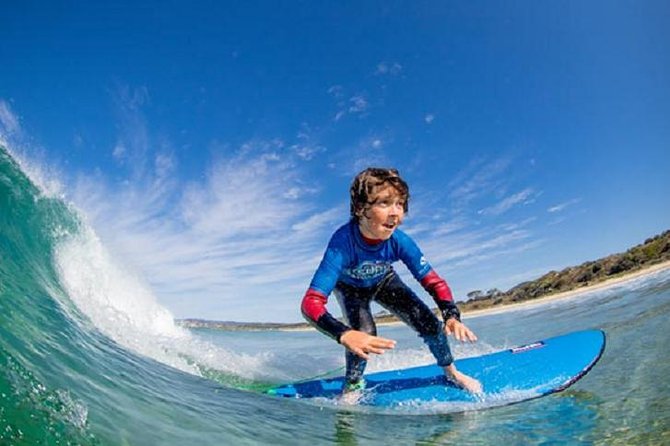
This hands-on session takes place at Middleton Beach just outside Adelaide, where you get guided instruction on how to read the ocean and catch waves. I like that the lesson is built around surf basics (not a vague demo), and that you’ll have all the gear included for getting in the water with less fuss.
Two things I especially like: the focus on surf safety (including rips) before you paddle out, and the way the instruction turns into real practice quickly, whether you’re brand-new or trying to fix an old habit. One thing to consider: this is weather-dependent, so if conditions aren’t good, your session may be moved or refunded.
In This Review
- Key highlights you’ll notice fast
- Why Middleton Beach works for learning to surf
- Meeting up at Surfers Parade and Chapman Road (and why it matters)
- What you’ll learn first: surf safety and rip awareness
- Sand practice first, then gentle waves
- In-water coaching: from first attempts to repeat rides
- Gear included: less spending, more surfing time
- Who this lesson suits best (and who might want a different plan)
- Price and value: is $46.62 worth it?
- Practical tips so your lesson day goes smoother
- Booking decision: should you do it?
- FAQ
- What’s the duration of the surfing lesson at Middleton Beach?
- Where do I meet the instructor?
- Is the lesson good for beginners?
- What surfing equipment is included?
- How many people are in the group?
- Do I need to bring my own surf gear?
- Does the lesson run in the morning or afternoon?
- What happens if the weather is bad?
- Can I cancel for a full refund?
Key highlights you’ll notice fast
- Beginner-friendly shoreline practice before you try the waves
- Rips and surf-safety basics taught from the start
- All equipment included, including surfboard, rash top, wetsuit, and sunscreen
- Choose morning or afternoon, so you can match your day in Adelaide
- Small group limit (max 8) for more attention in the water
Why Middleton Beach works for learning to surf
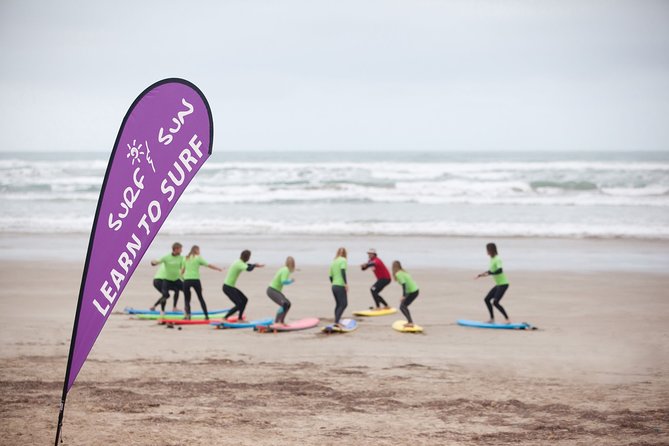
Middleton Beach is the kind of place that makes sense for a first surf lesson. The goal on day one is not to conquer big sets. It’s to learn how to move around your board, spot what the ocean is doing, and get a few successful rides. That’s exactly what a good learn-to-surf class is trying to produce in about two hours.
The beach setting matters because it lets your instructor teach using clear, practical cues. You’re able to practice basics on sand first, then test them in gentle surf. When you’re learning, that order helps. You get the rules, you rehearse the body positions, and then you apply them without having to “figure it out” while currents are pulling at you.
Also, this is a family-friendly activity. That doesn’t mean it’s watered down. It usually means the teaching approach is straightforward, patience is normal, and the instructor expects a wide range of ages and abilities. You’ll benefit if you like structure and clear coaching rather than just watching someone else surf.
You can also read our reviews of more tours and experiences in Adelaide.



Meeting up at Surfers Parade and Chapman Road (and why it matters)
Your lesson starts at Surfers Parade & Chapman Road, Middleton SA 5213. The activity ends back at the same meeting point, so you’re not trying to guess transit or scramble to get back after you’re wet and tired.
Plan for the fact that you need to make your own way to Middleton Beach to meet the instructor. The good news is that the meeting point is listed as near public transportation, which is helpful if you’re not driving or you want an easy back-up plan after the lesson.
Timing is also worth respecting. You’ll likely spend the first portion of the session gearing up and learning what to do next, so arriving a little early is smart. And because you can choose either a morning or afternoon lesson, you can pick the time that fits your energy level. Morning tends to feel fresher for many people; afternoon can be easier if you’re already sightseeing earlier in Adelaide.
What you’ll learn first: surf safety and rip awareness
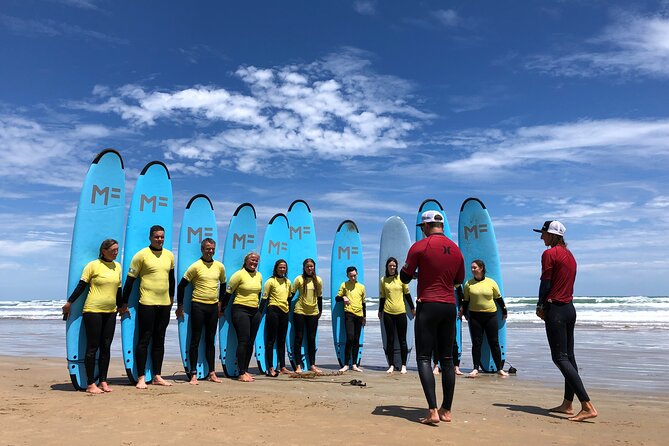
Before anyone gets serious about standing up, you’ll cover essential safety basics. This is not the fun part, but it’s the part that keeps surfing enjoyable. You’ll learn how to identify rips, plus how to catch waves and stand up on your surfboard.
Here’s why this matters: on a first lesson, your biggest challenge is usually not strength or balance. It’s decision-making. You need to understand what a rip looks like, how to choose a safer path for paddling, and how to position yourself when waves come in. A clear safety talk early reduces panic later, and that alone makes the whole session feel smoother.
You’ll also get guidance on the “how” of surfing movements. Instead of random attempts, you’re learning a sequence: where your body goes on the board, how to get your feet set for the stand-up moment, and what to do if a wave carries you differently than you expected. Even if you’ve surfed before, that kind of structured refresher is useful.
Sand practice first, then gentle waves
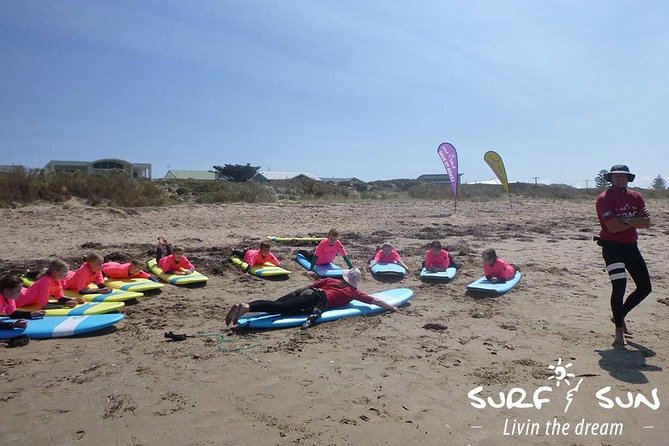
A well-run learning session uses a simple teaching rhythm: rehearse on sand, then try the same skills in water. That’s exactly the approach here. You’ll get time to practice your new skills on the sand before you move into the ocean.
Sand practice is underrated. It’s where you can get comfortable with the board’s feel, the direction it wants to go, and the right stance without getting knocked around. You’ll likely repeat small movements—pacing, foot placement, and the timing of your pop-up—until it starts to click.
Then you transition into the water on the beach’s gentle wave section. This is where the lesson becomes real. You’re not just learning theory; you’re testing it with actual wave conditions that are beginner-friendly. The ocean still has surprises, but the goal is to give you enough success early that you want to keep going.
And if you don’t stand up right away? That’s normal. On a first session, even getting into the right position and catching a small wave counts as progress. The best part is that you’re working with an instructor who can adjust what you’re doing while you’re in the action.
In-water coaching: from first attempts to repeat rides
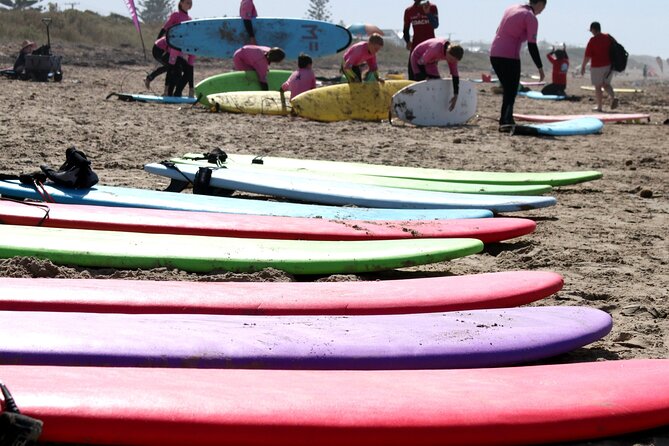
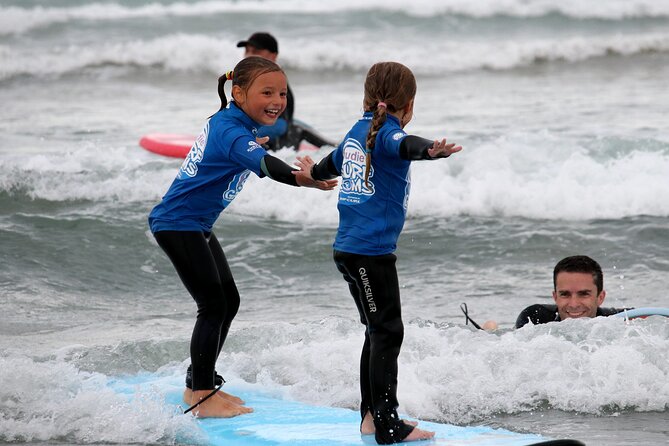
The biggest difference between a good surf lesson and a frustrating one is in-water help. This experience is built around an instructor who teaches the basics or assists you to refine existing skills, depending on your level. That matters because beginners usually need quick, simple corrections. People with some experience often need refined technique: timing, posture, paddling efficiency, or how to approach the wave line.
With a maximum group size of 8 travelers, you should get more than a once-over. A smaller group makes it easier for the instructor to notice what’s happening and adjust instruction on the fly. It’s also less chaotic. You’re not waiting around while a crowd gets attention.
The lesson pacing also helps. Two hours is long enough to learn the basics and actually try them, but short enough that you’re not exhausted before you start getting good at it. You’re likely to have multiple attempts, and repetition is how stand-up surfing becomes less of a mystery.





Gear included: less spending, more surfing time
One of the easiest “value wins” here is that equipment is included: you’ll get a high-quality surfboard, rash top, sunscreen, and a wetsuit. That reduces the usual stress of figuring out what to wear and whether you chose the right gear.
It also changes how you plan your day. If you’re traveling around Adelaide and want to fit in a surf lesson, you don’t have to add another shopping errand. You can simply show up and get geared up for the water.
The wetsuit and rash top are especially useful for comfort. Even on pleasant days, ocean water can feel cool, and comfort helps you focus on learning instead of shivering or second-guessing your outfit. Plus, sunscreen being supplied means you can avoid digging through your bag mid-lesson.
Who this lesson suits best (and who might want a different plan)
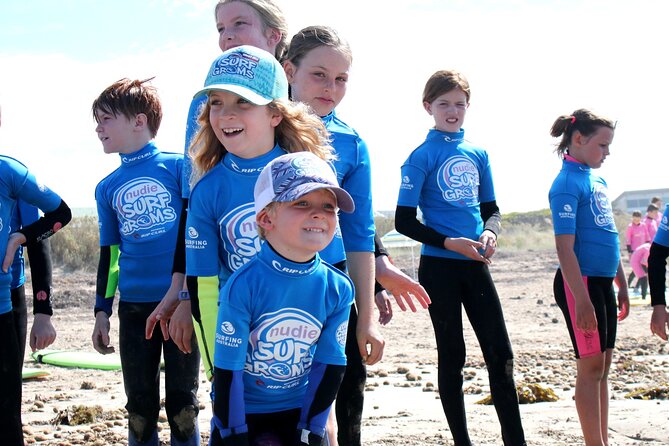
This works for all levels, including first-timers and people looking to refine what they already know. That’s a good fit if you’re traveling with mixed abilities or if you’re not sure whether you’ll be able to stand up but want instruction anyway.
You should also have moderate physical fitness. That doesn’t mean you need to be athletic in the gym sense. It does mean you’ll be paddling, moving with the board, and practicing pop-ups with some effort. If you have limitations with water activities or stamina, consider that before booking.
Because it’s popular with families and kids, the instruction is geared toward making the session understandable. If you learn best with clear steps and real-time corrections, you’ll probably enjoy it a lot.
If you’re expecting a long, advanced surf session with major technical challenges, you might feel it’s too introductory. This is a fundamentals-and-comfort-with-the-ocean kind of lesson, and that’s exactly why it’s a strong first step.
Price and value: is $46.62 worth it?
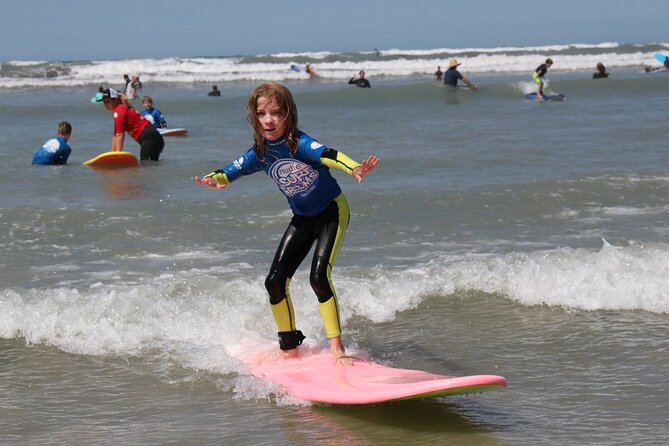
At $46.62 per person for an approximate 2-hour lesson, the value comes from what’s included and how quickly you get into the teaching. Many surf experiences charge extra for gear, and that’s where the real cost often creeps in.
Here, you’re already getting:
- a surfboard
- wetsuit and rash top
- sunscreen
- coaching and safety instruction
That package matters because it removes the hidden friction. You’re not paying to rent gear you might not use, and you’re not spending time hunting down equipment before you even start learning. The time part is also big: two hours is enough to have a meaningful learning arc, but it doesn’t eat your entire day.
It also helps that the group is capped at 8. More attention for the same basic price usually translates into faster progress. If you’ve struggled with lessons where instructors are spread thin, you’ll feel the difference.
Practical tips so your lesson day goes smoother
You’ll get the best experience if you treat the lesson like a short training session. A few simple habits make a difference:
- Arrive a bit early so you can get set up without rushing
- Listen carefully during the safety talk, especially rip identification
- Relax your expectations: the goal is learning and repeat attempts, not perfection
- Stay open to corrections. Small changes in foot placement or timing can matter fast
Also, plan your day around the water. Even with a wetsuit and rash top, you’ll come away wet and salty. If you’re pairing the lesson with other plans in Adelaide, give yourself a buffer afterward so you’re not trying to jump straight into a big meal or long drive without time to freshen up.
Finally, be ready for weather to play a role. This experience is listed as requiring good weather. If conditions aren’t suitable, you’ll be offered another date or a full refund, so you’re not stuck.
Booking decision: should you do it?
I’d book this learn-to-surf lesson if you want a structured, beginner-friendly introduction that focuses on safety, technique basics, and actual practice. The combination of included gear, a small group size, and a clear sequence (sand practice, then gentle waves) makes it easier to feel confident fast.
Skip it or reconsider if you’re dealing with stamina limitations for water activities, or if you’re hoping for an all-day experience. This is a tight, focused lesson. That’s the strength, but it’s not a full surf trip.
If you’re staying near Adelaide and want one memorable activity that doesn’t require prior surf gear or special planning, this is a smart pick. Pick a morning or afternoon slot that fits your energy, show up ready to learn, and let the instructor guide you from safety basics to your first real wave attempts.
FAQ
What’s the duration of the surfing lesson at Middleton Beach?
The lesson runs for about 2 hours.
Where do I meet the instructor?
Meet at Surfers Parade & Chapman Road, Middleton SA 5213, Australia.
Is the lesson good for beginners?
Yes. The lesson welcomes beginners learning surf basics, and it also supports people who want to refine existing skills.
What surfing equipment is included?
You’ll be provided with a surfboard, rash top, wetsuit, and sunscreen.
How many people are in the group?
The group size is capped at a maximum of 8 travelers.
Do I need to bring my own surf gear?
No. All necessary equipment for the lesson is included.
Does the lesson run in the morning or afternoon?
You can choose either a morning or afternoon lesson.
What happens if the weather is bad?
This activity requires good weather. If it’s canceled due to poor weather, you’ll be offered a different date or a full refund.
Can I cancel for a full refund?
Yes. You can cancel up to 24 hours in advance for a full refund.