REVIEW · MURRAY BRIDGE
Monarto Safari Park: General Admission Tickets
Book on GetYourGuide →Operated by Zoos South Australia · Bookable on GetYourGuide
A safari day without the passport. Monarto Safari Park is billed as the largest safari experience outside Africa, and the set-up really sells the feel of an open savannah. Big, open-range animal enclosures make the place feel more like wildlife on the move than animals sitting behind glass.
I also like how the park is built around the Zu-loop shuttle bus. It’s a true hop-on, hop-off system, so you can move between viewing platforms without turning the day into a leg-day contest.
One thing to plan for: the distances add up, and while the park is described as wheelchair accessible, the paths around enclosures can be uneven—so mobility needs a little extra thinking.
In This Review
- Quick Key Highlights
- Monarto Safari Park Basics: One Full Day in South Australia
- Arriving and Getting In: Car Park to Entrance Tunnel
- The Zu-loop Shuttle Bus: The Best Way to Cover Long Distances
- Walking the Trails: When You Should Get Off the Bus
- Keeper Talks: The Included Part That Makes the Animals Make Sense
- Animal Viewing Highlights: Lions, Giraffes, Meerkats, and Lemurs
- Elephants, Porcupines, and the Joy of Actually Seeing Activity
- Food and Souvenirs: Budget for Convenience
- Getting the Most Out of Your Day: A Simple Strategy
- Who Should Book Monarto Safari Park General Admission?
- Should You Book Monarto Safari Park General Admission?
- FAQ
- How long is Monarto Safari Park general admission?
- What’s included with general admission?
- What’s not included in the ticket price?
- Where do I enter and how do I access the park?
- Can I bring my own food?
- Are drones or smoking allowed?
- Is the park wheelchair accessible?
Quick Key Highlights
- Unlimited Zu-loop shuttle rides let you bounce between viewing platforms as often as you want
- Over 15 km of walking tracks give you the option to slow down and explore on foot
- Free daily keeper presentations help you understand what you’re seeing (not just spot animals)
- Large savannah-style enclosures make it easier to spot active behavior and natural movement
- Optional animal experiences cost extra if you want face-to-face moments beyond general admission
Monarto Safari Park Basics: One Full Day in South Australia
Monarto Safari Park sits in South Australia and is designed for a one-day visit, with the park open daily from 09:30 to 17:00 and last entry at 15:00. That timing matters. If you roll in late, you can still see a lot, but you’ll feel rushed trying to catch both bus stops and the walking trails.
The ticket price is $38 per person for general admission. On paper, that’s not “cheap,” but it becomes better value once you factor in what’s included: unlimited use of the Zu-loop shuttle bus, access to 15 km+ of walking tracks, and free daily keeper presentations. In other words, you’re paying for a full-day plan, not just a ticket to pass through a gate.
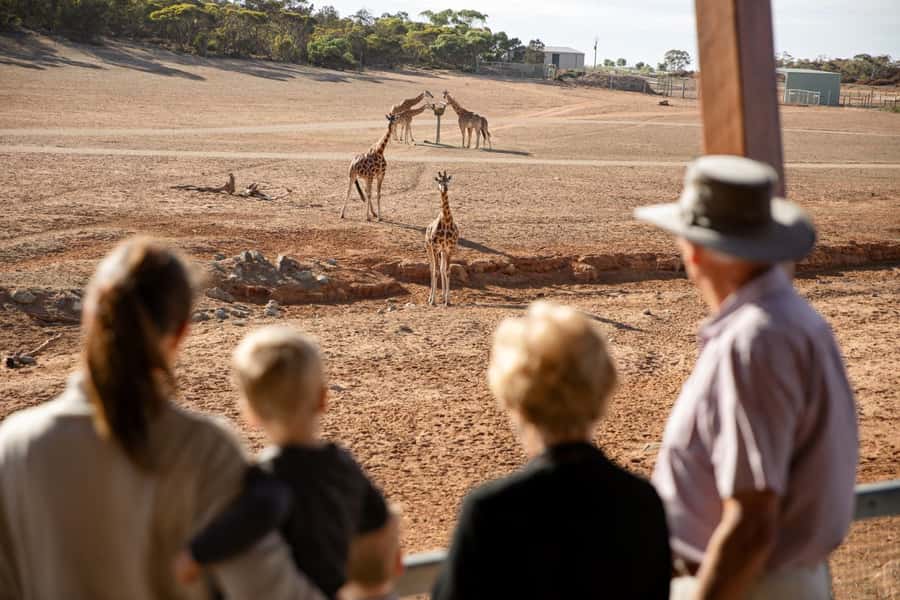
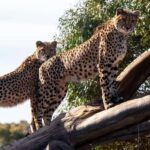
Also, you’re not limited to animals from one region. The park mixes Australian native animals with major African species—think lions, rhinos, giraffes, meerkats, and more. The park’s size and open layouts are the whole point: you’re meant to roam across wide plains, not just pop from enclosure to enclosure.
You can also read our reviews of more tours and experiences in Murray Bridge.
Arriving and Getting In: Car Park to Entrance Tunnel
Getting started is simple. You park in the carpark, then enter via the entrance tunnel. There’s free parking, which is a quiet win if you’re traveling with a family or coming from farther down the road.
When you arrive, you’ll present your digital QR code at the turnstiles. From there, you’re immediately routed into the flow of the park: access to the shuttle bus and the walking tracks.
If you’re the type who likes to have your day organized, do this early:
- Grab shade and water first, because you’ll be outside a lot.
- Choose whether you want a mostly-bus day or a split day. The park supports both, but you’ll enjoy it more if you commit to a plan.
The Zu-loop Shuttle Bus: The Best Way to Cover Long Distances
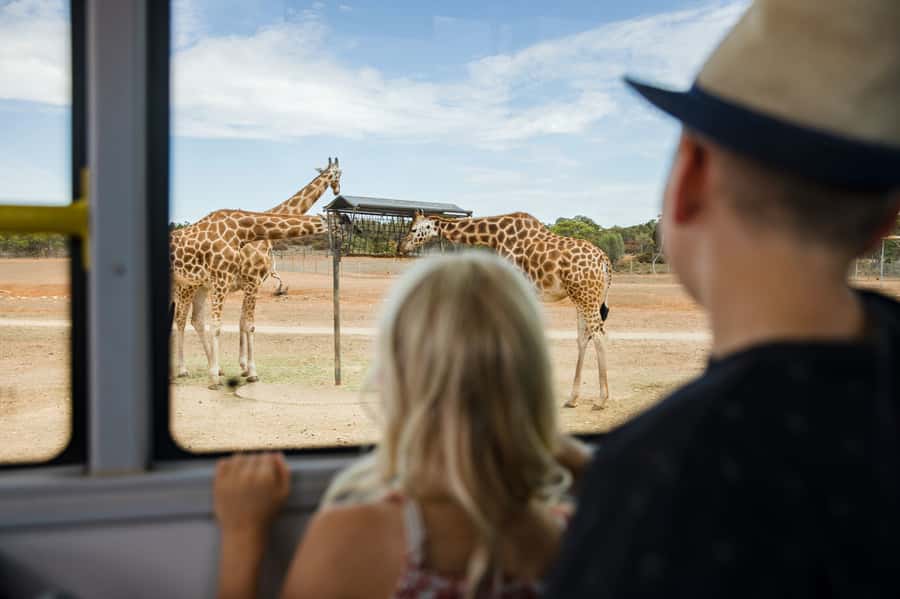
The Zu-loop bus is the heart of a stress-free safari day. It’s an unlimited hop-on, hop-off service that takes you between viewing points across the open plains. This matters for two reasons.
First, it saves energy. The park offers 15 km of walking tracks, and you can absolutely walk it all—but most people will mix walking with the bus to avoid getting tired before they reach the most interesting exhibits.
Second, the bus keeps the experience moving. You’re not wandering aimlessly trying to find the next good sightline. The shuttle structure funnels you toward viewing platforms, so you know you’re stopping where you’re meant to stop.
A practical photo tip: some visitors noted that bus windows can affect visibility at certain times. If you want photos, try to pick seats with the clearest line of sight, and wipe your lens before boarding when the windows look a bit rough.
One more planning note: not every bus experience sounds equally clear. Some people found that audio on certain buses was hard to hear, so if you care about the commentary, sit closer to the front when you can.
Walking the Trails: When You Should Get Off the Bus
The walking component is a real part of the experience, not an afterthought. You’ve got access to over 15 km of walking tracks, and you can do as much or as little as you like. This is where the park starts to feel like you’re out in the open with the animals, rather than only viewing from a platform.
I like walking for two reasons:
- You catch animals that are active when the group isn’t right on top of them.
- You get more time at a stop to notice details, not just big silhouettes.
For practical comfort, wear shoes that handle dirt paths. Even if you mostly use the shuttle, you’ll still walk from bus stops to enclosures. One mobility-related theme comes up in the real world: some paths and surfaces can be uneven, and that’s harder when you’re using a walker, stroller, or wheelchair.
If mobility is a concern, think “assistive plan,” not “perfect plan.” Use the bus strategically, and don’t assume every route feels the same underfoot.
Keeper Talks: The Included Part That Makes the Animals Make Sense
One of the best values here is built in: free daily keeper presentations. These talks turn animal viewing into something more than spotting shapes in the distance.
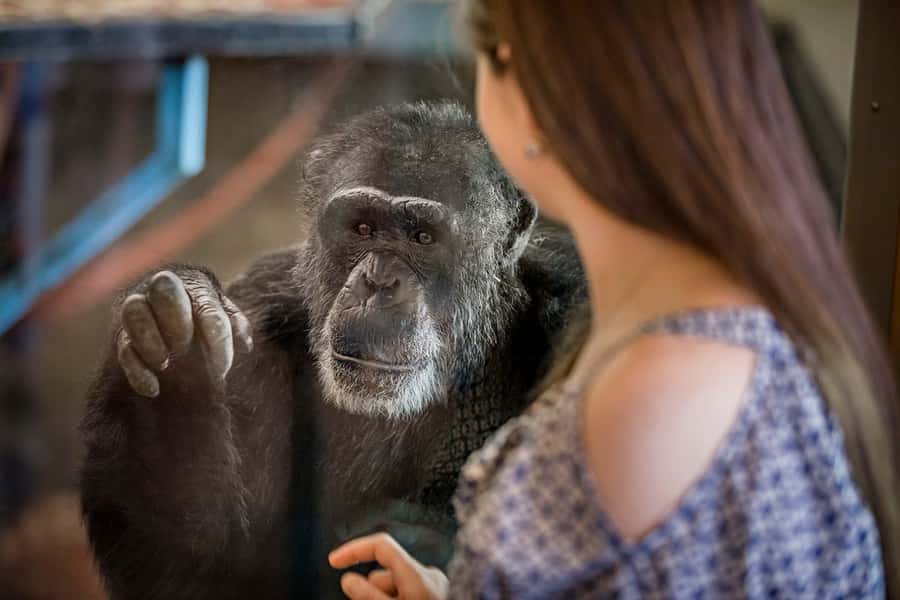
The keeper presentations give context for behavior—why animals hang where they do, what feeding and enrichment look like, and what to watch for when the animals move. That’s especially useful with species that don’t always stand out immediately, like rhinos or chimps, where timing and vantage point matter.
You’ll also see signs that the park is set up for more than passive watching. The experience is designed around things like:
- hopping between viewing platforms,
- listening during bus stops,
- and doing a little “wait time” for animals to shift position.
Even if you’re visiting with kids, the talks help you steer attention from just loud moments (though there are some loud moments) to the small cues that make animal behavior interesting.
Animal Viewing Highlights: Lions, Giraffes, Meerkats, and Lemurs
Monarto puts a spotlight on big-name animals, and it also supports a “surprise me” approach if you keep moving. Here are the major categories you should plan around.
Giraffes
You may have opportunities tied to feeding and close interaction (these are part of the park’s offering, while more intensive experiences cost extra). Either way, keep an eye out for when giraffes shift toward the viewing areas.
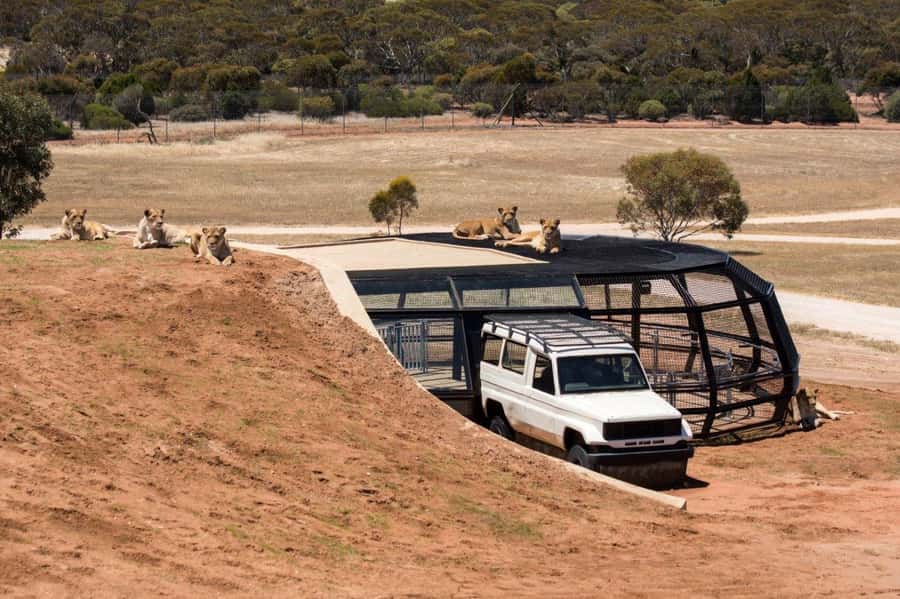
Lions
The park highlights lion encounters in a way that feels dramatic. Some visitors specifically mention lion feeding as a standout. In an open-range setting, that kind of moment feels more like real life than a scheduled show in a tiny enclosure.
Meerkats
The park includes chances to see and mingle with meerkats. If you’re traveling with kids, meerkats are one of the easiest ways to keep attention locked in while still learning something.
Rhinos
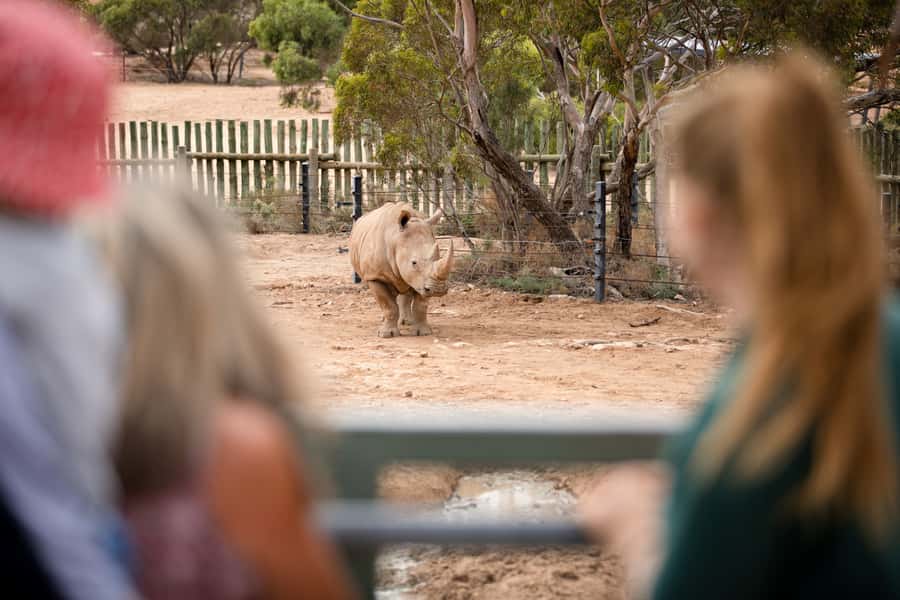
Rhinos can be harder to see than you expect—so don’t assume “not here” means “not today.” Use the bus flow to keep checking, and allow time at platforms instead of racing through.
Chimps and Lemurs
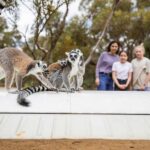
Chimps are on the animal list, and the park also features a lemur area described as the Land of Lemurs. Lemurs are often busy and visible when conditions are right, so slow down at the right stops rather than rushing every leg.
One reality check
An aviary disappointment comes up in the lived experience: one visitor noted that an aviary stop had no birds at the time. That doesn’t mean it’s always like that, but it’s a good reminder to treat smaller specialty areas as bonus stops, not the backbone of your day.
Elephants, Porcupines, and the Joy of Actually Seeing Activity
A few details stand out from the kind of day people end up having at Monarto.
Elephants are a major “wow” draw, and multiple visitors specifically call them out as amazing. There’s also mention of an elephant enclosure expansion and enthusiasm about when updates open up, which tells you the park keeps evolving.
And then there’s the fun low-key win: people report seeing animals that many zoos skip or hide well. Porcupines are one example that came up. That’s the best kind of surprise—when you leave feeling like you saw more than just the poster species.
The overall effect is that the park encourages you to check back. Animals move in and out of viewing zones, and if you stick to one quick pass, you might miss the active moments.
Food and Souvenirs: Budget for Convenience
Food and drinks are not included in the general admission ticket. There are places to eat inside the park, including a lodge/cafeteria setup and picnic areas.
Here’s how I’d handle it:
- Use the sheltered picnic areas if you’re traveling as a family or if you want more budget control.
- If you rely on buying food inside the park, assume prices can feel steep. The park is set up for day-long stays, so convenience costs.
If you want to keep the day smooth, plan a simple snack strategy. Bring water and a couple of easy items if that fits your travel style. If not, you can still eat inside, but budgeting helps your mood.
Souvenir shopping is part of the exit rhythm, so if you’re trying to avoid last-minute impulse buys, set a spending limit early.
Getting the Most Out of Your Day: A Simple Strategy
You’ll enjoy Monarto most if you treat it like a flexible loop, not a fixed checklist.
A strategy that fits the park’s strengths:
- Start with one or two early platforms by bus to get oriented.
- Walk between a couple of stops where the paths are comfortable for you.
- Use the shuttle to correct your plan if you’re tired or if you find animals aren’t at the exact spot you expected.
- Catch keeper talks when they’re scheduled, because they guide your attention.
If you’re traveling with kids, the shuttle ride itself becomes an activity. Toddlers and preschoolers often love the bus segments, and the open viewing style helps adults stay engaged too.
If you’re traveling with mobility limits, don’t try to force a full “walk-it-all” day. You can still get a meaningful safari experience with the bus as your backbone, then choose which enclosures you’re able to reach on foot.
Who Should Book Monarto Safari Park General Admission?
This is a strong match for:
- Families who want a full-day activity without complex planning.
- First-time safari visitors in South Australia who want to see African species in a big open-range layout.
- Animal lovers who appreciate keeper explanations and not just close-up photos.
- Mixed groups (grandparents + kids) because the shuttle supports different walking comfort levels.
It may be less ideal if:
- You want a totally streamlined, fully accessible route with no uneven surfaces. Wheelchair access is listed, but real-world path conditions can still be tough.
- You expect every specialty area to deliver on the same day. Some enclosures may be quieter or disappointing at specific times.
- You’re chasing a hyper-detailed photo hunt only. Photo results from bus viewing can vary depending on window glare and where you sit.
Should You Book Monarto Safari Park General Admission?
If you want value for a full day outdoors, Monarto is easy to recommend. At $38 per person, the mix of unlimited Zu-loop bus rides, 15 km+ of walking tracks, and free daily keeper talks means you’re not just paying for access—you’re paying for an experience you can shape.
I’d book it if you’re okay with spending most of the day in an open-air setting and you’re willing to mix bus and walking. You’ll get the best results by arriving with a light plan, using the viewing platforms, and allowing time for animals to drift into view.
If mobility is a key concern, go in with realistic expectations: use the shuttle often, choose routes that feel safest for your group, and don’t treat every path like it’s level and smooth.
In short: for a classic safari-style day near Adelaide, Monarto delivers exactly the kind of big-animal, big-space feeling you’re hoping for—without the long flight.
FAQ
How long is Monarto Safari Park general admission?
It’s a 1-day ticket, and the park is open daily from 09:30 to 17:00 with last entry at 15:00.
What’s included with general admission?
General admission includes unlimited use of the Zu-loop shuttle bus, access to over 15 km of walking tracks, and free daily keeper presentations, plus free car parking.
What’s not included in the ticket price?
Food and beverages aren’t included, and animal experiences (which go beyond general admission) are available at an extra cost. Transportation to and from the park also isn’t included.
Where do I enter and how do I access the park?
You park in the carpark and enter via the entrance tunnel. Present your tickets at the turnstiles, and then you can access the Zu-loop shuttle bus and the walking tracks. You’ll need your digital QR code ready on arrival.
Can I bring my own food?
The park has sheltered picnic areas, so you can plan to bring food for a picnic-style break. The park also has places to buy food, but food and beverages are not included in the ticket.
Are drones or smoking allowed?
No. Smoking and drones are not allowed.
Is the park wheelchair accessible?
The activity is listed as wheelchair accessible. Some visitors have also noted that certain paths and bus boarding can be challenging depending on mobility needs.