REVIEW · MELBOURNE
St Kilda: Group Lesson for Stand-Up Paddleboarding
Book on GetYourGuide →Operated by STAND UP PADDLE BOARDING PTY LTD · Bookable on GetYourGuide
St Kilda SUP lessons make balance feel teachable. This 90-minute group lesson puts you right on Melbourne’s St Kilda Beach so you can learn stand-up paddleboarding with real coaching from the start, not just guesswork. The vibe is fun, and the teaching focus is on getting you paddling effectively quickly with experienced instructors.
I also like that the format feels approachable for lots of people, including families, with a supportive tone that helps you improve without pressure. The session is built for quick progress in just 90 minutes, and you’ll leave with enough technique basics to paddle on your own next time.
One thing to think about: it’s not suitable for kids under 12, and you must be able to swim. If you’re coming with a non-swimmer (or anyone with mobility impairments), this lesson won’t fit.
In This Review
- Key things I’d zero in on
- Why St Kilda SUP is a smart first paddle in Melbourne
- Your 90-minute flow: learning technique that sticks
- Beach-side coaching: how safety and confidence work
- What’s included, what’s optional, and the budget angle
- Who should join, and who should sit this one out
- What to bring for comfort in Melbourne sun and spray
- Price and value: is $42 a fair deal for SUP?
- Tips before you go: timing, expectations, and a smooth start
- Should you book this St Kilda SUP lesson?
- FAQ
- How long is the St Kilda SUP group lesson?
- What does the lesson include?
- Do I need any previous SUP experience?
- What are the age requirements?
- Do I need to know how to swim?
- Is a wetsuit provided?
- What should I bring with me?
- Is food and drink included?
Key things I’d zero in on
- St Kilda Beach, central Melbourne makes this an easy add-on to a city day
- Technique from day one so you’re not stuck flailing after the first minute
- 90 minutes of coached time aimed at getting you paddling effectively
- All core gear provided including board, paddle, and leg rope
- Wetsuit and lifejacket if required for comfort and safety
- Beginner-friendly group format with no minimum group size needed
Why St Kilda SUP is a smart first paddle in Melbourne
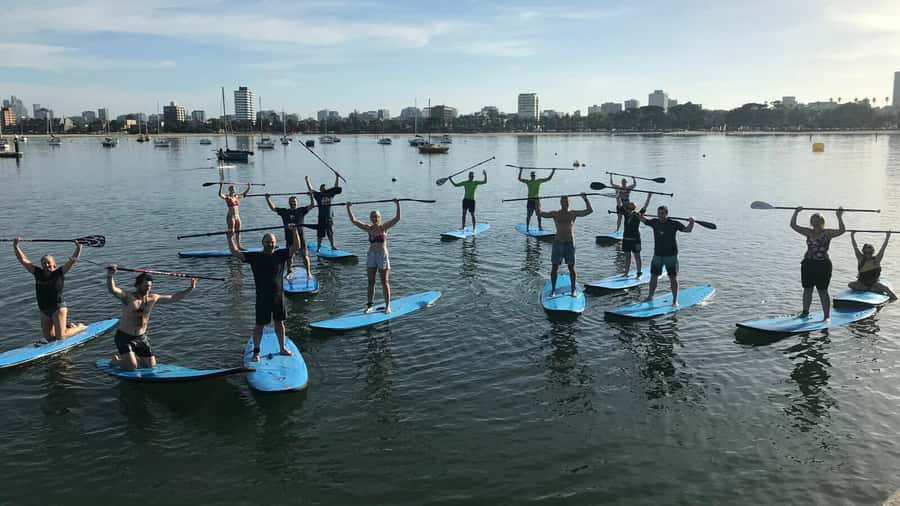
If you’ve ever watched someone glide on a SUP board and thought, I could never do that, this is exactly the kind of lesson that changes your mind. St Kilda’s beach setting is a big part of why it works: you’re learning in a place that’s made for being outdoors, close to the city, and easy to reach when you want an active break without a long trip out of town.
The other reason it’s a strong choice is how the lesson is framed. You’re not just renting equipment and hoping for the best. You get instruction from day one, so your stance, paddle angle, and basic rhythm are guided early. That cuts the learning curve in a way you feel almost immediately. The most useful part is that instructors aim to have you paddling effectively within a short period, which is ideal if you don’t want a long “class” before you get on the water.
And the reviews hint at something important: it tends to feel easier than you expect, yet still challenging enough to stay interesting. That balance matters. If a lesson is only easy, you leave feeling bored. If it’s too hard too fast, you leave frustrated. This one seems designed to land in the middle.
A few more Melbourne tours and experiences worth a look



Your 90-minute flow: learning technique that sticks
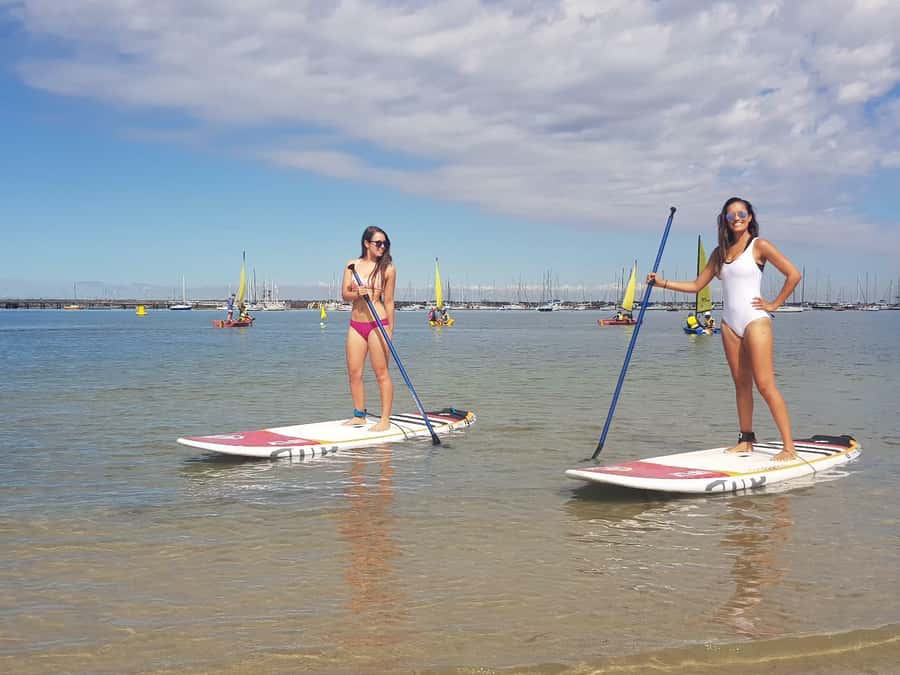
There isn’t a long itinerary with lots of stops here. The whole point is to use the time on the beach and on the water efficiently so you learn the technique that matters.
Here’s what you can expect, in a practical order:
- You’ll start with a briefing and instruction so you understand how to stand safely and how to hold and use the paddle correctly.
- Then you’ll work on technique with the instructor support so you can build a basic, repeatable paddling motion.
- As the session goes on, the coaching helps you apply what you learned so you’re actually moving with control, not just trying to stay upright.
- Near the end, you’ll finish with enough guidance that you’re not leaving empty-handed. The aim is that you take away adequate knowledge to paddle on your own.
This structure is a big deal because SUP has two skills stacked together: balance and paddle mechanics. People often focus on one and ignore the other. A good lesson helps you connect the two. With this experience, the emphasis is on correcting technique early and then using guided practice so you don’t pick up bad habits that are hard to unlearn later.
Duration also matters. Ninety minutes is long enough to get past the awkward first phase, where you feel wobbly and self-conscious, but short enough that you’re not exhausted before you’ve learned anything. It’s a sweet spot for first-timers, and it works well for families too, since it’s active without turning into an all-day commitment.
Beach-side coaching: how safety and confidence work
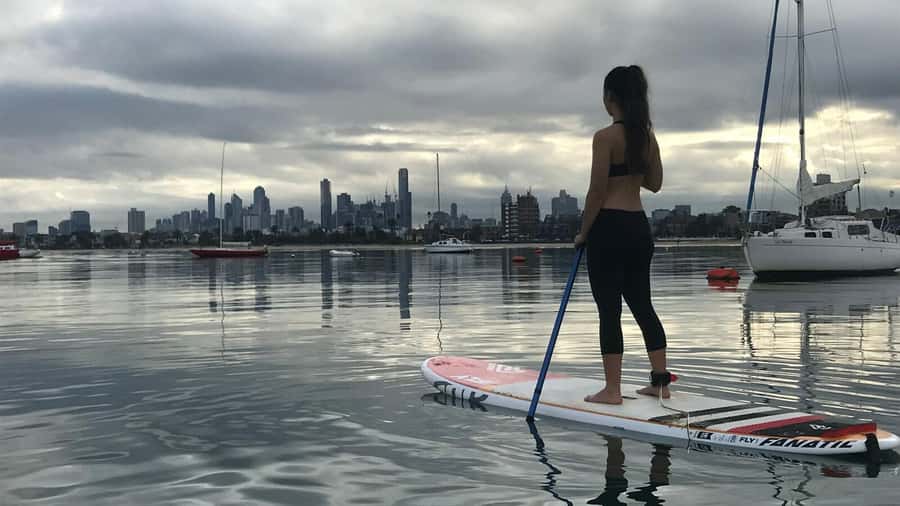
St Kilda Beach is the stage, but the real difference maker is the instructor coaching style. This is described as a safe and nurturing environment, and that usually translates into three practical things when you’re learning a new sport.
First, you’ll get taught how to manage your body position. SUP isn’t just “stand up and paddle.” Your stance, weight distribution, and where you place your feet on the board changes everything. When that’s taught clearly, you spend less time falling and more time moving.
Second, you’ll learn how to use the paddle effectively. A lot of people waste energy by paddling with the wrong angle or too aggressively. When you learn the correct technique early, you start gliding with less effort, which makes the experience feel more rewarding fast.
Third, you’ll get support so you can progress without taking big risks. The lesson includes equipment like a leg rope on the board, and when conditions require it, a wetsuit and a lifejacket are provided. That doesn’t remove the need to use good judgment, but it does reduce the harsh “all on you” feeling that some beginner activities have.
The instructors being English-speaking is also helpful for visitors who want clear explanations. And since it’s a group lesson, you’re likely to see common mistakes and corrections happen in real time, which helps you learn faster because you can mirror what works.
What’s included, what’s optional, and the budget angle
Let’s talk value, because SUP lessons can get pricey fast when you add gear rentals, safety equipment, and instructor time. Here, you don’t get hit with a surprise shopping list.
Included items are:
- Stand-up paddleboard
- Paddle
- Leg rope
- 90-minute session with an expert instructor
- Wetsuit (if required)
- Lifejacket (if required)
- Rash vest (optional)
Optional item note: the rash vest is described as optional but also provided if required. That’s a nice touch because water conditions and skin sensitivity vary, and you won’t necessarily have to bring your own extra layer.
What this means for your budget and comfort:
- You can pack light. You bring the basics (swimwear, towel, sun protection), and they handle the specialized gear.
- You won’t be guessing what to rent versus what to bring. Everything that’s central to learning safely is listed as included.
- You can focus on the actual lesson instead of equipment logistics.
One small “watch this” item: food and drink aren’t included. If you’re combining this with a day on the beach, plan a snack or meal before or after. Also, you won’t have hotel transfers, so think about how you’re getting to the meeting point and building travel time into your schedule.
Who should join, and who should sit this one out
This lesson is designed to be inclusive, but it’s also clear about limits. You must know how to swim, and there’s a minimum age of 12. It’s also not suitable for wheelchair users or people with mobility impairments.
That might sound strict, but it’s a practical safety call. SUP involves getting on and off a board on the shoreline and balancing on water. Even with good instruction and supportive gear, the environment requires independent movement and swimming ability.
If you’re a typical fit, here’s who will likely enjoy it:
- Teens and adults who can swim and want a fun way to learn a new skill fast
- Families with kids 12+ who want an active, hands-on activity at St Kilda
- First-timers who want guidance, not just a rental
- Visitors who want an outdoor activity that still feels close to central Melbourne
If you’re unsure about your swimming level, don’t guess. The lesson explicitly requires you to know how to swim. Also, consider weather and comfort. Even when you feel capable, being out on the water changes your energy level.



What to bring for comfort in Melbourne sun and spray
Even with wetsuit and safety gear handled, you still need the basics. Your packing list here is straightforward, and it matches what you’ll actually use during a beach-based activity:
- Sunglasses
- Hat
- Swimwear
- Towel
- Sunscreen
If you’ve ever left a beach day underprepared, you already know why this matters. Sun and glare can be intense, and SUP can keep you moving longer than you expect once you get the hang of it. Sunglasses and a hat help you stay comfortable, and sunscreen matters because you’re often on the water with reflections.
One more practical tip: bring a towel that’s actually absorbent enough for post-session drying. You’ll likely want to change out of swimwear right away if you’re continuing your day.
Price and value: is $42 a fair deal for SUP?
At $42 per person for a 90-minute session, the value depends on what you compare it to.
If you’re thinking about doing SUP in a DIY way, you’d normally need to cover board access, instruction (or learn the hard way), and safety gear. This lesson bundles the key elements into a single price: the board, the paddle, the leg rope, and an expert instructor for the full session.
Two things make that pricing feel reasonable:
- Instructor time is the costly part. Learning safely and efficiently requires real coaching, not just gear handover.
- The session is long enough to matter. Ninety minutes gives you time to progress beyond the first awkward stage and actually learn technique.
Now the reality check: you still need to be ready for the requirements. Minimum age is 12, you must be able to swim, and the experience isn’t suitable for wheelchair users or those with mobility impairments. If you’re in the right group, the price is likely a solid deal for the instruction you get.
Also, since English is the instructor language and the experience is structured for all ability levels, you’re paying for clarity and guided technique. That’s the part that helps you leave feeling like you gained a skill, not just had a one-off splash.
Tips before you go: timing, expectations, and a smooth start
This is a beach activity, so small timing choices matter more than you’d think. You’re asked to arrive 10 minutes before the activity starts. That buffer helps you get sorted, fit into the lesson flow, and avoid rushing when you’re about to step onto water.
A few expectation-setting points that help:
- You’ll be learning from correct technique cues early, so listen closely and try to repeat what the instructor demonstrates.
- Even if you feel confident on a board for a moment, expect the lesson to keep building. SUP rewards consistency, and instructors will aim to get you paddling effectively, not just wobbling.
- Wetsuit and lifejacket are provided if required. If you run cold easily, that’s another reason to take packing seriously and arrive ready to get kitted up.
If you’re planning your day, remember food and drink aren’t included. Think about a snack stop near your next activity so you don’t get stuck hungry after you’ve just used energy outdoors.
Should you book this St Kilda SUP lesson?
I’d book it if you meet the basic requirements (age 12+, able to swim) and you want a guided, beginner-friendly SUP experience with the kind of coaching that helps you get moving fast. It’s also a good choice if you’re in Melbourne and want an outdoor activity that doesn’t demand a half-day commute.
Skip it if swimming ability is uncertain, if someone in your group doesn’t meet the minimum age, or if mobility needs make beach and water movement unsafe. In those cases, you’ll be happier choosing a different activity that matches your situation.
Overall, the combination of expert instruction, gear included, and a 90-minute time window makes this a strong value way to learn SUP at a famous Melbourne beach.
FAQ
How long is the St Kilda SUP group lesson?
The session runs for 90 minutes.
What does the lesson include?
You get the 90-minute session, an expert instructor, a stand-up paddleboard, a leg rope, and a paddle. A wetsuit is provided if required, and a lifejacket is provided if required. A rash vest is optional.
Do I need any previous SUP experience?
No. The experience is described as suitable with no minimum people required and no minimum ability level necessary.
What are the age requirements?
The minimum age is 12.
Do I need to know how to swim?
Yes. You must know how to swim to participate.
Is a wetsuit provided?
Yes, a wetsuit is provided if required.
What should I bring with me?
Bring sunglasses, a hat, swimwear, a towel, and sunscreen.
Is food and drink included?
No. Food and drink are not provided.