REVIEW · BLUE MOUNTAINS
Stargazing with an Astronomer in the Blue Mountains
Book on Viator →Operated by Blue Mountains Stargazing · Bookable on Viator
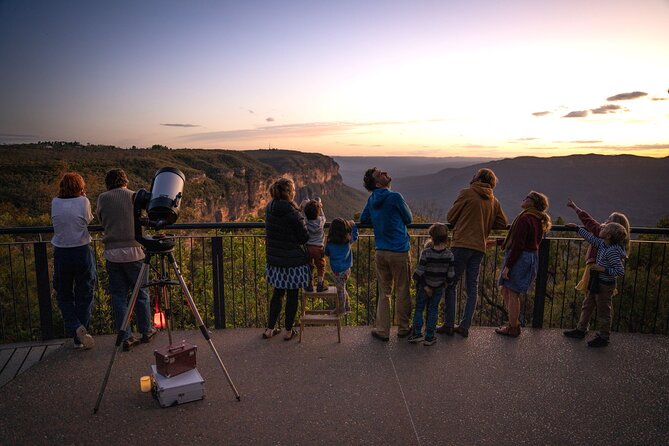
Blue Mountains nights teach you to look up. This 90-min stargazing session in the Greater Blue Mountains focuses on the sky you can actually see, Southern Hemisphere favorites and all. I like that it turns star-watching into a real lesson, with laser-guided constellation storytelling that keeps you oriented even after dark.
My favorite part is the hands-on gear: a professional-grade telescope plus astronomy binoculars, so the sky goes from blurry points to real targets. You also get warm or cold drinks (hot chocolate is mentioned), which sounds small until you’re standing still while the temperature drops.
One thing to consider: wind and weather can change where you view from. Even when the tour runs, you might not always get the exact perfect lookout setup, and if conditions are rough enough they’ll switch options for the night.
In This Review
- Key Points to Know Before You Go
- Why Wentworth Falls and the Greater Blue Mountains Sky Works
- Your 90 Minutes at the Lookout Track: How the Night Flows
- Telescope Time: Planets, Nebulae, and the Photoshopped Look (Without the Photoshop)
- Laser Constellations and Q&A With an Astrophysicist
- Drinks, Comfort, and What to Wear Under Dark Skies
- Price and Value: What $60.97 Gets You in the Blue Mountains
- When Weather Changes the Plan
- Who This Tour Fits Best (and Who Might Skip It)
- Should You Book Blue Mountains Stargazing?
- FAQ
- What is the duration of the stargazing tour?
- Where does the tour start and end?
- How much does the tour cost?
- What can I see during the stargazing session?
- Are telescopes and binoculars provided?
- What drinks are provided?
- Is the tour wheelchair and stroller accessible?
- What happens if the weather is bad?
- Is the tour refundable if I cancel?
Key Points to Know Before You Go
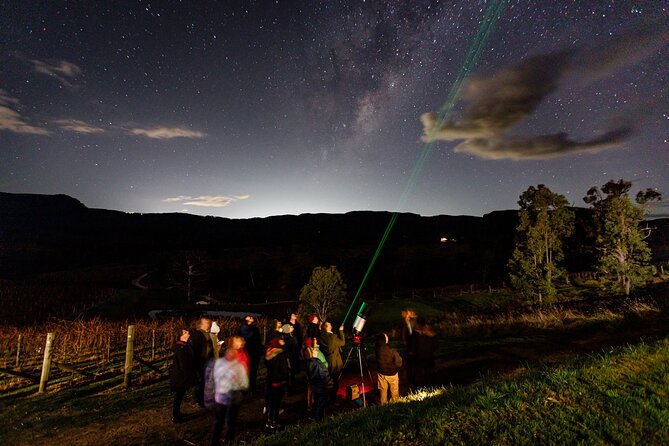
- Professional-grade telescope used to view Moon, planets, and deep-sky objects when conditions allow
- Laser-guided constellation storytelling helps you find the big Southern Hemisphere landmarks fast
- Small group size (max 20) makes Q&A actually work, not just a shouted hello
- Hot drinks provided, plus a clear plan for what happens when skies won’t cooperate
- English and French language support, with a guide who explains what you’re seeing
Why Wentworth Falls and the Greater Blue Mountains Sky Works
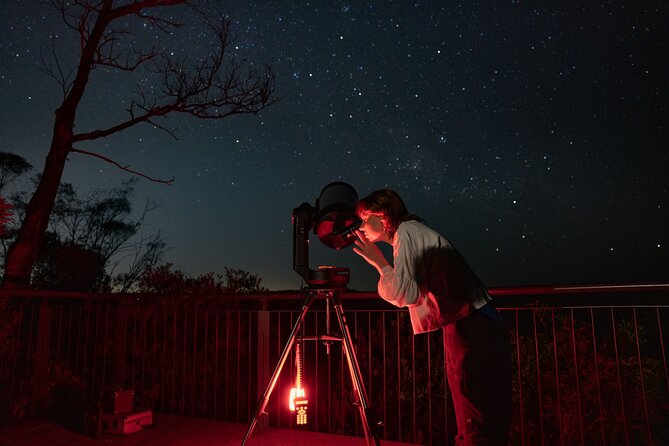
The meeting point is at Wentworth Falls Lookout Track in New South Wales, and the whole point of that choice is simple: you want a dark, open view of the Southern sky. The Blue Mountains are a World Heritage-listed setting, and that matters because this kind of guided stargazing is all about seeing more than just the brightest stars.
What I like about this tour’s tone is that it doesn’t act like you need to be an astronomy nerd. You’re not asked to memorize star charts. Instead, you learn the sky step-by-step, then you watch the guide connect those names to what’s actually above you.
It also helps that the tour is built for real viewing time. At roughly 1 hour 30 minutes, you get enough minutes under the stars to see how the sky changes as your eyes adjust, not just a quick look and a goodbye.
You can also read our reviews of more tours and experiences in Blue Mountains.
- Blue Mountains Small-Group Tour from Sydney with Scenic World,Sydney Zoo & Ferry
★ 5.0 · 3,709 reviews
Your 90 Minutes at the Lookout Track: How the Night Flows
This starts and ends back at Wentworth Falls Lookout Track, so you’re not sent wandering all over the countryside. That makes the plan feel easy: you show up, settle in, and focus on the sky without worrying about complicated transfers.
Here’s the practical flow you can expect:
- Welcome and orientation: The guide gets you oriented with the sky you’ll be hunting that night.
- Naked-eye constellation time: You learn how to identify constellations without instruments first. This is key, because it teaches you what to look for when you’re not holding binoculars.
- Laser-guided storytelling: A laser pointer is used to help you trace patterns and targets. It’s the fastest way I know to keep people from losing the plot when it’s dark and your hands are cold.
- Binoculars and telescope viewing: Once you know where to look, you shift to the astronomy binoculars and then the professional telescope for specific objects.
- Q&A with the astronomer: You get time to ask questions and get direct answers tied to what you’re seeing.
The Q&A part matters more than you’d think. A lot of stargazing experiences end right as the questions start. Here, the group format (maximum 20 people) gives you a real chance to ask stuff, like why the Moon looks different through a telescope, or what that fuzzy patch in the sky actually is.
Also, the guide is an astrophysicist with over ten years’ experience. In past nights with hosts named Nathan, Tom, and Alka, the common thread was clear: the explanation stays understandable and the energy stays up even when you’re waiting for the sky to cooperate.
Telescope Time: Planets, Nebulae, and the Photoshopped Look (Without the Photoshop)
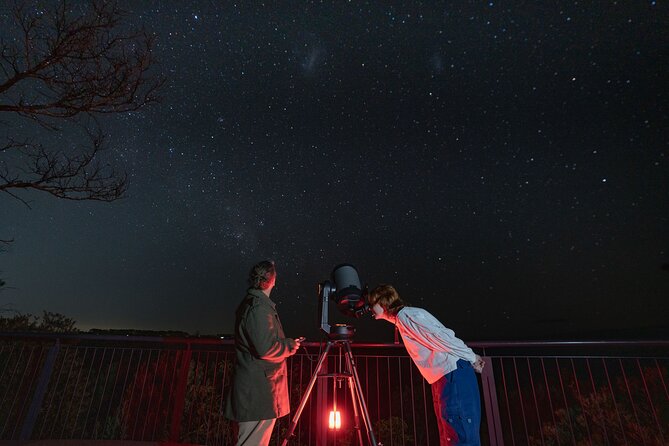
The tour is set up to show a mix of solar system and deep-sky targets, and what you see depends on the time of year and the specific night. The list includes:
- Moon (craters can be visible)
- Planets such as Mars and Venus
- Saturn’s rings
- Jupiter’s moons
- Orion Nebula
- Star clusters
- Double and triple stars
- Deep-sky objects like galaxies and even the Milky Way
What I love here is that the telescope isn’t treated like a magic trick. It’s used with a purpose. You learn where to aim first, and that means you’re not just waiting for someone to point the scope at something and move on.
A couple practical notes for expectations:
- If it’s hazy or the atmosphere is shaky, you might get fewer crisp details. That’s not the guide’s fault; it’s physics.
- Planets and the Moon tend to be the easiest wins. But deep-sky objects (like galaxies and nebulae) can look subtle even through a telescope, so the tour helps you build the skill to notice what’s there.
One of the most memorable moments for people new to the Southern Cross is going from sunset light to true night sky, watching the bright patterns appear. That shift is part of the experience here: your brain starts reading the sky like a map, not like random dots.
Laser Constellations and Q&A With an Astrophysicist
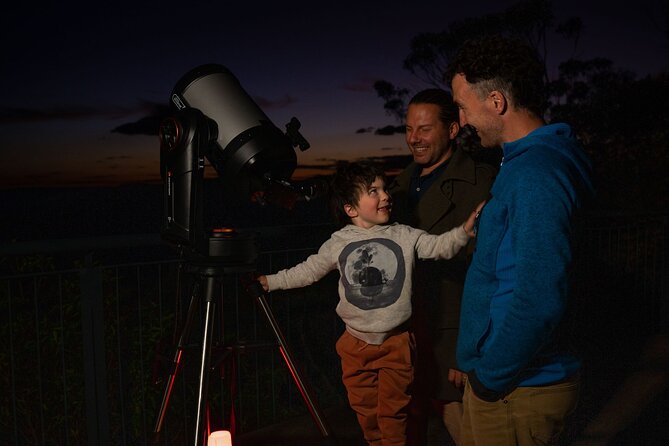
The laser-guided constellation storytelling is the glue that makes the night stick. You’ll learn how to identify constellations with the naked eye first, then the instruments make those lessons sharper.
The astronomy binoculars are also a smart inclusion. Telescopes are great, but binoculars help you keep a wider view in mind while still seeing real structure. If you’ve ever looked up and felt lost, binoculars are the middle step that makes everything feel doable.
Then comes the live question-and-answer time. This is where the experience becomes yours. You can ask practical questions that are really about your own viewing—what to look for next, why something looks brighter, how to tell one object from another.
In nights hosted by guides such as Nathan, Tom, and Alka, the best moments usually came from this back-and-forth: someone spots something, asks about it, and the guide links it right back to the constellation story you just learned.
Language is also a genuine plus. The tour is offered in English and French, so you’re not stuck translating or guessing what’s happening during key parts of the viewing.
Drinks, Comfort, and What to Wear Under Dark Skies
Cold nights can turn a great stargazing session into a stand-and-wince session. This tour helps with that: warm or cold drinks are provided depending on conditions, and hot chocolate is included as a complimentary treat.
What does that mean for you? It means you can stay outside longer without rushing to bundle up in a panic. You’ll be standing around looking up, and that’s where comfort pays off.
I’d also plan to dress for temperature drops. Even if the day feels mild, lookout areas can cool fast once the sun goes down. Bring a warm layer and something for your hands if you tend to get cold easily. You’ll enjoy the viewing more when you’re not distracted by shivering.
And if you’re using a stroller or wheelchair: the tour is wheelchair and stroller accessible, which is a big deal for an activity like this. Service animals are allowed too.
Price and Value: What $60.97 Gets You in the Blue Mountains
At $60.97 per person for about 1 hour 30 minutes, the price isn’t just for standing in the dark. You’re paying for:
- A guide who is an astrophysicist with ten-plus years’ experience
- A state-of-the-art telescope and astronomy binoculars
- Laser-guided constellation storytelling
- Drinks (hot or cold depending on weather)
- Q&A time
- A small group limit (maximum 20)
Compared with DIY stargazing, the value is the instruction plus the gear. If you’ve got a phone app and a faint memory of constellations from school, you’ll still see stars—but you’ll miss the “this is what you’re looking at” part. This tour gives you that context fast.
It’s also a popular slot. On average, the tour is booked about 24 days in advance. That’s not a reason to panic, but it is a hint: if you want a specific night, don’t wait until the last minute.
When Weather Changes the Plan
Good stargazing depends on weather. In bad conditions, you’re given options on the day at 1 pm:
- You can receive a gift voucher/credit to reschedule (transferable and valid for 3 years)
- Or you can choose an alternative 90-min indoor planetarium astronomy tour inside a dome with a projector and cinema experience (this indoor option requires a minimum of 8 guests to run)
No matter which way it goes, the tour is weather-dependent. The key is that you’re not just left hanging with nothing to do—there’s a backup path.
Also note the confirmation timing: you should receive confirmation within 48 hours of booking (if available). And if you don’t get an email at 1 pm on tour day, it means the stargazing tour is confirmed.
Who This Tour Fits Best (and Who Might Skip It)
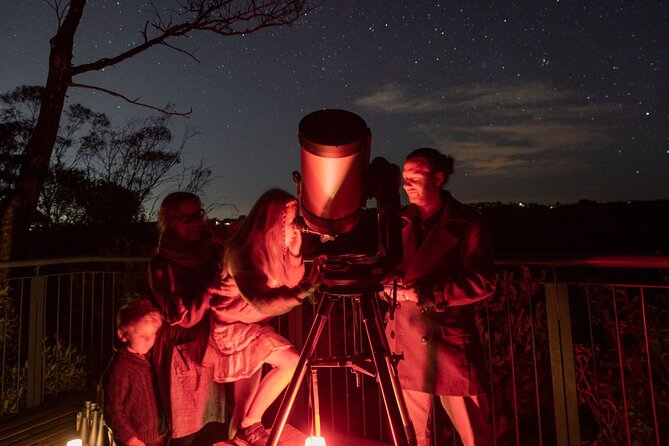
This is a strong fit if you:
- Want to learn the Southern night sky without a big class setup
- Enjoy hands-on guidance with real observing tools
- Prefer short, focused outings rather than half-day tours
- Have kids, beginners, or anyone curious who needs a quick path from confusion to understanding
It also works well if you’re someone who likes asking questions and getting answers tied to what’s in front of you. The format is built for that.
You might consider other options if:
- You’re very attached to the idea of being outdoors the entire time no matter what. Wind and weather can affect the viewing setup.
- You want a strict itinerary with guaranteed specific celestial targets. The tour is explicit that what you see depends on the time of year and the night’s conditions.
Should You Book Blue Mountains Stargazing?
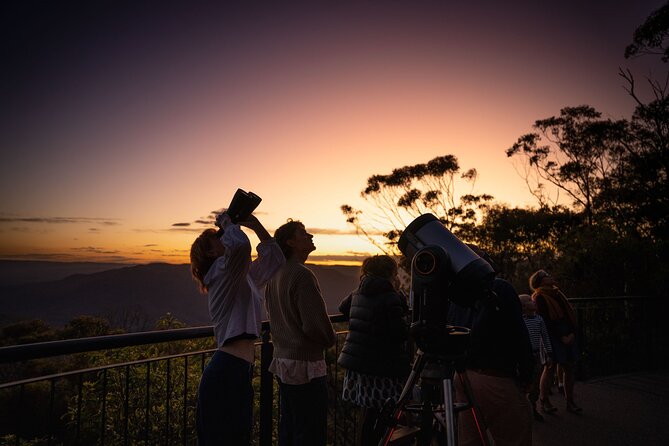
If you want a practical, enjoyable way to see more of the Southern sky, this is an easy yes. You’re paying for pro equipment, clear constellation teaching, and an astrophysicist-led Q&A, all wrapped into a simple 90-minute format based at Wentworth Falls Lookout Track.
Book it if you can dress warmly and you’re flexible about weather. Choose it if you want the moment when the Southern Cross finally clicks in your mind, not just a random look up at stars.
One last piece of advice: come ready to look longer than you think you’ll need. The best part isn’t only what you see through the telescope. It’s the way the sky starts to make sense in between those telescope moments.
FAQ
What is the duration of the stargazing tour?
The tour lasts about 1 hour 30 minutes.
Where does the tour start and end?
It starts at Wentworth Falls Lookout Track in New South Wales and ends back at the same meeting point.
How much does the tour cost?
The price is $60.97 per person.
What can I see during the stargazing session?
You might see the Moon, planets such as Mars and Venus, Saturn’s rings, Jupiter’s moons, the Orion Nebula, star clusters, double and triple stars, deep space objects like galaxies, and the Milky Way. What’s visible depends on the night and time of year.
Are telescopes and binoculars provided?
Yes. The experience includes a professional-grade telescope and astronomy binoculars.
What drinks are provided?
Warm or cold drinks are provided depending on weather conditions, and hot chocolates are listed as complimentary.
Is the tour wheelchair and stroller accessible?
Yes. Wheelchair and stroller access is available.
What happens if the weather is bad?
On the day at 1 pm, you can either receive a gift voucher/credit to reschedule (transferable and valid for 3 years) or attend an indoor planetarium astronomy tour if it runs (minimum of 8 guests needed). No refund is offered in case of bad weather.
Is the tour refundable if I cancel?
No. This experience is non-refundable and cannot be changed for any reason. If you cancel or request an amendment, the amount you paid will not be refunded.