REVIEW · BRISBANE
Sunshine Coast: Scuba Dive the Ex-HMAS Brisbane Ship Wreck
Book on GetYourGuide →Operated by Sunreef Mooloolaba · Bookable on GetYourGuide
A steel ghost ship waiting underwater. On the Sunshine Coast, you’ll explore the Ex-HMAS Brisbane wreck—an enormous decommissioned destroyer now turned reef—about 2.9 nautical miles offshore. What I like most is the sheer wreck size right in front of you and the usual 15–20m visibility, plus lots of critters living on her. One possible drawback: the water can be seriously cold, and 5mm suits may not feel like enough in winter or if you run cold.
You’ll spend about 3 hours in the water during a 5-hour day, guided by qualified PADI instructors or divemasters. The setup is relaxed too, since the operator uses two midship moorings so you can cover the full ship without feeling rushed.
What makes this trip stand out is access. You don’t just look at the outside—you can enter the engine room and visit the control room, where the kill switches are still intact. That said, you’ll need a torch for any interior penetration, and there’s a charge if you don’t bring one.
In This Review
- Key things to love about the Ex-HMAS Brisbane experience
- Why the Ex-HMAS Brisbane wreck is such a big deal
- Getting to the wreck: short boat time from Sunreef Mooloolaba
- Your route underwater: outside hull, engine room, and control room
- Marine life: the wreck as a living neighborhood
- Water clarity, swell, and the real cold-water checklist
- Price and value: what $133 buys you (and what costs extra)
- Who should book this wreck trip (and who shouldn’t)
- Practical tips to make it smoother (and warmer)
- Final call: should you book the Ex-HMAS Brisbane wreck trip?
- FAQ
- FAQ
- What’s the duration and price of the Ex-HMAS Brisbane experience?
- Where does the trip start?
- How far offshore is the Ex-HMAS Brisbane wreck?
- Do I need scuba certification to participate?
- Is scuba equipment included in the price?
- Do you provide permits?
- Is a torch required for going inside the wreck?
- What water temperatures should I expect?
- Is the experience suitable for pregnant women?
Key things to love about the Ex-HMAS Brisbane experience
- World-class wreck site: a guided-missile destroyer now serving as an artificial reef
- Two-moored, two-session plan: you can see more of the full hull without sprinting
- Outside + inside access: engine room and control room are part of the story
- Consistent clarity: average visibility around 15m, often 20m or more
- Marine life on the move: turtles, eagle rays, rays, kingfish, grouper, and corals
- Real cold-water reality: bring proper thermal protection and expect chill in winter
Why the Ex-HMAS Brisbane wreck is such a big deal
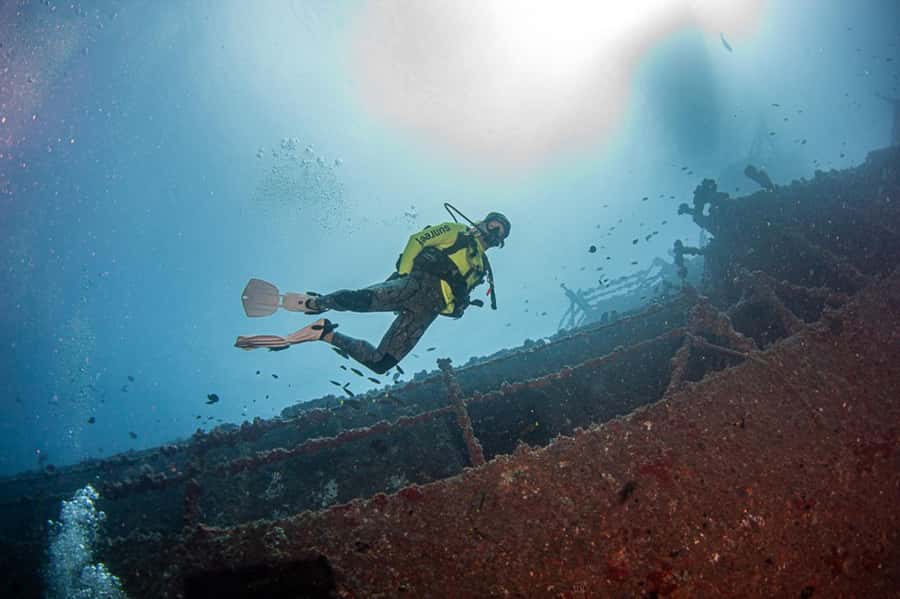
The Ex-HMAS Brisbane is the kind of wreck that gets talked about because it feels complete. She sits upright, with about 15 meters of water over the forward decks and roughly 18 meters over the stern, so you’re not stuck staring at a small portion of wreckage from one angle.
This ship also has a purpose now. The vessel has become a world-class artificial reef and diving site, and it’s operated under the Queensland Government’s environmental licensing for trips to the former HMAS Brisbane. Translation for you: this isn’t just “wreck for wreck’s sake.” The place is set up so marine life can keep establishing, while divers can safely explore what’s there.
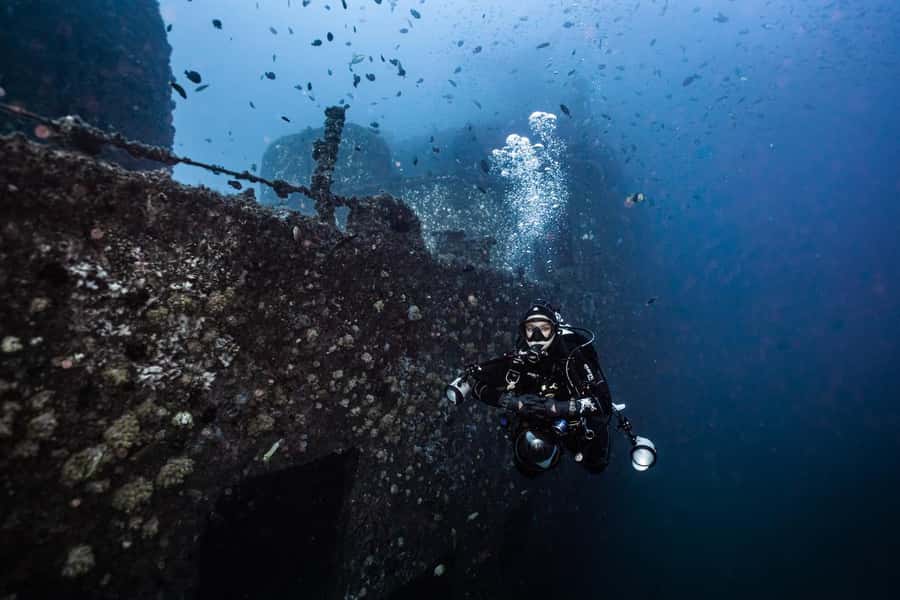
And yes, she’s big. Even when you’re only cruising the outside, the scale hits you fast: hull plating, deck shapes, and structure that makes the wreck feel like a real ship you could almost walk onto—if you had gills and a strong torch.
Finally, the environment matters. Water clarity is typically good and swell is usually minimal, which makes the underwater experience feel calm and controlled instead of chaotic.
You can also read our reviews of more scuba diving tours in Brisbane
Getting to the wreck: short boat time from Sunreef Mooloolaba
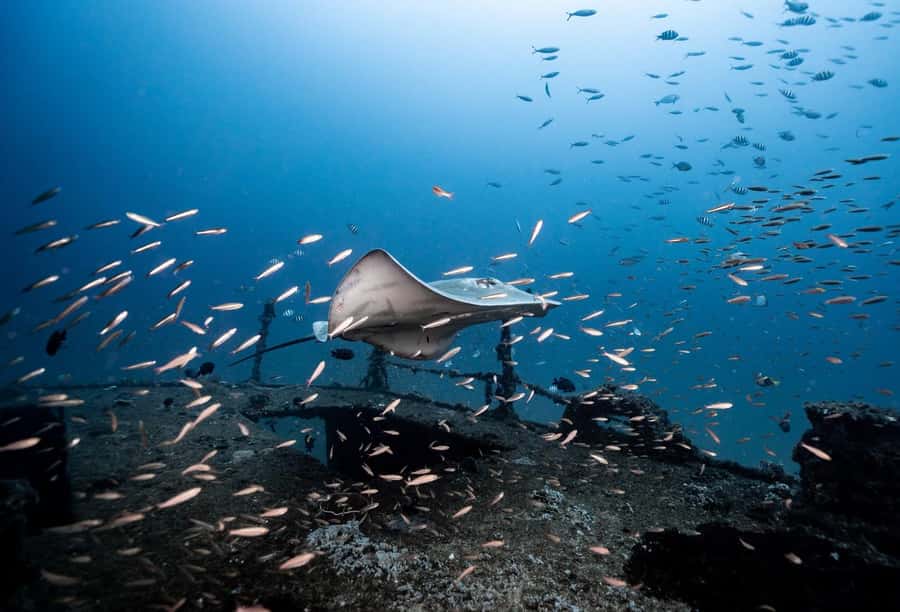
You start at Sunreef Mooloolaba, do a short safety briefing, then head out by boat for about 30 minutes. The good news is the site isn’t far. The wreck sits 2.9 nautical miles offshore, so you’re not spending half your day battling waves just to get to the steel.
The rest of your time is built around underwater exploring with a comfortable rhythm. The operator uses two midship moorings, which helps the team manage the route and keeps you from doing one long, stressful trek across the entire structure.
Why this matters: wreck dives can turn into navigation marathons. Here, the mooring strategy helps you visit different parts of the ship in a way that feels organized, with time to look and time to breathe.
On a 5-hour total schedule, you’re also less likely to end up rushed. That’s a quality-of-life thing, especially if you’re doing penetrations or if you like to take your time observing marine life.
Your route underwater: outside hull, engine room, and control room
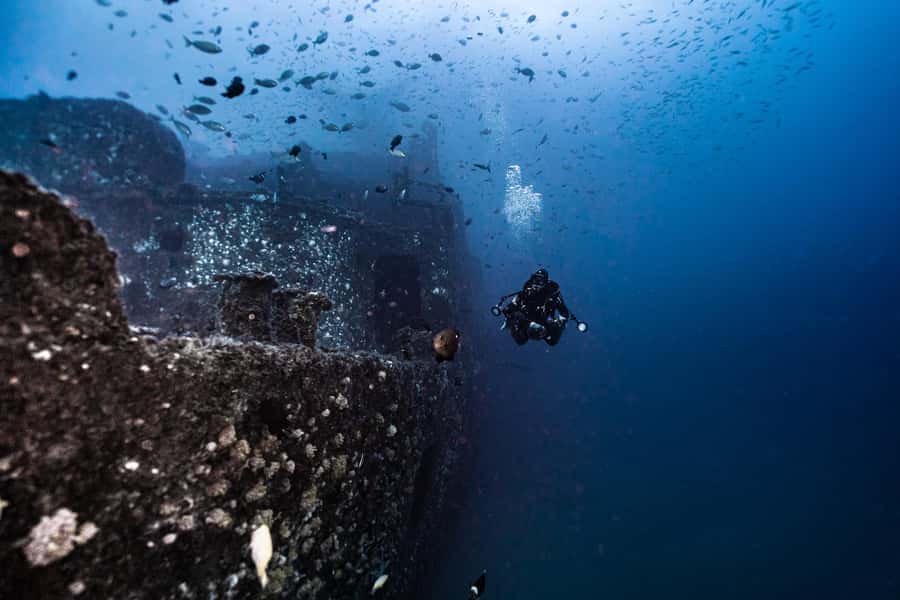
This experience is set up for both the “wow, that’s a wreck” moment and the “wait, I can go inside?” moment.
You’ll typically start by looking at the outside and using the ship’s geometry as your landmark. The wreck’s size means you can do a full circuit of features—bow sections, deck structures, and the way marine life has moved in over time. The hull creates a maze of angles that makes it easy to keep your eyes busy.
Then you can go deeper into the ship itself. The engine room and control room are real targets, not just optional bonus points. The control room is especially memorable because the kill switches are still intact. That gives the space a “time capsule” feeling—you’re looking at functional hardware, not just random scars.
Here’s your practical warning: penetration entry requires a diving torch. If you don’t have one, there can be an extra charge to use one. And because torch light affects comfort and buoyancy work, it’s worth arriving prepared.
Also, plan for temperature and time. You’re working through different parts of the wreck, and interior spaces tend to feel colder than open water. If you run cold, keep your warm gear strategy front and center.
Marine life: the wreck as a living neighborhood
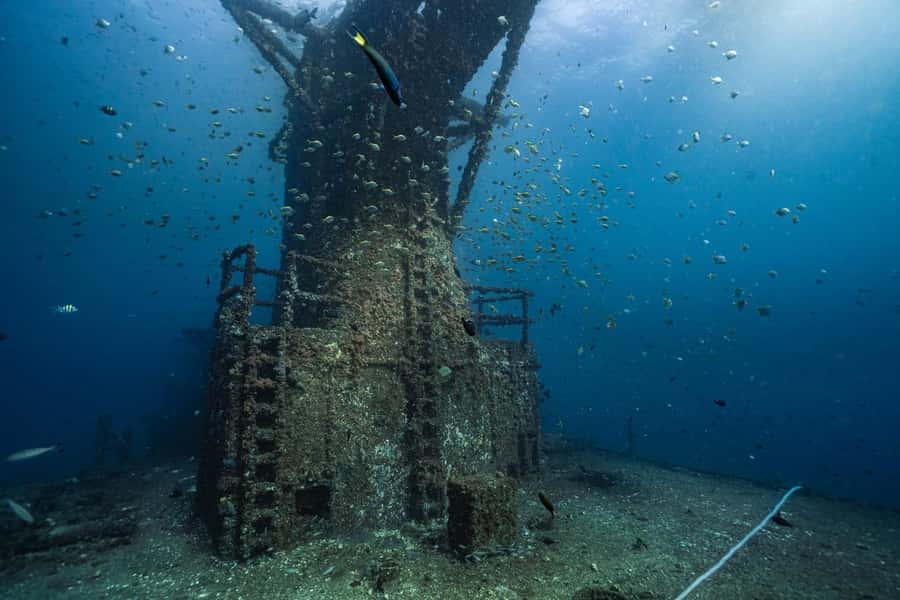
The Ex-HMAS Brisbane isn’t just a structure. It’s a hangout spot for lots of creatures, from big swimmers to small reef residents.
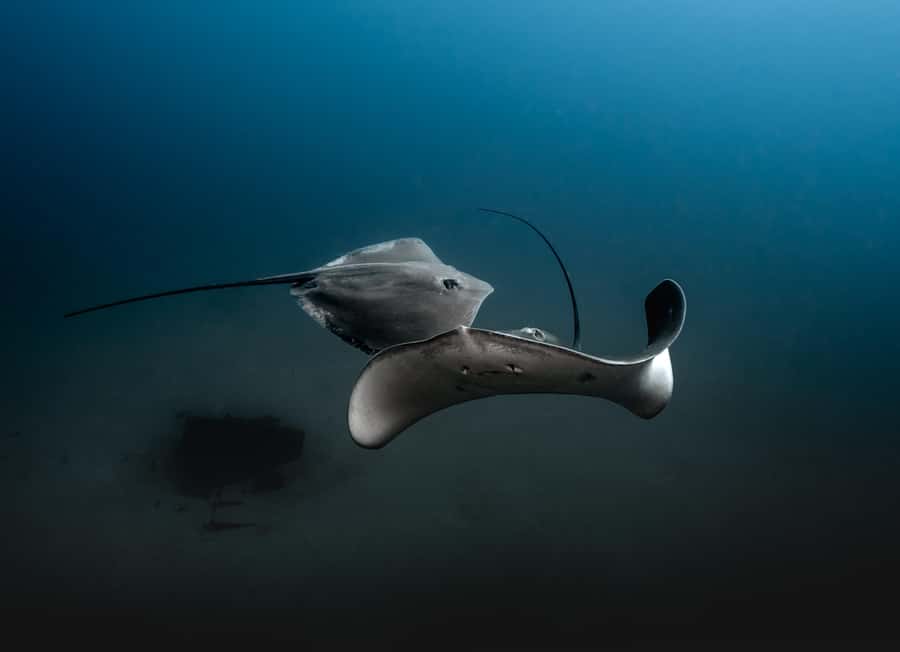
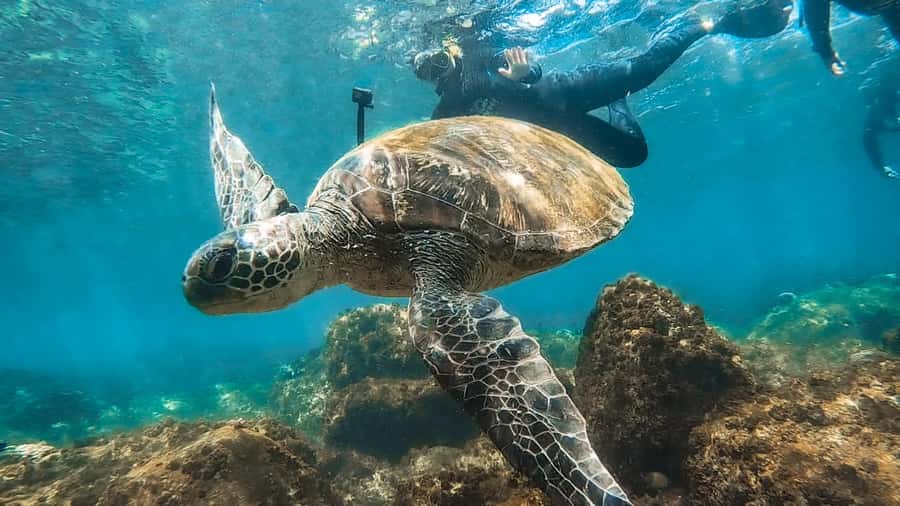
What you might see includes large bull and eagle rays, plus eagle rays cruising between funnels. Turtles are also known to take residence—one has been seen on the aft funnel.
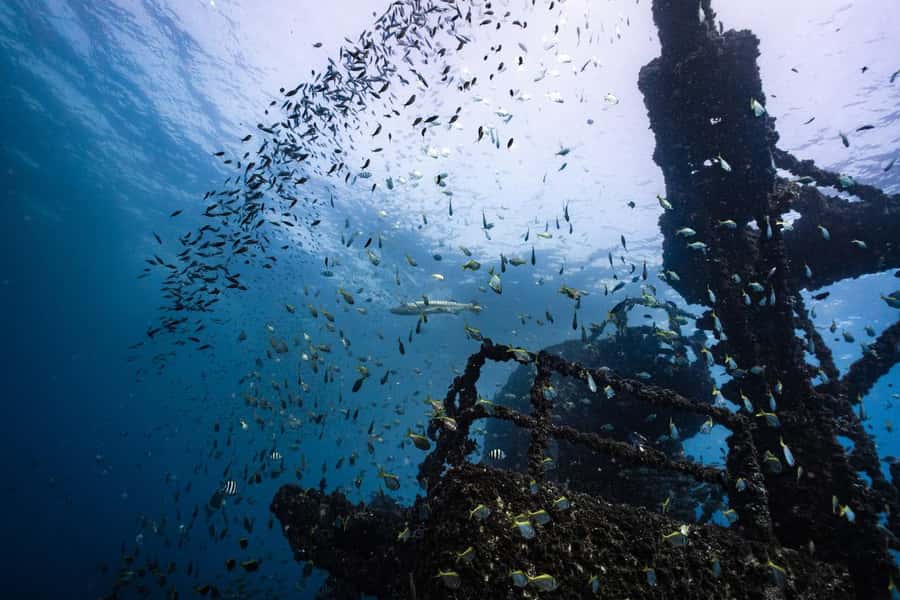
There’s also a clear pattern of predator activity around the ship. A resident school of yellow-tailed kingfish has been seen buzzing baitfish schools around the wreck. If you’re lucky, you’ll spot up to 10 giant Queensland grouper off the bow at once.
Smaller reef life rounds it out in a very “you can slow down” way. Local inhabitants listed include angler fish, lionfish, blennies, nudibranchs, sea hares, and squid. There are also schools of juvenile red emperor and snapper.
And corals are making steady progress. You can expect a huge number of soft corals, and hard corals that are getting established.
If you like wrecks for macro life and behavior, this one fits. The ship creates surfaces and shelter, so you can look up for rays and turtles, then look closer for critters on the structure.
Water clarity, swell, and the real cold-water checklist
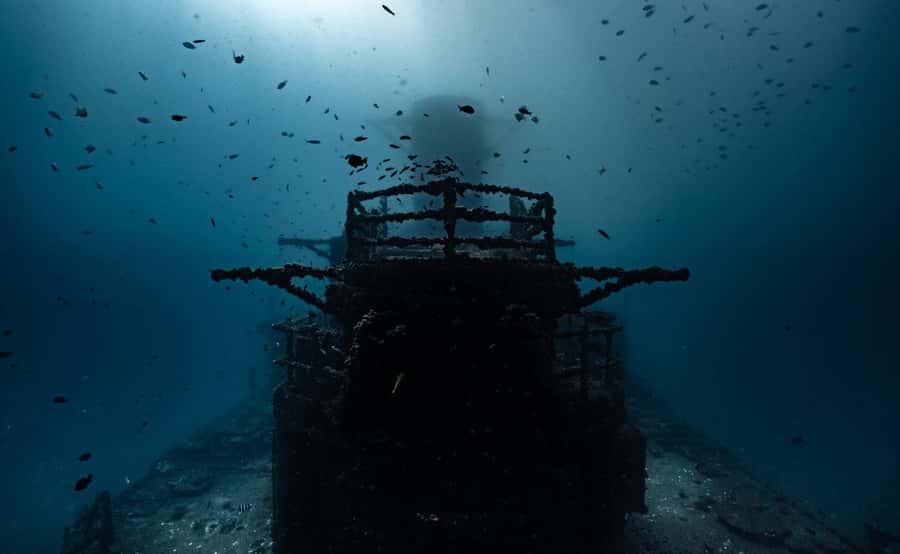
Conditions are a major part of whether a wreck trip feels effortless or miserable.
Expect consistent good water clarity, with visibility averaging around 15 meters and up to 20 meters or more not uncommon. Minimal swell helps too. That combination usually means you can focus on buoyancy and exploring, instead of constantly fighting the water.
Temperature is the part that can surprise people. Water temps range from 17°C in winter to as warm as 27°C in summer. That’s a big swing.
One review experience highlights the reality: even with a 5mm wetsuit, the water was extremely cold, and divers were shivering—though the crew had hot soup ready after the session, which genuinely helps you warm up fast.
Another review had the opposite scenario temperature-wise (around 22°C), but still found the thermal setup lacking with a 5mm wetsuit and open fins that caused blisters and skin injuries. Their takeaway was clear: the equipment fit and thermal layering matter, not just the water reading.
So here’s the practical approach for you:
- If you run cold, consider thicker thermal protection than you think you need, especially for winter months.
- Bring or hire well-fitting fins (open-heel designs may rub if you aren’t set up for them).
- If you can, use thermal accessories like a hood and gloves—extra warmth can turn a miserable trip into an enjoyable one.
After you surface, you’ll have light snacks and the crew experience includes warming-up support (like hot soup on at least one trip), which is a nice end-of-day reset.


Price and value: what $133 buys you (and what costs extra)
At $133 per person, you’re paying for a short boat day, permits, and guided supervision—plus the access to a standout wreck that’s built for an artificial-reef underwater experience.
What’s included:
- Return boat trip
- Light snacks
- Marine Park permits
- Qualified PADI instructors or divemasters to guide you
What’s not included:
- Scuba equipment
- Underwater camera (if you want one)
- Hotel pickup
- A torch for penetration entry (if you need one, there may be an extra charge)
- Any equipment hire is typically an extra payable on the day, even if it’s available and in excellent condition
So is it good value? For this specific wreck, yes—because you’re paying for more than a generic open-water check. You’re getting guided structure access to the full ship, including interior areas, in consistent conditions with decent visibility.
If you already own good scuba gear and a torch, your spend stays closer to the base price. If you need rentals and add-ons, build a little buffer into your budget.
Who should book this wreck trip (and who shouldn’t)
This isn’t for first-timers.
You must hold a current scuba certification, or at least have open-water certification, and you need to have been scuba diving within the past two years. Bring your certification card (or digital card) and be ready to sign a participant statement before getting in the water.
You also need the physical reality of cold water and controlled buoyancy. Interior exploration adds another layer of technique—so if you’re not comfortable with that, you may find the experience stressful.
Not suitable:
- Pregnant women are not allowed to participate
- Divers without certification shouldn’t book
It’s also a great fit if you enjoy the full wreck experience: outside structure, lots of marine life, and the chance to see the engine room and control room hardware.
Practical tips to make it smoother (and warmer)
You’ll be happiest if you treat this as a planning trip, not just a booking.
Bring:
- Swimwear and a towel
- Biodegradable sunscreen
- Your scuba certification card (digital or physical)
- Your logbook (a dive log is specifically mentioned)
- Your thermal plan
If you’re renting gear, confirm what you’ll get is comfortable for long sessions. One review mentioned issues with fins and skin injury when the setup wasn’t right, so fit matters.
Torch: for any interior penetration, you need a torch. If you don’t have one, ask ahead if possible, or expect an extra charge on the day.
And about water on board: one review said there was chips and coffee, but no water. That’s not a guarantee for every trip, but if you like staying hydrated, bring your own bottle if allowed—or at least plan for it.
Finally, be ready for temperature swings. Even with winter-to-summer ranges, you should assume it can feel cold once you’re in the water and moving slowly in or near shaded interior spaces.
Final call: should you book the Ex-HMAS Brisbane wreck trip?
If you want a wreck that feels like a real ship, plus marine life that actually lives on it, this is a strong pick. The combination of consistently good visibility, minimal swell, and the chance to see both outside sections and interior spaces makes the experience feel like more than a checkbox.
I’d book it if:
- you’re properly certified and current
- you enjoy wreck structure and marine life observation
- you’re comfortable with interior exploration and you can handle cold-water conditions
I’d think twice if:
- you get cold easily and rely on a thin 5mm kit year-round
- you don’t have a torch for penetration entry
- you don’t feel confident with your equipment fit (fins especially)
If you match those points, you’ll likely come away remembering the scale of the Ex-HMAS Brisbane and the living “neighborhood” of creatures that now call her home.
FAQ
FAQ
What’s the duration and price of the Ex-HMAS Brisbane experience?
The experience runs for about 5 hours and costs $133 per person.
Where does the trip start?
The meeting point is Sunreef Mooloolaba on the Sunshine Coast.
How far offshore is the Ex-HMAS Brisbane wreck?
The wreck is about 2.9 nautical miles offshore.
Do I need scuba certification to participate?
Yes. Everyone must hold a current scuba diver certification, or at least be open-water certified, and you need to have been scuba diving within the past two years.
Is scuba equipment included in the price?
No. Scuba gear is not included, but it can be hired for an additional cost on the day. Equipment is described as being in excellent condition.
Do you provide permits?
Yes. Marine Park permits are included.
Is a torch required for going inside the wreck?
Yes. A diving torch is required for penetration entry, and an extra charge may apply if needed.
What water temperatures should I expect?
Water temperatures range from 17°C in winter to 27°C in summer.
Is the experience suitable for pregnant women?
No. Pregnant women are not allowed to participate.