REVIEW · SYDNEY
Sydney Walking Tour including The Rocks (small group)
Book on Viator →Operated by Sydney's Wonders Tours · Bookable on Viator
Sydney’s past is hiding in plain sight. This small-group walk stitches together Hyde Park and The Rocks with easy, focused stops and stories you can actually remember. You’ll move through cathedral views, convict walls, legal precinct landmarks, and laneways that still feel like they belong to another century.
Two things I really like: the small group limit (16 people) keeps it conversational, and the route is packed with major sights without turning into a museum marathon. One thing to keep in mind: it’s still a 2.5-hour walk, so plan for crowds on footpaths and bring sun protection.
In This Review
- Quick hits before you go
- Start at Hyde Park North, finish at Campbells Cove
- Small group size and walking pace: how 2.5 hours works
- Hyde Park to St Mary’s Cathedral: civic Sydney before the old streets
- Hyde Park Barracks, Queen’s Square, and the Rum Hospital deal
- Macquarie Street to the Botanic Garden: power, horses, and an Aboriginal connection
- Macquarie Place Park to Customs House: from public space to trade
- The Rocks lanes in order: Suez Canal, Nurses Walk, and George Street
- Campbells Cove payoff: Opera House and Harbour Bridge views
- Price and value: is $32.28 worth it?
- Who should book this Sydney Walking Tour?
- Should you book it: my decision guide
- FAQ
- How long is the Sydney Walking Tour including The Rocks?
- How much does it cost?
- Where do I meet, and where does the tour end?
- What time does the tour start?
- How big is the group?
- Is the walking difficult?
- Are tickets and admissions included?
- Is free cancellation available?
Quick hits before you go
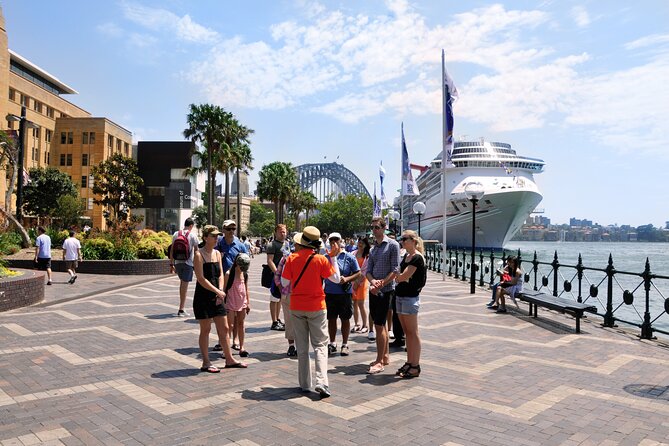
- 16-person max means you’re not yelling over a crowd.
- Most stops are free to view, so your money goes to the storytelling and pacing.
- Hyde Park Barracks (UNESCO) gives you the convict-to-immigration context early.
- The Rocks laneways like Suez Canal and Nurses Walk show history at street level.
- Ends at Campbells Cove for a clean payoff with Opera House and Harbour Bridge views.
- Guide names you’ll hear often include Lily, plus Leilani and Lele, praised for clear explanations and smart heat pacing.
Start at Hyde Park North, finish at Campbells Cove
This tour is built around a simple flow: you begin inland in Hyde Park, then gradually work your way toward the historic core of Sydney and end at Circular Quay-area harbour views. The meeting point is the Archibald Memorial Fountain in Hyde Park North (110 Elizabeth St). The end is Campbells Cove (4 Circular Quay W, The Rocks), which is a smart place to stop because you can hop onto public transport or grab a meal nearby.
Starting in Hyde Park also helps. It’s a green reset before you get into denser, older streets. And ending at Campbells Cove gives you a visible “yes, I get it now” moment: you’re right where the city’s big harbour icons sit.
You can also read our reviews of more walking tours in Sydney
Small group size and walking pace: how 2.5 hours works
The tour is about 2 hours 30 minutes. That’s long enough to cover serious ground, but not so long that you feel trapped. The route is mostly an on-foot orientation, with short stop-and-look moments that keep you moving without feeling rushed.
Recent tour feedback highlights good pacing, and especially the way guides manage hot weather by finding shade when possible. One person even noted the walk felt mostly downhill, which can make the second half easier on your legs. Still, don’t treat that as guaranteed—Sydney sidewalks can be uneven and The Rocks streets can include steps and tight turns.
What to bring is straightforward:
- Comfortable walking shoes
- Sunscreen and a hat (the route includes open-sun stretches)
- Water, because you’ll be outside for most of it
If you have moderate mobility limits, this is the kind of walk where you’ll want to be honest with yourself about distance and time on foot. The tour does note a moderate physical fitness level requirement, so plan accordingly.
Hyde Park to St Mary’s Cathedral: civic Sydney before the old streets
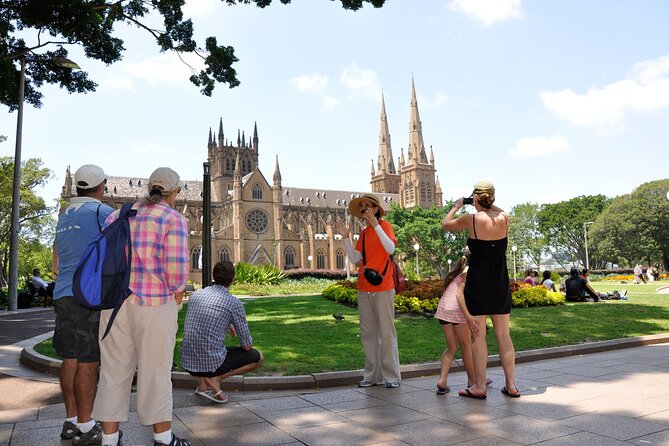
You start at Hyde Park, and not just as a quick photo stop. Hyde Park is the oldest park in Australia, and it works as a calm introduction to city life—lawns, statues, and that feeling of space in the middle of downtown. It’s a good place to learn how Sydney grew outward from planned public spaces.
Then you shift to St. Mary’s Cathedral, a Gothic-style landmark that looks instantly familiar if you’ve seen European cathedral architecture. The guide’s job here is to connect the building to Sydney’s Catholic heritage, so you’re not just admiring stonework—you’re placing it in the story of the city’s institutions.
These early stops matter because they set the tone. You’re about to spend the rest of the morning on older, more complicated Sydney layers, including convict-era hardship and later immigration. Getting the civic context first helps it all click.
Hyde Park Barracks, Queen’s Square, and the Rum Hospital deal
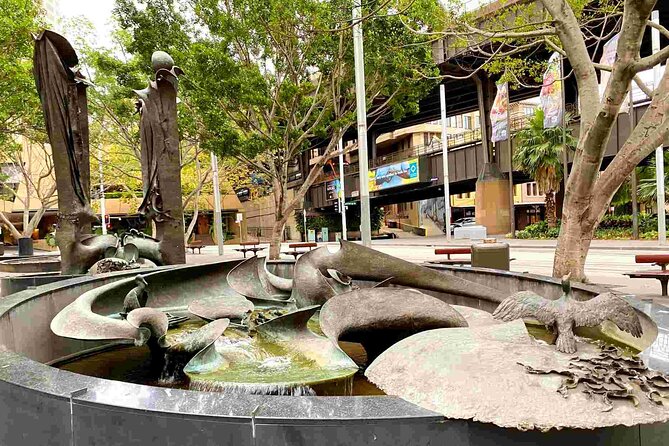
One of the most important segments starts with Hyde Park Barracks, a UNESCO World Heritage site. You’ll learn how it functioned as a convict prison and later as an immigration depot. That timeline is the point: Sydney’s early population wasn’t a clean, orderly origin story. It was a mix of punishment, work, and forced movement, followed by new arrivals under government systems.
Next comes Queen’s Square, which pulls you toward Sydney’s legal precinct. You’ll see the Supreme Court and Law Courts building area and learn how this part of the city ties law, power, and public administration together. It’s a quick stop, but it’s one of those “now I see why this square matters” moments.
Then you visit the Sydney Eye Hospital, also linked with the story of the Rum Hospital. The clue is in the origin story: it was built through a unique deal involving rum. It’s a memorable reminder that early Sydney’s systems often grew out of trade, temptation, and practical bargains—not just ideal policy.
If you’re the type of person who likes cause-and-effect history, this section delivers. You’ll see how buildings reflect the city’s economy, politics, and social control.
Macquarie Street to the Botanic Garden: power, horses, and an Aboriginal connection
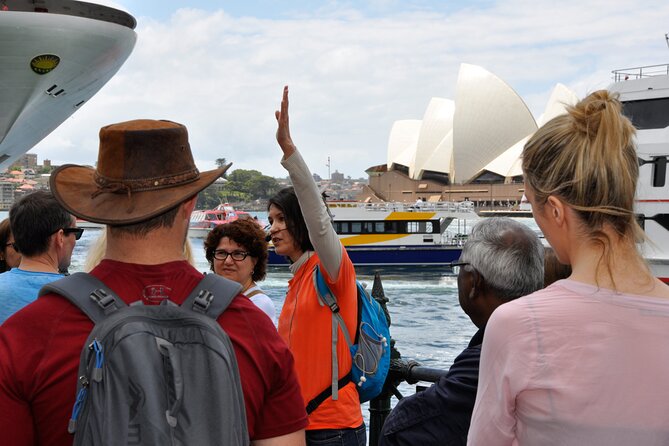
As you walk along Macquarie Street, the theme shifts to government and authority. This is where you learn the meaning of “official Sydney”: Parliament House and other buildings tied to administration shape the look and feel of the area. It’s not just a street name—it’s a corridor of power that explains how decisions were made and enforced.
You then head to the Royal Botanic Garden Sydney, where the emphasis includes Aboriginal connection and plant life from Australia and around the world. It’s a breather stop too, because gardens change your pace and your attention. Even if you only get a few minutes, it helps reset you before the more intense history of The Rocks.
From there, you reach the Sydney Conservatorium of Music, housed in historic Old Government Stables. The story here is the horses and carriages tied to the governor’s world. It’s a small architectural transformation lesson: how buildings shift roles over time without losing their original bones.
Then the tour pauses at The Edge of the Trees, an artwork that reflects the intersection of Aboriginal and European cultures. This stop is valuable because it’s not only about a colonial timeline. It’s about how that relationship continues to be acknowledged through public art.
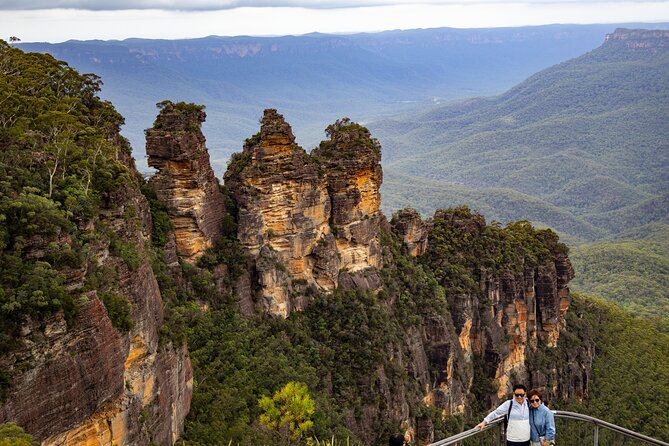
- Blue Mountains Small-Group Tour from Sydney with Scenic World,Sydney Zoo & Ferry
★ 5.0 · 3,709 reviews

Macquarie Place Park to Customs House: from public space to trade
Macquarie Place Park is small, but historically important. It’s described as Sydney’s first public space, and you’ll get a sense of how early city planning shaped daily life. You can also look for artifacts and details that make the place feel like more than a park with benches.
Then you move to Customs House, the trade hub of the city. The main point you’ll take away is that Customs House oversaw ships and goods as they arrived. It’s one of the reasons Sydney became the trading node it was—movement in, taxes out, commerce everywhere.
This segment works well because it links the “big institutions” you just saw with the street-level reality of The Rocks. Trade brought people and money. It also brought stress, crime, and conflict. That’s the setup for what comes next.
The Rocks lanes in order: Suez Canal, Nurses Walk, and George Street
Once you step into The Rocks, the story moves from institutions to street life. You’ll walk cobblestone lanes and sandstone streets tied to convict-era life. The Rocks is described as a living museum, and the point isn’t to treat it like a theme park. It’s to see how layers remain visible in the built environment.
A standout stop is Suez Canal, a narrow laneway tied to the underworld side of history. The name alone signals trouble, and the guide’s job is to connect it to the kinds of criminals and shadowy characters that used these spaces.
Then you head to Nurses Walk, where the focus turns to early nurses and the challenges faced by pioneering women. That shift is important. Too many “old Sydney” walks over-focus on governors and convicts. Here you also get people who worked in care roles, and that makes the neighborhood feel more human.
You’ll also pass by Playfair Street, Argyle Street, and George Street. These streets show how the area changed over time—from commerce and activity in earlier days to later entertainment and modern life. Even with short stops, you learn what each street is for, historically and today, so you can walk through The Rocks with a mental map instead of random wandering.
One practical tip: these laneways are charming, but they can also be crowded and a bit stop-and-go. A small group helps here because you keep momentum without getting lost in a pack.
Campbells Cove payoff: Opera House and Harbour Bridge views
The final stop is Campbells Cove, a waterfront ending point that’s ideal after hours on older streets. You get harbour views that include the Opera House and Harbour Bridge. Even if you’ve seen them from elsewhere, the angle and the sense of place help cement what you’ve been learning.
This is also a smart place to continue your day. The location puts you close to Circular Quay connections and to places in The Rocks where you can eat or explore further at your own pace. If you did this on your first day, this ending gives you exactly what you need: you can decide what to revisit with confidence.
Price and value: is $32.28 worth it?
At $32.28 per person for roughly 2.5 hours, the value is mostly about two things: guided context and route efficiency. Many stops are free to view, so you’re paying for the interpretation, the order, and the small-group advantage rather than entry fees.
Is it a “see everything” tour? No. It’s not trying to replace museum time. The tradeoff is tight storytelling and a strong orientation to major parts of Sydney: Hyde Park, key civic buildings, and The Rocks street-level history, ending at harbour icons.
If you want a quick, guided way to understand what you’re looking at—before you spend your next days choosing museums, walks, or neighborhoods—this is priced to fit that goal.
Who should book this Sydney Walking Tour?
Book it if:
- You want a first-day orientation to Sydney’s layout and identity
- You like your history tied to real buildings and streets, not just dates
- You prefer a small group and a guide who can keep a conversation pace
Skip it (or pick a different style) if:
- You want long inside visits and museum time
- You have limited ability for prolonged walking on uneven sidewalks
- You’re hoping for lots of ticketed entry stops, since many highlights are exterior viewing and street-level explanation
Should you book it: my decision guide
If your goal is to understand Sydney and The Rocks fast, with a guide you’ll actually hear, this is a solid choice. The small group size and the way the route progresses from Hyde Park institutions to The Rocks laneways makes the city feel connected. Add in the strong ending at Campbells Cove, and you get a tour that finishes with both story and view.
If heat or mobility is your concern, plan for sun protection and take it slow where you need to. Otherwise, at this price, it’s an efficient, memorable way to start your Sydney stay on the right foot.
FAQ
How long is the Sydney Walking Tour including The Rocks?
It’s about 2 hours 30 minutes.
How much does it cost?
The price is $32.28 per person.
Where do I meet, and where does the tour end?
You meet at Archibald Memorial Fountain in Hyde Park North (110 Elizabeth St). The tour ends at Campbells Cove (4 Circular Quay W, The Rocks).
What time does the tour start?
The start time is 10:30 am.
How big is the group?
This tour is limited to a maximum of 16 travelers.
Is the walking difficult?
It’s listed as requiring a moderate physical fitness level. The tour is not positioned as extremely strenuous, but it does involve a lot of walking.
Are tickets and admissions included?
The tour notes free admission for the stops listed. You’ll also receive a mobile ticket.
Is free cancellation available?
Yes. You can cancel up to 24 hours in advance for a full refund.


More Walking Tours in Sydney


More Tours in Sydney
- Blue Mountains Small-Group Tour from Sydney with Scenic World,Sydney Zoo & Ferry
★ 5.0 · 3,709 reviews
More Tour Reviews in Sydney
- Blue Mountains Small-Group Tour from Sydney with Scenic World,Sydney Zoo & Ferry
★ 5.0 · 3,709 reviews