REVIEW · HOBART
Tasman Island Cruises and Port Arthur Historic Site Day Tour from Hobart
Book on Viator →Operated by Pennicott Wilderness Journeys · Bookable on Viator
Tasmania has a way of stealing your attention fast. This day tour pairs a 3-hour Tasman National Park cruise with Port Arthur Historic Site for a rare land-and-sea hit from Hobart. You get round-trip transfers, included food, and time to look up at the cliffs and down at the convict ruins without planning a thing.
I really like how the day is built around the scenery, not just checklists. The open-air cruise gives you good sightlines for cliffs, caves, and wildlife—plus onboard commentary to help you read what you’re seeing. I also appreciate that meals are handled for you: coffee or tea up front and an included lunch later, so your timing stays smooth.
One thing to think about before you book: the boat ride can be cold and windy, and the water can roll a bit. If you’re prone to motion sickness, plan for that (and take the offered ginger tablets), and dress like you mean it—there are jackets, but you’ll still feel the weather.
In This Review
- Key things to know before you go
- Hobart to Tasman Peninsula to Port Arthur: a long day that stays organized
- The 3-hour Tasman National Park eco-cruise: cliffs, caves, and wildlife chances
- Open-air seating is great, but it’s not a spa
- Safety and comfort on the water: life jackets, jackets, and seasickness reality
- Morning tea and lunch: included food that keeps the day moving
- Port Arthur Historic Site in three hours: what you can realistically see
- Guides on the day: the local personality effect
- Price and value: is $236.69 fair for this mix of cruise + UNESCO entry?
- Who this tour suits best (and who might want a different option)
- Should you book the Tasman Island Cruises and Port Arthur day tour?
- FAQ
- How long is the Tasman Island Cruises and Port Arthur Historic Site day tour?
- What time does the tour start from Hobart?
- Does this tour include a cruise and Port Arthur entry?
- Is lunch included?
- Are there jackets provided for the boat ride?
- Does the tour operate in bad weather?
- Is hotel pickup included?
- How big is the group?
- Are tickets mobile?
- Is there time to see wildlife during the cruise?
Key things to know before you go
- No driving on your part: round-trip bus transfers from Hobart keep the day low-stress.
- A real 3-hour cruise: open-air tiered seating helps everyone see the cliffs, caves, and wildlife.
- Warm-and-cold weather setup: full-length waterproof, windproof jackets are provided, but bring layers anyway.
- Port Arthur gets a full block of time: you’ll have three hours on the UNESCO site, including lunch time.
- Small-ish group: capped at 40 travelers, which makes the day feel less crowded.
- Your sea legs matter: some passengers get motion discomfort depending on conditions.
Hobart to Tasman Peninsula to Port Arthur: a long day that stays organized
This is a 10 hours 30 minutes type of day—roughly a full day out of Hobart. The big win is that you’re not piecing together transport. You check in at Pennicott Wilderness Journeys at Franklin Wharf (Dock Head Building) and the tour runs from the start time in the morning, with the cruise and Port Arthur visit following in a steady rhythm.
Expect a guided bus ride that handles the big geographic jump: Hobart to the Tasman Peninsula area, then onward to Port Arthur. You also stop for morning tea at a local cafe before the water part of the day. That timing matters because it helps you avoid showing up underfed and rushed when the boat day starts.
The group size cap (up to 40 travelers) is also part of the “why it works” equation. Smaller groups tend to move more smoothly—especially when you’re boarding, finding seats, and keeping everyone together for the land transfer afterward.
You can also read our reviews of more historical tours in Hobart
The 3-hour Tasman National Park eco-cruise: cliffs, caves, and wildlife chances
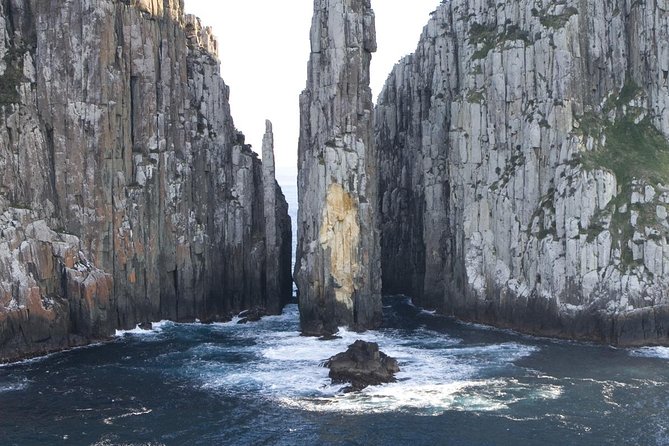
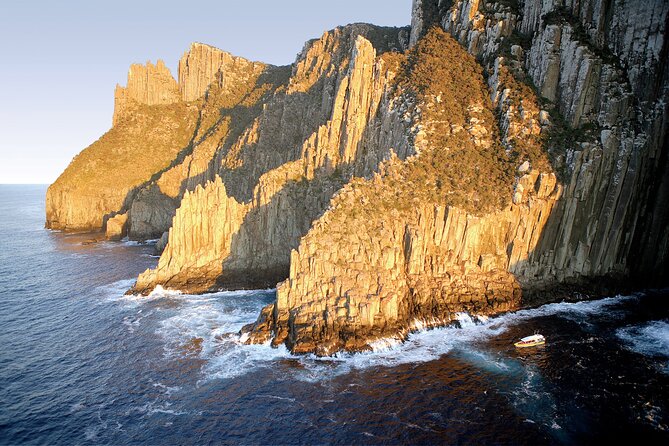
The cruise is the star of the show, and it’s positioned as an eco-cruise through the Tasman National Park coastline. You board for a three-hour wilderness cruise along the rugged stretch from Eaglehawk Neck around toward Port Arthur. It’s not a quick “drive-by” boat moment—it’s long enough to settle in and start spotting the details.
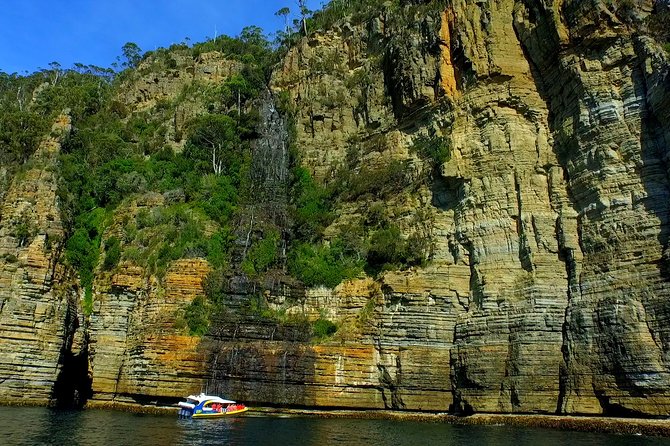
From the boat, you’ll look up at towering vertical sea cliffs and pass sea caves. There’s onboard interpretation, so you’re not just staring at rock and hoping it means something. The guide explains the natural environment and history tied to the coastline and helps you connect what you see—cliff face, cave openings, and the general shape of the coast—to why this area is so special.
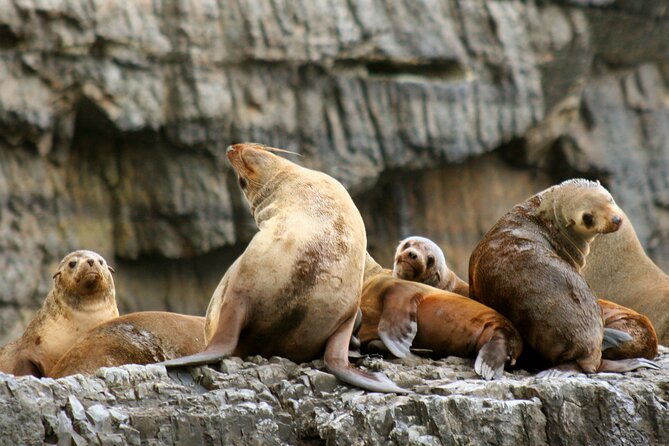
Wildlife spotting is a major reason people book. Depending on what the day gives you, you might see seals hauled out on rocks, seabirds overhead, and dolphins moving alongside the vessel. In some outings, passengers have reported whales (including humpback whales) and even a mix of birds like albatross. You also have a chance with birds of prey such as peregrine falcons nesting on the rugged coastline.
Open-air seating is great, but it’s not a spa
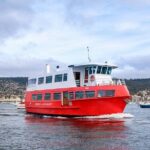
The boat has open-air tiered seating, which is fantastic for views—more people can see without craning over shoulders. The trade-off is that weather hits you directly. If it’s chilly, you’ll feel it, even with jackets. This is one of the most repeated practical tips from the day’s reviews: dress warmly and expect a wind-chill effect, especially on the return.
One more practical angle: if you’re worried about motion sickness, the crew has offered ginger tablets in at least one sailing. In my view, that’s a good sign the operator expects real-world sea conditions and tries to help people manage them.
Safety and comfort on the water: life jackets, jackets, and seasickness reality
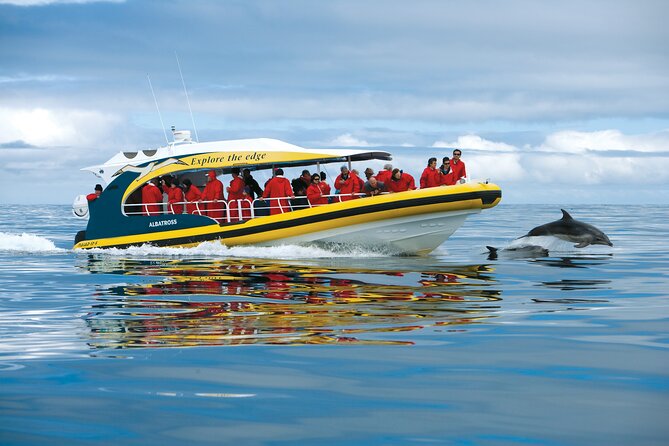
The tour description says full-length waterproof and windproof jackets are provided. That helps a lot because it cuts down on how “soggy” the experience can feel, even if spray comes over. Still, you’ll want to wear warm layers under the jacket so you’re comfortable for the full cruise duration.
On life jackets: the boats carry life jackets for guests and crew, and in Tasmania they’re not required for wearing on boats over 6 metres in length. That said, passengers can opt to wear one if they like. If you don’t swim well or you’d rather feel extra-secure, it’s worth asking what the options are that day.
Motion sickness comes down to sea conditions and personal tolerance. One review noted a vomiting incident next to a passenger with limited assistance. That’s the kind of thing that can happen anywhere at sea, but it’s also a reminder to pick a seat that feels good for you. If you’re sensitive, consider telling the crew early and request support where possible.
Morning tea and lunch: included food that keeps the day moving
This is a meal-included tour, and it matters on a long day. You’ll have coffee or tea included, and you also get morning tea at a local cafe before boarding.
For lunch, you’re not stuck hunting for a meal on your own at Port Arthur. Lunch is included with the Port Arthur time window. The lunch format is a practical detail worth highlighting: a substantial lunch box has been provided, including soup, a salad roll (ham, salad, or vegetarian), fruit, a cookie, a sweet treat, and both cold and hot drinks.
That setup is convenient for pacing because Port Arthur can be walk-and-step-on-foot work. You can eat in the cafe area or on the move depending on what suits you that day. It’s also a big value point: you’re paying for entry time and transport, and the food is part of the package.
One note to calibrate expectations: not everyone loves the lunch style. At least one review felt it didn’t compare to a restaurant meal seen by other touring groups. If you’re the type who wants a full sit-down lunch with choices, you might find the included lunch box style less satisfying. But if you want simple fuel that keeps you on schedule, it works.




Port Arthur Historic Site in three hours: what you can realistically see
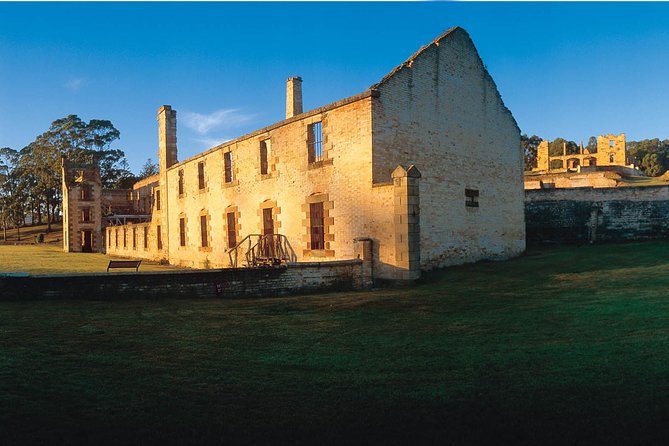
After the cruise, the tour heads to Port Arthur Historic Site, a UNESCO-listed part of the Australian Convict Sites. You get three hours on the grounds, which is a solid amount of time for a first visit—especially when your morning already involved a long transit and a boat.
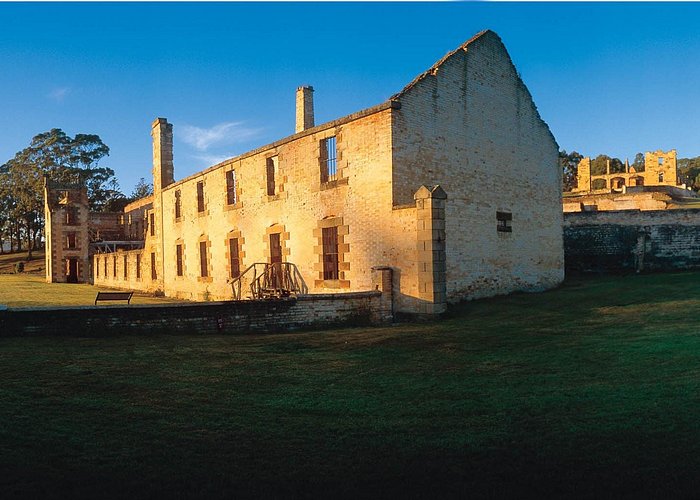
Port Arthur is where the day’s tone shifts. The site focuses on Australia’s penal history at the former penal colony. You’ll see landscaped grounds with old structures and ruins, including highlights such as the penitentiary building, a guard tower, and a church.
Three hours sounds short until you’re there and realizing how many key locations you want to visit. With a time window like this, I suggest you choose your pace: walk the core paths and prioritize the major buildings, then use the rest of the time to wander and read whatever signage catches your interest. That approach gives you context without trying to force every single interpretation panel into your brain.
Also, the lunch inclusion is part of why the visit feels manageable. You’re not squeezed into a restaurant hunt while trying to see the prison precinct.
Guides on the day: the local personality effect
A tour is only half logistics and half people, and this one seems to have strong staff energy. Several bus drivers have left a mark on the experience: Paul was described as friendly and funny with local knowledge, while Murray, Alan, and Daniel were praised for being informative, careful, and attentive to passengers.
On the water, the boat crew matters just as much. Passengers have credited the skipper and deck hand with being knowledgeable and helpful. There’s also a story about a crew member helping retrieve an item left behind at the cafe, which tells me they’re not treating the day like a production line—they’re paying attention to what happens after the big moments.
There’s one counterpoint: one review criticized guide interactivity and attentiveness after a passenger was unwell and wasn’t offered help beyond a seat change. That’s a reminder that service quality can vary by day and by specific circumstances. Overall, though, the stronger pattern is that guides keep the day moving with humor, safety awareness, and real context.
Price and value: is $236.69 fair for this mix of cruise + UNESCO entry?
At $236.69 per person, this isn’t a budget afternoon. But you’re not just paying for a ticket; you’re paying for a packed “you do nothing” day.
Here’s what you’re getting for that price, based on the provided details:
- Round-trip guided bus transportation from Hobart
- A 3-hour wilderness cruise with interpretive guidance
- Port Arthur Historic Site admission and three hours on-site
- Coffee or tea plus lunch included
When you add up entry time, long-distance transport, a full-length cruise, and meals, the price starts to feel more like a bundled day rather than a collection of separate expenses. That’s the value logic: this tour saves you the time and hassle of coordinating two big attractions in different places.
That said, value depends on your priorities. If you’re primarily history-focused and Port Arthur time feels like an add-on to the day’s main attraction, you might feel the balance is off. If you’re primarily nature- and wildlife-focused, the long cruise time and the chance of dolphins, seals, and even whales make it feel more like the right fit.
Who this tour suits best (and who might want a different option)
This tour is a strong fit if:
- You want Tasman Peninsula by land and sea in one day.
- You’re seeing Tasmania for the first time and want a high-impact day without planning.
- You enjoy wildlife viewing and want a long cruise window rather than a quick boat ride.
- You like structured pacing: the transport and timing are handled.
It may be less ideal if:
- You’re very prone to seasickness. Conditions vary, but the boat is open-air and can be windy.
- You expect a sit-down lunch experience at Port Arthur rather than an included lunch box.
- You need very interactive, high-touch guiding at every stage. Some passengers felt guide engagement wasn’t as attentive as they expected in a specific situation.
Also, if language comprehension is a concern for you, note that at least one review mentioned the guide was hard to understand. That’s personal, but it’s worth keeping in mind.
Should you book the Tasman Island Cruises and Port Arthur day tour?
I’d book it if you want a day that feels like real Tasmania: coastal geology, wildlife chances, and then a UNESCO convict-site visit that actually gives you time to walk around. The included meals, the full-length jacket support, and the no-driving setup make it a convenient way to cover a lot of ground.
I’d pause before booking if sea conditions and motion sickness are your top concern, or if you’re picky about lunch style. On a day when the weather isn’t ideal, the cruise can still be worth it, but your comfort level depends on how you handle cold wind and choppy water.
If you’re the type who likes seeing wildlife with good odds, getting your bearings fast around the peninsula, and pairing that with a focused history block at Port Arthur, this is a very solid choice.
FAQ
How long is the Tasman Island Cruises and Port Arthur Historic Site day tour?
It runs for about 10 hours 30 minutes.
What time does the tour start from Hobart?
Check-in is by 7:15am, and the tour starts at 7:30am.
Does this tour include a cruise and Port Arthur entry?
Yes. You get a 3-hour wilderness cruise plus three hours at Port Arthur Historic Site, and admission is included for both parts.
Is lunch included?
Yes. Lunch is included during your Port Arthur time, and coffee/tea is also included.
Are there jackets provided for the boat ride?
Yes. You’re provided with full-length waterproof and windproof jackets.
Does the tour operate in bad weather?
It operates in all weather conditions, and you should dress appropriately.
Is hotel pickup included?
No. Hotel pickup and drop-off are not included.
How big is the group?
The tour has a maximum of 40 travelers.
Are tickets mobile?
Yes. The tour uses mobile ticket format.
Is there time to see wildlife during the cruise?
You have chances to see wildlife during the cruise, including mentions of seals, dolphins, seabirds, and sometimes whales, depending on conditions.