REVIEW · MORNINGTON PENINSULA
The Explorer – Cranbourne Gardens
Book on Viator →Operated by Royal Botanic Gardens Victoria · Bookable on Viator
A short bus ride, big garden payoff. The Explorer – Cranbourne Gardens is a practical way to tour the 37-acre Australian Garden by open-air minibus with live commentary from the driver. Even if you only have a slice of time on the Mornington Peninsula, you get a guided route that helps you understand what you’re seeing.
I like two things a lot: the bus covers standout sections like the Red Sand Garden and the Peppermint Garden without turning your day into a marathon. I also appreciate how this format fits different needs, including families and visitors who prefer less walking.
One possible drawback: at about 25 minutes, it’s an overview, not a full walk-through. If you want to linger in your favorite areas, plan to hop off and explore afterward.
In This Review
- Key points at a glance
- A 25-minute loop that helps you read Cranbourne Gardens fast
- Price and value: what $10.76 gets you in the Royal Botanic Gardens Cranbourne
- Boarding at Royal Botanic Gardens Cranbourne: where the tour starts
- Your Explorer route: Red Sand Garden to Peppermint Garden
- Red Sand Garden: the first big visual cue
- Howson Hill: a chance to understand elevation and structure
- Ian Potter Lake: the calm break in the plant story
- Arid Garden: plants under pressure, explained in a friendly way
- Dry River Bed: when water is a memory
- Peppermint Garden: the winding return
- Hop off when you want more: how to use the bus like a smart itinerary
- Who this tour is perfect for on the Mornington Peninsula
- What to do before and after the ride (so you don’t waste your time)
- Should you book The Explorer – Cranbourne Gardens?
- FAQ
- How long is The Explorer at Cranbourne Gardens?
- Where do I redeem my ticket?
- Is there live commentary during the tour?
- Is admission included?
- Can kids ride for free?
- What happens if the weather is poor?
Key points at a glance
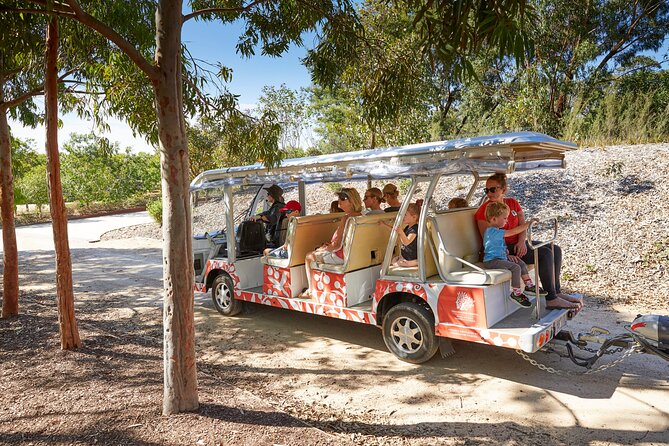
- Driver-led live commentary keeps the ride moving with plant, garden, and cultural context
- A themed route with clear landmarks like Howson Hill and Ian Potter Lake
- Low-stress touring that helps you see more with less walking
- Covers arid and river-style settings including the Arid Garden and Dry River Bed
- Designed for families and mixed mobility needs with a maximum group size of 25
- Kids Explorer option during school holidays where children ride free on the family bus
A 25-minute loop that helps you read Cranbourne Gardens fast
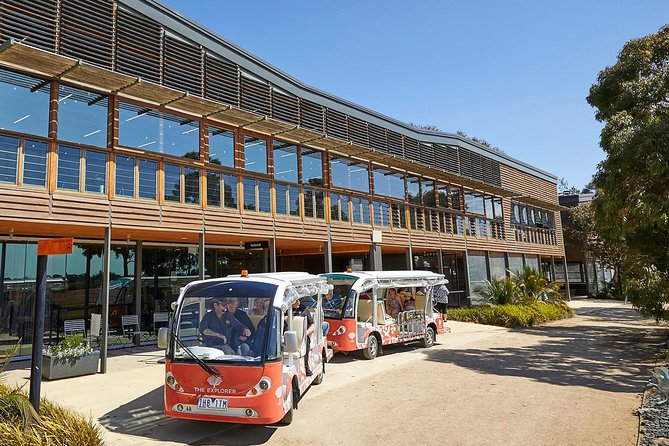
Cranbourne Gardens can feel huge once you’re on foot. This is the smart antidote. In roughly 25 minutes, you’re dropped into the big-picture story of the Australian Garden and shown how the plant collections change by setting. You don’t need to decode signage first, because the driver’s live talk gives you a map in plain language.
I like that the ride is structured enough to prevent that common garden problem: you wander, you see a lot, and you still miss the “why.” The bus route gives you anchor points—places you can remember later when you return for a longer stroll.
Keep in mind the pacing is quick by design. If you’re hoping for long photo stops and lots of time off the bus, treat this as your orientation lap. Then use that understanding to decide where you want to spend more time.
You can also read our reviews of more tours and experiences in Mornington Peninsula.


Price and value: what $10.76 gets you in the Royal Botanic Gardens Cranbourne
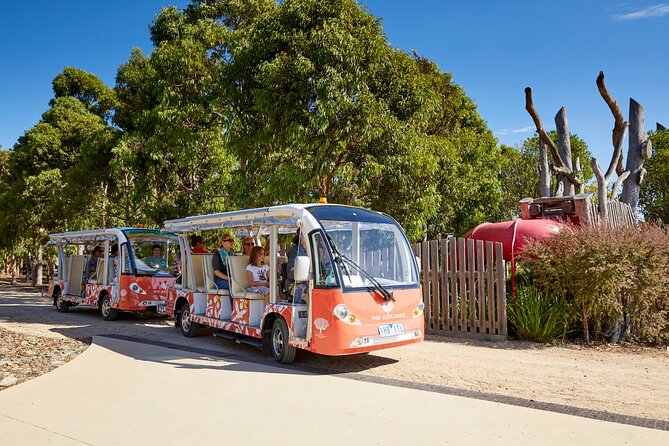
$10.76 per person is a modest price for a guided overview, especially because you’re paying for interpretation, not just transport. You get a driver/guide with live commentary, and the experience is capped at a maximum of 25 travelers, so it stays small and easy to manage.
One thing that adds value is the way the tour is framed around time-saving. Instead of walking between far-flung areas, you can sit back, cool down, and still cover key zones. That’s especially meaningful if you’re traveling with kids, older relatives, or anyone who tires quickly.
Also, the offer lists admission as free. That matters because it keeps the decision simple: you’re mainly paying for the guided bus experience rather than stacking extra ticket costs on top. If you’re already planning to visit the Royal Botanic Gardens Victoria site, this is a low-cost way to make your entry feel more complete.
Boarding at Royal Botanic Gardens Cranbourne: where the tour starts
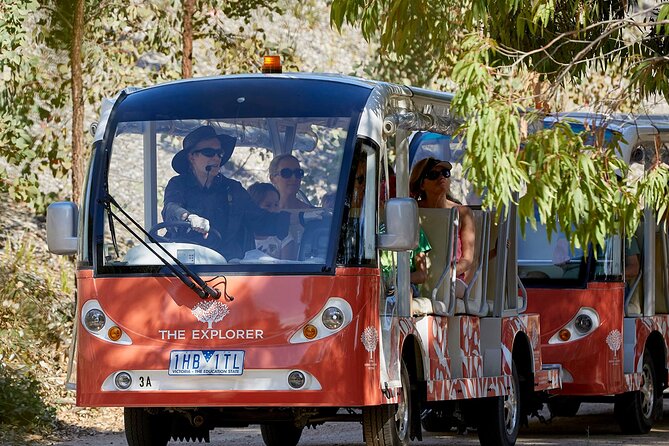
The tour redemption point is at the Royal Botanic Gardens Cranbourne area, along Ballarto Road and Botanic Drive (Cranbourne VIC 3977). Plan to arrive a bit early so you can find your group and get settled before the bus departs.
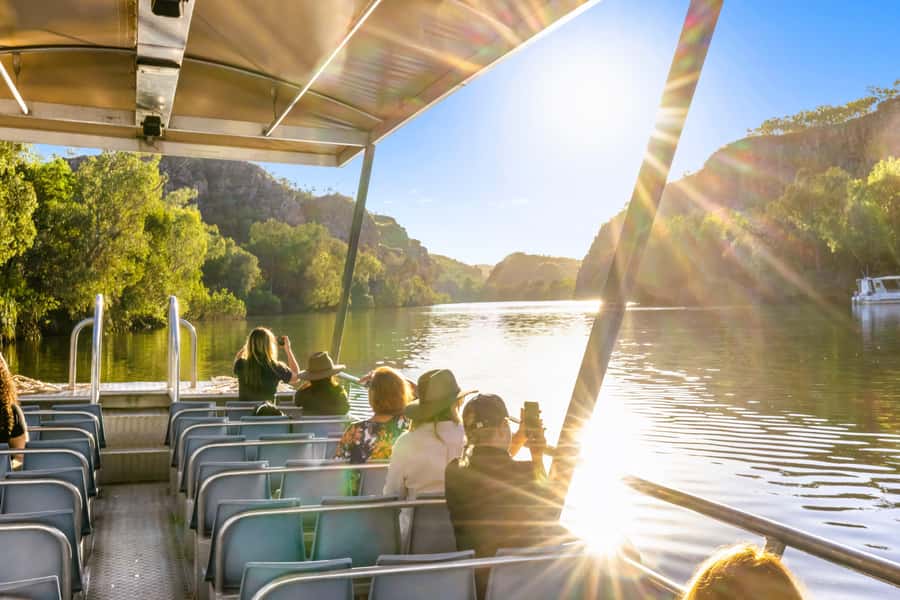
The ride is in an open-air minibus, so you’ll feel the breeze and see more than you would in a fully enclosed vehicle. That’s great for photos and for keeping things comfortable on warm days. It also means you’ll likely want basic sun protection—hat, sunscreen, and sunglasses—because you’re outside for a good chunk of the experience.
You’ll also appreciate that service animals are allowed, and the meeting area is near public transportation. That can be handy if you don’t want to fight parking after you’ve had a long drive on the peninsula.
Finally, remember this is a weather-dependent experience. If conditions are poor, the operator may offer a different date or a full refund, so keep an eye on the day’s forecast.
Your Explorer route: Red Sand Garden to Peppermint Garden
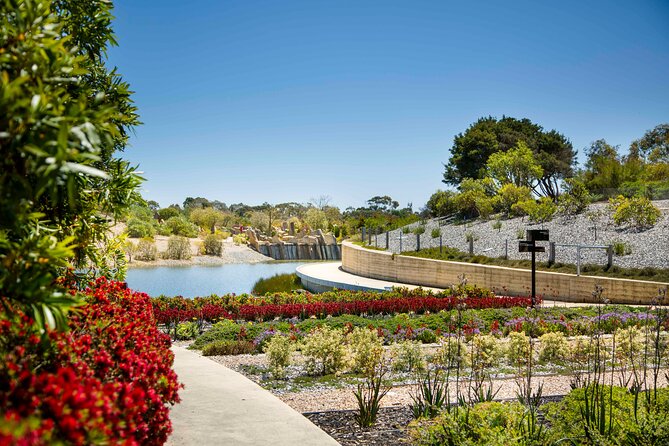
The tour is built around a loop through major areas of the Australian Garden. You start with a signature setting, then move through plant worlds that reflect different climates and landforms, before winding back through a more familiar-feeling section. The driver’s narration turns those changes into a story you can follow from seat one.
Even though you’re not walking the whole way, you still get a lot of sensory input: the feel of different garden layouts, how water and terrain are represented, and what each themed area is trying to teach. It’s not just sightseeing. It’s interpretation you can carry into your own walking afterward.
Red Sand Garden: the first big visual cue
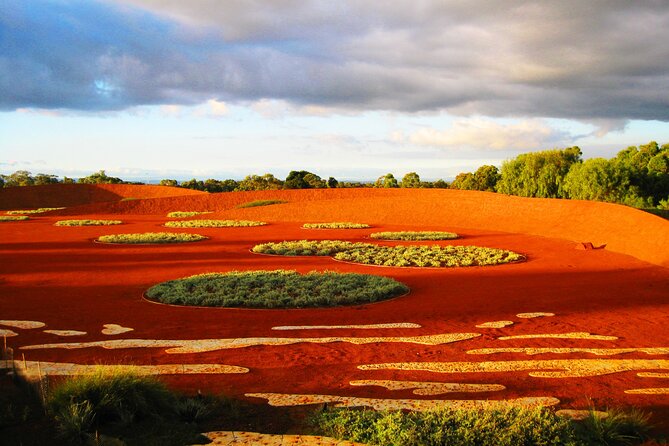
Red Sand Garden is your starting point, and it’s a strong choice because it immediately signals that this is about Australian conditions, not generic landscaping. Expect the driver to connect the plants and design features to arid or sand-influenced environments. If you love learning what you’re looking at, this is where the tour starts doing real work.
This is also a good moment to get oriented visually. After this, when you see other zones, you’ll start noticing how the garden shifts in texture and planting style.




Howson Hill: a chance to understand elevation and structure
From the Red Sand Garden, the route continues along the east coast section of the Australian Garden. Then you move through the area called Howson Hill. Even if you don’t think about it on a first visit, hills and slopes change the way a garden is planned—how plants are grouped, how views are framed, and how water is managed.
Because you’re riding rather than hiking, Howson Hill gives you the “overview” version of those concepts. You can register what’s happening without spending energy climbing, which is exactly what makes this tour useful for mixed-ability groups.
Ian Potter Lake: the calm break in the plant story
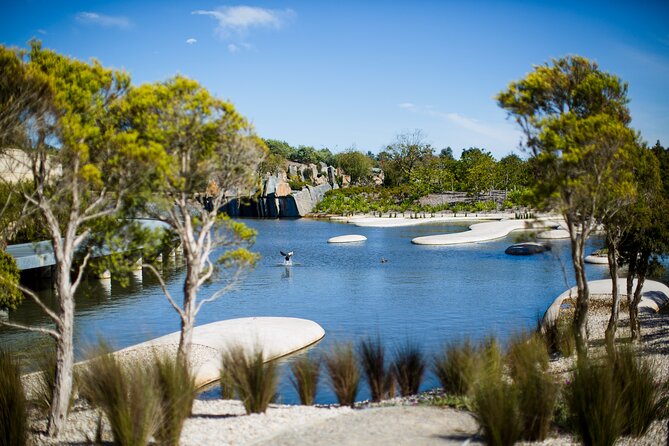
Next up is Ian Potter Lake. Water areas are a favorite stop for a lot of people for one simple reason: they’re relaxing. Even from the bus, you can usually take in reflections and the way planting is arranged near water.
More than just a pretty pause, a lake setting helps the tour show contrast—how different environments support different plant communities. It’s a built-in reset between the drier-looking zones and the arid-themed areas that come later.
If you’re someone who tends to rush through gardens, this stop is where your pace naturally slows down.
Arid Garden: plants under pressure, explained in a friendly way
The Arid Garden section is where the tour leans hardest into learning. This is the part that turns the garden from “pretty places” into “climate, design, and adaptation.” You’ll hear commentary that helps you understand why certain plants are grouped together and how their needs shape what you see.
This is also one of the areas where a bus tour helps more than you’d expect. If you only have time for a quick visit, the Arid Garden might be the hardest zone to cover efficiently on foot. Riding through it gives you the key points without needing to commit to a long walk.
Dry River Bed: when water is a memory
The Dry River Bed is a clever concept: it shows how river environments can be represented even when water isn’t present. From the bus you’ll get the idea fast—this is about flows, soils, and seasonal change rather than a constant stream.
This stop is especially interesting if you’re the type who wonders why certain beds look the way they do. Dry River Bed gives you a visual answer.
And if you’re traveling with kids, this is the zone that often sparks questions. A “dry river” sounds simple, but it’s a great entry point into how Australian landscapes work.
Peppermint Garden: the winding return
The route winds back through the Peppermint Garden. This section gives you a softer landing after the more intense arid themes. You’ll likely notice the planting and overall feel shift again, which makes the tour loop satisfying. It ends in a way that’s easy to digest before you decide what to do next.
Peppermint Garden is also a practical cue. If you liked that vibe, you know where to head for a closer look once you get off.
Hop off when you want more: how to use the bus like a smart itinerary
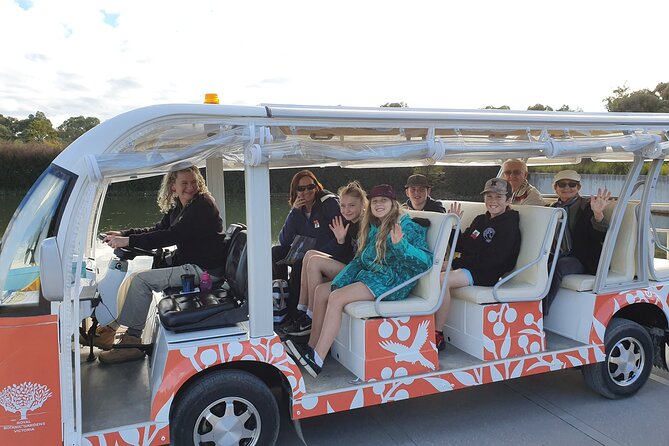
One of the best features here is flexibility. Your ticket includes the ability to hop off at various stops. That turns a single guided ride into a choose-your-own-garden experience.
Here’s how I’d use that if you’re trying to get maximum value in a limited time:
- Do the full loop first for orientation.
- Then get off at one or two zones you liked most and walk around at a comfortable pace.
This approach works because the bus narration gives you context, so you don’t wander randomly afterward. You already know what you’re looking for. That’s how the experience turns from “we rode a bus” into “we learned something and then explored on purpose.”
If mobility is an issue, this also keeps things realistic. You can step off for short stretches and return to the bus when you need a break. It’s a nice balance between comfort and freedom.
Who this tour is perfect for on the Mornington Peninsula
The Explorer bus is a good match for people who want to see big plant collections without paying in sore legs. The format is especially suited to:
- Families, since kids can enjoy the ride and the story without a long hike
- Visitors with mobility issues, because the bus covers major ground
- Nature lovers and keen gardeners, since the commentary ties design to plant needs
- Anyone doing a quick stop on the way to Phillip Island and wants an efficient “Cranbourne highlights” hit
It also helps that the group size is capped at 25. Smaller groups tend to feel calmer, and live commentary works better when people aren’t packed in.
There’s also a Kids Explorer option during school holidays, where children ride free on the Kids Explorer Bus. If you’re visiting at that time, it can make the outing much more budget-friendly for families.
One more sweet detail: wildlife sometimes shows up. A wallaby sighting is specifically called out as a memorable moment. That’s the kind of bonus that makes a garden feel alive.
What to do before and after the ride (so you don’t waste your time)
This is a short tour, so timing matters. If you can, plan to do it early in your visit. That way, your later walking feels guided by your own choices.
Before boarding, take a quick look around the Visitor Centre area. You’ll know what you’re starting from, and it helps you picture the route. After the ride, I’d head straight back to one or two stops you care about most—Red Sand Garden and Dry River Bed are popular anchor points because they’re visually distinct.
It also helps to build in time for food. There’s a café on site noted as a nice add-on, so you can turn your garden stop into a full half-day plan instead of a rushed stop-and-go.
And if you care about photos, remember you’re on an open-air vehicle. That’s great for shots of the gardens as you pass. For close-up photos, you’ll still want to hop off at your favorite area.
Should you book The Explorer – Cranbourne Gardens?

Book it if you want a fast, guided overview of the Royal Botanic Gardens Cranbourne’s Australian Garden. At $10.76 and about 25 minutes, it’s a smart way to spend limited time, especially if you have family members who need a gentler pace. The live driver commentary is the real value because it turns a quick loop into something you can understand.
Skip or consider doing it after you’ve already walked a lot if you prefer slow, unstructured garden wandering and you’re committed to exploring on foot for hours. This tour is designed to teach you what to look for, not to replace a full walk.
If you’re on the Mornington Peninsula with a tight schedule, I’d think of The Explorer as your garden GPS: short ride, clear highlights, and a better plan for where you go next.
FAQ
How long is The Explorer at Cranbourne Gardens?
The experience lasts about 25 minutes.
Where do I redeem my ticket?
You redeem at Royal Botanic Gardens Cranbourne, Ballarto Road & Botanic Drive, Cranbourne VIC 3977, Australia.
Is there live commentary during the tour?
Yes. The bus includes informative live commentary by the driver/guide.
Is admission included?
The details provided list Admission Ticket Free.
Can kids ride for free?
Yes during school holidays, Kids Explorer says children ride FREE on the Kids Explorer Bus.
What happens if the weather is poor?
This experience requires good weather. If it’s canceled due to poor weather, you’ll be offered a different date or a full refund.