REVIEW · ULURU KATA TJUTA NATIONAL PARK
Uluru: Audio Guided Tour
Book on GetYourGuide →Operated by Uluru Audio Guide Pty Ltd · Bookable on GetYourGuide
Uluru hits different when you’re not stuck in someone else’s schedule. This audio guide turns your smartphone into a trail buddy, with 100+ stories and GPS-triggered info for both Uluru and Kata Tjuta. I like that it’s built for roaming at your own speed, and I also like how it targets what you’re looking at right now instead of talking at you from afar. One thing to watch: the whole experience can depend on your phone’s GPS and signal, so if it’s patchy, you may need to work a bit to get each spot to play.
I also like that you’re not paying for a full “bus tour vibe.” You download once, then you can walk, drive, or bike around Uluru-Kata Tjuta National Park without feeling rushed. The guide comes in multiple languages, and it’s wheelchair accessible, which matters for route planning. The only real drawback I see for most people is simple: this is not designed for hearing-impaired visitors, so it’s best if you can use audio.
In This Review
- Key Highlights Worth Your Time
- A Pocket Guide That Makes Uluru Feel Personal
- Pre-Download Before the Gates: Don’t Do This Last-Minute
- How the Guide Works: Roads, Walks, and GPS Waypoints
- Uluru Base Walk: Using the Audio Like a Slow, Smart Map
- Kata Tjuta Walks: Geology and Wildlife Notes Without the Lecture
- Getting the Most From Auto-Trigger: A Smartphone Reality Check
- Languages and Listening Comfort for Real Travel Days
- Price and Value: $14 for a 10-Day Uluru Companion
- Who This Audio Tour Is Best For
- Quick Practical Tips That Make It Smoother
- Should You Book This Uluru Audio Guide?
- FAQ
- How much does the Uluru Audio Guided Tour cost?
- How long can I use the audio guide?
- Do I need to download the app before entering the park?
- What’s included in the price?
- Is national park entry included?
- Do I need transport to get there?
- What languages are available?
- Is it wheelchair accessible, and is it suitable for hearing-impaired visitors?
- What do I need to bring?
Key Highlights Worth Your Time
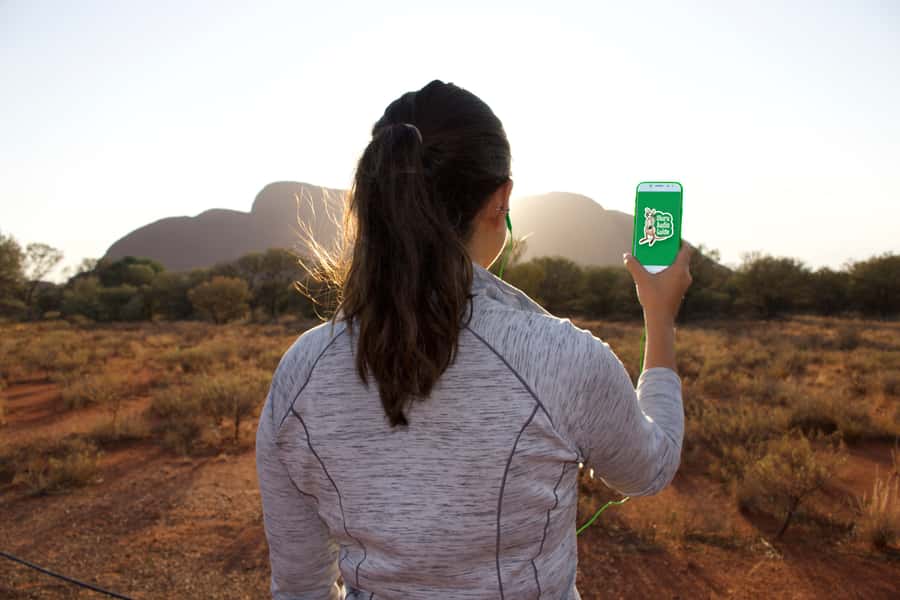
- GPS-based waypoints that aim to start the right story as you get near sights
- 100+ stories, facts, and local insights for culture, geology, and wildlife
- Covers Uluru and Kata Tjuta with audio for roads and walks across the area
- Multi-language audio (English, German, Italian, Spanish, French, Japanese, Chinese)
- Self-paced touring—great if you hate big groups and loud commentary
- A charged smartphone is essential since you download and run the app in-park
A Pocket Guide That Makes Uluru Feel Personal
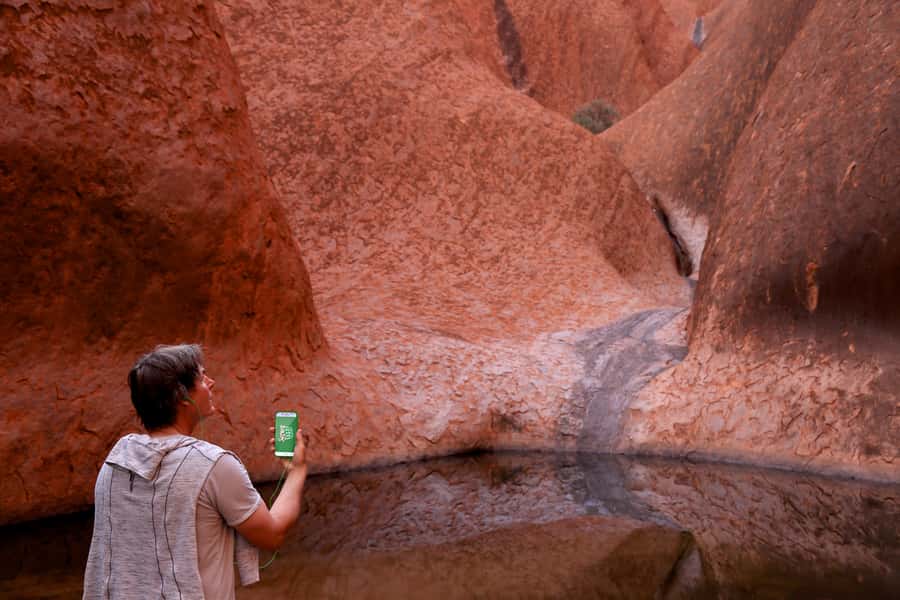
Uluru doesn’t need a script. But it does benefit from the right prompts. This Uluru Audio Guide is basically a self-guided tour that meets you where you are. Instead of following a group, you follow the rock—through stories about what you’re seeing, why it matters, and what lives in the area around it.
Two things make this work well. First, the sheer amount of audio content. Over 100 stories, facts, and local insights means you can get something different each time you pass a viewpoint. Second, the guide’s design around your precise surroundings. The app uses GPS functionality so the audio can relate to where you’re standing, not where you were ten minutes ago.
Now, the practical reality: you’re relying on a phone. If your device struggles with GPS or if connectivity is weak (which can happen in remote places), you might get partial playback or miss some auto-trigger moments. It’s still usable, but it’s not the same friction-free experience you want.
You can also read our reviews of more tours and experiences in Uluru Kata Tjuta National Park.

Pre-Download Before the Gates: Don’t Do This Last-Minute
Here’s your first “do this right” step: download the audio tour before you enter Uluru-Kata Tjuta National Park. You’ll need to read your confirmation voucher carefully for the download information, and you’ll want the app ready before you’re in the park area.
Why this matters more than it sounds:
- You don’t want to burn precious daylight fiddling with downloads.
- If your connection is unreliable, downloading in-park could turn into a frustrating wait.
- The guide is meant to run as you walk and drive, so having it ready keeps you in the flow.
Before you go, also charge your smartphone fully. This isn’t optional “nice to have.” The app’s GPS features and audio playback are phone-hungry tasks, and there’s nothing heroic about watching a battery drop while you’re trying to reach a viewpoint.
Tip: bring a small charging strategy if you can—at minimum, keep your phone topped up early in the day so you’re not hunting power near sundown.
How the Guide Works: Roads, Walks, and GPS Waypoints
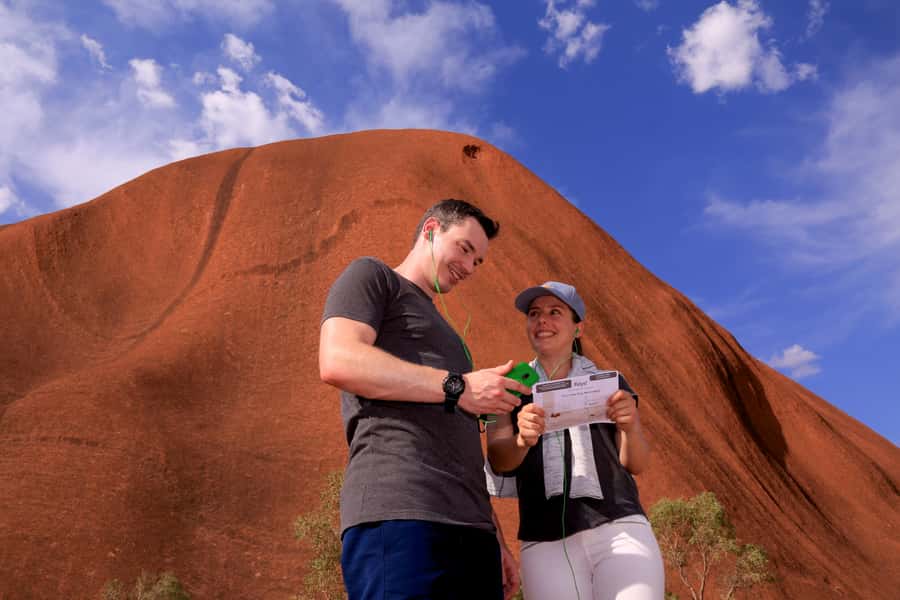
This audio tour covers every road and walk at Uluru and Kata Tjuta. Translation: you’re not forced into one track. You can build your own day based on your energy level and the time of day you want to go.
The app is designed to play audio at relevant points using GPS. In plain terms, it’s like a guided tour that’s trying to sense when you’ve arrived at a “moment,” then start the story for that moment automatically.
That’s the promise. Here’s the consideration: GPS can be picky about exact positioning. One person found the waypoints sometimes required extra wandering back and forth to find the correct trigger, especially when a sight ended up behind a barrier. So if the first attempt doesn’t work instantly, don’t panic. Move carefully along the official path and try again from another angle. It’s a small annoyance, but it can save you from missing the audio entirely.
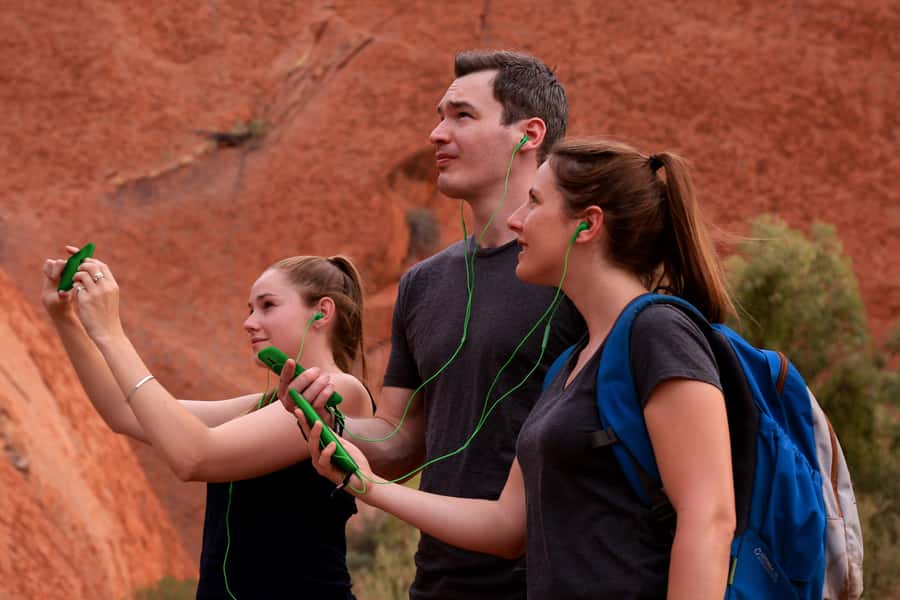
Also, keep in mind you’ll likely be using headphones or earbuds. One user mentioned having a headset in while listening, which makes sense for comfort and clarity, especially in windy, open areas.
Uluru Base Walk: Using the Audio Like a Slow, Smart Map
Uluru’s base walk is where the audio guide shines. You’re close enough to feel the scale, and you’re moving slowly enough to absorb details. With this app, you’re not just walking from A to B. You’re walking while the guide points out culture, geology, and local wildlife context around the area.
The key value here is timing. The guide is built to cover “virtually everything you may want to know” about the region and to provide information that matches your surroundings. In practice, that means you can get a story right when you reach a spot that visually makes sense.
If you want to do this walk in a way that feels personal (not like marching), the self-paced format is a win. You can pause. You can step to the side. You can linger at a viewpoint without worrying about where the group is. It also helps if you’re traveling with kids or anyone who doesn’t love fast tours; a guided pace can be exhausting, while an audio pace lets everyone control the speed.
One more tip: because auto-trigger can depend on GPS accuracy, don’t treat the audio like a guarantee. If a section goes quiet unexpectedly, you can adjust your position along the path and wait a few seconds for the next moment to kick in. If it doesn’t, you’ll still be able to keep walking and enjoy the scenery while you troubleshoot.
Kata Tjuta Walks: Geology and Wildlife Notes Without the Lecture
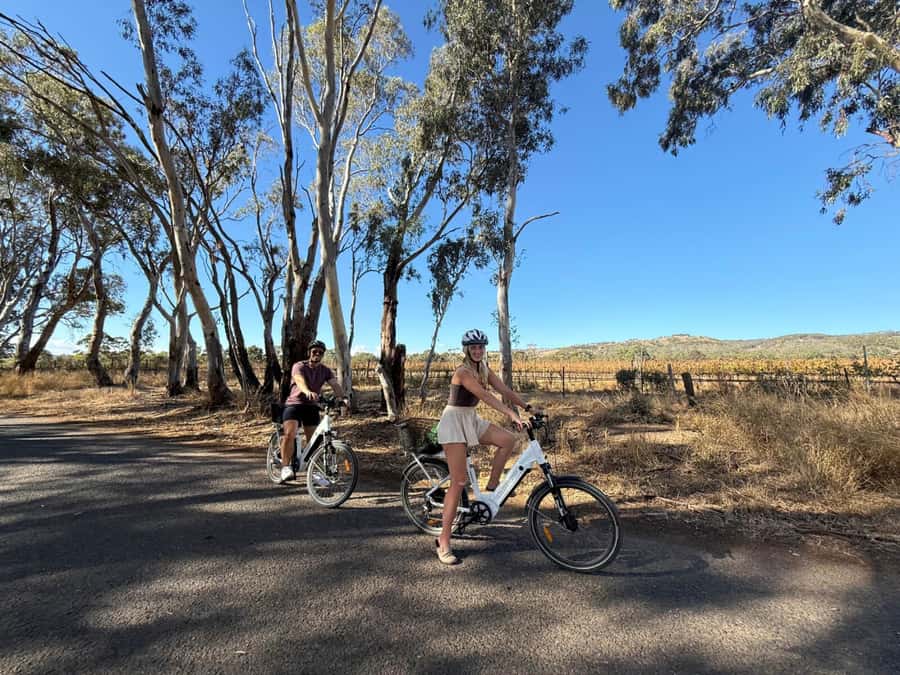
If Uluru is the iconic single rock, Kata Tjuta is the range of stories. This guide includes audio for Kata Tjuta too, and it’s designed for leisurely exploration—walks, drives, or even bike rides depending on how you want to spend your time.
Kata Tjuta benefits from audio because it’s less about one “centerpiece view” and more about feeling the variety as you move. The guide helps you make sense of what you’re seeing: geology, the meaning of the area, and the animals that call the region home.
The practical advantage is that you can tailor your day. If you’re the type who likes a longer walk, you can stay out longer and keep audio going as you move. If you’re tired after Uluru, you can choose a shorter route and still get meaningful context instead of “just walking for steps.”
And because this is self-guided, you don’t need to worry about missing the “one important talk.” If you want to hear more about a specific section, you can go back and replay. A one-time tour is often a blur. This one is replayable.
Getting the Most From Auto-Trigger: A Smartphone Reality Check
The audio guide’s GPS functionality is what makes it feel “smart.” But that also means your phone matters.
Here’s how to get the best chance of smooth playback:
- Keep your smartphone charged before you start your walk.
- Use GPS-focused listening as a strategy: get yourself near the main path and wait a moment before assuming the story won’t play.
- If a specific waypoint seems unreachable or the audio doesn’t start, adjust your position and try again from a nearby accessible spot.
What not to do: don’t assume it will always work perfectly in every spot. One user had a frustrating experience when GPS didn’t work and audio stopped during the base walk. That’s the downside of relying on tech in remote terrain. The good news is that when it does work, it can make the experience feel like a guide is quietly doing the timing for you.
So I recommend you treat auto-trigger as the bonus, not the only plan. If your phone misbehaves, you can still keep walking and enjoy Uluru-Kata Tjuta with the audio as it becomes available again.
Languages and Listening Comfort for Real Travel Days
Language coverage is a practical strength here. The guide is available in English, German, Italian, Spanish, French, Japanese, and Chinese. That’s helpful if you’re traveling with mixed-language friends or family and want everyone to listen to the same content style.
Comfort-wise, the format is straightforward: audio on your phone. You’ll likely want a headset or earbuds so you can focus and protect your hearing in open outdoor spaces. If you’re listening while walking, keep volume at a safe level. Your surroundings are part of the experience too: footsteps, wind, and the atmosphere around you.
One more note: it’s not suitable for hearing-impaired people. If that applies to someone in your group, you’ll need a different plan.
Price and Value: $14 for a 10-Day Uluru Companion
At $14 per person, you’re not buying a guided group tour. You’re buying a long-running access pass to a detailed self-guided system. The app is valid for 10 days from first activation. That’s the part people miss: you don’t just pay for one walk. You can use the audio across days as your plans shift.
Is it good value?
- Yes, if you want flexibility and you’d otherwise pay for a guided experience you may not enjoy.
- Yes, if you like having context without scheduling constraints.
- Less ideal if you expect your phone to behave flawlessly and you hate tech dependence.
Also remember what’s not included. National park entry tickets and transport to and from Uluru aren’t part of this price. So your “true trip cost” has two separate pieces: park access and logistics. The audio guide is the interpretive layer—what turns scenery into understanding.
If you’re already planning to spend real time exploring Uluru-Kata Tjuta National Park, this becomes a low-cost way to upgrade every hour you’re out there.
Who This Audio Tour Is Best For
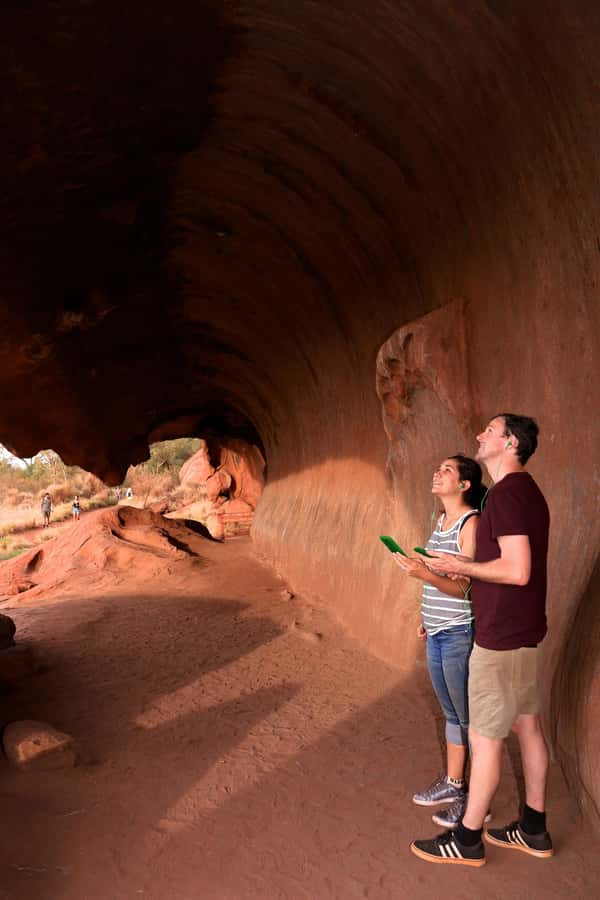
This is a strong match if you:
- Want a self-paced experience with fewer people and less waiting
- Prefer learning in small chunks while you walk
- Like having control over when you pause and replay
- Travel with kids or companions who do better with flexible pacing
- Appreciate practical context about culture, geology, and wildlife
It’s also helpful if you want something you can replay later. Hotels, rest areas, and downtime are when you can revisit stories and connect what you heard to what you saw.
It’s less of a match if you:
- Need accessibility support for hearing impairment (this guide isn’t suitable in that case)
- Are unwilling to troubleshoot a phone app if GPS doesn’t trigger smoothly
Quick Practical Tips That Make It Smoother
A few habits will make this tour feel smoother on the ground:
- Download before you arrive at the park and keep your phone charged.
- Wear shoes you can walk comfortably in for a base walk day.
- Use earbuds/headphones so you can hear clearly and avoid blasting audio in shared spaces.
- Be patient with waypoint triggering. If something doesn’t play, reposition along the accessible path and try again.
- Give yourself time. Uluru and Kata Tjuta reward slow travel. The audio guide is designed for that pace.
Should You Book This Uluru Audio Guide?
If you’re planning to spend meaningful time exploring Uluru-Kata Tjuta National Park, I’d book this. The price is low compared to the experience it adds, and the ability to match audio to what you’re seeing makes learning feel natural rather than forced. The 10-day access window is a bonus if your schedule shifts due to heat, walking fatigue, or just plain good views.
Book it especially if you dislike group tours with lots of people and you want to wander without feeling lost. It’s also a solid choice for families because you can adjust the pace and keep children engaged with facts at the moment they notice something interesting.
One caution: go into it with the right mindset. If your phone has weak GPS or connectivity in the park, you might miss some auto-trigger moments. If that would annoy you too much, consider pairing the audio with a backup approach (for example, using your own pacing and reading signage when audio fails).
Overall: for most self-directed explorers, this is a smart, affordable way to get more out of every walk.
FAQ
How much does the Uluru Audio Guided Tour cost?
It costs $14 per person.
How long can I use the audio guide?
The audio guide is valid for 10 days from the first activation.
Do I need to download the app before entering the park?
Yes. You need to download your audio tour prior to entering Uluru-Kata Tjuta National Park, using the information in your confirmation voucher.
What’s included in the price?
You get the audio tour download. The guide covers every road and walk at Uluru and Kata Tjuta.
Is national park entry included?
No. National park entry tickets are not included.
Do I need transport to get there?
Transport to/from Uluru is not included.
What languages are available?
The audio guide is available in English, German, Italian, Spanish, French, Japanese, and Chinese.
Is it wheelchair accessible, and is it suitable for hearing-impaired visitors?
It is wheelchair accessible. However, it is not suitable for hearing-impaired people.
What do I need to bring?
You’ll need a charged smartphone.