REVIEW · ADELAIDE
10-Day Adelaide to Perth Adventure Tour
Book on Viator →Operated by Untamed Escapes · Bookable on Viator
Australia stretches farther than you think.
This coast-to-coast trip turns long drives into short adventures, moving you from the Flinders Ranges to the Nullarbor Plain, then down to Esperance, the South West, and on to Perth.
I love how much you actually do each day without feeling rushed. You get real time outdoors: bushwalks, a sand-dune session at The Tub, and surf time on a remote beach—plus chances to see iconic wildlife in the wild.
One thing to consider: this is an active, camping-heavy trip over roughly 4,000 km, with limited facilities on some nights, so comfort swings more than on a hotel tour.
In This Review
- Key highlights you’ll care about
- From YHA Adelaide to Perth by 6 pm: how the trip runs
- Camping in swags and bush camp nights: what the nights are really like
- Day 1 and Day 2: Flinders Ranges hikes, Mount Remarkable, and outback art at Kimba
- Eyre Peninsula to the windmills: surfing at Streaky Bay and optional wildlife at Baird Bay
- Day 4 and Day 5: Nullarbor’s scale, Bunda Cliffs, and Cape Le Grand’s white sand
- Day 6 and Day 7: Esperance beaches and Stirling Ranges at Mt Trio
- Day 8: South West coast drama meets misty forest time
- Day 9: Margaret River with conservation at Capes Raptor Centre
- Day 10: Ngilgi Cave culture with Wadandi custodian Josh Koomal Whiteland and Perth arrival
- Price and value: what $1,646.07 includes, and what might cost extra
- Who should book this Adelaide to Perth adventure (and who should think twice)
- Should you book it?
- FAQ
- How long is the Adelaide to Perth tour?
- Where does the tour start and where does it end?
- Is pickup offered?
- What is included in the price?
- Are any major activities not included?
- How big is the group?
- What kind of accommodation should I expect?
- What fitness level do I need?
- Does the tour run in all weather?
Key highlights you’ll care about
- Small-group pace (max 20) keeps the van ride manageable and makes camp life feel communal.
- Camping in swags under starry skies is the vibe here, with some nights having no facilities.
- Big-scenery days that still include stops like Bunda Cliffs and Cape Le Grand, not just miles of road.
- Hands-on conservation at Capes Raptor Centre in Margaret River adds meaning to the trip.
- Cultural experience with Wadandi custodian Josh Koomal Whiteland is a standout closing chapter.
- Guide-led meals and good camp energy are repeatedly praised, with names like Adam, Eli, Elliott, and Gary and Hannah coming up.
From YHA Adelaide to Perth by 6 pm: how the trip runs
You start at YHA Adelaide Central at 6:30 am, which matters because this tour is built on early momentum. By the time you’ve crossed the first stretch of the outback edge, you’re already into that wide-open, do-something-now rhythm that keeps the days from turning into “just driving.”
The tour ends near the Western Australia Visitor Centre in Perth around 6 pm. Expect a final long drive day near the end (roughly 300 km that morning/afternoon), so plan to treat Perth arrival like a wind-down, not a plan-a-big-night outing.
Transport is by air-conditioned minivan with a maximum of 20 passengers. That smaller size helps on remote roads: there’s less waiting, fewer people to coordinate, and you can actually hear the guide when they’re explaining what you’re about to see.
Meals and basics are handled for you in a clear way. You’ll have 9 breakfasts, 2 lunches, and 8 dinners included, and you’ll camp for 8 nights with basic facilities plus 1 night at bush camp with no facilities. The “basic” vs “none” difference is the practical detail to remember.
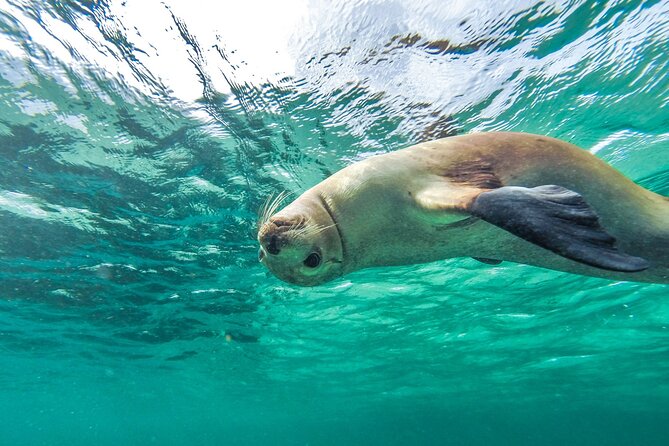
Also note a couple of optional items that can affect your budget and schedule. The wildlife swim with wild sea lions and dolphins is listed as not included (you have to inquire directly), and the Baird Bay wildlife encounter is also optional and not included.
You can also read our reviews of more tours and experiences in Adelaide.

Camping in swags and bush camp nights: what the nights are really like
This isn’t the kind of trip where you forget you’re camping. The charm is obvious—sleeping under the stars, waking up to bush sounds, and sharing camp chores—but the logistics are real.
One night is bush camp with no facilities. That means you should be ready for the practical side of “roughing it,” like using whatever simple setup is available at the site and planning your water and bathroom timing. On the other 8 nights, you’re in camping with basic facilities, and on at least one stop the info specifically points out shower and toilet facilities.
Most days, you’ll spend time outside in daylight, then return to the camp rhythm: dinner, group talk, and the low-tech joy of stars. Past trip feedback repeatedly flags sleeping in a swag sleeping bag under the stars as a highlight, so if that’s your idea of a great night, this tour is going to hit.
If you’re the type who needs constant comfort, consider this a test. Bring a good sleep system and expect temperature swings. Australia out west can shift fast between day heat and night cool, and your comfort will depend on your layers.
Day 1 and Day 2: Flinders Ranges hikes, Mount Remarkable, and outback art at Kimba
The early days mix gentle town breaks with proper walking. You start with a stop at Wallaroo on Yorke Peninsula, then head along the coastline to Port Germein for history-steeped small-town wandering and food.
Then you reach Mount Remarkable National Park, with camp set at Mambray Creek. This is one of those “stop expecting a lot, then suddenly you’re in it” moments—red gums, rugged country, and that sense of being in a real place rather than a scenic pull-off.
On Day 2, you wake up to bush life and do the Davey’s Gully Hike, described as a gentle 2.4 km loop. The best part here is the balance: it’s not a slog, so you still have energy for the rest of the day. You get the outdoors without paying for it with blisters.
After that, you roll into Kimba, where the day includes both a photo moment and an arts stop: the iconic silo mural and Workshop26, a former tractor shed turned into a creative collective. It’s a nice reminder that these “outback” stops aren’t just empty space—they’re communities that keep making things.
The afternoon shifts to the Eyre Peninsula coastline at The Tub, where towering sand dunes become the activity playground. You can sand-surf with a board or just enjoy the controlled chaos of people chasing the perfect dune run.
You finish Day 2 at Coodlie Park Farm Retreat, described as off-grid and eco-focused. Dinner and stargazing are part of that night rhythm, and this is exactly the kind of place where the sky becomes the entertainment.
Eyre Peninsula to the windmills: surfing at Streaky Bay and optional wildlife at Baird Bay
Day 3 starts with one of the most intense “this is why you came” options: Baird Bay Experience, an optional wildlife encounter. It’s run by Eco-accredited operators, and it’s listed as not included, so you’ll decide whether you want that extra cost for the chance at a close-up moment with marine life.
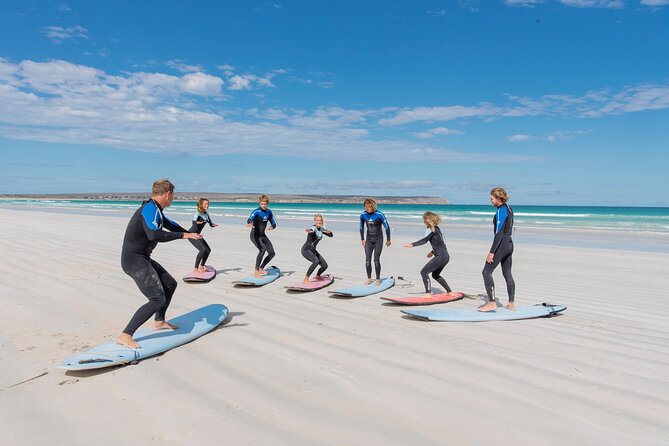
If you skip it, you still get a full day. You head to Streaky Bay for a learn-to-surf session with a local surf school on a remote beach. Even if you’re not a surfer, you’ll enjoy being taught in the right setting—wide open, not crowded, and focused on getting you standing up safely.
You can also choose your own pace there: swim, walk the shoreline, or simply take the beach in. That flexibility is a real value in a tour like this, especially when weather can shift.
Then you move on to Penong, a quirky end-of-day town known for its forest of windmills. It’s not a “touristy landmark” stop—it feels like the local working landscape, which is a good change of pace after the ocean and dunes.
The Eyre Peninsula section has a theme: water, then sand, then water again. If you like coast time—seriously, real coast time—this stretch will feel like a highlight run.
Day 4 and Day 5: Nullarbor’s scale, Bunda Cliffs, and Cape Le Grand’s white sand
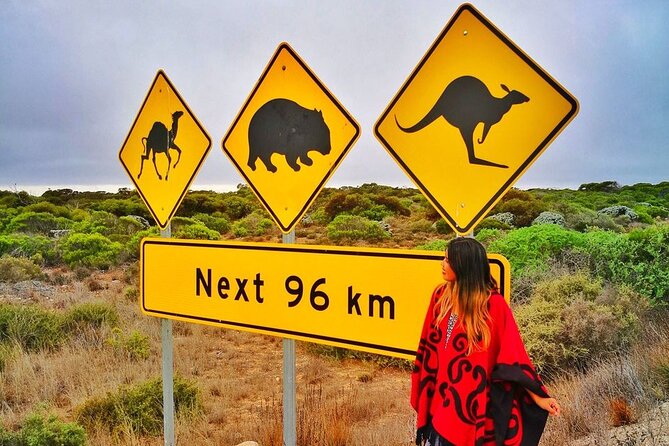
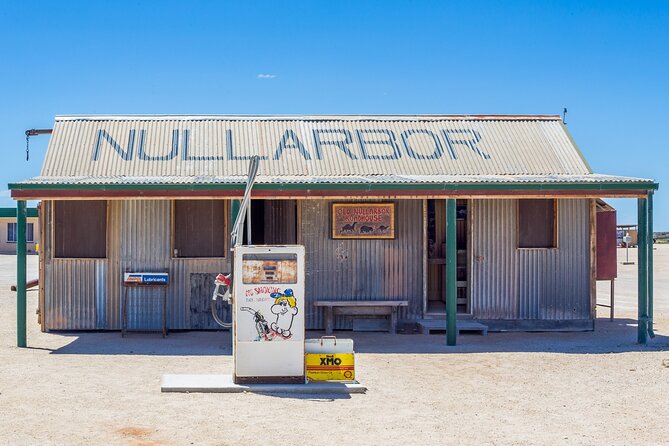
Day 4 is where the trip turns cosmic. You begin crossing the Nullarbor Plain, described as vast and treeless, almost like another planet. You’ll stop at the famous sign area with camels, kangaroos, and wombats crossing, which is one of those strange roadside scenes that makes you laugh and then realize how much life adapts to this place.
At Bunda Cliffs, you get the view that sells the whole route: the Great Australian Bight stretching out endlessly. The cliffs are described as reaching up to 120 metres and spanning over 200 kilometres, which is the kind of scale you can’t fully understand from a brochure. Bring sun protection because you’ll likely be standing still for photos.
You also get a practical “you’re changing regions” moment when you cross into Western Australia. The information notes 1.5 hours gained, and that time feels like breathing room as the day continues.
Day 5 starts with one more iconic road: the 90 Mile Straight, described as the longest, flattest, dead-straight road in Australia. It’s an emotional experience too. Your brain goes looking for turns that never come, and then you look up and realize you’re still surrounded by sky and road.
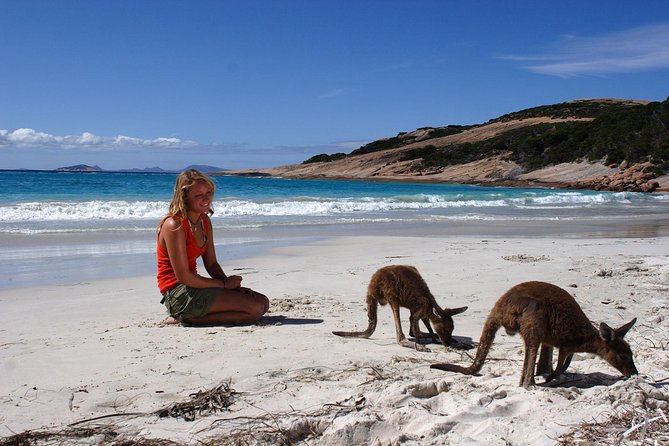
You’ll stop in Norseman en route, then head into Esperance region at Cape Le Grand National Park. This is where the scenery flips hard: desert tones melt into white sand and impossibly blue water, plus dramatic granite headlands.
The included time in Cape Le Grand continues into Day 6 as well, so you’re not just driving through. You get at least one full day to slow down and enjoy beaches and hikes, and even the description mentions the casual wildlife sightings you might see, like kangaroos sunbathing.
If you’re deciding whether this is worth it, the Esperance-to-Cape-Le-Grand stretch is the “yes” chunk. It’s remote, but it’s gorgeous, and it’s built into the schedule rather than left as a wish.
Day 6 and Day 7: Esperance beaches and Stirling Ranges at Mt Trio
Day 7 begins with camp packed up and a quick coffee stop in Esperance, followed by a final beach moment at Twilight Cove. It’s a simple rhythm: eat, move, and then enjoy one more shot of turquoise and white sand before the itinerary turns inland.
Then you arrive in the Stirling Ranges at Mt Trio, set up as a peaceful private campground surrounded by nature. This is a nice emotional change after the coast: fewer waves, more sense of height and jagged peaks nearby.
Even if you don’t chase every viewpoint, the advantage here is that you’re in the right region for hiking and wandering. The tour includes time at the Mt Trio base, and that lets you rest your legs some days but still enjoy the outdoors.
This half of the trip is about variation. If you’ve gotten beached out, the inland granite gives your eyes a new job.
Day 8: South West coast drama meets misty forest time
Day 8 is a full “South West hit parade,” and it’s also a good example of why group touring works in remote areas. You’re moving between different environments that would be hard to chain on your own without a lot of planning.
You start at Porongurup National Park, where you hike through tall karri and marri trees and around granite peaks. The description here hints at a slow, almost timeless feeling—exactly what you want after long travel days.
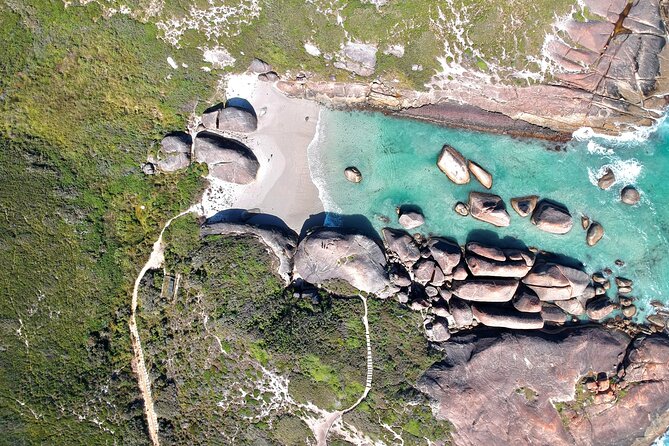
Then you head toward Albany for dramatic ocean energy at The Gap and Natural Bridge, plus a calmer stop at Elephant Rocks. That combination gives you both cliff-and-swell views and a more sheltered beach-boulder scene.
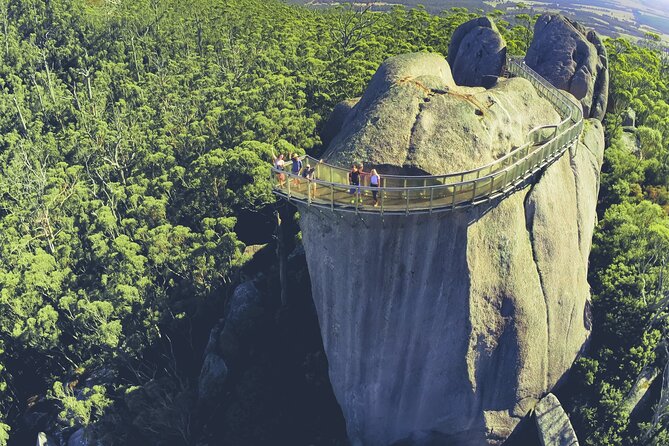
The day ends in the forest at Walpole-Nornalup National Park, specifically with time at the Quinninup Forest area and a walk that includes meeting the Giant Tingle Tree. It’s described as misty, canopy-covered forest country, so expect shade and that cooler “different world” feeling.
You camp at Quinninup Forest – Caravan Park, and the notes include that you’re at/near Shannon National Park with shower and toilet facilities. That’s a meaningful comfort upgrade after some stretches of limited amenities.
Day 9: Margaret River with conservation at Capes Raptor Centre
Day 9 is a shift from “look at nature” to “help nature.” You start with a hands-on conservation volunteering experience at one of Australia’s largest bird of prey sanctuaries, the Capes Raptor Centre, included for about 3 hours.
This part matters because it changes your relationship with the animals you’ve been seeing—or imagining—across the trip. It’s not just watching from a distance. You’re participating in care and conservation, which gives the day weight.
After that, you have time in the Margaret River Region with stops around Margaret River township, including time for boutiques, art galleries, and a local bite to eat. That gives you a breather and a little reward after serious travel effort.
This blend is why the middle-to-late days feel balanced. You get meaning and then you get a human-scale town moment.
Day 10: Ngilgi Cave culture with Wadandi custodian Josh Koomal Whiteland and Perth arrival
The final day is structured as a respectful cultural experience, not just a last-minute checklist.
At Ngilgi Cave Ancient Lands Experience, you get a 2.5-hour cultural journey with Wadandi custodian Josh Koomal Whiteland. The tour includes a bushwalk through the cave area (the description is cut off mid-sentence, but the key point is clear: it’s guided cultural land time led by a custodian). You end this trip with context, not just photos.
Then you head to Busselton and Origin Markets, where you’ll have time to browse local food, drink, art, and handmade keepsakes. This is a nice way to turn the trip into real souvenirs you can actually use, not just magnets.
Finally, you arrive in Perth around 6 pm near the Western Australia Visitor Centre area. The van day ends the coast-to-coast effort, and you’ll likely feel the fatigue that comes from ten days of waking early and sleeping under wide skies.
Price and value: what $1,646.07 includes, and what might cost extra
At $1,646.07 per person, this isn’t a “cheap weekend” number. But it’s also not just a bus ride with a few view stops. You’re paying for transport in an air-conditioned minivan, a driver/guide, 10 days of itinerary planning, camp accommodation for most nights, and most meals—plus a long list of included natural and activity stops.
Where value gets real is the coverage. You’re not just seeing one region. You’re moving through the Flinders Ranges, Eyre Peninsula, Nullarbor Plain, Esperance, Stirling Ranges, South West national parks, and Margaret River, then finishing in Perth.
That said, there are two clear “budget watch” items in the information provided. The optional Baird Bay wildlife encounter isn’t included, and the optional sea lions and dolphins swim is also not included and requires you to inquire directly. If you’re the type who always wants the top wildlife moments, you’ll want to price those in early.
Also, the tour is described as averaging being booked 30 days in advance, so if your dates are firm, don’t wait too long.
Who should book this Adelaide to Perth adventure (and who should think twice)
You’ll love this tour if you want a big country feel and you’re okay with camping nights and active days. You should be fine if you have a reasonable level of fitness and can handle bushwalks plus a general “outdoors every day” rhythm.
It’s also a strong fit if you like group travel that actually works. With max 20 people and shared camp life, the trip tends to create momentum and rapport fast—especially when meals and camp setup are handled with teamwork.
Think twice if:
- you need hotel-level comfort every night
- you’re sensitive to rougher toilet/shower situations on the bush camp night
- you strongly prefer self-driving with your own stops and timing
One person who shared feedback mentioned a virus spreading through the group during their trip, which is a reminder of group travel reality. Bring basic hygiene habits with you and don’t skip them just because you’re outdoors.
Should you book it?
If you want an Adelaide to Perth journey that feels like a series of real experiences—hikes, dunes, coasts, national parks, and at least one meaningful conservation day—this tour makes sense. The structure is built to keep you moving without turning every day into a grind.
Book it if you’re excited by starry camping, small-group energy, and the “see a lot but still do stuff” balance. Skip it if you want quiet luxury or you hate the idea of limited facilities for part of the trip.
FAQ
How long is the Adelaide to Perth tour?
It runs for 10 days approximately.
Where does the tour start and where does it end?
It starts at YHA Adelaide Central at 6:30 am, and it ends near the Western Australia Visitor Centre in Perth around 6 pm.
Is pickup offered?
Yes, pickup is offered.
What is included in the price?
The tour includes a driver/guide, transport by air-conditioned minivan (max 20 passengers), accommodation (bush camp with no facilities for 1 night and camping with basic facilities for 8 nights), and meals including dinner (8), breakfast (9), and lunch (2). Most activities are included as well.
Are any major activities not included?
Yes. The swim with wild sea lions and dolphins is not included and must be inquired about directly. The Baird Bay wildlife encounter is also listed as optional and not included.
How big is the group?
The tour has a maximum of 20 travelers.
What kind of accommodation should I expect?
You’ll stay in bush camp with no facilities for one night, and camping with basic facilities for eight nights.
What fitness level do I need?
The tour is active and requires a reasonable level of fitness.
Does the tour run in all weather?
The experience requires good weather, and if canceled due to poor weather you’ll be offered a different date or a full refund.