REVIEW · NOURLANGIE ROCK
3-Day Kakadu 4WD Camping Tour
Book on GetYourGuide →Operated by Territory Expeditions · Bookable on GetYourGuide
Kakadu hits fast, then keeps going. This 3-day 4WD camping tour from Darwin mixes crocodile country, ancient rock art, and real swimming holes. The pace is busy, but it stays fun and outdoorsy from the first morning pickup to the late return through Pine Creek.
What I like most is the way it treats Kakadu like a living place, not a checklist. You get the Corroboree Billabong cruise for wildlife time, then head straight into the park for Ubirr’s rock art and 360º views, which is the kind of sight you remember long after the photos. I also like the hands-on camp setup: safari tents (or a swag under the stars option), proper meals, and the chance to unwind around the campfire instead of feeling like you’re camping in logistics.
One thing to consider: this style of tour can feel more suited to younger, more active groups. If you want a very slow, deeply academic feel to every stop, this may not be the best match.
In This Review
- Key things to know before you go
- Getting to Kakadu: early Darwin pickup and a 4WD day-one rhythm
- Corroboree Billabong crocodile cruise: wildlife time without rushing
- Ubirr rock art and the 360º lookout above Nardab floodplains
- Mardugal Billabong camp life: tents, swags, and a proper recharge
- Jim Jim Falls: a 1 km gorge walk between 200m sandstone cliffs
- Burrungkuy (Nourlangie Rock) Dreamtime stories and cultural context
- Gunwhardewharde lookout: Arnhem Land escarpment views from above Burrungkuy
- Maguk (Barramundi Gorge) and Gunlom infinity pools: the two swim days that sell the trip
- Maguk (Barramundi Gorge)
- Gunlom Falls and the naturally occurring infinity pools
- Meals, showers, and the gear choices that matter
- Price and value: what $704 covers in Kakadu terms
- Who this Kakadu 4WD camping tour is for (and who should pass)
- Should you book the 3-Day Kakadu 4WD Camping Tour?
- FAQ
- What time is pickup from Darwin?
- How many people are in the group?
- Is accommodation included, and what type do you sleep in?
- Are park fees and meals included in the price?
- Do you have bathrooms and showers at the camp?
- Do I need to bring a sleeping bag?
- How much walking is involved?
- Is swimming included?
- What luggage is allowed?
- What age is the tour suitable for?
Key things to know before you go
- Small-group format (up to 16) helps you move through Kakadu without feeling like you’re stuck in a crowd
- Corroboree Billabong cruise is built for wildlife watching, including crocodiles and lots of birdlife
- Ubirr rock art at the top viewpoint gives you that Arnhem Land-and-floodplains 360º perspective
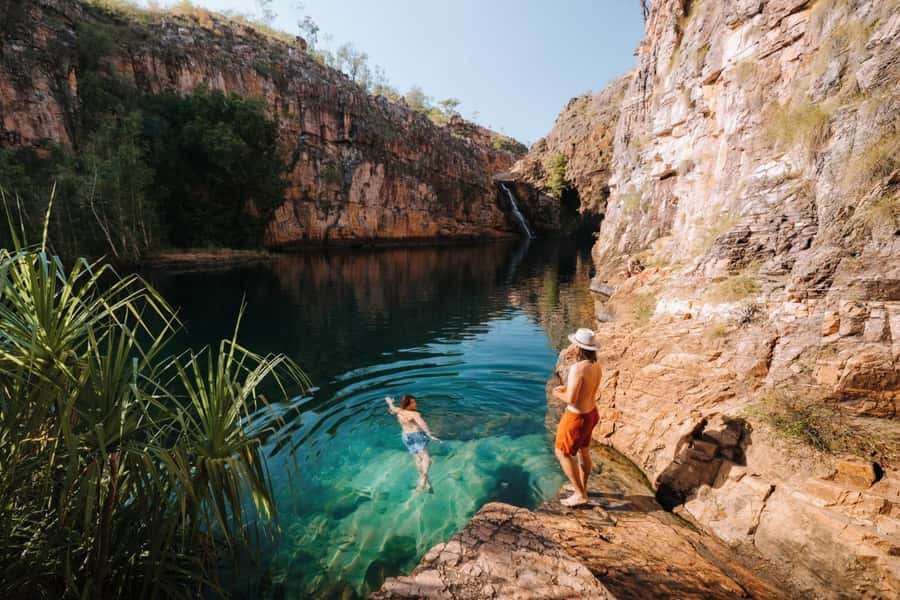
- Jim Jim, Maguk, and Gunlom are real swim spots, not just look-only viewpoints
- Safari camp comfort includes toilets/showers and a screened camp area for meals, so you’re not living in discomfort
- Campfire time with your guide can be part of the vibe, especially if your group lands with a guide like Rhett
Getting to Kakadu: early Darwin pickup and a 4WD day-one rhythm
The tour starts early. You’re picked up in Darwin around 6.30–6.45am, then you’re on the road toward Kakadu. That matters because Kakadu is big, and the distances are real—so you’ll spend some time in the vehicle, but it’s the only way to fit in multiple must-sees in three days.
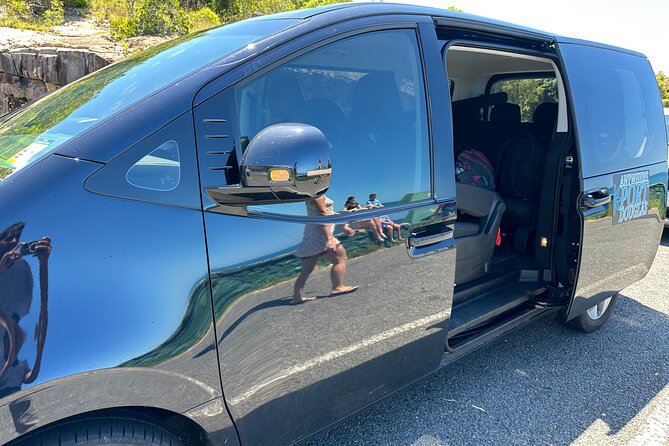
Transport is air-conditioned and uses an all-terrain style vehicle. You’ll also deal with a strict luggage setup: no oversize bags, and a 10kg limit for one small/medium soft bag or backpack plus a small daypack that can fit inside the vehicle. If you pack like you’re going camping for a week, edit hard. If you pack like you’re going hiking and swimming for a long weekend, you’ll be fine.
One more practical note: the itinerary can be reversed at the guide’s discretion, and road closures or seasonal conditions can shift timing. That’s normal in Kakadu—so I’d keep your day flexible and your expectations for wildlife sightings realistic.
A few more Nourlangie Rock tours and experiences worth a look
Corroboree Billabong crocodile cruise: wildlife time without rushing
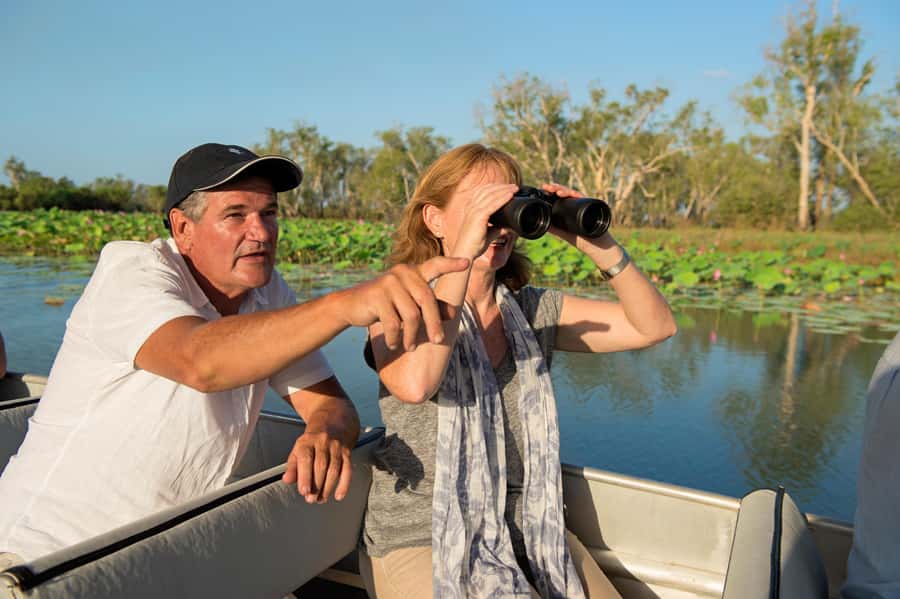
The first major Kakadu experience is the Corroboree Billabong wildlife cruise. This is a great early-day activity because wildlife doesn’t care about your schedule—cruising at the right time gives you the best chance to spot crocodiles and the area’s birdlife in their natural setting.
In at least one recent group, the cruise host and guide setup included a lot of personality—on the day I’m basing this on, the cruise guide was known as Meatloaf, which made the cruise feel less like a lecture and more like an experience you can talk about all night.
What to expect:
- You’re not just seeing water and trees. You’re looking for movement: eyeshine, heads above the surface, and birds working the shoreline.
- It’s calm enough for photography, but you’ll still want to keep your hands free—grab your camera after you’ve got your croc/bird “targets” lined up.
This stop is also valuable because it sets the theme for the rest of the trip. Kakadu’s beauty is obvious, but the cruise reminds you why this place matters ecologically—and why your swimming plans need common sense around water and wildlife.
Ubirr rock art and the 360º lookout above Nardab floodplains
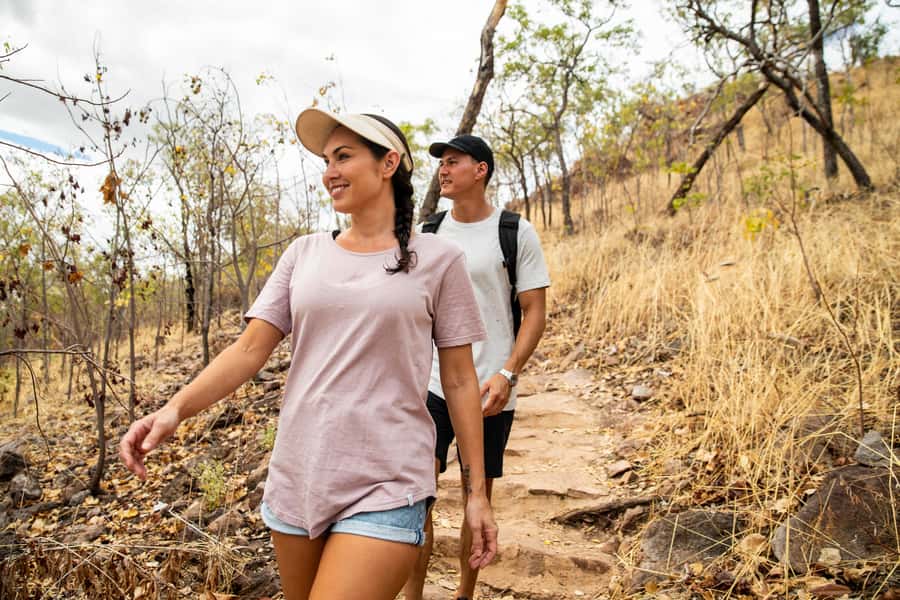
After the cruise and a picnic-style lunch near the East Alligator River (with the chance to spot crocs and flying foxes), you head to Ubirr, in northern Kakadu. Ubirr is one of those places where you can stand there and feel time stretch.
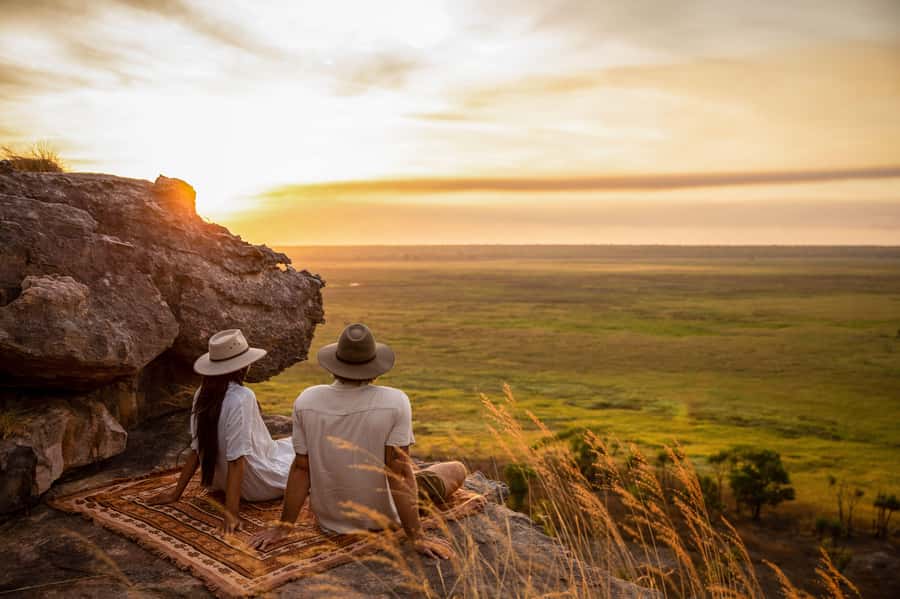
You’ll learn about the rock art from your guide, including the meaning behind paintings connected to the traditional owners of the area. Then there’s a climb to a top viewpoint, and that part is the payoff: staggering 360º views over the Nardab floodplains and into Arnhem Land.
Why it’s worth your energy:
- Rock art here isn’t just background. It’s placed in the landscape for a reason, and the viewpoint helps you understand how people read country.
- The panoramic lookout makes the “where” click. Kakadu stops being a map, and starts being geography you can picture.
Practical tip: wear shoes with grip for the climb, and bring sunscreen even if it looks cloudy. In Kakadu, the sun can get sneaky.
Mardugal Billabong camp life: tents, swags, and a proper recharge
Night one is camping at an exclusive safari camp at Mardugal Billabong. This is where the tour earns points for being realistic about comfort.
You’ll get:
- Permanent safari tents as standard accommodation
- An option to sleep under the stars in a swag
- Pillow and sheets included
- Toilets and showers at each camp
- A large screened undercover area for meals
That screened camp area matters more than you’d think. When the weather shifts, you still eat comfortably and keep your gear under control.
Camp vibe is also part of the experience. In one group, the guide Rhett built the evening around an open campfire, cool drinks, and that classic toasted marshmallow moment. Not every night will be identical, but the tour clearly leans into an easy-going camp feel instead of a rushed stopover.
If you choose the swag, plan for cooler air and bring something warm. The tour includes basic comfort items, but it’s still out in the open.
Jim Jim Falls: a 1 km gorge walk between 200m sandstone cliffs
Day two starts with a fresh breakfast, then you do 4-wheel driving toward Jim Jim Falls. This is where the tour’s “active day” feel really shows.
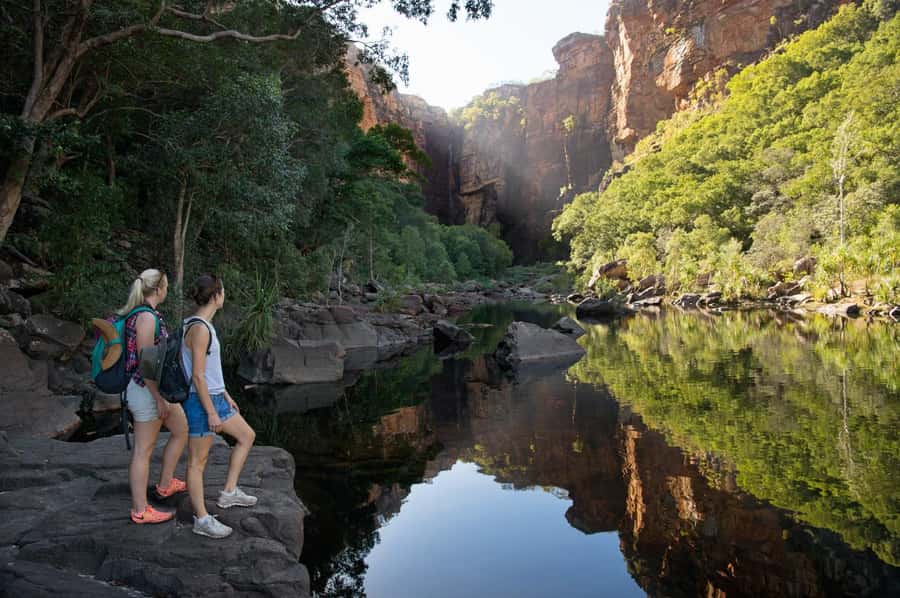
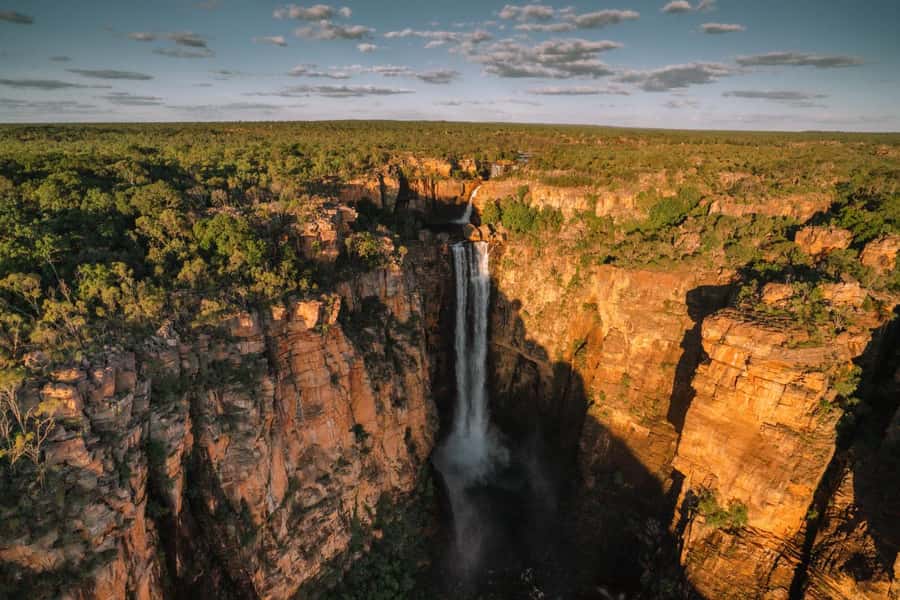
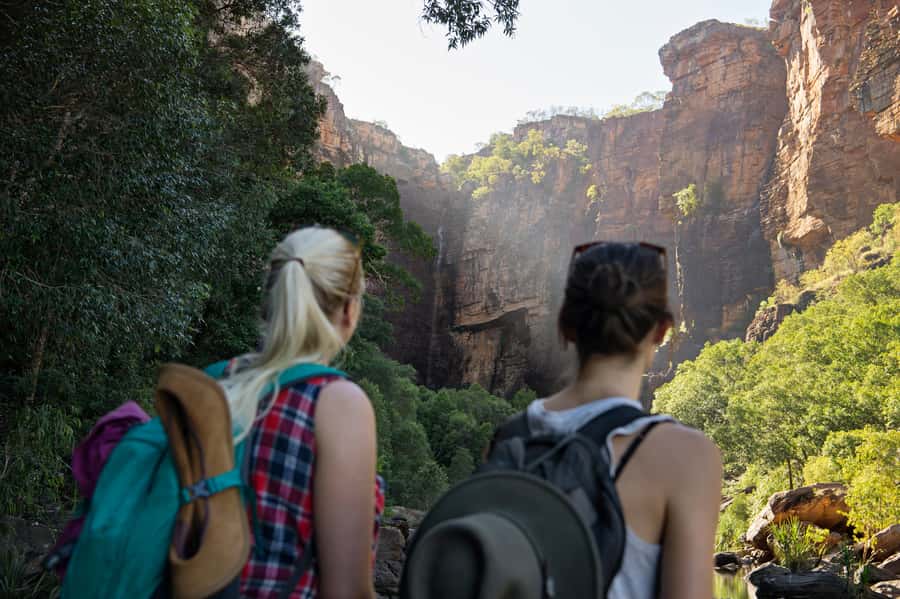
The hike is about 1 km through a gorge surrounded by towering 200m-high sandstone cliffs. When you reach the falls, there’s a plunge pool that’s perfect for a refreshing swim—or you can just relax and take in those views.
What makes Jim Jim special on this tour:
- It’s not only about standing at a waterfall. You get to be in the water and see the setting up close.
- The gorge walk gives you that Kakadu feeling of moving through ancient geology, not just moving between car stops.
A consideration: swimming stops mean you should be mentally ready to get wet, even if the day starts cooler. Pack bathers/towel (they’re required in your packing list), and use insect repellent. The walk through enclosed areas can mean bugs.
Burrungkuy (Nourlangie Rock) Dreamtime stories and cultural context
After lunch, you head to Burrungkuy (Nourlangie Rock). This is a heavy-hitting cultural stop. You’ll learn Dreamtime stories and rock art of this region and hear about their significance to the traditional owners.
Then you don’t just get a cultural talk and leave. The tour also adds in a deeper local learning layer with a visit to the Warradjan Cultural Centre. Expect interactive displays and demonstrations—exact details aren’t guaranteed, but the point is clear: you’re getting more than a quick glance at rock art. You’re learning how to approach it with respect and understanding.
Why this matters for you:
- Kakadu is more than scenery. Rock art is tied to lived knowledge.
- If you’ve ever seen cave art elsewhere and thought, I wish someone explained what I was actually looking at, this type of stop fixes that.
A balanced note: if you want a super academic tone the whole day, you might find the mix of cultural interpretation plus hikes feels like it’s hitting the whole group’s energy level. For many people, that’s a strength. For some, it’s not.
Gunwhardewharde lookout: Arnhem Land escarpment views from above Burrungkuy
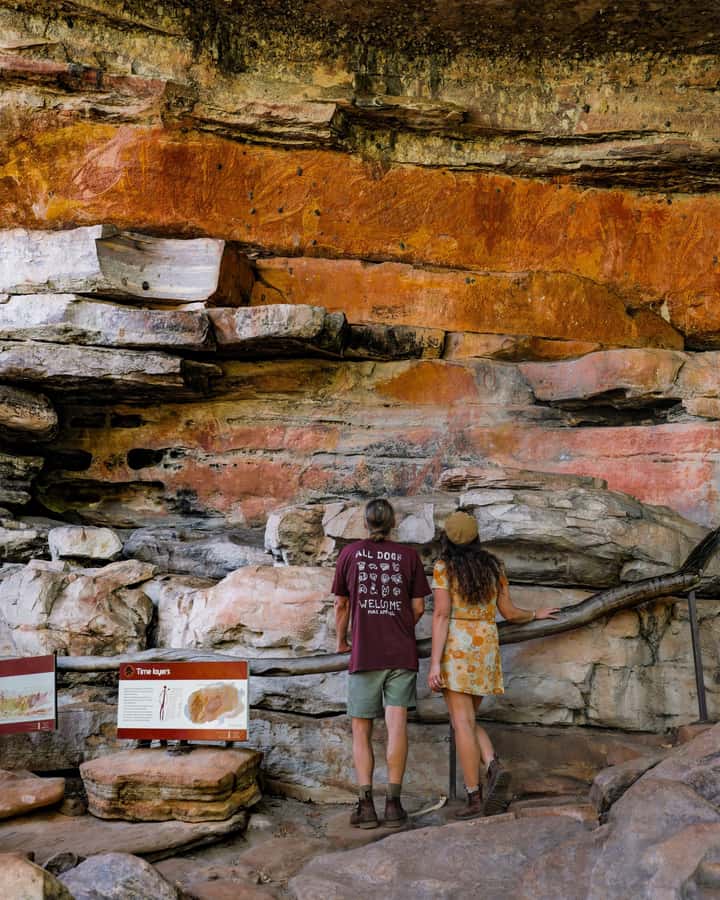
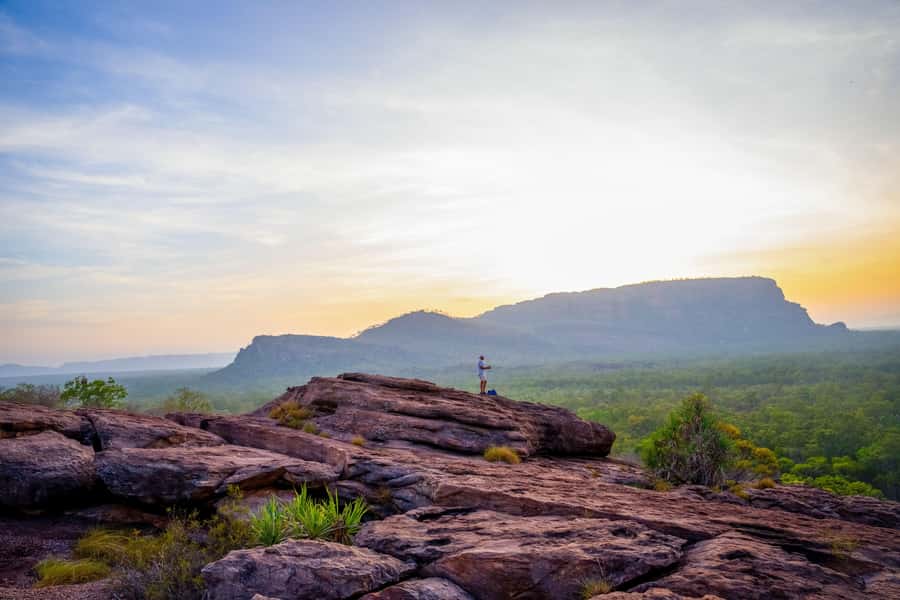
Still day two, you’ll hike up to Gunwhardewharde lookout. This is built for the view side of Kakadu: you look across the woodlands toward the Arnhem Land escarpment while also taking in the vista over Burrungkuy and Anbangbang Billabong.
Even if you don’t consider yourself a serious photographer, this kind of lookout earns its place:
- It helps you understand scale—Kakadu’s “tiny in the distance” features become real terrain.
- It also gives you a break from constant walking. You can take it slow on the climb and linger when you reach the top.
After this, you return to camp and relax around the campfire after dinner.
Maguk (Barramundi Gorge) and Gunlom infinity pools: the two swim days that sell the trip
Day three is for water and views.
Maguk (Barramundi Gorge)
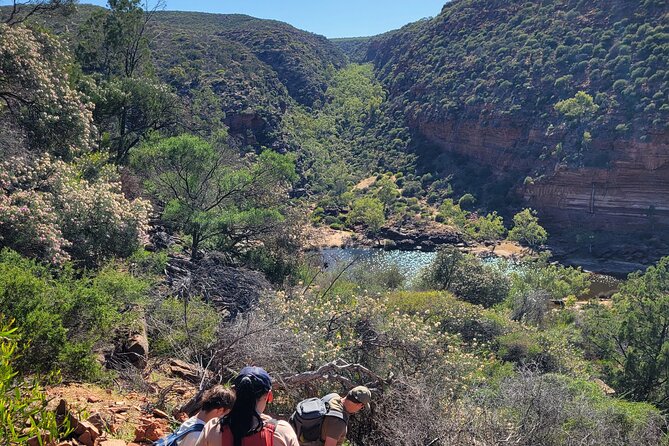
You head to Maguk (Barramundi Gorge) and do a 1 km hike through a paperbark forest. There’s also some rock scrambling, so wear shoes that grip and be ready for uneven ground.
At the plunge pool, you get another chance to swim in a pristine setting. This stop is valuable because it feels different from Jim Jim. Same overall idea—walk into a gorge, then swim—but the environment reads differently.
Gunlom Falls and the naturally occurring infinity pools
Then you head to Gunlom Falls in southern Kakadu. The hike to the top is rewarded with panoramic views and the chance to swim in naturally occurring infinity pools. There’s also a lower plunge pool that’s described as a must-see.
This is one of the most memorable parts of the tour because it combines:
- a proper hike (you earn the view),
- an iconic water feature (you actually swim),
- and the feeling of being in an open, big-sky place.
Practical reality: infinity pools look simple on photos, but water conditions can change. Move carefully at the edges, watch your footing, and swim when it feels safe.
Meals, showers, and the gear choices that matter
One reason people recommend this tour style is that it feeds you well—without turning the trip into a food tour.
You’re included for:
- 2 breakfasts
- 3 lunches
- 2 dinners
- snacks throughout
Meals are described as fresh and delicious in multiple accounts. There’s also a screened undercover camp area for eating, which helps with comfort if the weather does what it wants.
Sleeping setup:
- Safari tent or swag
- pillow and sheets included
- Sleeping bag not included, but you can hire one for $20 if you advise during booking
Phone and power:
- Your packing list includes a power bank, and that’s a clue: power at camp is limited. Bring a charger you can rely on plus a power bank so you’re not stuck with a dying phone after a long day of photos.
Bring:
- sturdy walking shoes
- hat and sunscreen
- toiletries
- bathers and towel
- 1.5L water bottle
- torch
- insect repellent/net
- power bank
Also: you’re told not to bring oversize luggage. If you’re tempted to pack a heavy daypack, remember you’ll be living with the 10kg limit all trip.
Price and value: what $704 covers in Kakadu terms
At $704 per person for three days, this doesn’t feel like a bargain price in dollars. But when you break it down, it starts making sense for Kakadu.
You’re paying for:
- pickup and all-terrain air-conditioned transport
- a live English guide
- national park fees
- camping accommodation (safari tent or swag) with pillow and sheets
- toilets and showers at camp
- a full meal plan (breakfasts, lunches, dinners, snacks)
- wildlife and crocodile cruise
- swims at multiple locations
This matters because Kakadu is not cheap to operate in. Park fees and remote logistics raise costs fast, and the tour is handling that for you.
If you were to do Kakadu independently, you’d still need transport, bookings, permits, and a lot of planning—plus the risk of finding out too late that a road is closed or a swimming area is shut. This tour runs the route and keeps group movement efficient, which is a real kind of value.
Who this Kakadu 4WD camping tour is for (and who should pass)
This trip fits best if you:
- enjoy walking, including short hikes and uneven ground
- want swimming in remote spots like Jim Jim, Maguk, and Gunlom
- don’t mind early starts and long drive stretches
- like a small group up to 16 and a friendly guide vibe
It may not fit if you:
- have low fitness or struggle with hiking and rock scrambling
- need mobility assistance (it’s not suitable for people with mobility impairments)
- are bringing very young kids (minimum recommendations and constraints apply; it’s not suitable for children under 7, and the minimum age recommended is 15, though children as young as 8 can be taken)
Also, if you’re an older group member looking for a very quiet, deep, slow interpretation style, one mixed experience stands out: the tour can feel geared toward a more youth-spirited, communicative group dynamic.
Should you book the 3-Day Kakadu 4WD Camping Tour?
I’d book this if you want a full-flavoured Kakadu weekend: wildlife cruise, Ubirr rock art, and the big swimming stops in one tight 3-day window—without having to figure out remote logistics yourself. The combination of included meals, camp showers/toilets, and guided interpretation makes it easier than most independent plans.
I’d think twice if you need a slower, more academic pace all day, or if you’re not comfortable with hikes, rock scrambling, and getting wet. Kakadu is wild. This tour is built for that reality.
If you match the vibe—outdoorsy, curious, and ready for short but real walks—it’s a strong way to experience Kakadu with just enough comfort to keep the focus on the places that matter.
FAQ
What time is pickup from Darwin?
Pickup is scheduled around 6.30–6.45am from your nominated accommodation in Darwin.
How many people are in the group?
The tour runs as a small group limited to 16 participants.
Is accommodation included, and what type do you sleep in?
Yes. You sleep in a permanent safari tent, with an option to sleep under the stars in a swag. Pillow and sheets are included.
Are park fees and meals included in the price?
Yes. National Park fees are included, along with meals: 2 breakfasts, 3 lunches, and 2 dinners plus snacks.
Do you have bathrooms and showers at the camp?
Yes. Toilets and showers are available at each camp.
Do I need to bring a sleeping bag?
A sleeping bag is not included. You can hire one for $20 if you advise when booking.
How much walking is involved?
You’ll do short hikes including about 1 km to Jim Jim Falls and a 1 km hike to Maguk through paperbark forest with rock scrambling. You’ll also hike to lookouts and to Gunlom Falls viewpoints.
Is swimming included?
Swimming is included at several locations, including Jim Jim, Maguk, and Gunlom. You should bring bathers and a towel.
What luggage is allowed?
Oversize luggage isn’t allowed. There’s a strict 10kg luggage limit, and you should bring one small to medium-sized soft bag or backpack plus a small daypack.
What age is the tour suitable for?
The minimum age recommended is 15 years, but children as young as 8 can be taken. It’s not suitable for children under 7.