REVIEW · NOURLANGIE ROCK
Darwin City: 3-Day Kakadu and Litchfield 4WD Camping Tour
Book on GetYourGuide →Operated by Territory Expeditions · Bookable on GetYourGuide
Ticking off two big national parks is only half the fun. This 3-day 4WD camping trip in the Northern Territory mixes ancient Aboriginal rock art, waterfall swims, and a wildlife and crocodile cruise, then finishes each night in permanent safari tents. I love seeing rock art at spots like Ubirr/Nourlangie and I love that you get to swim at places such as Maguk and Florence Falls rather than just look from a distance.
The main consideration is that this is real camping. You’ll work within a strict 10kg luggage limit, expect insects and heat depending on the season, and you’ll need a decent baseline fitness for the walks and short hikes between sites.
In This Review
- Key highlights you’ll feel right away
- 4WD camping across two parks: why this tour feels different
- Price and what you truly get for $704
- Your guide makes the day: how Libbi and Rhett set the tone
- Kakadu day-by-day: rock art first, then the water
- Nourlangie Rock and Ubirr: where the rock art has context
- Maguk (Barramundi Gorge): the swim that breaks up the long day
- Jim Jim Falls: the monsoon-forest walk and the water access
- Litchfield National Park: waterfalls, rockholes, and termite mounds
- Florence Falls: a classic waterfall swim
- Buley Rockholes and Ikoymarrwa Rock Holes: water in the rock
- Magnetic Termite Mounds: small things that teach big geography
- Wangi Falls: the cool finish
- Camping night setup: safari tents, swag under the stars, and limited power
- What the route teaches you about the Northern Territory
- Small group comfort: 16 people, not 60
- What to pack (and what to leave behind)
- Fitness and who this tour suits best
- Timing, weather, and when plans can change
- Should you book this 3-day Kakadu and Litchfield 4WD camping tour?
Key highlights you’ll feel right away
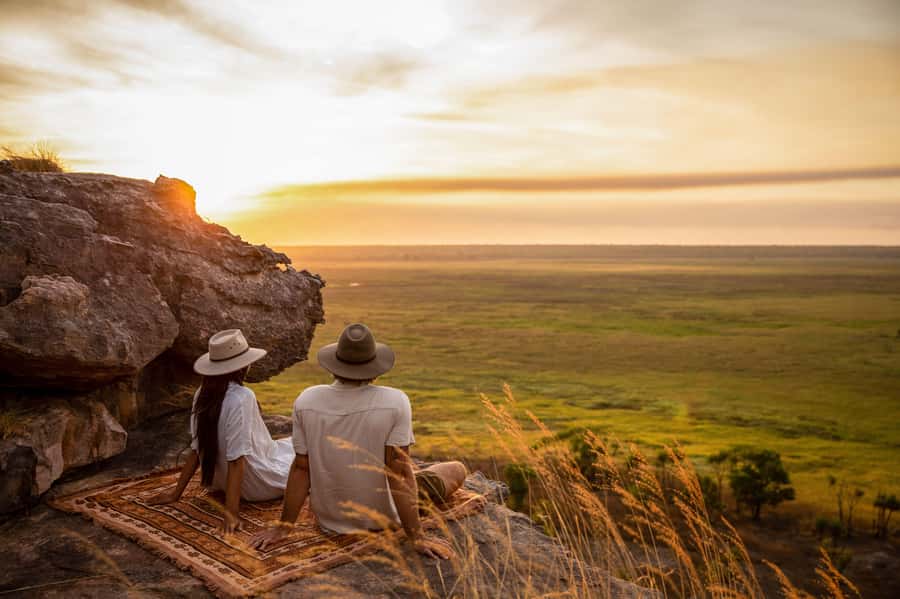
- Small group (max 16) makes it easier to move at the right pace and keep stops personal
- Timed swims and walks help you avoid the harshest heat and get better time at viewpoints
- Aboriginal rock art interpretation at Nourlangie/Ubirr adds meaning beyond the photos
- Waterfall access includes the effort that makes places like Maguk, Jim Jim, Florence, and Wangi Falls worth it
- Wildlife and crocodile cruise rounds out the nature side with a different kind of action
- Camping in permanent safari tents keeps you comfortable while still feeling like the Outback
4WD camping across two parks: why this tour feels different
This tour isn’t trying to speed-run the Northern Territory. It’s built around doing fewer things well in Kakadu and Litchfield National Parks, and doing them with a guide who knows how to read the day. The result is a trip that feels like you’re on safari, not just on a bus.
I also like the balance between big icons and the small, personal moments. You get the headline stops, but the day is also paced so you can actually enjoy lookouts, take photos, and cool off when it counts. And because the group is limited to 16, you spend less time stuck in logistics and more time talking with people, listening, and looking around.
Finally, the camping setup matters. The tour uses permanent safari tents, with an option to sleep in a swag under the stars. That means you’re not bargaining with “roughing it” in the dark, but you still get that Outback feeling when the camp quiets down.
You can also read our reviews of more tours and experiences in Nourlangie Rock.
Price and what you truly get for $704
At $704 per person for a 3-day tour, this isn’t a budget pick. But it also isn’t just “transport plus sightseeing,” because a lot of the real costs are handled for you.
Here’s what the inclusions cover in practical terms:
- All meals as indicated
- Camping fees and equipment
- Park fees included
- Accommodation transfers
- Swimming time in the featured spots
- Wildlife and crocodile cruise
- Interpretation of natural and cultural features
- A small-group setup designed to limit impact
What that means for you: you’re paying for convenience and reduced decision fatigue. You’re not trying to track separate tickets, hire gear, or plan daily food in remote areas. The sleeping bag is the one extra you may need to add, since it’s not included (you can hire one for $20).
If you’re comparing this to piecing together Kakadu and Litchfield on your own, the real value is that you get the route, timing, and know-how bundled in—plus the guide interpretation that makes rock art and seasonal wildlife feel understandable instead of random.
Your guide makes the day: how Libbi and Rhett set the tone
This tour leans on the guide for more than directions. You’ll get interpretation of what you’re seeing, and that changes the whole trip.
One example is Libbi, who’s noted for clear explanations about flora, fauna, and rock paintings, plus strong safety awareness when driving through remote areas. Another example is Rhett, praised for being an expert who loves the job, and for the small comfort details that make long days feel manageable. Both styles point to the same thing: good guiding isn’t just storytelling. It’s timing, pacing, and risk awareness.
You also want a guide who helps a mixed group gel. Solo travelers often worry about feeling left out on small trips. The group setup here is designed to share tasks and keep the atmosphere friendly, so you’re not just sitting quietly in a vehicle.
Kakadu day-by-day: rock art first, then the water
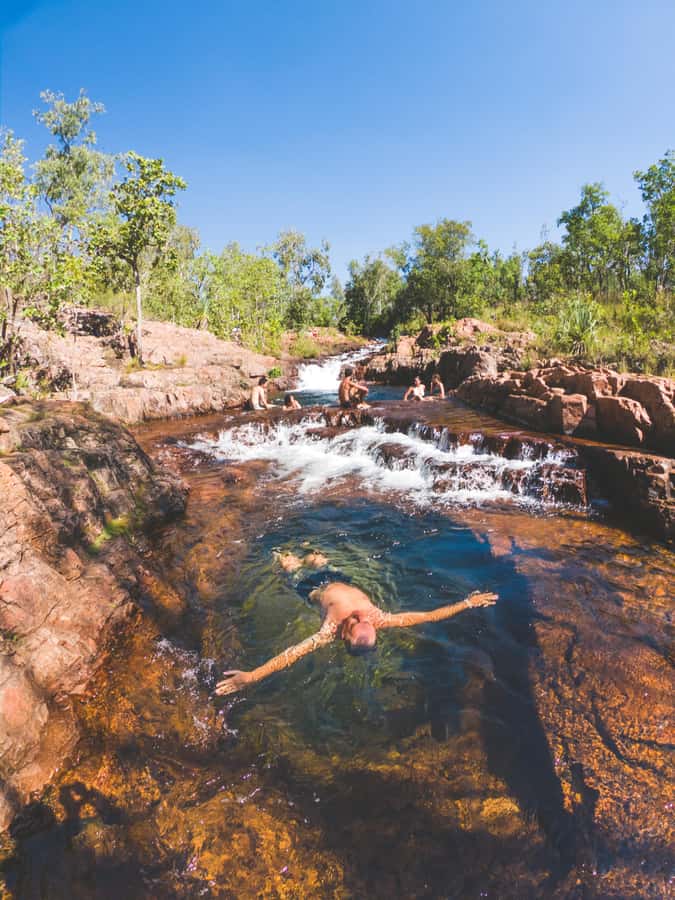
The exact order can be reversed depending on conditions, but the flow is usually Kakadu-focused first and then moving into Litchfield. Weather, park road closures, and cultural commitments can shift plans, so keep some flexibility.
Nourlangie Rock and Ubirr: where the rock art has context
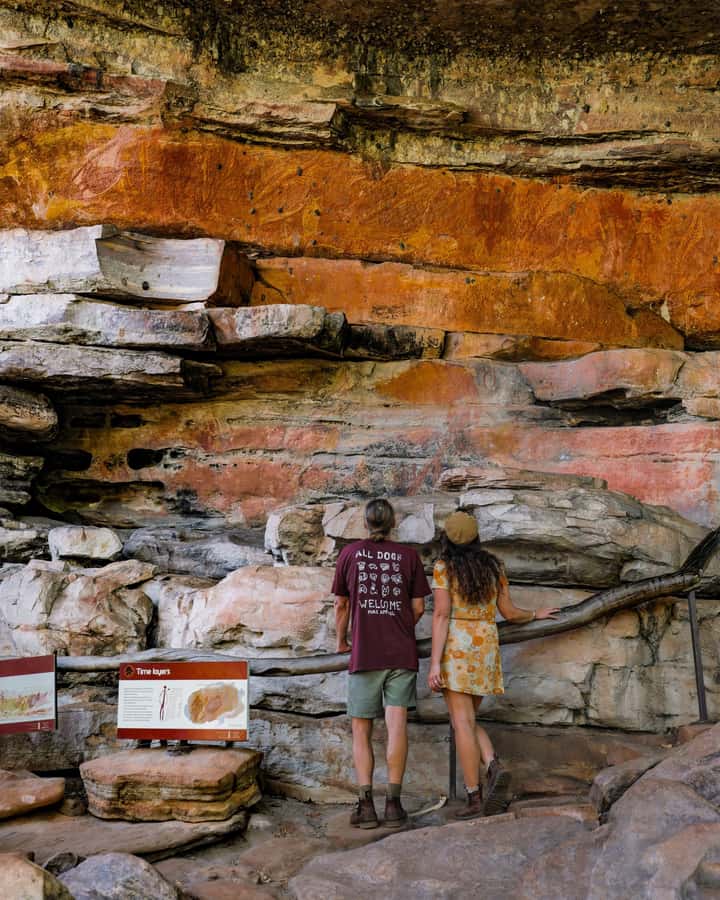
Nourlangie Rock and Ubirr are the cultural anchor points. You’re not just viewing rock walls. You’re learning what you’re looking at, including how Aboriginal rock art connects to country, storytelling, and how people interpret the land.
Why this stop is worth your energy: it turns “ancient drawings” into something you can actually read. With interpretation, you notice details better, and you understand why certain viewpoints matter. It also helps you slow down. Kakadu can be big and fast visually, and rock art is one of the ways the tour teaches you to look carefully instead of just snapping wide angles.
Practical tip for you: bring sunscreen and wear a hat early. Even when the day doesn’t feel too hot, the glare around rock formations adds up.
Maguk (Barramundi Gorge): the swim that breaks up the long day
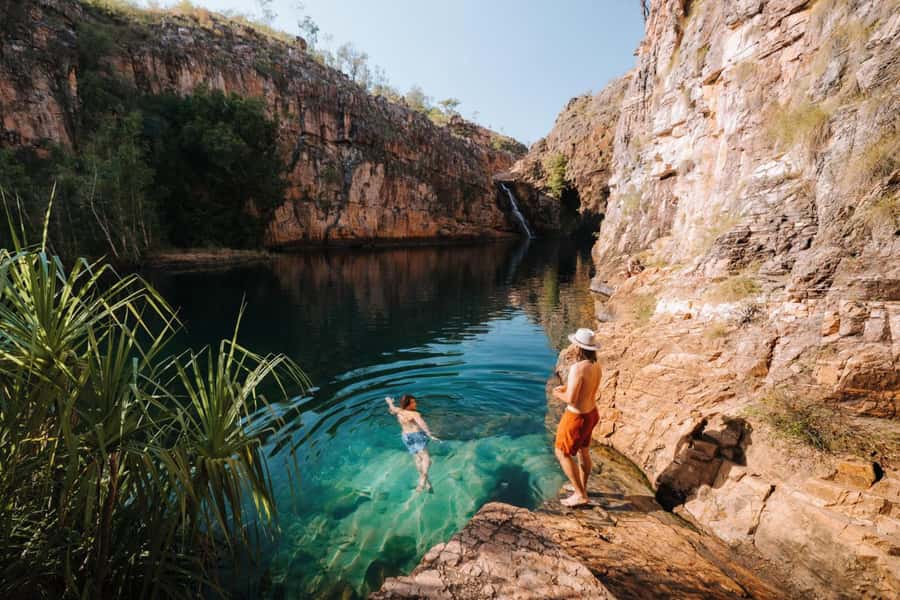
After hikes and lookouts, the tour gives you the payoff: swimming in Maguk (Barramundi Gorge). This is the kind of stop you feel in your body. After hours in the outback sun and dust, stepping into cool water resets you.
There’s also a strategy to timing. The tour aims to schedule swims and walks for better comfort, which means you spend more of your day feeling good instead of battling heat. And once you’re in, you tend to stay present, because the water makes you slow down.
Potential drawback: you’ll want swim gear ready, and you may still get insect attention in the broader environment. Insect repellent and a long-sleeved shirt can be worth the effort.
Jim Jim Falls: the monsoon-forest walk and the water access
Jim Jim Falls is one of the headline natural stops: a short hike through monsoon forest leads you to clear water, with towering cliffs around the falls. What makes it special on this tour is how you reach the falls area via a scenic boat ride and boardwalk.
That boat-and-boardwalk approach matters for two reasons:
- You experience the site from angles you wouldn’t get by walking alone
- It turns the day into a rhythm of modes, not just “drive, hike, repeat”
You’ll likely feel the day afterward, too. If you’re the kind of traveler who likes the “effort equals payoff” trade, this one works.
Litchfield National Park: waterfalls, rockholes, and termite mounds
Once the trip shifts into Litchfield, the vibe changes from Kakadu’s rock-art focus to more water-and-geology variety. You’ll still hike, but the scenery sends a different message: gentler, more playful places where swimming is part of the plan.
Florence Falls: a classic waterfall swim
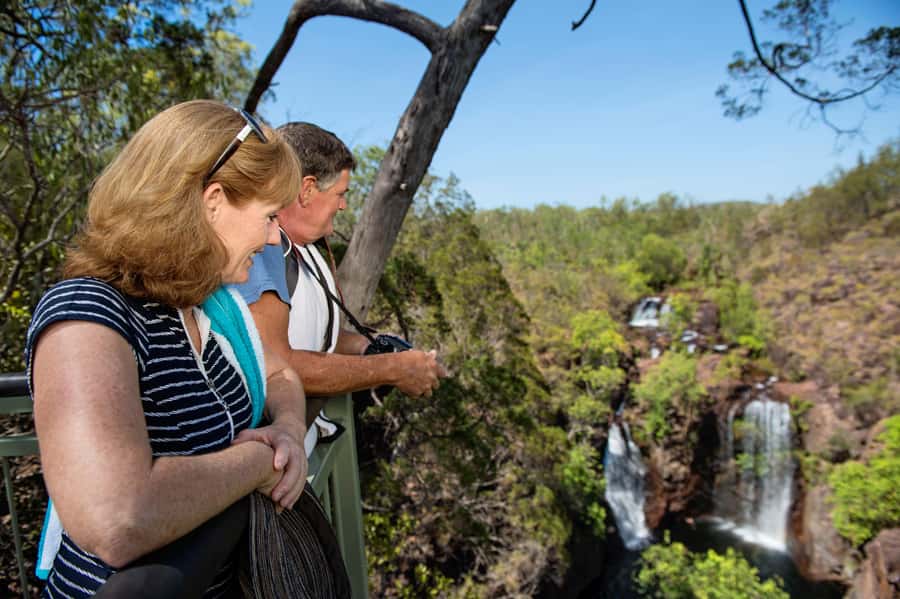
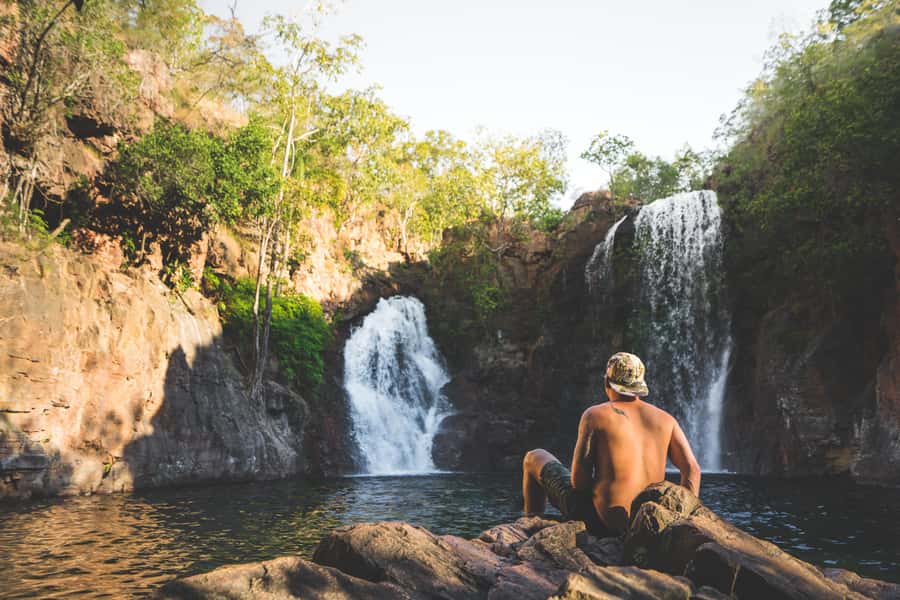
Florence Falls is one of the big reasons people come to Litchfield. Here, you get time to swim in the “enchanting” setting of the falls area. It’s a welcome break after days that are more about lookout time.
If you’re planning your day around photo opportunities, this is where you’ll feel the benefit of a guided schedule. Good timing helps you avoid peak heat and can also mean more relaxed time for photos and changing.
Buley Rockholes and Ikoymarrwa Rock Holes: water in the rock
The rockholes in Litchfield give you that satisfying mix: geologic textures plus swimming coves. Buley Rockholes are known for cascading sections you can enjoy, while Ikoymarrwa Rock Holes rounds things out with another swim opportunity.
These are also “bring your patience” places. You might stand and wait for the right moment to move in and out of the water. It’s not a problem if you approach it like nature time, not attraction time.
Magnetic Termite Mounds: small things that teach big geography
You also stop for the iconic Magnetic Termite Mounds. They’re a reminder that this area is shaped by more than just waterfalls. Termite mounds can tell you something about how life adapts and how the land organizes itself over time.
This is a short stop compared to a swim location, but it’s a great “quick lesson” moment. You’ll see the difference a guide makes in interpretation: the mound looks like a mound until someone explains why it’s interesting.
Wangi Falls: the cool finish
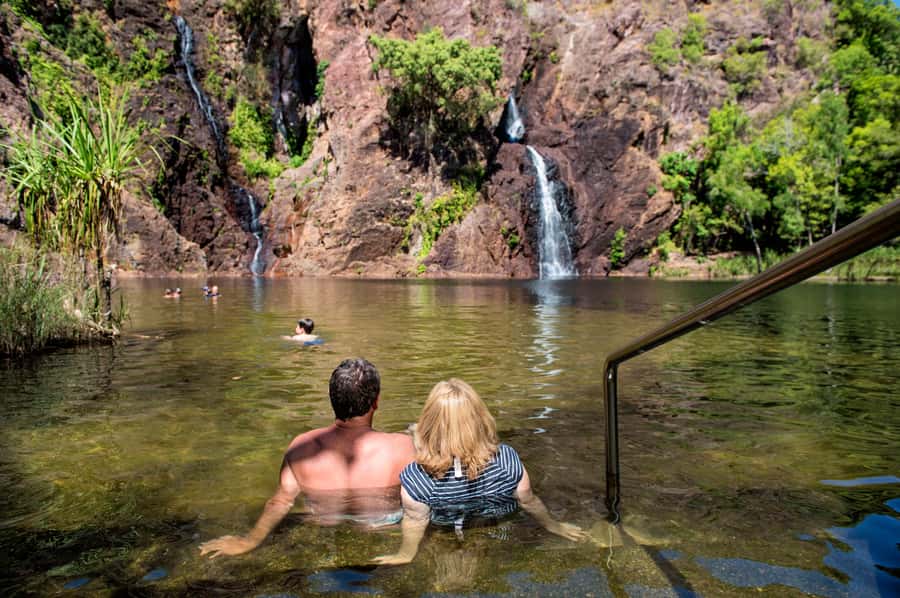
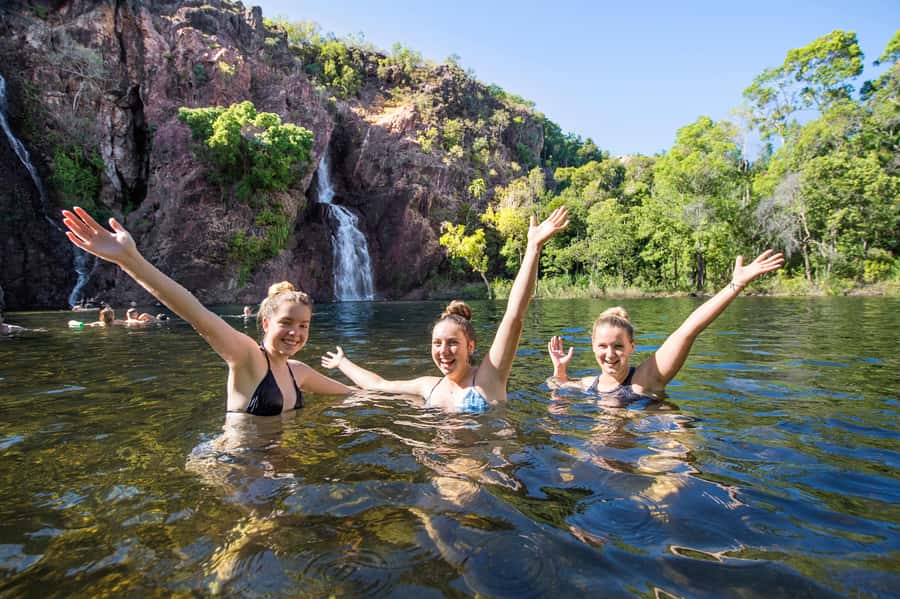
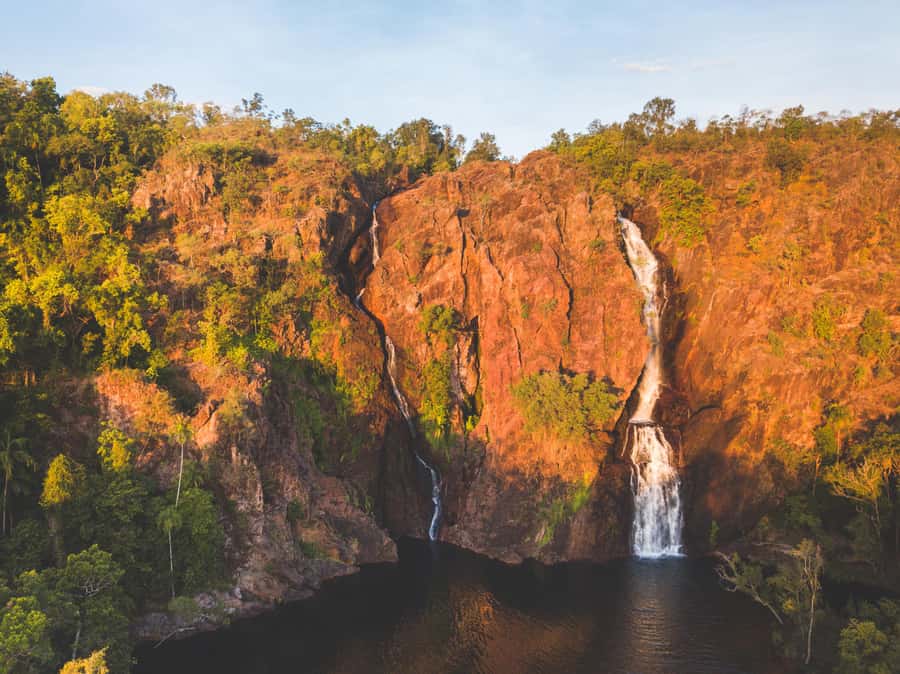
The tour’s Litchfield ending includes Wangi Falls, another standout where you can cool off. If you want a satisfying final impression, Wangi works well because it feels like a real payoff after multiple swim-and-hike moments.
Camping night setup: safari tents, swag under the stars, and limited power
Camping is a core part of the experience here, and it’s handled in a way that keeps you comfortable enough to enjoy the next day.
You’ll sleep in permanent safari tents, and you can choose the swag option if you want to sleep under the stars. That choice is more than comfort. Sleeping under the sky tends to make you feel how remote the Northern Territory really is, especially when the light changes at night.
Power is limited at camp, and you’ll want a power bank for charging your phone. Bring a flashlight too, because once you’re in camp, the dark is real.
Also plan for basic nighttime logistics:
- keep water handy
- pack your swim stuff where you can grab it fast
- don’t rely on your phone for everything if it runs out of charge
What the route teaches you about the Northern Territory
This isn’t a “check the box” itinerary. The tour is set up to connect three things: culture, water, and wildlife.
- Aboriginal rock art teaches you that country isn’t just scenery. It’s story, knowledge, and meaning.
- Waterfalls and swimming spots show you why these places are more than pretty views. Water is how you survive the day emotionally as much as physically.
- The wildlife and crocodile cruise adds movement and unpredictability. It’s a different kind of watching, and it makes the day feel alive rather than static.
The guided interpretation is what binds it together. Without it, you’d mostly see stops. With it, you start to notice patterns.
Small group comfort: 16 people, not 60
One of the best practical advantages is the group size: limited to 16. You’ll feel it in things like:
- less waiting around at viewpoints
- easier social energy in camp
- more room for questions during interpretation
It’s also why solo travelers often feel comfortable here. A small group can turn into a little community fast—especially when people help with tasks at camp and share the small moments between activities.
What to pack (and what to leave behind)
This tour keeps luggage tight for a reason. The vehicle and camp setup are built for soft bags and daypacks, not big suitcases.
You should bring:
- sun hat
- swimwear and a towel
- sturdy hiking shoes
- sunscreen
- jacket and long-sleeved shirt
- insect repellent
- flashlight
- reusable water bottle (1.5L)
- sleeping bag if you don’t want to hire one
- power bank for phone charging
Not allowed:
- luggage or large bags
Know the limit:
- strict luggage limit of 10kg
- plan for one small to medium soft bag or backpack plus a small daypack
One small but important detail: pack for insects and for water. If you leave repellent behind, you’ll feel it later.
Fitness and who this tour suits best
This tour is not a good fit for everyone. It’s generally more active than people expect because you’ll hike and walk at multiple stops, including short hikes and river-area access.
Not suitable for:
- children under 8 years
- people with low level of fitness
Recommended minimum age is 15 years, though children as young as 8 may be taken. If you’re traveling with kids, focus on whether they can handle uneven ground and time in the sun.
Who this tour is for:
- you want a guided, interpretive experience in Kakadu and Litchfield
- you want real swimming time in iconic areas
- you like small groups and don’t want to fight crowds
- you’re okay with camping and basic power limits
Timing, weather, and when plans can change
This is Northern Territory weather, so expect variability. The itinerary can change due to seasonal conditions, extreme weather, park road closures, and cultural commitments from Traditional owners.
What you can do: keep your schedule flexible and pack for temperature swings. Even when you feel warm during the day, nights can feel cooler in the outback.
Should you book this 3-day Kakadu and Litchfield 4WD camping tour?
Book it if you want the best “mix” of the region without doing the hard planning yourself. The value is strong because park fees, meals, camping equipment, and the wildlife/croc cruise are handled, and the guiding adds meaning to rock art and natural features. The small group size also makes it feel human, not crowded.
Skip it if camping isn’t your thing, or if you don’t want to deal with limited luggage, insect repellent needs, and day hikes that require basic stamina. Also, if you’re sensitive to heat, pack smart and trust the tour’s timing approach.
For the right traveler, this is one of those rare tours where you end the day muddy from walking, then cool down in the water, then fall asleep under a big sky, with the cultural story still in your head.