REVIEW · CAIRNS AND THE TROPICAL NORTH
Atherton Tablelands Rain Forest by Night from Cairns
Book on Viator →Operated by Wait-a-While Rainforest Tours · Bookable on Viator
Rainforest nights in Queensland feel unreal. This small-group Atherton Tablelands tour turns the Wet Tropics into a guided hunt for nocturnal animals, including spotlight walks for platypus and tree kangaroos.
I also like that you get the full routine: daytime rainforest searching, then a true after-dark program using provided gear.
One thing to plan for: the drive is twisty, and you’ll do a moderate amount of walking, including in the dark.
What I really enjoy is the mix of wildlife time with proper breaks and good scenery. At Lake Barrine, you’ll stop for afternoon tea in an old teahouse setting by a volcanic crater lake, not just another quick stop.
Then dinner lands in heritage Yungaburra, so the evening feels like an outing, not a nonstop scramble for animals.
You should book it if you want real rainforest time and you can handle a few hours of off-and-on walking. If you get motion sick, take precautions before you head up the Gillies Range Road, since the roads are famously curvy.
In This Review
- Key things that make this tour worth your time
- Why Atherton Tablelands rainforest at night is a different game
- Cairns pickup and the curvy climb up Gillies Range Road
- Lake Barrine teahouse: volcanic crater-lake break with real atmosphere
- Atherton Tablelands day walk: the rainforest in daylight
- Yungaburra dinner in a heritage village before the night hike
- Curtain Fig National Park after dark: spotlighting geckos and possums
- Platypus spotting at sundown: set expectations and stay patient
- Small-group size (max 11) and the guide you’ll actually learn from
- What to pack for a rainforest night (and what to bring yourself)
- Price and value: what you’re paying for beyond the wildlife
- Who this tour fits best (and who should think twice)
- Should you book Atherton Tablelands Rain Forest by Night from Cairns?
- FAQ
- What time does the tour start?
- How long is the tour?
- How big is the group?
- Is hotel pickup and drop-off included?
- What meals are included?
- What wildlife might I see?
- Do I need to bring special equipment?
- What should I wear or bring for the night walk?
- Is the drive comfortable if I get motion sick?
- What if the weather is poor?
- Can I get a full refund if I cancel?
Key things that make this tour worth your time
- Platypus at dusk: your guide times the search for when this shy animal is most active.
- Spotlight-and-binocular wildlife viewing: you’re not just wandering; you get tools and guidance to spot critters.
- Lake Barrine afternoon tea: crater-lake views and a break at an 80-year-old teahouse.
- Curtain Fig National Park at night: geckos, frogs, owls, possums, and more on a guided night hike.
- Small group (max 11): easier spotting and more attention from the guide.
- Comfort stops built in: dinner in Yungaburra before the dark walk, plus provided rain ponchos.
Why Atherton Tablelands rainforest at night is a different game
Day tours in the tropics are fine, but night is where the Wet Tropics really flex. The whole rhythm changes after sundown: animals that hide in daylight start moving, and the rainforest becomes all sound, smell, and sudden flashes of movement.
On this tour, you get both halves. By day, you walk interpretive trails in the rainforest and look for creatures that are active in daylight. After dinner, you shift to spotlight searches for nocturnal animals. That mix matters because it keeps you engaged even if you strike out on one specific sighting.
This is also one of the better ways to see Australian wildlife in its real setting. You’re not in a zoo cage. You’re following a guide through habitat that’s been shaped by thousands of years of rainforest growth.
You can also read our reviews of more evening experiences in Cairns and the Tropical North
Cairns pickup and the curvy climb up Gillies Range Road
You start around 1:30 pm, with hotel pickup and an air-conditioned vehicle. The drive up toward the Tablelands includes the scenic but very twisty Gillies Range Road, which is part of the adventure for some people and a deal-breaker for others.
If you’ve ever had motion sickness on winding mountain roads, plan ahead. A number of guests specifically warned that the drive can be challenging, so it’s smart to consider medication before you go. At night, you also want to be comfortable enough to focus during the dusk and dark searching.
One practical win: because the tour handles the transport, you can focus on the viewing. You won’t be renting a car and trying to navigate unfamiliar roads while everyone else is watching for a flash of movement by the river.
Lake Barrine teahouse: volcanic crater-lake break with real atmosphere
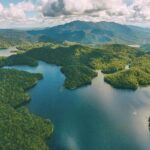
Lake Barrine is where the day tour becomes a proper afternoon. You arrive at a volcanic crater lake surrounded by rainforest, then you slow down for afternoon tea.
The teahouse stop is more than a snack break. It’s described as about 80 years old, which gives the stop a sense of place. You’ll be able to look out over the lake while you have tea or coffee and fresh-baked goods, plus you get a breather before the wildlife walking ramps up again.
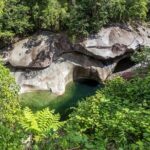
You’ll also get time to check out a volcanic pool at Lake Barrine. That’s a small detail, but it adds variety to the day so it feels like a journey through different rainforest features, not only the same trail loop.
If your group includes people who get restless on long drives or long walks, this tea stop often becomes the moment everyone recalibrates.
Atherton Tablelands day walk: the rainforest in daylight
After Lake Barrine, you head into the Atherton Tablelands, where you spend the majority of the tour searching for wildlife. This is the daytime leg, typically about 4 hours.
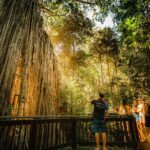
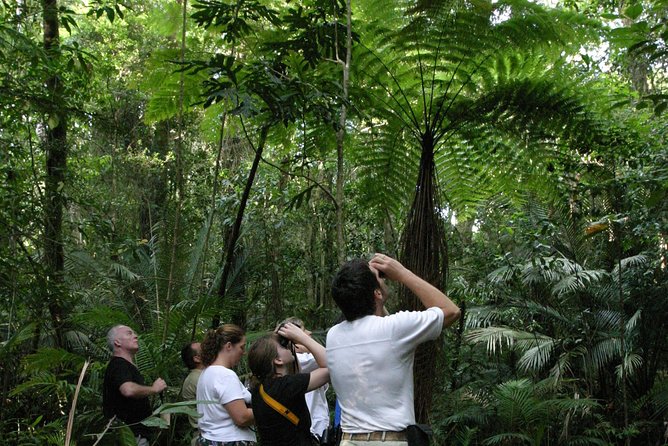
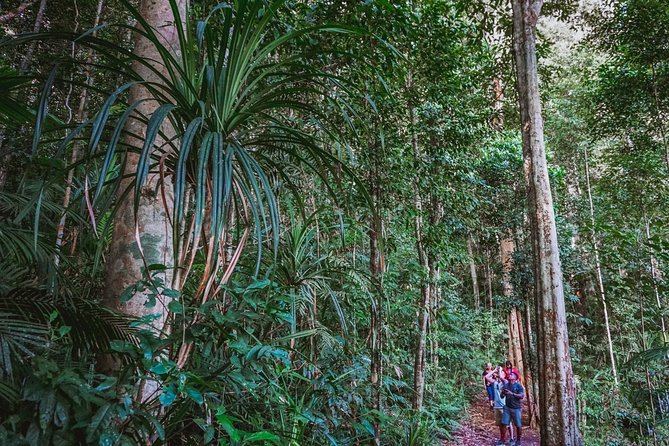
Your guide leads interpretive walking trails through rainforest. You’re looking for more than one headline animal. You might spot butterflies, birds, flying foxes (bats), and other rainforest life. The tour also mentions seeing things like thousand-year-old kauri pines and a towering curtain fig tree along the way.
Daytime is also when you can appreciate the rainforest’s structure. At night, everything happens faster and feels harder to see. By day, you get to learn how the habitat works—what grows where, and why animals show up where they do. That knowledge helps later, when you’re searching by spotlight.
A subtle but important thing: you’ll have binoculars and rain ponchos provided. That means you can keep your focus on spotting rather than scrambling for the right gear when weather shifts.
Yungaburra dinner in a heritage village before the night hike
Once the daylight leg winds down, you head to Yungaburra for dinner at a country restaurant in a heritage village setting. The ride and dinner matter because they create a hard reset before darkness.
Yungaburra is described as a heritage village with original buildings from the 1890s still in use, so you’re eating somewhere that feels old and story-driven, not like a modern fast stop. Reviews also point out that dinner is a highlight for many people, with options including vegetarian meals and hearty mains.
This stop is also practical. After hours of walking and looking around, you’ll want real food and a chance to warm up before the night walk in the rainforest. Think of it as energy management for the evening search.

Curtain Fig National Park after dark: spotlighting geckos and possums
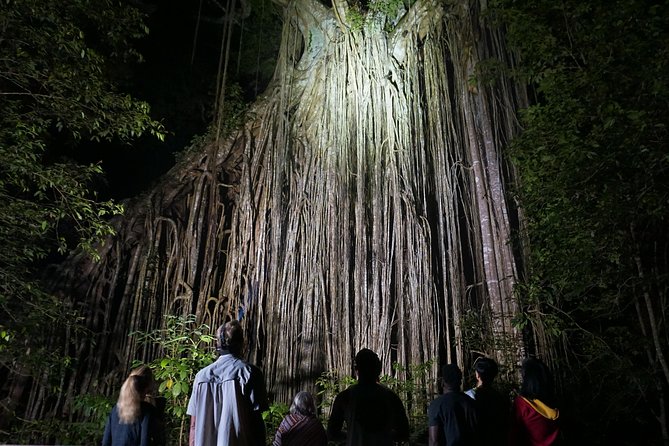
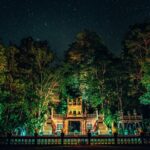
After dinner, the tour focuses on what’s active when the forest is darker: nocturnal animals. The night hike is about 1.5 hours and is centered around Curtain Fig National Park.
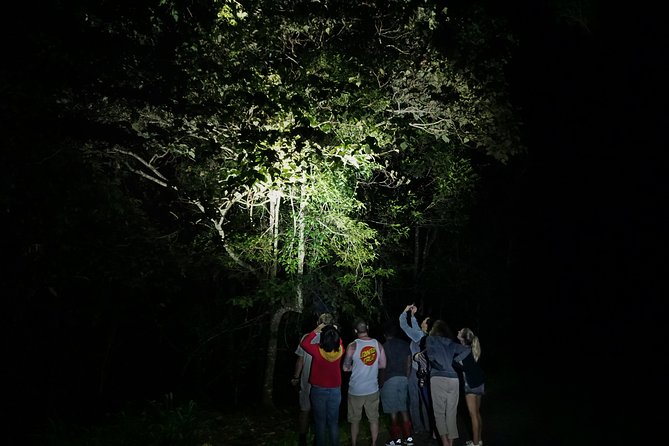
Here’s what changes: instead of scanning with your eyes, you’re using provided spotlights and binoculars. Your guide helps you point your attention at the right places, and you’ll get instructions on how to use the binoculars effectively.
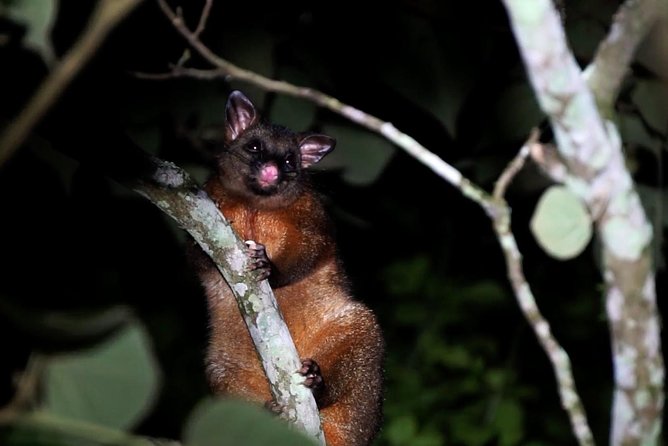
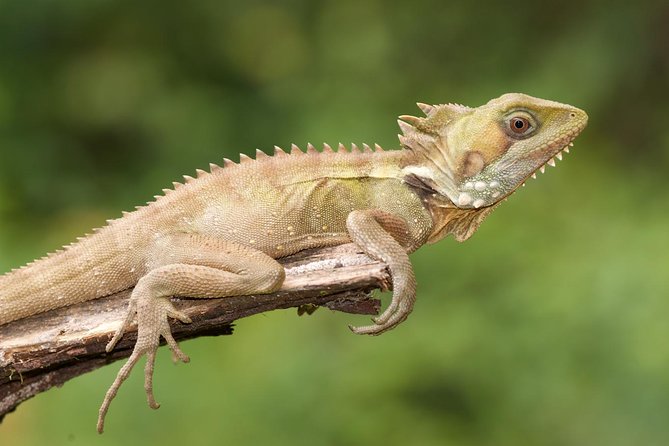
During this dark leg, you may spot bright green gecko lizards, the Lumholtz tree kangaroo, glider possums, frogs, owls, and tiny ringtail possums. You’re also likely to see other rainforest creatures, because the tour is designed as a search pattern, not a guarantee list.
One extra benefit that can happen on clear nights: the sky can be very dark away from city light. Some people specifically mentioned seeing the Milky Way, so if the weather cooperates, you might catch a memorable stargazing moment as you transition in and out of the spotlight search.
Platypus spotting at sundown: set expectations and stay patient
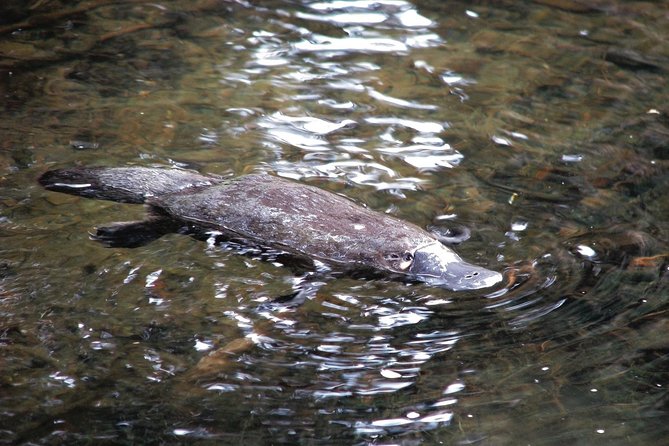
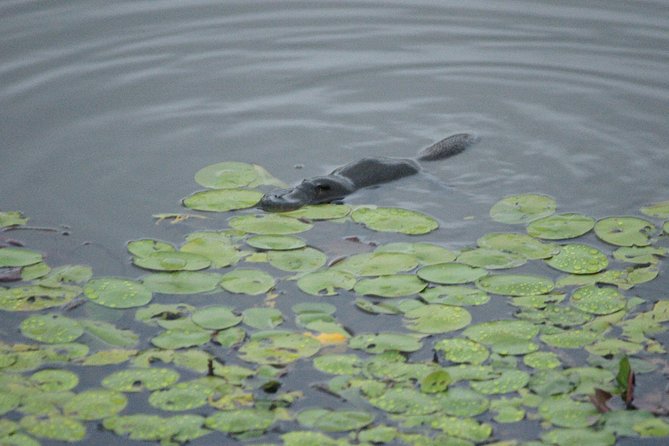
If you book this tour for one animal, it’s probably the platypus. The schedule is built around that: you go in search at sundown, when the shy platypus is most likely to be active.
Even with great timing, platypus sightings can still be hit-or-miss. That’s not a flaw in the tour. It’s the real deal of observing wildlife in the wild. The value is in going with someone who knows where to look and keeps searching until they find signs.
Guests also praised the way guides persist on the platypus search. If you’re lucky, you might see one swimming and feeding, and some groups have reported multiple sightings. But even if you only get a glimpse, the experience is still unusual—because many people go their whole life without seeing one in its natural habitat.
My advice is simple: don’t treat this like a checklist item. Treat it like a patience exercise with great payoffs.
Small-group size (max 11) and the guide you’ll actually learn from
The tour runs as a maximum of 11 travelers, which you’ll feel during both the day walks and the night searching. With a smaller group, it’s easier to stop quietly, reposition, and avoid crowding the viewing spots.
It also tends to mean you can ask questions and get answers in real time. Guides on this tour have been praised for being hands-on at spotting animals in different lighting, and for teaching people how to use the binoculars rather than handing them over with no guidance.
Two guide names came up in feedback: Paul and Clayton. Different guides bring their own personality, but the consistent theme is clear: they’re out there looking carefully, not just following a fixed route.
If you’re the type who likes to understand what you’re seeing—why an animal might be present or how rainforest features connect to wildlife—this is the kind of tour where that curiosity gets rewarded.
What to pack for a rainforest night (and what to bring yourself)
This is a night-in-the-rainforest experience, so your clothing choice matters.
You should wear closed-toe shoes and bring a jacket for nighttime. A moderate amount of walking is involved, including walking in the dark. If you’re not used to uneven ground or you dislike low-light conditions, you may want to think through your comfort level before booking.
Insect spray is not provided, so bring it. The tour does provide rain ponchos, binoculars, spotlighting gear, and reference materials, but bugs are your responsibility.
If you’re prone to motion sickness, consider medication before the drive. Multiple reviews specifically flagged the curvy roads going up and down.
Price and value: what you’re paying for beyond the wildlife
At about $157.79 per person for an 8-hour outing, the price can look steep until you see what’s included.
Your ticket covers:
- Hotel pickup and drop-off
- A local guide
- Afternoon tea at Lake Barrine
- Dinner in Yungaburra
- National park fees
- All equipment (binoculars, spotlighting gear, rain ponchos)
- An air-conditioned vehicle
Drinks aren’t included unless specified, so you may want cash or card for anything you choose to purchase.
So the value isn’t just the idea of seeing a platypus. It’s that you’re paying for transport, park access, meals, and the gear that makes night viewing possible. If you were to DIY it, you’d spend time coordinating routes, finding safe access points, and buying the right spotting gear—plus you’d miss the guide’s search patterns that boost your odds.
For people staying in Cairns who want a high-effort wildlife experience without the stress, it’s strong value.
Who this tour fits best (and who should think twice)
This tour is a great fit if you:
- Want to see Australian wildlife in the Wet Tropics rather than from a static platform
- Enjoy night walking and can handle cooler evening air
- Appreciate guided searching over guaranteed animal checklists
- Prefer a smaller group where you can actually look and learn
You might think twice if you:
- Get motion sick on curvy mountain roads
- Don’t like walking in the dark
- Want a strict schedule where you never wait for sightings
Should you book Atherton Tablelands Rain Forest by Night from Cairns?
Yes—if you’re excited about nocturnal wildlife and you’re willing to embrace the wild part of wildlife. The blend of Lake Barrine afternoon tea, heritage dinner in Yungaburra, and a structured night hike in Curtain Fig National Park makes this feel like a full evening outing, not a short drive-by.
I’d book it especially if platypus sightings are on your list, because the timing at sundown and the guide’s persistence are the real reasons this tour gets such strong ratings. Just plan for the twisty drive, bring insect spray and a jacket, and keep your expectations flexible.
If you want, tell me your travel month and whether anyone in your group gets motion sick—I can help you decide how to time it and what to pack.
FAQ
What time does the tour start?
The start time is 1:30 pm.
How long is the tour?
The duration is about 8 hours.
How big is the group?
This experience has a maximum of 11 travelers.
Is hotel pickup and drop-off included?
Yes. Hotel pickup and drop-off are included.
What meals are included?
You get afternoon tea at Lake Barrine and dinner at a country restaurant in Yungaburra.
What wildlife might I see?
The tour focuses on Australian native animals, including platypus at dusk and the Lumholtz tree kangaroo at night, plus options like tree frogs, geckos, glider possums, owls, flying foxes, and wallabies.
Do I need to bring special equipment?
No. The tour provides binoculars, spotlighting gear, rain ponchos, and reference materials.
What should I wear or bring for the night walk?
Wear closed-toe shoes and bring a jacket for nighttime. Insect spray is not provided, so you should bring your own.
Is the drive comfortable if I get motion sick?
The route includes the very twisty Gillies Range Road, so if you’re car sick, it’s smart to take precautions.
What if the weather is poor?
This experience requires good weather. If it’s canceled due to weather, you’ll be offered a different date or a full refund.
Can I get a full refund if I cancel?
You can cancel for a full refund if you cancel at least 24 hours before the experience start time. Less than that usually isn’t refundable.