REVIEW · AUGUSTA AUSTRALIA
Augusta: Whale Watching Tour
Book on GetYourGuide →Operated by Naturaliste Charters · Bookable on GetYourGuide
Whales in the bay can happen fast. This tour pairs a purpose-built vessel with expert spotting in Flinders Bay, plus on-board talks from a Marine Biologist about migrating whales and what you’re actually seeing out there. I especially like how quickly the crew seems to get you into position, and how the commentary makes the whole trip feel less like random sightseeing and more like real wildlife watching.
I also enjoy the comfort and feel of the boat. You’re treated like a VIP, with access to the Skippers lounge if you want it, and there’s a simple onboard tea break to keep things pleasant during the cruise. The main drawback is sound: if the commentary isn’t easy to hear for you from your seat, you’ll want to pick a spot where you can hear clearly and still keep an eye on the water.
In This Review
- Key Things I’d Prioritize Before You Go
- Step Off the Dock and Into a Whale-Spotting Rhythm
- The Value of the VIP Feel on the Alison Maree
- Flinders Bay: Where Two Worlds Meet (And Whales Hang Out)
- What You Might See: Humpbacks, Southern Right, Blue Whales, Dolphins
- Humpback whales
- Southern right whales
- Blue whales
- Dolphins
- The On-Board Marine Biologist: Turning Sightings Into Meaning
- How the Two-Hour Cruise Feels in Real Time
- The Whales-or-Free Guarantee: Why It Changes the Value
- Quick Tips for Getting the Best Views
- Who This Tour Suits Best
- Should You Book This Augusta Whale Watching Tour?
- FAQ
- How long is the whale watching cruise?
- What whales and wildlife can I expect to see?
- Does the tour offer a guarantee if I do not see whales?
- Is there food or drinks included?
- What species information will I hear on board?
- Where do I meet the crew?
- When do tours run?
- Is the tour suitable for families and wheelchair users?
Key Things I’d Prioritize Before You Go
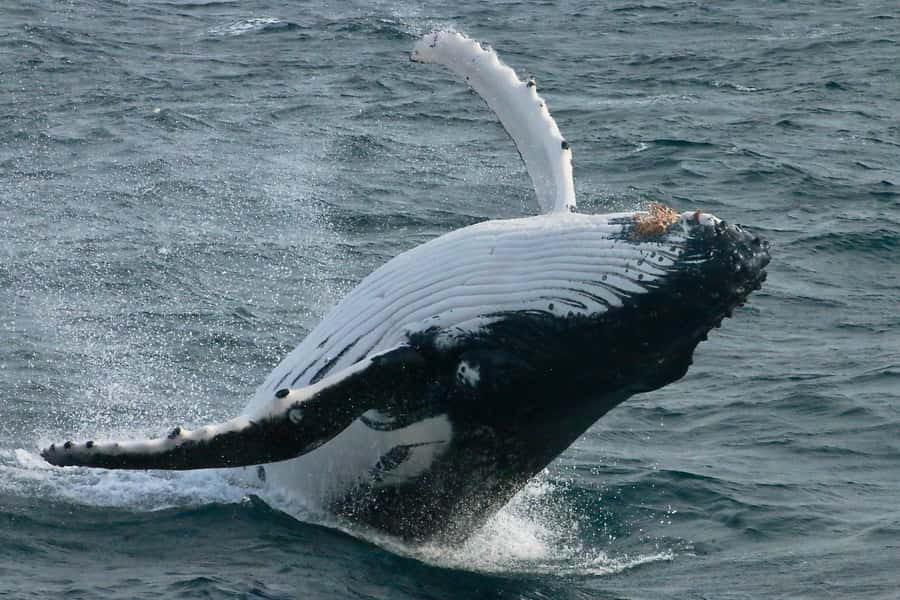
- Flinders Bay is sheltered, which helps you enjoy the wildlife without fighting rougher conditions as much.
- On-board Marine Biologist commentary turns sightings into a learning moment, not just a spectacle.
- Multiple whale types are possible: humpbacks, southern right, and blue whales, plus dolphins.
- A very high sighting success rate (the operator quotes 99%), and a whales-or-free guarantee if you miss out.
- You don’t need binoculars to find whales here, since the migration can be active and close.
- The cruise often runs longer than the scheduled time, depending on whale activity and how long they keep engaging the boat.
Step Off the Dock and Into a Whale-Spotting Rhythm
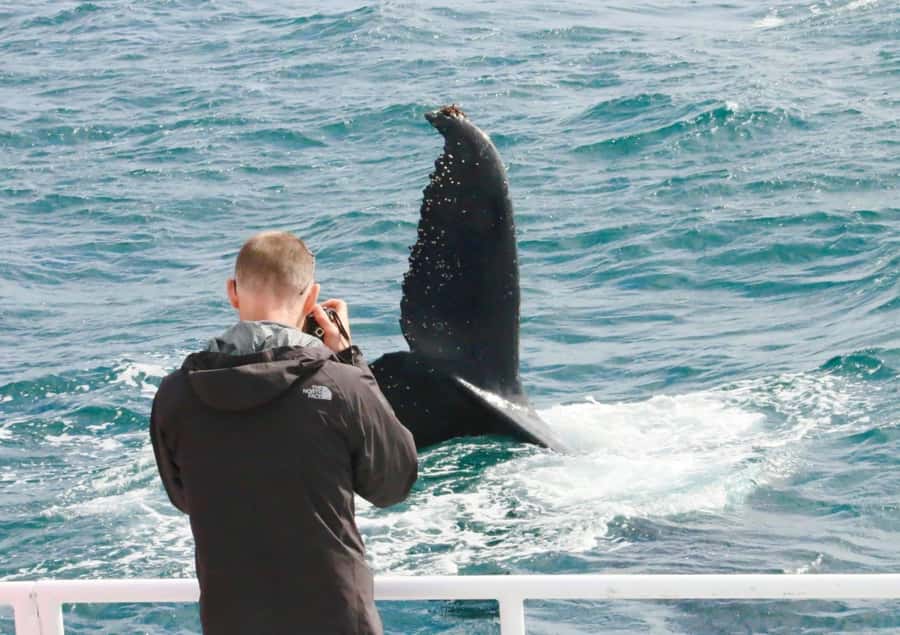
Your day starts at Augusta Boat Harbour, where you meet the crew at the supplier’s desk in the undercover area. It’s not a complicated setup, which matters when you’re excited and just want to get out there. Before you head to Flinders Bay, there’s a safety briefing, and then you’re in motion toward one of the South West’s best whale-watching zones.
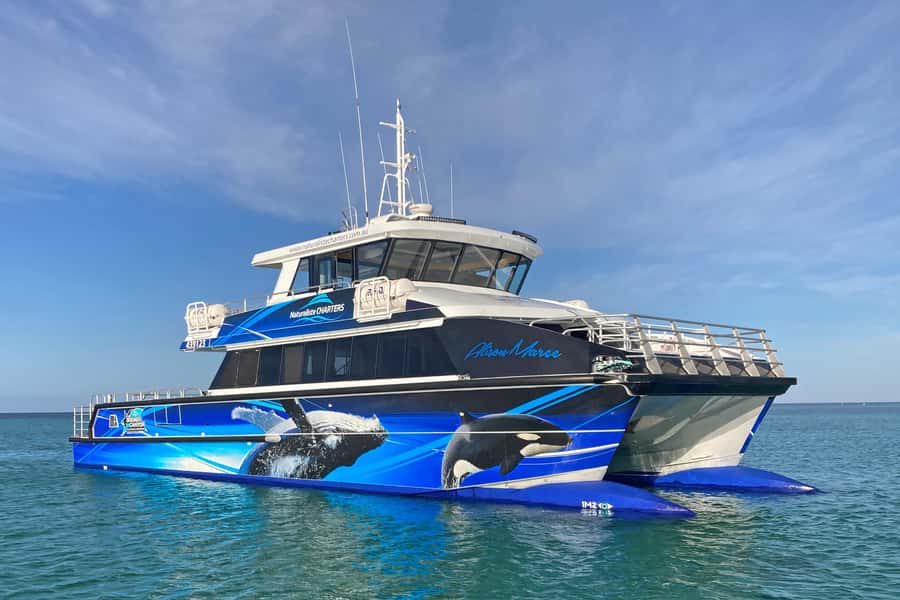
The boat used for this experience is the Alison Maree, described as a sturdy charter vessel built specifically for whale watching. That detail isn’t just marketing fluff. On whale tours, stability and layout matter because you’re trying to track animals that can change direction quickly. A purpose-built setup also helps keep the viewing workflow smoother for everyone on board.
You’ll also notice the tour’s pace. You’re not stuck waiting around for “the perfect moment” for ages. The experience is designed around how whales move through this region, and the operator notes that you often don’t have to wait long after departing Augusta Harbour until whales are sighted.
You can also read our reviews of more tours and experiences in Augusta Australia.
The Value of the VIP Feel on the Alison Maree
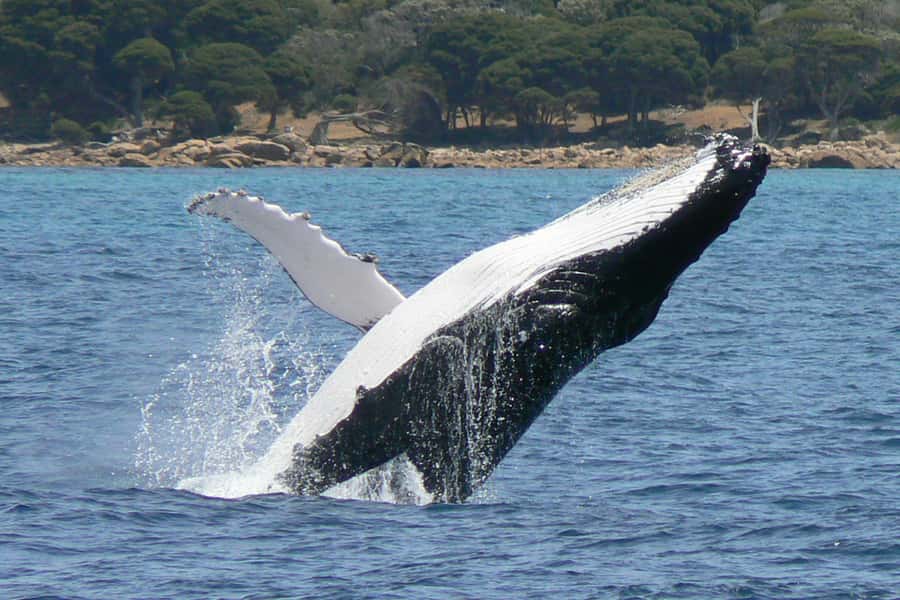
This is one of those tours where the tone is calmer and more welcoming than you might expect for wildlife viewing. Everyone is treated as a VIP on board the vessel, and complimentary access is available to the Skippers lounge. If you like having a comfortable place to settle while still being near the action, that lounge option can make a difference.
There’s also a practical reason to care about comfort. A two-hour cruise is short enough that every minute counts, but long enough that you’ll appreciate warm layers, a stable viewing position, and a spot where you can focus on what’s happening at the water’s surface.
You’ll likely appreciate the simple refreshment plan too. There’s a morning or afternoon tea stop onboard with hot drinks or water and biscuits. It’s not a full meal service, so don’t expect a restaurant-style experience, but it does keep the ride from feeling purely “sit and stare.” You can warm up, regroup, and then head right back to scanning the water.
Flinders Bay: Where Two Worlds Meet (And Whales Hang Out)
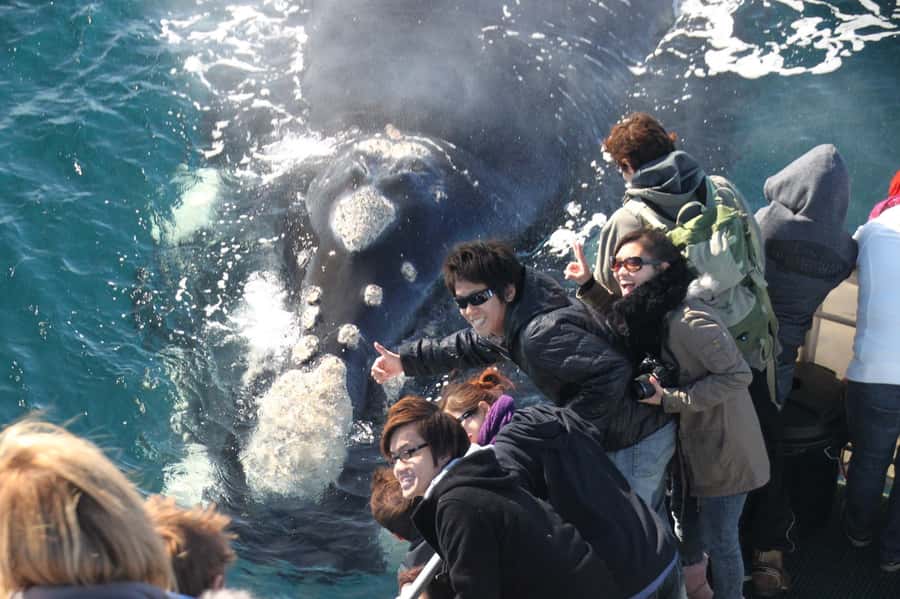
Flinders Bay is the heart of this tour, and the operator frames it as a place where two ocean conditions meet. Even if you don’t think about it scientifically, that matters because it helps explain why whales and dolphins end up using this area. In plain terms: food and movement patterns bring marine animals into the right spots, and Flinders Bay is one of those places.
The big migration context here is humpbacks. The tour highlights that there can be over 35,000 humpbacks migrating through the broader region, and that Flinders Bay serves as a resting area during the northern migration. That doesn’t mean you’ll see every whale possible, but it does mean you’re not gambling on a random sighting. Your odds are high because the bay can be actively used by whales during the season.
And yes, you’re watching whales in a real habitat, not behind a fence or from a viewing platform. The cruise operates in sheltered waters, which helps keep viewing comfortable. You also get the key advantage of whale watching in this specific bay: you’re not always searching at distance. The tour notes that binoculars aren’t required because there’s plenty to see when conditions and activity line up.
What You Might See: Humpbacks, Southern Right, Blue Whales, Dolphins
This tour is built around the migration calendar, so your best results come from being ready to observe calmly and frequently. Often after departure, the crew starts finding whales, and then the boat follows the action in real time.
Humpback whales
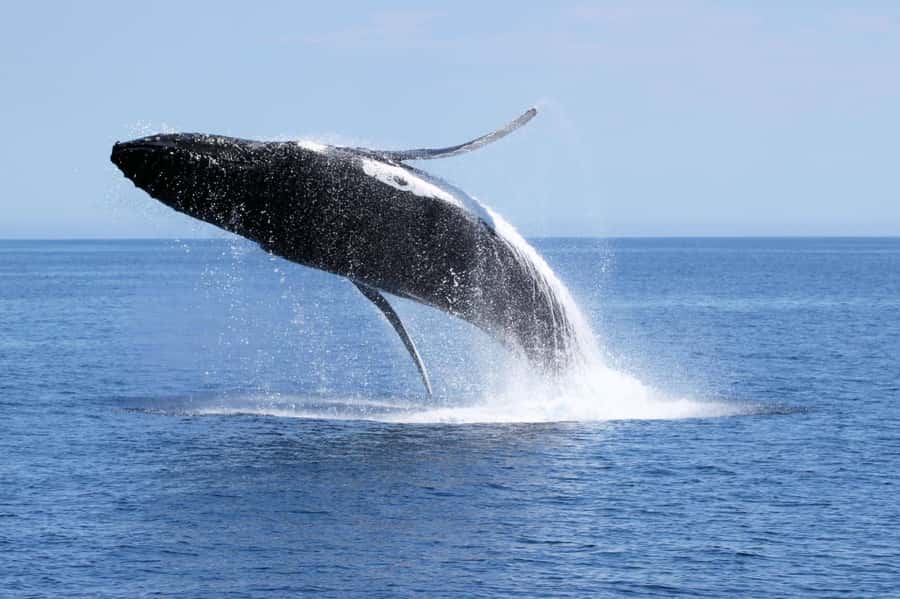
Humpbacks are the star possibility. With so many migrating, you’re likely to see behaviors rather than just one quick surface blow. A lot of the enjoyment from this tour comes from the fact that humpbacks can show repeated activity, so the crew has time to point things out and you can keep tracking the same individuals.
Southern right whales
Southern right whales are also highlighted as a common sighting in Flinders Bay, and that adds an extra emotional layer. The tour notes that southern rights were once nearly wiped out by whaling. If you’ve never considered how long recovery takes for wildlife populations, this is a gentle way to understand it: right whales have a gestation period long enough that population rebound can be slower than people expect.
Blue whales
Blue whales are mentioned as a possible species you could encounter. Blue whales can be harder to spot than some other types because of distance and timing, but the tour is designed around actively searching and using expert knowledge to locate sightings during the cruise window.
Dolphins
Dolphins often show up alongside whale viewing. They’re fun because their behavior can be more playful and unpredictable, and they help keep the cruise lively even when whale activity changes moment to moment.
The On-Board Marine Biologist: Turning Sightings Into Meaning
One of the strongest parts of this tour is the way information is delivered while you’re actually watching. You’ll hear history and movements of the whales from an on-board Marine Biologist. That matters because whale watching can become frustrating if you only see one moment at a time and don’t know what you’re looking for.
The tour also includes stories from friendly skippers. This blend is useful: the skipper angle gives you practical “what to expect on the water” context, while the Marine Biologist angle gives you the species-specific details. If you like asking questions, this is the style of tour that supports it. You can ask as many questions as you like, which is the easiest way to turn a good cruise into a memorable one.
One practical note from experience shared by others: audio can be tricky. A central PA system would help some passengers hear commentary more clearly, so if you find yourself struggling with sound, don’t just tolerate it. Move to a spot where you can both see and hear the guide best.
How the Two-Hour Cruise Feels in Real Time
The cruise runs for about two hours in Flinders Bay. In practice, whale watching can stretch a bit because whales decide the schedule. People have reported the tour staying out roughly 50 minutes longer than the stated time when whales kept interacting with the boat. That’s not a promise, but it’s a sign of how the crew prioritizes the animals over the clock.
During the cruise window, you’ll go through a cycle that repeats: scan the water, track movement, wait for surfacing or breaching, then watch behavior unfold. Because you’re in a sheltered bay and because the area can be busy with migrating whales, you often get multiple chances rather than one quick look.
This is also where the tour’s “you won’t need binoculars” messaging can pay off. If you normally feel frustrated on wildlife tours because you can only see tiny specks, this location tends to work better. Even so, keep your eyes moving. Animals can travel, surface, and then vanish quickly, so the best viewing happens when you watch the water’s patterns, not just one spot.
The Whales-or-Free Guarantee: Why It Changes the Value
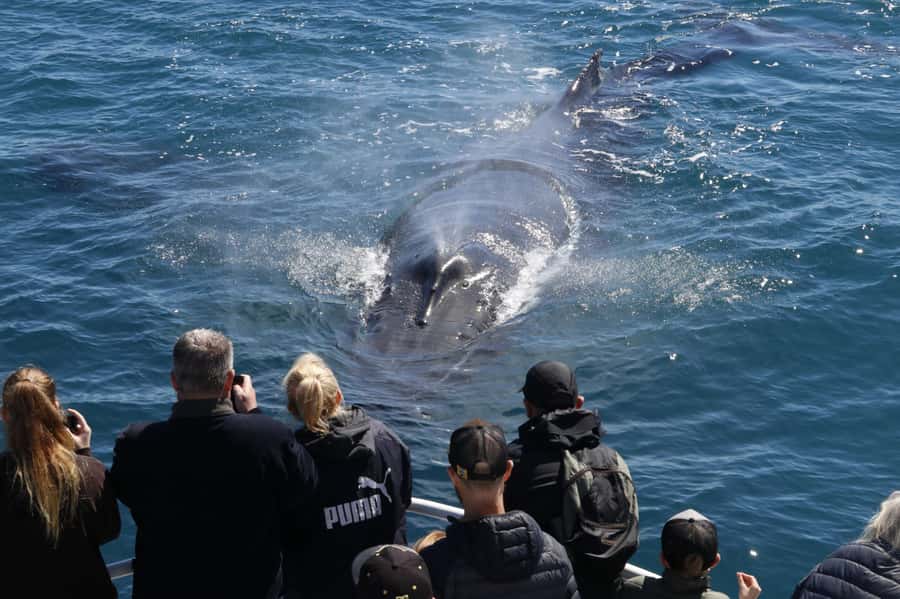
The operator quotes a 99% sighting success rating, and they add a straightforward guarantee: if you don’t see whales, you can join again for free. That’s a big deal for value, because whale watching is inherently weather- and timing-dependent.
Most people don’t want to pay for a “maybe” experience, especially if they only have one day in Augusta. This guarantee shifts the risk away from you. It doesn’t change nature, but it does change how you feel spending that $74 per person.
Speaking of price, here’s how I think about it. You’re paying for more than boat time. You’re paying for:
- a purpose-built whale watching vessel,
- expert on-board commentary from a Marine Biologist,
- a comfortable, guided experience in sheltered waters,
- and a built-in safety net if whale sightings don’t happen as expected.
Add tea onboard and a 10% meal discount at local restaurants on the day of your tour, and the total package feels more complete than a bare-bones cruise.
Quick Tips for Getting the Best Views
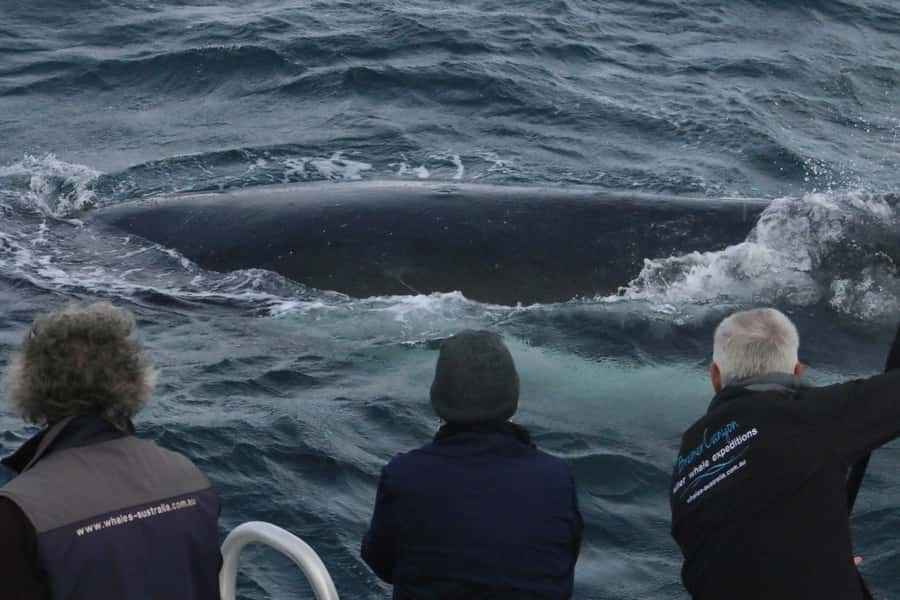
You can’t control whales, but you can control how well you’re set up to watch them.
- Bring warm clothing. Even in pleasant weather, time on the water can get cool fast.
- Wear comfortable shoes. You’ll want to move a bit and still feel steady while watching.
- Bring a reusable water bottle. You’ll appreciate having water on hand.
- If you’re prone to motion sickness, consider sea sickness preventatives before you go, since the tour data specifically flags this as a preparation item.
Also, treat the viewing process like a team sport. Check where people are looking, then choose a spot that gives you a clear view of the water without blocking your view of the crew’s pointing or explanation.
Who This Tour Suits Best
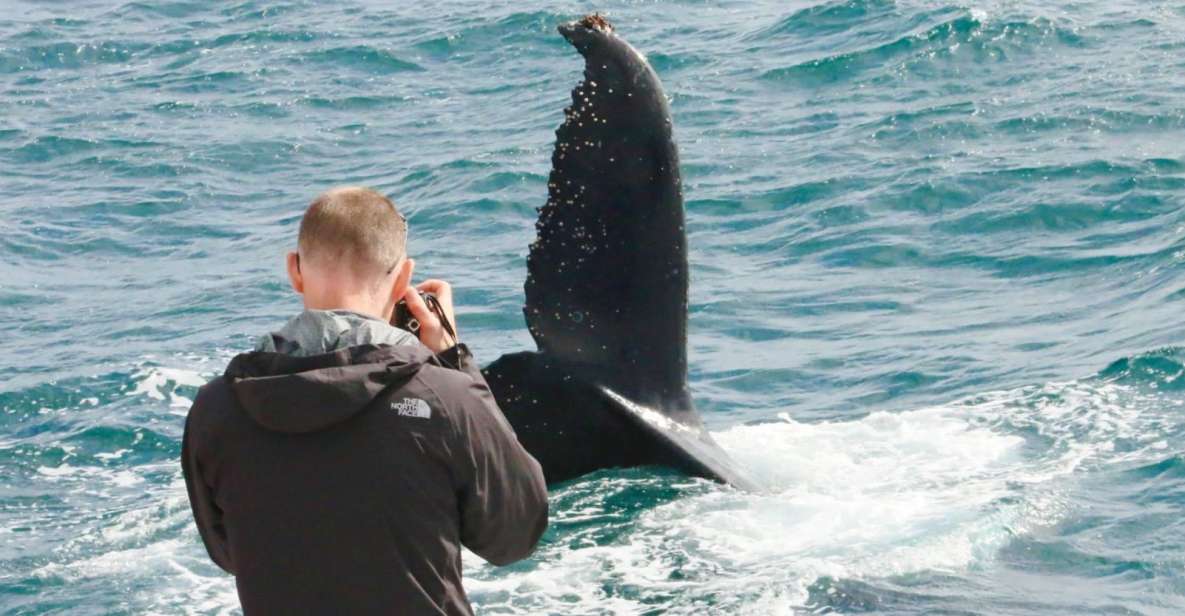
This tour works especially well if you want a guided, family-friendly whale experience without turning it into a long day of logistics. It’s described as suitable for all ages and family friendly, which usually means the experience stays approachable rather than overly technical.
You’ll also enjoy it if:
- you like asking questions and getting species context,
- you want a strong chance of seeing whales quickly once you depart,
- you care about comfort and a well-organized onboard setup.
If you’re someone who hates crowds or needs lots of personal space to shift side to side, there’s one caution from shared experiences: on boats where passenger numbers are high, moving for the best angle can be harder. Choose your seat thoughtfully and be ready to rotate your position without making it a big production.
Should You Book This Augusta Whale Watching Tour?
I’d book it if you’re visiting Augusta during whale season and you want the kind of tour that tries to maximize both sightings and understanding. The best reasons are practical: you’re cruising sheltered Flinders Bay, you get Marine Biologist commentary, and the whales-or-free guarantee reduces the risk that you’ll pay and see nothing.
I’d think twice if you’re very sensitive to audio issues or if you strongly prefer lots of space to constantly reposition for angles. In that case, choose your viewing spot early and plan to stay alert.
FAQ
How long is the whale watching cruise?
The cruise lasts about 2 hours in Flinders Bay.
What whales and wildlife can I expect to see?
The tour focuses on migrating humpback whales, southern right whales, and blue whales, and it also notes dolphins as a likely sighting.
Does the tour offer a guarantee if I do not see whales?
Yes. The operator provides a whales-or-free guarantee, with the option to join the tour again for free if you don’t see whales.
Is there food or drinks included?
Yes. You get morning or afternoon tea, including a hot drink or water and biscuits.
What species information will I hear on board?
You’ll have expert commentary and talks from an on-board Marine Biologist, plus stories from the skippers.
Where do I meet the crew?
Meet the crew at the supplier’s desk in the undercover area at Augusta Boat Harbour on Leeuwin Road.
When do tours run?
Tours depart twice daily. You can check availability to see the starting times.
Is the tour suitable for families and wheelchair users?
It’s described as family friendly for all ages and wheelchair accessible.
If you tell me your travel dates and whether you prefer a morning or afternoon departure, I can help you pick the timing that best matches what you want from the ride.