REVIEW · PERTH
Boom-and-Bust: self-guided historical walking tour of Perth
Book on Viator →Operated by Stories Unseen · Bookable on Viator
Perth tells its story in jumps. This self-guided audio walk strings together about 200 years of change, from the Swan River Colony era to Perth’s coming-of-age, with turn-by-turn directions and short historical clips that help you see what shifted across the decades.
What I like most is the way it’s built like a timeline you can walk. Each stop connects a specific chapter to what you can actually see today, so the city’s ups and downs stop feeling random and start feeling logical. I also really enjoyed the narration tone from Riley, mixing local trivia with jokes while you move between key sites like His Majesty’s Theatre and the Council House.
One thing to consider: since it’s self-guided, you may hit stretches where the audio feels quiet while you’re walking. If you prefer a constant, in-person-style flow of commentary, you’ll want to pace yourself to match the narration and use the on-demand options to keep momentum.
In This Review
- Key highlights you’ll notice right away
- Why Perth’s boom-and-bust story works better as a walk
- Getting started at First Contact, then finishing at the Bell Tower
- How the audio tour tells 200 years stop by stop
- Stop: Perth (the story setup)
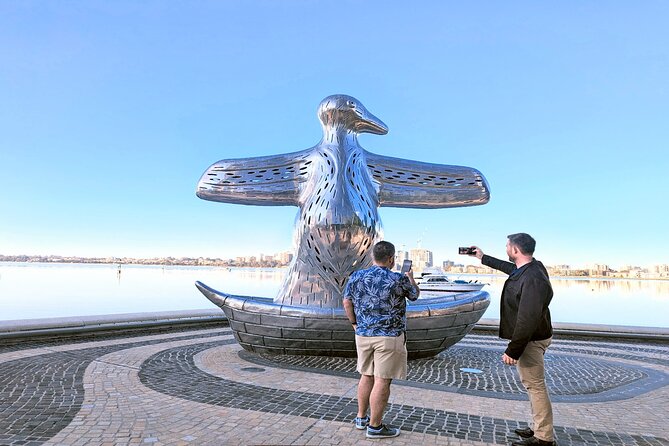
- Stop: First Contact (where the walk begins)
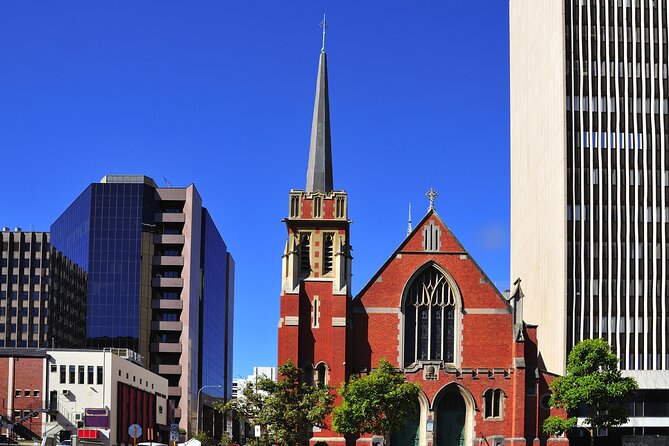
- Stop: His Majesty’s Theatre (gold boom energy)
- Stop: Raine Square (farming roots and King Street)
- Stop: Hay Street Mall (gilded era to the Great Depression)
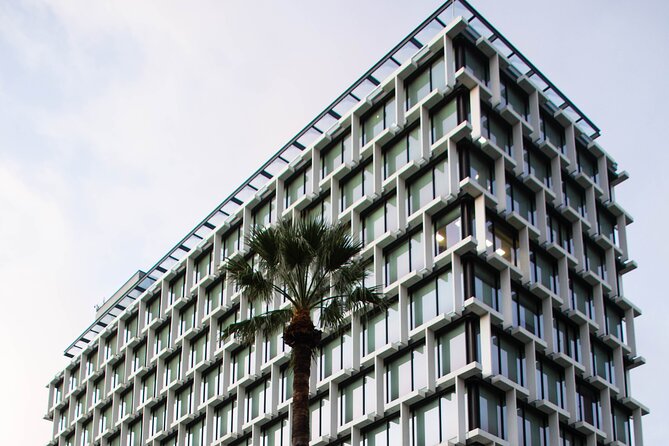
- Stop: Council House (minerals and modernism)
- Stop: Quay Perth / the Esplanade (the 1980s boom in buildings)
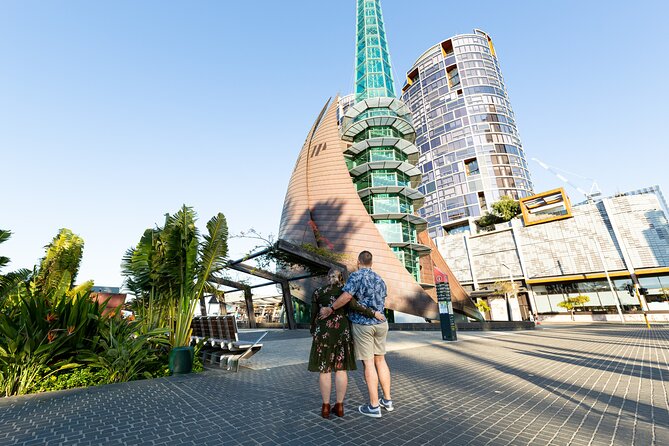
- Stop: The Bell Tower (how the cycle continues)
- What you learn beyond the stops (the themes that stick)
- Boom-and-bust isn’t only money
- Perth’s identity includes weird obsessions
- Indigenous farming knowledge is part of the timeline
- Modernist art and Alan Bond add color
- Price and value: when $17.93 per group makes sense
- Practical tips to make a self-guided tour feel smooth
- Who this tour is best for
- Should you book Boom-and-Bust in Perth?
- FAQ
- How much does the Boom-and-Bust self-guided tour cost?
- How long does the tour take?
- What do I need to use the tour?
- Where do I start and where does the walk end?
- Is public transportation nearby at the end?
- Is the Bell Tower stop included for entry fees?
- Can I cancel for a full refund?
Key highlights you’ll notice right away
- Decade-by-decade storytelling that links money booms to demolition, development, and social change
- Riley’s local trivia and dad-joke energy as you travel between major landmarks
- Heritage balcony obsession and other Perth quirks that you can spot in real streetscapes
- A mix of old footage and modern views so you can compare then and now at each stop
- Booms and personalities, including the rise, fall, and rise again of Alan Bond, tied to the city’s skyline
Why Perth’s boom-and-bust story works better as a walk
Perth isn’t just one era layered over another. It’s more like repeated cycles: money spikes, buildings go up, then the city has to adjust when fortunes change. This tour takes that concept and turns it into something you can follow at street level.
The big win is that you’re not only learning dates. You’re learning cause and effect. When you hear about a gold boom, a minerals-and-modernism chapter, or the 1980s boom along the Esplanade, you’ll also be looking for the physical results—new building styles, changing street character, and why some spots feel preserved while others look like they were built to move on fast.
And because it’s self-guided, you can slow down when something catches your eye. The tour even supports linger-longer and dig-deeper options, so you’re not forced to race through like you might on a fixed group schedule.
You can also read our reviews of more walking tours in Perth

Getting started at First Contact, then finishing at the Bell Tower
You begin at First Contact (4 Aitken Way, Kewdale WA 6105). That matters because the tour opens by setting context before it starts chasing specific landmarks. If you’re arriving in Perth by public transport, plan your start so you’re ready to hit play on arrival.
You’ll end at The Bell Tower in Barrack Square (Barrack Square, Riverside Dr, Perth WA 6000), which is an easy finish if you’re staying in the CBD. It’s accessible from the Esplanade Train Station and the FREE Blue CAT Bus route. The Bell Tower stop also runs with stated opening hours for the period listed (essentially open daily), so it’s usually a convenient way to wrap up your afternoon.
Two practical things to keep in mind:
- This is a self-guided walk using your phone or tablet, so bring a fully charged device.
- The tour includes audio narration and turn-by-turn directions, but the final stop notes an admission ticket is not included—so if you want to go beyond the exterior viewing, budget for any on-site entry that may apply.
How the audio tour tells 200 years stop by stop
The tour runs about 1 to 4 hours, with roughly 10 minutes per stop as a baseline. In practice, that range comes from how often you pause, replay, or choose linger-longer moments at places that grab your attention. If you’re the type who likes to read the streetscape instead of rushing past it, plan closer to the longer end.
Stop: Perth (the story setup)
This first stop frames Perth’s big arc: from the early struggles of the Swan River Colony to later confidence and identity as the City of Light. You get historical footage and the overall through-line that the rest of the walk follows decade-by-decade.
Why it’s worth your time: it gives you a map for how to interpret what you’ll see later. If you start here, later chapters land with more meaning.
Possible drawback: if you’re already very familiar with Perth’s broad history, you might find this first stop feels like orientation. Still, it’s useful orientation.
Stop: First Contact (where the walk begins)
This is the start of your self-guided experience. Expect audio commentary, historical footage, and place suggestions that act like a launchpad for what comes next.
Practical tip: once you start, keep your phone at listening level and stay aware of your pacing. Since this is self-guided, the narration works best when you’re moving at a rhythm similar to what the tour expects.
You can also read our reviews of more guided tours in Perth




Stop: His Majesty’s Theatre (gold boom energy)
Here the story turns toward WA’s first gold boom. His Majesty’s Theatre helps make the chapter feel anchored in a real landmark rather than something you read about only in a book.
What you’re likely looking for: how wealth and migration change a city’s public life—people, entertainment, ambition—and how those shifts leave behind buildings and street identity.
Consideration: if the area is busy when you’re there, you may have to wait for a clear spot to watch your screen or focus on the audio.
Stop: Raine Square (farming roots and King Street)
Raine Square is used as a backdrop for a farming-focused chapter of Western Australia. It’s also linked to the idea of heritage along King Street, so you’re encouraged to notice how older patterns influence modern street character.
What this stop adds to the tour: not every Perth story is about minerals or money booms. Farming practices matter, including Indigenous knowledge connected to land and growing. The tour highlights ancient science of Indigenous farming practices, which helps balance the “booms and busts = mining and buildings” stereotype.
Practical tip: keep an eye out for how the city’s agricultural past influenced the routes, supply, and settlement decisions that later booms accelerated.
Stop: Hay Street Mall (gilded era to the Great Depression)
You move into two stops inside the Hay Street Mall area. This chapter covers Perth’s Gilded Era and then the recovery from the Great Depression.
This is where the tour helps you connect architecture and mood. In a city cycle story, downturns aren’t just economic—they also change what gets built, what gets maintained, and what gets reimagined.
What I like about this part: it’s easy to picture how optimism would shape a mall-style retail and civic space, then imagine how the same spaces would have to adapt when the economy cooled.
Stop: Council House (minerals and modernism)
Council House brings together minerals and modernism, which is a great match for Perth’s late-century identity. Minerals are Perth’s long-running engine, but modernism is how the city tried to translate that engine into style, attitude, and a new kind of public face.
This stop also links well with the tour’s theme of social change—modern styles often show up alongside shifts in how people live, work, and see the city’s future.
Consideration: if you’re not a fan of architecture talk, you might want to treat this stop as a story primer. It’s still worth it because it explains why the city looks the way it does.
Stop: Quay Perth / the Esplanade (the 1980s boom in buildings)
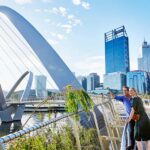
The tour specifically calls out that the best way to see the impact of Perth’s 1980s boom is along the Esplanade buildings. You’ll be guided to then-and-now comparisons and sites including the Former Esplanade Hotel.
This stop is practical as well as historical. You can stand in one place and compare what you see with what the audio shows, which makes the boom feel more tangible.
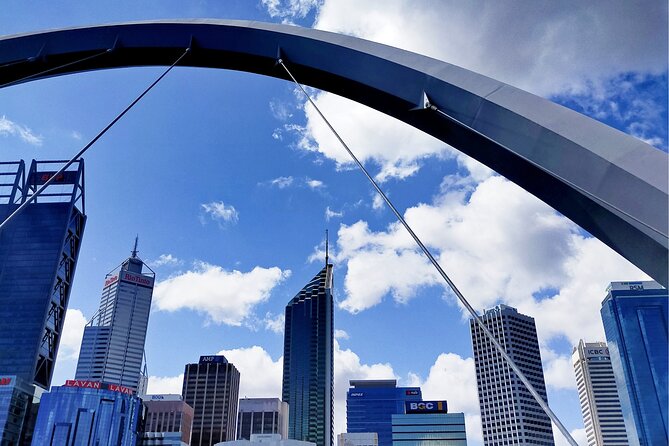
If you like skyline spotting, this is one of the most satisfying stops. If you don’t, you can still enjoy it as a classic “then vs now” moment.
Stop: The Bell Tower (how the cycle continues)
The final stop at The Bell Tower ties the whole boom-and-bust theme into the present. It’s a good place to finish because you’re already in the CBD and the story closes with the idea that Perth’s cycle hasn’t stopped.
The tour also uses some signature Perth oddities in its wider storytelling—like the City’s obsession with heritage balconies and the inclusion of London Court as the first place in Perth to have air-conditioning. While those details are scattered through the broader narration, they fit neatly into this ending message: Perth keeps changing, but it also keeps arguing about what should be preserved and what should be replaced.
One more practical note: because admission at this final site isn’t included, you can still enjoy the walk and audio without committing to paid entry. Just decide ahead of time if you want to go inside.
What you learn beyond the stops (the themes that stick)
A good self-guided walk is supposed to leave you with new eyes. This one mostly does that through a few recurring story threads:
Boom-and-bust isn’t only money
The tour doesn’t treat economic swings as background noise. It links fortune changes to demolition and development, and then to social shifts. That matters because Perth’s look today is partly the result of what people could afford in different decades—and what they decided was expendable.
Perth’s identity includes weird obsessions
You’ll hear about the city’s strange obsession with heritage balconies. That sounds like trivia until you realize how it shapes streetscapes and debates about what counts as worthwhile history versus what blocks progress.
Indigenous farming knowledge is part of the timeline
The tour includes Indigenous farming practices as ancient science. Even if you only take away the idea that knowledge systems predate the boom narrative, it changes how you interpret land use around the city.
Modernist art and Alan Bond add color
The tour references Perth’s scandalous modernist art movement and the rise, fall, and rise again of Alan Bond. Those aren’t just name drops. They help explain how Perth’s bold periods came with creative risks and high-stakes business drama.
Price and value: when $17.93 per group makes sense
At $17.93 per group (up to 5), the price is aimed at shared value. If you’re walking with one or more friends, it often works out like a low-cost activity with a big history payoff.
Where it becomes extra good value:
- You want to spend time outdoors in the CBD, not wait for a scheduled guide.
- You like historical audio at your own pace, including replaying bits when a detail catches your attention.
- You’re comfortable using a phone for navigation and media.
Where it might feel less worth it:
- If you strongly prefer live, continuous guiding and hate silence during walks.
- If you’re the type who usually needs staff to answer questions on the spot.
Practical tips to make a self-guided tour feel smooth
This is the part where small choices make the experience better.
- Use headphones or keep volume steady. Since it’s narration-based, inconsistent volume can make you miss the links between stops.
- Plan for flexibility. The tour is designed for roughly 10 minutes per stop, but linger-longer options exist for a reason.
- If you hit a quiet stretch, don’t panic. Pause, read your surroundings, then press play again when the next segment begins. It helps you stay in the story rhythm.
- Wear good walking shoes. The tour covers multiple CBD landmarks, and you’ll likely end up doing more walking than the 8 stop timestamps suggest.
And if you want the humor side—yes, Riley’s dad-joke energy is part of the fun—just keep listening through. The laughs help you remember the facts.
Who this tour is best for
This tour fits best if you:
- Want a low-pressure way to learn Perth’s history without a rigid schedule.
- Like connecting stories to architecture and streetscapes.
- Prefer short bursts of audio with the freedom to pause and look.
It can also work well for couples or small groups, since the price is per group up to 5. If you’re traveling with friends who have different interests, the decade-by-decade structure makes it easier for everyone to find something they care about—heritage debates, farming roots, theatre/gold boom chapters, modernism, or the Esplanade’s boom-era look.
Should you book Boom-and-Bust in Perth?
Book it if you want a street-level history story that explains why Perth changes the way it does, and you’re happy to guide yourself with audio and maps. The best part is the cause-and-effect approach: booms and busts aren’t just facts; they become visible in the buildings and street characters you pass.
Skip it (or think twice) if you need constant spoken narration the whole way through. Because it’s self-guided, a more traditional, uninterrupted guide-style experience isn’t the goal. You’ll still get the story, but you’ll need to match the tour’s pace.
If you’re planning a sunny afternoon in the CBD and want something different from standard sightseeing, this is a fun way to turn Perth’s skyline and streets into a living timeline.
FAQ
How much does the Boom-and-Bust self-guided tour cost?
It costs $17.93 per group, up to 5 people.
How long does the tour take?
Plan for about 1 to 4 hours.
What do I need to use the tour?
You use a self-guided format on your phone or tablet. It uses a mobile ticket, audio narration, and turn-by-turn navigation.
Where do I start and where does the walk end?
You start at First Contact, 4 Aitken Way, Kewdale WA 6105, and you finish at The Bell Tower, Barrack Square, Riverside Dr, Perth WA 6000.
Is public transportation nearby at the end?
Yes. The Bell Tower is accessible from the Esplanade Train Station and the FREE Blue CAT Bus route.
Is the Bell Tower stop included for entry fees?
The final stop notes that admission is not included.
Can I cancel for a full refund?
Yes, you can cancel for free up to 24 hours in advance for a full refund, with the cutoff based on local time.