REVIEW · TASMANIA
Cape Bruny Lighthouse Tour – Bruny Island
Book on Viator →Operated by Bruny Island Safaris · Bookable on Viator
Spiral stairs, big ocean views, real lighthouse stories. A Cape Bruny Lighthouse Tour on Bruny Island gets you inside the 1836 lighthouse, with binoculars for seabirds and a local guide who connects the tower to convict-built history and the life of keepers in a remote place.
The one catch I’d plan around is the climb: the route up is a wrought-iron spiral staircase, and in bad weather it can feel unpleasant.
In This Review
- Key Highlights at a Glance
- Cape Bruny Lighthouse: A Short Tour With Long Views
- Finding the Start in South Bruny National Park
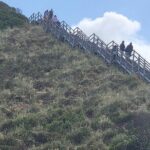
- Up the Wrought-Iron Spiral Staircase to the Balcony
- Seabirds, Marine Life, and the Whale-Spotting Question
- Inside the Tower: Convict-Built Details and the Light Prisms
- Why the Guide Matters More Than You’d Think
- Good Value for a 30-Minute Lighthouse Climb
- Weather, Timing, and Getting the Best From the Day
- Who This Tour Is Best For
- Should You Book the Cape Bruny Lighthouse Tour?
- FAQ
- How long is the Cape Bruny Lighthouse Tour?
- What’s included in the tour price?
- Do I need a National Parks Pass?
- Can children take the tour?
- Is transportation included?
- Can I cancel for a full refund?
Key Highlights at a Glance
- Step inside an 1836 tower open to the public in southern Tasmania
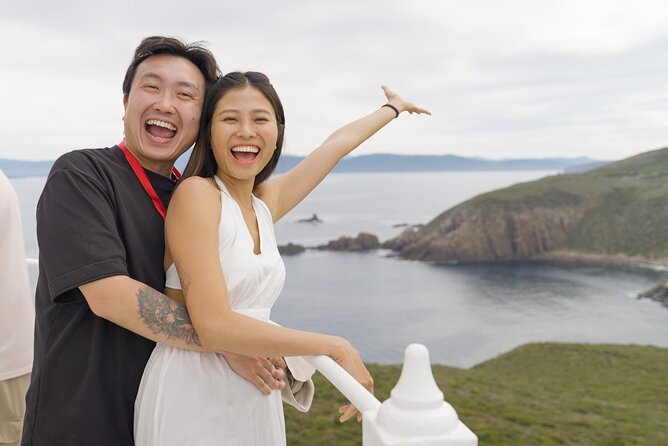
- Spiral staircase views over the Tasman Sea, South East Cape, Whale Head, and small offshore islands
- Binoculars included for spotting albatross, gannets, shearwaters, and more
- Light prisms up close with stories about convict-built engineering
- Small groups (max 10) with time to ask questions and take photos
Cape Bruny Lighthouse: A Short Tour With Long Views
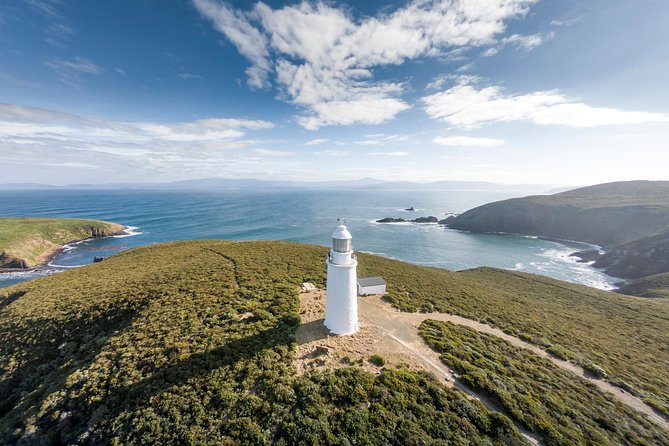
This is the kind of tour that makes sense even if you’re not trying to pack your day with stops. The Cape Bruny Lighthouse experience runs about 30 minutes, and the pace is built around one main goal: getting you to the balcony and inside the lighthouse so you can see the coast up close and understand what you’re looking at.
What makes it feel special is that it’s not just about scenery. You’re climbing into an old working-era structure and getting practical context—why it was built where it was, how it worked, and what it was like when the people on the tower were basically alone out there with the weather and the sea.
And because the group is limited to up to 10 travelers, it doesn’t turn into a rushed line. You’re more likely to get clear answers, and you’ll have time to pause for photos when the light is good.
You can also read our reviews of more tours and experiences in Tasmania.

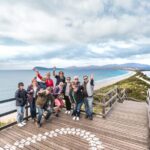

Finding the Start in South Bruny National Park
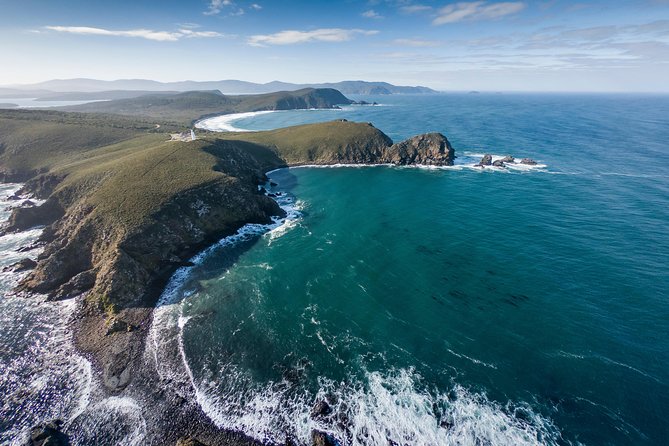
You’ll make your own way to Cape Bruny Lighthouse Tours, 1750 Lighthouse Rd, South Bruny TAS 7150. The activity ends back at the same meeting point.
One important thing to know: the lighthouse sits in South Bruny National Park, and you need a National Parks Pass to enter. The tour price includes the lighthouse admission ticket, but the park fee is not included in the tour price. If you forget the pass, you can’t just “tour your way in.”
Good news: the tour uses a mobile ticket, and service animals are allowed. That keeps things straightforward once you arrive.
Up the Wrought-Iron Spiral Staircase to the Balcony
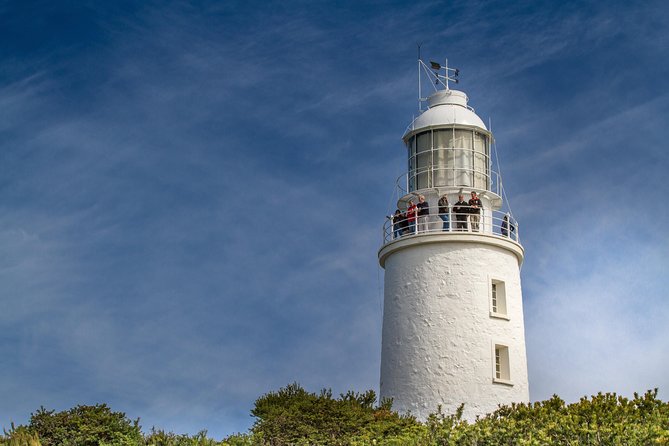
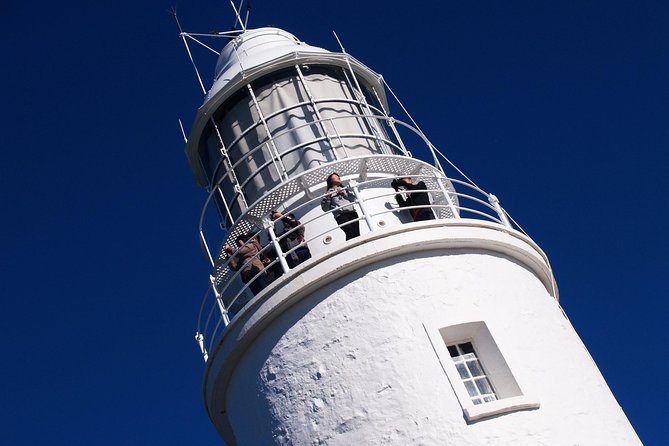
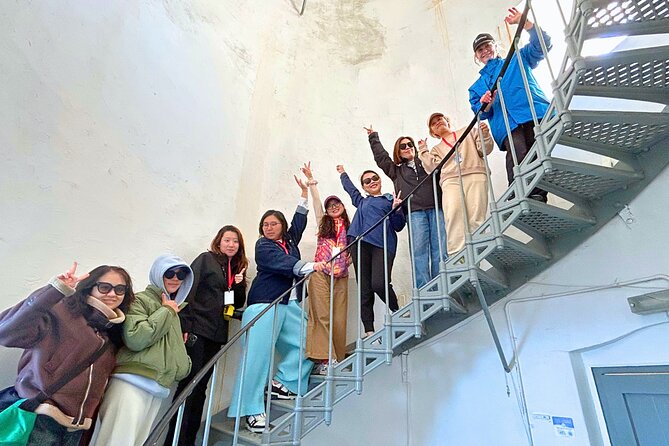
After a quick introduction from your guide, you climb the lighthouse’s wrought-iron spiral staircase. This is the part that turns a roadside landmark into a real experience. You’re going up inside the tower, not just looking at it from outside.
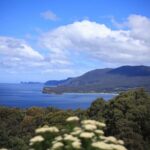
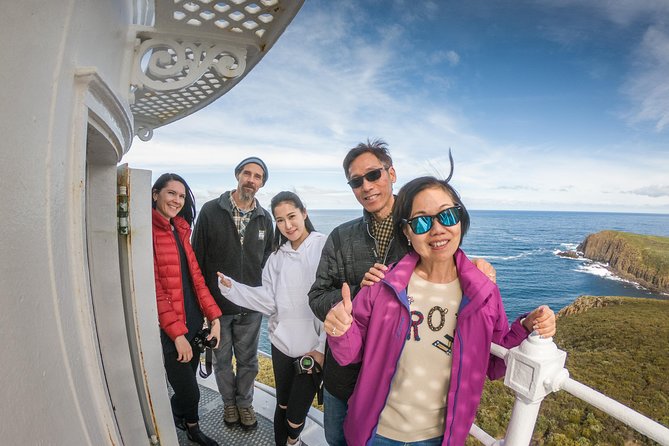
The prize is the tower balcony, with sweeping views across the Tasman Sea and out toward major headlands and offshore features like South East Cape and Whale Head. On a clear day, you’ll also spot the small islands scattered along the coast.
A big part of why this works for almost everyone is that the climb is short, but it’s steep enough to make the final viewpoints feel earned. If you’re traveling with kids, this is also a built-in “event.” It’s easy to point out what’s happening around you as you rise—shapes of coastlines, how the sea changes near headlands, and where seabirds tend to circle.
Seabirds, Marine Life, and the Whale-Spotting Question
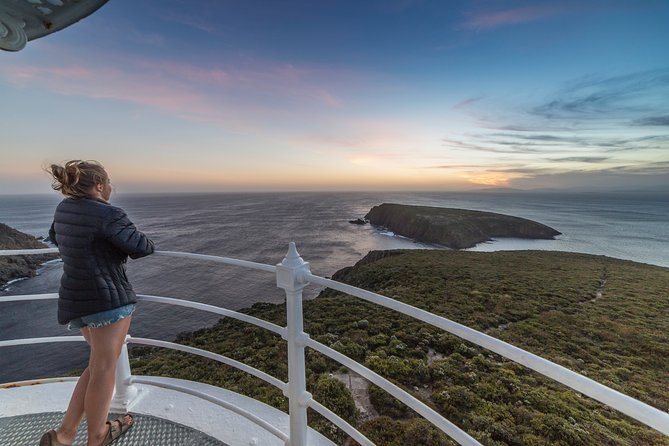
The lighthouse is built for the sea, and that means the area around you comes alive fast. Your guide provides binoculars, and you’ll use them to scan for marine life and birds.
Keep an eye out for birds like albatross and gannets—they’re often on the move and can wheel close to the tower. You might also see short-tailed shearwaters and even wedge-tailed eagles swooping nearby. This is one of those places where the ocean looks calm until you start watching the action in the air.
Then there’s the whale question. Depending on the season, you may catch sight of migrating whales farther out. The key word is may, because the sightings depend on timing and conditions. Still, having a guide who knows what to watch for adds real value—you’re less likely to miss the good stuff when it’s happening at distance.
Tip for your own planning: treat the wildlife as a bonus, not a guarantee. You’re still getting something meaningful even if the birds are quiet—those coast views and the lighthouse details don’t disappear.
Inside the Tower: Convict-Built Details and the Light Prisms
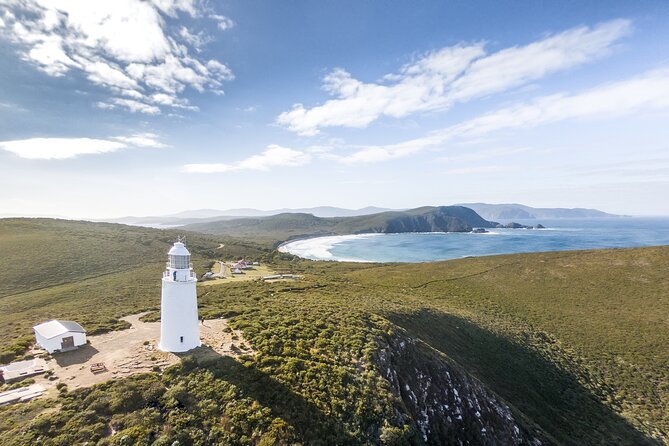
Once you reach the tower and get your bearings, the tour shifts from views to meaning. The Cape Bruny Lighthouse dates back to 1836, and it rises 114 meters (374 feet). It’s also the only lighthouse open to the public in southern Tasmania, which is a big deal when you’re comparing it to other lighthouse experiences that may be closed, restricted, or only viewable from a distance.
You’ll also get a look at the light prisms up close. This is where the whole place stops being a pretty building and becomes engineering. Seeing how the light system works—up close—helps you understand why lighthouses mattered so much along this rugged coastline.
And your guide ties it all together with stories about the people who built and operated it. You’ll hear about the convict-built lighthouse and the lighthouse keepers who worked in this remote locale. The tour doesn’t just toss dates at you. It focuses on what the job meant day to day and why it was so isolated.
That keeper perspective is part of what makes the experience stick, especially if you’re the type who likes knowing what life was like behind the scenes, not only what the place looks like now.


Why the Guide Matters More Than You’d Think
This is a short tour, so the quality of the guide really shows. A strong guide does two things well:
1) They explain what you’re seeing without turning it into a lecture.
2) They give you time—especially if you have questions.
The experience stands out for the way guides handle the group. You’ll get answers as you go, and you’re not forced to keep pace with a strict script. If you’re traveling with a child who needs extra time, it helps that the tour’s rhythm can slow down a bit while you’re climbing, looking, and taking photos.
That matters because the lighthouse has so many moving parts—literal stairs, bird scanning, coast photography, and then the inside technical details. With the right guidance, it all feels connected. Without it, you might rush past the best bits.
If you want the experience to feel personal, ask your guide what’s most likely to be active around the tower that day. Even a few minutes of targeted guidance can change what you notice.
Good Value for a 30-Minute Lighthouse Climb
The price is $17.93 per person, and for a tour that includes admission plus a guide and binoculars, it’s honestly a solid deal. You’re not paying just for the view—you’re paying for access inside the lighthouse and interpretation that helps you understand why this spot is important.
Here’s how the value breaks down:
- Included: tour guide, binoculars, and lighthouse admission ticket
- Not included: transportation to and from attractions and the National Parks Pass
The duration—about 30 minutes—also affects value. You get a concentrated hit of the best parts: climb, balcony views, wildlife spotting, and the inside light prism details. If you’re spending time on Bruny Island, this is a realistic add-on that won’t eat a whole morning.
For families, the short time window can be a plus. For couples, it’s a manageable way to get something iconic without committing to a half-day. For solo travelers, it’s an easy, guided way to see a standout lighthouse with minimal planning stress.
If you’re the type who hates rushing, you’ll still want to show up ready to take your time on the staircase—especially if the weather is iffy.
Weather, Timing, and Getting the Best From the Day
This lighthouse tour depends on weather in a very practical way. The climb and time on the balcony mean you’ll feel the elements. One potential downside is straightforward: if it’s raining, the steep stair climb can be very unpleasant.
So when you plan your Bruny Island day, I’d think in terms of “best odds for a good climb and clear views.” Clearer weather gives you better visibility for the coastline and increases your chances of enjoying bird activity from the balcony.
Timing also affects wildlife. Whales are described as possible depending on season, and seabird action can vary. Even if you don’t get whales, you’ll still be scanning for albatross and gannets with binoculars—so at least you’re doing something satisfying with your eyes the whole time.
Who This Tour Is Best For
I’d put this tour at the top of the list if you want:
- An introductory lighthouse experience that actually includes going inside
- A guided stop with binoculars and real guidance on what to look for
- A compact tour that fits into a busy Bruny Island day
- A small-group format (max 10 travelers) that makes it easier to ask questions
It may be less ideal if you know you can’t handle a spiral staircase climb, since the tour is built around going up. For families, note that children must be accompanied by an adult, and children under 5 years can’t take part.
If your main goal is a long, slow, boat-style wildlife day, this won’t replace that. But if you want a high-impact lighthouse moment—history, views, and wildlife potential—this tour is the right size.
Should You Book the Cape Bruny Lighthouse Tour?
Book it if you want the closest thing to a “you’re really inside the lighthouse” experience on Bruny Island. The combination of exclusive public access, a climb to dramatic views, and included binoculars makes it good value for the time you spend. Add in the convict-era and keeper stories, and it becomes more than a photo stop.
Don’t book it if weather is a major concern for your group or if stair climbing is a hard no. In rain, the ascent can take the shine off fast.
If you’re flexible and you like your tours guided, short, and focused on one standout place, this is a strong choice—and it’s the kind of stop that can genuinely be a highlight of the island.
FAQ
How long is the Cape Bruny Lighthouse Tour?
It runs for about 30 minutes (approx.), including an introduction, the climb, and time to experience the lighthouse.
What’s included in the tour price?
The tour includes a tour guide, binoculars, and the lighthouse admission ticket.
Do I need a National Parks Pass?
Yes. Cape Bruny Lighthouse is in South Bruny National Park, and a National Parks Pass is required to enter.
Can children take the tour?
Children must be accompanied by an adult. Children under 5 years old are not able to partake.
Is transportation included?
No. Transportation to and from attractions is not included.
Can I cancel for a full refund?
Yes. You can cancel for a full refund if you cancel at least 24 hours before the experience’s start time.