REVIEW · BYRON BAY
Cape Byron Aboriginal Tour
Book on GetYourGuide →Operated by Explore Byron Bay · Bookable on GetYourGuide
There are stories in every turn of the path. This Cape Byron Aboriginal Tour with Arakwal Bundjalung woman Delta Kay blends an easy coastal walk with local Dreaming stories and on-site learning at significant places. I especially like the way the tour focuses on place-based meaning rather than generic facts.
Two moments made this experience feel practical and memorable to me: learning the Dreaming story of Nguthungalli (Julian Rocks), and hearing about Walgun (Cape Byron) and the thousand-year-old midden. A small consideration: parking at The Pass is paid and can get busy, so you’ll want to build in extra time before your start.
For a 90-minute outing, the tour also does a lot of small things right. You get an English-speaking live guide, chances to learn some Bundjalung language, and a bush tucker tasting that’s included in the price.
In This Review
- Key takeaways for Cape Byron Aboriginal Tour
- Cape Byron in 90 minutes: what the walking pace feels like
- Where to start: The Pass Cafe meeting point and parking reality
- Your guide, your lens: learning with Delta Kay
- Stop 1: getting oriented at the start of the walk
- Cape Byron learning: the Dreaming story of Nguthungalli (Julian Rocks)
- Walgun (Cape Byron) and the thousand-year-old midden
- Bush tucker tasting: included, practical, and not just a snack
- Language and cultural learning: small chances that add up
- Price and value: is $53 reasonable for this walk?
- Who should book this tour (and who might skip it)
- The practical checklist before you go
- Should you book the Cape Byron Aboriginal Tour?
- FAQ
- Where is the Cape Byron Aboriginal Tour meeting point?
- How long is the tour?
- What will we do during the walk?
- Is bush tucker tasting included?
- Is the tour wheelchair accessible?
- Is parking free at The Pass?
- Are pets allowed on the tour?
Key takeaways for Cape Byron Aboriginal Tour
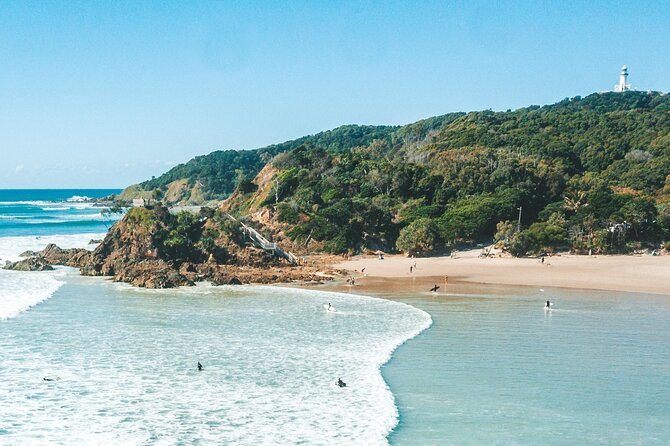
- Meet-point clarity: Directly in front of The Pass Cafe at 1 Brooke Drive, Byron Bay.
- Easy, guided walking: About a 1.5-hour walk while you learn along the way.
- Big story, specific place: Nguthungalli at Julian Rocks, told where it matters.
- Walgun and the midden: Learn why Cape Byron holds evidence that goes back thousands of years.
- Hands-on culture learning: Bush tucker tasting plus info on natural medicine, tools, weapons, and artefacts.
- Worth the set price: $53 includes guide fees and the tasting, with parking extra.
Cape Byron in 90 minutes: what the walking pace feels like
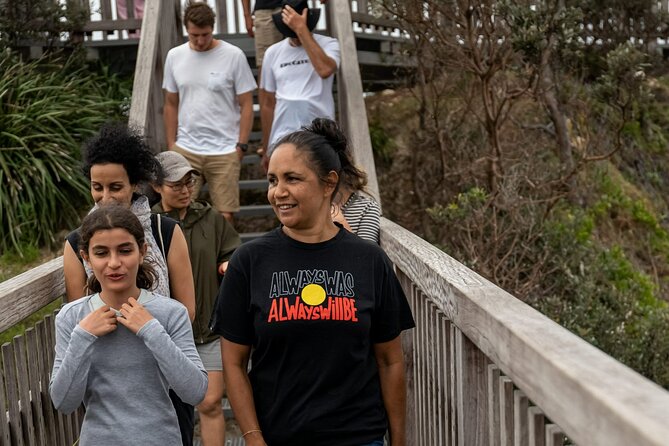
This is a 90-minute experience built around an easy, guided walk of about 1.5 hours. That pacing matters in Byron Bay, where plans can sprawl and it’s easy to overbook yourself. Here, you get enough time to listen properly and still have energy left afterward.
The format is also friendly for first-timers. You’re not trying to cover a long trail on your own. Instead, you’re following an Aboriginal guide who connects the scenery to stories, tools, and food—things you can’t really understand from photos alone.
If you like structured tours but hate feeling herded, this one hits a good middle ground: you walk, you stop, you learn. It’s the kind of activity that turns a famous viewpoint into a meaningful place.
You can also read our reviews of more tours and experiences in Byron Bay.

Where to start: The Pass Cafe meeting point and parking reality
The meeting point is directly in front of The Pass Cafe, at 1 Brooke Drive, Byron Bay NSW 2481. That’s easy to find, but the area has a catch: the parking at The Pass is paid and can be busy.
Parking runs at $5 per vehicle/motorcycle per hour. Plan for that. If you show up at the last second, you’ll be doing the Byron Bay version of time travel—except instead of traveling, you’ll be circling a car park.
A simple tip that saves stress: arrive early enough to park, then take a breath before you meet your guide. It also helps you start the tour feeling relaxed, which matters because you’ll be listening for story details.
And yes, this tour is wheelchair accessible, so the day is designed to be manageable. Just note that you’ll still be doing a guided walk segment, so if mobility is limited, consider the walk time you can comfortably handle.
Your guide, your lens: learning with Delta Kay
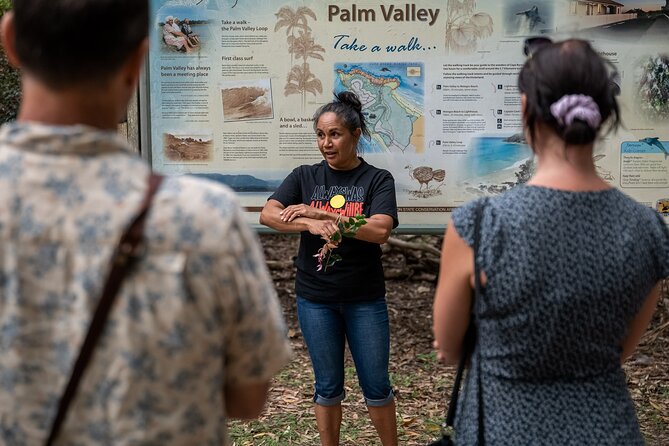
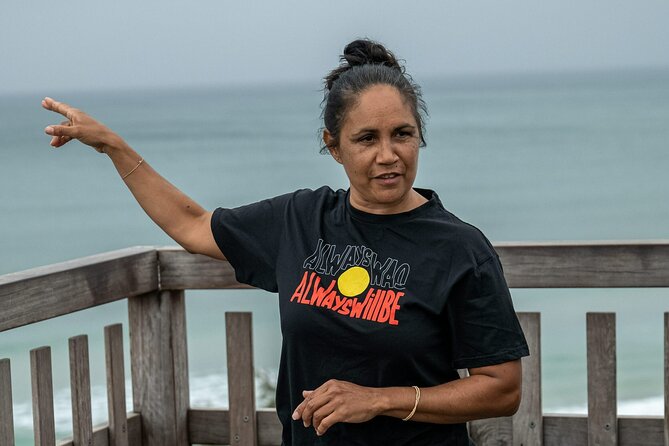
The tour is led by Arakwal Bundjalung woman Delta Kay. Having the story told through the people connected to the land changes the whole tone of the walk. Instead of reading panels or guessing meaning from the coast, you’re hearing traditional stories and local knowledge tied to the places you’re standing on.
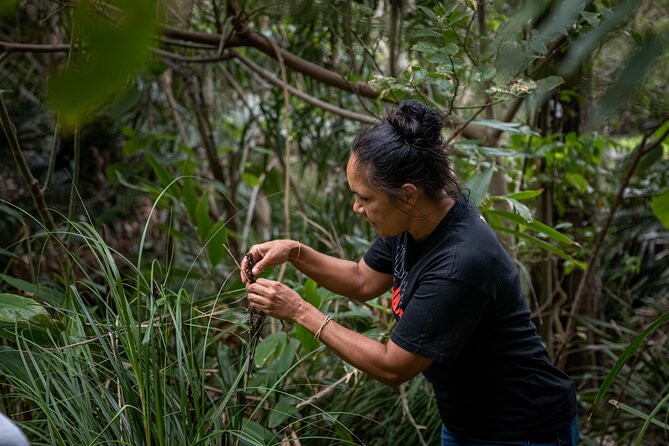
I like that the learning isn’t only storytelling. You also get practical topics: bush tucker, natural medicine, tools, weapons, and artefacts. Those subjects help you understand Aboriginal culture as lived knowledge—what people used, how they prepared food, and how skills connect back to country.
The language element also makes a difference. There are opportunities to learn some Bundjalung language, not just a quick phrase and done. Even if you only remember a couple of words, it adds texture to everything you hear afterward.
Stop 1: getting oriented at the start of the walk
Before you move, you’ll gather at The Pass area and get set up for the walk ahead. This part matters more than it sounds. A good start helps you know what you’re looking at, what kind of details to listen for, and where the tour is headed.
Expect a gentle, guided flow from the meeting point into the Cape Byron area. The goal is not to rush you through a checklist. It’s to put you in the right headspace so the later stops feel grounded.
If you’re the type who likes taking photos, you’ll still be able to. Just try to listen first. The story context makes the pictures more useful later.
Cape Byron learning: the Dreaming story of Nguthungalli (Julian Rocks)
One of the standout moments is the Dreaming story of Nguthungalli, linked to Julian Rocks. This is the kind of stop that turns a landmark into a narrative you can actually follow.
The way a Dreaming story is delivered on-site changes how it sticks. Instead of thinking of rocks as scenery, you start thinking about meaning: the why behind place names, landmarks, and what the landscape teaches. When you hear the story near Julian Rocks, it stops feeling like trivia and starts feeling like geography with memory.
I also like how this kind of storytelling adds a layer of cultural context to Byron Bay. You’re not just looking at the coast as a postcard. You’re learning the connections between country, tradition, and the lived knowledge of the Arakwal Bundjalung people.

Walgun (Cape Byron) and the thousand-year-old midden

Another key stop focuses on Walgun (Cape Byron) and the thousand-year-old midden. That’s a big claim, and the value here is how it’s explained in a way that connects evidence to understanding.
A midden isn’t just an interesting fact. It points to long-term presence and ongoing relationships with food and seasons. When you learn about it during the walk, it reframes the landscape from a background to a record of human activity over time.
This is where the tour earns its cultural weight. You see Cape Byron as more than viewpoints and footpaths. You understand it as a place where evidence of occupation and practice has endured.
If you enjoy learning that has depth but stays human-scale, this part works well. It doesn’t require you to be an expert on day one. The guide’s explanations help you see why the area matters.
Bush tucker tasting: included, practical, and not just a snack
Bush tucker is included in the tour price, which is a solid value point. You’re not paying extra for a sample cup, and you’re not stuck watching someone else eat while you take notes.
Taste experiences tend to land differently than lectures. When you try bush foods, you get a sensory anchor for the information you hear about plant knowledge and food use. It’s one thing to hear about the land as a source of sustenance, and another to taste it.
On this tour, bush tucker tasting sits alongside learning about natural medicine, tools, weapons, and artefacts. That combo helps the day feel coherent. Food, medicine, and tool knowledge all come from how people read country—what’s available, how to prepare it, and what it’s used for.
Also, if you’re picky about trying new foods, it helps that this is a short tour. The tasting is part of the experience, not a full meal obligation.
Language and cultural learning: small chances that add up
You’ll have opportunities to learn some Bundjalung language during the walk. Even if you only take away a few words, it changes how you process the story. Language gives you a different way of thinking about what you’re seeing.
This is also where the tour feels respectful and practical. Learning language through a guide connected to the area beats reading a phrase list later. You’re hearing words in context, tied to places and stories you’ve already visited during the walk.
There’s also time for learning about natural medicine, and how tools and artefacts relate to daily life. The tour doesn’t treat culture like museum items behind glass. It presents it like knowledge—something that was used, made, and passed along.
Price and value: is $53 reasonable for this walk?
At $53 per person, this tour is not a budget bargain, but it also isn’t overpriced for what’s included. You’re paying for Aboriginal guide fees and bush tucker tasting during a guided walk that covers major cultural talking points.
The biggest value factor isn’t the price alone. It’s the combination of:
- A specific local guide (Delta Kay)
- On-site storytelling tied to Cape Byron landmarks
- Included bush tucker tasting
- Multiple learning themes beyond food
Parking is extra, and it matters. The Pass parking costs $5 per hour for your vehicle or motorcycle. Still, even with that add-on, the tour feels like a focused learning block rather than a half-day production.
If you’re already planning to spend time in Byron Bay’s Cape Byron area, this is a way to make that time more meaningful without turning your day upside down.
Who should book this tour (and who might skip it)
This tour fits best if you want cultural learning in a structured, accessible format. You enjoy guided storytelling, you like walking with a purpose, and you want to see Cape Byron through the lens of Aboriginal connection to country.
It’s also a good pick if you’re traveling solo or with a small group and want something that feels grounded in place rather than generic sightseeing. The inclusion of language and bush tucker helps it go beyond a standard history lecture.
Who might think twice? If you struggle with any walking at all, even an easy 1.5-hour segment may be a challenge. Also, if you’re traveling with a pet, this tour doesn’t allow pets, so you’d need alternate plans.
The practical checklist before you go
Here’s what I’d sort before showing up, because it makes the tour experience smoother:
- Arrive early to handle paid parking near The Pass.
- Wear comfortable shoes for an easy coastal walk.
- Bring water and expect you’ll be out and listening for about 90 minutes total.
- Plan for weather shifts in coastal Byron Bay. Even on calm days, conditions can change fast.
- Leave pets at home, since pets aren’t allowed.
Also, the tour runs in English, so you can relax and focus on the guide’s explanations.
Should you book the Cape Byron Aboriginal Tour?
I think you should book this tour if you’re visiting Byron Bay with curiosity and a desire for real context. The combination of Nguthungalli at Julian Rocks, Walgun and the thousand-year-old midden, and the bush tucker tasting makes the price feel like you’re paying for more than a walk—you’re paying for meaning delivered at the right places.
If you hate walking or you’re short on time, you might choose something else. But if you’re already in the Cape Byron / The Pass area, this is one of the most direct ways to turn sightseeing into understanding.
FAQ
Where is the Cape Byron Aboriginal Tour meeting point?
The meeting point is directly in front of The Pass Cafe at 1 Brooke Drive, Byron Bay NSW 2481.
How long is the tour?
The experience runs for about 90 minutes total, including an easy 1.5-hour guided walk.
What will we do during the walk?
You’ll take an easy guided walk through significant places while learning local history and traditional stories. There are also opportunities to learn some Bundjalung language and about bush food, natural medicine, tools, weapons, and artefacts.
Is bush tucker tasting included?
Yes. Bush tucker tasting is included as part of the tour.
Is the tour wheelchair accessible?
Yes, the tour is listed as wheelchair accessible.
Is parking free at The Pass?
No. Parking at The Pass is paid parking at $5 per hour per vehicle or motorcycle.
Are pets allowed on the tour?
No, pets are not allowed.