REVIEW · DARWIN
Darwin Heritage Walk
Book on Viator →Operated by Walk Darwin Pty Ltd · Bookable on Viator
Darwin looks new, but the stories go way back. This Darwin CBD walking tour strings together old facades, surviving landmarks, and the moments that reshaped the city, all explained by a local guide with a real love for Darwin. You’ll see the old and the new side-by-side, with frequent photo chances and quiet corners that many people miss when they rush through town.
I especially like the small group setup and the way the guide keeps things moving without turning it into a lecture. I also like that the pace works in the heat: you’ll be out walking and standing, but the stops are planned and you can expect breaks for photos and comfort.
One possible drawback: if you want a lot of active sightseeing or lots of time inside buildings, this tour is more about listening to stories than covering ground. It can feel a touch slow to some people, and a couple of the most detailed moments land later in the route.
In This Review
- Key highlights at a glance
- Darwin Heritage Walk in Darwin CBD: what you’re really signing up for
- The story engine: how the route connects Cyclone Tracy, bombing, and rebuilding
- Star Village and Brown’s Mart Theatre: the past you can still spot on the street
- Stop: Star Village (pre-Cyclone Tracy survivor)
- Stop: Brown’s Mart Theatre (more than a pretty facade)
- Old Town Hall to Administrator of the Northern Territory: ruins, restoration, and power
- Stop: The Old Town Hall (Palmerston-era reminder)
- Stop: Administrator of the Northern Territory (restored buildings and gardens)
- Parliament House and Bicentennial Park: the waterfront payoff
- Stop: Parliament House (self-government and the harbor)
- Stop: Bicentennial Park (green space with hidden reminders)
- The guide experience: where the tour really wins or loses
- Price and value: is $42.32 worth it for 2 to 2.5 hours?
- Who should book this Darwin Heritage Walk, and who might want something else
- Should you book it
- FAQ
- How long does the Darwin Heritage Walk take?
- Where does the tour start and end?
- What does the tour cost, and what’s included?
- Is the tour mainly walking or standing and listening?
- What should I bring with me?
- Does it run in bad weather?
- How big are the groups?
Key highlights at a glance
- Old-and-new Darwin in one route: restored sites next to modern use, so the past stays visible
- Survivors from before Cyclone Tracy: like Star Village, one of the original holdovers from the earlier city
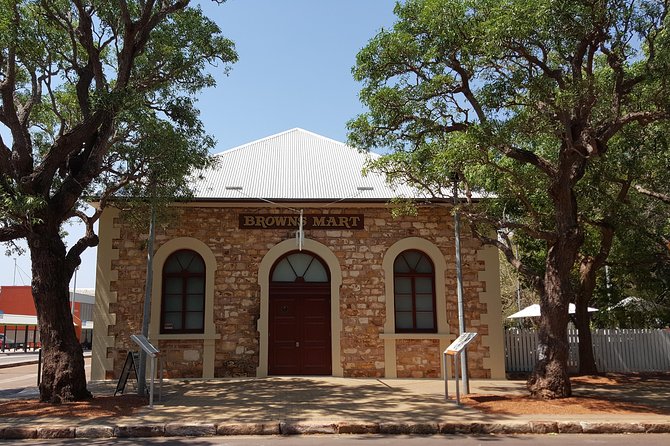
- Social history you can still feel: Brown’s Mart Theatre and its long run as a community landmark
- Waterfront views built into the walk: Parliament House and Bicentennial Park look out over Darwin Harbour
- Max 6 people, guided commentary: a personal feel with spoken stories throughout
- Photo-friendly stops: built-in chances to pause and capture the facades and monuments
Darwin Heritage Walk in Darwin CBD: what you’re really signing up for
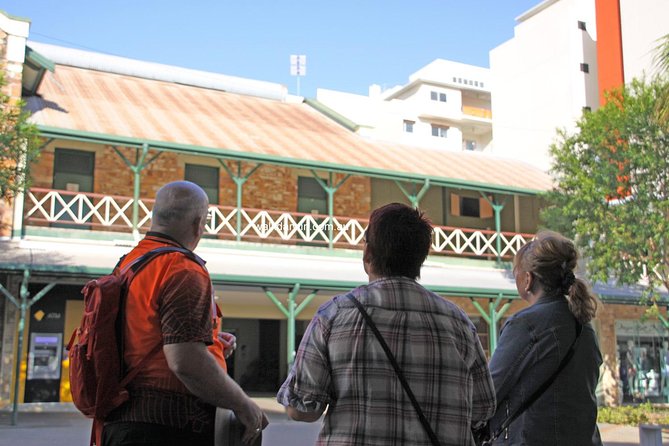
This is a classic “get your bearings fast” tour. The starting point is easy to reach in the city center: John McDouall Stuart at the corner of The Mall and Knuckey St. The tour ends back in the CBD area near Lyons Cottage, at the intersection of The Esplanade and Knuckey St, opposite Lyons Cottage.
It runs about 2 hours to 2 hours 30 minutes, with a maximum group size of 6. That matters. Small groups mean the guide can answer questions as you go, and you’re less likely to get stuck with a fast-moving pace that makes you miss details. Plus, the tour uses a mobile ticket, so you’re not hunting for paper on a busy morning.
The tour operates in all weather conditions, so Darwin’s humidity and sudden showers both factor into what you’ll wear. I’d treat this as a morning or late-morning outdoor plan: bring sunscreen, a hat, and drinking water, and wear enclosed non-slip walking shoes.
You can also read our reviews of more walking tours in Darwin

The story engine: how the route connects Cyclone Tracy, bombing, and rebuilding
Darwin’s modern look can fool you. You see restored facades, tidy gardens, and government buildings, but the city’s identity was hammered by major events and then rebuilt with stubborn energy.
On this walk, the guide connects several defining chapters: the city’s early growth, the impact of the bombing of Darwin, and the long shadow of Cyclone Tracy. That’s one reason this tour works so well as an introduction. Instead of memorizing dates, you start linking what you see—buildings, monuments, parks—to what shaped them.
You’ll also get the practical version of history. You’re not just told what happened; you’re shown how Darwin chose what to preserve and what to repurpose. That old-versus-new framing is the “secret sauce” here, especially in a compact CBD where most people only skim.
If you care about Indigenous history deeply (beyond a brief mention), plan to ask questions. One past guest felt the tour didn’t go far enough on the Larrakia story, like first contact and what happened to Aboriginal people living in the early township. If that topic is important to you, bring it up respectfully with your guide during the walk, when there’s time to ask.
Star Village and Brown’s Mart Theatre: the past you can still spot on the street
You begin with the kind of heritage that doesn’t wait for you inside a museum. The CBD streets act like an open-air timeline, and the guide uses them to set the context.
Stop: Star Village (pre-Cyclone Tracy survivor)
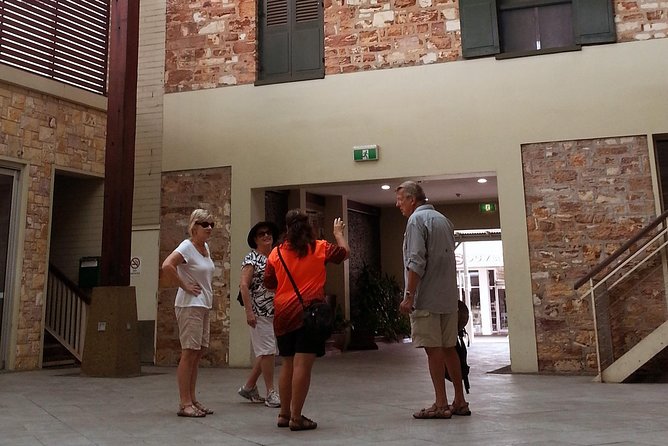
Star Village is one of the best examples of Darwin’s endurance you can actually point at. It’s a former open-air cinema and one of the few original buildings from before Cyclone Tracy. Today it’s been converted into a chic retail hub, but you still get the historic features explained as you view it.
Why this stop is worth it: it’s proof that the city isn’t only rebuilding from scratch. Darwin kept pieces of itself, even when everything else changed. If you like “how did this survive?” stories, this one lands.
You’ll likely spend about 10 minutes here, focused on exterior viewing and commentary.
Stop: Brown’s Mart Theatre (more than a pretty facade)
Brown’s Mart Theatre has stayed tied to Darwin’s social culture for over 100 years. The guide walks you through a few key stories while you peruse the exterior.
This stop helps you understand Darwin as a lived-in city, not just a place of headlines. Theatre and public venues tell you how communities gathered, how entertainment worked, and how social life found a rhythm even through tough times.
Again, expect roughly 10 minutes, mostly listen-and-look.
You can also read our reviews of more historical tours in Darwin

Old Town Hall to Administrator of the Northern Territory: ruins, restoration, and power

Darwin has both “broken-but-important” sites and “saved-and-restored” ones. This middle stretch gives you that full range.
Stop: The Old Town Hall (Palmerston-era reminder)
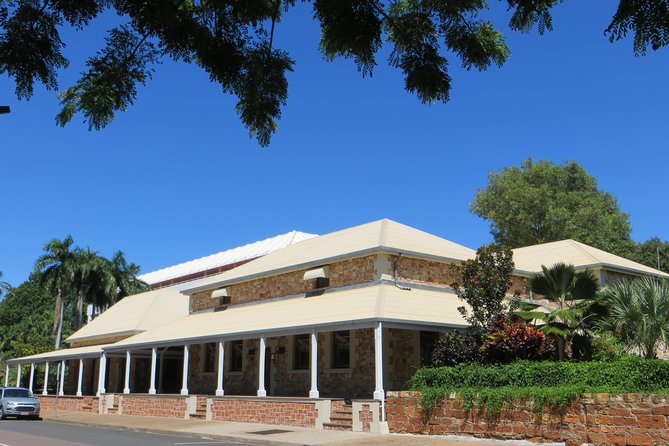
At Old Town Hall, you’ll see a site that’s now in ruins—the Old Palmerston Town Hall. It acts like a visible reminder that pioneers and early residents passed through here before the city we know today took its shape.
The drawback with ruins like this is that they can look quiet or vague if you don’t have the context. That’s exactly where a guided walk pays off. The guide’s role is to help you read what your eyes might miss.
Expect about 10 minutes here.
Stop: Administrator of the Northern Territory (restored buildings and gardens)
Next up is the Administrator of the Northern Territory, a set of beautifully restored buildings with gardens. Today, they’re used as offices, but the restoration lets you see early Darwin-era life in a way that feels tangible.
This is a great contrast to the ruins: same theme (early years), different outcome (preserved and used). If you enjoy architecture that carries a story, don’t rush this stop.
You’re looking at about 10 minutes again.
Parliament House and Bicentennial Park: the waterfront payoff
This is where the walk starts to feel like it has its own finishing rhythm. You move from CBD buildings toward the harbor-side mood, and the views make the history stick in your head.
Stop: Parliament House (self-government and the harbor)
Parliament House presides over Darwin Harbour, and the guide uses it to explain how the city became a self-governing modern place.
Even if you’re not a political-history person, this stop helps you understand Darwin’s shift from frontier outpost to functioning civic center. You’ll connect the buildings to the way decisions got made and how the city organized itself.
Expect about 10 minutes with spoken commentary and exterior viewing.
Stop: Bicentennial Park (green space with hidden reminders)
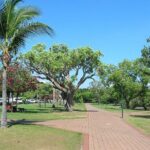
Bicentennial Park is your chance to breathe a little. Overlooking Darwin Harbour, it’s a green space for recreation, and it includes hidden treasures that remind you of early Darwin.
The harbor view is the obvious draw, but I like that this stop isn’t just “pretty scenery.” The guide points out details that keep it tied to the broader story of the city’s earlier days.
This segment is about 15 minutes, so there’s slightly more time to soak it in.
The guide experience: where the tour really wins or loses
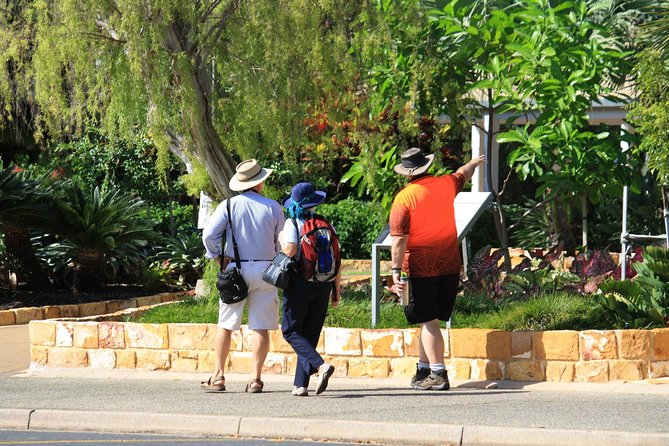
The biggest difference between a good walking tour and a great one is the guide. On this Darwin Heritage Walk, the guides have a strong track record of turning facades into characters.
In particular, John and Robin show up repeatedly in guest feedback. John is described as very passionate, with broad coverage of both history and politics, and a habit of pausing for questions and photos. Robin is praised for bringing the city to life through stories and life experience.
That aligns with what you should look for during your own tour:
- If you’re the type who asks questions, this format is friendly to you. The guide can’t control curiosity, so they often welcome it.
- If you burn easily, watch for shade breaks. Some guides make a point of timing stops to keep comfort in mind.
- If your attention span runs short, give it time. One criticism is that it can feel slow and that some of the most interesting parts show up later. For me, that’s a reminder to stay patient at the beginning, because the context matters before the bigger moments.
Also note the style: this tour is mostly about standing, looking, and listening. One guest summed it up as not much walking, which is true enough that you should know what you’re opting into.
Price and value: is $42.32 worth it for 2 to 2.5 hours?

At $42.32 per person, you’re paying for a local guide and spoken commentary through a compact CBD route. There’s no hotel pickup included, and food and drinks aren’t included either, so you should plan your own water and a snack afterward.
Here’s why I still think the price is fair for the right traveler:
- You’re getting guided context for sites you might otherwise skim past.
- The group size is small (up to 6), which makes the guide time feel more personal than a big-bus style tour.
- The stops are primarily free to view externally, so you’re not stacking ticket costs on top.
If you’re only in Darwin for a short time, this is a practical way to understand what you’ll see later—museums, harbor walks, and other heritage stops will make more sense once you’ve connected events like the bombing of Darwin and Cyclone Tracy to actual places.
Who should book this Darwin Heritage Walk, and who might want something else
This is a strong fit if you:
- want an introduction to Darwin’s CBD in a short window
- like history told through buildings, not just facts in a book
- appreciate a calm, small-group pace with photo stops
It’s also a good option for moderately active travelers. You will be walking and standing, but the route is designed for an easier stroll and multiple short stops.
Consider a different experience if you:
- want lots of indoor time or museum-style wandering
- dislike listening-heavy formats
- are looking for a deep dive into every identity and perspective in Darwin’s history (especially Indigenous history). You can ask questions, but the tour’s structure may still feel too brief for your needs.
Should you book it
I’d book the Darwin Heritage Walk if you want a smart first morning in Darwin. The combination of small group size, guided stories about what shaped the city, and the practical old-and-new look makes it a real value for the time.
Book it if you like walking tours where the route is short, the guide is the star, and you leave with a mental map of how Darwin got to where it is now. You’re also smart to reserve early; it’s an experience that tends to get booked about 45 days in advance.
If you’re flexible on pace and you’re okay with a lot of listening (with plenty of chances to pause for photos), this is one of the easier ways to get your bearings and understand the places you’ll keep seeing around Darwin.
FAQ
How long does the Darwin Heritage Walk take?
It runs for about 2 hours to 2 hours 30 minutes.
Where does the tour start and end?
It starts at John McDouall Stuart corner The Mall and Knuckey St in Darwin City, and it ends at the intersection of The Esplanade and Knuckey Street, opposite Lyons Cottage.
What does the tour cost, and what’s included?
The price is $42.32 per person. Included are a local guide and spoken commentary. Food and drinks aren’t included.
Is the tour mainly walking or standing and listening?
It’s best described as a moderate walking route with a lot of story time while you stand and look at the sites.
What should I bring with me?
Bring a camera, sunscreen, a hat, and drinking water. Enclosed non-slip walking shoes are recommended.
Does it run in bad weather?
The experience operates in all weather conditions, and you should dress appropriately. If it’s canceled due to poor weather, you’ll be offered a different date or a full refund.
How big are the groups?
The tour has a maximum of 6 travelers.