REVIEW · COFFS HARBOUR
Daytime Kayak Eco Tour of New South Wales
Book on Viator →Operated by C- Change Adventures · Bookable on Viator
This daytime kayak eco tour turns Coffs Harbour’s river into a living classroom and a slow, peaceful paddle at the same time. I love the hands-on mix: you get real coaching on paddling, then you look for wildlife and learn how mangroves and sandflats support it all.
Two things that really stand out to me are the chance to see wildlife up close (staples like herons, egrets, and sea-eagles) and the activities that make the science stick, like yabby pumping and exploring the sandflats. One thing to consider is that you’ll want decent weather for the water time—this experience depends on it.
In This Review
- Key highlights you’ll care about
- Why this Coffs Harbour kayak tour feels different than a standard paddle
- Getting on the water: paddling basics, sit-on-top comfort, and safety gear
- Wildlife spotting in the river system: what you’re actually looking for
- Mangroves and the science of surviving sea-water
- Yabby pumping and sandflats: hands-on learning you can feel
- The Aboriginal fish trap and local history along the river
- A guide who keeps it engaging (including the fun bits)
- Photos without the awkward end-of-tour scramble
- Price and value: what $43.03 buys you in two hours
- Who should book this tour (and who might want to think twice)
- Quick decision guide: book or skip?
- FAQ
- How long is the Daytime Kayak Eco Tour?
- How much does the tour cost?
- Where do I meet for the tour?
- What’s included with the kayaking?
- Do I need kayaking experience?
- What wildlife might we see?
- Do we learn about mangroves?
- Will we try yabbying and see crabs?
- What happens if the weather is bad?
- Can I get a refund if I cancel?
- Is there a limit on group size?
Key highlights you’ll care about
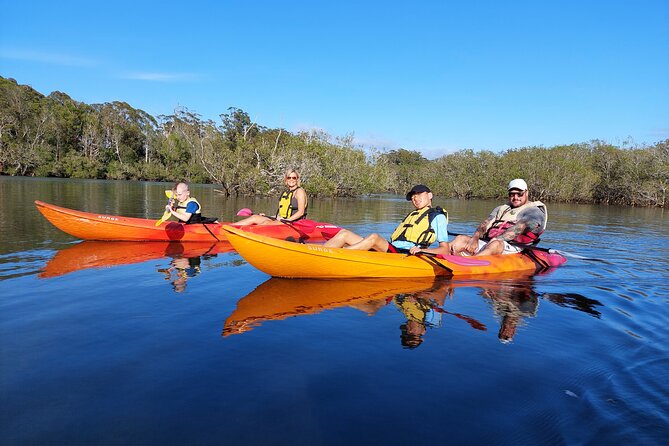
- Marine scientist guiding: expect wildlife and ecosystem explanations along the route, not just a casual chat
- Sit-on-top kayaks with tuition: you’ll learn how to paddle and maneuver safely or improve technique
- Wildlife spotting on the river: stingrays, fish, herons, egrets, ibis, spoonbills, osprey, and sea-eagles
- Mangrove lessons: learn how mangroves manage to live in sea-water and what adaptations make them work
- Yabby pumping + sandflat exploring: soldier and hermit crabs are part of the hands-on feel
- Free photo sharing: your guide takes photos during the tour if you want them afterward
Why this Coffs Harbour kayak tour feels different than a standard paddle
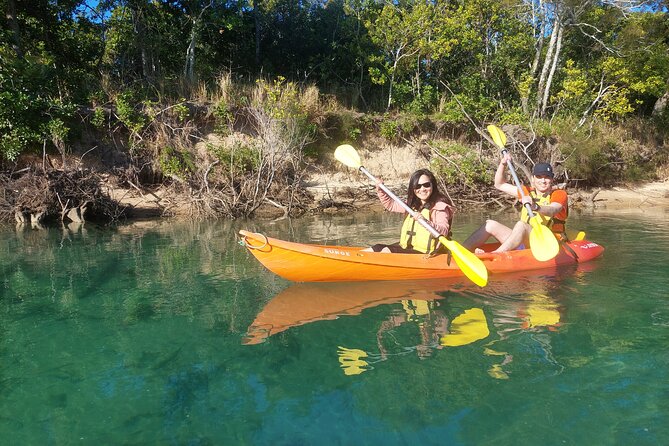
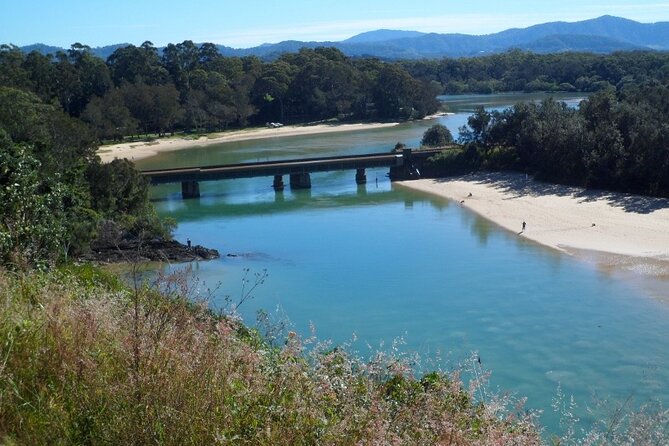
Coffs Harbour is a good place to learn about coastal ecosystems because rivers here connect land life to salt-influenced habitats. On this tour, you’re not just “on water.” You’re moving through mangrove country, sandflats, and the kind of shallows where animals use cover and food-rich edges.
The best part is the rhythm. You get guided pauses to look closely, then you paddle again. That structure helps you notice small stuff: a bird’s feeding behavior, a muddy edge where crabs hang out, or the signs of marine life just under the surface.
Also, the tour is designed to keep your brain off your phone. The experience leans into quiet time away from technology, while still giving you learning and a few energizing moments to keep everyone engaged.
A few more Coffs Harbour tours and experiences worth a look
Getting on the water: paddling basics, sit-on-top comfort, and safety gear
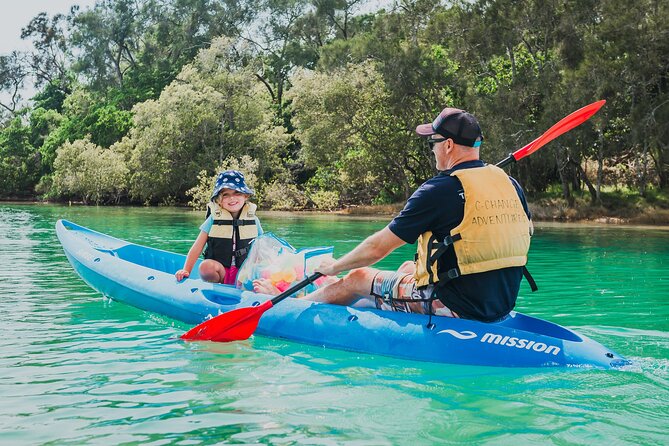
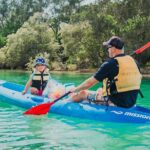
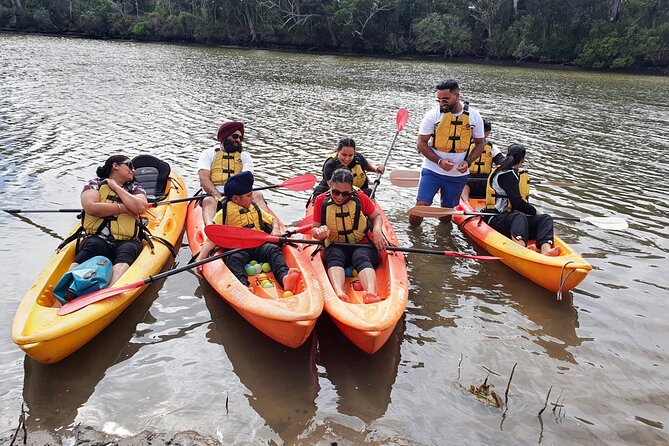
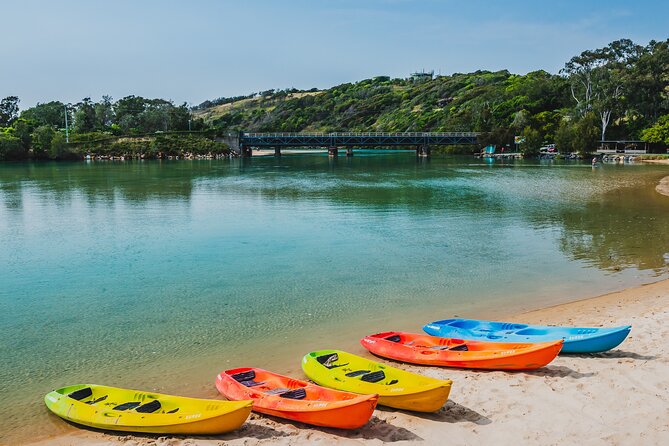
This tour uses comfortable sit-on-top kayaks, which are practical if you’re new to kayaking. You’re not stuck in a closed cockpit, and it’s easier to get your balance while you’re learning.
Before you head out, you’ll get safety equipment and guidance. You’ll also be fitted with a lifejacket—so you can focus on learning technique rather than worrying about what happens if you get thrown off balance.
Because the group can include beginners, the guide’s role matters. You should expect tuition that helps you paddle and maneuver safely or refine what you already know. That’s also where your confidence grows fast: even if you start out stiff or awkward, you’ll get chances to practice while the guide watches and adjusts.
One small practical note: this is a two-hour outing, so you’ll want to arrive ready to move. If you show up late or distracted, you lose the time that’s meant for coaching and wildlife spotting.
Wildlife spotting in the river system: what you’re actually looking for
The tour explicitly calls out wildlife to watch for, and that helps you know where to focus. You’re on the river looking for animals like stingrays and fish, plus birds such as herons, egrets, ibis, spoonbills, and osprey.
What I like about this approach is that it turns scanning into something specific. Instead of paddling and hoping for the best, you have a target list and an ecosystem context. When you learn what mangroves and sandflats provide—shelter, feeding areas, and water conditions—your sightings feel more meaningful.
You might also spot sea-eagles. These larger birds can be impressive at a distance, but the real value is learning why they show up where they do. The guide points out points of interest along the way, so your “wow” moments come with an explanation instead of just a quick glance.
Keep your expectations flexible. Wildlife viewing depends on conditions, timing, and animal behavior. Still, the tour is built around noticing what’s there today, not chasing a checklist like it’s a contest.
Mangroves and the science of surviving sea-water
One of the most memorable parts of this tour is the mangrove lesson. Mangroves look rugged, but the real story is their survival tricks—how the plants handle sea-water influence and the challenges of living in a coastal mixing zone.
The guide explains what makes mangroves interesting and points to the adaptations that let them function where other plants struggle. That matters because mangroves aren’t just scenery. They create habitat structure and shape the food web, from small creatures hiding in roots to birds hunting around the edges.
When you understand the role mangroves play, you’ll start noticing details while you paddle: root patterns, the way the shoreline changes, and why certain spots feel more “alive.” Even if you’re not a science person, this kind of explanation connects the dots between what you’re seeing and why it exists.
Yabby pumping and sandflats: hands-on learning you can feel
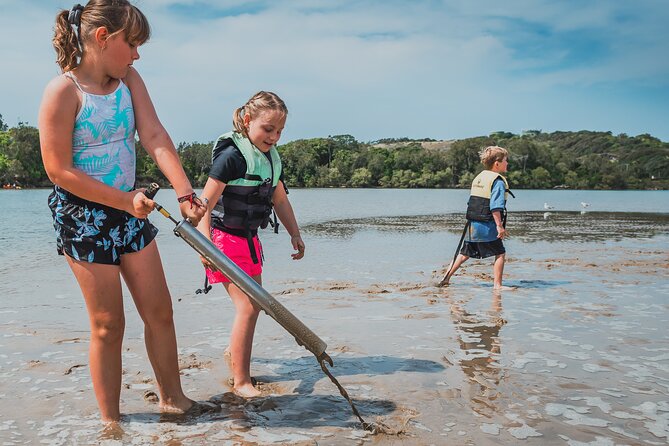
If you want an eco tour that doesn’t stay locked in theory, this one gives you a chance to get involved. You’ll try yabby pumping, and then you’ll explore sandflats for soldier and hermit crabs.
This is the part that turns the tour from viewing to participation. Yabbies and crabs live in the intertidal and shallow zones where sediment, water movement, and cover all matter. Learning about mangroves makes more sense after you see how creatures use the sandflat environment.
It also helps that the tour includes practical guidance. You’re doing something that many people have never tried, so the “how” matters as much as the “what.” By staying within a guided setting, you get the excitement without guessing or taking risks.
And yes—this activity changes the tempo. Expect a more playful, hands-on feeling compared with the quieter wildlife scanning.

The Aboriginal fish trap and local history along the river
A good nature tour also gives context. This one includes learning about an Aboriginal fishtrap and the local history of the area.
You’ll get the story in a way that fits the setting: instead of treating history as a separate lecture, it’s tied to how people used the river and its resources. That matters because these ecosystems aren’t only for wildlife. They’re also part of human knowledge and long-term connections to the land and water.
If you’re the type of traveler who appreciates respectful place-based learning, this segment can be a highlight. Even short explanations can make your later wildlife observations feel richer—especially when you realize the river has been studied, used, and understood for a long time.
A guide who keeps it engaging (including the fun bits)
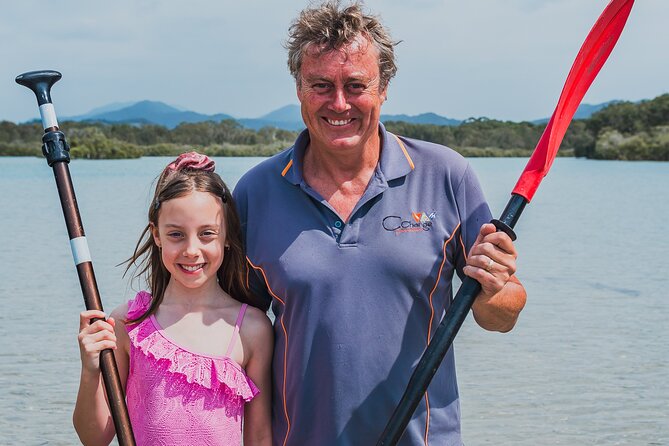
The tour’s value isn’t only in the ecosystem facts. It’s also how the guide keeps the group moving and comfortable.
In the feedback I’ve gathered from others, a guide named Matt stands out for mixing in light games during the paddle. That kind of approach matters because kayaking can be physical and a little technical at first. Games add energy, reduce awkwardness, and make the time feel less like a lesson and more like a shared adventure.
Even if games aren’t your thing, a good guide is still what makes the difference between a “nice hour on water” and an experience you remember. You’re looking for someone who can point out wildlife clearly, explain what you’re seeing in plain language, and keep the group safe and focused.
Photos without the awkward end-of-tour scramble
One practical benefit: your guide takes photos during the tour and can send them to you afterward if you’d like. That saves you from stopping constantly to take pictures while you’re also trying to paddle and look for animals.
For this kind of outing, photos are often the difference between remembering only the big moments and remembering the whole flow. Birds, shallow-water scenes, and group shots are much easier when someone else is handling the camera.
If you’re traveling with friends or family, this feature is also a simple way to get good photos without everyone fighting over who holds the phone.
Price and value: what $43.03 buys you in two hours
At $43.03 per person for about two hours, this tour is priced like an active, guided coastal experience—not just a rental kayak. You’re getting sit-on-top kayaks, safety equipment, lifejackets, and instruction, plus a marine scientist guide or equivalent science-led guidance.
That’s where the value comes from. The time isn’t “you go out alone and explore.” You’re paying for interpretation, wildlife spotting support, and hands-on activities like yabby pumping and sandflat exploring.
With a maximum group size of 30, you should have a good chance of staying engaged rather than being swallowed by the crowd. It also helps with pacing: the guide can keep track of everyone while you stop and start to look at wildlife.
For short stays in the area, this is a solid way to get a memorable nature hit without committing a full day. For longer trips, it still works because it adds depth—mangroves, mangrove survival, fishtraps, and local ecological knowledge.
Who should book this tour (and who might want to think twice)
I think this tour suits you if you want a mix of outdoors time and actual learning. It’s also great if you’re curious about coastal ecosystems and you like doing one or two hands-on activities instead of only watching from a distance.
You’ll likely enjoy it if you:
- are new to kayaking and want tuition
- enjoy wildlife watching and want help spotting what matters
- like family-friendly energy, with games and hands-on parts
- want to learn about mangroves and sandflat life without a long classroom session
You might want to reconsider if you’re very weather-dependent in your planning. Since the tour requires good weather and can be rescheduled or refunded due to poor conditions, have some flexibility in your schedule.
Quick decision guide: book or skip?
Book this if you want a short, well-guided nature experience in Coffs Harbour that includes both science and hands-on fun. The combination of paddling instruction, wildlife spotting, mangrove learning, and yabby pumping is a strong mix for the time and price.
Skip it only if you can’t be flexible with weather or you’re looking for a long, laid-back cruise with zero participation. This one asks you to take part—paddle, look, and try one active sandflat activity.
FAQ
How long is the Daytime Kayak Eco Tour?
It runs for about 2 hours.
How much does the tour cost?
The price is $43.03 per person.
Where do I meet for the tour?
You meet at C-Change Adventures, 20 Sawtell Rd, Toormina NSW 2452.
What’s included with the kayaking?
You get sit-on-top kayaks, all safety equipment, and lifejackets. There is also tuition to help you paddle and maneuver safely or improve technique.
Do I need kayaking experience?
Most travelers can participate, and the tour includes instruction.
What wildlife might we see?
The tour mentions stingrays, fish, herons, egrets, ibis, spoonbills, osprey, and sea-eagles.
Do we learn about mangroves?
Yes. The tour includes learning about mangroves and their adaptations for living in sea-water.
Will we try yabbying and see crabs?
Yes. You’ll try yabby pumping and explore sandflats for soldier and hermit crabs.
What happens if the weather is bad?
The experience requires good weather. If it’s canceled due to poor weather, you’ll be offered a different date or a full refund.
Can I get a refund if I cancel?
Yes. There is free cancellation, and you can cancel up to 24 hours in advance of the experience for a full refund.
Is there a limit on group size?
Yes. The tour has a maximum of 30 travelers.