REVIEW · CAIRNS AND THE TROPICAL NORTH
Full-Day Great Barrier Reef Pontoon with Snorkeling & Activities
Book on Viator →Operated by The Quicksilver Group · Bookable on Viator
Coral gets up close out on the pontoon. This full-day Great Barrier Reef trip from Cairns is built around multiple viewing options—snorkel in the water, then go dry for the underwater observatory and semi-submersible coral viewing.
Two things I really like: the day includes reef education plus real time in the water, and you’re not stuck choosing just one way to see the reef.
I also like that the crew handles the practical stuff. You get snorkelling equipment with instruction, and reef guides (including people named Michael and Kevin in past departures) focus on safety and making sure you can actually enjoy what you paid for.
One drawback to keep in mind: the platform can feel busy, especially at the underwater observatory windows, and the day’s timing needs care if you’re connecting to a cruise schedule.
In This Review
- Key Things to Know Before You Go
- From Spence Street to the Reef: fast catamaran ride that sets the tone
- The Outer Reef pontoon: what 3 hours on the platform is really for
- Reef education on the way: how it improves what you see
- Snorkeling with instruction: get more reef, waste less energy
- Underwater observatory and semi-submersible: dry viewing that still feels real
- Underwater observatory
- Semi-submersible
- Lunch and snacks: included food that affects comfort, not just hunger
- Optional add-ons: Scuba-Doo, helicopter flights, and paying for extra wow
- Scuba-Doo underwater scooter
- Helicopter flights
- Scuba-related activities
- Price and value: does $214.46 make sense?
- How crowded days and choppy seas change your reef experience
- Who should book this Outer Reef pontoon day
- Should you book this Great Barrier Reef pontoon tour?
- FAQ
- How long is the tour?
- What time does the tour start in Cairns?
- Are meals included?
- Do I get snorkeling equipment and instruction?
- Can non-swimmers still enjoy the reef?
- Is hotel pickup included?
- Are Scuba-Doo, helicopter rides, or scuba included?
- What happens if the weather is poor?
- Can I cancel for a full refund?
Key Things to Know Before You Go
- 3 hours on the Outer Reef platform gives you a real chunk of time, not a quick photo stop
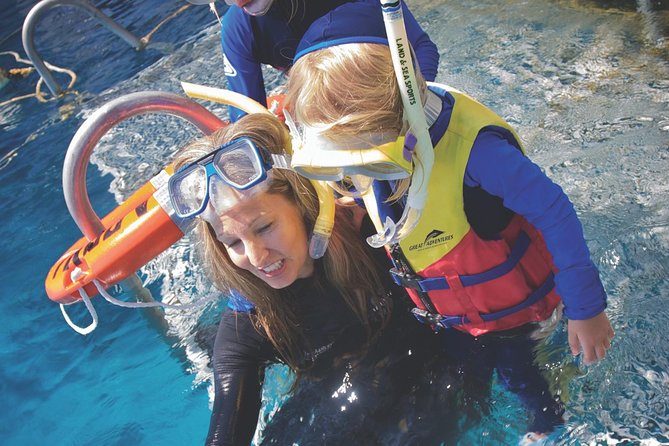
- Snorkelling gear + instruction helps you get in the water confidently, even if you’re not a strong swimmer
- Underwater observatory and semi-submersible let non-swimmers see coral without getting wet
- Fast catamaran transfers from Cairns mean less time stuck on land and more time on the reef
- Optional add-ons like Scuba-Doo and helicopter flights can add serious cost if you’re not budgeting ahead
From Spence Street to the Reef: fast catamaran ride that sets the tone
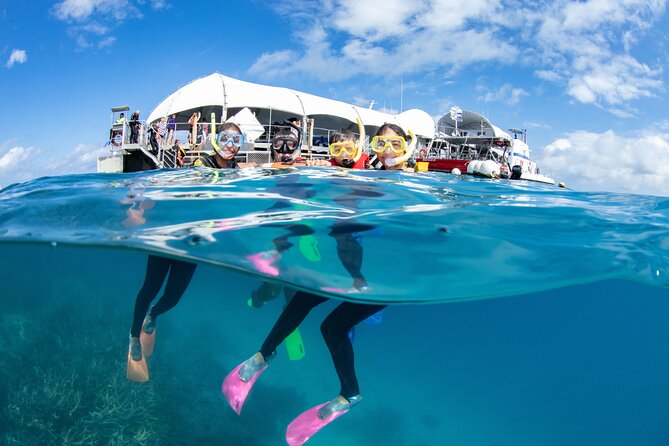
This starts in Cairns at 1 Spence St with a 10:30 am departure. The big practical win here is that you don’t waste your morning playing taxi roulette or waiting around for a hotel pickup that isn’t coming. You go straight from town to the water, on a fast catamaran ride, with the reef day already rolling.
Expect the crossing to be part of the experience. Some days it’s smooth; other days the sea has opinions. A couple of past riders noted that when the ride got rough, they provided nausea help such as ginger tablets. That’s the kind of detail that matters because it affects your whole day—if you feel rough on the way out, snorkeling later won’t feel fun.
Also note the tour runs for about 7 hours total. That means the schedule is paced like a proper day trip: you’ll eat, you’ll suit up, you’ll do reef activities, and then you’ll head back before you start googling your “how do I get back” options.
You can also read our reviews of more snorkeling tours in Cairns and the Tropical North


The Outer Reef pontoon: what 3 hours on the platform is really for
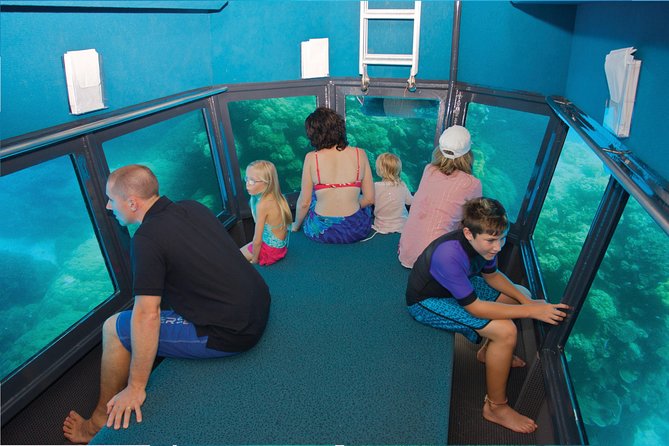
Once you reach the Outer Barrier Reef activity platform, you’re given about 3 hours on the site. The point of this pontoon setup is simple: it’s spacious and gives you a lot of ways to experience the reef from one place.
Here’s what that time usually turns into:
- You’ll gather at stations to get fitted with gear.
- You’ll go in and out of the water as needed.
- You’ll split your attention between snorkeling and the dry viewing experiences.
- You’ll eat lunch and reset between sessions.
I like that this is not a single-activity day. You can spend more effort on snorkeling if that’s your focus, or you can keep it calm and plan to spend more time dry at the underwater observatory and semi-submersible.
One caution: the pontoon experience can get crowded. Several past experiences pointed to congestion around the underwater windows and the snorkeling area. This isn’t necessarily a deal-breaker, but it is worth planning for. If you’re the type who gets cranky when you can’t move, pick your times and rotate between activities.
Reef education on the way: how it improves what you see
You get a reef educational presentation as part of the day. It’s not just trivia. Good reef education changes how you look at coral and fish on the platform.
For example, snorkeling can feel like “fish everywhere” until you learn what you’re actually seeing—coral types, what different colors usually mean, and how to stay safe around the water. Past riders also praised the guided snorkeling approach, including instructors who handled safety carefully and explained what to watch for.
If you want to maximize your time, treat the presentation as your setup session. Ask questions if you have them (currents, jellyfish protection, what’s worth trying in the water first). You’ll feel more confident once you’re actually suited up and floating.
Snorkeling with instruction: get more reef, waste less energy
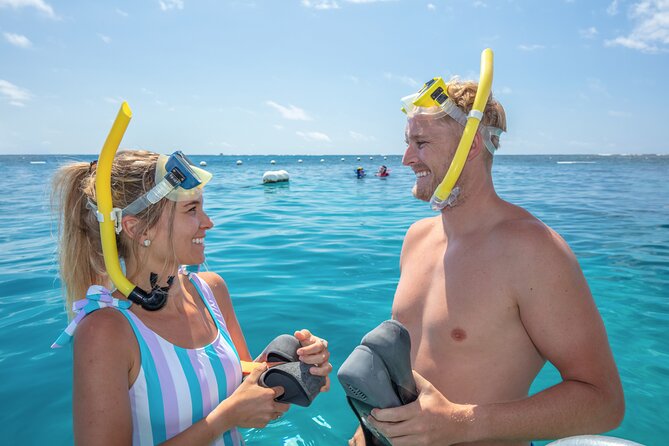
Snorkeling here comes with equipment and instruction, plus buoyancy vests. That combination matters. A lot of reef trips leave you with a mask and a hope. This one tries to reduce the guesswork.
A few practical tips I recommend based on how these operations work:
- Tell the crew about any medical limits before you get in the water. The tour explicitly notes snorkeling can be strenuous.
- If you’re nervous, start with the supervised guidance. You’ll usually see more when you spend less time fighting your gear.
- Don’t treat it like a race. You want calm, steady breathing and controlled floating.
Jellyfish protection is another detail that’s worth your attention. One rider mentioned full-body Lycra suits were provided for sun and stinging jellyfish protection. Even if you’re not sure you’ll need it, it’s smart to use what they provide—reef water can be deceptive, and stingers are not always obvious.
Timing helps too. Some people found the reef was easier to enjoy without feeling like they were snorkeling on top of each other when the conditions were calm. When the day gets choppy, you might feel more tired faster. Plan for that.
Underwater observatory and semi-submersible: dry viewing that still feels real
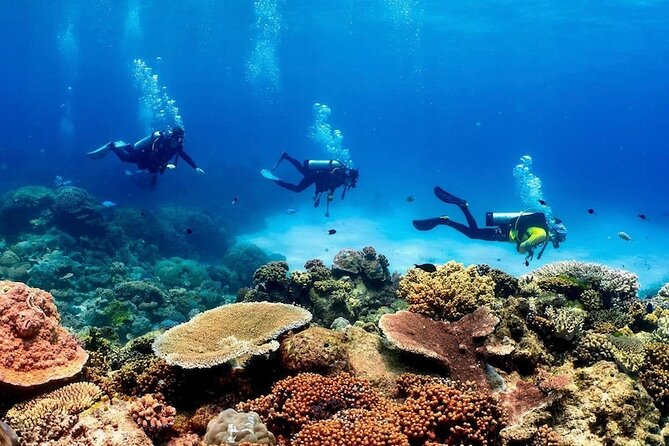
Not everyone wants to go in the water. That’s why this trip is structured with two separate dry viewing options: an underwater observatory and a semi-submersible coral viewing tour.
A few more Cairns and the Tropical North tours and experiences worth a look



Underwater observatory
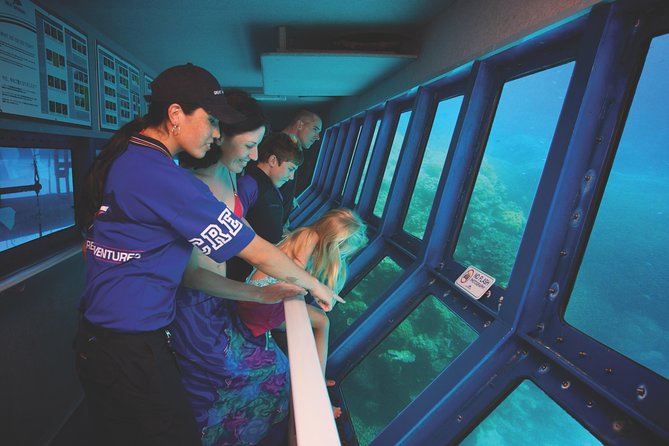
The observatory is designed so you can see the reef through viewing windows while staying dry. This is a big win for non-swimmers and for anyone who wants breaks between snorkeling sessions.
A couple of negative comments mentioned that windows were dirty or streaked, which can add a blue-grey tint and make fish look less vivid. That’s not something you can fully control, but you can keep it practical: when you’re in the observatory, try multiple windows if possible and let staff know if something seems unusually unclear.
Also, expect it to be busy. Several notes said it could feel crammed at the windows. If you want the best view, get in a little early or time it when the biggest wave of people is in the water.
Semi-submersible
The semi-submersible is another dry approach, and it’s often less stressful than juggling snorkeling gear in crowds. One helpful tip from a past rider: if you have choices, aim to do the semi-sub on the second afternoon run. The first one can be packed, while the later slot tends to feel more manageable.
This is a good example of how small scheduling decisions can change your comfort level without changing your cost.
Lunch and snacks: included food that affects comfort, not just hunger
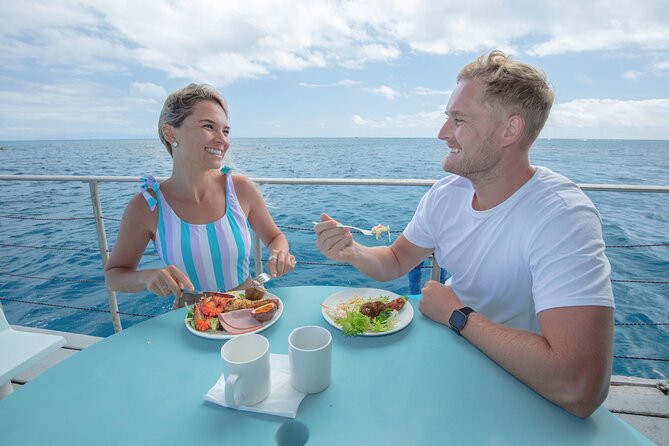
Food is included, and that’s not a small deal on a day that can stretch 7 hours with time in open ocean.
You get:
- Morning tea
- Hot and cold buffet lunch, including prawns
- Afternoon tea
- Plus additional items noted by riders during the return ride (coffee/tea and snacks were mentioned by some)
How good is the lunch? It’s buffet food on a working boat. Some people called it tasty and good variety. Others said quality was poor or mediocre. Either way, lunch is meant to keep you fueled for snorkeling and observatory time—not to replace a gourmet meal.
One practical plus: showers. A rider specifically mentioned fresh-water showers on the reef pontoon. If you’ve ever tried to get back on a boat with salt crust on your face, you’ll appreciate this.
Optional add-ons: Scuba-Doo, helicopter flights, and paying for extra wow
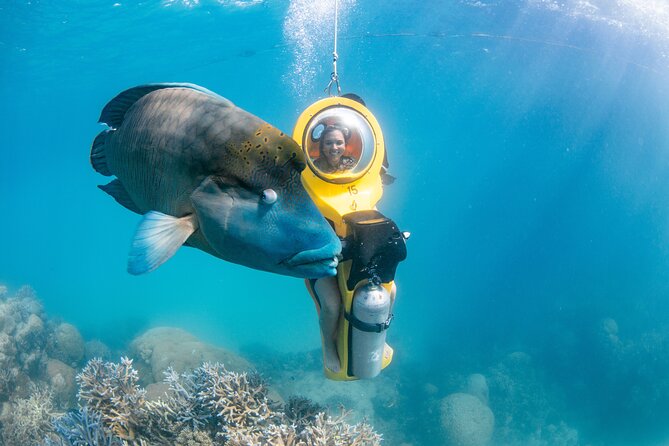
This tour gives you a base reef day, then offers paid upgrades. If you like the idea of seeing the reef from multiple angles, these add-ons can be worth considering.
Scuba-Doo underwater scooter
Scuba-Doo is mentioned as an optional experience that’s not included. It comes with extra cost on the day. Some people loved it as an unforgettable addition. Others were disappointed it was fully booked when they arrived. If Scuba-Doo is a must for you, consider it early in your planning and ask what’s available once you’re on-site.
Helicopter flights
Helicopter flights are also optional and extra. One featured experience highlight described taking the helicopter offered through the tour and feeling it was great value because it also helped with cruise timing.
Scuba-related activities
The tour also lists optional scuba as an additional cost, with a minimum age of 12. If anyone in your group is considering it, factor that into your plan early because age and medical requirements can affect participation.
My advice: treat add-ons like dessert. If you want dessert, great. If you’re on a tight budget, the included snorkeling + dry viewing already delivers most of the core experience.
Price and value: does $214.46 make sense?
At about $214.46 per person, you’re paying for an organized day that includes:
- Return fast catamaran transfers from Cairns
- 3 hours on the Outer Reef platform
- Snorkelling equipment + instruction
- Underwater observatory
- Semi-submersible coral viewing
- Reef education
- Morning and afternoon tea
- Buffet lunch (including prawns)
- Environmental management charge
That’s why this price can feel reasonable. A lot of reef days either include transport and food but make you pay for the underwater experiences separately, or they give you one viewing angle and call it a full day.
Your best “value moment” is when you use multiple formats in one trip: a snorkel session for the living coral and fish, then a dry observatory window when your energy drops, then the semi-sub when you want a calmer view.
The places where value can feel worse are also predictable:
- If you end up skipping snorkelling (or can’t snorkel due to conditions), you’re relying more heavily on the observatory/semi-sub, and crowding can reduce the experience quality.
- If weather reduces visibility, the reef can look less colorful even when the ecosystem is still healthy.
- If your schedule is sensitive (like cruise ship connections), any delay can increase stress.
In other words: the price is for convenience and variety. It’s best when you actually use that variety.
How crowded days and choppy seas change your reef experience
This reef day depends heavily on day-of conditions. The tour requires good weather, and that’s for a reason. The faster the boat and the more exposed you are, the more the sea can affect comfort and energy.
A few patterns show up in real feedback:
- When weather and water are calmer, snorkeling can feel less crowded and more enjoyable.
- When water visibility drops or the day turns cloudy, the reef can feel less colorful even if you’re still seeing plenty of marine life.
- Crowding tends to happen at the same focal points: snorkeling edges, the observatory windows, and the semi-sub sessions.
You can’t control weather, but you can control how you respond. If visibility is weaker, don’t panic-scroll for color. Focus on movement—fish behavior, coral shapes, and the overall reef structure.
And if it’s choppy, remember: it’s okay to dial back snorkeling and switch to the dry viewing modes. The trip is designed for that.
Who should book this Outer Reef pontoon day
This works best if your group includes a mix of interests.
Book it if:
- You want an Outer Great Barrier Reef experience without having to arrange everything yourself.
- You want snorkeling with instruction, not just equipment rental.
- Non-swimmers in your group still want to see coral from the underwater observatory and semi-submersible.
Consider another option if:
- Your top goal is maximum quiet. The platform can be busy.
- You’re extremely sensitive to crowds or have limited patience for shared space.
- You’re only interested in one activity and might skip the included options.
Families often do well because it’s a “choose your comfort level” format. You can do more in the water if you feel good and then switch to dry viewing when you don’t.
Should you book this Great Barrier Reef pontoon tour?
If you want a well-rounded Great Barrier Reef day with real included time on the Outer Reef, I’d say yes—with a couple of smart cautions.
Do book it if you’ll use snorkeling and the dry viewing options. The best results come when you rotate between experiences and don’t get stuck waiting at one window.
Think twice if you know you need a calm, uncrowded environment at all times, or if you’re planning a tight connection after the tour. On days where schedules get stressed, the reef part is still fantastic, but the stress outside the reef can steal your enjoyment.
Bottom line: the included package is designed for variety—snorkel, observatory, semi-sub, and reef education—so you come away feeling like you truly did the reef, not just visited it.
FAQ
How long is the tour?
The experience runs for about 7 hours (approx.), with about 3 hours at the Outer Reef platform.
What time does the tour start in Cairns?
The start time is 10:30 am. The meeting point is 1 Spence St, Cairns City QLD 4870.
Are meals included?
Yes. You get morning tea, a hot and cold buffet lunch (including prawns), and afternoon tea.
Do I get snorkeling equipment and instruction?
Yes. Snorkelling equipment is included, and you receive instruction. Buoyancy vests are also provided.
Can non-swimmers still enjoy the reef?
Yes. There’s an underwater observatory and a semi-submersible coral viewing tour, both included, so you can view the reef while staying dry.
Is hotel pickup included?
Hotel pick up and drop off are not included.
Are Scuba-Doo, helicopter rides, or scuba included?
No. These optional activities are available for an additional cost paid on the day.
What happens if the weather is poor?
The tour requires good weather. If it’s canceled due to poor weather, you’ll be offered a different date or a full refund.
Can I cancel for a full refund?
Yes. You can cancel up to 24 hours in advance of the experience start time for a full refund.