REVIEW · ULURU
Full Uluru Base Walk at Sunrise Including breakfast
Book on Viator →Operated by SEIT Tours · Bookable on Viator
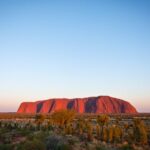
Uluru changes with the light. This full sunrise base walk is built around a 12-kilometer loop and guided learning, from geology to Indigenous creation stories tied to the rock. I like the way the guide keeps the focus on Tjukurpa (Creation Time stories) while you’re actually walking the terrain, not just looking at it from a bus window.
I also love the practical setup: hotel pickup and drop-off with air-conditioned transport, plus a breakfast you can eat without slowing everything down. The outback picnic is carried in a satchel, and the morning timing means you’re in the cooler air before the heat really grabs you.
One thing to know up front: the included breakfast is not a big sit-down meal. You’ll get an outback-style picnic that’s more like snack portions in a pack, and you carry it during the hike.
In This Review
- Key highlights to know before you go
- Sunrise start from Ayers Rock Resort: why it matters
- The full 12-kilometer base walk: pace, terrain, and what to watch for
- Tjukurpa at Uluru: stories you hear while the ground makes sense
- Picnics at sunrise: what’s in the satchel and how to handle it
- Waterholes, rock art, and Kantju Gorge: where the walk turns special
- Guide and group size: the difference between a walk and a cattle-call
- Price and value: what you’re paying for, and what’s extra
- Packing list: shoes, water, layers, and the fly-mask reality
- Who should book this Uluru sunrise base walk
- Should you book it?
- FAQ
- How long is the Uluru full base walk tour at sunrise?
- What distance do I walk?
- Is hotel pickup and drop-off included?
- What’s included with the sunrise breakfast?
- Do I need to pay for Uluru-Kata Tjuta National Park entry?
- What fitness level do I need?
- How big is the group?
- Is the route difficult?
- What should I bring?
- What if the weather is bad?
Key highlights to know before you go
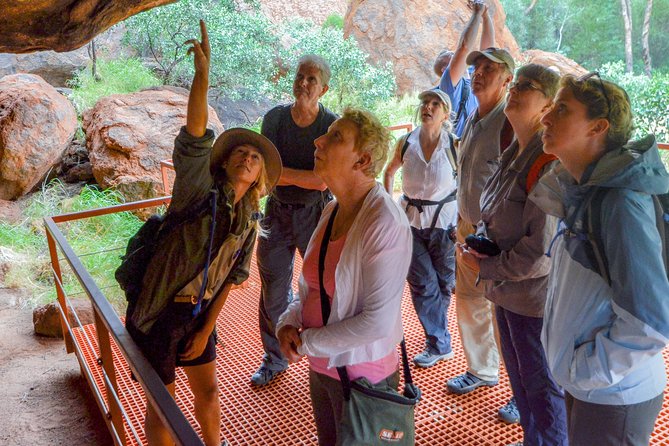
- Small group feel (max 15) with more time for questions during a long walk
- 12 km / 7.5 miles around Uluru on a mostly even, marked route at sunrise
- Tjukurpa storytelling on the move, including Liru and Kuniya, plus other creation stories
- Picnic breakfast in a satchel with tea/coffee or hot drink options during the stops
- Cultural photo rules in some areas, so your best sunrise shots may come from allowed viewpoints
- National Park entry fee needed (A$38 for over 18s, valid for 72 hours), separate from the tour price
Sunrise start from Ayers Rock Resort: why it matters
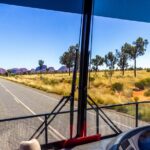
The tour begins before sunrise, with your guide collecting you at the entrance to your Ayers Rock Resort accommodation. That “get picked up early” part sounds minor until you’re standing around in the dark deciding whether your ride will show up. Here, you just meet the guide, hop in the Mercedes Benz Sprinter, and get moving.
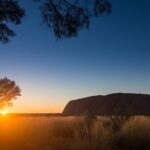
Once you enter Uluru-Kata Tjuta National Park, the timing sets the tone. Walking just before the sun rises gives you that mix of cool air, softer light on the rock, and fewer crowds blocking your view. It’s also when the desert feels most “awake” without being overstimulating, so you can actually pay attention to what the guide is saying.
The day runs about 6 hours total, with roughly 5 hours of walking on the base trail. That matters because you should plan this as your main Uluru activity, not an add-on. If you’ve only got limited time in Yulara (Ayers Rock Resort), this is a strong way to get a lot of the icon up close in one go.
You can also read our reviews of more walking tours in Uluru

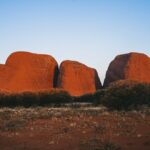
The full 12-kilometer base walk: pace, terrain, and what to watch for
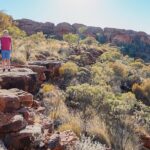
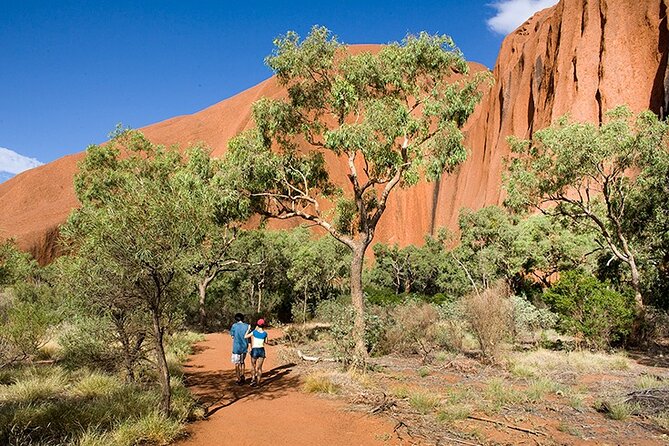
You’re doing the full circumference of Uluru’s base on a 12-kilometer / 7.5-mile loop. Even better, it’s described as moderate walking on an even surface, but “even” in the desert can still mean sand patches and uneven footing in spots. One review noted that the walk is mostly flat but some sandy areas can slow you down, so shoes that grip matter.
A practical takeaway: treat this as a “long walk,” not a “hard climb.” Most people can handle it if they’re comfortable walking for hours and don’t mind stopping frequently to look, listen, and take in the setting. You’ll start around sunrise, and the shade disappears in stages—so you may go from chilly to warm surprisingly fast.
Also, you’re not just moving from point A to point B. The guide stops often for stories and for key features. That’s good for your brain and your feet. It’s not a constant march the whole time.
One more thing that’s worth planning for: photo restrictions can apply in culturally sensitive areas. I’d assume you’ll be able to take plenty of pictures, but you might be asked to pause or change where you shoot during certain moments—especially around sunrise viewing. When that happens, it’s best to go with the flow and focus on seeing the place properly.
Tjukurpa at Uluru: stories you hear while the ground makes sense
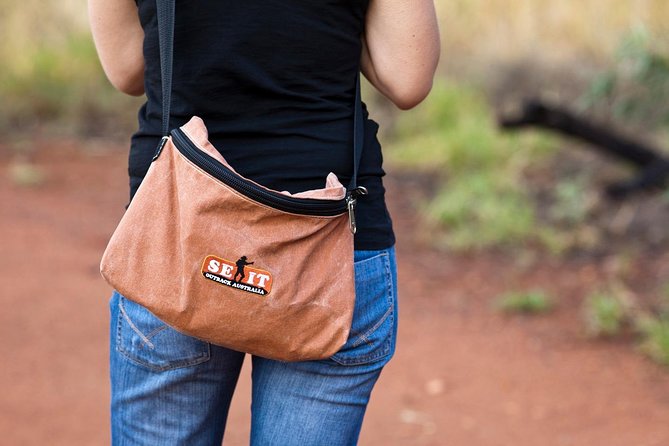
What makes this walk feel different is the way the guide ties what you’re seeing to Indigenous meaning. As you walk, you’ll hear creation stories associated with Tjukurpa and the Anangu people (the local Aboriginal community). This isn’t delivered as a lecture delivered at random. It’s connected to specific portions of the loop.
Two story threads come up repeatedly in the tour description:
- Kuniya (woma python) stories while you’re on the way into Mutitjulu Waterhole
- Liru (venomous snake) stories also associated with the base trail learning moments
That combination helps you remember what you’re hearing. You can picture the rock features, then match them to the story themes, instead of trying to store abstract information.
Some guides are especially praised for how they handle the storytelling pace and tone. Names you may hear referenced include Lucia, Graham, Rachel, Flo, Michael, Andy, Emily, Trent, and Max. The consistent thread from guide experiences is that they explain clearly and respectfully, and they keep the group moving on schedule without rushing the key moments.
If you’re the type who likes learning, you’ll likely enjoy how the guide uses small stops as “chapters.” If you’re not a huge talker, that’s still okay. You can dip into the stories when you want, then take quiet time between stops when you don’t.
Picnics at sunrise: what’s in the satchel and how to handle it
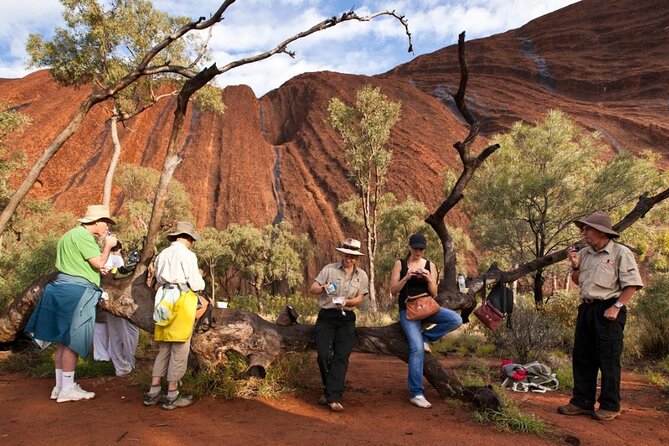
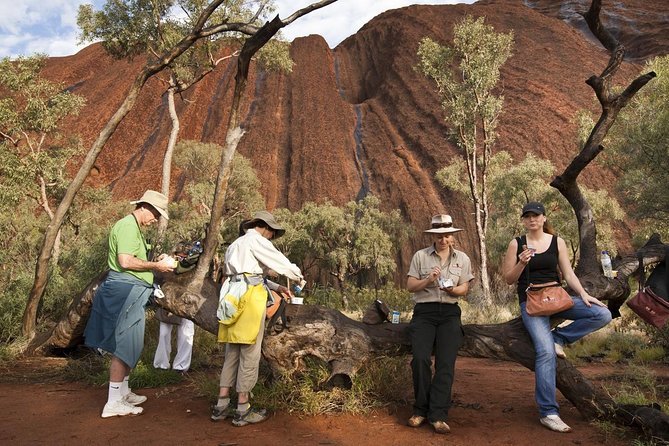
Breakfast is included, and it’s specifically designed to keep you fueled for the trail. It’s an outback picnic breakfast carried in a supplied satchel, and it comes with tea/coffee (and you may find hot drink options via hot water during breaks).
Here’s what you should expect, based on the way the tour is described: you’re not stopping for a long breakfast in a café. You’ll likely eat during a designated stop, then continue. One piece of feedback to file away is that breakfast can feel basic—more snack-like portions than a full meal—and you might carry a pouch of items for parts of the hike.
So how do you make this work for you?
- Plan to eat what you’re given, but keep your energy steady with smart pacing (don’t go out too fast).
- If you’re sensitive to “light” breakfasts, consider bringing a couple of extra small snacks for yourself, just in case.
- Wear layers and manage water (food alone won’t fix dehydration in the later warmth).
The upside: having breakfast included saves you from hunting for food in a remote area before sunrise, and the hot drink component is a morale booster when you’re still chilly in the early air.
Waterholes, rock art, and Kantju Gorge: where the walk turns special
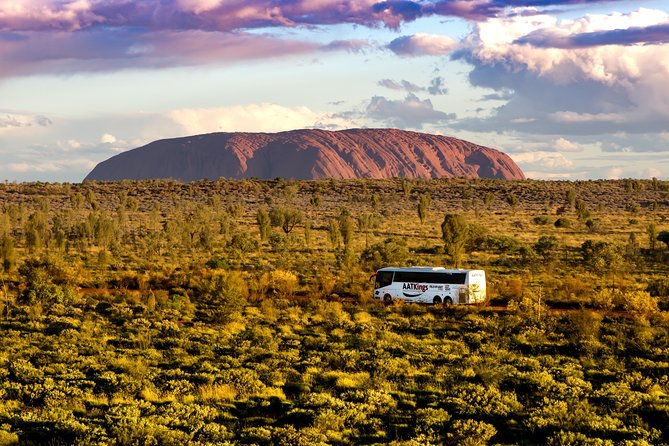
This is a “full base” day, which means you’ll pass a lot of Uluru’s visible features. The tour description highlights several categories of stops, and that’s useful because it means you’re not only chasing sunrise photos—you’re seeing Uluru in pieces.
You’ll watch the sunrise from the trail, then move on to highlights like:
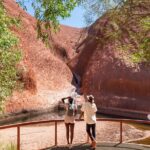
- Waterholes (including the Mutitjulu Waterhole area, where the Liru and Kuniya story themes appear)
- Rock art sites along the way, shared with context from the guide
- A learning section connected to the Mala people via the Mala Walk to Kantju Gorge
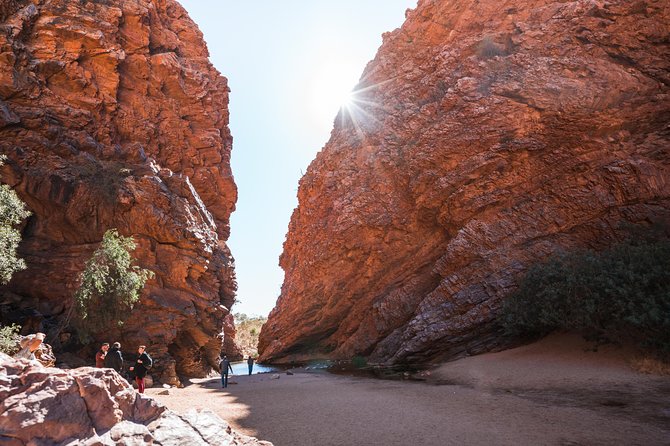
The Kantju Gorge mention is a good example of why guided context matters. If you’re only looking at the outline of a canyon or a rocky dip, it can feel like just more rock. A guide who connects it to the people and creation stories helps your brain “attach meaning,” and that makes the whole loop feel more coherent.
Also, the stops are built for listening. Desert mornings have a lot of small sounds—wind, insects, distant birds—and the tour notes that you’ll take time during breakfast while hearing desert noises around you. That’s not just “nice atmosphere.” It’s part of why the sunrise timing works: your senses are sharp before the day gets loud and hot.
A few more Uluru tours and experiences worth a look


Guide and group size: the difference between a walk and a cattle-call
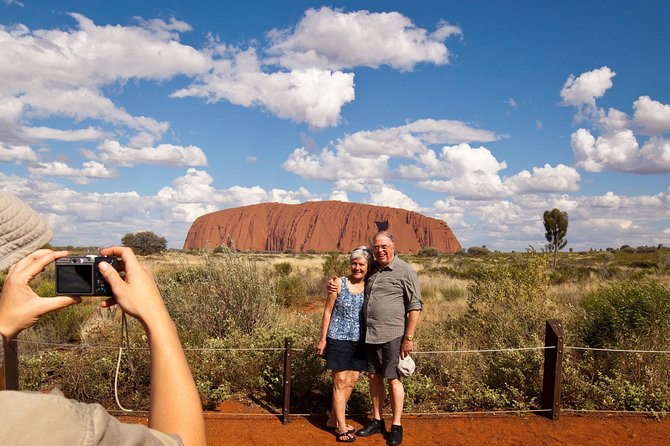
This is a small-group tour, with a maximum of 15 travelers. That matters on a 12-kilometer route because spacing affects everything: how easy it is to hear the guide, how smoothly photo stops happen, and how comfortable you feel asking questions.
The setup seems designed for a calm pace. Several guide name mentions came with comments about the group being small—down to just a few people in some cases—making the experience feel more personal. Even if your group ends up near the higher end of the max, it’s still much better than sitting in a big bus crowd and trying to learn while shifting around on the move.
I also like that the guide is responsible for staying on time, but the schedule includes enough stops to keep the walk from feeling like a timed hike. You’ll be walking a lot, yes—but it’s not a “no talking, no stopping” situation. Expect a guided rhythm.
Price and value: what you’re paying for, and what’s extra
The tour price is $171.42 per person. On paper, that’s not cheap, but value here isn’t only about distance. You’re paying for:
- A professional guide delivering on both walking logistics and cultural/geological context
- Transport in an air-conditioned vehicle with hotel pickup and drop-off
- Breakfast included (outback picnic style)
- The small-group format
What’s separate is the park entry fee. You’ll need to cover the Uluru-Kata Tjuta National Park entry fee for adults, listed as A$38.00 per person for over 18s, valid for 72 hours. The tour also notes you can buy park entry online ahead of time or from your guide in the morning. Either way, it’s an extra cost you should plan for.
So is it worth it? If you’re comfortable walking 12 kilometers and you want a guided version rather than an independent loop, you’re essentially paying for convenience, context, and timing. If you’re just trying to check a box with minimal learning, you might not feel the value as strongly. But if you want the stories and the “why” behind what you see, the guide-led structure is where this price makes sense.
Packing list: shoes, water, layers, and the fly-mask reality
The tour asks for comfortable walking shoes, and that’s not a small detail. A 12-kilometer loop done at a steady pace benefits from shoes with support and grip. You’ll be on an even route most of the way, but sand and uneven patches can slow you down. Better traction means fewer ankle wobbles and less fatigue.
Layers are also essential. Even though it’s sunrise and you might expect the temperature to rise quickly, conditions can swing a lot during the morning. One comment highlighted freezing-then-boiling conditions as shade breaks, and others stressed warm layers in cold months. Plan for “cool at the start, warmer later.”
And bring sunscreen and water. Water isn’t listed under inclusions, and the walk is long enough that you shouldn’t rely on the provided breakfast alone. One practical tip you’ll hear for desert walking: use facilities when you come across them, rather than waiting until you’re already far out on the trail.
Finally, consider fly masks if you’re bothered by insects. A piece of feedback specifically urged people to be prepared with fly protection.
Who should book this Uluru sunrise base walk
This tour is a great fit if you want:
- The iconic sunrise experience without dealing with logistics alone
- A guided full base loop with cultural and geology explanations
- A small-group feel with more time to ask questions
- A “morning energy plan” thanks to included breakfast and early timing
It may be less ideal if:
- You’re expecting a heavy, sit-down breakfast and dislike carrying snack-style food
- You don’t handle longer walks well, even if the surface is mostly even
- You need totally unrestricted photography at sunrise in sensitive areas (photo rules can limit where you shoot)
If your goal is simply seeing Uluru from multiple angles fast, you might already feel like there’s enough viewpoint overlap in the area. But if your goal is to understand Uluru as a lived cultural landmark—while physically walking around it—this format makes the day feel purposeful.
Should you book it?
I think you should book this sunrise base walk if you’ll enjoy walking for hours and you want the stories tied to the places you step past. The combination of small group, guided Tjukurpa storytelling, and breakfast + hotel transfers makes it one of the easier ways to do the full loop without scrambling for timing or access.
But if your top priority is minimizing early starts or you need a full breakfast that doesn’t involve carrying food in your pack, go in with clear expectations. Adjust with extra snacks and plan your layers and water, and you’ll be set for a meaningful morning on the base of Uluru.
FAQ
How long is the Uluru full base walk tour at sunrise?
It runs about 6 hours approximately, including the early pickup and the time on the trail.
What distance do I walk?
You walk the full base trail, about 12 kilometers (7.5 miles).
Is hotel pickup and drop-off included?
Yes. Hotel pickup and drop-off are included, and your guide collects you before sunrise at the entrance to your Ayers Rock Resort accommodation.
What’s included with the sunrise breakfast?
You get an outback picnic breakfast carried in a supplied satchel, and tea or coffee is part of the breakfast.
Do I need to pay for Uluru-Kata Tjuta National Park entry?
Yes. Park entry tickets are required for entry, and the listed park entry fee for over 18s is A$38.00 per person, valid for 72 hours. Your guide can also sell the ticket in the morning or you can buy it online ahead of time.
What fitness level do I need?
The tour is for travelers with a moderate physical fitness level. It involves moderate walking on an even surface, and you should wear comfortable walking shoes.
How big is the group?
The tour has a maximum of 15 travelers, and it’s designed as a small-group experience.
Is the route difficult?
The route is described as mostly even and not treacherous, but you should expect a long walk and possible sandy areas that can make some parts slower.
What should I bring?
You should bring comfortable walking shoes. It’s also smart to bring layers for changing morning temperatures, plus water and sunscreen for a long desert walk.
What if the weather is bad?
The experience requires good weather. If it’s canceled due to poor weather, you’ll be offered a different date or a full refund.