REVIEW · TAMBORINE MOUNTAIN
Gold Coast: Tamborine Mountain Canyon Flyer Zipline Tour
Book on GetYourGuide →Operated by TreeTop Challenge · Bookable on GetYourGuide
Flying over the rainforest starts with a click. On Tamborine Mountain’s Canyon Flyer, you hit 70 km/h on eight ziplines and look out at Great Dividing Range scenery from way above the canopy. I especially like how the tour is set up to build confidence fast, instead of throwing you straight into the scariest part. The one caution: the bridge section can feel a bit wobbly for some people, even if you’re ready for the zipline.
This ride is about 3 hours and runs as a small group (limited to 10), so you’re not stuck waiting around. You’ll also spend almost the whole experience in the air, with just one point where you touch the ground, which makes it feel like a real aerial adventure. Still, if you’re very nervous around heights, have certain health conditions, or don’t meet the weight or age limits, this won’t be the right fit.
In This Review
- Canyon Flyer at Tamborine Mountain: what this tour is really like
- Key points I’d anchor on before you book
- Getting to Thunderbird Park from the Gold Coast and Brisbane
- The 3-hour flow: briefing, nerves, and your first launch
- Above 70 m: how the zipline route actually plays in your head
- Bridges and heights: the one place nerves can slip through
- Guides and safety: the staff names you’ll hear during prep
- Who should (and shouldn’t) take Canyon Flyer
- What to bring and wear: the little stuff that prevents big hassle
- Price and value at $95 per person
- Where the views come from: rainforest and Great Dividing Range energy
- Should you book Canyon Flyer? My quick decision guide
- FAQ
- How long is the Gold Coast Canyon Flyer zipline tour?
- How many ziplines are included?
- What speed and height can I expect?
- How long is the longest zipline?
- Do I need prior zipline experience?
- Where does the tour start?
- What should I wear or bring?
- What isn’t allowed during the tour?
- Is it suitable for children?
- Who should not book?
Canyon Flyer at Tamborine Mountain: what this tour is really like
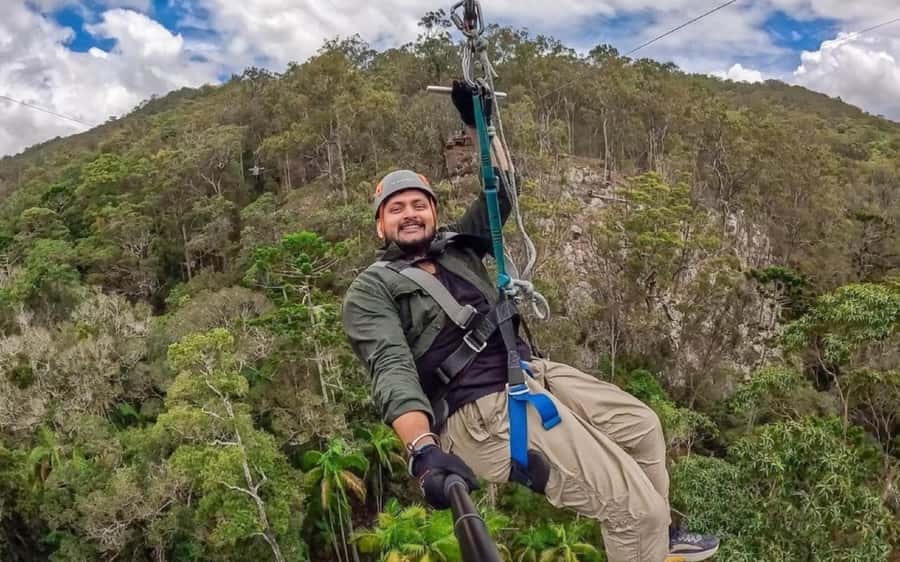
Gold Coast’s Canyon Flyer at Tamborine Mountain is a classic “big zipline energy” day in the Hinterland. You’re not doing obstacles or technical courses. You’re doing long lines over rainforest-style canopy, with canyon views and big height numbers that make your body remember it for a while.
The headline stuff is impressive on paper: 8 ziplines, speeds up to 70 km/h, and a top height of around 70 m over the treetops. The longest ride stretches 300 m, and together the lines run over about 1.5 km. Translation: you spend a lot of time gliding, not just “checking a box” for a quick zip.
Key points I’d anchor on before you book
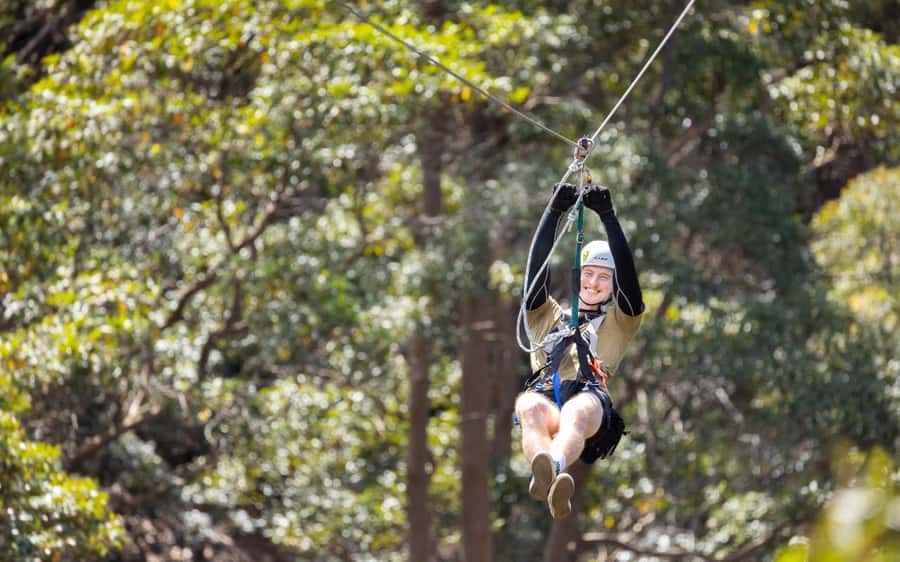
- Up to 70 km/h on multiple ziplines, not just a single fast run
- About 70 m high with views over ancient rainforest and the Great Dividing Range
- Longest line 300 m, plus 8 ziplines totaling about 1.5 km
- Confidence coaching first, so you learn how to handle the ride before the bigger stretches
- Mostly in the air with only one touch point, so the experience feels continuous
- Thunderbird Park setting within roughly 10 acres of world heritage nature
You can also read our reviews of more tours and experiences in Tamborine Mountain.

Getting to Thunderbird Park from the Gold Coast and Brisbane
Canyon Flyer runs out of Thunderbird Park and leaves from the TreeTop Challenge area. It helps to plan your arrival so you’re not rushing up the mountain roads.
From the Gold Coast, you’ll take M1 exit 57, turn left onto Tamborine–Oxenford Rd, and follow it up Tamborine Mountain. After that, you turn right at the roundabout onto Gallery Walk, then right again at the next roundabout onto Eagle Heights Rd. Keep going to Tamborine Mountain Rd, follow it down until you see Thunderbird Park on the right.
From Brisbane, travel south on M1, then take exit 34 (Beenleigh). Head straight through the roundabout onto City Rd, turn right onto Logan St, and follow it until it turns into Boundary St. Continue through the first roundabout and take the third exit of the second roundabout onto Beaudesert–Beenleigh Rd. Eventually turn left onto Tamborine Mountain Rd; Thunderbird Park will be on your left as you drive up.
If you’re coming by rental car, I’d budget extra time for the last stretch up the mountain. It’s not about the distance—it’s the driving mood shift once you’re climbing.
The 3-hour flow: briefing, nerves, and your first launch
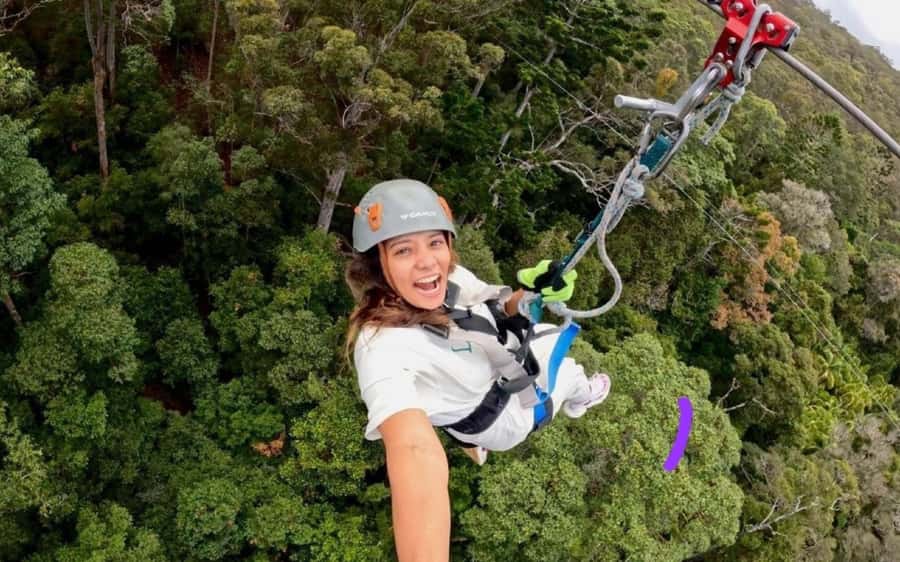
The whole tour takes up to about 3 hours, and you’ll be with two experienced guides who operate the safety equipment. That matters because the pacing is human, not robotic. You’re taught what to do, what not to do, and how to handle the equipment before you’re flying.
You start with a fun scenic ride to the zipline starting point. Then the guides walk you through safety gear and the briefing. The goal here is simple: get the mental fear under control first, then let your body do what it does best—hang, clip in, and whoosh.
The first zipline is the confidence-builder. After that, you cross two plank bridges to reach the next section of the tour. That bridge part is quick, but it’s also the first place where nerves can spike for people who don’t like feeling their footing.
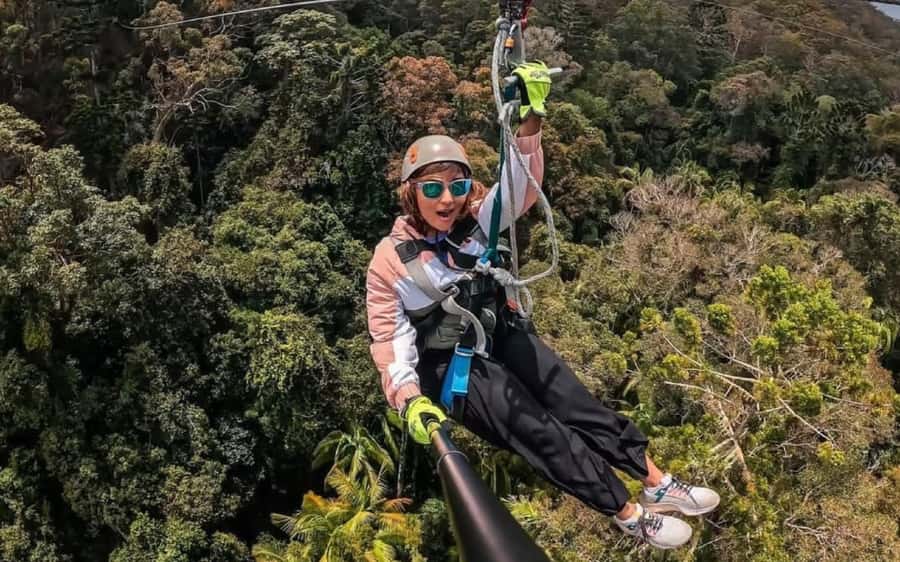
Once you’re on the longer lines, you’ll be suspended up to 70 m above the ground and going as fast as 70 km/h. The whole design aims to keep you moving through the treetops without long waits on the ground.
Above 70 m: how the zipline route actually plays in your head
Canyon Flyer is built around eight ziplines spanning roughly 1.5 km. The rides connect across canyon-style views, cliffsides, and high above the tree canopy. Even if you don’t obsess over measurements, you’ll feel the structure: short learning moments first, then longer stretches where your brain finally stops arguing and starts enjoying.
Here’s what that typically feels like in sequence:
- Training start
Your first line is about rhythm. You learn how to position yourself and trust the system. This is where you figure out if your body can handle the sensation of motion while clipped in.
- Bridge-to-next-zone transition
Two plank bridges get you from the opening learning area into the bigger run. The bridges matter because they’re where your “am I doing this?” thoughts can creep back in. If you’re even slightly bridge-shy, take a steady breath here and focus on the next platform.
- The longer canyon glide phase
This is where the speed and distance start to feel real. You’ll hit up to 70 km/h, and your camera-brain usually tries to remember everything at once: treetops below, cliffs or canyon edges nearby, and sky expanding as you move forward.
- The longest ride moment
The star number is the 300 m line. That length changes the whole ride feel. Instead of a quick thrill, you get a longer glide window where you can actually look around—rainforest textures, canyon contours, and those far views associated with the Great Dividing Range.
A helpful mental trick: treat each zip like a chapter. Don’t think about the entire route at once. Your first objective is always the next platform, the next clip, the next safe step.
Bridges and heights: the one place nerves can slip through
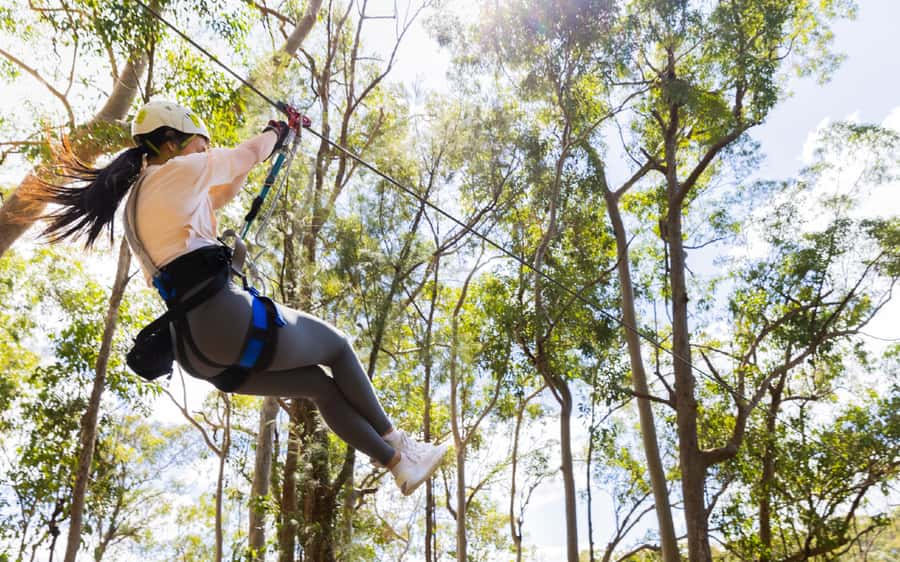
Let’s talk about the part that can surprise people: the bridges. One of the most specific pieces of feedback tied to the experience is that the bridges can feel wobbly for some riders. Even if you’re fine with heights, a wobbly plank or swing-style feel can hit your comfort zone a different way than a straight zip.
So here’s my practical advice:
- If you’re okay with heights but hate questionable footing, mentally label the bridges as brief and move your focus forward.
- Wear closed-toe shoes with a grip you trust. You’re standing on platforms before you launch, and your feet will thank you.
- During the briefing, ask the guides to point out the right way to handle yourself on the bridge section. You’re paying for a safe, guided experience—use that.
Also, the overall tour is not advertised as a technical obstacle course. That’s good. You’re not required to climb rock steps or do tricky platforms—this is mostly about flying and safe transitions.

Guides and safety: the staff names you’ll hear during prep
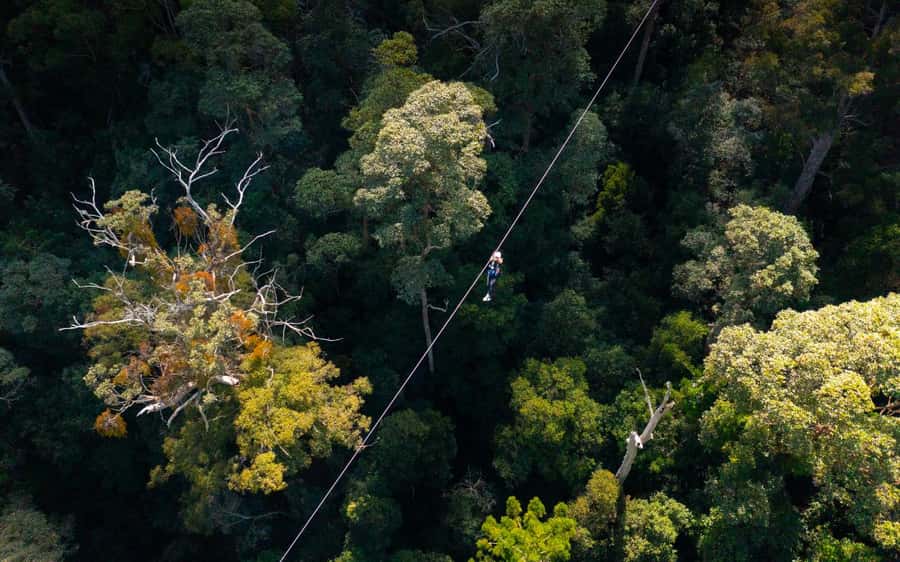
Canyon Flyer runs with two guides who handle the safety equipment. The vibe is hands-on coaching, not just a once-over and go.
From the names I’ve seen called out in guide experience, Blair, Eden, and Decko come up. If you hear those names during your group, know you’re in capable hands. The key detail is that the guides manage the gear operations for groups up to 10, so you’re not piecing together instructions while wearing a harness.
I also like the way the tour is structured for first-timers. You’re not thrown into a full-send moment with no practice. You build from the first zipline and then expand into the longer, faster runs once you’ve got the hang of how it all feels.
Who should (and shouldn’t) take Canyon Flyer
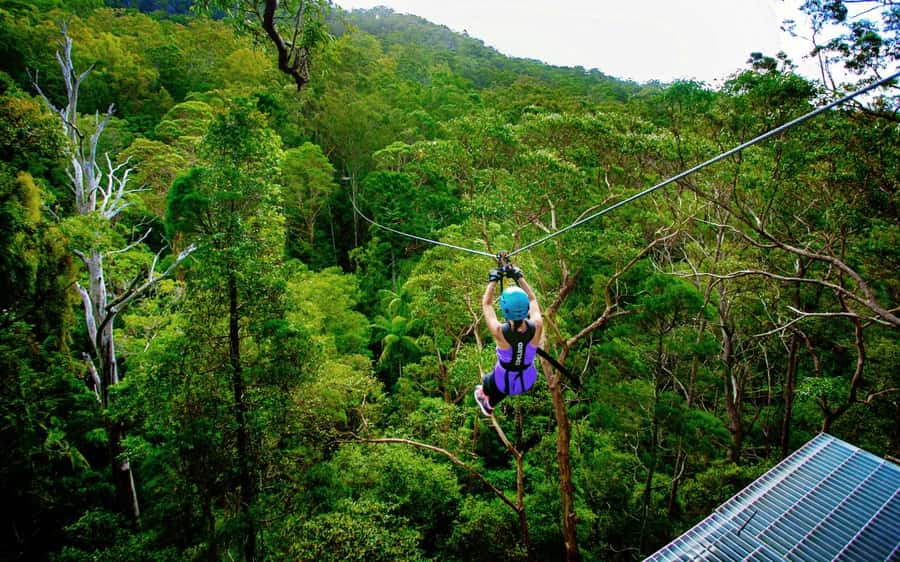
This is a high-expectation zipline. It’s thrilling and it’s designed to be accessible across fitness levels, but it comes with clear limits.
Not suitable for:
- Children under 8 years
- Pregnant women
- People with back problems
- People with heart problems
- People with high blood pressure
- People with recent surgeries
- People who are afraid of heights
- People over 120 kg (264 lbs)
- People under 40 kg (88 lbs)
Those limits aren’t just formalities. Harnessing and being suspended at height is physical. If any of those categories apply, it’s smarter to choose a different kind of Tamborine day.
If you’re within limits and you’re okay with flying, Canyon Flyer can work even if you’re not sporty. The tour notes say it’s for all fitness levels with no prior experience required. Still, if you’re carrying injuries or serious medical concerns, don’t treat this as a casual activity.
What to bring and wear: the little stuff that prevents big hassle
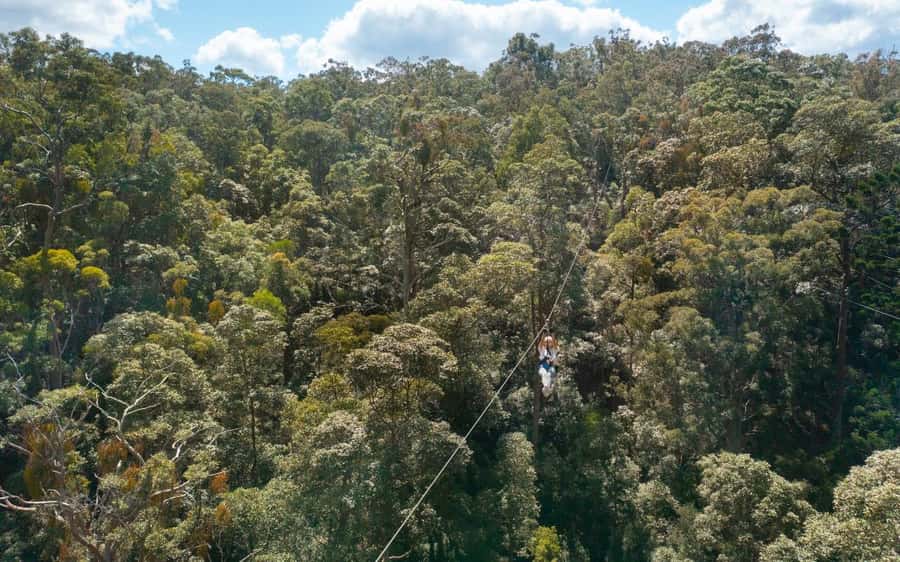
You’ll keep it simple:
- Wear comfortable clothes
- Bring closed-toe shoes (enclosed shoes are required)
- If you have long hair, tie it back tightly
This isn’t the place for flip-flops, loose footwear, or dangling hair that can cause a headache during harness setup.
Not allowed:
- Smoking
- Alcohol and drugs
Also, children under 18 need parental consent to be signed (with specific age-handling at 14 and over during sign-in). If you’re bringing a teen, make sure you’ve planned for consent.
Price and value at $95 per person
$95 per person sounds steep until you break down what you get. You’re not just buying one ride. You’re getting:
- 8 ziplines across about 1.5 km of total flying
- Speeds up to 70 km/h
- Height up to 70 m
- A 300 m longest line run
- A guided operation by two trained guides using safety equipment
- A scenic ride to the starting point
- A full safety briefing and gear included
What’s not included: transportation to and from the activity and food and drinks.
So the value question becomes: how many minutes in the air do you want, and how much do you trust the safety team? Canyon Flyer is selling time above the canopy, plus speed and height numbers that most people are trying to chase in a single day. If that’s your goal, the price lines up well with the output.
If you’re mainly interested in a calm walk in the rainforest and some casual views, you might find this budget better spent elsewhere. But if you want that kinetic, “I’m flying” feeling, this is one of the clearer ways to get it.
Where the views come from: rainforest and Great Dividing Range energy
The scenery isn’t vague. You’re flying over ancient rainforest with views tied to the Great Dividing Range. The route is designed to give you that sense of scale—treetops below, canyon edges nearby, and a wide horizon as you ride.
The “only one touch point where you’ll touch the ground” detail is important for view-hunters. When you’re not constantly stepping on and off platforms, you actually get continuous sightlines. You also lose fewer moments to re-clipping and standing around.
Pro tip: plan for a dry day—or at least be ready for damp air. The activity is outdoors and suspended. Your best photos often come when you’re calm enough to look up for the next angle.
Should you book Canyon Flyer? My quick decision guide
Book it if:
- You want longer zips and lots of airtime, not a short taste
- You’re comfortable with heights and can handle a few brief bridge transitions
- You like the idea of a small group and structured coaching
- Your timing is flexible within a 3-hour window
Consider skipping it if:
- You’re afraid of heights
- You have medical restrictions listed for heart, high blood pressure, recent surgeries, back problems, or pregnancy
- You’re looking for a low-key, no-harness type experience
- Bridges feel like a guaranteed problem for you mentally
If you fit the limits and you’re okay with some bridge wobble risk, Canyon Flyer is the kind of Tamborine day that turns into a real story. Fast lines. Big height numbers. And views that make you look up for the next platform instead of checking your watch.
FAQ
How long is the Gold Coast Canyon Flyer zipline tour?
The experience takes up to about 3 hours.
How many ziplines are included?
You’ll ride 8 ziplines during the tour.
What speed and height can I expect?
The tour includes speeds up to 70 km/h and you can be suspended up to about 70 m above ground.
How long is the longest zipline?
The longest zipline is 300 meters.
Do I need prior zipline experience?
No prior experience is required. Guides provide safety equipment and a briefing, and the tour starts with a confidence-building first zipline.
Where does the tour start?
The tour is at Thunderbird Park and leaves from the TreeTop Challenge area.
What should I wear or bring?
Wear comfortable clothes and closed-toe shoes. If you have long hair, tie it back tightly.
What isn’t allowed during the tour?
Smoking is not allowed, and alcohol and drugs are not allowed.
Is it suitable for children?
Children under 18 need parental consent to be signed. The activity is not suitable for children under 8.
Who should not book?
It’s not suitable for people afraid of heights and for those with back problems, heart problems, high blood pressure, recent surgeries, or for pregnant women. There are also weight limits and height-related restrictions based on age and body weight.