REVIEW · KATA TJUTA
Lake Amadeus, Uluru & Kata Tjuta Helicopter Tour
Book on GetYourGuide →Operated by Professional Helicopter Services · Bookable on GetYourGuide
Desert scenery looks different from the sky. I love how this Lake Amadeus to Uluru route turns three big names into one connected aerial story, and I also like the way the pilot’s descriptions keep the flight feeling focused instead of random. One catch: you need to handle steps and platforms to get in and out of the helicopter, so it’s not a great match if you have mobility limits or low fitness.
In This Review
- Key things to know before you book
- Lake Amadeus, Uluru & Kata Tjuta: Why This Helicopter Route Feels Worth It
- Price and Time: Is $495 for 90 Minutes Fair Value?
- Getting Picked Up and Boarding the Helicopter Without Stress
- First Flight Segment: Over Lake Amadeus and the Salt-Lake “Edge”
- Uluru From Above: Scale, Shadows, and That “Power” Feeling
- Kata Tjuta: Watching the Domes Form a Whole System
- Sunrise, Sunset, or Day: How Light Changes What You’ll See
- Spotting Wild Camels From the Air: Realistic Expectations
- The Pilot and Guide Experience: Why People Keep Praising the Flight
- Who This Helicopter Tour Fits Best
- Small Practical Tips That Improve the View
- Should You Book This Helicopter Tour Over Uluru, Kata Tjuta & Lake Amadeus?
- FAQ
- How long is the Lake Amadeus, Uluru & Kata Tjuta helicopter tour?
- What does the tour include?
- Where is pickup available?
- What time of day can I choose?
- What languages are offered during the tour?
- Do I need closed-toe shoes?
- Is this tour suitable for people with mobility impairments?
- Is there a weight limit?
- Is the tour always guaranteed to run?
- What’s the cancellation policy?
Key things to know before you book
- Lake Amadeus first: you start over the salt lake area, where the desert texture turns into graphic patterns from above
- Two UNESCO-sized icons in one flight: you fly over Uluru and Kata Tjuta, giving you scale that ground views can’t always show
- Pilot commentary matters: you’ll get live, English explanations tied to what you’re actually seeing below
- Sunrise or sunset options: light shifts the reds and shadows fast, so timing affects the look a lot
- Wild camel spotting: you may spot camels roaming the desert plains from the air
- 90 minutes, not a half-day: it’s short enough to fit cleanly into a tight itinerary at Ayers Rock
Lake Amadeus, Uluru & Kata Tjuta: Why This Helicopter Route Feels Worth It
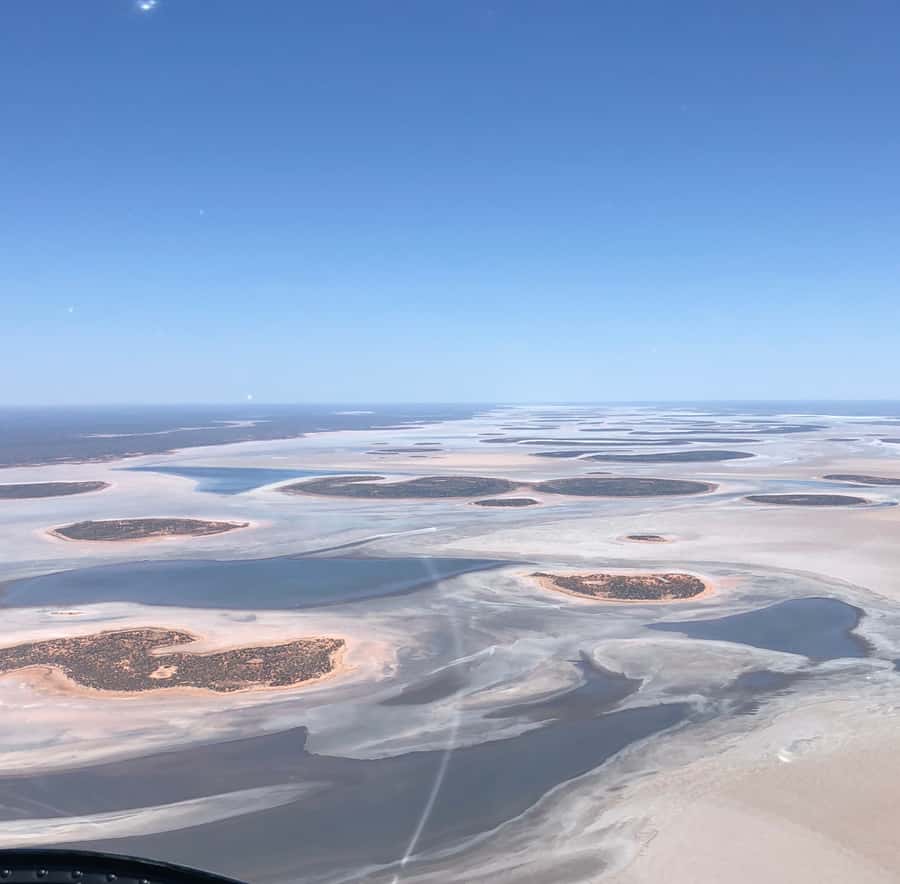
If you’re already in the Northern Territory with limited time, this tour does something smart: it compresses three standout locations into one 90-minute helicopter flight. On the ground, Uluru and Kata Tjuta are unforgettable, but the big missing piece is scale. From above, you finally see how the salt lake, dunes, and rock formations relate to each other across the desert.
The flight also works because it follows a logical rhythm. You begin with Lake Amadeus—the salt lake/sand meeting zone—then move to Uluru, and finish with Kata Tjuta. That order matters. It helps your eyes adjust from flat salt textures to massive monolith forms to a whole field of domes and ridges.
And the feel of the experience is practical, not flashy. The pilot and guide are there to point things out and explain what you’re looking at, so you don’t just sit and hope for the best views. Based on what people consistently praised, the friendly staff and the quality of the pilot narration are a major reason this tour earns its high marks.
You can also read our reviews of more tours and experiences in Kata Tjuta.
Price and Time: Is $495 for 90 Minutes Fair Value?
At $495 per person, this isn’t a budget activity. So the question is simple: what do you get for the money?
You get:
- A real aerial look at Uluru, Kata Tjuta, and Lake Amadeus in one go
- Return hotel transfers from select accommodations around Voyages Ayers Rock Resort (with one exception)
- English live guidance plus English audio support
- A flight duration of 90 minutes, which is long enough to feel satisfying, but short enough not to swallow your whole day
Is it expensive? Yes. But in this part of Australia, a helicopter flight is one of the few ways to see multiple headline sites in a single outing without losing hours to driving and check-in time. If you’re traveling with people who are short on time, or you want one “wow” moment you can’t easily replace with a regular tour, the value starts to make sense.
If you’re the type who enjoys slow land-based exploring and you’re already planning sunrise or sunset walks on the ground, then a helicopter may feel like a luxury you could skip. Still, even then, the aerial perspective changes how you understand the area.
Getting Picked Up and Boarding the Helicopter Without Stress
Logistics are part of the experience here, so I’d plan for them like you would for a flight.
Pickup is included from select stays within Voyages Ayers Rock Resort. The meeting points are straightforward:
- Sails in the Desert Hotel: meet outside the reception lobby
- Outback Hotel & Resort: meet outside the reception lobby
- Desert Gardens Hotel: meet outside the reception lobby
- Ayers Rock Resort Campground: meet at the bus stop on the ring road
You’ll want to be waiting at least 5 minutes early at your selected pickup point. That small habit makes everything run smoother.
Two boarding notes matter a lot:
- You need to be able to use steps and platforms to enter and exit the helicopter.
- Bring closed-toe shoes.
Also check the basic physical fit limits before you fall in love with the idea. This tour isn’t suitable for people with mobility impairments, it has a 125 kg / 275 lbs weight limit, and low fitness is listed as a problem category. If you’re unsure, it’s worth asking before you book.
First Flight Segment: Over Lake Amadeus and the Salt-Lake “Edge”
Your tour starts with a flight over Lake Amadeus, specifically the area where the salt lake meets the sand. From the air, this kind of boundary looks like a natural diagram. Instead of seeing a flat horizon, you see texture changes—crusty salt tones, sandy gradients, and the way water (even when minimal) affects color and shape.
This is also where the tour gives you one of its most fun “keep your eyes open” tasks: look out for wild camels roaming the desert plains near this salt-and-sand zone.
From a reader standpoint, here’s what I think you should do:
- Keep your gaze moving between the ground patterns and the far horizon. Camels aren’t always easy to spot if you lock onto only one point.
- Don’t expect every sighting to be obvious. The point is to try—this part of the flight is set up to make spotting possible.
Even if you don’t see a camel, you’ll still get a strong visual payoff from how the desert changes tone. The best helicopter moments often come from noticing small shifts in color and texture, not just the big monuments.
Uluru From Above: Scale, Shadows, and That “Power” Feeling
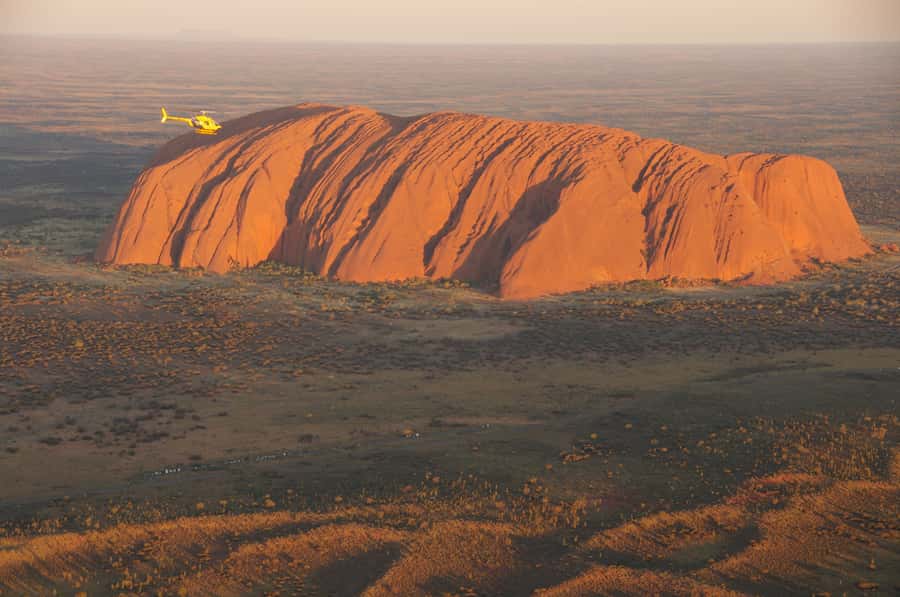
Then you shift to Uluru, and the experience turns from texture spotting to pure scale. Uluru isn’t just impressive because it’s large. It’s impressive because it’s consistent—its mass reads clearly from the air, and the surrounding flats help your brain measure distance.
One subtle advantage of flying over Uluru is how quickly you can understand different angles. On foot, you’ll feel certain viewpoints more than others. From the helicopter, you get a sweep of perspectives in a short time, which helps you appreciate why people describe it as powerful and why the rock dominates the region.
There’s another practical benefit too. When you see Uluru from multiple aerial angles, it becomes easier to connect what you saw on the ground earlier (if you did any walks) with what you’re seeing now. It’s not just pretty—it helps your mental map lock in faster.
Kata Tjuta: Watching the Domes Form a Whole System
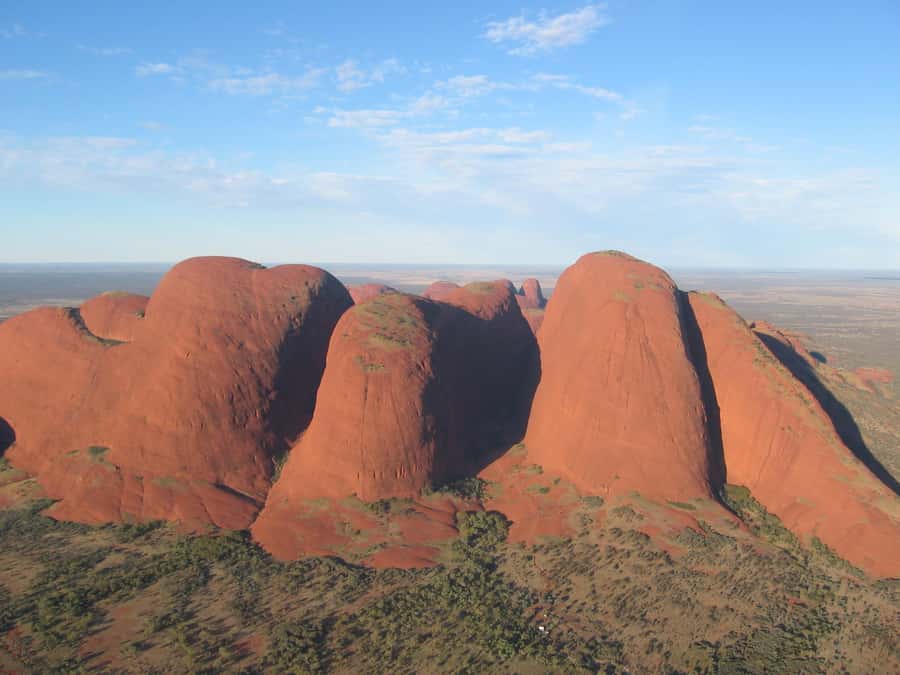
After Uluru, you fly toward Kata Tjuta. If Uluru is the single headline, Kata Tjuta is the “system.” From above, the domes and ridges read like a cluster of sculpted shapes. You start to see how the formations relate to each other, and how valleys and ridgelines create shadow lines that are hard to notice from a distance.
This segment matters because Kata Tjuta often feels huge even when you’re standing in one area. From the helicopter, you grasp the full spread without needing to hike between points.
If you’re hoping for a specific view—like seeing how many domes are in the cluster or how the terrain falls away—this is where aerial time pays off. The flight format lets you witness the layout without committing to a multi-stop land route.
Sunrise, Sunset, or Day: How Light Changes What You’ll See
This tour gives you a choice: you can do it at sunrise, sunset, or during the day (depending on availability). Light is not a small detail here—it’s half the show.
- Sunrise tends to soften contrasts and bring out gentle warm tones. It can be great if you like the calm side of the desert.
- Sunset typically boosts reds and deepens shadows fast, which can make Uluru and Kata Tjuta look dramatic.
- Daytime works if you want maximum clarity and don’t want to gamble on low-light conditions. You’ll likely find it easier to spot fine textures and smaller ground features.
If you’re trying to decide, I’d match the timing to your travel style. If you’re in Northern Territory mode for photos and mood, go sunrise or sunset. If you’re more focused on spotting camels, scanning the salt-and-sand edge, and reading the terrain, daytime can be an easier visual experience.
Spotting Wild Camels From the Air: Realistic Expectations
The tour’s camel-spotting angle is clear: you’re flying in areas where wild camels may roam. But keep expectations practical.
A helicopter gives you height and a wide field of view, which helps. Yet camels are still animals moving across a huge, textured desert. Your best strategy is to stay alert during the segments that matter:
- the Lake Amadeus portion
- the broader desert plains imagery you’re shown while flying
Also, don’t treat camel spotting as the make-or-break outcome. Even when you don’t see animals, you’ll still get a powerful view of the desert’s shapes and color zones—those are built into the route.
The Pilot and Guide Experience: Why People Keep Praising the Flight
One of the strongest, most repeated strengths in the feedback is that the flight feels guided, not just scenic. People mentioned:
- friendly staff and helpful service
- very interesting descriptions from the pilot
- a flight that’s more “explained” than “floating”
That matters because helicopter tours can sometimes feel like you’re just being shown landmarks. Here, the English live tour guide and English audio guide support you with context while you’re seeing the sights. If you like knowing what you’re looking at—how the land forms, where key features sit, and what patterns mean—that added commentary makes the 90 minutes feel like more than a quick camera stop.
There’s also a fun detail that came up in reviews: one pilot’s sports enthusiasm showed up during the ride. That kind of personable touch doesn’t change the scenery, but it does make the experience feel human and comfortable, which is a big part of why people rate the customer service so highly.
Who This Helicopter Tour Fits Best
This tour is a strong match if:
- you’re short on time in the Ayers Rock area and want Uluru + Kata Tjuta + Lake Amadeus in one outing
- you want a “big views” experience without committing to a long day of land travel
- you enjoy guided narration and want your time in the air to feel purposeful
- your group can comfortably handle steps/platforms for boarding
It’s not the best choice if:
- you have mobility impairments or you expect trouble with steps/platforms
- you’re over the listed 125 kg / 275 lbs limit
- you have low fitness, given the entry/exit and overall constraints
If you’re traveling with people who are unsure about the physical side, I’d treat this as a make-or-avoid decision early rather than waiting until the day. Helicopter experiences are unforgiving about logistics.
Small Practical Tips That Improve the View
Nothing here requires special prep, but these details help:
- Wear closed-toe shoes.
- Give yourself a cushion to arrive early at pickup; being rushed makes boarding harder.
- Bring the mindset of a “spotter.” Even with huge landmarks, the desert rewards quick scanning—especially for camel-spotting.
And when you’re in the air, don’t just aim at the biggest object. Spend a few seconds looking at what’s around it: the flat plains, the color gradients, and the way the terrain changes. That’s where the route’s logic becomes obvious.
Should You Book This Helicopter Tour Over Uluru, Kata Tjuta & Lake Amadeus?
Book it if you want one high-impact experience that hits all the region’s headline sights in a tight time window. The value improves when you factor in hotel pickup, a true aerial perspective, and the fact that the flight is supported by live English guidance plus English audio. If you’re doing this as your main “wow” moment, the $495 price can feel easier to justify.
Skip or reconsider if you know you’ll struggle with steps/platform entry, or if you’re looking for a mellow, fully accessible day. Also reconsider if you already plan to spend plenty of time on the ground and you’d rather save money for other experiences.
My take: if your group is physically able and you want the desert from a bird’s-eye view, this is the kind of splurge that’s actually built into the itinerary—because it shows you what you can’t easily get any other way.
FAQ
How long is the Lake Amadeus, Uluru & Kata Tjuta helicopter tour?
The tour duration is 90 minutes.
What does the tour include?
It includes helicopter flight over Uluru, Kata Tjuta, and Lake Amadeus, plus pickup and drop-off from select accommodations within Voyages Ayers Rock Resort.
Where is pickup available?
Pickup is available from: Sails in the Desert Hotel, Outback Hotel & Resort, Desert Gardens Hotel, and Ayers Rock Resort Campground. Emu Walk Apartments are not included.
What time of day can I choose?
You can choose to do the tour at sunrise, sunset, or during the day. Starting times depend on availability.
What languages are offered during the tour?
The live tour guide and the audio guide are both in English.
Do I need closed-toe shoes?
Yes. Closed-toe shoes are required.
Is this tour suitable for people with mobility impairments?
No, it is not suitable for people with mobility impairments.
Is there a weight limit?
Yes. People over 275 lbs (125 kg) are not suitable.
Is the tour always guaranteed to run?
A minimum of three passengers is required. If the minimum isn’t met, bookings may be paired with other bookings.
What’s the cancellation policy?
You can cancel up to 24 hours in advance for a full refund.