REVIEW · NOOSA AND SUNSHINE COAST
Learn to Surf at Noosa on the Sunshine Coast
Book on Viator →Operated by Go Ride A Wave · Bookable on Viator
Learning to surf in Noosa feels like cheating.
In a tight 2-hour session at Noosa Heads, a pro instructor helps you catch waves fast with all equipment provided and real coaching, not vague advice.
I especially like that the lesson starts with a structured safety talk and then moves into waist-deep water, where beginners can actually practice without panicking. The other big win is the time split between beach instruction (how to stand) and then in-water assistance so you’re not just watching others.
One possible drawback: when the surf school gets busy (holiday periods can pack people into a compact area), it can feel less one-to-one than you’d hope. If you’re very nervous or want very detailed feedback every ride, aim for a quieter session.
In This Review
- Key things to know before you stand up
- Noosa Heads makes learning feel worth it
- Price and what $60.25 buys you in real terms
- Meeting at Beach Access No 11: arrive early, start easy
- Gear and board sizing: the unglamorous part that helps you win
- The safety talk plus beach basics: where beginners get a fighting chance
- Your first rides: practice in the zone where mistakes are safe
- How the lesson teaches you to stand up (not just balance)
- Group size, instructor ratios, and the reality of busy days
- Morning vs afternoon: choose the session that matches your energy
- What to bring (so you don’t borrow trouble)
- Who this surf class suits best
- My bottom line: should you book this Noosa surf lesson?
- FAQ
- How long is the surfing class?
- Where do we meet for the lesson?
- What’s included in the price?
- Do I need to bring my own surfboard or wetsuit?
- Is the lesson only for beginners?
- Is there a small group limit?
- Do they offer morning and afternoon classes?
- Is food or drinks included?
- What happens if the weather is bad?
- How does cancellation work?
- Is the meeting point easy to reach?
Key things to know before you stand up
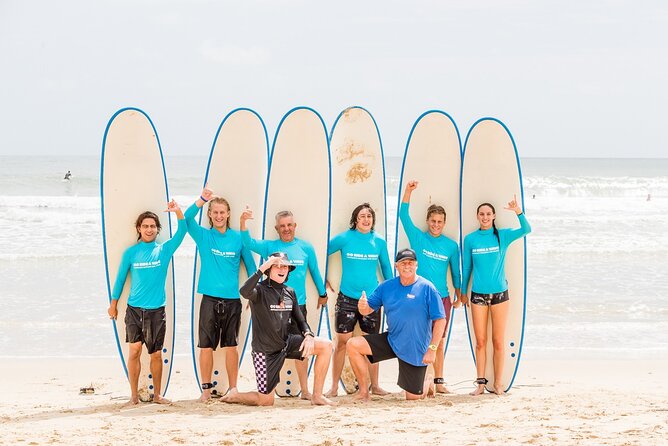
- Small-group lesson (max 7 travelers) means you’re not lost in the crowd
- Beginner-friendly boards are selected for your size, not a one-board-fits-all approach
- Safety first, then waves: quick beach briefing before you hit waist-deep water
- Stand-up coaching on the beach helps you translate tips to your first rides
- Morning or afternoon classes let you match surf time to your day
- Equipment included (rash shirt or wetsuit + surf gear) so you travel lighter
Noosa Heads makes learning feel worth it
Noosa Heads sits on the Sunshine Coast with surf that’s famous for a reason: the scenery is gorgeous, and the water offers a friendly on-ramp for first-timers. Even if you’ve never paddled before, you’ll see why people come back to this stretch again and again.
What I like about this setting is that you get the excitement of being at a legendary surf spot, without needing to be a surf robot. The lesson structure keeps things simple: safety talk, then try. That pacing matters because confidence is built in small chunks, not one giant leap.
Also, the vibe is broad enough for families and solo travelers. You’re not expected to be fearless on day one. You’re expected to try.
You can also read our reviews of more tours and experiences in Noosa and Sunshine Coast.


Price and what $60.25 buys you in real terms
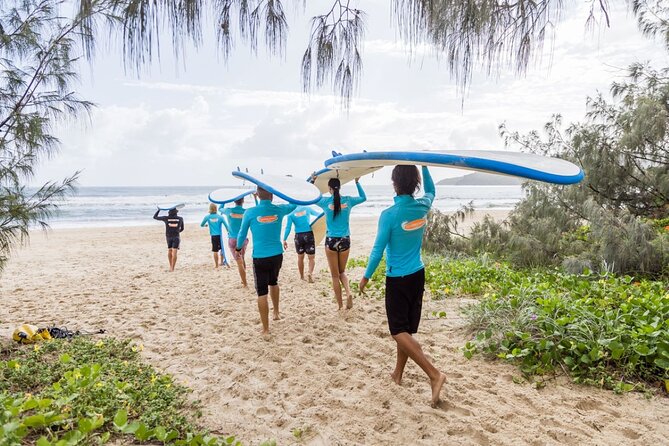
At $60.25 per person for about 2 hours, this is one of those deals that makes sense when you look past the headline cost. You’re paying for a professional guide, plus the full setup: surf equipment and proper sizing for a beginner board.
If you tried to do this on your own, you’d still pay for a board, maybe a wetsuit or rash shirt, and you’d probably spend a lot of time figuring out the basics while your legs burn from paddling the wrong way. Here, you’re buying coaching time during the part that matters most: the first attempts to pop up and balance.
One practical note: food and drinks aren’t included. So plan to grab a snack after, or eat beforehand if you’re the type who gets cranky when hungry.
Meeting at Beach Access No 11: arrive early, start easy
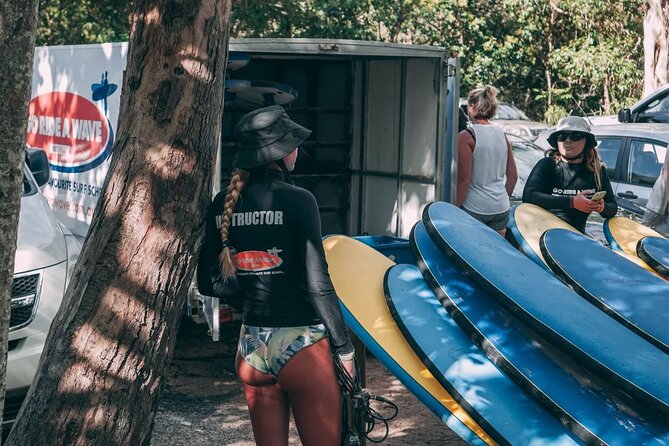
Your lesson meets at the trailer in the car park at Beach Access No 11 on Claude Batten Drive in Noosa Heads. The advice is to show up 15 minutes before the lesson starts, which is plenty of time to get geared up without rushing.
This start matters more than it sounds. Getting your board size right and getting your rash shirt or wetsuit on calmly means you’re ready when the water time begins.
You’ll be provided a long-sleeved rash/sun shirt for warm weather. In winter, they swap to a wetsuit. That’s a big deal on the Sunshine Coast, where “mild” can turn chilly once you’re in the water and moving slowly.
Gear and board sizing: the unglamorous part that helps you win
Before you walk down to the beach, the crew helps you get set up. You’ll be given the right size soft beginner surf board. This is one of the highest-impact parts of learning, because a board that’s too big or too small forces you to struggle before you even reach the wave.
The board choice is also a signal that the lesson is designed for skill development, not just a fun outing. You’re learning technique, and technique needs the right platform.
If you’re tempted to wear your own board gear, don’t overthink it. The school handles what you need for the session, so you can focus on paddling, timing, and standing.
The safety talk plus beach basics: where beginners get a fighting chance
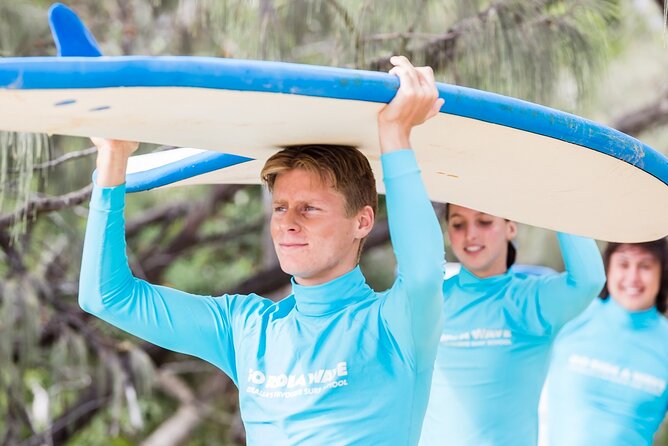
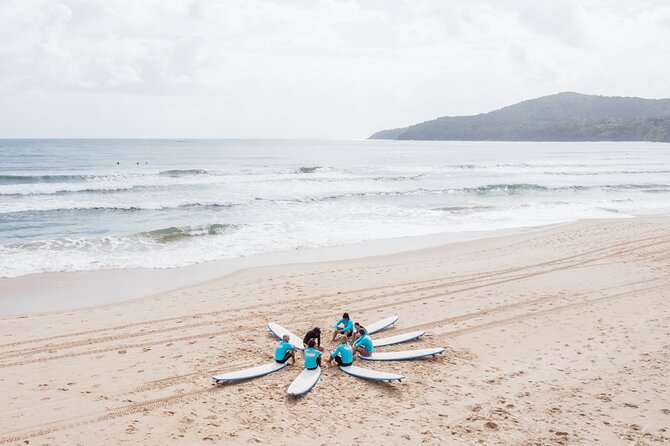
Once you’re at the beach, you get a safety talk and basic instruction on land. Then you move into waist-deep water for your first wave attempts.
This is a smart way to teach. Waist-deep water lets you practice without feeling trapped under your own nerves. You can fall, reset, and try again. That repetition is the difference between one dramatic wipeout and steady progress.
During the coaching, you’ll hear practical cues meant to get you moving in the right direction quickly. In instructor stories, you can see this style clearly: Sisi is singled out for enthusiastic, clear explanations; Rose is praised for breaking things down in a way that makes immediate sense; Hannah is remembered for patient, beginner-friendly guidance all the way through.
The point isn’t to “perform.” The point is to build the muscle memory for popping up and balancing.



Your first rides: practice in the zone where mistakes are safe
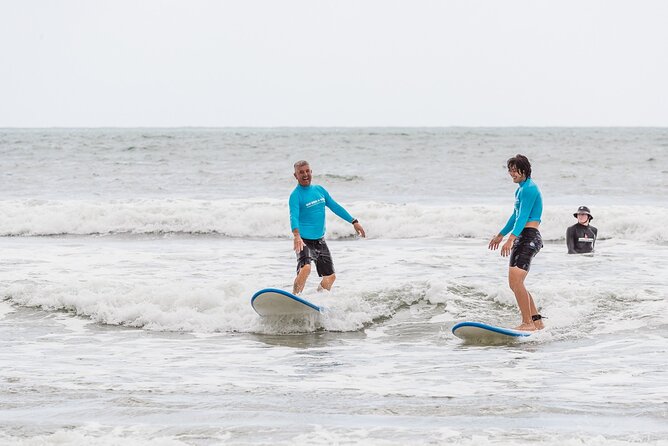
After the basics, the lesson shifts into catching your first few waves. The goal here is simple: get you on the board, then help you adjust as you feel what’s happening.
The water time is where you learn wave timing. You’ll feel the difference between paddling too early, too late, and just right. With an instructor nearby, you don’t have to guess whether you’re doing everything wrong. You get corrections while the moment is still fresh.
Even if sea conditions are a bit rough, the lesson approach stays focused on giving everyone a fair shot. Some people note rougher water yet still managed multiple rides. That’s consistent with the teaching goal: keep you moving toward standing up, even when conditions aren’t perfect.
How the lesson teaches you to stand up (not just balance)
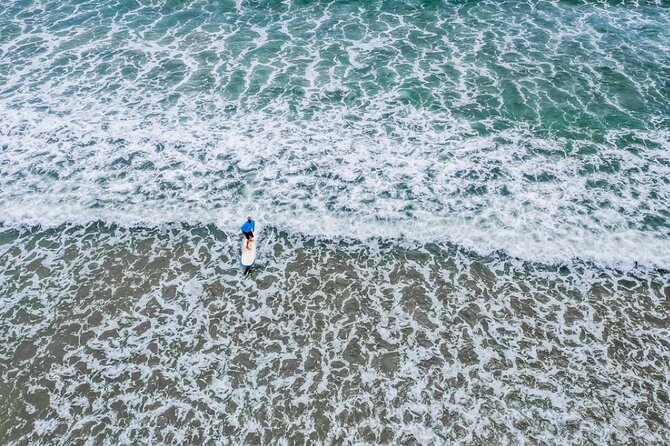
After the initial wave attempts, you return to the beach. This is where the most important instruction usually happens: how to stand up, step by step, with the instructor breaking it down so you can translate it into the next attempt.
Then you head back into the water for the rest of the session, with the instructor assisting people as they try to stand up. This structure is what helps beginners improve quickly. You’re not waiting until the end to learn the key skill.
In multiple instructor examples, you can see the emphasis on clarity and follow-through. Cece is praised for getting people up and catching a wave. Scott and Georgia are credited with making time for every participant and keeping the teaching method clear and simple. Marit is highlighted for supportive coaching and for giving tips that click before you commit to a ride.
And yes, many people finish the lesson with a sense of accomplishment, even if they don’t look like a pro on day one. The lesson aims for real progress.
Group size, instructor ratios, and the reality of busy days
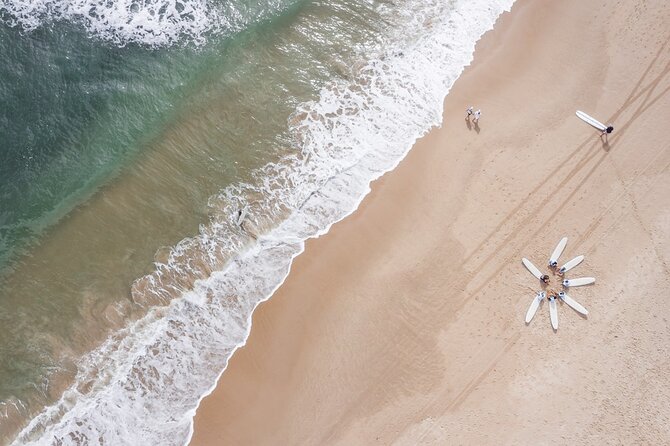
The class is set for small groups, with a maximum of 7 travelers. That limit is what makes the “personal attention” promise believable.
Still, there are two realities to consider. First, surf conditions and staffing can affect how spread out people feel in the water. Second, peak holiday timing can push the vibe from personal to crowded.
One shared concern described a very busy day feeling compact, with lots of surfers in a tight space. Another person noted the lesson felt less one-on-one and would’ve benefited from splitting by experience level for feedback after every ride.
The good news is that the provider sets instructor-to-student ratios around industry guidelines, and they’ve stated an approach aiming for roughly 1 instructor per 7 surfers. On a reported day, it was even closer to 1:6.
So here’s the practical takeaway: if you’re anxious, brand new, or you want frequent feedback after each attempt, try to pick a time that’s less likely to be jammed. If you’re flexible and just want to learn the fundamentals and have a memorable surf session, this format is usually a great fit.
Morning vs afternoon: choose the session that matches your energy
You can pick either a morning or afternoon class, which is genuinely useful in Noosa. The lesson is only about 2 hours, so you can pair it with beach time later, or keep it early if you want the rest of your day for exploring.
If you’re planning to do other things around Noosa Heads, morning sessions can be nice because you get the active part out of the way. Afternoon sessions can work better if you want a slow start and you prefer to surf when you’re already in “vacation mode.”
Either way, the coaching flow stays the same: safety talk, beach basics, waist-deep practice, then more time in the water to stand up.
What to bring (so you don’t borrow trouble)
The school provides the key gear: rash shirt or wetsuit, plus surf equipment. That means you can pack lighter than you might expect.
What you should still think about bringing:
- Swimwear you’re comfortable wearing under a rash shirt/wetsuit
- Sun protection for after you change (the rash shirt helps, but you’ll still be out in daylight)
- A small towel or quick-dry item for post-session comfort
- Water and a snack for afterward, since food and drinks aren’t included
Also, don’t treat this like a casual walk in the sand. You’ll be paddling and moving, so wear something you can manage with wet gear and a sandy beach.
Who this surf class suits best
This is built for all ages and skill levels, including beginners. If you’ve been meaning to try surfing but thought you needed lessons, this is the straightforward path.
It also suits people who want to polish basics. Even if you’ve stood up before, the lesson format can help you refine timing and balance without turning it into a long, intimidating session.
From instructor praise, you can infer the coaching style is patient and practical. People mention instructors being funny, encouraging, and attentive. There are also standout comments about kids doing well, including a 12-year-old who got standing and wanting to go back.
If you’re traveling with family, check your group expectations. You’ll likely be in the water together, but that doesn’t automatically mean your feedback will be identical every ride. Still, the lesson is designed so everyone gets instruction and chances to try.
My bottom line: should you book this Noosa surf lesson?
If your goal is your first real wave and a confidence boost you can actually feel, I’d book it. You’re getting a pro-guided 2-hour session, beginner board support, and a lesson format that mixes safety, beach coaching, and repeated practice in the water.
I’d especially recommend it if:
- you’re new to surfing and want a clear, step-by-step way to stand up
- you like the idea of small-group attention (up to 7)
- you’re visiting Noosa and want an activity that fits the setting, not just a random tour
Hold off or be extra selective if:
- you’re extremely sensitive to crowds and want heavy one-on-one feedback
- you’re going during a busy holiday period and prefer more breathing room in the lesson area
For most people, the value comes from the structure: you don’t just watch, you try, reset, and learn. That’s the kind of “first time” experience that turns into a second time.
FAQ
How long is the surfing class?
It runs for about 2 hours.
Where do we meet for the lesson?
You meet at the trailer in the car park at Beach Access No 11 on Claude Batten Drive, Noosa Heads QLD 4567. The activity ends back at the meeting point.
What’s included in the price?
A professional guide and all necessary equipment are included.
Do I need to bring my own surfboard or wetsuit?
No. The lesson includes equipment, and they will provide a long-sleeved rash/sun shirt (or a wetsuit in winter) and a beginner surf board sized for you.
Is the lesson only for beginners?
No. It’s suitable for all ages and skill levels, including beginners.
Is there a small group limit?
Yes. The maximum group size is 7 travelers.
Do they offer morning and afternoon classes?
Yes. You can choose a morning or an afternoon class to fit your schedule.
Is food or drinks included?
No. Food and drinks are not included.
What happens if the weather is bad?
The experience requires good weather. If it’s canceled due to poor weather, you’ll be offered a different date or a full refund.
How does cancellation work?
Free cancellation is available. You can cancel up to 24 hours in advance for a full refund. If you cancel less than 24 hours before, the amount you paid won’t be refunded.
Is the meeting point easy to reach?
The activity is noted as near public transportation.