REVIEW · MELBOURNE
Melbourne: Tandem Skydive Experience over St. Kilda Beach
Book on Viator →Operated by Skydive Melbourne · Bookable on Viator
You can’t fake this kind of view. I like that this Melbourne tandem jump pairs big-city skyline energy with the shock of leaving the plane over the water, then gliding back down under an easy-to-follow parachute plan. You get a classic Melbourne aerial loop too: St Kilda, Port Phillip Bay, and the city all show up from up high.
What I love most is the “no guesswork” setup: you’re strapped in with a professional tandem instructor for the whole experience, so you’re not doing anything alone. Second, I like the way the timing is built around your comfort: safety briefing first, then the scenic flight, then the jump when you’re ready.
One possible drawback: the whole schedule can be weather-dependent. If conditions aren’t right, you may wait longer than the “about 4 hours” estimate, and winter can mean cold, windy time on the ground.
In This Review
- Quick hits before you commit
- Melbourne tandem sky jump: why St Kilda feels different
- Getting to the jump zone: St Kilda meeting point and Moorabbin Airport
- The safety briefing: where your nerves get turned into focus
- The scenic flight up to height: Melbourne from a pilot’s eye view
- The exit and freefall: 220 km/h over the bay
- The parachute ride: 5 to 7 minutes of control and views
- Landing, your certificate, and the big question: do you pay for photos
- Price and value: is A$343.56 worth it?
- Who should book this (and who should think twice)
- What can mess up your schedule: weather, delays, and cold waits
- Should you book Melbourne’s St Kilda tandem jump?
- FAQ
- Where do I meet for the experience?
- How high is the jump and how long is freefall?
- Is there pickup included from Melbourne?
- Are photos and video included in the price?
- What are the age and weight limits?
- Can I steer the parachute?
- What if bad weather cancels the jump?
Quick hits before you commit
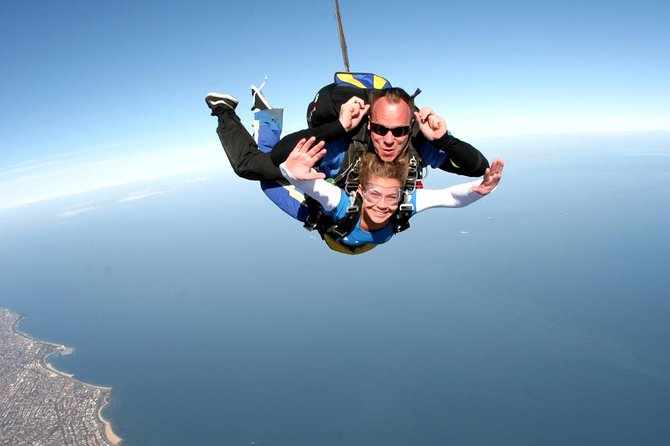
- Melbourne’s only beach sky jump: the jump is set over St Kilda Beach, not far inland
- 14,000 ft from the air (up to 15,000 ft in the flight): you’ll feel the scale fast
- Up to 60 seconds of freefall with speed reported up to 220 km/h
- Parachute glide for 5 to 7 minutes with a chance to steer if you want
- Max 20 people: it stays more like a small group experience than a cattle-call
- Optional video and photo add-on: plan on extra cost at the dropzone
Melbourne tandem sky jump: why St Kilda feels different
Most sky experiences in big cities are “near the city.” This one is in the middle of it—in your face, under your feet, and across your entire view. As you rise out of Moorabbin Airport, you’re watching Melbourne spread out like patchwork. Then the jump lines up over St Kilda and the coastline, which makes the whole moment more vivid than a generic drop over fields.
What you’re really buying is three things that matter to most first-timers:
- A guided experience you don’t have to manage
- Real aerial geography (city, beach, and bay all at once)
- A package designed for first-timers with short, clear phases: briefing → flight → jump → canopy
If you’re looking for adrenaline plus a “wow, I can’t believe I saw that” viewpoint, this is one of the most direct ways to get it in Melbourne.
You can also read our reviews of more tours and experiences in Melbourne.

Getting to the jump zone: St Kilda meeting point and Moorabbin Airport
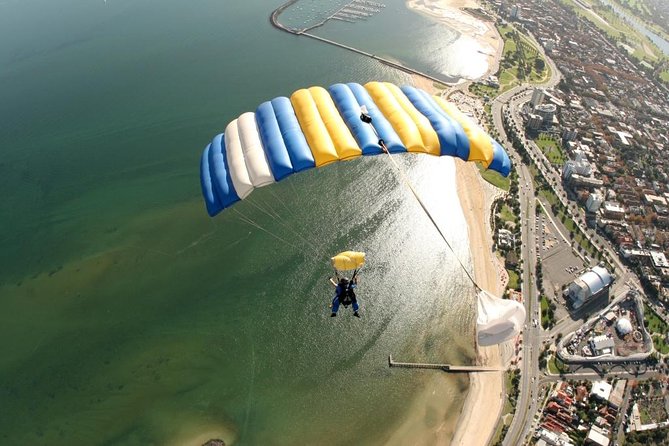
You start at M.O. Moran Reserve, St Kilda (VIC 3182), and the activity ends back at that same meeting point. Pickup is offered, and a mobile ticket is included, which usually means less paper fuss.
Here’s the practical part: St Kilda is your rendezvous point, but the sky jump itself starts at Moorabbin Airport. So your time is split between “getting ready on the beach-side meeting point” and “airport day logistics.”
What I suggest:
- If you’re relying on pickup, make sure you know the pickup timing early so you don’t burn extra time waiting around.
- Dress like you might be standing around in wind. Even when the jump is the headline, the waiting can be long.
Group size is kept to a maximum of 20 travelers, so you’re not stuck in a giant crowd. Still, plan for the day to feel busy: there’s paperwork, briefing, gearing up, and then a coordinated call when it’s your turn.
The safety briefing: where your nerves get turned into focus
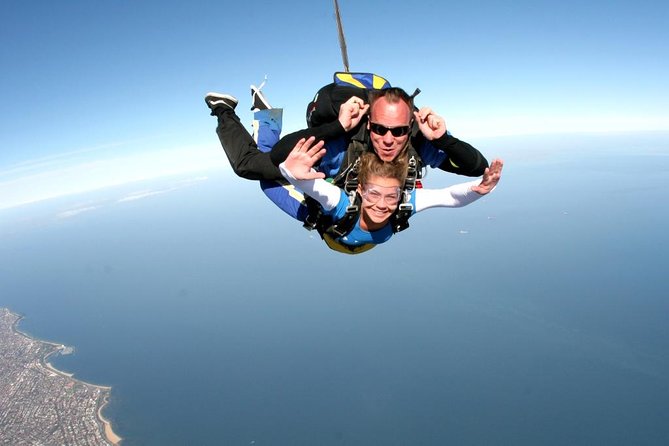
You’ll do a safety briefing before anything happens in the air. This matters more than people think. Skydiving anxiety often comes from not knowing what happens next.
In this format, the “next” is spelled out in phases:
- what the instructor handles
- what you feel during freefall
- what happens when the parachute opens
- how the landing sequence works
Also, because you’re tethered to a qualified tandem instructor at all times, you’re not trying to figure out timing or body position mid-air. The better the briefing is, the more your brain can let go.
Based on past experiences with instructors credited by name (including Simon and Cleave), a big theme is how they keep you calm and give you something to focus on besides fear statistics. That kind of tone can turn a tense body into a functional one fast.
The scenic flight up to height: Melbourne from a pilot’s eye view
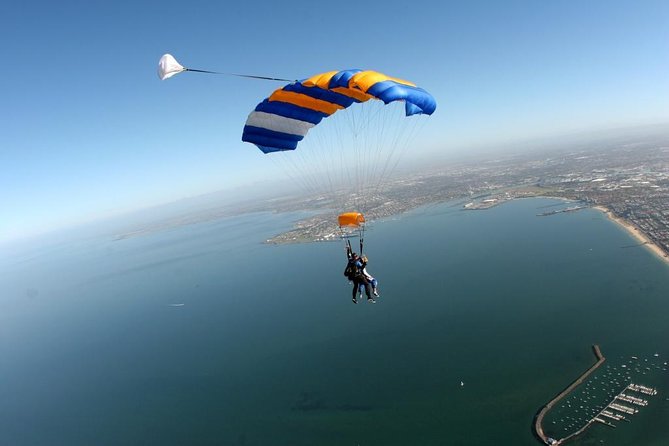
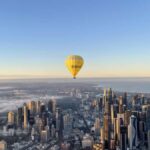
After the briefing, you’ll take a scenic flight up to around 15,000 feet over Melbourne and St Kilda. The plane ride is not just travel time. It’s your transition from “I’m thinking about this” to “I’m doing this.”
From up there, Melbourne’s layout snaps into clarity:
- the city blocks and major corridors
- the curve and open span of Port Phillip Bay
- St Kilda’s shoreline shapes, which make the jump feel anchored to something real
You can expect the jump to happen from up to 15,000 feet, and the freefall is described as up to 60 seconds. Freefall isn’t the whole experience, but it’s the part your body remembers.
A practical tip: during the flight, try to relax your shoulders and jaw. People often tense without realizing it. If you feel your mind racing, focus on your breathing and what the instructor is telling you. It keeps your body steady.
The exit and freefall: 220 km/h over the bay
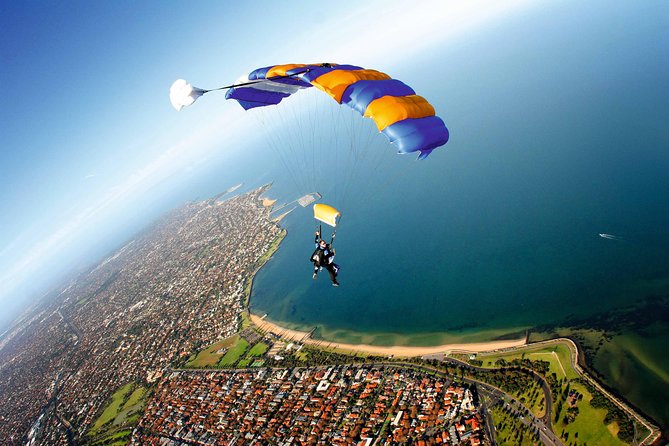
This is the headline moment: you exit the plane and start freefall. The experience is described as reaching speeds up to 220 km/h, with freefall lasting up to 60 seconds.
What surprised me just from how people describe it is how quickly your brain shifts from fear to sensation. At these speeds, you don’t have time for long mental debates. Your attention narrows to the physical input: wind pressure, motion, and the instinct to stay calm while strapped in.
And because the jump is over the coastline and bay area, you get a “moving map” effect. You’re not just falling into blank sky. You’re falling past recognizable landmarks: water, beach, and the city beyond it.
The parachute ride: 5 to 7 minutes of control and views
After freefall, the parachute is deployed by your instructor, and you shift from high-speed motion to a calmer glide. The canopy ride is described as 5 to 7 minutes, and it’s when the views really become the main event.
This is also where the experience changes tone:
- you still feel motion, but it’s smoother
- your brain has time to look around
- you can take in the scale of Melbourne and the bay
If you’re feeling brave, you can also take control and steer the parachute. Even if you don’t think you want control, this offer matters because it gives you a role in the landing phase rather than just a passive ride down.
If you want the best “photo moment” vibe (even though you’ll likely buy your own add-on media), this is the part where you look for the instructor’s cues and take a breath. Enjoy the fact that you’re actually floating above something beautiful.
Landing, your certificate, and the big question: do you pay for photos
At the end, you return back to the meeting point at M.O. Moran Reserve. You’ll also receive a commemorative skydive certificate, which is a nice keepsake when your photos are still stuck on a phone in airplane mode.
Now, about photos and video. These are not included. You can buy them at the dropzone for A$179 per person. That price is steep, so decide based on your personality:
- If you love proof for family and friends, the cost can feel worth it.
- If you’d rather save money, skip it and rely on your memory.
One useful practical note: when video is offered, make sure you think about what side your face is on and whether you’ll want it captured from your better angle. It sounds silly until you’re the one watching your own footage later.
Also plan for the day’s temperature. One experience credited as winter mentioned freezing conditions and recommended summer for more comfortable timing. If you’re visiting in colder months, bring warm layers and expect you’ll be outside before you’re in the air.
Price and value: is A$343.56 worth it?
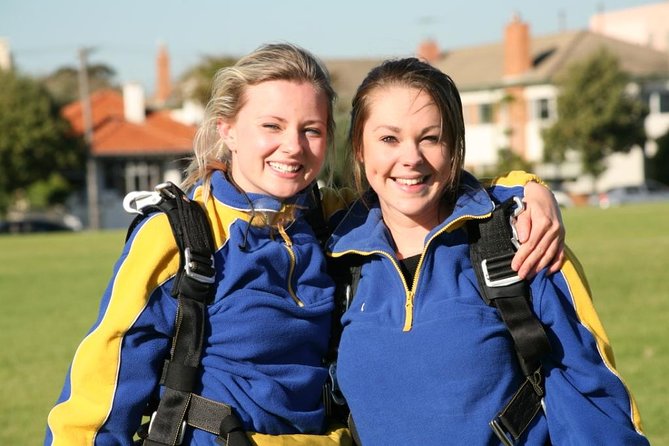
At A$343.56 per person, this isn’t a cheap “thrill.” But it’s also not overpriced for what you’re getting—because your money buys access to:
- tandem gear and professional training from tandem masters
- a planned route with scenic flight over Melbourne and St Kilda
- up to 60 seconds freefall plus 5 to 7 minutes under canopy
- a certificate and required fees listed as Australian Parachuting Levy and admin fee
- small-group handling (max 20 travelers)
Where the value shifts is the add-on media. If you add video and photos, you’ll raise the total. If you don’t, the experience stays within the base price.
So here’s the honest value equation: this is worth it if you want a first-time sky experience with strong guidance and landmark views. If you’re purely budget-focused, skip the add-ons and decide whether the wind-and-cold waiting time fits your style.
Who should book this (and who should think twice)
This experience fits best if:
- you want a guided first jump with a tandem instructor from start to finish
- you care about the route and scenery, not just the thrill number
- you’re comfortable following instructions and letting the day run on weather calls
It may not fit if:
- you’re pregnant (it’s not recommended)
- you have concerns about parachuting risks (the activity is inherently risky, like any parachuting operation)
- you fall outside the weight limits. The info states a maximum weight of 242 lbs (110 kg) on application. It also lists a surcharge for 207 lbs (94 kg) or more.
- you can’t meet the height reporting requirement. All passenger heights must be advised at booking.
Age-wise: minimum age is 16, subject to approval. If you’re under 18, you need a parent or guardian. If you’re older, you’ll probably feel more confident since the instructors handle all the technical parts.
If your biggest worry is safety, focus on the reality that you’re harnessed to the instructor the entire time and guided through every phase. Past experiences highlight how calm instruction can shrink anxiety fast, especially when you trust the person on your harness.
What can mess up your schedule: weather, delays, and cold waits
This activity requires good weather. If conditions aren’t suitable, you might get shifted to another date or offered a full refund, depending on how it’s handled that day. Even when jumping is possible, timing can slip.
One experience mentioned a 7-hour delay, and another noted that winter was freezing. Those two things are common-sense travel issues:
- If you’re doing this in peak weather-change season, build in patience.
- Pack for waiting. A jump jacket helps, but warm base layers matter more.
If you’re going with a partner who may not want to hang around all day, consider that mismatch ahead of time. You might need a plan for their comfort and downtime.
Should you book Melbourne’s St Kilda tandem jump?
Yes—if you want a sky experience that’s tied to Melbourne’s real geography, and you want the confidence boost of a tandem instructor handling everything while you enjoy the ride and views. The mix of city + coastline + bay is the main reason this one stands out.
Skip it or think hard first if you’re very sensitive to cold, have mobility or health concerns, or aren’t willing to accept weather delays. Also, be honest about the money: A$343.56 covers the jump, but photos and video add cost at the dropzone.
If you’re ready to trade a calm afternoon for a memorable burst of motion and scenery, this is a strong booking.
FAQ
Where do I meet for the experience?
You meet at M.O. Moran Reserve, St Kilda VIC 3182, Australia, and the activity ends back at the same meeting point.
How high is the jump and how long is freefall?
You’ll jump from around 14,000 feet (and the flight can go up to 15,000 feet). Freefall lasts up to 60 seconds.
Is there pickup included from Melbourne?
Pickup is offered, and a mobile ticket is included. If you want pickup, make sure you confirm your pickup point and time ahead of your jump day.
Are photos and video included in the price?
No. Video and photo packages are available to purchase at the dropzone for A$179 per person.
What are the age and weight limits?
Minimum age is 16, subject to approval, and anyone under 18 must be accompanied by a parent or guardian. Maximum weight is 110 kg (242 lbs) on application. A surcharge applies for 94 kg (207 lbs) or more.
Can I steer the parachute?
Yes. If you’re feeling brave, you can take control and steer the parachute during the canopy portion.
What if bad weather cancels the jump?
This experience requires good weather. If it’s canceled due to poor weather, you’ll be offered a different date or a full refund.