REVIEW · GYMPIE
Noosa: Epic Whale Watching Ocean Kayak Tour & Beach 4X4
Book on GetYourGuide →Operated by Epic Ocean Adventures Noosa · Bookable on GetYourGuide
Whales meet you on your paddle. I love the chance to watch humpbacks in a minimal-impact way from ocean kayaks, and I also like the combo of Double Island Point with a 4X4 beach drive that often puts you in the action before you ever hit the water. The main catch: sightings can be close or far depending on the whales’ timing, so you’ll want to go with an open mind.
This is set in the Great Sandy National Park stretch of Queensland, where the beaches and bays feel remote and the access is part of the thrill. I also like that the tour isn’t just about whales—you may see dolphins, turtles, and rays, and you get a proper break to swim or relax.
One practical consideration: this trip isn’t for everyone. It’s not suitable for non-swimmers, kids under 7, people with heart problems, or anyone over 220 lbs (100 kg), and you’ll want to bring gear for getting damp.
In This Review
- Key highlights you’ll feel on this tour
- Why Double Island Point feels different from typical whale tours
- The day’s flow: from The J Noosa Theatre to whale watching
- The Great Sandy National Park drive: views before the whales
- Double Island Point first: the beach base and free time
- The beach drive thrill: where whale spotting can start
- Ocean kayaking whale watching: the paddles-up method
- What wildlife you might see besides humpbacks
- Swimming and relaxing: why the schedule includes a break
- What it’s like to be guided (and why that helps)
- Price and value: is $121 worth it?
- Who should book this Noosa whale-kayak tour
- What to bring so the day feels easy
- Getting the best odds for whale sightings
- Should you book this Noosa tour?
- FAQ
- How long is the Noosa Whale Watching Ocean Kayak Tour?
- Where do I meet for the tour?
- Is whale spotting guaranteed?
- Is this tour suitable for children?
- Do I need to be able to swim?
- What should I bring?
- Are pets or alcohol allowed?
Key highlights you’ll feel on this tour
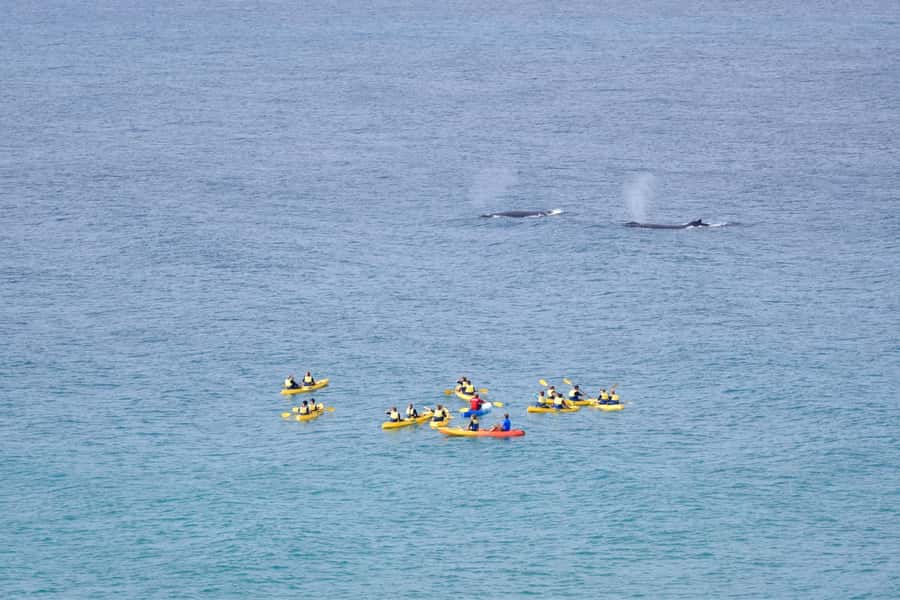
- Minimal-impact paddles-up approach: interactions are designed to happen on the whales’ terms.
- Double Island Point access by 4X4: you reach places regular cars can’t, often around low tide.
- Two hours of guided whale watching from kayaks: long enough to settle in and actually track what’s happening.
- Scenic Great Sandy National Park drives: time for big views en route, not just a rush to the water.
- Wildlife beyond humpbacks: you may also spot dolphins, turtles, and rays.
- A swim-and-relax window: you get a breather on the beach, not nonstop paddling.
Why Double Island Point feels different from typical whale tours
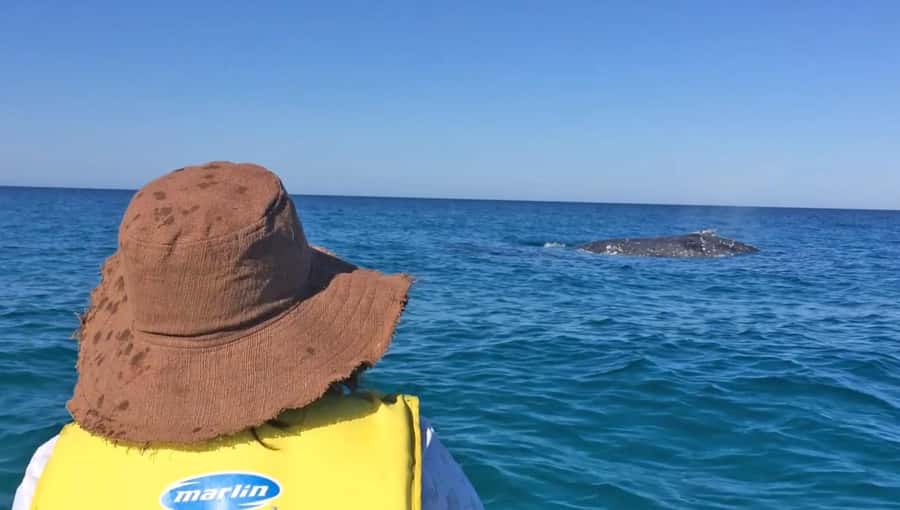
If you’ve done whale watching from a boat, you already know the thrill. What makes this one special is the mix of remote access and active viewing. Double Island Point is only reachable by 4X4 vehicles, and the tour is built around getting you into the right coastal zones—often when the tide and weather give you the best shot.
The other big difference is how the tour frames wildlife viewing. The experience focuses on keeping things relaxed and respectful inside the marine park area. That matters, because whale watching works best when the animals don’t have to change what they’re doing to accommodate us.
And then there’s the setting. You’re not staring at animals from one single viewpoint all day. You’re moving through the scenery—crystal-clear water areas, long sandy stretches, and lookout-type scenery like K’Gari (Fraser Island) views—so the day feels like a real Noosa North Shore adventure rather than a one-point spectacle.
You can also read our reviews of more tours and experiences in Gympie.

The day’s flow: from The J Noosa Theatre to whale watching
Your meeting point is straightforward: in front of The J Noosa Theatre at the bus pull-out area on 60 Noosa Dr. Plan to arrive a little early so you can get sorted, ask any last questions, and be ready when the scenic drives begin.
The tour runs for about 6 hours, and it’s paced in a way that doesn’t feel like a sprint. You start with a scenic drive into Great Sandy National Park (about 1 hour). Then you spend time at Double Island Point, including a whale-watching stretch of about 2 hours from the kayak, plus a 30-minute free time window.
That structure is handy for real life. People who get seasick or stressed on busy boats often find kayaking easier to manage mentally, because you’re not constantly bouncing and turning. And you still get enough time on the water to make whale spotting more than just a quick glance.
The Great Sandy National Park drive: views before the whales
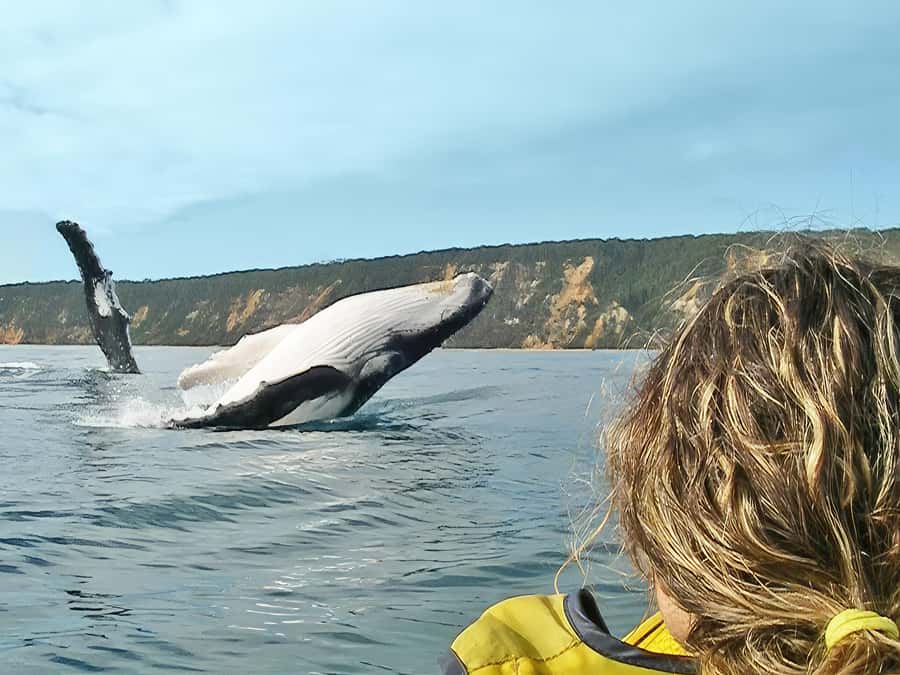
One hour of driving through Great Sandy National Park might sound like “just transit,” but it’s not treated like that here. You’re traveling through a rugged coastal part of Queensland, and the tour includes commentary so you get context on what you’re passing.
You’ll also build up anticipation before you reach the water. By the time you arrive around Double Island Point, the scenery is already setting the tone: long beaches, ancient colored sand features, and the possibility of that wide-horizon kind of sightline you need for whale watching.
If you’re the kind of person who likes to understand the place you’re visiting (instead of just checking boxes), this part of the day helps. It’s also a nice buffer if you want to settle in after pickup rather than going straight into paddling.
Double Island Point first: the beach base and free time
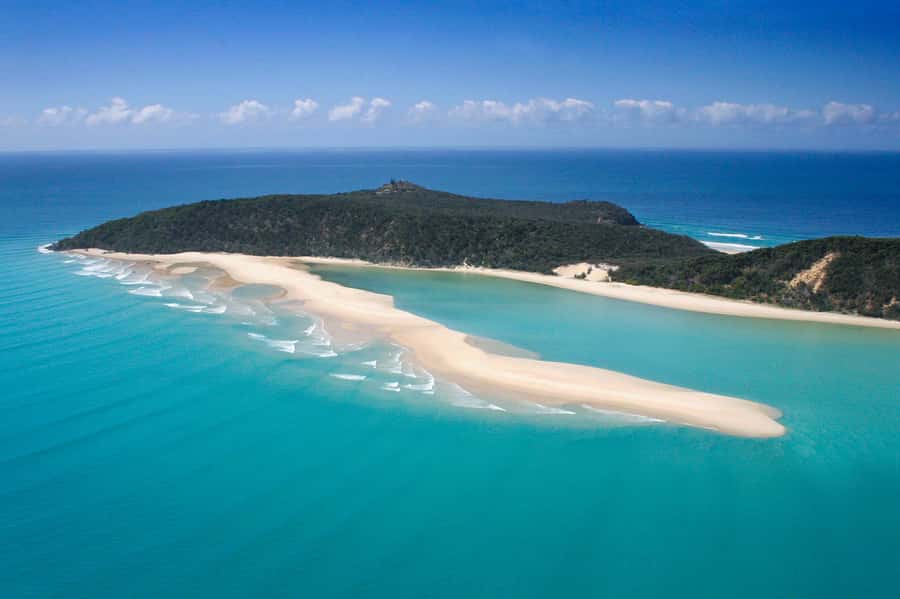
When you reach Double Island Point, you get 30 minutes of free time. This is the moment to get your bearings—straightforward, but important. You can take a quick look around, handle any last-minute essentials, and get ready for the main wildlife viewing period.
This stop also sets you up for what’s unique about this route: the tour’s whale watching starts even before kayaking. During the migration season, whales often pass close to shore, and the schedule is designed so you can spot from the beach area first.
There’s also a built-in reason to use this free time well: water conditions and whale positioning can change fast. If you want the best odds, you want calm, not scrambling.
The beach drive thrill: where whale spotting can start
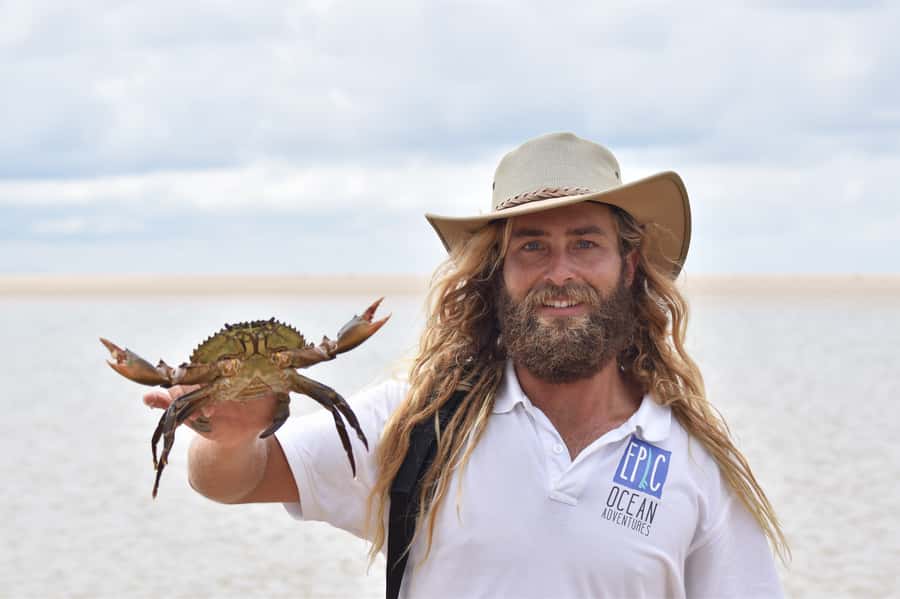
After the initial arrival and break, you can experience a thrilling beach drive component that’s tied to whale activity during migration. The key point is not just excitement—it’s placement.
Because Double Island Point is reached via 4X4 access and the route often runs around low tide, the tour can position you away from the biggest crowd pockets and out into the heart of Great Sandy National Park. That matters for two reasons:
- When whales come close, you want to be at the right stretch of coast.
- When whales are farther out, you still need a viewpoint with good sightlines.
You’re also being handled by a guide who understands marine viewing etiquette. That means you’re not out there just hoping the animals do the right thing—you’re there with a plan that balances searching with respect.
Ocean kayaking whale watching: the paddles-up method
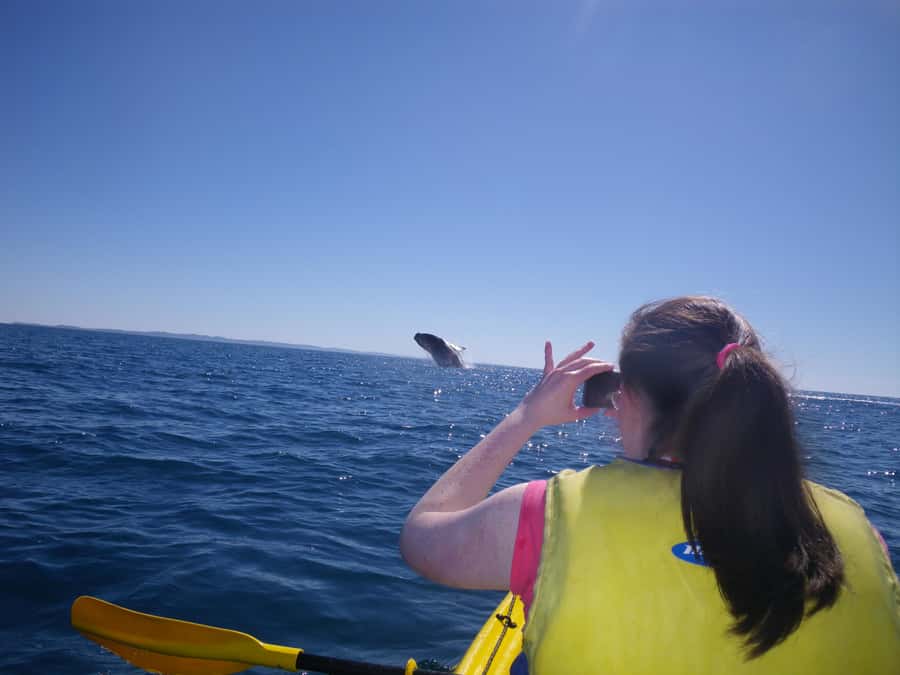
Now the main event: guided ocean kayaking and whale watching from the water. This is where the tour earns its reputation as an eco-focused way to see whales.
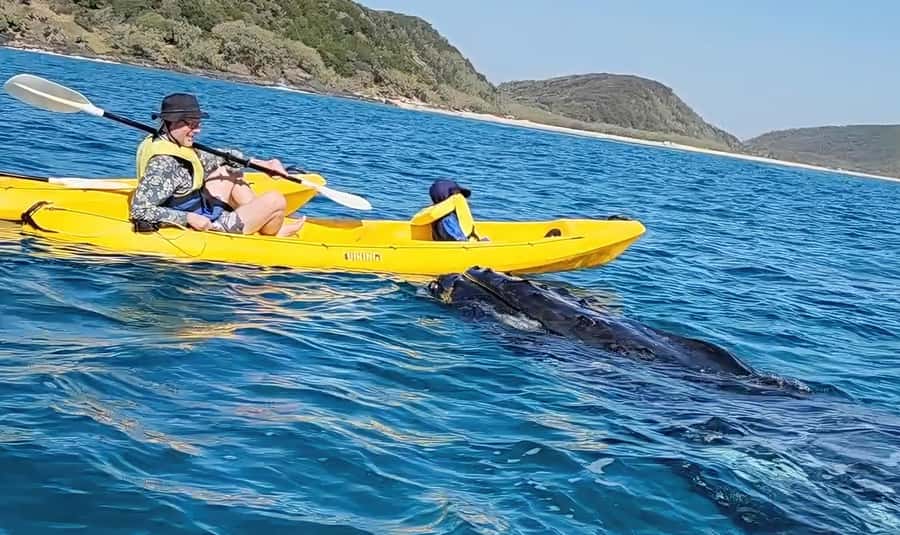
The tour uses a procedure described as paddles up, which is essentially the idea that your movements are controlled to reduce disruption. In practice, it means interactions happen on the whales’ terms. If the whales come nearer, you may be able to observe from closer range. If they stay farther out, you’re still set up for long, patient scanning.
That unpredictability is normal for whales. Migration patterns, wind, swell, and whale behavior all shape what you’ll actually see. The good news is the experience is built for that reality. You’re not pushed into a rigid script where everyone leaves disappointed if the first sighting isn’t dramatic.
This is also why the guide experience matters. The tour is guided throughout, and the emphasis is on safety and smooth coordination so you can focus on spotting spouts, movement patterns, and changes in the water.
And yes—people often feel the difference when they watch from a kayak. You’re quieter, lower to the water, and you’re moving at paddling pace. It can feel surprisingly natural, like you’re part of the scene rather than overpowering it.
What wildlife you might see besides humpbacks
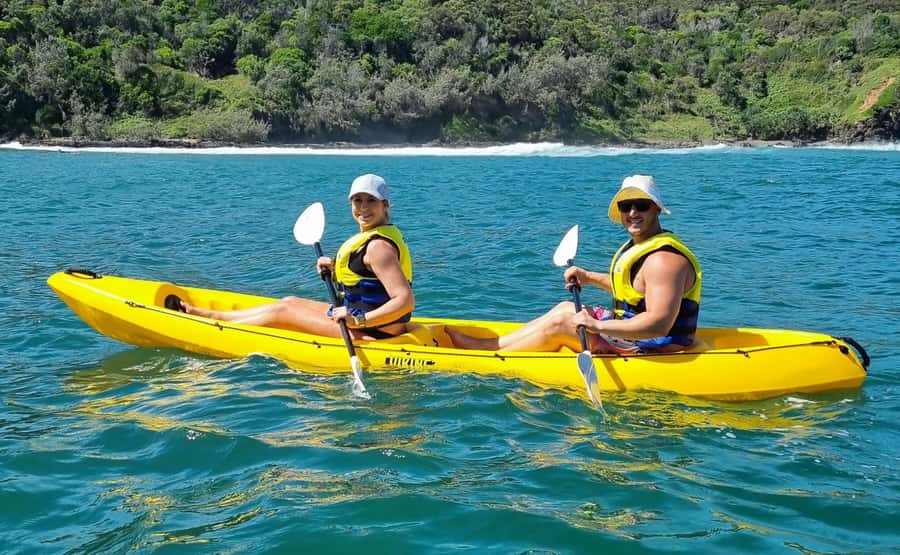
Even if humpbacks steal the show, this tour is clearly designed as a multi-species day. In addition to humpback whale encounters during migration, you may see:
- dolphins in pods
- turtles
- rays
The tour also notes that humpbacks often pass by with an estimated 40,000 migrating north in the season referenced for this tour period. You don’t control that number, of course, but it helps explain why whales are possible on most days during migration.
Here’s the useful way to think about this: if your one goal is humpbacks and you only get a distant view, don’t treat the day as a failure. You’re still out in a marine environment that’s actively used by different species.
Swimming and relaxing: why the schedule includes a break
You’ll have time to swim or relax on the beach, and there are included light snacks and water. This matters more than you might think. After kayaking and scanning the water for a while, a planned pause keeps the experience comfortable instead of turning into an exhausted slog.
The included snack portion is described as light. If you expect a full meal, plan to top up elsewhere before or after. One small practical tip: keep your timing in mind so you don’t rush during the short windows—you’ll get more out of the whale watching if you’re not dealing with hunger stress or cold-clammy discomfort.
What it’s like to be guided (and why that helps)
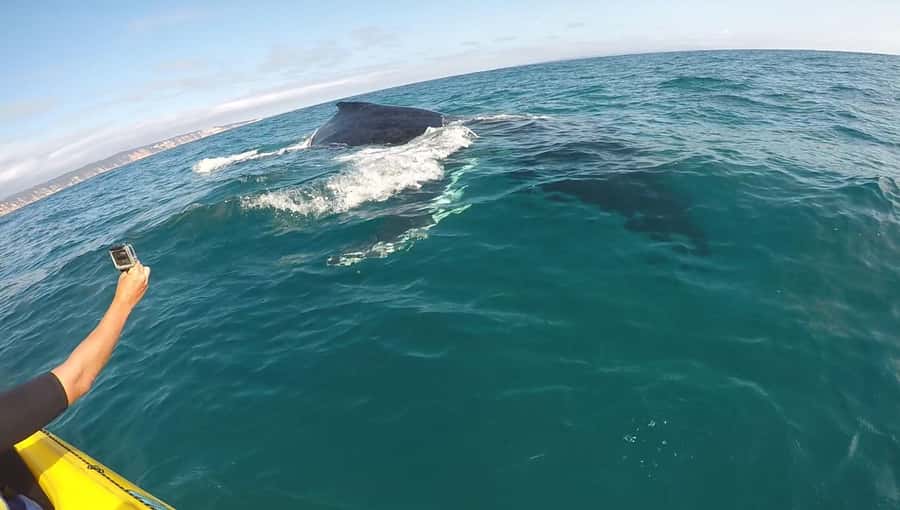
A common theme with strong whale-watching days is not just wildlife—it’s how the guide manages the whole flow. In this kind of tour, guidance covers several things at once:
- where to look and when
- how to keep your distance and avoid disrupting behavior
- how to coordinate on the water
- how to keep the energy up without rushing
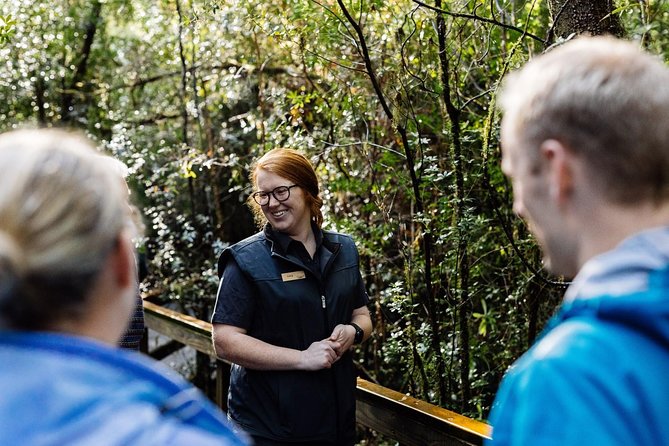
The experience is run by an English-speaking instructor, and the day includes local knowledge commentary throughout the scenic parts. That blend helps you feel like you understand what you’re seeing, not just watching and hoping.
Price and value: is $121 worth it?
At $121 per person for a 6-hour day, this isn’t a budget activity. But it’s priced in line with a specialty experience: ocean kayaking, guided whale watching in protected marine zones, and a 4X4 beach drive component that not everyone can reach on their own.
So what makes the value feel right?
- You’re getting access to a remote stretch that’s 4X4-only.
- You’re being guided for both safety and wildlife etiquette, including the paddles-up approach.
- You get real time in the habitat: roughly 2 hours on the water for whale watching, plus other viewing windows and breaks.
When it might not be worth it is when your expectations are ultra-specific. If you only feel satisfied with guaranteed close whale encounters, this tour can’t promise that. The pricing assumes you’re open to nature’s timing.
Also, if you can kayak confidently and you already have a 4WD, you could theoretically self-navigate. But this tour wraps up the logistics, equipment, and respectful viewing methods into one guided day.
Who should book this Noosa whale-kayak tour
This works best if you:
- want an eco-minded way to watch whales (not loud, fast, or intrusive)
- are comfortable paddling in ocean conditions
- like guided structure and local commentary
- enjoy mixed wildlife days where dolphins, turtles, or rays could join the main show
It’s also a great fit if you don’t have a 4WD yourself and still want to experience Noosa North Shore’s more remote coast.
You should skip it if:
- you’re a non-swimmer
- you have heart problems (as the activity notes)
- you’re traveling with kids under 7
- you’re over 220 lbs (100 kg)
- you don’t want to deal with a beach-to-water day (bring the right clothing and a waterproof bag)
What to bring so the day feels easy
The tour lists a simple but important packing set. Bring:
- sunglasses and a hat
- change of clothes plus a towel
- beachwear and a waterproof bag
- a waterproof plan for anything you can’t get wet
That last part is key. Even if the ocean looks calm, kayaking days often mean spray, wet hands, and damp gear. Keeping your valuables protected helps you enjoy the whale watching instead of worrying about your phone.
Getting the best odds for whale sightings
You can’t force whales to come close. But you can stack the odds:
- Expect whale migration patterns during the season this tour targets.
- Use the beach-viewing window so you’re not only scanning from the kayak.
- Keep a calm attitude. When whales move, they can appear suddenly and then disappear. If you’re tense or rushed, you miss it.
Also, remember the tour is always shaped by nature. Some days whales are close. Other days they’re farther away. Either way, you’re still in the right place with the right viewing style.
Should you book this Noosa tour?
Yes, if you want whale watching that feels respectful, active, and genuinely connected to Great Sandy National Park. The paddles-up approach, the kayak time, and the 4X4 access combine into a day that feels more like an outing in wildlife country than a one-dimensional attraction.
Hold off (or at least reset expectations) if your only acceptable outcome is extremely close whale views every time. This tour is built around real animal behavior, so the experience can be quietly amazing even when the whales aren’t right next to you.
If you fit the fitness and swim requirements, and you’re excited to be guided in a low-impact way on the water, this is a strong Noosa North Shore pick.
FAQ
How long is the Noosa Whale Watching Ocean Kayak Tour?
The tour lasts about 6 hours.
Where do I meet for the tour?
Meet in front of The J Noosa Theatre at the bus pull-out area at 60 Noosa Dr.
Is whale spotting guaranteed?
No. Whale migration means you’ll often have chances to spot whales, but wildlife timing varies, and sightings can be close some days and farther away on others.
Is this tour suitable for children?
It’s not suitable for children under 7 years old.
Do I need to be able to swim?
Yes. The tour is not suitable for non-swimmers.
What should I bring?
Bring sunglasses and a hat, plus beachwear, a towel, and a change of clothes. A waterproof bag is also recommended.
Are pets or alcohol allowed?
Pets are not allowed, and alcohol and drugs are not allowed.