REVIEW · PERTH
Perth: Rottnest Island Skydive and Ferry Package
Book on GetYourGuide →Operated by Skydive Geronimo · Bookable on GetYourGuide
A plane ticket to the sky, then back to the beach. This Perth to Rottnest Island package pairs a tandem jump over the island with a same-day return ferry, so your day has real momentum. I like that you can choose your jump height (10,000 or 15,000 feet) and still get a proper safety routine before you go. I also like the built-in way the operator gets you to and from Rottnest, including the Rottnest admission fee. The only real drawback is timing: your booking time is for skydive check-in, not your ferry, so you’ll want to read the ferry tickets closely and plan for a little waiting.
Once you’re on Rottnest, you’re not stuck after the jump. You get a chance to browse the island at your own pace until your return ferry from Barack Street Jetty. One more consideration: this is weather dependent, and the team asks you to phone before you travel back.
In This Review
- Key highlights worth knowing
- Perth to Rottnest: why this package works
- Picking 10,000 vs 15,000 feet: more than a number
- The day on Rottnest: from ferry terminal to the plane
- What it feels like: free-fall, then the slow roll under canopy
- Ferry timing and the one call you must make
- Group size: why up to 6 matters for comfort
- What to bring (and what gets left on the ground)
- Landing, then free time on Rottnest
- Price and value: is $365 worth it?
- Pros and the one thing to watch
- Who this is best for
- Should you book? My take
- FAQ
- FAQ
- What time is my booking?
- Where do I meet for the ferry?
- Do I need to arrive early to the ferry terminal?
- How do I get the ferry departure details?
- How long is the free-fall?
- When does the parachute open?
- Is there time to explore Rottnest after the jump?
- Are video and photos included?
- Are there height, weight, or health restrictions?
- Who should not book this experience?
Key highlights worth knowing
- 10,000 or 15,000 feet gives you a real choice in free-fall time and views.
- Small group up to 6 means you get attention without feeling rushed.
- Rottnest ferry + jump in one day keeps logistics simpler than booking separately.
- 5-minute parachute ride after deployment at 5,000 feet is a big part of the experience.
- English-speaking instructor and a full safety briefing help first-timers feel set.
- HD photo/video add-on on the day lets you decide without pre-committing.
Perth to Rottnest: why this package works
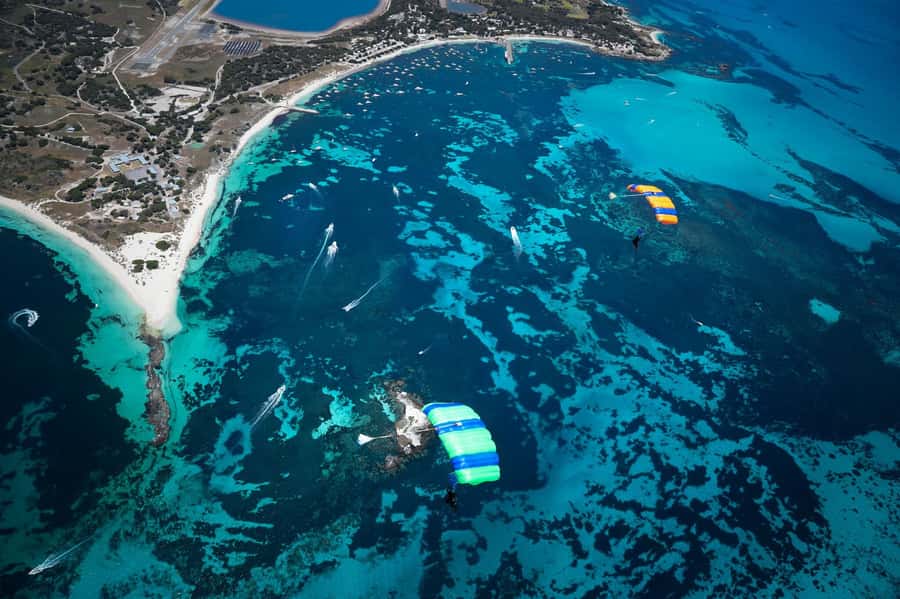
If you’re doing a once-off, bucket-list kind of day, this combo makes sense. You get the thrill part (your tandem jump) and the sightseeing part (time on Rottnest) without turning the day into a spreadsheet of connections. The operator ties in the ferry from Perth to Rottnest and back the same day, plus the Rottnest admission fee.
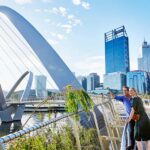
The starting point is Perth Barrack Street Jetty near Elizabeth Quay Train Station. That’s useful because it’s central and easy to reach before you board. You’re told to arrive 30 minutes before your ferry departure for ticketing and boarding, so build in a little buffer rather than sprinting with your bag.
One thing to keep straight: the time you book is your jump check-in time, not when your ferry leaves. After booking, you receive ferry tickets within 48 hours, and those tickets will show the ferry operator, port, and departure time. This matters because your day has two different clocks: the jump schedule and the ferry schedule.
You can also read our reviews of more tours and experiences in Perth.

Picking 10,000 vs 15,000 feet: more than a number
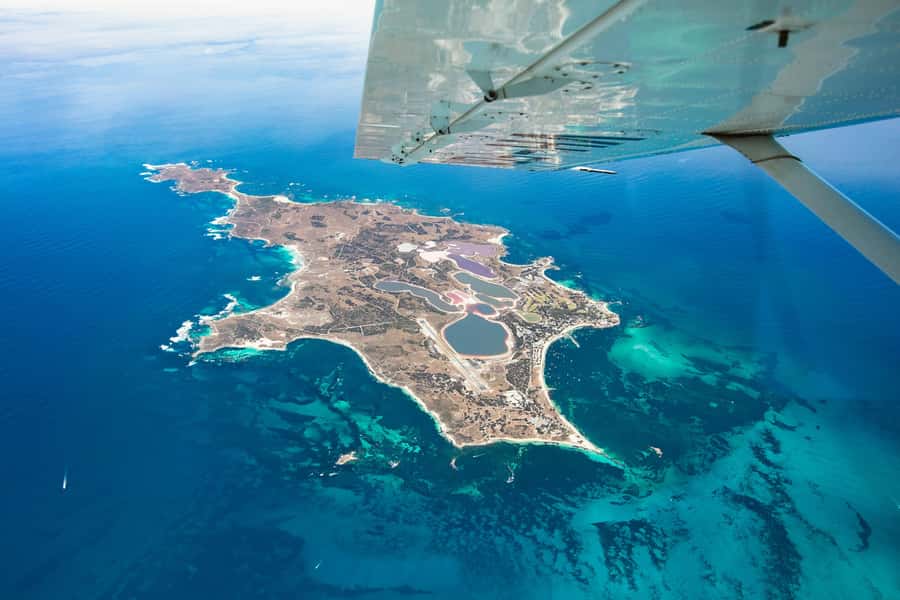
This is one of the easiest choices you’ll make, and it shapes the whole feel of the day. The tandem jump is offered at two altitudes: 10,000 feet or 15,000 feet. Your free-fall time depends on the altitude—about 30 seconds from 10,000 or up to 66 seconds from 15,000.
What I like about this setup is that it’s not just about bragging rights. Higher altitude gives you more time to look around, and that changes how the jump feels. Rottnest Island is small enough that you can actually make sense of the view as you fall, and then the scenery becomes part of the ride instead of just background noise.
The parachute part is also part of the payoff. Your instructor deploys the parachute at 5,000 feet, then you get around 5 minutes under canopy. That longer glide is where you slow down, look around, and realize you’re safe and landing soon.
If you’re nervous about the first moment, I’d lean toward a lower altitude to reduce the rush. If you’re chasing maximum time in the air, choose 15,000 feet and enjoy the extra seconds of free-fall.
The day on Rottnest: from ferry terminal to the plane
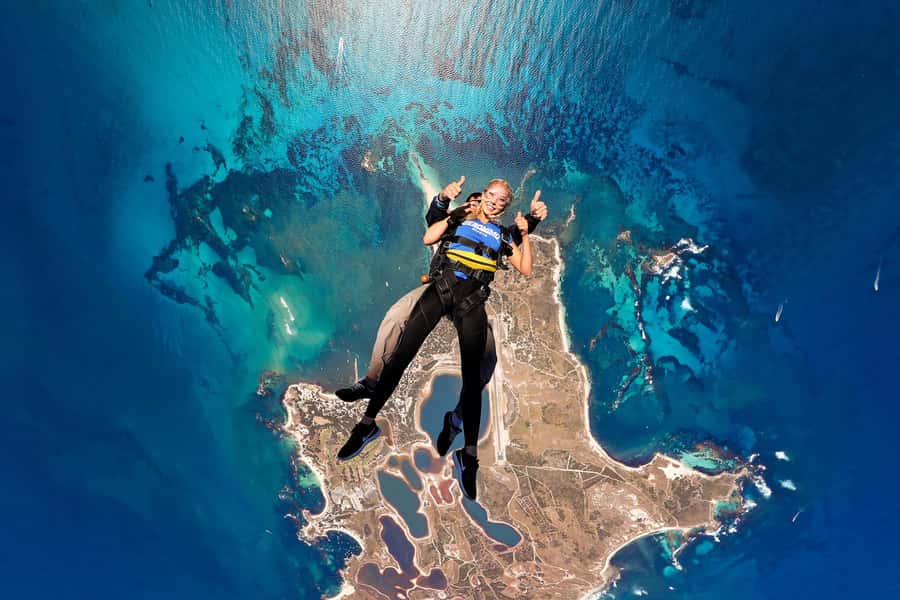
Once you arrive on Rottnest, your jump experience starts on land before you ever see the sky. You’ll check in at the Rottnest Island Terminal Building at Rottnest Airfield. From the ferry jetty, it’s about a 15-minute walk, so plan comfortable shoes and don’t treat it like a casual stroll in thongs.
After you arrive and complete the paperwork, you’ll be harnessed and go through a safety briefing. This is standard skydiving procedure, but what matters for you is the clarity. In the feedback for this operator, people praised the step-by-step guidance and careful explanations before the moment. That tends to be the difference between a first-timer feeling shaky and a first-timer feeling ready.
Then comes the climb. You’ll head to the plane with your instructor and get a view of the island as the aircraft rises to your selected altitude. When you’re at height, your instructor handles the sequence, and you jump together.
What it feels like: free-fall, then the slow roll under canopy
Your instructor is the whole point of this being a tandem experience. You’re not managing equipment. You’re focusing on staying calm, listening, and enjoying what you came for.
The free-fall is fast—around 200 kilometers an hour—and it lasts 30 to 66 seconds depending on altitude. That means it’s not a long movie scene. It’s more like a strong burst of time where your brain goes from thinking to simply experiencing.
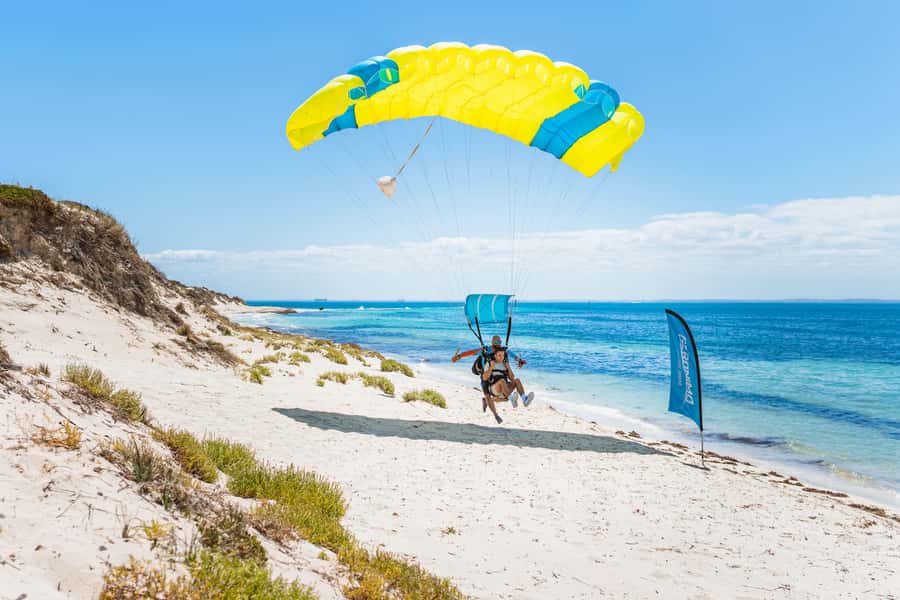
After that, the parachute deploys at 5,000 feet. The moment you feel the slowdown is often a relief for nervous first-timers. Then you get roughly 5 minutes of parachute time. This is when you can actually look and take it in: the island shape, the coastline, and how close the landing area is.
The landing is on the beach area alongside family and friends, which keeps the day from feeling like a closed loop. You do the big moment, then you’re back where people can see you and cheer you on.
Ferry timing and the one call you must make
This is the part that can trip people up, so treat it like a mini safety checklist.
- Your booking time is your skydive check-in time, not your ferry departure.
- Your ferry departure details (operator, port, time) come later via your tickets.
- You’re required to phone 1 hour before your ferry departure to confirm weather is suitable for operation.
The phone call requirement is not optional. The instructions specifically warn you not to travel on your ferry tickets until you’ve confirmed the operation with the team. That’s your “don’t gamble your whole return plan” rule, and it’s a smart one. Weather can change quickly, and this process is meant to keep everyone safe.
Also, operating hours vary by season. That’s why your exact jump time slot is confirmed after booking, not at the moment you buy. If you have strict plans for that same day back in Perth, keep them flexible.
Group size: why up to 6 matters for comfort
This package runs as a small group, limited to 6 participants. Smaller groups tend to mean less chaos at check-in and more time for quick questions before you step into harnesses.
For nervous first-timers, that matters. You want time to understand what’s happening and what your instructor expects from you during the jump. With a tiny group, the team can keep the rhythm steady and avoid the feel of a factory line.
It also helps with the practical stuff: paperwork, harnessing, and getting to the plane all move more smoothly. You’ll still feel excitement and some waiting, but it usually comes from scheduling and air operations rather than crowd crush.
What to bring (and what gets left on the ground)
For the jump itself, you don’t need fancy clothes. You need safe clothes and shoes.
Bring:
- Comfortable clothes
- Closed-toe shoes (required)
Not allowed:
- Sandals or flip-flops
You’ll also be assessed on the day by the chief safety instructor. Eligibility depends on things like weight, height, and health, including relevant medical conditions. That’s not just paperwork—it’s there for safety, and you should plan like the day could hinge on that assessment.
Weight and eligibility limits include:
- Passengers over 95 kg (209 lbs) are taken case by case
- Not suitable for pregnant women
- Not suitable for people with heart problems or other pre-existing medical conditions
- Not suitable for children under 16
If you’re in the grey zone for any health-related item, it’s worth checking before you go so you don’t lose the money or the time. The day is weather dependent too, so plan your schedule to handle possible shifts.
Landing, then free time on Rottnest
After your jump, you’ll be free to explore Rottnest Island until your ferry departure time back to Perth. That is part of the value of doing this as a package: your adrenaline moment isn’t followed by a rushed exit.
Rottnest is known for its laid-back island vibe and easy walking options, so this free time is where you can balance the intensity of the jump. Think of it as your chance to reset your body, grab a meal, and enjoy the island after you’ve done the big moment.
The day ends with your return ferry from Barack Street Jetty in Perth. (Yes, the jetty names are close enough to confuse people. Double-check your tickets so you don’t end up at the wrong pier.)
Price and value: is $365 worth it?
At $365 per person for a one-day package, you’re paying for more than just the thrill. Your total includes:
- A tandem jump at 10,000 or 15,000 feet
- Same-day return ferry tickets from Perth
- Rottnest Island admission fee
If you were booking separately, you’d likely spend time coordinating a ferry schedule, admission, and the jump operator’s timetable. This package reduces that mental load. You’re buying a plan that already connects the ferry and the jump check-in window.
It’s not the cheapest way to do a thrill on a trip, but it is a tidy way to get a high-impact experience with clear inclusions. The video and photo package is extra and paid on the day, which gives you control—if you want a professional edited set, you can add it, and if not, you can save the cash.
Given the small group size and the structured safety briefing, I’d call this a fair value choice if Rottnest + a tandem jump is exactly what you want.
Pros and the one thing to watch
What I’d call the best parts:
- You get a real height choice (10,000 or 15,000 feet), not a one-size-fits-all jump.
- The team focuses on clear safety explanations, which helps you relax and enjoy the moment.
- The parachute time (deployment at 5,000 feet and around 5 minutes under canopy) adds a long, calm section after the fast free-fall.
- The ferry + admission are included, so the day stays organized.
- Small group size (up to 6) helps the experience feel personal.
The one consideration: waiting time.
One detail that comes up is that the wait before you’re in the air can be longer than expected. That’s normal in weather and aircraft scheduling, but it’s still something to plan around. Bring patience. Hydrate. Wear layers so you’re comfortable while you wait.
Who this is best for
This package fits most travelers who want an all-in-one day on Rottnest without building logistics from scratch.
You’ll likely love it if:
- You want a first-time tandem jump with an instructor guiding everything
- You like the idea of pairing the jump with island time afterward
- You prefer small-group attention rather than a huge crowd setup
- You’re comfortable with the health and eligibility rules
You might reconsider if:
- You’re not comfortable with strict timing and possible delays due to weather
- You have health conditions that could affect eligibility
- You’re traveling with kids who are under 16 (not suitable)
Should you book? My take
If Rottnest Island is on your “must do” list and you want a major, memorable adrenaline moment in one day, I think this is a solid booking. The combination of ferry, admission, and a professionally guided tandem jump is what makes it feel like a true experience, not just a ticket purchase.
Book it if you can handle weather variability and you’re willing to follow the key instruction—especially the phone call to confirm the return ferry operation. Also, read the difference between your jump check-in time and your ferry departure time. Get that right, and you’ll have a day that goes from busy planning to pure sky-to-sea satisfaction.
FAQ
FAQ
What time is my booking?
Your booking time is your jump check-in time, not your ferry departure time.
Where do I meet for the ferry?
You meet at Perth Barrack Street Jetty, close to the Elizabeth Quay Train Station.
Do I need to arrive early to the ferry terminal?
Yes. You should arrive 30 minutes prior to your ferry departure for ticketing and boarding.
How do I get the ferry departure details?
After booking, you’ll be sent your ferry tickets within 48 hours. Check those tickets for the departure time, port, and ferry operator.
How long is the free-fall?
You’ll have 30 to 66 seconds of free-fall, depending on whether you choose 10,000 or 15,000 feet.
When does the parachute open?
Your parachute is deployed at 5,000 feet.
Is there time to explore Rottnest after the jump?
Yes. After your jump, you can explore Rottnest at your leisure until your return ferry departure.
Are video and photos included?
No. A professionally edited HD video and photos package can be purchased on the day.
Are there height, weight, or health restrictions?
You must pass an eligibility assessment by the chief safety instructor on the day. Passengers over 95 kg (209 lbs) are case by case, and it is not suitable for people with certain conditions such as heart problems or relevant pre-existing medical conditions.
Who should not book this experience?
It’s not suitable for children under 16, pregnant women, people with heart problems, and anyone with pre-existing medical conditions that could affect eligibility.