REVIEW · PORT DOUGLAS
Port Douglas: Great Barrier Reef 45-Minute Helicopter Flight
Book on GetYourGuide →Operated by Nautilus Aviation Pty Ltd · Bookable on GetYourGuide
Reef views from the sky feel unreal. This 45-minute helicopter flight out of Port Douglas turns the Great Barrier Reef into something you can actually grasp at a glance, with views over Tongue Reef, Batt Reef, and Low Isles. I like the clear safety check handled by the Nautilus team on the ground, and I also like the practical onboard setup with headsets using voice-activated microphones for easy pilot commentary.
You’ll spend the flight looking down like a reef detective. I love that the route is designed for wildlife spotting from above, with a pilot who actively scans for sea turtles, sharks, manta rays, dolphins, dugong, and (Jul to Sep) humpback whales. The one catch is that window seats are not guaranteed, so if your top priority is unobstructed photos, pick your expectations carefully.
In This Review
- Key highlights worth your attention
- Why fly Great Barrier Reef by helicopter instead of boat
- The Port Douglas departure: 4-Mile Beach and that rainforest-meets-sea look
- Low Isles: two coral cay islands and the 1878 lighthouse from above
- Batt Reef and Tongue Reef: the view that makes the reef feel real
- Wildlife spotting from the air: what the pilot looks for
- Snapper Island: a quick slice of reef-country visuals
- Headsets, seat assignments, and how the onboard comfort really works
- Weather and the one factor you can’t control
- How this $442 price makes sense for what you get
- Who should book this Port Douglas reef flight
- Should you book the Great Barrier Reef helicopter flight?
- FAQ
- How long is the Port Douglas Great Barrier Reef helicopter flight?
- How much does the flight cost?
- What can I see during the flight?
- What wildlife might be spotted from the helicopter?
- Is this a private flight?
- How big is the group?
- Are window seats guaranteed?
- Is pickup from Port Douglas included?
- What is the meeting point?
- What’s the check-in timing?
- Is there free cancellation?
Key highlights worth your attention
- Tongue Reef and Batt Reef in one loop: you get a big-picture view of reef structure fast.
- Low Isles and the 1878 lighthouse: two coral cay islands with a famous lighthouse on show from above.
- Pilot-led animal spotting: you might see turtles, sharks, sting rays, and dolphins from the air.
- Voice-activated headsets: communication stays clear without you fumbling with buttons.
- Small group of up to 6: less crowding, more personal attention during the flight.
- Modern air-conditioned helicopters: comfort matters when you’re buckled in and listening.
Why fly Great Barrier Reef by helicopter instead of boat
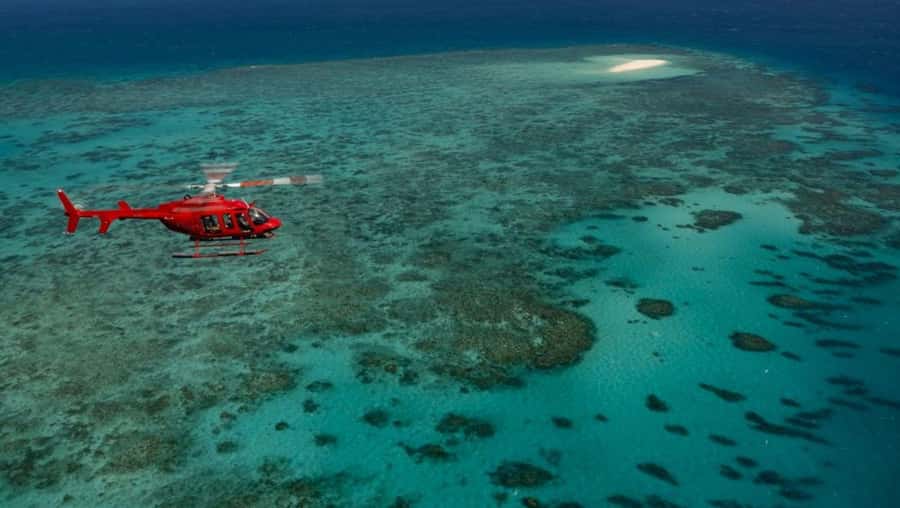
The Great Barrier Reef is famous for scale, and that’s the problem. From the water, it’s easy to admire a section without fully understanding how huge the whole system is. From the air, everything changes. You get that immediate sense of reef geometry, sand color, and where the ocean shifts from deep blue to shallow green.
This flight is built for that moment when your brain finally clicks. In a single circuit you’re seeing reef, islands, and coastline in the same view. You’re also getting a bird-eye perspective on what lives in the water below. Many of the larger species are simply easier to spot from high up than from a snorkeling spot where everything is sideways and close to the surface.
I also appreciate how this experience is run like a professional operation rather than a sightseeing scramble. The Nautilus team does a safety briefing on the ground, then you’re in the helicopter with voice-activated headsets. That means you’re not stuck guessing what you’re looking at while the pilot is busy flying.
The timing matters too. A 45-minute flight is short enough to feel efficient, but long enough to get a real sense of the route rather than a quick flyby.
A few more Port Douglas tours and experiences worth a look

The Port Douglas departure: 4-Mile Beach and that rainforest-meets-sea look
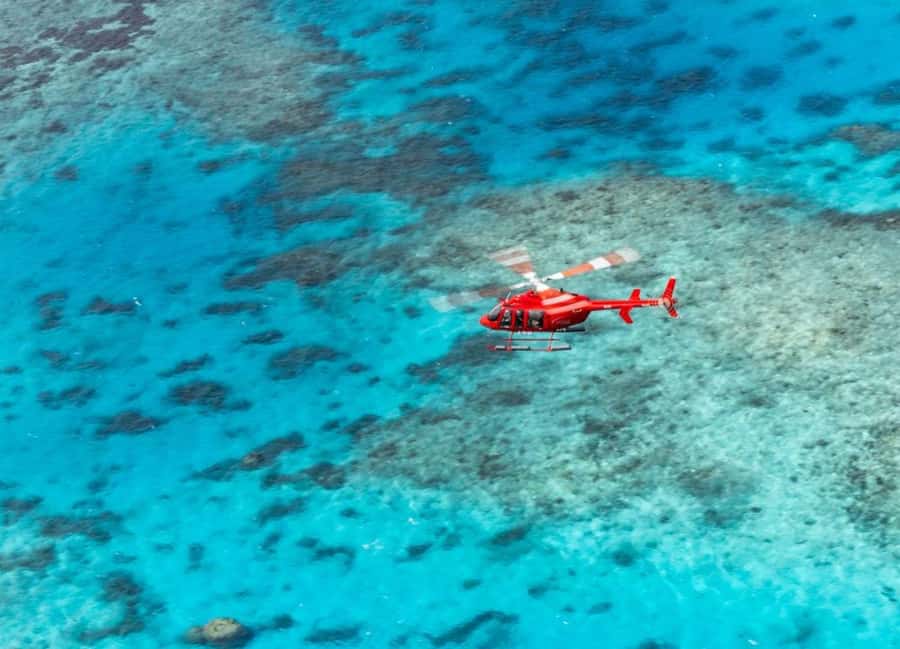
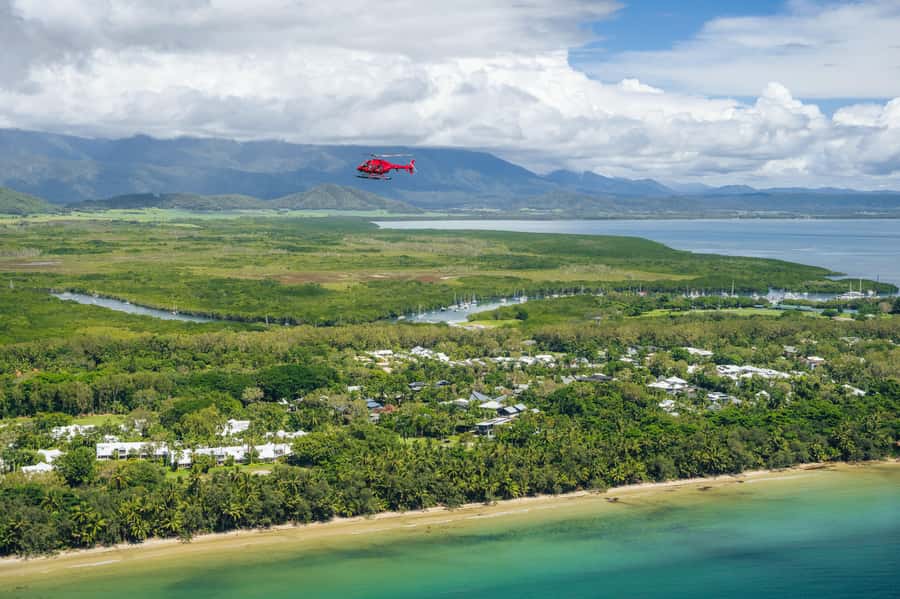
Your journey starts over Port Douglas and 4-Mile Beach, which is more than just a scenic opener. This part of the route helps you orient instantly. You see the coastline shape, the line where land transitions into water, and the way reef areas form near the shore.
In practice, this is the part of the flight where you stop looking for one perfect shot and start watching patterns. Reef edges, shallows, and deeper channels show up as color changes. Even if you’ve seen reef photos before, it’s different when you can see them in real time from a fixed point in the sky.
If conditions cooperate, this is also where the visibility can feel most dramatic early on. One of the clearest lessons from past flights is that when skies clear up and the light hits at the right angle, you get crisp views of how the sea meets the reef. That’s the kind of perspective that’s hard to recreate later.
You should also know the flight is shared and not private, and that affects how much space you have for photography between seats. With a small group, it’s manageable, but don’t plan on moving around to chase angles.
Low Isles: two coral cay islands and the 1878 lighthouse from above
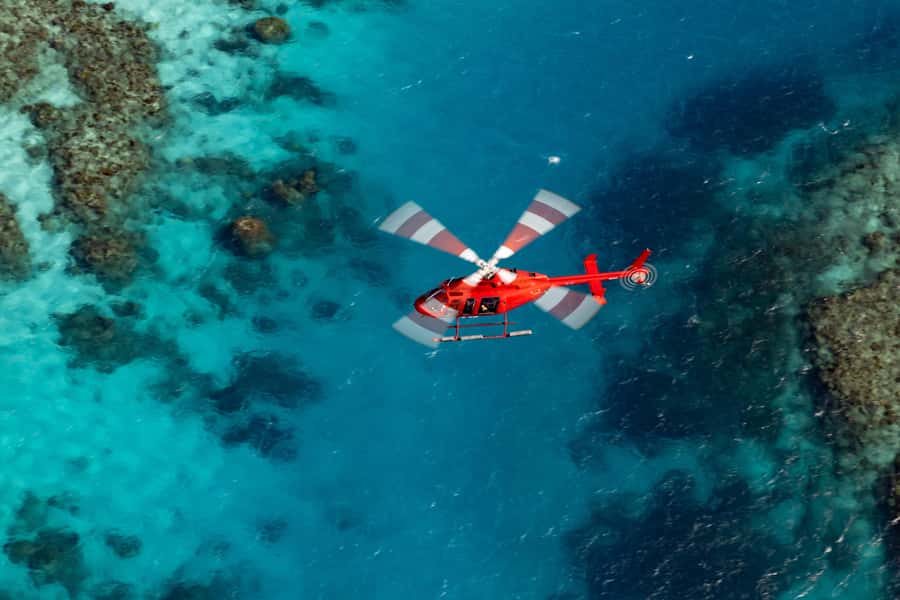
After you leave the Port Douglas shoreline behind, the route swings toward Low Isles. Low Isles is the kind of place you can understand just by looking down: two coral cay islands, fringed reef, and a famous lighthouse dating to about 1878.
From a helicopter, Low Isles tends to hit two goals at once:
- You see the islands as objects, not just dots on a map.
- You see the surrounding fringing reef as a ring of shallow water that supports life close to shore.
The fringing reef is important because it’s often where you’ll notice the most contrast in color around the edges of the island. Those lighter, shallower zones show up clearly from the air. If you’ve ever wondered why some reef spots look more “alive” than others, this aerial view helps answer that question fast.
The lighthouse is the visual anchor. Even if you aren’t interested in maritime history, it makes the area easy to point out during the flight and helps you keep track of where you are in the circuit.
Also, the pilot’s commentary plays a big role here. Hearing what you’re looking at while you see it can turn “pretty water” into a connected story about habitat and location. Past flights have featured pilots such as Brie, who focused on giving passengers the best views possible, which is exactly what you want during a short 45-minute window.
Batt Reef and Tongue Reef: the view that makes the reef feel real
The middle of the flight is where the Great Barrier Reef starts to feel less like a destination and more like a living system. As you move over Tongue Reef and Batt Reef, the reef appears as structure: long shapes, edges, and breaks in the water’s color.
This is also the section where animal spotting becomes a serious activity. When you’re high above, larger marine life can be visible as movements or shapes against the water. The whole point is that you’re not just sightseeing; you’re looking for wildlife patterns that you would miss up close.
A useful mindset here: don’t wait for one big moment. Scan continuously. If the pilot calls out a target, you’ll often have a few seconds to lock onto it before it changes position or disappears behind a shallow area.
Based on what’s been seen during these flights, you may spot sea turtles and other marine life such as reef sharks and sting rays from above. Dolphins can also show up in the water below, and depending on the season, humpback whales can be part of the experience.
One of the best parts of this kind of aerial route is that it reframes the reef for you. Instead of thinking in small patches, you start thinking in terms of connected areas—coastline, islands, and reef zones all working together.
Wildlife spotting from the air: what the pilot looks for
This is where the flight earns its cost, because the helicopter gives you a rare vantage point. The pilot isn’t just reciting facts; the route is designed for spotting. You’re likely to get a “search” experience, where the pilot joins you in scanning for animals.
The species you could be watching for include:
- Sea turtles
- Sharks
- Manta rays
- Dolphins
- Dugong
- Humpback whales (Jul to Sep)
Season matters. If you’re traveling outside Jul to Sep, don’t assume whales will be part of your day. You still may see plenty of other wildlife, but it’s better to think of whale spotting as a seasonal bonus rather than a guarantee.
Also, don’t ignore the small animals. From high above, even a turtle can look tiny in the frame. That’s not disappointing; it’s informative. It helps you understand how much life is supported by the reef system—life can be small but abundant, and visibility from the air gives you a different scale reference than snorkeling does.
Pilots like Mark have been praised for being informative and for providing a memorable experience through active searching. That fits what you want in this short time: someone who knows where to look and can keep commentary steady while you focus on the views.


Snapper Island: a quick slice of reef-country visuals
You also pass over Snapper Island, which is one of those “you’ll blink and miss it” landmarks—unless you’re ready. In a 45-minute flight, every segment is short. That means you should treat these islands as waypoints.
From the air, islands like this can look simple, but the surrounding waters usually aren’t. Color bands and reef edges help you connect what you see on the surface with the habitat below. If you’re trying to understand the reef system rather than just take photos, paying attention to the water tones around these islands helps a lot.
If you want the best chance to see these features clearly, keep your head up during the “in-between” moments too. Many people focus only on the biggest named spots, but the smaller islands can teach you just as much about how reef shapes influence the sea.
Headsets, seat assignments, and how the onboard comfort really works
This flight isn’t a silent ride. You’ll use headsets with voice-activated microphones, which is a practical detail that actually improves the experience. You can listen to the pilot commentary without struggling with audio controls, and that matters because you’ll have questions in your head as you spot shapes below.
The aircraft are described as modern and air-conditioned, which helps you stay comfortable even when you’re focused and still. In a short flight, discomfort can steal your attention. Here, the comfort setup is meant to protect the viewing time.
Seat choice is another real-world factor. Window seats are not guaranteed, and because this is a shared flight, seat selection is not something you can fully engineer. You’ll also be checked for weight and accompanying carry-on luggage at booking, and that can affect seat assignment.
One detail I’d take seriously: the maximum single-seat weight is 130 kg, and this includes any carry-on luggage/bag. If you exceed that limit, you need to purchase an additional seat (at 50% of the ticket price) on the day of travel with the local partner. The reason to care is simple: it impacts your booking and it can affect how you’re placed in the helicopter.
If you’re the kind of person who likes smooth operations, this is where the process matters. Past flights included discreet weight checks and then seat assignment, which is exactly how it should feel: efficient, not awkward.
Weather and the one factor you can’t control
You’re doing this for visuals, so you care about clarity. Helicopter flights depend on cloud cover and visibility, and the good news is that skies can change quickly. On at least one past flight, cloud was forecast but the day cleared enough for very clear views.
You can’t force the weather. But you can plan smart. If you have flexibility in your travel dates, consider choosing a time when conditions are likely to be better. This is also why having starting times matters: check availability for the day you want.
A small hint for your expectations: even with good visibility, you won’t necessarily see every animal. The reef is alive, but wildlife isn’t in “tour mode.” Your best approach is to treat spotting as a guided search rather than a checklist.
And because it’s only 45 minutes, you’re betting on a concentrated window of good conditions. That’s why the experience is so memorable when it clicks: you’re not lingering in uncertainty for hours.
How this $442 price makes sense for what you get
Let’s talk money. At $442 per person for a 45-minute helicopter flight, this is not a casual splurge. It’s a premium way to see the reef system from a perspective you can’t get from the shore or on a standard boat day.
Here’s the value logic:
- You’re buying time in the air over multiple reef zones (Tongue Reef, Batt Reef, Low Isles, plus island landmarks like Snapper Island).
- You’re buying guided interpretation via an in-flight pilot who provides commentary and actively looks for wildlife.
- You’re buying a vantage point where larger marine life is easier to spot from above.
- You’re buying comfort and communication, including modern air-conditioned helicopters and voice-activated headsets.
Compared with spending a full day on the water, this costs more per hour, but it’s also far more concentrated. You get a map-like view of the reef and its islands in a way that helps you connect experiences across the region. If you’ve already snorkeled somewhere nearby, the aerial view can feel like the final puzzle piece—showing you how the pieces fit together.
Is it worth it? If your goal is scale, big-picture reef structure, and a real chance at seeing wildlife from above, the price starts to feel reasonable. If your goal is long time in one spot or lots of hands-on reef activity, you might consider other reef experiences first.
Who should book this Port Douglas reef flight
This works best for people who:
- Want a fast, high-impact way to see the Great Barrier Reef system as a whole.
- Like wildlife spotting and enjoy having a pilot actively scanning for animals.
- Prefer small-group experiences (this one is limited to 6 participants).
- Value clear onboard communication with headsets and live English commentary.
It’s also a strong fit if you’ve done snorkeling already and want the missing perspective: where rainforest meets coast and where reef zones stretch out beyond the shoreline.
If you’re coming from Port Douglas without a car, this is simple in the sense that you just need to get to the meeting point. Hotel pickup and drop-off from Port Douglas is not included, so you’ll plan your own transport to either the Sheraton Mirage lobby or the helipad across the highway.
Should you book the Great Barrier Reef helicopter flight?
I think you should book it if you’re excited by the idea of seeing the reef from above and you’re okay with a short, concentrated experience. The combination of Low Isles, Batt Reef, Tongue Reef, and island landmarks like Snapper Island makes this more than a generic “see the reef” flight. And the pilot-led search for wildlife adds real payoff.
Skip it only if you know you’ll be disappointed by short timing or by the fact that window seats are not guaranteed. Also, if you’re tightly budgeted, it’s a premium price for a 45-minute ride. For everyone else, it’s one of those rare experiences where the aerial view doesn’t just look nice—it changes how you understand the reef.
FAQ
How long is the Port Douglas Great Barrier Reef helicopter flight?
It’s a 45-minute scenic flight.
How much does the flight cost?
The price is listed as $442 per person.
What can I see during the flight?
You’ll fly over 4 Mile Beach, Low Isles, Batt Reef, and Snapper Island, with views across the Great Barrier Reef including Tongue Reef.
What wildlife might be spotted from the helicopter?
From the air you may be able to spot sea turtles, sharks, manta rays, dolphins, dugong, and (Jul to Sep) humpback whales. You may also see other marine life such as reef sharks, sting rays, and turtles from above.
Is this a private flight?
No. This is a shared basis experience, not private.
How big is the group?
It’s a small group limited to 6 participants.
Are window seats guaranteed?
No. Window seats are not guaranteed.
Is pickup from Port Douglas included?
No. Hotel pickup and drop-off are not included.
What is the meeting point?
You’ll be advised, with options including the Sheraton Mirage lobby or the helipad across the highway.
What’s the check-in timing?
You’re recommended to check in 45 minutes prior to departure, and check-in closes 30 minutes before departure.
Is there free cancellation?
Yes. You can cancel up to 2 days in advance for a full refund.