REVIEW · PORT DOUGLAS
Quicksilver Dive 4 Day PADI Learn to Dive Course
Book on Viator →Operated by The Quicksilver Group · Bookable on Viator
Scuba certification can start with a warm pool and end on the reef. This four-day PADI Open Water course in Port Douglas mixes heated pool practice with small-group coaching, so you get real feedback and time to master the skills. I also like that the trip doesn’t just stop at theory—you get six open-water sessions built into the program.
The main thing to think about is whether you’re ready for the physical and medical screening. You’ll need to swim 200m (or 300m with mask, fins, and snorkel) and tread water for 10 minutes, and some health conditions can affect approval.
In This Review
- Key highlights worth your attention
- Why Port Douglas is a smart base for PADI Gold Open Water
- Warner Street training: Day 1 and 2 in the pool and classroom
- The pool experience is where confidence is built
- Outer reef days 3 and 4: Agincourt Ribbon Reefs for real-world skills
- What you should mentally prepare for
- Gear, log book, certification: what’s included and what you’ll want to add
- Timing matters more than you think
- Instructors and the small-group advantage (and why it shows up in reviews)
- Price and value: what the listed cost means and what to double-check
- The main value risk
- Fitness, medical declaration, and the scuba readiness checks
- Who should book this and who might want another option
- Should you book Quicksilver’s 4-day PADI Open Water course in Port Douglas?
- FAQ
- What does the 4-day PADI Gold Open Water course include?
- Where does the course run, and when does it start?
- How many people are in the course group?
- Do I need to bring my own scuba gear?
- How good do I need to be at swimming before I can join?
- What are the minimum age and fitness requirements?
- What medical checks are required?
- Can I cancel for a refund?
Key highlights worth your attention
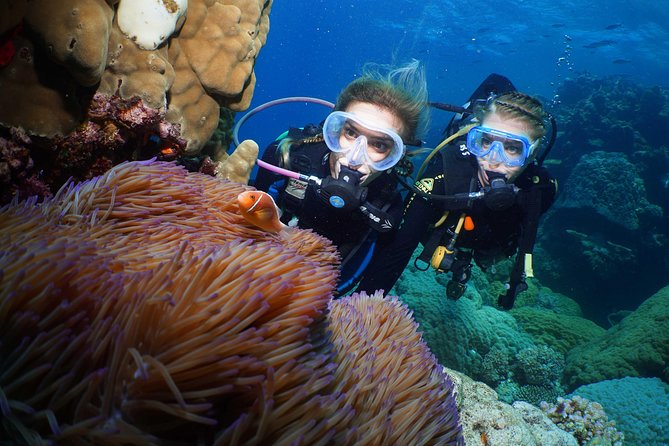
- Small-group max of 8 so the instructor team can give you hands-on fixes
- Heated pool training on Day 1 and 2 at the Quicksilver centre in Port Douglas
- Six open-water sessions total (4 required + 2 fun) to build confidence fast
- Two outer-reef day trips to the Agincourt Ribbon Reefs for the real skills practice
- All gear, scuba log book, and certification paperwork included so you’re not hunting gear last minute
Why Port Douglas is a smart base for PADI Gold Open Water
Port Douglas is the kind of place where your “classroom” can look out toward the Great Barrier Reef within days. You’re in a coastal town with easy access to reef days, plus a proper training setup on land.
What I like is that this course is built for progression. The first half focuses on comfort and control in a heated training pool, which helps you get your buoyancy and breathing rhythm sorted before you’re dealing with currents, visibility changes, and the general reality of being off a boat.
Another practical win: the course includes return coach transfers from Port Douglas accommodation only. That removes a chunk of stress—especially on the early starts when you’d rather be mentally reviewing skills than figuring out how to get to Warner Street at 8:30am.
One more value point: the program is small enough that the staff can keep an eye on individuals. In the feedback I see, instructors are repeatedly praised for being welcoming, safety-focused, and good at calming nervous students. Names that come up include Gordon, Adam, India, Emma, Haylie, Chris, Jade, and Indie—which is a nice sign that the team has depth and a consistent training style.
You can also read our reviews of more tours and experiences in Port Douglas.

Warner Street training: Day 1 and 2 in the pool and classroom
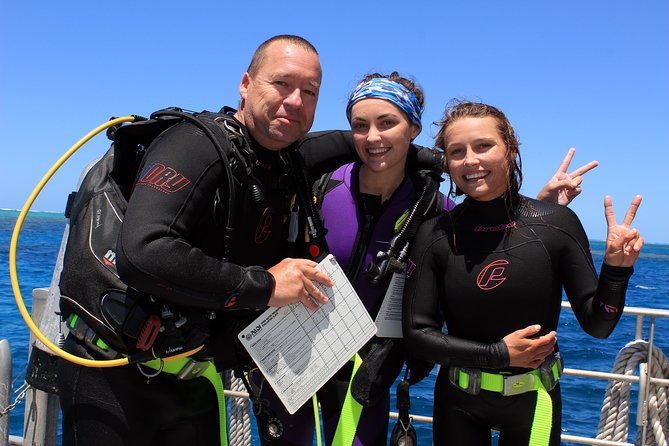
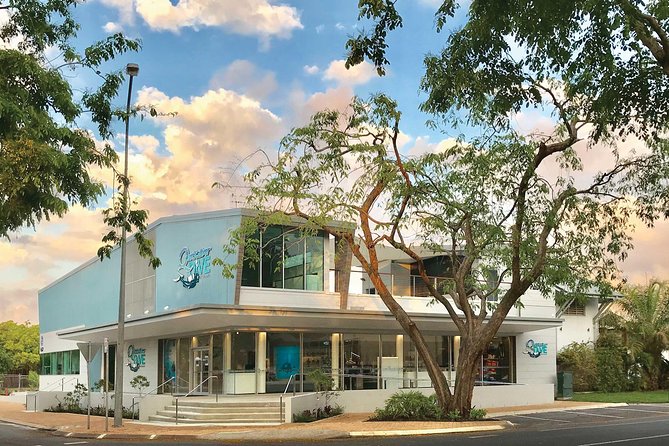
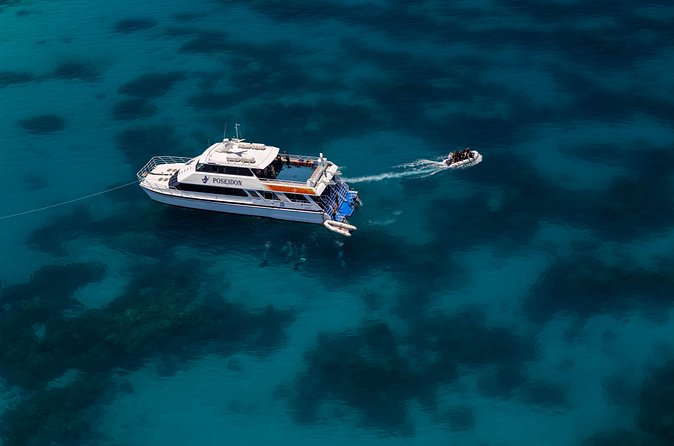
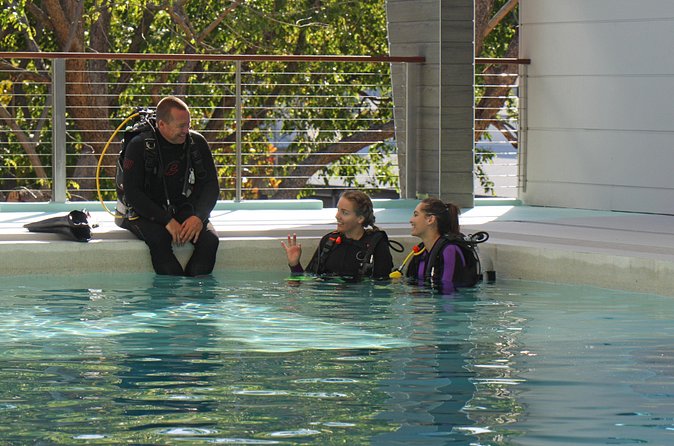
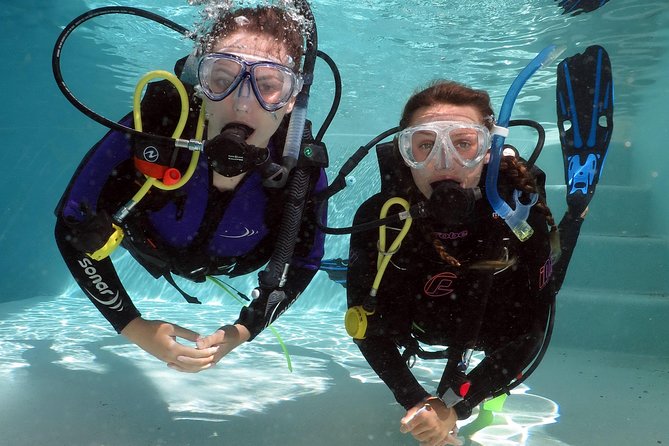
Days 1 and 2 are at the Quicksilver training centre at 19 Warner St, Port Douglas, with a mix of theory and in-water practice. The big deal here is the heated training pool, which makes skill drills feel less intimidating. If you’re someone who gets cold easily, that alone can help you learn faster because you won’t rush through exercises just to warm up.
Expect a structured flow: you’ll learn the concepts, then practice them right away. That’s key for certification, because the skills aren’t just “try it once.” You’re meant to build consistency—knowing what to do, doing it calmly, and understanding why the steps matter for safety.
You’ll also have tools that support learning. The course includes dive (scuba) equipment and a scuba log book, and it notes that you can use prescription masks if required. For many first-timers, fitting the mask correctly is half the battle; unclear vision can turn every skill into a chore.
Meals are handled too. You get lunch each day plus morning and afternoon tea, which matters more than it sounds when you’re using brainpower and muscle control for hours.
The pool experience is where confidence is built
If you go in thinking the pool is “just training,” you might miss what it actually does. These sessions are where you learn the routines you’ll rely on later during open-water checks. You’ll want to treat Day 1 and 2 as the main event, not the warm-up.
Outer reef days 3 and 4: Agincourt Ribbon Reefs for real-world skills
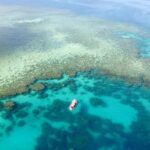
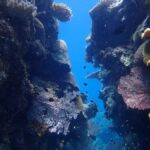
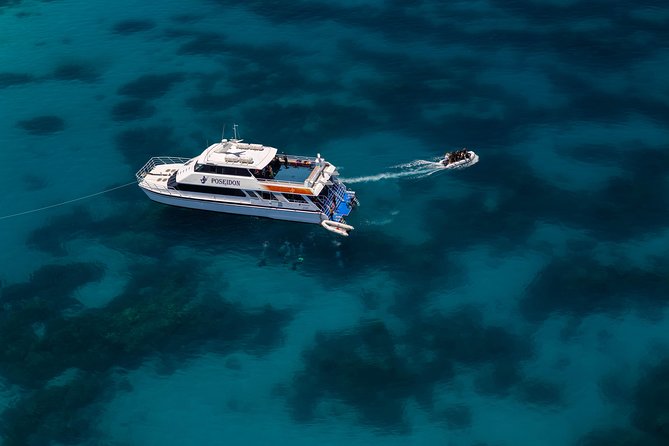
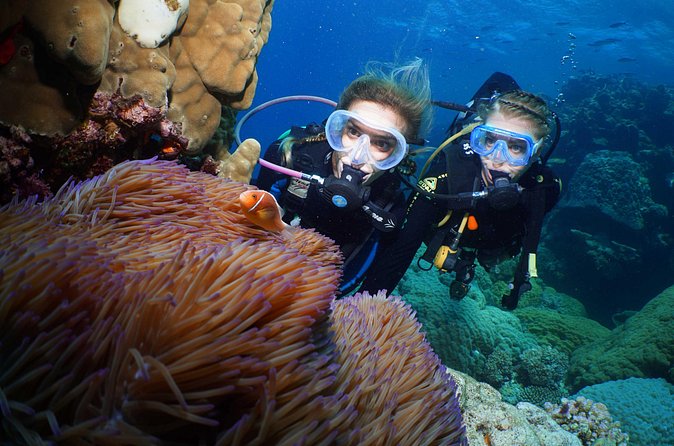
Days 3 and 4 are full day trips to the outer reef, specifically around the Agincourt Ribbon Reefs at the Great Barrier Reef. This is where the course shifts from controlled drills to handling changing conditions while still following the same safety framework.
You’ll complete six open-water sessions in total, with four mandatory and two fun. That “4 required + 2 extra” setup is a good balance: you get the certification-critical work, plus breathing room to enjoy the reef and wildlife without feeling like every moment is an exam.
The program also includes the Environmental Management Charge (Reef Tax). That’s one of those line items that’s easy to forget when you’re comparing costs between operators. Having it covered is a sign the reef days are fully packaged, not just “transport + vibes.”
Practical note: the course is scheduled to finish with the final open-water session completed by 2:30pm. The day ends back at the meeting point, which makes it easier to plan what you do after you surface.
What you should mentally prepare for
Outer reef days can mean more variables than the pool:
- boat movement and the need to stay calm while adjusting gear
- changing visibility and light conditions
- working through skills while paying attention to your depth and air
If you’re the type who overthinks, you’ll likely feel better once you’ve already practiced the key skills in the pool. If you’re the type who hates uncertainty, this course is still doable—it’s just more comfortable if you take your time and listen carefully to your instructor team.
Also, the course recommends that you not fly for 24 hours after diving. Since the final session is by 2:30pm, that’s usually enough time to plan a relaxed evening and avoid rushing travel immediately afterward.


Gear, log book, certification: what’s included and what you’ll want to add
This is a well-packed course in terms of what’s included. You get:
- All scuba equipment
- Scuba log book
- PADI Gold Open Water certification upon course completion
- Heated training pool on Day 1 and 2
- Lunch + morning and afternoon tea each day
- Environmental Management Charge (Reef Tax)
- Return coach transfers from Port Douglas accommodation
- Use of prescription masks if required
That list matters for value because first-time divers often underestimate how many small items they think they need. Mask fitting, basic gear rentals, log book costs, and reef-day fees can add up quickly elsewhere.
The only clear “bring extra” item is souvenir photos on Day 3 and 4. They’re not included, so if you know you’ll want them for memories, plan for that extra cost.
Timing matters more than you think
The start time is 8:30am, and the course begins every Tuesday (and on request). If your travel schedule is tight, build in buffer days in Port Douglas. Reef days are weather- and operations-sensitive, so you’ll want flexibility for your own sanity.
Instructors and the small-group advantage (and why it shows up in reviews)
With a maximum of 8 travelers, this course leans into the one thing you can’t fake: real coaching.
The feedback I’ve seen consistently points to instructors who are both professional and reassuring—people who explain what you’re doing, watch you closely, and adjust training when someone needs a calmer pace. Names repeatedly mentioned include Gordon, Adam, Emma, and Haylie, with India also showing up as a standout instructor. Other team members such as Chris and Jade are credited with making the overall experience smoother.
What that means for you: you’re less likely to get lost in a crowd. For a certification course, that matters because small mistakes—like how you breathe, how you clear your mask, or how you control buoyancy—are much easier to fix early than later.
Also, small-group learning tends to reduce the mental load. You’ll likely feel the instructor can track your progress, and you won’t have to wait around while others get help.
Price and value: what the listed cost means and what to double-check
The listing shows $0.00 per person. Since that looks like a placeholder rather than a real retail price, I’d treat it as “confirm the actual quote” before you commit your flights and plans.
Still, you can judge value based on what’s included. This course packages the expensive and annoying parts:
- reef-day fees (including the Reef Tax)
- transport on reef days
- equipment and log book
- meals
- certification
So even if the real price is higher than the displayed $0.00, it’s still likely strong value compared with piecing together a certification course item by item.
The main value risk
The biggest risk isn’t the course price—it’s assuming you can skip the prep. You must meet the basic swim requirement and complete the student diver medical declaration. If you have certain conditions (the data lists asthma, heart conditions, and diabetes as examples), you may need extra medical clearance.
That’s not a “gotcha.” It’s safety. But it can affect your timeline, so plan ahead if you have any relevant medical history.
Fitness, medical declaration, and the scuba readiness checks
You’ll need:
- ability to swim 200m (or 300m with mask, fins, and snorkel)
- ability to tread water for 10 minutes (float)
- a moderate physical fitness level
Minimum age is 10 years.
You’ll also complete the self-assessment Student Diver Medical Declaration. If you answer yes to any questions, the info says you’ll need a dive/scuba medical certificate indicating you’re medically fit. If a medical is required, it must be completed within 90 days of starting your course.
I’d treat this as step one of your planning. If you wait until the week of the course, you could end up with delays you can’t fix quickly.
Who should book this and who might want another option
This is a great fit if:
- you want PADI Open Water certification with structured coaching
- you like learning in small groups
- you’re new enough that the heated pool is a comfort bonus
- you want reef days that are built into the program, not tacked on later
You might want to think twice if:
- you’re not confident you can meet the swim and tread-water requirements
- you have medical conditions that could trigger extra clearance needs
- you can’t plan around the recommended no-fly for 24 hours after your last open-water session
If you’re traveling with a friend or family member, small-group training can also make the experience feel more personal without becoming chaotic.
Should you book Quicksilver’s 4-day PADI Open Water course in Port Douglas?
Yes, I’d book it if your goal is certification and you want a course that’s clearly set up for first-timers. The combination of heated pool Days 1–2, six open-water sessions with guided structure, and outer reef days to the Agincourt Ribbon Reefs is exactly what you want when you’re trying to learn safely and feel confident.
I’d also book it if you appreciate teams that get praised for being welcoming and supportive. The repeated mentions of instructors like Gordon, Adam, Emma, Haylie, and India suggest you’ll likely get the kind of coaching that helps nervous students calm down and progress.
The only reason not to book: you’re unsure about swim readiness, you have medical questions, or your travel schedule won’t tolerate the timing after your final open-water session.
FAQ
What does the 4-day PADI Gold Open Water course include?
It includes 6 open-water sessions (4 mandatory and 2 fun), all scuba equipment, a scuba log book, two outer-reef day trips (Days 3 and 4), meals each day (lunch plus morning and afternoon tea), the heated pool (Days 1 and 2), and PADI Gold Open Water certification on completion.
Where does the course run, and when does it start?
Days 1 and 2 are at the Quicksilver training centre on Warner St, Port Douglas. Days 3 and 4 are day trips to the outer reef around the Agincourt Ribbon Reefs. It starts at 8:30am, and the course commences every Tuesday (and on request).
How many people are in the course group?
The course has a maximum of 8 travelers.
Do I need to bring my own scuba gear?
No. All scuba equipment is included. The course also notes you can use prescription masks if required.
How good do I need to be at swimming before I can join?
You need to be able to swim 200m, or 300m with mask, fins, and snorkel, and tread water (float) for 10 minutes.
What are the minimum age and fitness requirements?
The minimum age is 10 years, and you should have a moderate physical fitness level.
What medical checks are required?
You must complete the Student Diver Medical Declaration. If it indicates a pre-existing condition may affect safety, you may need a medical certificate stating you are medically fit. If a medical certificate is required, it must be completed within 90 days of starting your course.
Can I cancel for a refund?
Yes. You can cancel for a full refund up to 24 hours in advance of the experience’s start time. If you cancel less than 24 hours before, the amount paid won’t be refunded.