REVIEW · OUTBACK QUEENSLAND
Roma: Lost World Carnarvons (Wallaroo) Day Tour
Book on Viator →Operated by Boobook Explore · Bookable on Viator
There’s something special about the Carnarvon Ranges. This Outback Queensland day tour pairs an ecologist-led walk on a private 72,000-acre station with Aboriginal sites like the Axe Factory, plus wildlife searching in tight crevices using a headlamp. I especially like the small group size (up to 14) and the fact that you get both nature and culture in one day. One consideration: it’s a long, early day (about 10 hours) out in the elements, and you’ll want a moderate fitness level.
If you land with guides like Craig He or Meryl, the storytelling tends to hit the right tone: friendly, practical, and heavy on real details about plants, animals, and life around Roma and the ranges. The day also includes lunch and snacks, so you’re not hunting for food in a place where convenience is… basically imaginary. The downside is that the tour requires good weather, so plan to stay flexible.
In This Review
- Key things you’ll remember
- Stepping off the main road into the Carnarvon Range
- Wallaroo Station: how 72,000 acres changes your day
- Axe Factory Aboriginal site and the secret cave moment
- Date Rock, Cycad Gorge lunch, and dinosaur-plant energy
- Arch Rock and the Sphinx: sandstone drama without the crowds
- Rainbow Cave rock art: where the range turns personal
- Wildlife spotting with a headlamp: the fun part that’s also practical
- Timing, pickup, and what the 10 hours actually feel like
- Food and comfort: lunch, snacks, and staying ready for the outback
- Price in context: what $211.59 buys you
- Who should book this Wallaroo day tour?
- Should you book? The quick decision checklist
- FAQ
- FAQ
- How long is the Roma: Lost World Carnarvons (Wallaroo) day tour?
- What time does the tour start?
- Where do I meet for the tour?
- How many people are in a group?
- What’s included in the tour price?
- Is there a headlamp wildlife component?
- What kind of fitness level do I need?
- What happens if the weather is bad?
- Do I get an e-ticket?
Key things you’ll remember
- Private Wallaroo property access on a 72,000-acre cattle station in the Carnarvon Range
- Headlamp wildlife spotting in narrow crevices, led by an ecologist
- Axe Factory Aboriginal site, including time to investigate a secret cave
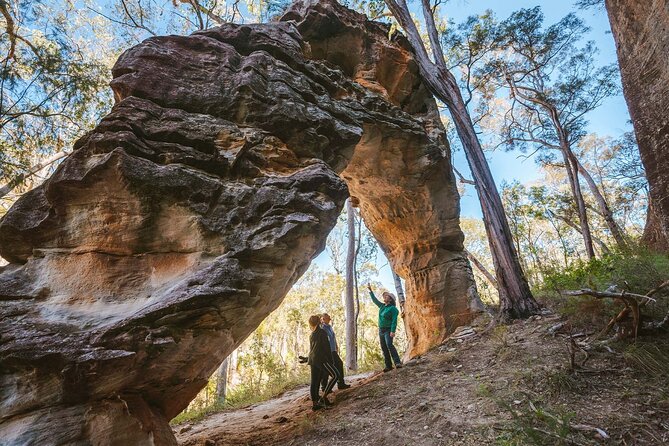
- Rock formations and viewpoints such as Arch Rock and the Sphinx
- Aboriginal art stops including Rainbow Cave
- Lunch, snacks, and transfers from central Roma (so you can go door-to-door)
Stepping off the main road into the Carnarvon Range
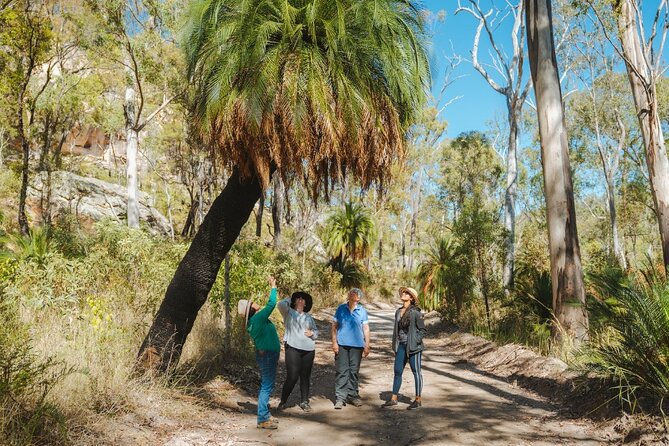
Roma is a good base for exploring Queensland’s more rugged side, and this day tour trades highway views for real range country. You’ll drive about 1.46 hours north of Roma to the Carnarvon Range area, where sandstone cliffs, gorge cuts, and dry-country plant life shape the whole feel of the day.
What makes this work is the way the tour is designed around the property itself, not a checklist of quick stops. You’re not just looking from a distance; you’re moving through the range with a guide who’s there to explain what you’re actually seeing. And because the group is capped at 14, it stays conversational instead of turning into a bus full of people holding phones at arm’s length.
One more practical point: this is an outdoor day, and it starts early. Meeting time is listed as 7:00 am at Boobook Explore on Quintin St, Roma, and the day runs roughly 10 hours. Expect that early light to matter—both for spotting wildlife and for getting your bearings before the day heats up.
You can also read our reviews of more tours and experiences in Outback Queensland.
Wallaroo Station: how 72,000 acres changes your day
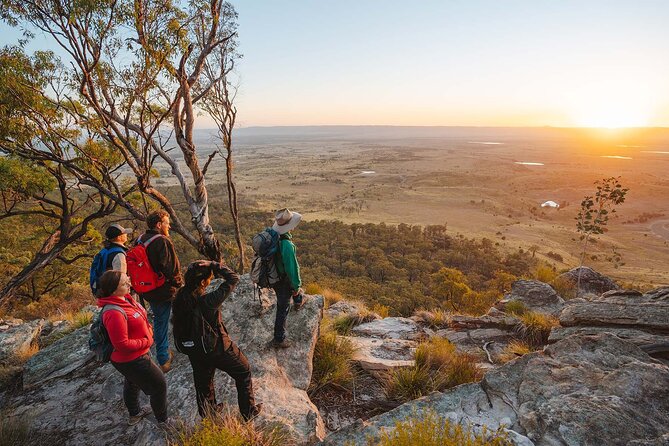
The heart of the tour is time on a private station—about 72,000 acres (29,000 hectares). That scale matters. On smaller tours, you can feel like you’re constantly rushing between viewpoints. Here, you have room to slow down and look closer.
Your ecologist guide sets the tone right away. They share what’s growing, what’s adapted to the area, and how animals use the structure of the cliffs and gorges to survive. Even if you’re not the type to read plant labels for fun, you’ll likely start noticing patterns—what thrives near watercourses, what shows up around rocky shade, and how life is distributed across this rugged terrain.
Also, the tour includes time to look for wildlife in narrow crevices using a headlamp. That tells you the tour has a wildlife component that goes beyond a quick scan from a wide open lookout. You’re looking where animals can realistically hide, and you’re doing it with a guide who knows what to look for and why.
The day also tends to include a stop connected to the Dawson River waterhole, with both Aboriginal and Colonial history mentioned. If you like your nature tourism with context—how people and animals share water in arid country—this kind of stop is exactly why the station-based format works.
Axe Factory Aboriginal site and the secret cave moment
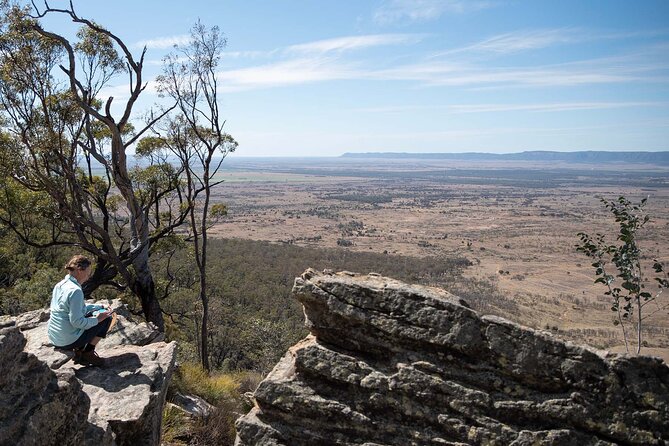
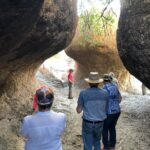
One of the strongest cultural stops is the Axe Factory Aboriginal site. You start your property visit here, and the focus includes investigating a secret cave.
This isn’t framed as a casual photo stop. The cave element changes the tempo of the day because it slows you down and shifts you from surface scenery into place-based meaning—rock, shelter, and the long relationship between people and the land. If you care about Aboriginal heritage in a respectful, guided way, this stop is one of the reasons the tour earns its reputation.
You’ll also likely hear how the range country shaped where people could move, shelter, and find resources. Even without getting overly technical, you’ll leave with a stronger sense of why the region’s features are not just views, but part of a lived geography.
Practical tip: bring a sense of curiosity and also a willingness to listen. Cave and cultural sites are exactly where good guides can make the difference between a forgettable stop and a meaningful one.
Date Rock, Cycad Gorge lunch, and dinosaur-plant energy
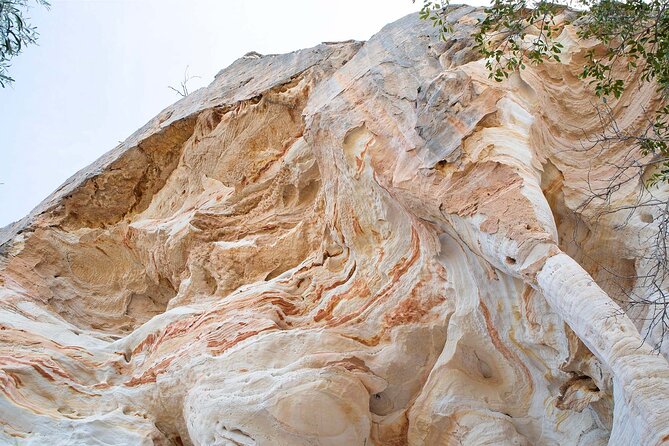
After the Axe Factory, the itinerary continues through major range landmarks like Date Rock and Cycad Gorge.
Lunch is served in the setting of Cycad Gorge. This is one of those details that sounds romantic until you’re actually there. You’re eating while surrounded by “dinosaur plants” (cycads), with the gorge and sandstone formations sitting around you in real time. It’s the kind of lunch that feels like it’s happening because you’re on the right property, not because someone scheduled a picnic.
Date Rock is another way the day keeps variety without turning chaotic. It’s a scenic stop that helps you connect the broader range story back to specific features you can point to.
If you’re the type who gets cranky when food is an afterthought, you’ll appreciate that lunch and snacks are built into the full-day structure. Out here, it really helps to have the energy to keep walking and looking instead of timing your day around whatever you find near the highway.
Arch Rock and the Sphinx: sandstone drama without the crowds
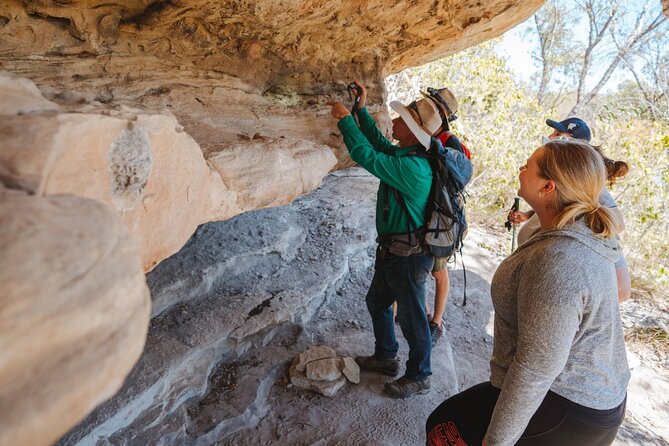
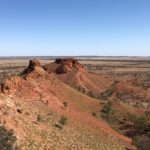
The Carnarvon Range is known for dramatic rock features, and this tour uses that strength well. You get time to soak up formations such as Arch Rock and the Sphinx.
These are classic examples of how sandstone country doesn’t just look pretty—it creates natural “stages” for the light and for your sense of scale. When the sun hits the edges, you can see the shape of the weathering patterns. When clouds move in, the cliffs can look darker and deeper, and the whole place feels more sculpted.
What I like about including stops like these is that they act as emotional anchors. After time spent in caves, listening to cultural stories, and checking crevices for wildlife, you get open-air views where you can reset your brain. It keeps the day from turning into one long stream of information.
And because this tour runs on a private property (and limits the group), you’re not fighting big-crowd logistics to enjoy the rocks. It feels more like a slow walk with purpose than a race to the next scenic billboard.
Rainbow Cave rock art: where the range turns personal
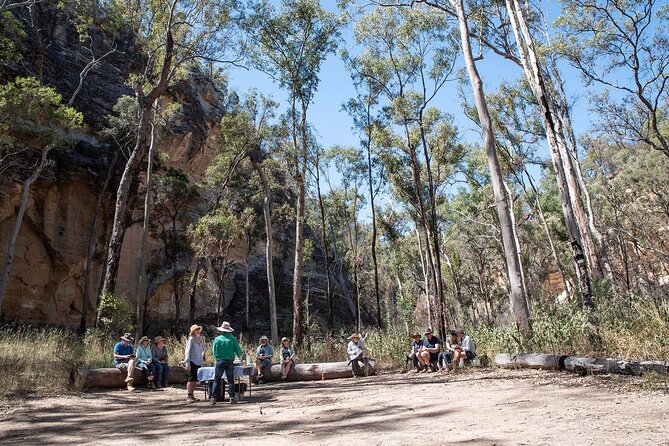
Rainbow Cave is one of the Aboriginal art stops on the route. This is the kind of place that benefits from a guide who can point out what you’re seeing without rushing it.
Rock art locations can be hit-or-miss on tours: sometimes people treat them like quick photo backdrops. Here, the day’s overall structure—ecologist guiding, station history and ecology context, and multiple culture-linked stops—makes it easier to understand why the art matters.
Even if you don’t know the first thing about interpreting rock art, you’ll likely walk away with a clearer sense that the art is tied to place, not just decoration. The cave setting also changes how you experience time. You go from looking at today’s landform to imagining what it looked like for people long before modern roads existed.
If you’re a fan of culture that feels specific to a location (instead of generic), Rainbow Cave is one of the best reasons to prioritize this tour over more stop-and-run options.
Wildlife spotting with a headlamp: the fun part that’s also practical
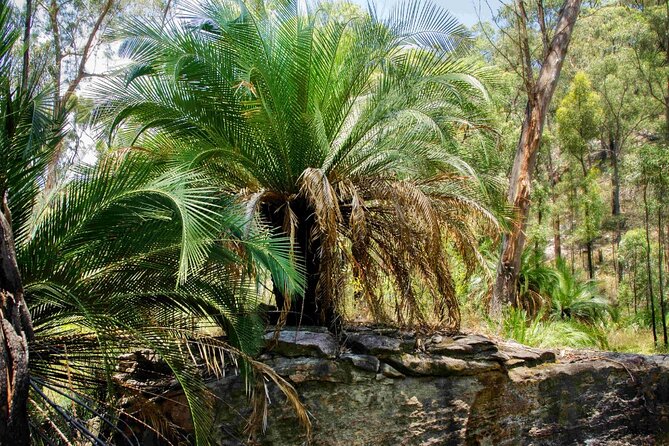
This is the wildlife activity that makes the tour feel more like an excursion than a sightseeing loop. You’ll look for wildlife in narrow crevices using a headlamp, guided by the ecologist.
That matters because outback wildlife often isn’t about seeing something clearly out in open space. It’s about learning where animals hide and how they move in rocky terrain. Narrow crevices can be effective because they offer shade, protection, and temperature control. A headlamp helps you scan carefully rather than blasting light randomly.
What to expect: this portion of the day rewards patience. The point isn’t to spot the biggest animal in 30 seconds. It’s to train your eyes and watch for small movement and reflective cues in the rock.
If you’re traveling with kids or friends who like “hunt for clues” activities, this part tends to land well—because everyone can participate in the looking without needing to be an outdoors expert.
Timing, pickup, and what the 10 hours actually feel like
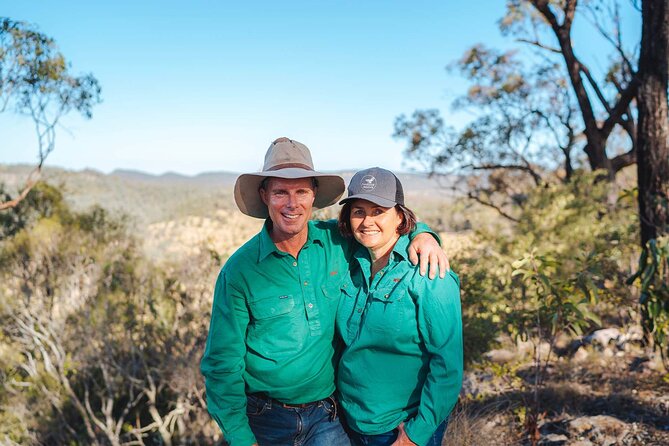
The tour is listed at about 10 hours. That’s not a short break. It’s a full day where the driving is part of the experience and the time on the station is the payoff.
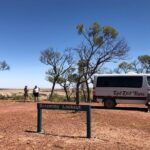
Pickup is offered from central Roma, and the meeting point is Boobook Explore at 15 Quintin St, Roma. If you’re staying near the center, you’ll probably find it straightforward. The tour is also described as near public transportation, which can help if you don’t have a car.
The small group limit (maximum 14) is a big plus for comfort. You’ll hear explanations without shouting across seats, and you’re more likely to feel like the guide can adapt to your questions.
One more practical note: it’s rated for travelers with moderate physical fitness. That doesn’t automatically mean strenuous hikes, but it does mean you should be comfortable with uneven ground and the sort of walking that happens outdoors. If stairs make you nervous, ask the operator how much walking you should expect on the day you book.
Food and comfort: lunch, snacks, and staying ready for the outback
This tour includes lunch and snacks, plus guiding and transfers. That’s a real value point because food stops in remote areas can be limited, and you don’t want the day derailed by hunger.
The lunch setup matters as much as the menu. Eating at Cycad Gorge, surrounded by sandstone and range plant life, changes how the meal feels. It becomes part of the experience instead of a break between activities.
Comfort-wise, plan like it’s a long day outdoors. Even though exact gear isn’t specified, the routine implies you should dress in layers and be ready for temperature swings. You’ll be under open sky at times and near rock shade at others.
Water isn’t specifically detailed in the information provided, so I’d suggest bringing a reusable bottle anyway, just in case. On tours, it’s better to have extra than to ask for it later.
Price in context: what $211.59 buys you
At $211.59 per person, this isn’t a bargain-basement outing. But it also isn’t priced like a quick coach ride either.
Here’s what you’re paying for in plain terms:
- Access to a private 72,000-acre property (not public viewpoints)
- An ecologist guide who can explain ecology and wildlife in context
- Cultural site visits that go beyond surface-level stops
- A day structure with lunch, snacks, and transfers from Roma
When you compare that to doing parts of this independently—fuel, entry costs (where applicable), and paying for guided interpretation—the pricing starts to feel more reasonable. In other words, you’re not just buying scenery. You’re buying interpretation and access.
The best way to get value is to go in with the right expectations. If you want a chill, minimal-walking, photo-only tour, this might feel like more effort than you expected. If you like learning while you travel, you’ll likely feel like the price is justified.
Who should book this Wallaroo day tour?
I’d point you toward this tour if you:
- Want a small-group Outback experience instead of big crowds
- Care about both nature and Aboriginal cultural sites in one day
- Enjoy wildlife spotting with guidance, not just a casual glance
- Like scenery that’s tied to real places and real land use (cattle station country)
I’d be cautious if you:
- Don’t handle early starts well
- Prefer purely relaxed sitting time over walking and standing for viewpoints
- Are sensitive to outdoor conditions and need highly predictable comfort
Should you book? The quick decision checklist
If you’re basing yourself around Roma and want a day that feels like it belongs in Queensland’s range country, this tour is a strong pick. The mix of ecologist-led wildlife searching, Aboriginal sites (Axe Factory and Rainbow Cave), and range landmarks like Arch Rock and the Sphinx is rare in one package.
Book it if your idea of a good day includes learning while you look around, and if you’re ready for a full, active 10 hours. Don’t book it if you’re hoping for a mostly seated, low-effort outing or if you won’t be able to handle weather-driven changes.
FAQ
FAQ
How long is the Roma: Lost World Carnarvons (Wallaroo) day tour?
It runs for about 10 hours.
What time does the tour start?
The listed start time is 7:00 am, with pickup from central Roma offered.
Where do I meet for the tour?
You meet at Boobook Explore, 15 Quintin St, Roma QLD 4455.
How many people are in a group?
The maximum group size is 14 travelers.
What’s included in the tour price?
Lunch, snacks, guiding, and transfers from central Roma are included.
Is there a headlamp wildlife component?
Yes. You’ll look for wildlife in narrow crevices using a headlamp, led by your guide.
What kind of fitness level do I need?
The tour is suitable for travelers with a moderate physical fitness level.
What happens if the weather is bad?
The experience requires good weather. If it’s canceled due to poor weather, you’ll be offered a different date or a full refund.
Do I get an e-ticket?
Yes. The tour uses a mobile ticket.