REVIEW · VICTORIA
Tae Rak (Lake Condah) 2-Hour Cultural Tour
Book on Viator →Operated by Budj Bim Cultural Landscape Tourism · Bookable on Viator
Eels, stories, and ancient aquaculture in one walk. This Tae Rak (Lake Condah) tour mixes Gunditjmara creation stories with real lake wildlife you can actually see from the path, plus a close look at the Tae Rak Aquaculture Centre. It’s a focused way to understand how people shaped waterways long before modern maps.
I especially like the way the guide ties culture to place: the lake isn’t just scenery, it’s a living system where marine and bird life show up alongside the stories. And the second big win for me is the practical, hands-on feel of the eel-focused aquaculture, from the kooyang (eel) holding tank to the old stone fish-trap sites you view while walking toward the weir.
One caution: the tour is short and doesn’t include coffee or snacks, and there’s a chance that food-tasting options (like eel samples) may not be pushed forward unless you ask. If you want to taste something, plan to speak up when you’re there.
In This Review
- Key highlights to know before you go
- Tae Rak (Lake Condah) in plain terms: what you’re seeing
- The first stop: Tae Rak Aquaculture Centre and kooyang eel viewing
- The walk to the weir: stone aquaculture, fish traps, and lava-flow waterways
- Gunditjmara stories, fauna, and flora you can spot without being an expert
- Price and timing: is $63.83 worth it for a 2-hour tour?
- What to bring, what to expect on the ground, and food-taste tips
- The tone: respectful storytelling, not just facts
- Should you book this Tae Rak (Lake Condah) 2-hour cultural walk?
- FAQ
- Where does the Tae Rak (Lake Condah) 2-hour tour start?
- How long is the tour?
- What does the tour cost?
- Is this tour offered in both the morning and afternoon?
- What’s included in the ticket?
- Are coffee or snacks included?
- Is there a mobile ticket?
- How large are the groups?
- Does the tour run in bad weather?
- Are service animals allowed?
Key highlights to know before you go
- Gunditjmara stories tied to the lake: creation stories and cultural meaning delivered while you’re watching the water and birds
- Tae Rak Aquaculture Centre start: you begin with an overview of the site, eel holding tank, and the processing area
- Kooyang (eel) harvesting context: you learn how traditional harvesting worked, not just that eels exist
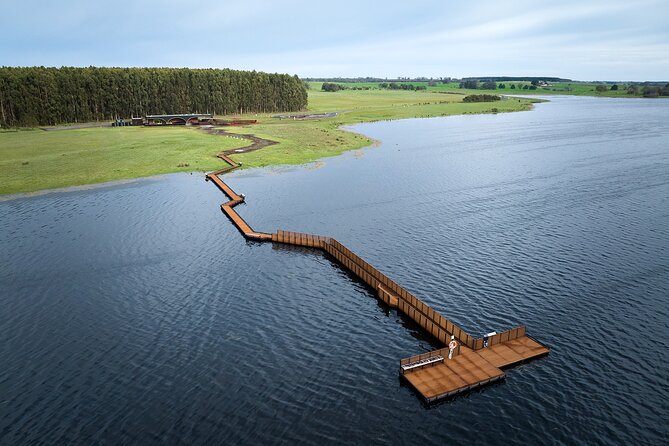
- Stone aquaculture sites and a weir viewpoint: you walk along the lake’s western edge to see fish traps and weir structures
- Small group feel: up to 30 people, so questions and discussion are more realistic
- Respectful presentation: the guide’s approach and the care in the buildings come through as part of the experience
Tae Rak (Lake Condah) in plain terms: what you’re seeing
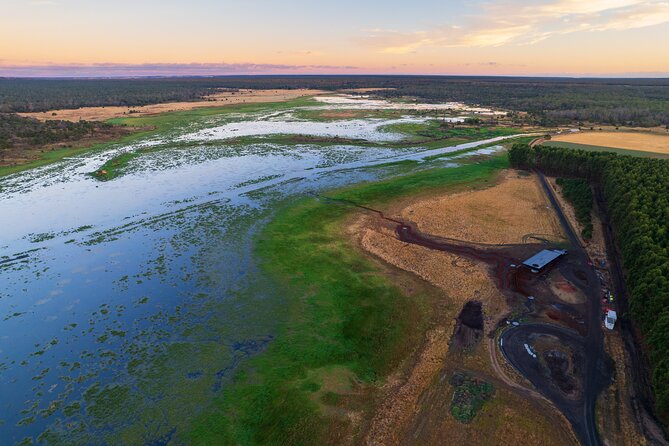
Tae Rak is Lake Condah, and the point of the tour is simple: you’re learning about the Gunditjmara relationship with this place, especially the ancient eel aquaculture that took advantage of natural waterways.
What makes it interesting is the combination. You’re not just hearing legends in the abstract. You’re standing at a functioning cultural site where the landscape itself is part of the lesson, including the lava-flow system that helped shape water movement and created opportunities for managing eels. That’s why the tour keeps returning to waterways, eel traps, and the living animals that still depend on the lake today.
Also, this is a guided walk with a clear arc. It starts at a centre, then moves outside along the lake edge toward a weir. You’ll get the big picture first, then the details as you walk.
And yes, the eel theme is real. If you love animal-focused cultural history, you’ll probably find yourself paying attention to the water differently afterward, like you can finally picture how people used it.
You can also read our reviews of more tours and experiences in Victoria.

The first stop: Tae Rak Aquaculture Centre and kooyang eel viewing
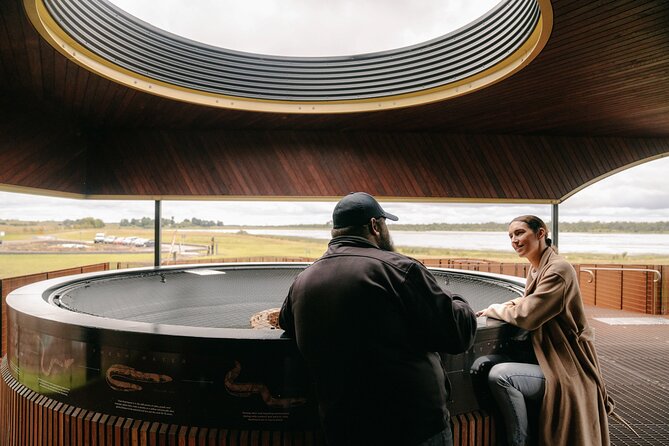
Your tour meets at the Tae Rak Aquaculture Centre area, and from the start you get a site orientation that makes the rest of the walk easier to understand. You’re not dropped onto a track and told to guess what matters. The guide sets the stage.
At the centre, you’ll get an overview that includes:
- the centre itself and how it supports cultural education
- the kooyang (eel) holding tank
- a view of the processing facility
- time around the cafe & retail space
This is one of the practical parts of the tour. Seeing the holding tank and processing setup helps you understand that this isn’t only an archaeological story. It’s connected to how eels are managed, prepared, and talked about today.
Then comes the cultural storytelling layer. The guide shares Gunditjmara creation context and points out culturally significant fauna and flora around the lake. Even if you’re not a bird-spotting expert, you’ll know what to look for because the guide is actively directing your attention to the marine and bird life on the water.
I also like that the tone feels careful and respectful. One review specifically called out the sensitivity of the infrastructure and building design, and you can feel that intent in how the centre is presented.
The walk to the weir: stone aquaculture, fish traps, and lava-flow waterways
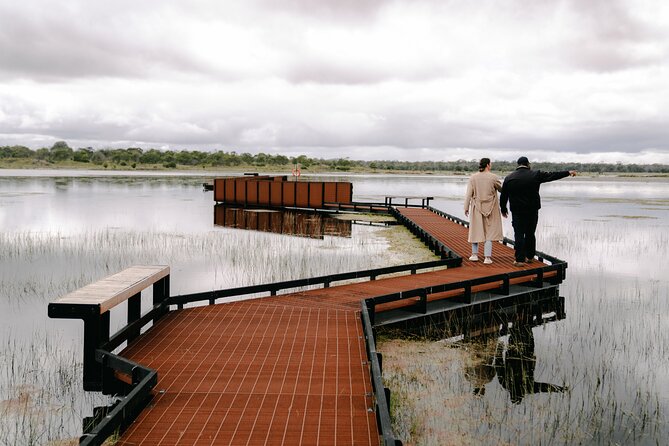
After the centre orientation, you continue along the western edge of the lake. This is where the tour turns from “here’s the background” to “here’s the evidence.”
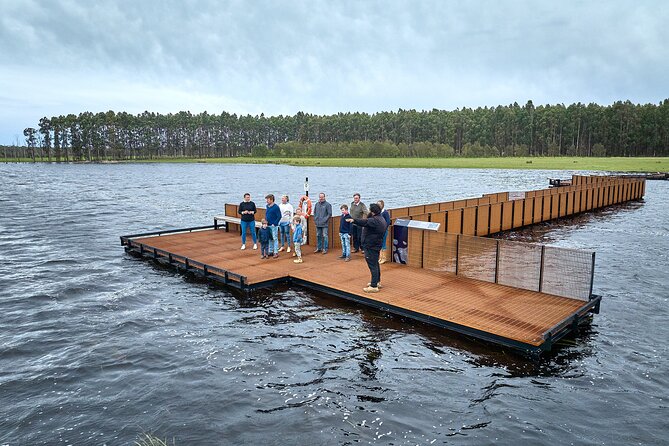
You’ll walk to a weir, and that viewpoint matters. A weir is one of those quiet engineering elements that can shape flow and influence where fish move and how people could harvest them. Instead of treating the old aquaculture like a museum display, you’re seeing how structures relate to water movement in a real setting.
As you go, the guide explains:
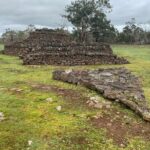
- stone aquaculture sites along the lake edge
- fish-trap features built by the ancient people
- how the lake system supported eel trapping and harvesting
- culturally significant plant and animal life connected to Tae Rak
One of the core ideas is the ancient aquaculture system built around lava flows and natural waterways. The tour frames it as a long-term relationship with the environment: people didn’t simply use the lake, they worked with the conditions the land already provided, then engineered sites to support eel harvest and processing.
The stone sites can feel abstract until someone connects them to function. That’s why this is a guided walk rather than a self-guided loop. With a guide, you can connect structures you’d otherwise overlook to the role they played in harvesting kooyang.
A practical note: this is only about 2 hours total, so you won’t get a long hike. You should treat it like a purposeful cultural walk with stops, not a nature trek.
Gunditjmara stories, fauna, and flora you can spot without being an expert
Some cultural tours talk at you. This one is more watch-and-listen. The guide’s job is to connect story to what you’re currently seeing: birds on the water, features along the edge, and the plants that matter in this environment.
You’ll hear legends and historical accounts tied to the Gunditjmara people and the Budj Bim Cultural Landscape context. Then you’ll get the extra layer: how those stories connect to the way the community interacted with waterways over thousands of years.
What I find valuable is the balance between emotion and explanation. Creation stories can feel distant if they’re only told as myth. Here, they come paired with a physical place and details about harvesting practices, especially around eels.
If you enjoy learning about animals, this tour has a built-in focus. Eels are the headline, but the guide also points you toward culturally significant flora and fauna. That means you don’t leave thinking you only learned one thing. You leave thinking about a whole system—water, food, plants, birds, and human knowledge all braided together.
Price and timing: is $63.83 worth it for a 2-hour tour?
The price is $63.83 per person for an approximately 2-hour tour. That can sound steep if you only compare it to a basic ticketed walk. But in practice, you’re paying for three things you don’t get on many DIY outings:
- a guided connection between culture and a specific place
- access to site elements like the eel holding tank and processing facility area
- an experience run with a small group cap (up to 30)
It also includes air-conditioned vehicle service and a restroom on site, so you’re not trying to plan around missing basics in a remote area.
You’ll want to plan ahead because it’s commonly booked about 21 days in advance on average. If you’re traveling in a busier season or want a morning vs afternoon slot, booking sooner is smart.
This is also a good tour length for a day in Victoria because it doesn’t swallow your schedule. Two hours gives you a meaningful cultural stop without forcing you to rearrange everything.


What to bring, what to expect on the ground, and food-taste tips
This tour is weather-dependent, and that makes sense because it’s a walk along the lake edge. If it’s unpleasant outside, the experience may be moved to a different date or you might be offered a refund.
On the day itself, here’s what you should prepare for:
- comfortable walking shoes for a short guided walk
- sun protection if the weather is clear
- water, especially if you’re doing the morning option
Inclusions vs non-inclusions are straightforward:
- Included: restroom on site, air-conditioned vehicle, the guided cultural walk
- Not included: coffee/tea and snacks
So if you like to start with a caffeine hit, plan to grab it after you arrive or afterward at the cafe & retail space. One review mentioned grabbing coffee in a peaceful natural environment, and another mentioned enjoying eel charcuterie afterward. That’s not guaranteed for every day, but it’s a sign that the on-site cafe/retail area can be part of the fun after the walk.
One more practical tip based on real feedback: if you want an eel-tasting moment, don’t rely on it being offered at the exact time you expect. If samples are possible, ask your guide or staff directly when you’re at the centre. That way you avoid the disappointment of thinking it was a “maybe” option.
The tone: respectful storytelling, not just facts
I like that this experience is presented with cultural respect built in, from the guide’s approach to the way the centre is designed. Reviews highlighted the guide’s knowledge and respect for culture, and that matters because cultural information should feel grounded, not performative.
You’re also learning within a wider reconciliation context. One review specifically noted steps toward reconciliation in the way the tour is delivered. Even if you don’t come with that framework, the end result is the same: you leave with more than trivia. You leave with a clearer sense of how the Gunditjmara story is connected to the physical world in front of you.
And because the group is limited to up to 30 travelers, the conversation doesn’t feel like a lecture hall. You’re more likely to get questions answered in a normal human way.
Should you book this Tae Rak (Lake Condah) 2-hour cultural walk?

I’d book it if you want a short, meaningful cultural experience that connects stories to a living environment. This is a great fit for couples, solo travelers, and small groups who like guided learning without committing to a long day. It’s also a strong choice if you’re an animal person, because kooyang (eel) is treated as the center of the conversation.
I’d think twice if you’re expecting food to be included, or if your plan is to get every tasting opportunity automatically. The tour doesn’t include coffee or snacks, and you may need to ask about any sample options you care about. If that’s important to you, plan to budget a little extra for the cafe area afterward.
One last nudge: with a 4.9 rating and about 98% recommending, this isn’t a lukewarm stop. The combination of respectful storytelling, the eel aquaculture focus, and the easy two-hour format is exactly what makes it an easy add to a Victoria itinerary.
If you’re in the area and you want to understand Tae Rak beyond a quick photo, this is the kind of tour that changes how you look at the lake when you’re done.
FAQ
Where does the Tae Rak (Lake Condah) 2-hour tour start?
The tour meets at WRRG+Q2 Breakaway Creek, Breakaway Creek VIC, Australia, at the Tae Rak Aquaculture Centre.
How long is the tour?
It’s approximately 2 hours.
What does the tour cost?
The price is $63.83 per person.
Is this tour offered in both the morning and afternoon?
Yes, you can choose from a morning or afternoon walk.
What’s included in the ticket?
The experience includes a restroom on site and an air-conditioned vehicle.
Are coffee or snacks included?
No. Coffee/tea and snacks are not included.
Is there a mobile ticket?
Yes, the tour uses a mobile ticket.
How large are the groups?
The maximum group size is 30 travelers.
Does the tour run in bad weather?
This experience requires good weather. If it’s canceled due to poor weather, you’ll be offered a different date or a full refund.
Are service animals allowed?
Yes, service animals are allowed.