REVIEW · HOBART
6-Day Tasmanian Explorer Adventure Tour from Hobart
Book on Viator →Operated by Under Down Under Tours · Bookable on Viator
Tasmania moves fast when you’re seeing it by road. This 6-day guided loop links major natural icons with transport, park fees, and expert commentary handled for you.
I especially like that you’re not just driving past highlights. You stop for real time at places like Lake St Clair, the Bay of Fires, and Freycinet, then add wildlife moments at Bonorong.
Two things I like a lot: national park entry fees are included and pickup/drop-off in the Hobart area means you can start and end without planning rides.
One consideration: food and drinks aren’t included (unless specified), so you’ll still need to budget for meals—on top of some active walking that’s best for moderate fitness.
In This Review
- Key highlights worth caring about
- Why this Hobart-to-Tasmania route feels efficient
- Getting to the bus: pickup, timing, and group size
- Day 1: Mount Field waterfalls, Lake St Clair, and the drive to Strahan
- Day 2: Henty Dunes, Ocean Beach, and the optional Gordon River Cruise
- Day 3: Cradle Mountain walking time plus Sheffield murals and Launceston
- Day 4: Cataract Gorge, St Helens lunch, and Bay of Fires to Bicheno
- Day 5: Freycinet National Park beaches, the Hazards, and Hobart nights
- Day 6: Bonorong Tasmanian devils, Richmond colonial streets, and kunanyi in Wellington Park
- Accommodation and the overnight pattern you should expect
- Wildlife spotting: Tasmanian devils and little penguins
- Price and value: what you’re paying for at $887.12
- What to pack for this kind of road trip
- Who should book this tour, and who should skip it
- Should you book the 6-day Tasmanian Explorer adventure from Hobart?
- FAQ
- How long is the tour?
- Where does the tour start?
- What time does the tour start?
- Does the tour offer pickup and drop-off?
- What’s included in the price?
- Are meals included?
- Is the Gordon River Cruise included?
- What physical fitness level do I need?
- What is the minimum age to join?
- Is the tour refundable if I cancel?
Key highlights worth caring about
- Included park entry fees save time and help keep your budget sane
- Small group size (max 24) keeps the trip from feeling chaotic
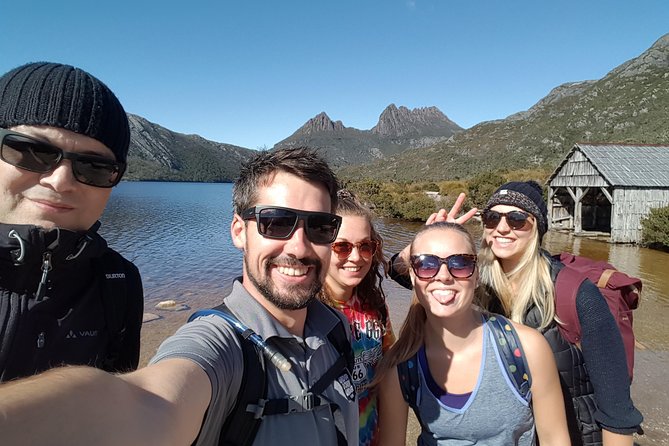
- Cradle Mountain walk choices, including the famous Dove Lake circuit
- Bay of Fires and Freycinet coastal time with guided stops and lookouts
- Bonorong Wildlife Sanctuary entry included, with Tasmanian devils among the featured animals
- Optional Gordon River Cruise is there if you want to add extra on the West Coast
Why this Hobart-to-Tasmania route feels efficient
If you’re short on time, this tour makes sense. You get a structured “best-of” Tasmania route without the mental load of car rental, driving between remote areas, and figuring out which turnoff is the right one.
What makes it work is the rhythm: you move every day, but you also stop long enough to walk, look, and take photos without feeling rushed. The itinerary hits classic areas across Tasmania’s north, west, and east—crucial if you want variety in geology and ecosystems, not just more viewpoints.
And since the tour is guided, you’re not relying on your phone for the story behind what you’re seeing. The way the guide explains the environment and wildlife theme comes up again and again in feedback, including guide names like Wombat and Josh—both known for keeping things upbeat and animal-aware.
A few more Hobart tours and experiences worth a look
Getting to the bus: pickup, timing, and group size
The day starts early. The meeting point is YHA Hobart Central (9 Argyle St), with a 7:00 am start time, and you return to the meeting point at the end. If you’re staying in the Hobart CBD, the pickup helps you avoid that awkward first-day scramble.
This tour runs with a maximum of 24 people, which is big enough to meet new people but small enough that you can actually hear the guide when everyone stops. In practice, that matters when you’re pulling into parking areas for short walks—you want order, not a zoo.
You’ll also have a mobile ticket, which is handy. Just note the pace: this is built for people who can do a mix of short walks and longer strolls, then handle longish driving days afterward.
Day 1: Mount Field waterfalls, Lake St Clair, and the drive to Strahan
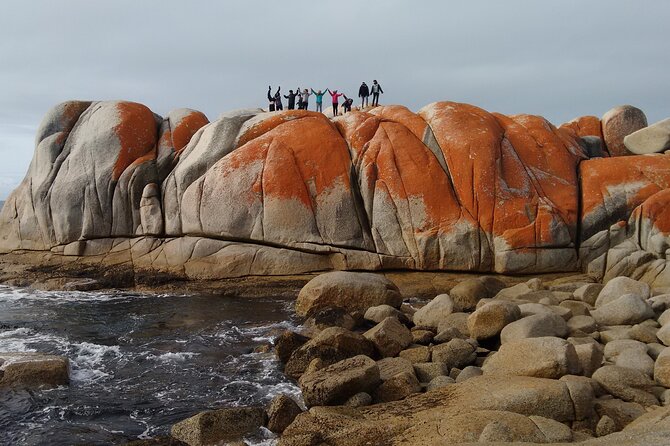
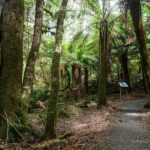
Day 1 is the “get your bearings in real nature” day, and it starts with Mount Field National Park. You’ll walk among tall trees and take in Russell Falls. It’s one of those classic Tasmania waterfall stops where the scenery does most of the work for you, and the walking portion is usually manageable for first-timers.
Next comes Lake St Clair, famous for being Australia’s deepest freshwater lake. You get lunch time plus short tracks near the water. This is a good pause in the itinerary because Lake St Clair tends to slow the pace—still scenic, but calmer than the mountain-heavy days.
After that, you head through Franklin-Gordon Wild Rivers National Park. You’ll typically stop at Nelson Falls and along the Franklin River for history and environmental context. This part feels more remote in tone: rainforest and river country, where the point isn’t a single photo spot—it’s the sense of scale and wildness you get from being there in person.
Then you roll on to Queenstown for a quick look around, followed by an overnight in Strahan. Strahan is your West Coast base for Day 2, sitting on Macquarie Harbour. If you want to understand why people talk about this region like it’s a different world, Strahan is your starting line.
Potential drawback: Day 1 is packed with stops. If you dislike early mornings and prefer a slower pace, you’ll want to plan to relax more on the evenings rather than trying to “keep going” after dinner.
Day 2: Henty Dunes, Ocean Beach, and the optional Gordon River Cruise
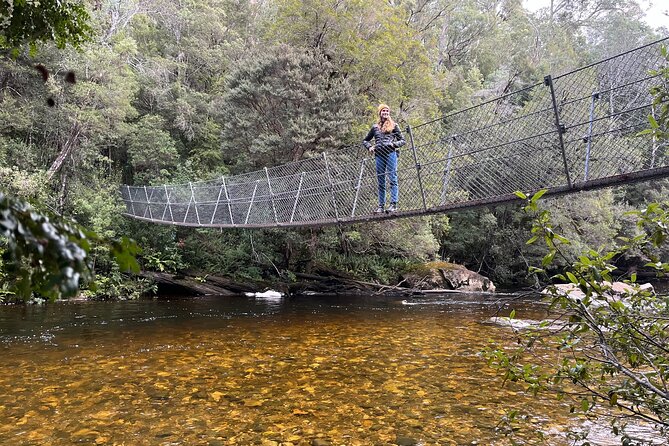
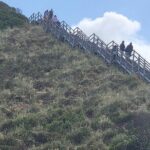
Day 2 is pure West Coast energy, and it starts with Henty Dunes. You’ll climb up the dunes for wide views, which is exactly the right move here. The point isn’t just to see the ocean—it’s to see how wind and sand shape the coastline.
Then you stop at Ocean Beach, with time for fresh air and a wander. The tour gives you a short window, which is perfect if you want the coast feel without spending the whole day on the road.
You’ll spend more time in Strahan again, with a chance to explore the town before heading into the rainforest areas tied to the Gordon River region. This is where the “gateway” feeling comes in. Strahan isn’t just a waypoint; it’s part of the West Coast story.
And here’s the big choice: a World Heritage Gordon River Cruise is optional. You can join it during the 9am to 2pm window, with highlights mentioned such as Hells Gates and Sarah Island, plus cruising upriver into ancient rainforests. The cruise isn’t included in the tour price, but it pairs well with this day because the alternative is mainly land-based stops.
If you’re the type who loves water travel and historic convict-era stories connected to Sarah Island, it’s worth considering. If you’re more of a walk-and-view person, you can still enjoy the day without booking the cruise.
Day 3: Cradle Mountain walking time plus Sheffield murals and Launceston
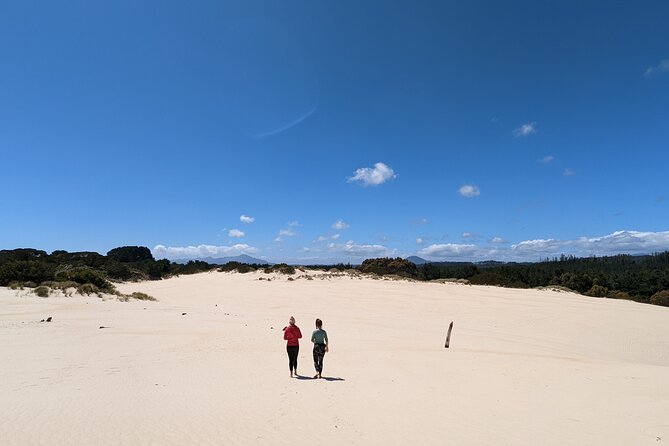
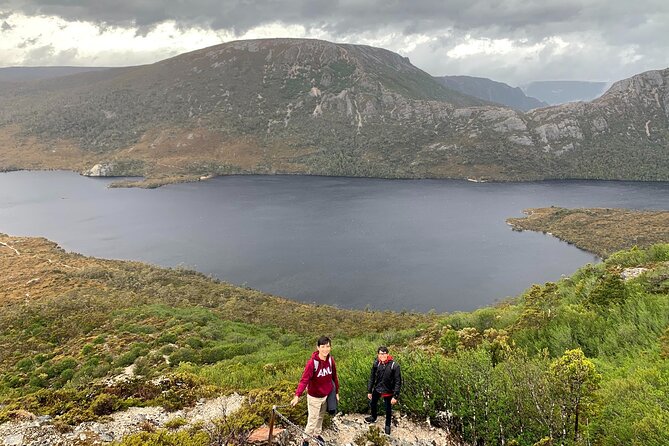
Cradle Mountain National Park is the star of Day 3, and the tour gives you a real walking choice. You can pick a walk that fits your fitness level, with the Dove Lake circuit called out as one of the best short walks in Australia. That’s a big deal because it means you can aim for a manageable loop and still get that “this is why people come here” feeling.
If you’re traveling as a first-time hiker, this is the day where good footwear pays off. The walk isn’t just for distance; it’s about getting close enough to see how glacial-carved terrain changes plant life and light.
On the way toward Launceston, you stop in Sheffield, a town known for murals. It’s quick, but it breaks up the driving and adds a more human scale after the wilderness-heavy blocks.
Finally, you overnight in Launceston, one of Australia’s oldest cities. This gives you an evening with options—pubs, a stroll, or dinner around the central areas. It’s also a nice change from the more remote West Coast towns.



Day 4: Cataract Gorge, St Helens lunch, and Bay of Fires to Bicheno
Day 4 starts in Cataract Gorge Reserve, right in the city. You’ll take a short walk along the South Esk River and look out for wallabies and peacocks if you’re lucky. This is a useful stop if you’re traveling with people who want nature without long hikes.
Then you head to St Helens for lunch. It’s described as a fishing town on the East Coast, which keeps the day grounded. Not every stop here is about national parks; some are about real daily life in Tasmania’s coastal communities.
Next is Bay of Fires, and this is where the scenery turns into something you remember later. You’ll walk the white sands around larapuna/Bay of Fires at an unhurried pace, taking in turquoise water and orange boulders covered with lichen. The tour also flags that this is an important area for palawa people—so it’s not treated like just a photo set.
After Bay of Fires, you move to Bicheno for the night. Bicheno is known as a beach town, and it’s also home to little penguins that burrow in the shore areas and return from the sea at night. Even if you’re not guaranteed to see every wildlife moment, the timing and location matter.
Best advice for this day: bring a light windbreaker. The coast can feel mild until you’re standing on sand with ocean air moving through.
Day 5: Freycinet National Park beaches, the Hazards, and Hobart nights
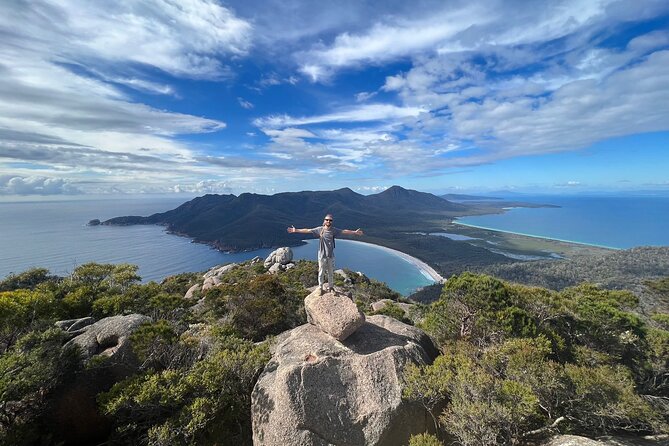
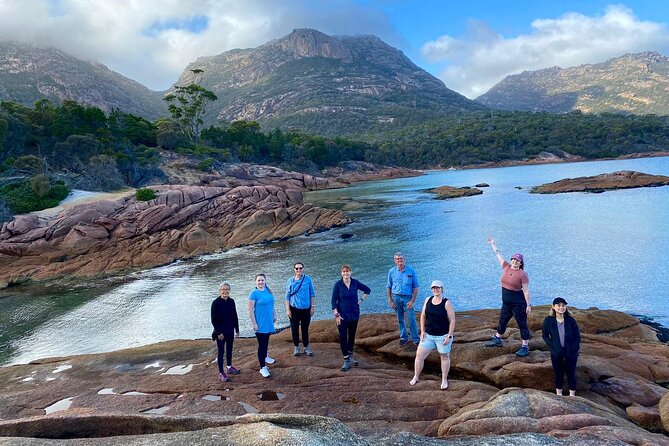
Freycinet National Park is a highlight day, and the tour gives you about a half-day to explore its beaches, forests, coves, and lookouts. You’ll see the pink granite Hazards mountain range from tranquil Honeymoon Bay. That pairing—soft bay water plus the harder, pink granite shapes—creates the classic Freycinet look.
This stop works for different travel styles. If you like short walks, you’ll still get shoreline views. If you like longer roaming, the park’s layout gives you choices within the overall time window.
After Freycinet, you return to Hobart for the evening and a full night of your own. The tour specifically suggests checking out the Salamanca region and the waterfront, or heading to lively areas by North Hobart. This is a smart way to balance nature days with city downtime, especially after a few nights in smaller towns.
Day 6: Bonorong Tasmanian devils, Richmond colonial streets, and kunanyi in Wellington Park
Day 6 is a “wildlife and culture” blend, which I like because it doesn’t end with a long drive and disappointment. You start at Bonorong Wildlife Sanctuary, described as Tasmania’s best-known conservation and wildlife sanctuary. Admission is included, and you can meet a variety of animals such as quolls, wombats, kangaroos, birds, and Tasmanian devils.
Tasmanian devils are a big draw here. If you care about conservation, the setting matters more than a quick sighting. Even when animals don’t cooperate perfectly, the sanctuary context gives meaning to the experience.
Next is Richmond. You’ll grab lunch and explore Richmond including Richmond Bridge and heritage buildings along colonial-style treelined streets. It’s a calmer, slower-feeling stop, especially compared with Cradle Mountain and the coastal days.
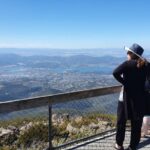
Then you finish in Wellington Park, locally called “The Mountain,” and mentioned with its palawa name kunanyi. The tour highlights features like fern glades, eucalyptus forests, and dramatic rock columns, with your guide shaping what you notice and why it matters.
By the time you return to YHA Hobart Central, you’ll feel like you’ve seen a lot—and more importantly, you’ll understand the pattern: wet wilderness, rugged coasts, and the places where people have built communities and stories around them.
Accommodation and the overnight pattern you should expect
You’re getting 5 nights accommodation included, which is a major part of why this tour can feel like good value compared to DIY. The overnights match the geography: you base in larger hubs when you need services (like Launceston) and you stay in smaller gateway towns near the natural areas (like Strahan and Bicheno).
That overnight structure matters because it reduces backtracking. You don’t waste time commuting long distances in the same day just to sleep somewhere more convenient for you—it’s built around where the stops make sense.
One practical note: the exact style of rooms isn’t spelled out in the tour details you provided. If you’re sensitive to room type, bring flexibility. You might see lodging options that vary from hostel-style setups to motels/hotels depending on the town.
Wildlife spotting: Tasmanian devils and little penguins
This tour is designed with wildlife in mind, but it’s honest about how nature works. Bonorong gives you a focused chance to see animals like Tasmanian devils, quolls, wombats, and other native wildlife in a conservation setting.
On the coast, the tour’s mention of little penguins in Bicheno is useful because it signals when and where to pay attention—penguins return from the sea at night and burrow along the shore. Even with no guarantees, you’ll be in the right place and the timing lines up better than random sightseeing.
My advice is simple: don’t rush wildlife. Give yourself a few quiet minutes at a stop, keep your noise down, and focus on being present rather than trying to “force” a sighting.
Price and value: what you’re paying for at $887.12
At $887.12 per person, you’re not just paying for transportation. You’re paying for a package of time-saving pieces that add up quickly if you do this on your own:
- 5 nights accommodation included
- National park entry fees included
- Bonorong Wildlife Sanctuary admission included
- Expert guide who handles pacing and interpretation
- Advanced Eco-Certified Tour as part of the operating model
The biggest “value math” is this: DIY road trips in Tasmania can get expensive fast once you factor in accommodation near popular parks and the logistical costs of getting from one region to another. Here, those elements are bundled.
What’s not included is equally important: food and drinks are generally on you unless specified. So the real cost to you depends on how you handle meals. If you plan to buy snacks, lunch, and dinner each day, budget accordingly. If you’re the type who packs breakfast-style items and treats meals as part of the experience, you’ll likely feel happier with the overall spend.
Also consider that park and sanctuary fees aren’t small. Having them included removes a bunch of decision fatigue.
What to pack for this kind of road trip
This tour mixes city moments, rainforest stops, dune climbs, and coastal walking. That means your packing needs to be practical, not fancy.
Bring:
- Good walking shoes with grip for uneven paths and wet ground
- A waterproof layer or rain jacket (Tasmania weather can shift)
- A warm layer for early starts and mountain air
- Sunscreen and a hat for the coastal days
- A small day bag for water, snacks, and layers
- Reusable bottle for stops where you might refill (if available on the route)
I also recommend charging devices before you start each day. Even if you’re not chasing photos nonstop, you’ll want maps, offline access, and a quick way to check what time you need to be back at the bus.
Who should book this tour, and who should skip it
This tour fits best if you:
- Want to see major Tasmania icons without planning every leg yourself
- Like guided storytelling and structured stops
- Are okay with a moderate activity level (short walks plus at least one longer walking day like Cradle Mountain)
- Prefer traveling in a group up to 24 people rather than solo driving
It might not be ideal if you:
- Want slow travel with lots of free time every afternoon
- Struggle with early starts and consistent day schedules
- Hate packing extra for meals since food and drinks aren’t included
If you’re in the middle—curious, active enough, and flexible—the format is strong.
Should you book the 6-day Tasmanian Explorer adventure from Hobart?
Yes, you should book it if your goal is to experience Tasmania’s headline nature areas in one tidy loop, with park fees and key wildlife entry already handled. The value is strongest for people who’d rather pay for convenience than spend that energy on routing and logistics.
I’d lean “book” especially if you want a mix of Cradle Mountain walking time, Freycinet coastal viewpoints, and Bay of Fires shoreline wandering, then finish with wildlife at Bonorong and a Hobart city night.
If you’re the kind of traveler who hates structured days and needs total control of every hour, you may feel boxed in. But if you like an itinerary that still gives real walking time, this one is a solid match.
FAQ
How long is the tour?
The tour runs for 6 days (approx.).
Where does the tour start?
The tour starts at YHA Hobart Central, 9 Argyle St, Hobart TAS 7000, Australia.
What time does the tour start?
The start time is 7:00 am.
Does the tour offer pickup and drop-off?
Yes. Pickup and drop-off are offered from Hobart CBD hotel, hostel and motel areas, and the tour ends back at the meeting point.
What’s included in the price?
Inclusions include 5 nights accommodation, national park entry fees, admission to Bonorong Wildlife Sanctuary, an expert guide, and the advanced eco-certified tour. Park fees and Bonorong entry are specifically listed as included.
Are meals included?
Food and drinks are not included unless specified. The itinerary notes lunch and wander time in some places, but it does not state that all meals are covered.
Is the Gordon River Cruise included?
No. The Gordon River Cruise option is listed as admission ticket not included, and it runs from 9am to 2pm as an optional add-on.
What physical fitness level do I need?
The tour is for travelers with a moderate physical fitness level.
What is the minimum age to join?
The minimum age is 8 years. Travelers aged 8–16 need to travel with a guardian.
Is the tour refundable if I cancel?
This experience is non-refundable and cannot be changed for any reason. If you cancel or request an amendment, the amount paid is not refunded.