REVIEW · BYRON BAY
Byron Bay: Nighttime Nature Walk with Night Vision Goggles
Book on GetYourGuide →Operated by Vision Walks - Eco Tours · Bookable on GetYourGuide
See rainforest animals without a bright torch.
This Byron Bay night vision nature walk lets you watch nocturnal wildlife more quietly, using special goggles so you’re not flashing around with a torch. You’ll also finish with hot chocolate and cookies under the stars.
What I really like is the guiding: you’re led by an environmental scientist, and if you’re lucky enough to get Wendy, you can expect a guide who’s passionate, punctual, and genuinely friendly. The second big win is the setup itself: the goggles help you notice activity in the dark while your guide keeps the whole group low-key and respectful.
One consideration: animal sightings are never guaranteed. On a typical night the team expects about five species, and the best chances come when the moonlight is lower.
In This Review
- Key things to know before you go
- Stealth Night Vision: how the goggles change everything
- Getting to the trees: the comfy eight-seater ride and 210 minutes
- The walk itself: how a rainforest night stays wildlife-friendly
- Wildlife you might see: the nocturnal lineup in the dark
- The hot chocolate finish: comfort after the quiet hours
- What to wear and bring for the best night vision experience
- Price and value: why $133 can make sense here
- Who should book this Byron Bay night vision walk
- Should you book the Byron Bay Night Vision Nature Walk?
- FAQ
- How long is the Byron Bay Nighttime Nature Walk with Night Vision Goggles?
- How much does the tour cost?
- What’s included in the tour price?
- Do you use a torch during the walk?
- How many animals can I expect to see?
- What animals might I see?
- What should I wear or bring?
- Is it suitable for children?
- Is it wheelchair accessible and are flash photos allowed?
Key things to know before you go
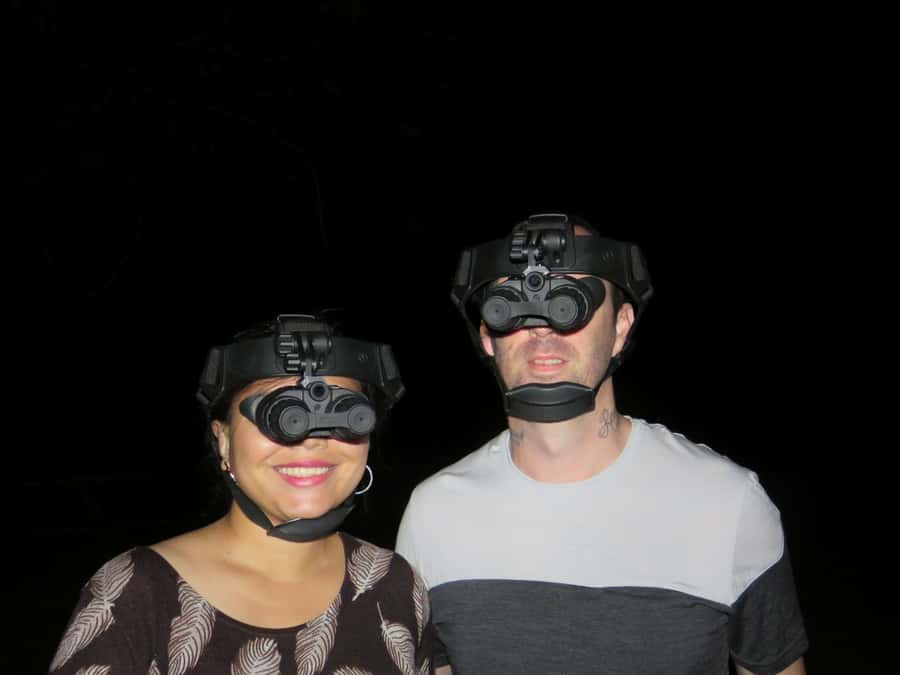
- Military-grade night vision goggles: see animals as they move, without shining a torch into the canopy.
- Environmental scientist guide: you get context for what you’re seeing, not just random spotting.
- Eco-minded low light: the whole point is staying incognito so wildlife isn’t startled.
- Expect about five species: a typical night includes multiple nocturnal animals, but it’s nature, not a show.
- Hot chocolate and cookies after: you get a warm break and a chance to look up at the night sky.
Stealth Night Vision: how the goggles change everything
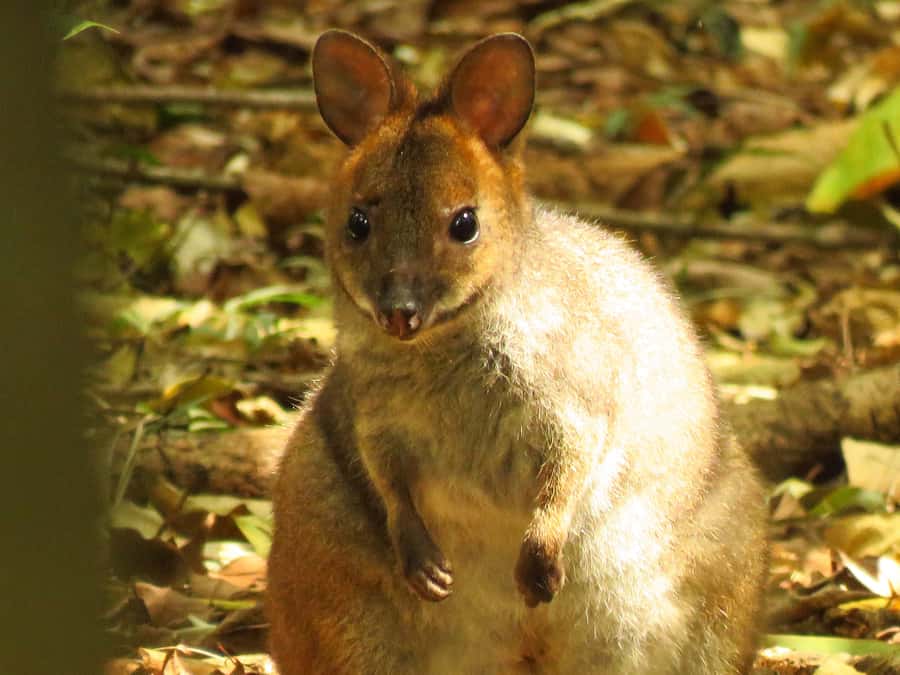
The star of this tour is the patented night vision approach, billed as a one-of-a-kind experience for seeing rainforest life after dark. Instead of torching the forest like a campsite ghost story, you move through the trees wearing special night vision goggles that let animals keep doing what they do.
Here’s why that matters. In a rainforest at night, bright light can push animals to hide, freeze, or move away. With the low-light method, you’re still able to spot activity, but the animals get less disruption. That means you’re more likely to see natural behavior rather than a quick panic reaction.
You’ll also notice that the goggles make distance and motion feel different. Some wildlife is hard to pick out when you’re relying on human eyes alone in darkness. With night vision, you’re essentially switching from “searching” to “following movement.” It’s a subtle shift, but it’s exactly what makes the walk feel different from standard night tours.
And since your group doesn’t scatter flashes of light around, the experience tends to feel calmer. You’re not wrestling with glare or re-spotting the same thing every few steps. You’re watching patterns unfold.
You can also read our reviews of more walking tours in Byron Bay
Getting to the trees: the comfy eight-seater ride and 210 minutes
This tour is built around a total duration of about 210 minutes, which includes getting you from pickup to the walk and back, plus the warm drink finish. Plan for a real evening out, not a quick after-dinner stroll.
Transport matters more than people think on night tours. You’re in a luxury eight-seater hybrid with air conditioning, video for the trip, and seats that are easy to get in and out of. It’s also a small-vehicle setup, so you’re not dealing with a huge crowd when it’s time to gear up and head into the dark.
Pickup is available from either the Byron shire area or Ballina shire area, so you don’t have to worry about driving at night on your own. Once you’re in the vehicle, you’ll get your bearings for what happens next—mainly the goggles and the rules of staying low-key.
Timing-wise, a night walk like this usually works best when you arrive a little ahead of the real dark so you can settle in. Once it’s truly night, the method does its job. Also, the guide notes that nights with less moonlight are best. So if you’re choosing dates, don’t just look at weather—think moon and darkness level too.
The walk itself: how a rainforest night stays wildlife-friendly
The tour is led by an environmental scientist guide who focuses on both spotting and interpretation—what you’re seeing, and why it’s doing it at this hour. That’s one of the strongest parts of the experience, because darkness makes animals harder to identify and easier to misread. When someone explains behavior instead of just pointing, you start to notice the small cues: movement near ground cover, sudden stillness in response to nearby activity, and the difference between a resting animal and one that’s actively foraging.
The other key is the low-light discipline. The team requests that you try to wear dark clothing if possible, so you don’t stand out visually. In practical terms, that means you’ll blend into the night and the wildlife won’t be reacting to the sight of people and bright gear.
You’ll also want to understand the no-torch vibe. The goggles are meant to replace the usual handheld light. That’s why flash photography isn’t allowed. Even if a camera flash is brief to you, it can be disruptive for animals that rely on darkness for protection.
A typical night includes sightings of several species, and the team does its best to help you find them. But you should go in with the right mindset: nature runs the schedule. Your “win” is the method and the chance to see nocturnal life up close, even if one or two animals don’t show up.
Wildlife you might see: the nocturnal lineup in the dark
On a typical night, you can expect about five species. It’s also helpful to know the tour highlights a set of regular sightings, which helps you understand what you’re actively looking for—not just hoping for the best.
Common sightings include:
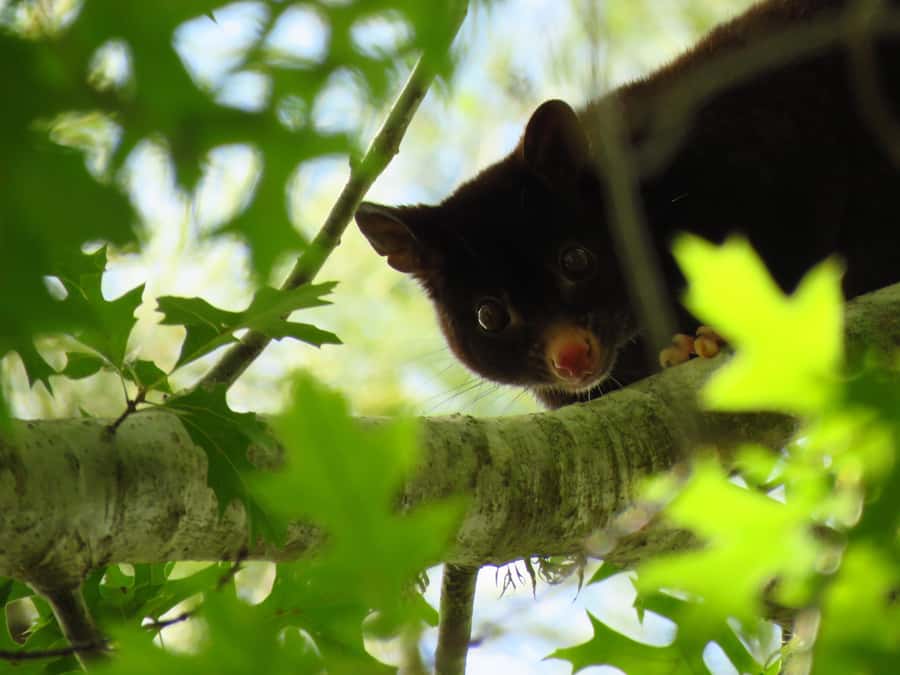
- Possum
- Pademelon
- Bandicoot
- Tawny frogmouth
- Fucsipes
- Micro bats
- Frogs
A few of these are especially fun because they show how “night” isn’t one category. Possums and pademelons are larger movements you might notice around undergrowth or tree edges. Bandicoots are the kind of ground-level activity that makes you slow down and watch the forest floor instead of scanning up. Tawny frogmouths are a reminder that birds can be incredibly motion-light at rest—so you learn to spot shape and silhouette rather than constant movement.
Micro bats and frogs often feel like a bonus layer of the ecosystem. They may not always announce themselves loudly, so your eyes (and your goggles) need time to adjust.
Also note what the guide says about moonlight: less moon usually means better contrast through the goggles. So if you’re planning your night, choose the darker option when you can.
The hot chocolate finish: comfort after the quiet hours
After the walk, you’ll wind down with hot chocolate and cookies while you look up at the stars. That part isn’t just a perk—it’s a smart reset. Night vision and dark viewing make you concentrate hard, and your eyes adjust differently after you come out of the trees.
This is also when the tour feels more like a shared night experience than a series of stops. Everyone gets a chance to compare what they noticed, and the guide can help connect the sightings to behavior you might have missed in the moment.
You’ll also have access to photographs as part of what’s included. That’s useful because, in the dark, your own ability to capture anything clear is limited. Even if you’re curious about taking pictures, flash photography isn’t allowed, so having professional or guided photos afterward helps you remember what you saw.
It’s a small detail, but it improves value. A night tour can be hard to “hold” in your memory, especially when the experience is about subtle movement. Photos help you revisit those moments without needing to guess what that blur was.
You can also read our reviews of more evening experiences in Byron Bay

What to wear and bring for the best night vision experience
This is a tour where preparation directly affects comfort and safety. The rules are simple, but follow them.
Bring:
- A water bottle
- A jacket depending on the weather
- Comfortable closed-toe shoes
- Dark clothing if possible (the team asks you to try)
The tour doesn’t allow sandals or flip-flops, and you should plan for a night where the ground matters. Comfortable, covered shoes keep your feet secure when you’re walking in the dark and staying with the group.
If you wear glasses, the guidance is to consider contact lenses if possible. That’s because goggles and eyeglass frames can be awkward together, and you’ll want the best view with minimal distraction.
Also remember: flash photography isn’t allowed. If you’re bringing a camera, keep it ready for non-flash use only as allowed, and expect that your main “capturing” will come from the included photo access.
One more practical note: children under 10 aren’t recommended, and the walk is not suitable for people with epilepsy. If either applies to you, it’s better to choose a different activity.
Price and value: why $133 can make sense here
At $133 per person for about 210 minutes, this isn’t a budget add-on. But it does have the things that usually justify a higher price point on nature tours: specialized equipment, trained guidance, and low-impact methodology.
You’re paying for:
- Use of night vision goggles (the core technology)
- An environmental scientist guide (interpretation and wildlife respect)
- Return transport in a small, comfy hybrid vehicle
- Hot chocolate and cookies
- Water refills
- Access to photographs
If you’ve ever done a standard night safari with bright torches, you know the trade-off. Either you see animals briefly while they react to light, or you spend most of the time unsure what you’re even looking at. Here, the entire method is designed to reduce disruption and improve your ability to detect motion in the dark.
You also get a small group experience. The tour is limited to a small number of participants, which means less noise, less shadow-chaos, and more time for the guide to spot activity and explain what it means. On nights when the group is very small, the experience can feel extra personal, and that’s often when people learn the most.
Still, go in with the right expectation: no one can guarantee sightings. The tour’s value comes from the approach and the chance to see nocturnal species in a way that doesn’t slam the forest with light.
Who should book this Byron Bay night vision walk
This tour fits best if you:
- Like nature and want to see animals active after dark
- Prefer a more wildlife-friendly approach than torch-based spotting
- Enjoy learning from a scientist guide, not just following a checklist
- Can handle a low-light evening and wearing closed-toe shoes
- Are okay with the fact that wildlife sightings can vary by night
It’s not a good match if:
- You have epilepsy (not recommended/suitable)
- You’re traveling with kids under 10
- You’re expecting a guaranteed lineup of animals on every outing
One extra fit check: consider your comfort with night conditions. Even with goggles, you’ll be walking in a dark environment, so your sense of calm matters. If you’re anxious in the dark, it might be tough to relax and really watch.
If you use a wheelchair, the tour is listed as wheelchair accessible. You’ll still want to confirm that the path and pace match your needs, but it’s at least a positive starting point.
Should you book the Byron Bay Night Vision Nature Walk?
Book it if you want the rare kind of wildlife viewing where the method is respectful and the guide explains what you’re seeing. The combination of night vision goggles, a science-focused guide, small-group pacing, and the cozy hot chocolate finish makes this feel like more than a simple tour—it’s a different way to experience the rainforest after dark.
Skip or rethink it if you need guaranteed animal sightings, can’t do the closed-toe shoe requirement, or if the health restrictions apply. If those hurdles don’t affect you, this is a strong choice for anyone who loves Byron Bay but wants to see it from a whole new angle.
FAQ
How long is the Byron Bay Nighttime Nature Walk with Night Vision Goggles?
The duration is about 210 minutes.
How much does the tour cost?
The price is $133 per person.
What’s included in the tour price?
You get return transport, an environmental scientist as your guide, use of night vision goggles, access to photographs, hot chocolate and cookies, and water refills.
Do you use a torch during the walk?
The experience is designed to avoid using bright lights, so you can observe without disturbing wildlife with a torch.
How many animals can I expect to see?
On a typical night, the tour expects sightings of about five species, but there are no guarantees.
What animals might I see?
Regular sightings mentioned include possum, pademelon, bandicoot, tawny frogmouth, fucsipes, micro bats, and frogs.
What should I wear or bring?
Bring a water bottle and closed-toe shoes. The tour also suggests a jacket depending on the weather, and dark clothing if possible.
Is it suitable for children?
It is not recommended for children under 10.
Is it wheelchair accessible and are flash photos allowed?
The tour is listed as wheelchair accessible. Flash photography is not allowed on this activity.