REVIEW · CAIRNS
Cairns: Marine Life Encounter
Book on GetYourGuide →Operated by Cairns Aquarium · Bookable on GetYourGuide
Stingrays and sea turtles in three hours. This private Cairns Aquarium experience pairs a behind-the-scenes look at how marine animals are cared for with the hands-on chance to hand-feed cownose stingrays. I also love that you finish with a visit to the Turtle Hospital so you see rehabilitation, not just display tanks. The one thing to plan around: children under 12 can’t feed the cownose stingrays and get a souvenir instead.
You’ll spend 3 hours moving through North Queensland habitats, from freshwater rivers and mangroves to reef and open-water species, with time for private educator moments. It runs Monday to Friday, in English, and it’s set up as a private group with skip-the-line entry—great if you want less waiting and more time with the animals.
In This Review
- Key highlights at a glance
- North Queensland marine life, packed into one smart 3-hour plan
- Entering Cairns Aquarium: more than a walk past glass
- The private behind-the-scenes tour: quarantine and food prep, explained clearly
- Hand-feeding cownose stingrays: the main event and the key rule
- River Monsters exhibit: feeding giant freshwater rays and barramundi
- Turtle Hospital: seeing rescue and rehabilitation, not just exhibits
- Price and value: is $211 per person worth it?
- Timing, days, and what that means for your schedule
- What to bring (and what to skip)
- Who this private Cairns Marine Life Encounter is best for
- Should you book Cairns Marine Life Encounter?
- FAQ
- How long is the Cairns Aquarium Marine Life Encounter?
- Where does the tour take place?
- What does the tour cost?
- Is this a private tour?
- Is hotel pickup included?
- Is food or drink included?
- What is included in the ticket?
- Can children under 12 feed the cownose stingrays?
- What days is the experience available?
- Is there free cancellation?
Key highlights at a glance
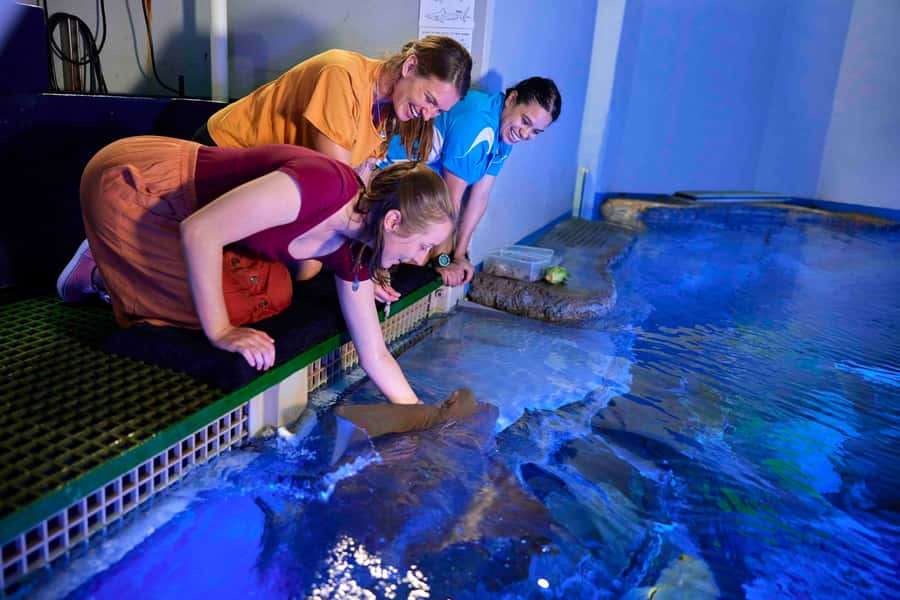
- Hand-feed cownose stingrays with aquarium guidance (kids under 12 can’t do this)
- Private behind-the-scenes tour focused on how the aquarium cares for marine life
- See quarantine and food preparation areas, not just public exhibits
- Feed giant freshwater rays and barramundi at the River Monsters exhibit
- Learn about sea turtle rehabilitation at the Turtle Hospital
North Queensland marine life, packed into one smart 3-hour plan
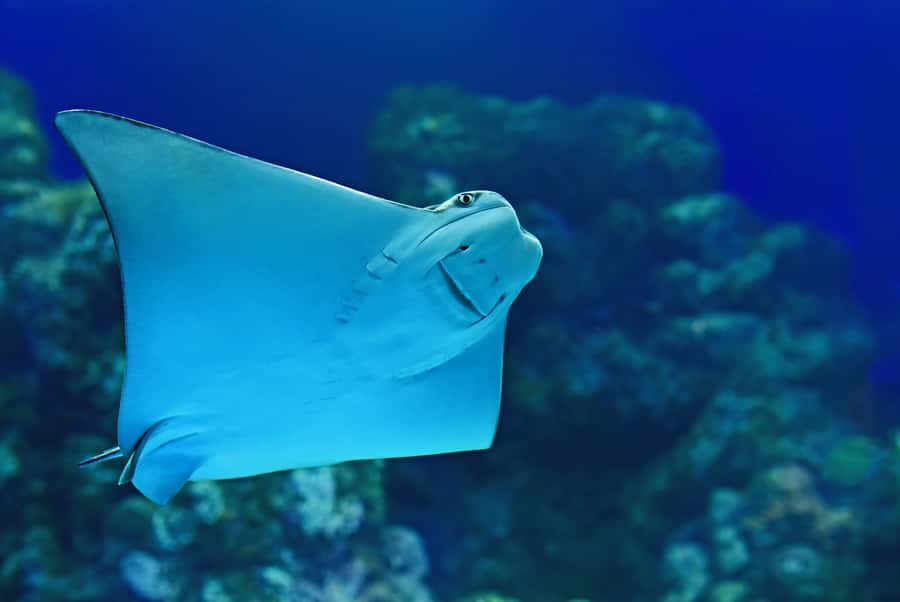
Cairns is a gateway to the Great Barrier Reef, but this tour does something nicer than just pointing at fish. You get a structured walkthrough that links ecosystems together: freshwater, mangroves, reef environments, and the Coral Sea side of the story.
The value is in the mix. You’re not only learning what’s in the tanks—you’re also learning how the aquarium supports animal health behind the scenes. Then you shift to the Turtle Hospital, where the focus changes from display to recovery.
A private guide helps here. With a small group, you can ask practical questions as you go instead of racing through like a checklist.
You can also read our reviews of more tours and experiences in Cairns.

Entering Cairns Aquarium: more than a walk past glass
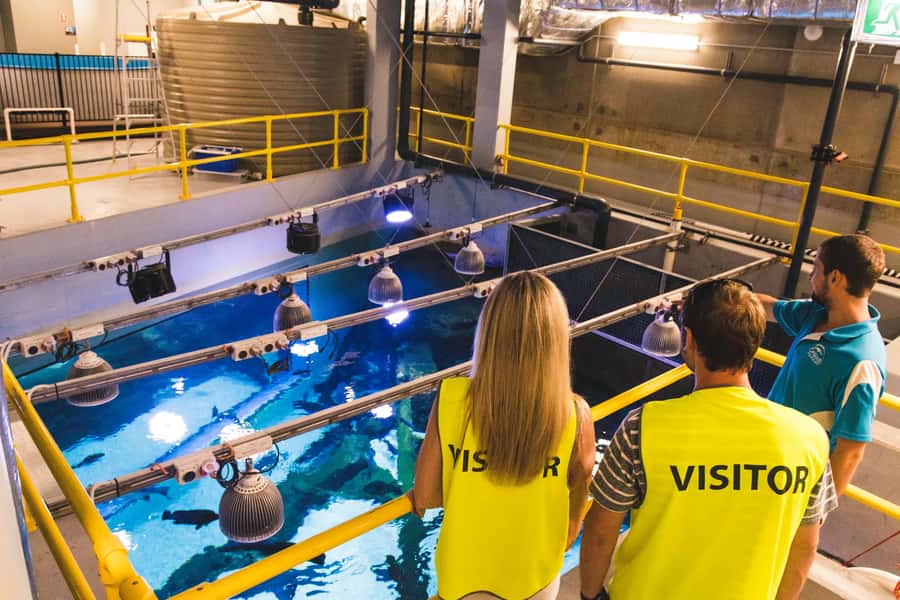
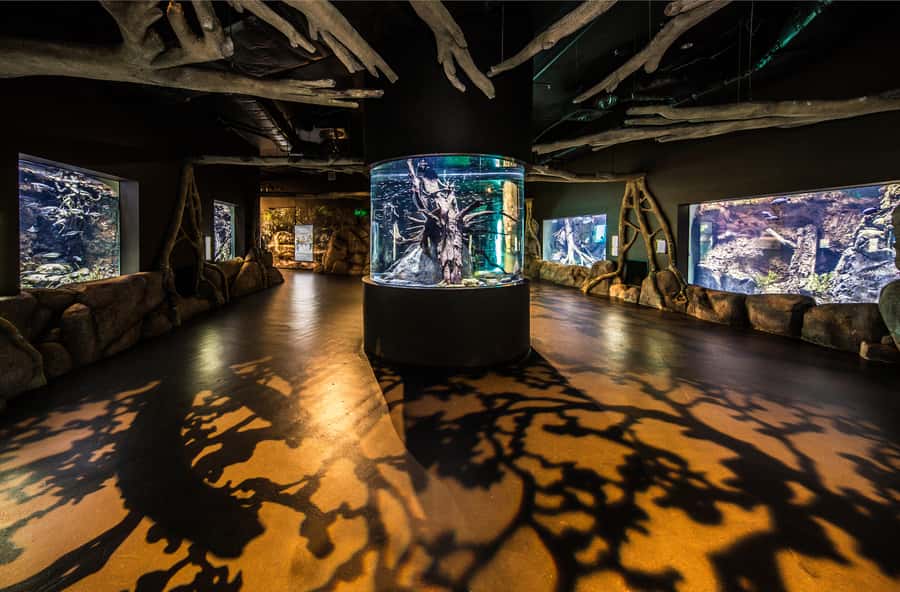
Your time starts with entry into the Cairns Aquarium. From there, you explore the aquarium’s tropical North Queensland habitats, including freshwater rivers, mangroves, the Great Barrier Reef, and the Coral Sea.
I like this approach because it keeps the story logical. Freshwater and mangrove life teach one set of survival strategies, while reef and open-water species teach another. Even if you know very little about marine ecosystems, the guide framing makes it easier to connect what you’re seeing with why it matters.
You’ll also learn about unique and endemic species tied to each ecosystem. That’s the kind of detail you don’t get from a generic aquarium visit, and it’s a big part of why the tour format works.
The private behind-the-scenes tour: quarantine and food prep, explained clearly
After your aquarium exploring time, one of Cairns Aquarium’s wildlife educators brings you into the private behind-the-scenes portion. This is where the tour earns its keep.
You’ll get to see two specifically mentioned areas:
- the quarantine section
- the food preparation room
Quarantine is a practical concept that most visitors never get to witness. Seeing it in person helps you understand that aquariums aren’t just display spaces—they’re systems built around health checks and safe transitions for animals.
The food preparation room adds another layer. You learn that feeding isn’t random or simple; it’s part of a routine that supports diets for different species. If you care about animal welfare, this section tends to hit harder than the public exhibits.
Hand-feeding cownose stingrays: the main event and the key rule
Next comes the highlight everyone talks about: an exclusive hand-feeding session of the cownose stingrays. This is the moment where the tour shifts from observer mode to active participation.
A few points matter for planning:
- It’s included as hand feed rays
- It’s guided by aquarium educators
- There’s a hard age rule: children under 12 aren’t permitted to feed the cownose stingrays, and they’ll receive a souvenir gift instead
That age restriction is the main drawback to consider if you’re traveling with younger kids. If your kids are old enough to participate, this becomes a standout experience because you’re learning while you’re feeding, not after the fact.
Even if you’re not the type who usually touches wildlife, a guided hand-feeding moment can be surprisingly educational. The educator framing helps you focus on responsible interaction and what the animals are doing, rather than treating it like a stunt.
River Monsters exhibit: feeding giant freshwater rays and barramundi
After stingrays, you head to the River Monsters exhibit for another feeding experience. Here, you’ll scatter feed the giant freshwater rays and barramundi.
This second feeding session matters because it’s not just repeating the same act. It’s a different set of species and a different style of habitat story—freshwater versus the coastal and reef-linked context earlier in the visit.
The word choice here is important: the tour doesn’t say you’ll just watch. You’ll be actively scattering feed, which means you’ll feel the connection between feeding behavior and the animal’s natural environment. If you like experiences with direct participation, this is one of the best ways to do it while staying within the aquarium’s controlled setting.


Turtle Hospital: seeing rescue and rehabilitation, not just exhibits
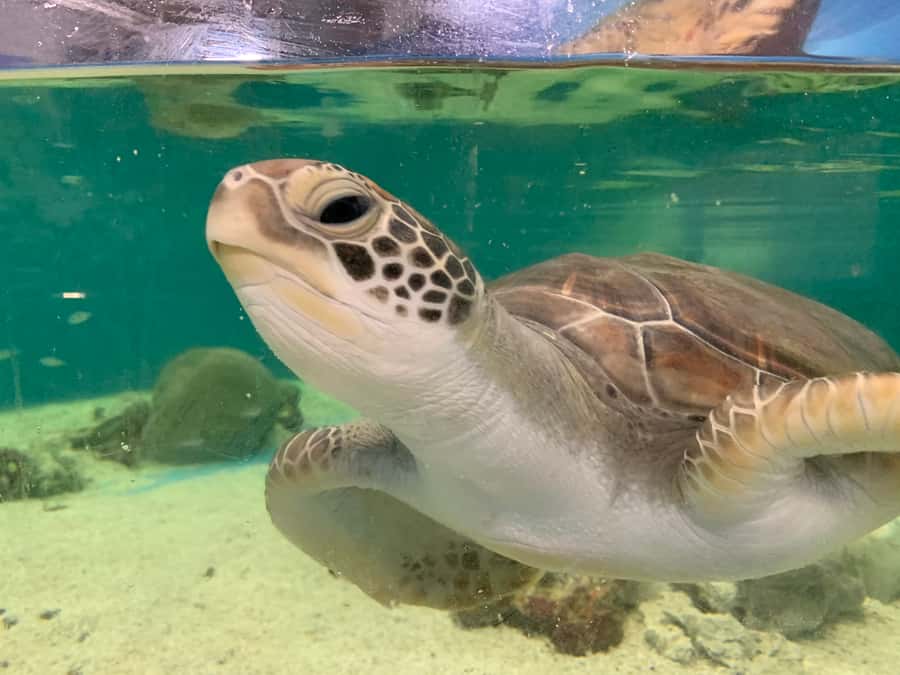
Your final stop is the Turtle Hospital, where you see and learn about rescued sea turtles and how rehabilitation works.
This part gives the tour a stronger emotional arc. Aquariums show marine life, but rehabilitation shows marine life that’s been impacted—and the effort required to help it recover. It’s also where your earlier lessons connect to real-world outcomes. You’re reminded that marine care isn’t only about keeping animals alive in tanks; it’s also about supporting recovery after rescue.
If you’re the kind of person who appreciates science with a human purpose, this is the section that often lingers. Even without technical details, the shift in focus makes the whole 3 hours feel complete.
Price and value: is $211 per person worth it?
At $211 per person for about 3 hours, this tour sits in the “special experience” category, not the casual admission-and-stroll category. So the question isn’t whether it’s expensive. The question is whether the included parts justify the price.
Here’s what you do get included:
- Entry into Cairns Aquarium
- A private guided behind-the-scenes tour
- Hand feeding experiences (cownose stingrays plus ray and barramundi feeding)
You don’t get hotel pickup or food and drink, so you’ll want to budget for that separately if you need it. But the core value is that the tour includes time and access that regular visitors typically won’t have.
I think it’s worth it if you care about the how, not just the what. The quarantine and food preparation access plus feeding time is the combo that pushes this above a basic aquarium ticket.
If your main goal is casual sightseeing with minimal extra cost, you’d likely feel the price pinch. But if you want a guided, hands-on learning format in a private group, the structure makes the price feel more fair.
Timing, days, and what that means for your schedule
This experience runs Monday to Friday and lasts 3 hours. It’s also a private group, in English, and it says you can check availability for starting times.
For planning, that matters in two ways:
- You’ll want to match it to your Cairns itinerary on a weekday.
- Because it’s 3 hours, you should schedule it where you can stay flexible and not rush straight into a long afternoon plan.
Also, you can skip the ticket line, which helps when you’re trying to keep momentum. Nobody wants to lose time at entry when the real value is inside.
What to bring (and what to skip)
The requirement is simple: bring comfortable shoes.
That’s not just a throwaway line. Feeding sessions and guided walking mean you’ll likely be on your feet. If you’re staying in Cairns and doing other activities the same day, pack shoes you can stand in without complaining by hour two.
And since no food or drink is included, plan to eat beforehand or factor in a stop after. This is especially important if you’re the sort who gets hungry fast during tours.
Who this private Cairns Marine Life Encounter is best for
This tour makes the most sense if you fit one of these groups:
- You want a hands-on animal experience that’s guided and rule-based
- You like animal care topics, especially quarantine and food preparation
- You’re drawn to conservation work and want to see sea turtle rehabilitation up close
- You prefer a private group format instead of sharing the educator’s attention with strangers
Families should plan carefully because children under 12 can’t feed the cownose stingrays. That doesn’t make the trip pointless for younger kids—it just changes what they can actively participate in.
If you’re traveling solo or as a couple, private often feels like a sweet spot: you get more attention and fewer time-wasting waits. If you’re with a larger group, you might still enjoy it, but you’d need to confirm how private group details are handled for your party.
Should you book Cairns Marine Life Encounter?
I’d book this tour if you want an aquarium visit that goes beyond looking. The private behind-the-scenes access plus the two feeding experiences give you an active, guided kind of learning that’s hard to replicate with a standard ticket.
Skip it—or think twice—if you mainly want a budget day of casual sightseeing. At $211 per person, you’re paying for access, teaching, and hand-feeding time, plus you’ll still need to handle meals and get yourself there since hotel pickup and food aren’t included.
If your schedule allows it (Monday to Friday) and you’re okay with the under-12 stingray feeding rule, this is a strong choice for people who love animals and care how they’re cared for.
FAQ
How long is the Cairns Aquarium Marine Life Encounter?
The tour duration is 3 hours.
Where does the tour take place?
It takes place in Queensland, Australia, at Cairns Aquarium with a visit to the Turtle Hospital.
What does the tour cost?
The price is $211 per person.
Is this a private tour?
Yes, it’s listed as a private group with a live tour guide in English.
Is hotel pickup included?
No, hotel pick up is not included.
Is food or drink included?
No, no food or drink is included.
What is included in the ticket?
Included items are entry into Cairns Aquarium, a private guided behind-the-scenes tour, and hand feed rays.
Can children under 12 feed the cownose stingrays?
Children under 12 are not permitted to feed the cownose stingrays, and a souvenir gift is substituted.
What days is the experience available?
This experience is available Monday to Friday.
Is there free cancellation?
Yes, you can cancel up to 24 hours in advance for a full refund.