REVIEW · CAIRNS
Cairns: Night at the Aquarium Guided Tour
Book on GetYourGuide →Operated by Cairns Aquarium · Bookable on GetYourGuide
Night predators make the aquarium feel real at last. This exclusive after-hours Cairns Aquarium tour shows the Great Barrier Reef world after dark, with glowing corals and reef fish that act totally different once the lights change.
What I liked most is the way the Wildlife Educator runs the show. Guides such as Georgie and Charly (and others like Daniel, Calvin, and Charly mentioned in real experiences) keep it lively with clear explanations and story-style teaching that actually holds your attention.
One drawback to consider is pacing. A few people felt it could feel rushed, and if you end up with a row that includes kids, you may get occasional window-blocking moments.
In This Review
- Key things that make this tour worth your time
- The Big Idea: Great Barrier Reef Life After Dark
- Inside the 10-Ecosystem Night Walk at Cairns Aquarium
- Night Coral Display: What Changes When the Lights Go Low
- Face-to-Face Predator Time: Sharks, Rays, Groupers, and More
- Dundee’s Restaurant Dinner: Reef-Themed Calm After the Tour
- Your Wildlife Educator: Daniel, Georgie, Calvin, and Charly’s Impact
- How Much Is $60 Worth for 2 Hours of Aquarium Night Life?
- Group Size, Pace, and the Kid-Window Reality
- Practical Tips for Best Views and Photos in Low Light
- Who This Tour Fits Best (and Who Should Think Twice)
- Should You Book Night at the Aquarium Guided Tour?
- FAQ
- Where does the tour start?
- How long is the Night at the Aquarium experience?
- Is this an after-hours aquarium entry?
- What does the Wildlife Educator guide you through?
- Do you see a night coral display?
- Can you see sharks and rays up close?
- Is dinner included, and where is it?
- Is the tour in English, and is it wheelchair accessible?
- Is free cancellation available, and can I reserve without paying now?
Key things that make this tour worth your time
- After-hours atmosphere: Less day-crowd noise, more calm, low-light viewing.
- 10 tropical ecosystems, one route: Rivers to reef, plus rainforest and mangroves, all in a guided sequence.
- Night coral display: You see how lighting changes animal behavior and how coral can look in a different way.
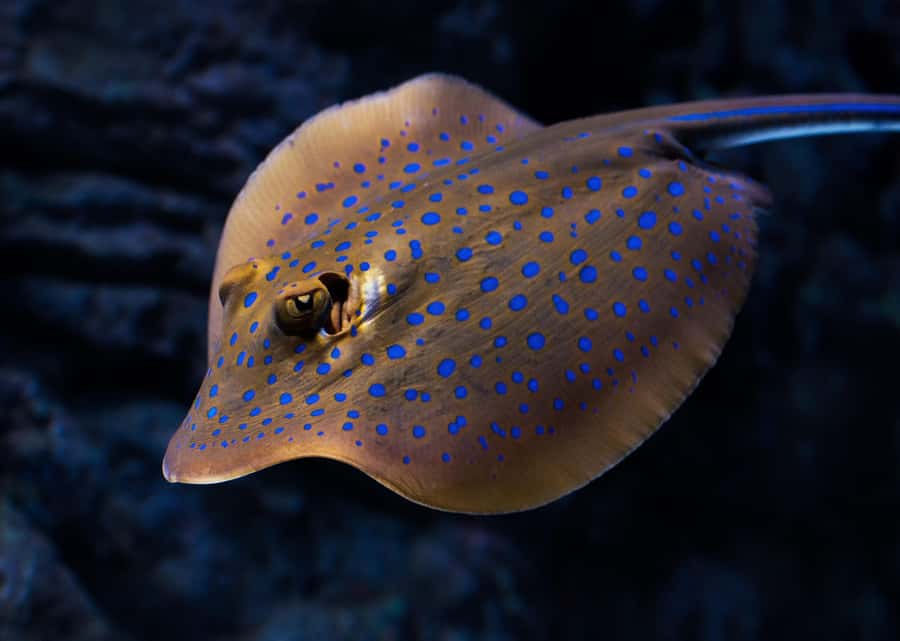
- Face-to-face with top predators: Sharks, rays, groupers, and other Coral Sea night hunters.
- A real educator-led format: Storytelling that helps you understand what you’re seeing, not just look at tanks.
The Big Idea: Great Barrier Reef Life After Dark
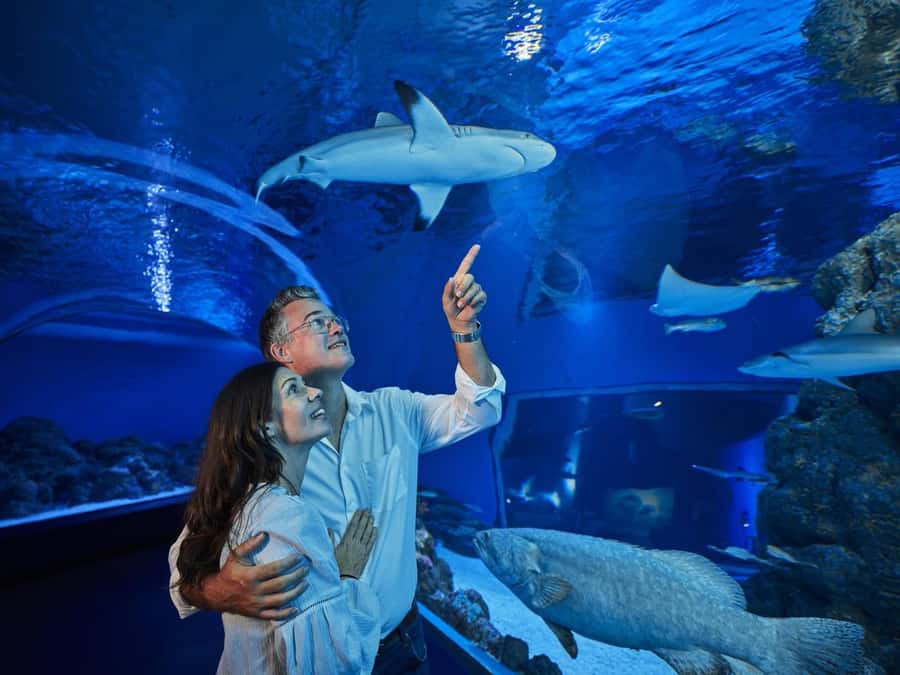
Daytime aquarium visits are fun, but they can feel like watching the world on pause. This night tour flips the script. You’re stepping into a setting built around nocturnal behavior, when animals move, feed, and hide differently than they do under bright lights.
In Cairns, that matters because the region’s life is tied to cycles. As the sun goes down, the aquarium’s exhibits mimic that shift—corals show up differently, colorful reef fish often look like they’re settling into shelter, and nocturnal predators start their routine. It’s not just about seeing animals. It’s about seeing how and why they act the way they do at night.
I also like that this tour doesn’t pretend the ocean is the only story. Coastal forests stir too—so you get a sense of how reptiles, amphibians, and insects fit into the same night-time ecosystem rhythm.
You can also read our reviews of more guided tours in Cairns

Inside the 10-Ecosystem Night Walk at Cairns Aquarium
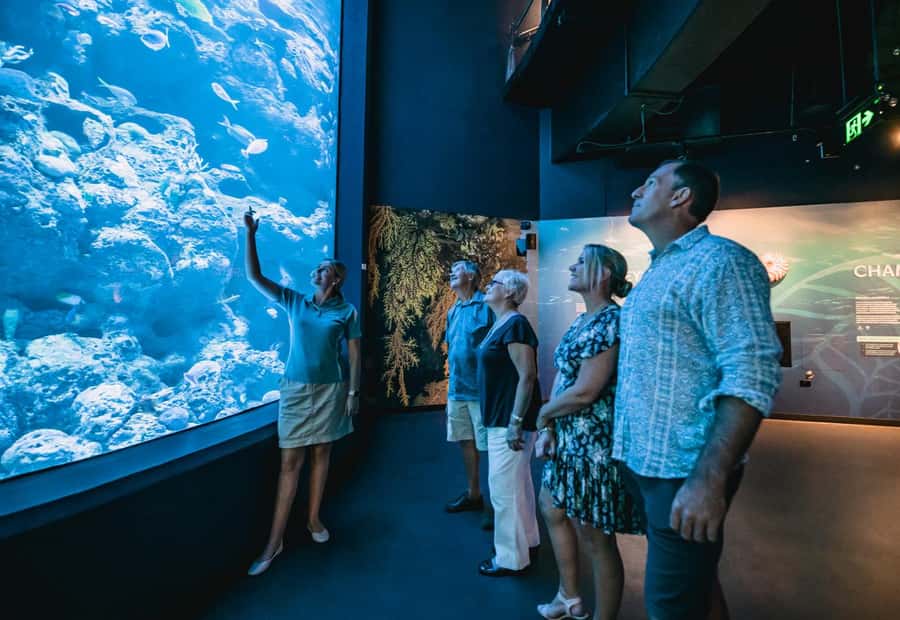
Your night starts at Cairns Aquarium, where the guided portion runs about 1.5 hours. The format is designed to take you through 10 tropical ecosystems—from rivers to the reef, plus rainforest, mangroves, and the Coral Sea.
Here’s the practical value: moving through ecosystems in sequence helps your brain stop treating each tank as a separate curiosity. You start building a map of how water and habitat connect, and why an animal that belongs in one zone wouldn’t make sense in another.
In the rivers-to-reef part of the route, you’ll get the feeling of “downstream to offshore.” In the mangroves and rainforest stops, the focus shifts to night behavior—what hides, what moves, and what you can spot when you know what to look for. The Coral Sea section is where the energy spikes, because this is where the tour focuses on major night predators like sharks and rays.
One note on expectations: you’re walking through multiple themed spaces rather than spending a long time parked at a single display. If you like to linger, you may want to plan extra time on your own before or after (and a later photo session).
Night Coral Display: What Changes When the Lights Go Low
A standout included feature is the night coral display. Coral can look surprisingly different when it’s not being shown as a daytime centerpiece. In a dimmer, night-style setup, you get a better sense of how lighting and animal activity connect.
Why this matters for you: you’ll likely notice your perception shift. During the day, your eyes grab color first. At night, you start noticing patterns—where animals rest, how they position themselves, and what seems active versus what’s conserving energy. That makes the whole evening feel more like a living system than a museum of glass boxes.
Also, keep in mind that night conditions can be challenging for photos. Glass reflections and low light can compete with your camera settings. My advice is simple: prioritize seeing first, then take photos when you’ve found a clear angle.
Face-to-Face Predator Time: Sharks, Rays, Groupers, and More
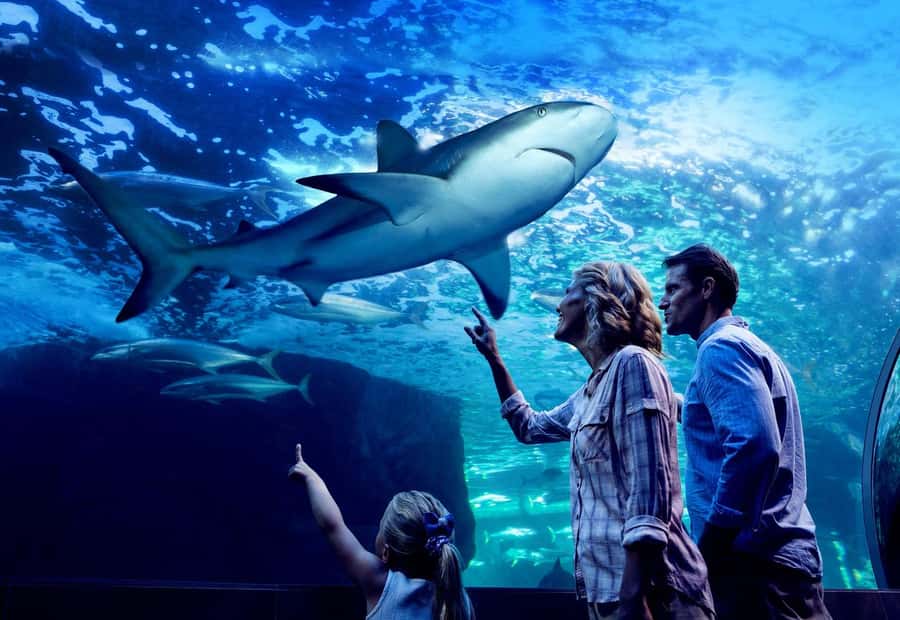
The tour is built around one clear payoff: you get face-to-face moments with the Coral Sea’s largest night-time predators. That includes sharks, rays, groupers, and more.
This is where the night format becomes more than a theme. At night, predators are supposed to be on the move—so the displays you’re shown are selected to match that story. The result is that you’re not just looking at animals. You’re watching behavior tied to a hunting timeline.
A practical way to enjoy this section: slow down your expectations. You may not see constant motion from every animal on every stop. The trick is to listen to the educator’s cues about what’s normal to observe at night, then watch long enough to catch the moment you need.
If you’re hoping for the “wow, I can’t believe that’s right there” feeling, this is the part most likely to deliver. It’s also the piece that shows up again and again in high ratings—especially around sharks and rays.
Dundee’s Restaurant Dinner: Reef-Themed Calm After the Tour

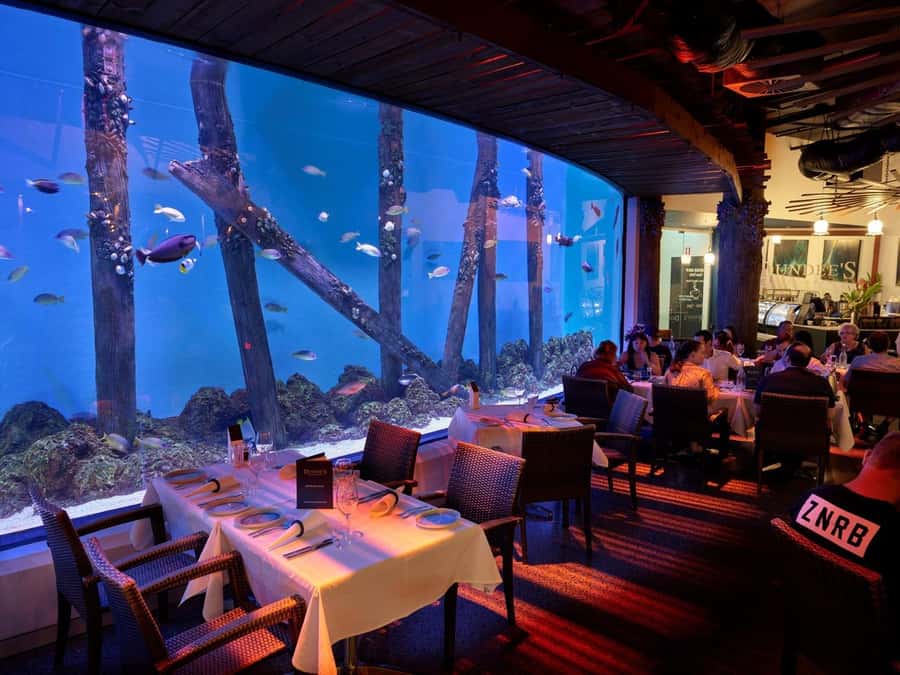
The experience doesn’t end when the aquarium walk does. You can complete your evening at Dundee’s Restaurant, with a dining experience matched to the sea life backdrop.
What I like about pairing dinner with this kind of activity is that it gives your brain time to settle. After you’ve been scanning tanks for nocturnal activity, sitting down in a setting built around the same theme helps everything click. You’re not rushing to the next thing—you’re absorbing what you just learned.
Timing can vary depending on your start time and whether you’re doing the dinner portion. The itinerary also indicates the dinner pairing can extend the evening to about 2.5 hours total.
If you have a sensitive stomach or you’re prone to motion discomfort, plan accordingly. A long guided walk plus dim lighting can be a bit tiring—so choose a meal pace that feels comfortable.
You can also read our reviews of more evening experiences in Cairns




Your Wildlife Educator: Daniel, Georgie, Calvin, and Charly’s Impact
This is one of those tours where the guide really changes the whole experience. The strongest praise you’ll see centers on education style: clear explanations, storytelling, and good crowd control.
From the guides named in real experiences, I’d focus on a few traits you should actively look for:
- Story-based explanations (Georgie and Charly are called out for passion and engagement)
- Clarity (Daniel is specifically mentioned as informative)
- Keeping the group flowing (Calvin is noted for crowd management)
Why that matters to you: aquariums can become a blur if you’re just reacting to what you see. A good educator helps you connect the behavior—why animals are out or hiding—to the habitat type you’re standing in. It also keeps you from missing key exhibits while the group repositions.
If you tend to lose track in busy spaces, choose a tour slot where you can stay close to the main path. That’s the best way to avoid ending up stuck behind someone taller, especially during the face-to-face predator sections.
How Much Is $60 Worth for 2 Hours of Aquarium Night Life?
At $60 per person for about 2 hours, the value hinges on what you get beyond a basic aquarium visit. Here’s the key point: this is an exclusive after-hours experience with a guided Wildlife Educator and an intentional route through 10 ecosystems.
You’re paying for three things:
- Time at the aquarium when it’s calmer, which makes viewing feel more relaxed.
- Guided interpretation, which turns “I saw tanks” into “I understand what that behavior means.”
- Higher-impact exhibits, especially the face-to-face predator focus and the night coral display.
If you enjoy animal behavior and you like learning in a structured way, $60 can feel fair, even like a bargain compared to spending a full day paying for entry and then trying to piece together the story on your own.
If you’re someone who only wants a quick look at big animals, you might feel the time is too tight. In that case, consider whether you’ll use the guide’s explanations—or whether you’ll mainly want the exhibits at your own speed.
Group Size, Pace, and the Kid-Window Reality

A practical heads-up: some comments point to a pace that can feel rushed. That’s common for guided night tours because the route depends on timing and you’re moving through multiple ecosystems.
If you hate feeling rushed, plan to be ready to move promptly at each stop. The best viewing comes from being in position when the educator cues the moment—not from trying to catch up mid-route.
There’s also the kid factor. One mention includes the idea that children can get in the way of windows. If you’re traveling without kids and want the clearest viewing, aim for a spot where you’re not forced to watch over shoulders. If you do travel with kids, the night setting is still a great fit—but bring realistic expectations about shared space.
Practical Tips for Best Views and Photos in Low Light

Night viewing is different. You’ll be in a low-light environment, with glass surfaces and moving groups. That’s not a problem, but it changes how you should approach it.
My go-to plan:
- Arrive ready to start and avoid standing around at the edges.
- Watch first, photograph second. If your focus splits, you’ll miss the best animal behavior.
- Stay close to the educator path so you don’t lose the timing of the face-to-face predator moments.
- Expect reflections. Move slightly for a clearer angle if the glass glare is ruining your shot.
Comfort matters too. Even though it’s only about 1.5 hours of guided movement, you’re standing in several places. Comfortable shoes help you keep your attention on the animals instead of your feet.
Who This Tour Fits Best (and Who Should Think Twice)
This tour fits you if you:
- enjoy animal behavior and want an explanation behind what you’re seeing
- like a structured route that keeps you from wandering aimlessly
- are curious about nocturnal life in a tropical setting, not just daytime highlights
- want a more calm-feeling aquarium visit thanks to the after-hours format
You might think twice if you:
- need a very slow pace with lots of time at each display
- don’t want to deal with group movement and repositioning
- hate low-light conditions for viewing or photos
If you’re the kind of person who loves planning experiences around a theme—night hunters, glowing corals, nocturnal rainforest activity—this is your match.
Should You Book Night at the Aquarium Guided Tour?
I’d book it if your idea of a great Cairns night includes learning something real and seeing the aquarium in a different mood. The exclusive after-hours timing, the route through 10 tropical ecosystems, the night coral display, and the emphasis on sharks, rays, and groupers make it more than a standard ticket.
I’d hold off if you’re only after a quick browse or if you strongly prefer long, unhurried viewing. In that case, you could still enjoy the aquarium, but this specific guided-night format might feel too structured.
If you do book, go in ready to watch closely, listen for the cues, and let the night theme do its job. This is the kind of experience where the best moments show up when you’re paying attention—not when you’re multitasking.
FAQ
Where does the tour start?
The tour starts at Cairns Aquarium.
How long is the Night at the Aquarium experience?
The guided night tour is about 1.5 hours. The overall evening can be longer when paired with dinner (the itinerary notes about 2.5 hours total).
Is this an after-hours aquarium entry?
Yes. The experience includes exclusive after-hours aquarium entry.
What does the Wildlife Educator guide you through?
You’re guided through 10 tropical ecosystems, from rivers to the reef, plus rainforest, mangroves, and the Coral Sea.
Do you see a night coral display?
Yes. A night coral display is included.
Can you see sharks and rays up close?
Yes. The tour includes the chance to come face to face with the Coral Sea’s largest night-time predators, including sharks, rays, groupers, and more.
Is dinner included, and where is it?
The experience can include dinner at Dundee’s Restaurant, with a dining experience matched to the sea life backdrop.
Is the tour in English, and is it wheelchair accessible?
The tour guide is English, and the experience is wheelchair accessible.
Is free cancellation available, and can I reserve without paying now?
Yes. You can cancel up to 24 hours in advance for a full refund, and you can reserve now & pay later.