REVIEW · QUEENSLAND
Coolangatta: 2 Hour Surf Experience on the Gold Coast
Book on GetYourGuide →Operated by Go Ride A Wave · Bookable on GetYourGuide
First time on a surfboard is a rush. I like how this lesson turns Coolangatta’s beginner waves into something you can actually understand and ride, and I really like the 2 hours of hands-on coaching that gets you from theory to pop-up. One possible drawback: it is harder than it looks, so plan on a few wipeouts and tired legs.
Coolangatta (also known as the Greenmount side) is a smart place to try surfing because the conditions are built for learning. You’ll start on the sand with safety and positioning, then head into waist-deep water to catch rolling waves with a soft-top board, a wetsuit or rash shirt, and sunscreen included.
In This Review
- Key things I’d bank on before you book
- Why Coolangatta/Greenmount works for your first lesson
- Meeting the Learn To Surf Truck overlooking Coolangatta Beach
- What’s included for $59: the value is the coaching time
- The first phase on sand: safety, positioning, and board control
- Into the water: waist-deep starts and first wave attempts
- The regroup on the beach: corrections that actually stick
- Second round in the surf: popping up and catching more waves
- The ocean side matters: what to expect from Coolangatta’s conditions
- What to bring (and what to plan for at the beach)
- Who should do this beginner surf lesson?
- Practical expectations: what the hardest part really is
- Booking, cancellations, and timing: keep it flexible
- Should you book this Coolangatta 2-hour surf experience?
- FAQ
- How long is the surf lesson?
- Where do I meet for the Coolangatta lesson?
- What’s included in the price?
- What should I bring?
- Do I need surfing experience?
- Is it suitable for children?
- What language are the instructors?
- Is there a cancellation policy?
- Is the activity wheelchair accessible?
Key things I’d bank on before you book
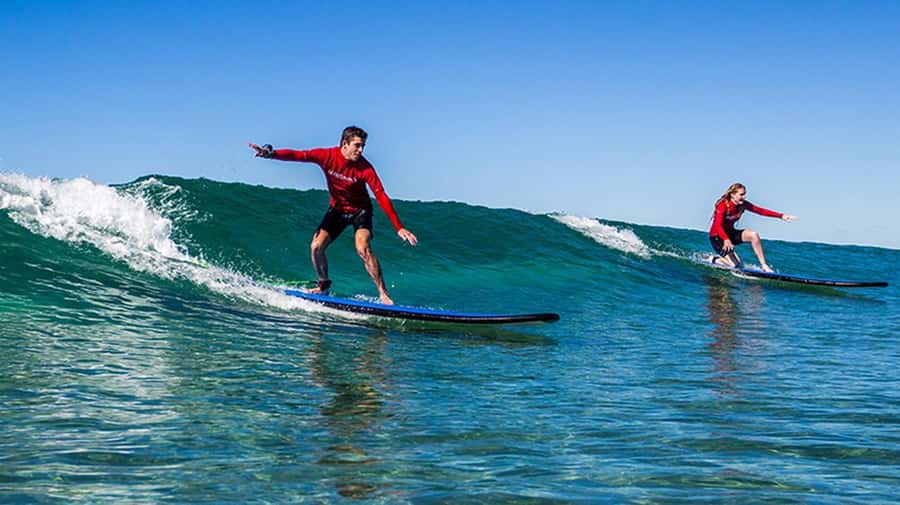
- Level 1 instruction focused on standing up fast, safely, and repeatably
- Soft-top board + waist-deep start that makes the first attempts less intimidating
- A beach regroup so you get corrections right where they matter
- Beginner-coast advantage at Coolangatta/Greenmount, where rolling waves are the point
- A small “get in the water” feel, with instructors named by past guests including Alex, Daniel, Blake, Arthur, Johnny, and Nick
Why Coolangatta/Greenmount works for your first lesson
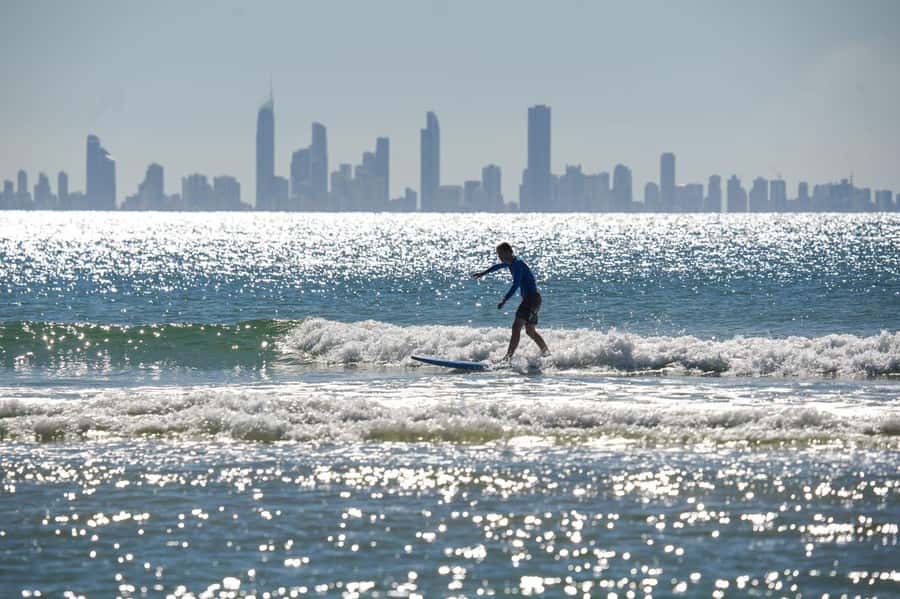
If you’re new to surfing, you don’t need a lecture about wave science. You need the right kind of water and the right kind of teaching.
Coolangatta is set up well for beginners. The waves tend to be rolling and learnable, which helps you practice the parts that normally feel impossible: paddling with purpose, getting your feet under you, and steering your board once you’re up. The goal isn’t to show off. It’s to leave feeling like surfing makes sense.
What makes this lesson feel “real” is how quickly it tries to connect skills to what you’re doing in the ocean. You’ll get safety and positioning on the beach, but the aim is practical board control—so you’re not just watching. You’re trying.
Also, the water here is warm enough that you’re not constantly fighting cold. That matters. When you can relax your breathing and keep your balance, you learn faster.
You can also read our reviews of more tours and experiences in Queensland.



Meeting the Learn To Surf Truck overlooking Coolangatta Beach
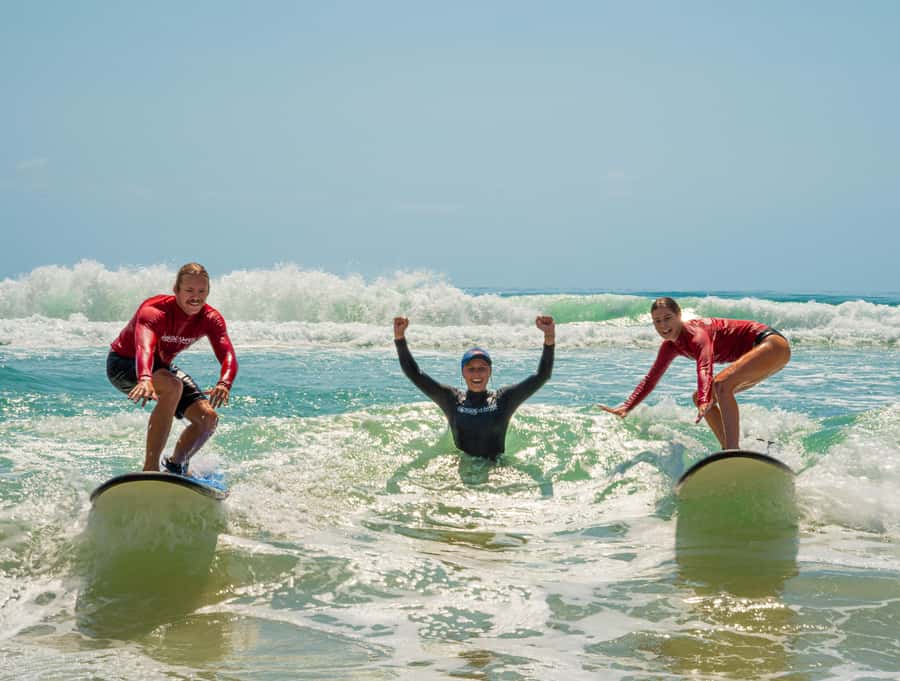
You’ll meet at the Learn To Surf Truck in the car park overlooking Coolangatta Beach, opposite the Coolangatta Rip Curl Surf Shop and Coolangatta McDonalds on Marine Parade (eastern end / right-hand side if you’re facing the ocean).
Show up 15 minutes early. That buffer is not “nice to have.” It’s how you get your rash shirt or wetsuit and your soft-top board sorted before the group hits the sand briefing. If you’re even a little late, you’ll feel rushed before you’ve even started.
Tip for finding the spot: anchor yourself on Marine Parade and those landmarks. Once you see the Rip Curl shop and McDonalds nearby, the rest is easy.
What’s included for $59: the value is the coaching time
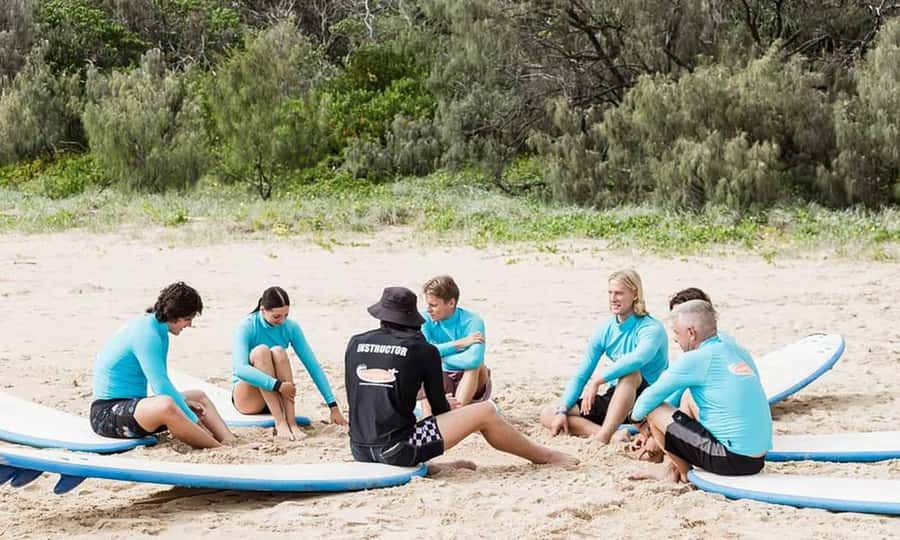
At $59 per person, you’re paying mainly for instruction and time in the water—not for fancy add-ons.
Here’s what you get:
- Rash shirt or wetsuit
- Soft-top surfboard
- 2 hours of instruction from a Level 1 qualified surf instructor
- Sunscreen
What you don’t get:
- Food or drinks
- Bathers or towel
That pricing makes sense if you treat it like a skills class. A surfboard you can stand on, a board size that fits beginners, and a teacher who can correct your pop-up in the moment is the difference between progress and frustration. Soft-top boards are designed to help you learn balance and recovery. They’re not “less surf.” They’re the smart starter tool.
One more practical note: no alcohol or drugs. The ocean doesn’t need added risk.
The first phase on sand: safety, positioning, and board control
Your session starts on the sand with a safety briefing and essential fundamentals. This is where the lesson earns its keep.
You’ll cover how to stay safe around waves and other surfers, plus where to position yourself on the board. You’ll also get guidance on board control basics—how to manage the board rather than getting dragged around by it.
This is the part you might think is boring. It’s not. It’s what keeps you from spending the whole lesson guessing.
From past experiences shared by guests, one repeated theme is that instructors take time to explain the theory in plain language—especially how to stand up and what you should be feeling as you do it. You may even hear familiar instructor names like Alex, Daniel, or Blake when people talk about how they got their first successful rides.
Into the water: waist-deep starts and first wave attempts
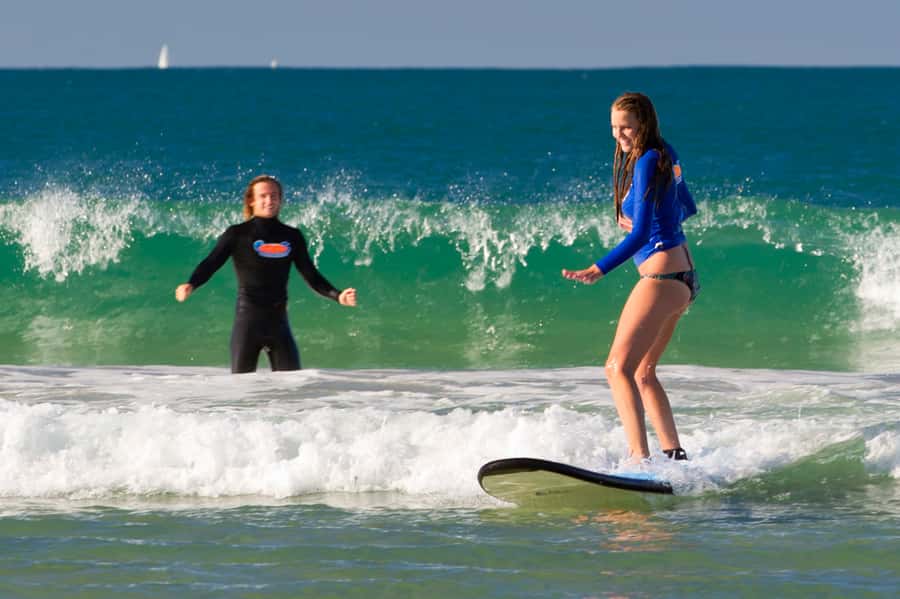
Once the beach part is done, you head into the water. The plan is to start with confidence: you’ll wade in to waist-deep depth so you can feel the board under you and get comfortable balancing.
Then you begin catching beginner waves. This is where surfing becomes addictive. Even when it’s messy, the moment you stand up and feel the board line up with the wave, everything clicks.
Also, rolling waves mean you can practice without getting immediately overwhelmed. You’re learning timing—when to paddle, when to pop up, and when to drop back into position if it doesn’t work.
If you’re wondering what it feels like, don’t romanticize it. It feels like effort plus sudden movement plus surprise. Expect fatigue and a few falls. That’s normal here and part of the learning curve.





The regroup on the beach: corrections that actually stick
After you’ve had a few rides, you regroup on the beach. This break is short, but it matters.
You’ll get expert tips on standing up and riding with better style. In real terms, this is where you’ll likely fix one of the biggest beginner issues:
- feet not landing under your body
- popping up too late
- looking down instead of looking where you’re going
- paddling in the wrong rhythm
A regroup also prevents a common beginner trap: repeating the same mistake again and again without realizing it. When you get feedback between sets, you can try a new approach right away.
Second round in the surf: popping up and catching more waves
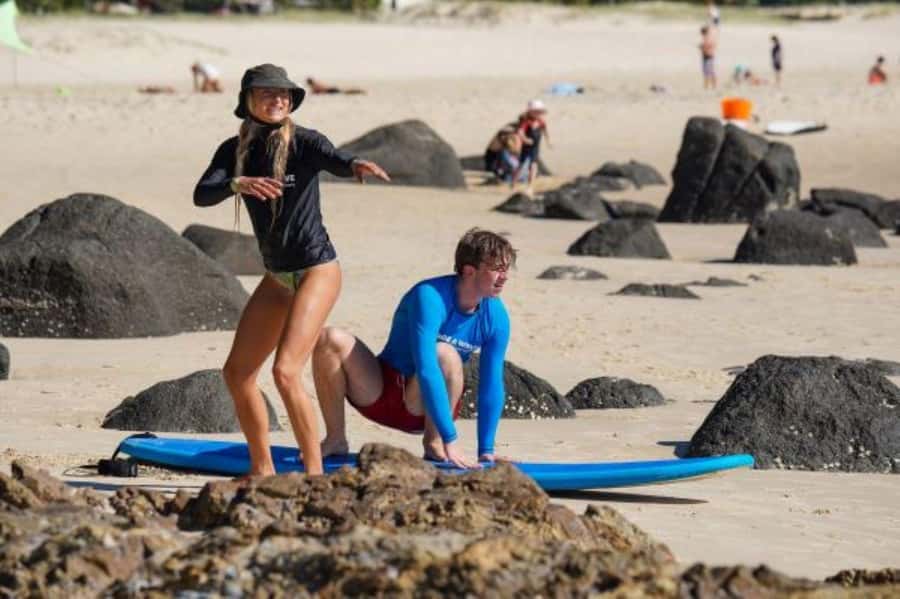
Back in the water, it’s the real fun. Now you focus on catching waves, popping up, and gliding across the surface.
This part is about repetition with guidance. You’re not just trying to catch one wave. You’re practicing the pattern so it becomes more automatic: paddle, set, pop, balance, steer.
If you’re learning in a small group, you may feel extra attention, which helps a lot with timing. One guest even noted how they appreciated a smaller group size, which can make instructions feel more personal.
And if you’re at the stage where you can finally stand, the lesson often shifts from scary to thrilling fast. People talk about that first moment of getting up on the board as the highlight—and for good reason. It’s the proof that the process works.
The ocean side matters: what to expect from Coolangatta’s conditions
This lesson is built around the beginner reality: you learn best when conditions give you chances.
That means you’ll likely spend a portion of the session catching gentler waves rather than chasing harder breaks. Coolangatta/Greenmount is suited for that. Rolling waves give you room to focus on technique and not just survival.
You’ll also get a feel for water dynamics—how your board responds once you’re standing, and how you have to stay balanced as the wave moves under you. Surfing teaches patience in the most physical way possible.
What to bring (and what to plan for at the beach)
You only need to bring water. Everything else essential for surfing is handled by the experience: rash shirt or wetsuit, soft-top board, and sunscreen.
But here are two practical thoughts so you don’t get caught off guard:
- You’ll want to be ready to change quickly if you feel like the wetsuit is snug or the sand is sandy.
- You’ll be in the sun, even when you think you’re not. Sunscreen is included, but it’s still smart to bring a little extra for after, if you burn easily.
Since food isn’t included, plan a snack or meal nearby before or after. The whole point is keeping your energy up so you can stay present while you learn.
Who should do this beginner surf lesson?
This is a clear fit for first-timers and anyone who wants structured help. If you’ve tried to surf on your own and got stuck at the stand-up stage, this format helps because it breaks the process into teachable chunks.
It’s also a good choice if you want more than a quick taste. The 2 hours of instruction are enough to feel progress, not just “I fell a lot.”
A couple limits to know:
- The activity is not recommended for children under 8
- Children under 9 must have a parent who is not participating who can assist in the water
- It’s not suitable for wheelchair users
If you’re traveling with kids and they’re old enough, you should feel encouraged—one guest mentioned their 10-year-old standing up and surfing by the end, which is exactly what you want to hear from a beginner lesson.
Practical expectations: what the hardest part really is
The hardest part is usually not paddling. It’s timing and balance under pressure—plus the fatigue that shows up right when you’re trying to do something new.
Go in with a simple mindset: try, fail, adjust. The instruction is meant to be used right away, not saved for later.
And yes, it can be physically challenging. One person put it perfectly: it’s harder than it looks. That’s your cue to wear the right attitude, drink your water, and keep expectations realistic.
If you do that, you’ll get the best payoff: feeling your first successful rides and leaving with a sense of what to practice next time.
Booking, cancellations, and timing: keep it flexible
You’ll see a duration listed as 2 to 6 hours depending on the starting time, even though you get 2 hours of instruction. That makes sense because surf lessons include setup, briefings, and time in and out of the water.
It also helps that cancellation is offered with a full refund if you cancel far enough in advance, so you can adjust around weather and ocean conditions. If you like flexible travel planning, the reserve-and-pay-later option is a plus.
For most people, the bigger timing tip is simple: give yourself extra time on the beach so you’re not rushing your first wetsuit moments.
Should you book this Coolangatta 2-hour surf experience?
Book it if:
- you’re a beginner who wants real coaching, not just board rental
- you want to learn safety and positioning along with the pop-up
- you like the idea of practicing in beginner-friendly waves at Coolangatta/Greenmount
- you’re comfortable with the fact that you’ll work hard and likely wipe out a few times
Skip it (or consider a different format) if:
- you need full accessibility support (wheelchair users aren’t suitable for this activity)
- you’re expecting a calm, easy stroll in the surf—this is a skill-building workout
- you’re traveling with a child under the recommended age and you can’t provide in-water assistance
If you want a first surf lesson that gives you more than a photo moment, this one has the right mix: beginner conditions, soft-top gear, and instructors who focus on standing up and catching your own waves. That’s the recipe for leaving the Gold Coast with stoke instead of just saltwater.
FAQ
How long is the surf lesson?
The instruction is 2 hours, and the total experience can run 2 to 6 hours depending on the starting time.
Where do I meet for the Coolangatta lesson?
Meet at the Learn To Surf Truck in the car park overlooking Coolangatta Beach, opposite the Coolangatta Rip Curl Surf Shop and Coolangatta McDonalds on Marine Parade.
What’s included in the price?
Included are a long-sleeved rash shirt or wetsuit, a soft-top surfboard, 2 hours of instruction by a Level 1 qualified surf instructor, and sunscreen.
What should I bring?
Bring water. Bathers or a towel are not included.
Do I need surfing experience?
No experience is required. The lesson is designed for beginners and includes safety, positioning, and board control.
Is it suitable for children?
It’s not recommended for children under 8. Children under 9 must have a parent (not in the lesson) who can assist in the water.
What language are the instructors?
Instruction is available in English.
Is there a cancellation policy?
You can cancel up to 24 hours in advance for a full refund.
Is the activity wheelchair accessible?
No, it is not suitable for wheelchair users.