REVIEW · MELBOURNE
English Melbourne Walking Tour
Book on Viator →Operated by Free Tour Melbourne · Bookable on Viator
Melbourne tells stories in tiny corners. This 2-hour CBD walk starts at Federation Square and threads through lanes, arcades, and big-name landmarks with a guide who explains what you’re seeing and why it matters, not just what it is.
You’ll cover a tight loop of recognizable stops like Flinders Street Station and the Royal Arcades, then pivot into the messier, more Melbourne bits like Hosier Lane, Degraves Street, and Chinatown.
I love two things most: the guide-led pace (it never drags), and the humor + local trivia that turns “a building” into something you remember. If you end up with guides such as Frank, Toby, or Sam, you’ll notice they speak clearly, keep the group moving, and answer questions instead of blasting through a script.
One possible drawback: this is a walking tour through the central city, so you’ll want comfortable shoes and a plan for weather. The route is mostly outdoors, and the stops still involve getting from place to place.
In This Review
- Key highlights you’ll actually feel on the walk
- Getting Oriented Fast: Federation Square to the CBD Loop
- Stop 1: Finding the Orange Umbrella at Federation Square
- St Paul’s Cathedral: A Quick Look Inside With Time to Notice
- Flinders Street Station: The Landmark That Anchors the Whole City Mood
- Hosier Lane: Graffiti as Art, Story, and Street Language
- Degraves Street: The European-Style Lane and What Sits Under It
- The Arcades: Block Arcade and Royal Arcade for Architecture Lovers
- Block Arcade
- Royal Arcade
- Bourke Street Mall: The City’s Central Spine for Shopping and Movement
- Chinatown: From Past Purpose to Present-Day Community
- State Library Victoria: A Must-See You’ll Want to Come Back To
- Old Melbourne Gaol: Spooky Past Without Turning Into a Scare Fest
- Melbourne City Baths: The Old Building Still Playing a Role
- Queen Victoria Market Finish: A Strong End Point for Food and Another Walk
- Price and Value: Why $17.93 Often Feels Like a Bargain
- Pacing, Guides, and the Style That Makes It Fun
- Who This Tour Fits Best (And Who Might Want Something Different)
- Should You Book This Melbourne Walking Tour?
- FAQ
- How long is the English Melbourne Walking Tour?
- Where does the tour start and what’s the meeting point?
- Where does the tour finish?
- What time does the tour start?
- Is the tour fully guided or do I get any self-guided time?
- How big is the group?
- Do I need to pay for entry to the stops?
- Is the tour near public transportation?
- Is there a free cancellation option?
- Is a mobile ticket used?
Key highlights you’ll actually feel on the walk
- Small group (up to 20), so it’s easier to hear and ask questions.
- Federation Square to Queen Victoria Market gives you a strong orientation for your next days in Melbourne.
- Hosier Lane and Degraves Street show the city’s street-level creativity and the stories behind it.
- Royal Arcade and Block Arcade add a different side of Melbourne: shopping arcades with real character.
- St Paul’s Cathedral gets a short interior look, not just a quick photo stop.
- City Baths and Old Melbourne Gaol bring a slightly spooky edge to the middle of the tour.
Getting Oriented Fast: Federation Square to the CBD Loop
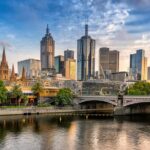
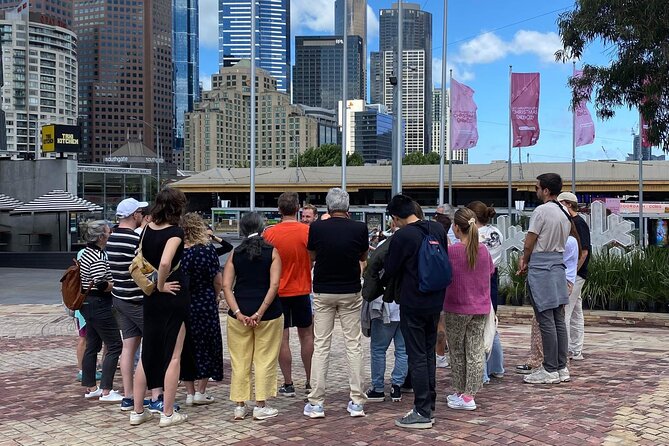
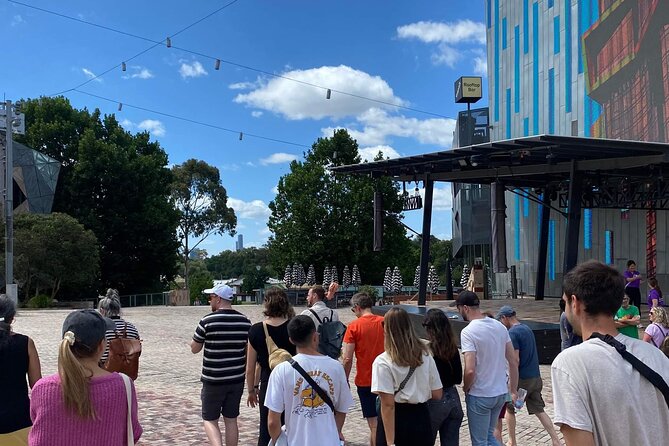
If you’re new to Melbourne’s CBD, this tour is a smart shortcut. Starting at Federation Square (look for the orange umbrella at the top of the stairs), you’re positioned where major streets and tram lines feed into the historic center. From there, the walk flows like a curated “walkable highlights” route, ending at Queen Victoria Market—perfect if you want to eat afterward.
The length is also friendly: about 2 hours. That matters, because a lot of city tours either run too long or feel rushed. Here, the timing is built around short stops that still give you context. You don’t have to wait around for long speeches; you get just enough to connect the dots, then you move.
You’ll also get a mobile ticket, which keeps things simple when you’re trying to stay light on your feet and not fiddle with paper. And since it’s near public transportation, you can top up your day easily before or after.
You can also read our reviews of more walking tours in Melbourne

Stop 1: Finding the Orange Umbrella at Federation Square
This start point is practical, and the tour makes it easy to join. You meet at 2 Swanston St, and the instructions are clear: search for the orange umbrella at the top of the stairs.
Federation Square is a good anchor because it sits right where Melbourne feels like it’s doing two things at once: civic space and busy city hub. Your guide uses that location to set the tone, so you’re not just walking from one landmark to the next. You’re learning how the CBD grew, where power and culture concentrated, and why the small lanes matter as much as the big buildings.
St Paul’s Cathedral: A Quick Look Inside With Time to Notice
St Paul’s Cathedral is the kind of stop that works best when someone gives you a mini-lesson first. You’ll get an overview of the church’s history and the immediate surroundings, then you’ll have a short self-guided window inside (about 3–4 minutes).
That self-guided moment is important. A guided tour sometimes turns into a conveyor belt of facts. Here, the brief independence gives you permission to look around—upward at the interior details, around at the space, and back out to the streets you just came from. You don’t need to be religious to enjoy this stop; it’s about architecture, scale, and the way Melbourne puts grand buildings next to everyday city life.
Flinders Street Station: The Landmark That Anchors the Whole City Mood
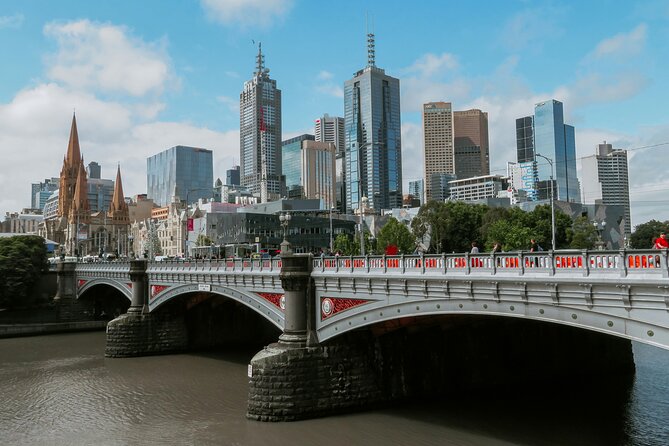
Next up is Flinders Street Station, one of those places you’ve seen in photos even if you’ve never been here. Your guide talks through the station’s history and why it became a defining image of Melbourne.
What you gain from a story-driven stop like this is perspective. When you understand the station’s role in movement and city identity, you stop treating it like a backdrop and start treating it like a centerpiece. And because the stop is short, you can still enjoy the feel of the square and streetscape without your legs getting tired.
Hosier Lane: Graffiti as Art, Story, and Street Language
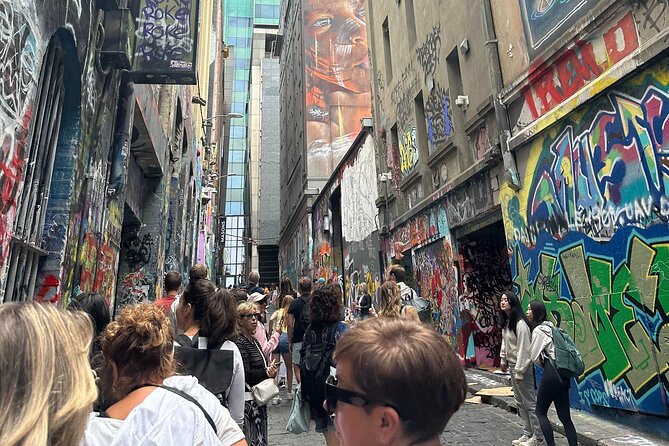
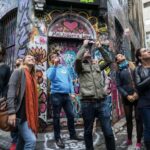
Then the tour shifts in a way that feels very Melbourne: Hosier Lane. The guide walks you through the lane and explains hidden details behind the famous street art scenes.
This is one of those stops where your eyes change. At ground level, you start noticing layers: style changes, different eras of work, and the way the lane becomes a living gallery. The key here isn’t art-school facts; it’s learning how Melbourne treats street art as part of city culture rather than something random.
If you like photography, this is a natural moment to pause. If you don’t, you’ll still get value, because the guide’s explanations give meaning to what’s on the walls and why people keep coming back.





Degraves Street: The European-Style Lane and What Sits Under It
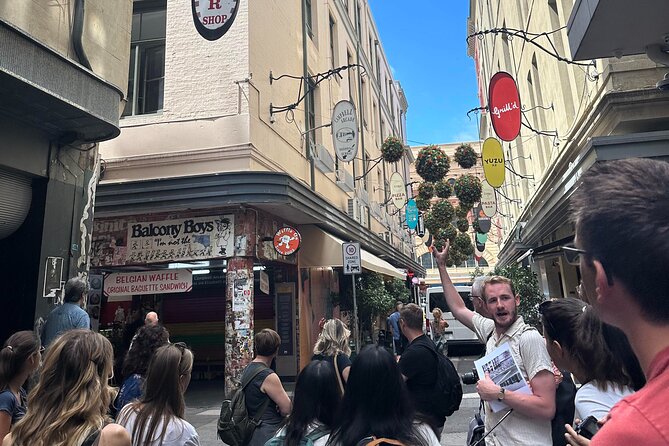
After Hosier Lane, you hit Degraves Street—a walking lane where the atmosphere feels like a small slice of Europe inside the CBD. Your guide points out the history beneath the street and explains why this corridor became such a go-to pedestrian spot.
This stop is less about “one specific landmark” and more about city texture. You learn how Melbourne’s lanes developed as shortcuts and gathering places, then how they transformed into places people linger. The value is practical: after the tour, you’ll know where to aim next time you want coffee, a walk, or a quick change of scenery without hopping trams.
The Arcades: Block Arcade and Royal Arcade for Architecture Lovers
Melbourne knows how to build shopping as an experience. The tour gives you two arcade stops, each with a different personality.
Block Arcade
At Block Arcade, you’ll step into one of Australia’s oldest arcades and hear the background behind its history and design. Even if you don’t plan to shop, arcades are worth seeing because they show how Melbourne wanted commerce to feel: covered, elegant, and very central.
Royal Arcade
Then comes Royal Arcade, Australia’s oldest arcade, where your guide explains the quirks and unique traits of the place. This stop tends to click for people who like details—materials, structure, and that mix of old-world design with modern city use.
Between the two arcades, you get a mini-lesson in how Melbourne’s CBD built personality. It’s not only about streets and squares; it’s also about the “in-between” spaces where people slow down.
Bourke Street Mall: The City’s Central Spine for Shopping and Movement
Bourke Street Mall is your next major street moment. Your guide explains why the mall matters to the city—how it became a center of Melbourne and a prominent shopping strip.
The practical takeaway here is mental mapping. After this stop, you’ll understand how Melbourne organizes foot traffic. You can orient yourself faster on your own because you’ll recognize the mall as a kind of backbone, with side streets branching into different neighborhoods and vibes.
And since the tour is paced in short segments, you won’t feel like you’re trudging through one long shopping corridor. You’ll get the story, then move on.
Chinatown: From Past Purpose to Present-Day Community
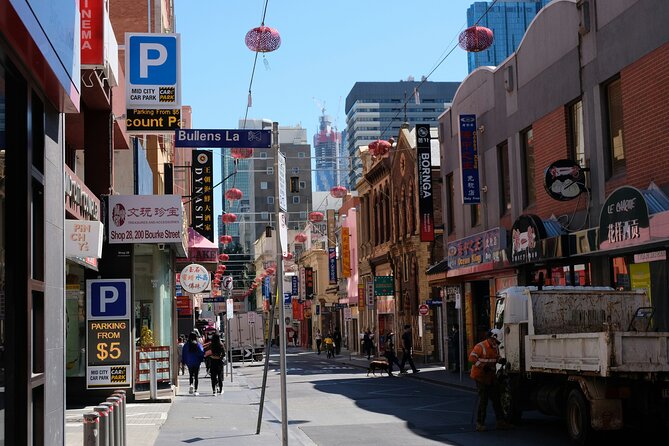
Next, you’ll walk into Chinatown, where your guide covers its historical significance and the ongoing relevance to Melbourne’s Chinese population.
This isn’t just a cultural stop for photos. It’s a city-building lesson. You see how migrant communities shaped the CBD over time, and how the area has continued to evolve while holding onto identity. If you’re planning future self-guided wandering, this part gives you direction on what to look for and what to ask about when you see shopfronts, signage, and streetscape changes.
State Library Victoria: A Must-See You’ll Want to Come Back To
Then it’s State Library Victoria, framed as a must-see. Your guide explains key features and what’s worth returning for.
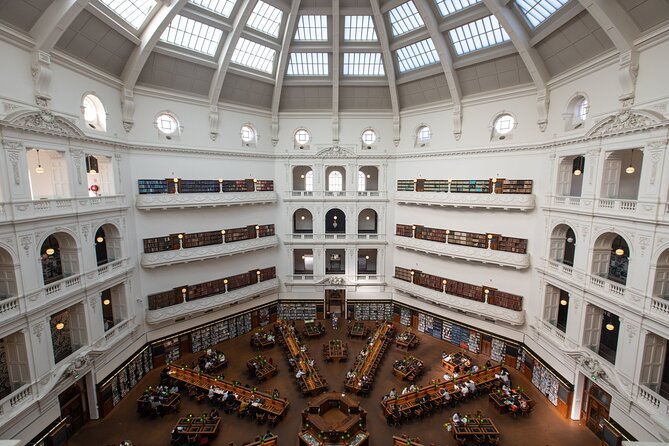
This is the stop where the tour often makes you want to extend your time in Melbourne. The idea is simple: you get a “why it matters” explanation during your short visit, and later you can explore properly at your own pace. If you like quiet spaces, research corners, or stunning public interiors, this is a great moment to keep in mind for a later afternoon.
Old Melbourne Gaol: Spooky Past Without Turning Into a Scare Fest
After the library, you get a darker turn: Old Melbourne Gaol. The tour treats it as a stop with a spooky, haunted past—built on mystery and intrigue.
Even if you’re not into ghost stories, gaols are fascinating because they tie architecture to human behavior: punishment, reform, and the way a city dealt with justice. The guide’s framing helps you see it as more than a creepy building. You learn the atmosphere, the history theme, and what makes it memorable.
Melbourne City Baths: The Old Building Still Playing a Role
Now you move to Melbourne City Baths, described as a beautiful old building surrounded by the modern city. Your guide connects its history to what’s still happening today.
This stop often surprises people. Baths can feel like a niche detail until you understand why this kind of public facility matters to urban life—community health, daily routine, and how the city served its residents. It’s also a visual break from the cathedral-and-lane rhythm, so your eyes reset before the final big destination.
Queen Victoria Market Finish: A Strong End Point for Food and Another Walk
The tour ends at Queen Victoria Market, at the corner of Elizabeth Street and Victoria Street.
This finish isn’t random. Markets are where stories and practicality collide: you can grab food, keep wandering, and let the day keep going without having to catch a bus right away. Your guide wraps up the walk by pointing you toward the market as a place to eat after, which is exactly what I want from a walking tour ending in a major public space.
If you still have energy after the tour, this is also a good moment to do a slow loop through stalls and people-watch. You’ve now seen the CBD’s highlights with context, so the market feels like a natural next chapter rather than just a place to pass through.
Price and Value: Why $17.93 Often Feels Like a Bargain
At $17.93 per person for a roughly 2-hour guided experience, the value depends on what you want from a city visit. If you’re looking for a deep, museum-style explanation, this isn’t that. But if you want orientation plus story-based context while you walk, the price is fair.
One smart detail in how this is set up is that the cost is tied to an average tip amount from pay-what-you-want versions of the same idea. Translation: it’s priced like a typical donation-based walking tour, but structured into a normal ticket. That often leads to the best kind of guide behavior—energetic, responsive, and focused on what matters to people on the ground.
And because the group size is kept to a maximum of 20, you’re less likely to feel lost in the back. The high ratings also line up with what you’d hope to get at this price: clear speaking, good pacing, and a mix of landmarks and everyday Melbourne.
Pacing, Guides, and the Style That Makes It Fun
The most repeated theme across guide performances here is that it’s informative without feeling heavy. Stops are timed, explanations are delivered with humor, and the pace keeps the walk feeling short—even though it’s a full CBD loop.
Guides like Frank, Toby, and Sam have a noticeable style in the way they handle the group: they keep their voice loud and easy to follow, answer questions, and sprinkle in local trivia that doesn’t feel like random facts. You also get suggestions for places to return to, including the State Library as a follow-up and nearby treats like ice cream.
That’s the real reason a tour like this works: it doesn’t just show you Melbourne. It helps you decide what to do next.
Who This Tour Fits Best (And Who Might Want Something Different)
This is a great fit if:
- You’re visiting Melbourne for the first time and want an efficient CBD overview.
- You enjoy stories tied to places, not just standalone photo ops.
- You want a route that mixes major icons with lanes, arcades, and culture spaces.
It might be less ideal if:
- You hate walking or want long, inside-only time.
- You need slow museum-level detail at each stop.
- You’re hoping for a very quiet tour with minimal street activity.
Should You Book This Melbourne Walking Tour?
Book it if you want a fast, friendly, story-led orientation that ends in a place you can immediately enjoy. The route is built for first-timers: start at Federation Square, hit the landmarks, then get the lanes and arcades that make Melbourne feel like Melbourne. At $17.93 for about 2 hours, it’s also priced low enough to be a no-stress decision—and the small group format makes it feel personal.
If you’re choosing only one walking tour to kick off your trip, this is the kind that gives you momentum for the rest of your stay.
FAQ
How long is the English Melbourne Walking Tour?
It runs for about 2 hours.
Where does the tour start and what’s the meeting point?
The tour starts at 2 Swanston St, Melbourne VIC 3000, where you meet your guide at Federation Square. Look for the orange umbrella at the top of the stairs.
Where does the tour finish?
The tour ends at Queen Victoria Market at the corner of Elizabeth Street and Victoria Street.
What time does the tour start?
The start time is 11:00 am.
Is the tour fully guided or do I get any self-guided time?
Most of the experience is guided as you walk between stops. At St Paul’s Cathedral, you get an overview and then a brief self-guided exploration of the interior (about 3–4 minutes).
How big is the group?
The tour has a maximum of 20 travelers.
Do I need to pay for entry to the stops?
The stops are listed as Admission Ticket Free, so you should not need separate paid entry for these sights.
Is the tour near public transportation?
Yes, it is near public transportation.
Is there a free cancellation option?
Yes. You can cancel for a full refund if you cancel at least 24 hours in advance of the experience start time.
Is a mobile ticket used?
Yes, you’ll receive a mobile ticket and confirmation at the time of booking.