REVIEW · FREMANTLE
Fremantle – Convicts, Culture & Street Art
Book on Viator →Operated by Two Feet and a Heartbeat Perth · Bookable on Viator
Fremantle has layers, and this tour shows them. In about 2 hours, you’ll walk through key spots that connect convict era tales, Indigenous history, and modern street art—ending with an easy stroll back toward Fremantle’s famous café strip.
I like two things right away: the guidance from Sanya and Ann, who keep the stories clear and friendly, and the tight route that hits major landmarks without wasting your time. You’ll get an orientation of central Fremantle, then shift from historic heavy hitters (prison-era buildings and trade corridors) to places where local creativity shows up fast.
One thing to consider: it’s a walking tour with moderate physical fitness needed, and it runs only when the weather behaves. If it’s raining hard, expect adjustments or a different date—so bring sensible shoes and a plan B mindset.
In This Review
- Key highlights worth your attention
- Starting at Fremantle Visitor Centre: quick orientation, no fuss
- Town Hall to FOMO Freo: where street art meets practical city life
- Fremantle Ports and C.Y. O’Connor: the builders behind the trade
- Whalers Tunnel: limestone, work, and the odd afterlife of trade routes
- The Fremantle Round House: oldest building, first-prison story
- Bather’s Beach and Esplanade Park: first settlers, reclamation, and Aboriginal history
- South Terrace and the Cappuccino Strip finish: a natural landing spot
- Price and value: $46.62 for a guided loop that doesn’t drag
- Who should book this Fremantle walk (and who should skip it)
- Should you book Convicts, Culture & Street Art in Fremantle?
- FAQ
- How long is the tour?
- Where do I meet, and when does it start?
- What’s included in the price?
- Is bottled water or food included?
- How big is the group, and is there a fitness requirement?
- What happens if it’s bad weather or I need to cancel?
Key highlights worth your attention
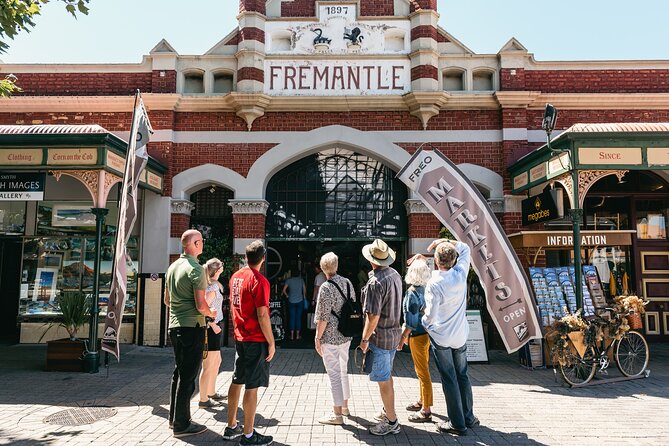
- Small group size (max 12) keeps the pace comfortable and questions welcome.
- Sanya and Ann bring the story to life with a friendly, practical approach.
- Convicts + Indigenous history are part of the same walking narrative, not separate stops.
- Whalers Tunnel and the Round House connect Fremantle’s trade and early imprisonment in one arc.
- Port history includes C.Y. O’Connor, the person behind the construction story.
- Coffee and/or tea included, so you’re not starting cold or ending empty.
Starting at Fremantle Visitor Centre: quick orientation, no fuss
The tour kicks off at the Fremantle Visitor Centre on High Street (155 High St) at 10:00 am. From there, you’ll get a short intro and a sense of direction so you’re not just following along—you know why you’re walking where you’re walking. The pace is designed for a 2-hour loop through central Fremantle, and the group is capped at 12 people, which is big enough to feel social but small enough to stay personal.
You’ll have a mobile ticket, so you can keep your phone ready and avoid scrambling for paper. If you’re using public transport, the meeting area is conveniently placed, and the route is built around walkable connections rather than long transfers.
Also, you’re not empty-handed. Coffee and/or tea are included, which matters on a short tour like this. It turns the walk into a proper morning or early afternoon reset, not just a sightseeing dash.
A few more Fremantle tours and experiences worth a look
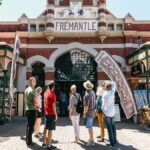
Town Hall to FOMO Freo: where street art meets practical city life

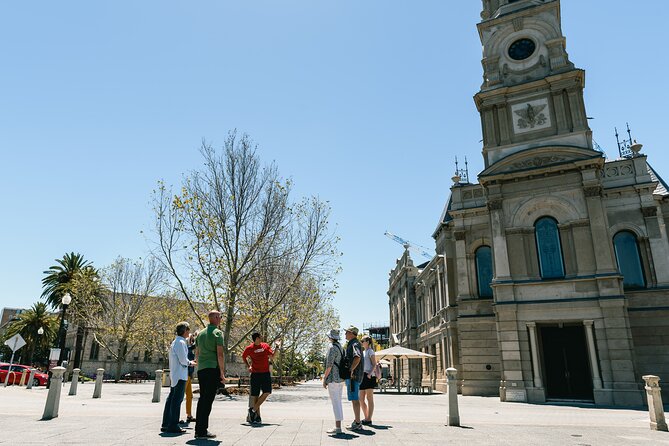
Your first stop is the Fremantle Town Hall area, and it works as a launch pad. You get the orientation feel, plus the grounding stories that explain how this part of town became what it is today. Even if you only catch a few minutes here, it helps the rest of the walk make sense.
Then you move into Walyalup Koort, where FOMO Freo sits. This is a hub that blends art, architecture, culture, retail, and dining in one concentrated zone. You’ll find independently owned shops and a hawker-style food court. I like that this isn’t just framed as a photo stop. It’s a real place where people go to shop, eat, and hang out—so the street art you’ll see later doesn’t feel like decoration. It feels like part of how Fremantle lives.
As you continue through a pedestrianised mall between the Cappuccino Strip and Walyalup Koort, you’ll see how the city’s “new” spaces and “old” stories share the same streets. The mall area has been revitalised with new street art, and the tour uses that as a bridge: from colonial-era narratives into what the community is saying now.
If you like street art, the timing helps. You’re not running between landmarks blindly. You’re getting context first, so the visuals mean something more than style.
Fremantle Ports and C.Y. O’Connor: the builders behind the trade
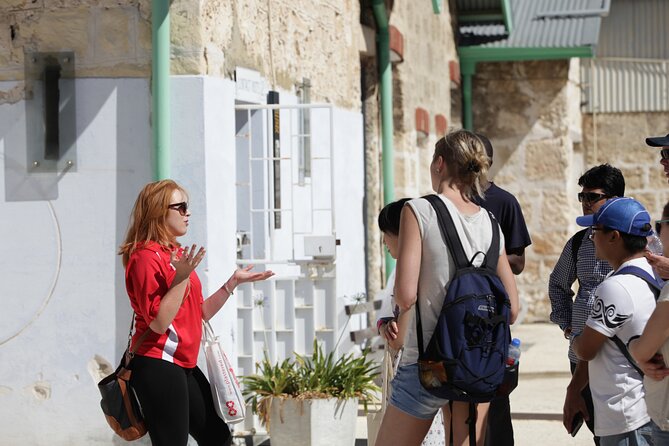
Next comes Fremantle Ports, where the emphasis shifts to shipping and infrastructure. Fremantle’s port took shape in the late 1800s/early 1900s, and the tour highlights the construction story and the man connected to it: C.Y. O’Connor.
This stop is short, around 10 minutes, but it’s pointed. It’s not a lecture about dates and details for their own sake. It’s more about showing how people and projects shaped the city’s direction. When you connect port building to Fremantle’s convict era, you start seeing why so many stories in this town circle trade, movement, and control.
One practical tip: use this moment to slow down and look around rather than just listen. The value of a short history stop is how you mentally map what you hear onto what you’re seeing outside.
Whalers Tunnel: limestone, work, and the odd afterlife of trade routes
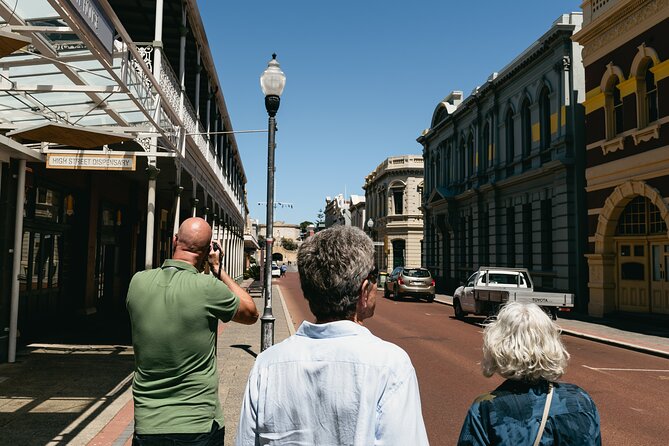
You’ll then walk through Whalers Tunnel, a tunnel cut directly into the limestone cliff. Its original job was practical: it was created to transport whale products from the water’s edge to High Street.
What I find smart about including this stop is that it reminds you history isn’t only in museums. It’s in the built environment—under your feet and along the walls you’re walking past. Even if the tunnel feels like a quick passage, it represents an era when extracting and moving goods shaped how cities functioned.
The tour also notes the tunnel has been used for more than just commerce, which is a clue that these places keep changing roles over time. That matters in Fremantle, because you’re watching layers build on layers, from trade to later uses.
A possible drawback here: tunnels and cliff-cut paths can feel tight depending on how you move and how crowded your moment feels. It’s only a short walk-through, but wear shoes with grip and keep your pace steady.
The Fremantle Round House: oldest building, first-prison story
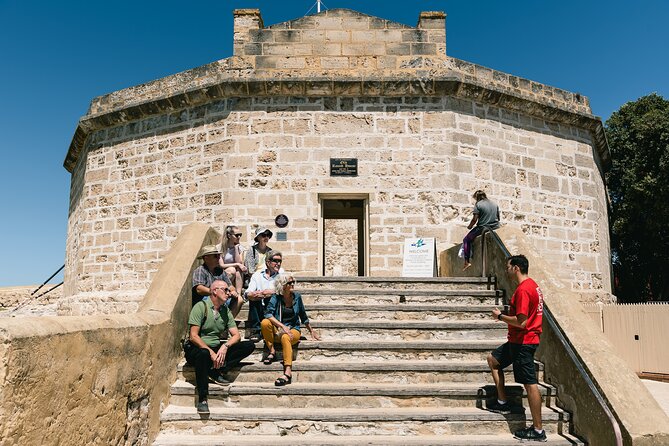
The Fremantle Round House is one of those stops that always lands because it carries weight. It’s described as the oldest building in the city and the first prison, and that’s exactly why it belongs in a convicts-and-culture walk.
Even with a brief 5-minute stop, the Round House frames the tour’s theme. It gives you a physical anchor for the stories about the colonial past and prisoner escapes. You don’t have to be a history buff to appreciate the emotional pull of a place used to control people. The guide’s job is to translate the building into meaning, and that’s where good hosting matters.
This is also where the tour’s “convicts” angle stays balanced with the “culture” angle. Prison history isn’t treated like trivia. It’s treated like a starting point for understanding how this city formed—socially, economically, and physically.
If you’re the type who learns best by standing close to the thing you’re talking about, this stop is a win.



Bather’s Beach and Esplanade Park: first settlers, reclamation, and Aboriginal history
From prisons and trade spaces, the walk shifts to arrival and land changes.
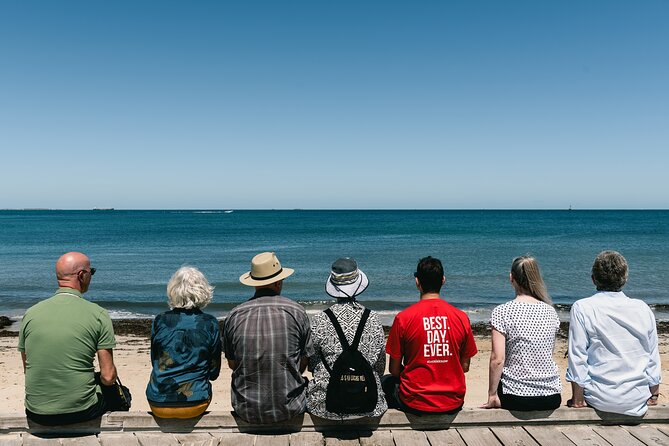
At Bather’s Beach, you see where the first settlers to Western Australia came ashore. The tour also points out the remains of an original timber-piled jetty, and you might even be able to climb onto what’s left. This is one of those moments where the history feels physical—like the coastline itself is still telling you a story.
Then you head to Esplanade Park, where the focus becomes land reclamation and Aboriginal history. The tour explains the reclamation of this land, which helps connect how coastlines get reshaped and how communities respond over time.
I like the pairing here. You start with a place tied to early arrival (Bather’s Beach), then you move to a park tied to how the land changed (Esplanade Park). It’s the same theme—people and place—but told through different lenses.
Safety note: if the jetty remnants look tempting, remember this is an outdoor structure and conditions vary. If it’s slippery, skip the climb.
South Terrace and the Cappuccino Strip finish: a natural landing spot
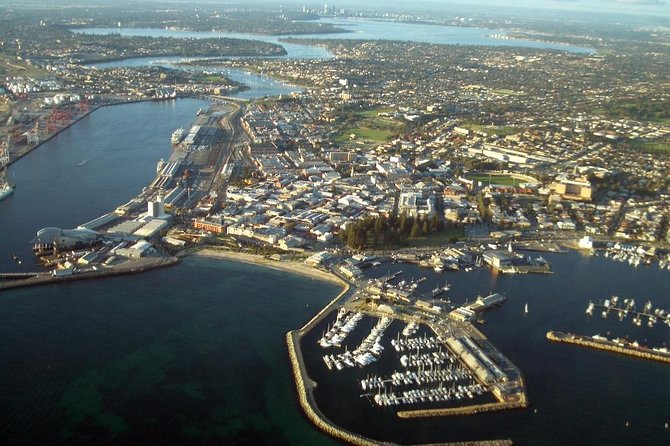
The final stretch is about payoff and ease. You walk down South Terrace, which is the heart trade street area, and the tour finishes on the famous Cappuccino Strip.
This ending is practical. You’re done with the guided part, but you’re not stranded in a dead zone. It’s a built-in “okay, now what” moment. You can grab something to eat or sit with a coffee and re-sort what you just learned while it’s fresh.
The stop is short—about 5 minutes—but it works as a reset from history mode to casual Fremantle mode.
Price and value: $46.62 for a guided loop that doesn’t drag

At $46.62 per person, this is priced for people who want a meaningful overview without spending half a day. The tour runs about 2 hours, and the stops are built around walkable areas with free entry at the listed highlights.
What you’re paying for is not admission fees—it’s the human element and the way the route stitches together themes. You get a professional local host, local history / fun stories, orientation of central Fremantle, and coffee and/or tea. For a short timeline, that’s a solid value mix: interpretation + comfort.
Group size matters too. With a maximum of 12 travelers, the experience is less like a crowd shuffle and more like a conversation with a plan.
One more practical signal: it’s commonly booked about 31 days in advance on average. That doesn’t mean you can’t find space last minute, but it’s a good reason to book when you know your dates.
Who should book this Fremantle walk (and who should skip it)
You’ll likely love this tour if:
- You want a compact walk that covers convicts, street art, and Indigenous history in one route.
- You like learning on foot, with frequent stops that keep your brain engaged.
- You’d rather spend money on guidance and coffee than on multiple separate attractions.
You might want a different option if:
- You’re expecting long museum-style immersion or extended indoor time. This is designed as a walk-through format, not a slow day of exhibits.
- You’re not comfortable with a short but real walking pace. The tour calls for moderate physical fitness, and the route includes outdoor terrain.
- Weather is unpredictable for your day, since the experience requires good conditions.
Should you book Convicts, Culture & Street Art in Fremantle?
Yes—if you want a guided sampler of Fremantle that stays focused and ends exactly where you can relax. The strongest part for me is the balance: convict-era stories tied to specific places like the Round House, trade and transport history at Whalers Tunnel and the Ports, and a route that also makes room for Aboriginal history and the lived-in feel of areas like FOMO Freo and Walyalup Koort.
Book it if you’re visiting Fremantle for the first time or you want a short plan that still feels like you learned something. Skip it only if you need longer stays at fewer sites, or if your schedule can’t handle weather changes.
If you do book, bring comfy shoes and keep your phone charged. You’ll want the time on foot—and the context—more than you’ll want anything heavy.
FAQ
How long is the tour?
The tour is about 2 hours.
Where do I meet, and when does it start?
You meet at the Fremantle Visitor Centre, 155 High St, Fremantle WA 6160, and the tour starts at 10:00 am. The tour ends in Fremantle.
What’s included in the price?
The price includes a professional local host, orientation of central Fremantle, local history and fun stories, and coffee and/or tea.
Is bottled water or food included?
Bottled water is not included, and food and drinks aren’t included unless specified. So it’s smart to plan for your own water and any snacks you want.
How big is the group, and is there a fitness requirement?
The tour has a maximum group size of 12 people and is listed as requiring moderate physical fitness.
What happens if it’s bad weather or I need to cancel?
The experience requires good weather. If it’s canceled due to poor weather, you’ll be offered a different date or a full refund. Cancellation is free if you cancel up to 24 hours in advance for a full refund.