REVIEW · BLUE MOUNTAINS
Half-Day Abseiling Adventure in Blue Mountains National Park
Book on Viator →Operated by High and Wild Pty Ltd · Bookable on Viator
If you’ve ever wanted to test your nerve, this is it. A short drive from Katoomba, you’ll practice abseiling technique and then progress to bigger drops in Blue Mountains National Park, all with hands-on instruction and plenty of scenery to enjoy. The way the session steps you up from a small start to an overhanging 30-metre rappel makes it feel like training, not just a thrill ride.
What I like most is that the guide stays close as you learn, fix small technique points, and build confidence fast. I also really value that everything safety-related is included—ropes, harness, helmet—plus national park fees and transport from the operator’s office, so you’re not scrambling for extras. The only real drawback is that you need a moderate physical fitness level, and the activity depends on conditions, so weather can change the plan.
In This Review
- Quick highlights
- Katoomba access: why starting at 207 Katoomba St works
- The half-day plan: from 5m warm-up to 30m overhang
- 1) Training start: a 5-metre abseil to get your bearings
- 2) Build confidence: 15-metre abseils with repetition
- 3) The moment you remember: 30-metre overhanging abseil
- 4) Back to Katoomba
- Safety and instruction: what the guide coaching actually gives you
- Gear, comfort, and what you should think about before you go
- Views you actually get time for: bushland scenery between drops
- Price and value: is $150.62 for a half-day a fair deal?
- Who this tour fits best (and who should think twice)
- Weather reality: operates in all conditions, but timing can shift
- Should you book this half-day abseiling in the Blue Mountains?
- FAQ
- FAQ
- How long is the half-day abseiling tour?
- Where does the tour start and end?
- How much does it cost per person?
- Is transport included?
- Is food or drinks included?
- What equipment is provided?
- Do I need to have done abseiling before?
- What fitness level do I need?
- Does it run in bad weather?
- How many people are in the group?
- What is the cancellation policy?
Quick highlights
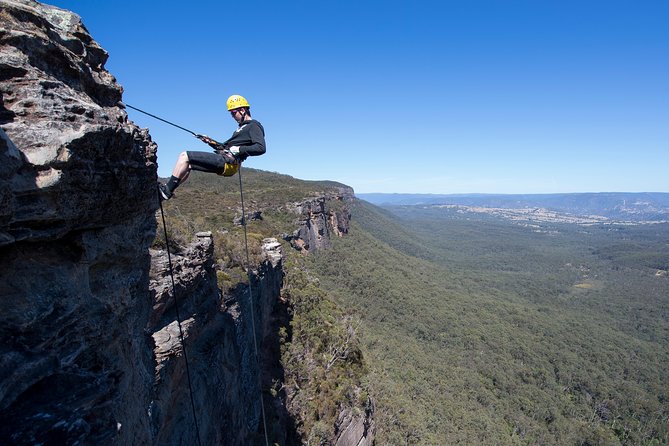
- A smart progression from 5m to 30m so you get comfortable before the big moments
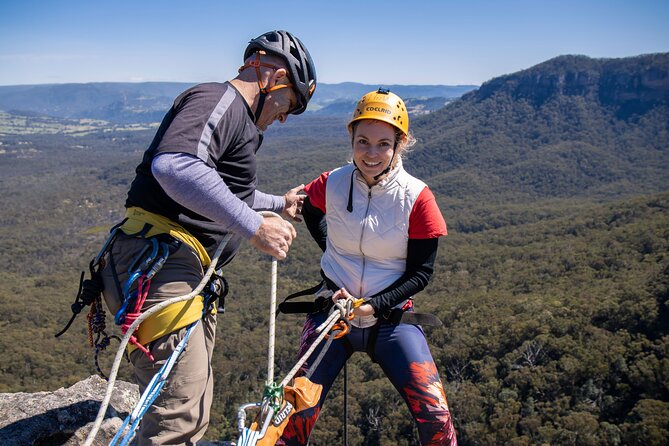
- Instructors close by to coach and encourage while you rappel
- All technical gear provided (ropes, harness, helmet) for a more worry-free start
- National park fees included so your total cost is easier to judge
- Small group size (max 16) for more personal attention
- Round trip from 207 Katoomba St by the operator’s transport
Katoomba access: why starting at 207 Katoomba St works
Katoomba is the practical base for Blue Mountains adventures, and this one starts right in the town at 207 Katoomba St. That matters because you’re not wasting time figuring out remote trailheads or arranging separate transport for gear and people.
The session is set up as a half-day block (about 3 hours 30 minutes), so you get a focused burst of adrenaline without losing your whole day. You’ll also be brought to the abseiling location by the operator, then end back at the same meeting point. That simple start-and-finish rhythm is exactly what you want when you’re scheduling other Blue Mountains stops like scenic walks or viewpoints afterward.
Because it’s capped at 16 travelers, you’ll likely feel the group stays manageable. It’s not a huge crowd where you spend most of the time waiting. You can concentrate on learning the system, the body position, and the feel of controlled descent.
You can also read our reviews of more tours and experiences in Blue Mountains.
- Blue Mountains Small-Group Tour from Sydney with Scenic World,Sydney Zoo & Ferry
★ 5.0 · 3,709 reviews
The half-day plan: from 5m warm-up to 30m overhang
This tour is built like a staircase. First you learn the motions in a smaller rappel. Then you repeat a mid-size stage. Finally, you move to the longer, more intense drop.
Here’s how the adventure typically unfolds:
1) Training start: a 5-metre abseil to get your bearings
You begin with a 5-metre (about 16 feet) abseil. It’s short enough to help your brain accept what’s happening: how you attach in, how you control speed, and how you keep your balance. If you’ve done abseiling before, this still works as a quick re-check of form. If it’s your first time, it teaches the technique without throwing you straight into the deep end.
This is the stage where you’ll feel the most coaching value. The instructors are close by and will encourage you through the steps. That support is important because abseiling is as much about calm, repeatable technique as it is about bravery.
2) Build confidence: 15-metre abseils with repetition
Next come 15-metre (about 49 feet) abseils. The plan is to do a couple of them, which is smart. One descent can tell you a lot. Repeating it helps you lock in control and confidence, so the second time feels steadier than the first.
This portion also gives you a chance to look around more. Blue Mountains National Park has that “startle-then-become-curious” effect. While you’re clipped in and moving through the descent, your focus is on technique, but you’ll still get glimpses of surrounding bushland scenery between moments.
3) The moment you remember: 30-metre overhanging abseil
The finale is the big one: a 30-metre (about 98-foot) adrenaline-pumping overhanging abseil. Overhanging adds a different kind of challenge because you’re not just descending a straightforward face. It’s the segment that turns the afternoon into a story you’ll keep telling.
At this point, your technique isn’t supposed to be perfect. The goal is that you’ve practiced enough earlier to handle the shift in angle and length. With the instructor explaining each step, you’re not guessing. You’re following a method.
4) Back to Katoomba
After the drops and wrap-up, the activity ends back at the meeting point at 207 Katoomba St. The whole thing is designed to leave you with your day intact for other Blue Mountains plans.
Safety and instruction: what the guide coaching actually gives you
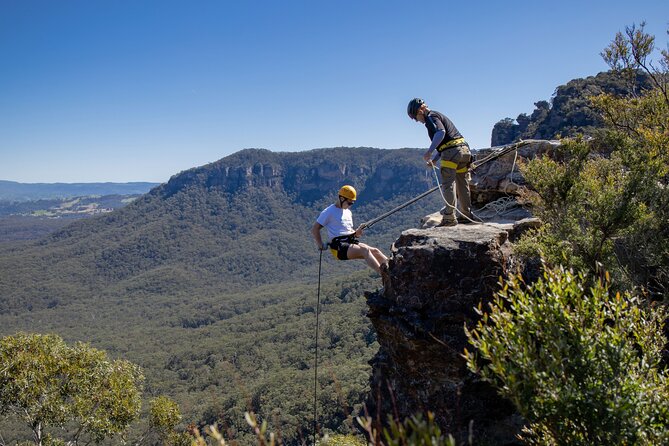
Abseiling has a reputation for being scary. In real life, the difference between panic and control is usually preparation and clear cues.
This tour is structured around that idea. You’ll receive tips and safety instructions from a guide, and you’ll use a fully qualified instructor. The operator also provides all technical and safety equipment, which keeps the biggest variables out of your hands.
The part I especially appreciate is the close-by instruction model. You’re not sent down and left to figure it out. The instructors are there to explain techniques, encourage you, and stay involved as you progress from one drop to the next. That approach matters because it reduces the mental load. When you’re learning something physical and technical, less uncertainty helps you do better.
Based on what people highlighted in their feedback, instructors can make or break an experience. One standout example: Gemma was called out as amazing and extremely knowledgeable, and that kind of leadership shows up in the way a group handles the bigger rappel stages. If you’re the type who needs confidence built through reassurance and instruction, this style of guiding is a huge plus.
Gear, comfort, and what you should think about before you go
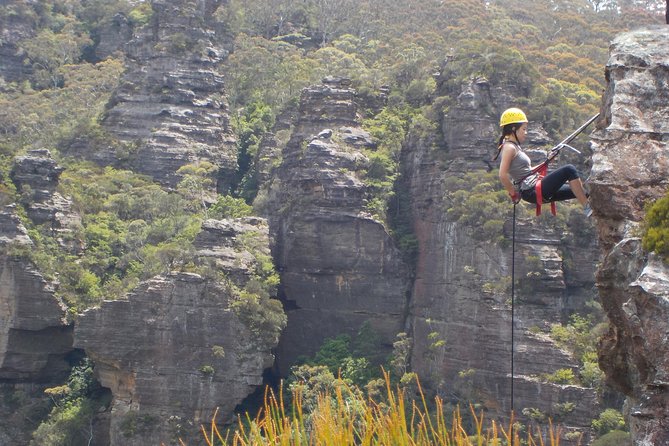
Good news: you don’t have to source the complicated stuff. The tour includes ropes, a harness, and a helmet, plus all technical and safety equipment.
What that means for you: you can show up and focus on the human stuff—breath control, listening carefully, and moving as the instructor cues you. It also lowers friction if you’re visiting from out of town and don’t want to carry gear.
Now, one practical note: the tour requires moderate physical fitness. That doesn’t automatically mean you need to be an athlete, but you should be comfortable with physical activity and being on your feet during setup and changeover between rappels.
Also, since food and drinks are not included, plan ahead. A half-day can still leave you hungry, especially if you’re nervous or excited (both can work up an appetite). Bring water if allowed where you’ll stage, or plan to eat afterward back in Katoomba. At minimum, don’t treat this like a quick snack-sized activity.
Finally, the tour says it operates in all weather conditions, so you’ll want to dress appropriately for the day. Weather affects comfort more than most people expect. Cold, wind, or wet conditions can make the whole experience feel harder even if the skill level is the same.
Views you actually get time for: bushland scenery between drops
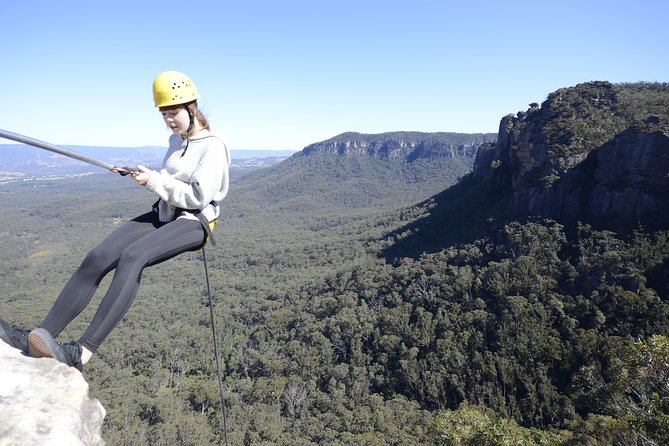
It would be easy for an abseiling tour to feel like tunnel vision: clip in, go down, repeat. This one gives you a chance to enjoy the setting.
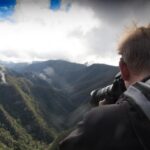
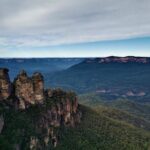
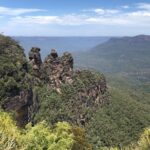
You’ll be abseiling in Blue Mountains National Park, and the experience specifically encourages you to look around at the surrounding bushland scenery. That’s not just marketing talk. While you’re moving carefully through the descent, you can still steal moments to take in the cliffs, the trees, and the way the terrain opens up below.
This matters because it changes the emotional texture of the day. If your only goal is fear, you might miss the reason people love the Blue Mountains in the first place. If you want the thrill and the reminder that you’re in a special place, this tour balances both.
Price and value: is $150.62 for a half-day a fair deal?
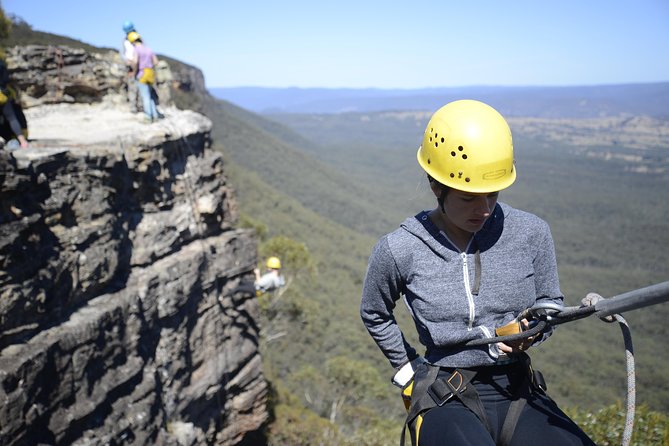
At $150.62 per person, this isn’t a budget activity. The value comes from what’s bundled.
Here’s what you’re getting as part of the price:
- Local guide and a fully qualified instructor
- All technical and safety equipment (not a rental you have to hunt down)
- All fees and taxes, including national park fees
- Transport from the office to the abseiling location
- Mobile ticket convenience
When you add those pieces up, the cost makes more sense. Abseiling is safety-heavy. You’re paying for expertise, gear, and time on site, not just the rappel itself. In other words, you’re buying structure.
What to consider is that it’s still a half-day. There’s no hotel pickup or drop-off included, so you’ll need to get yourself to the meeting point at 207 Katoomba St. If you’re already staying in Katoomba or very close, that’s easy. If you’re farther out, budget time to reach the start.
Also, you’re paying for a small group experience (maximum 16 travelers). That matters for learning and attention, especially if you’re new to abseiling.
Who this tour fits best (and who should think twice)
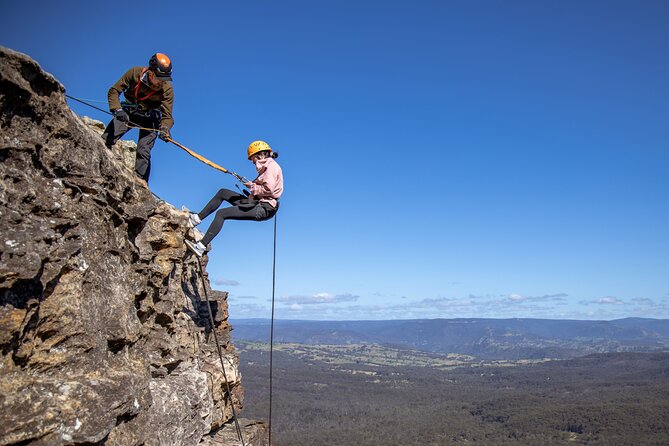
This is one of those adventures where fit matters more than age or destination hype.
You’ll likely enjoy it most if:
- You want an action-packed half day in the Blue Mountains
- You like guided learning and clear instructions
- You’re happy progressing in stages—small rappel first, bigger ones later
- You appreciate that park fees and safety gear are included
It’s also listed as suitable for people with moderate physical fitness. If you’re comfortable with a physically active morning or afternoon and can follow safety steps, you’ll probably be fine.
If you’re bringing kids, note the rule: children must be accompanied by an adult. The tour description doesn’t specify minimum ages, so you’d want to confirm what applies when booking.
If you hate being cold in the outdoors, keep weather in mind. The tour operates in all weather conditions, and it’s also dependent on good conditions—so don’t plan your whole day around getting perfect weather for every activity.
Weather reality: operates in all conditions, but timing can shift
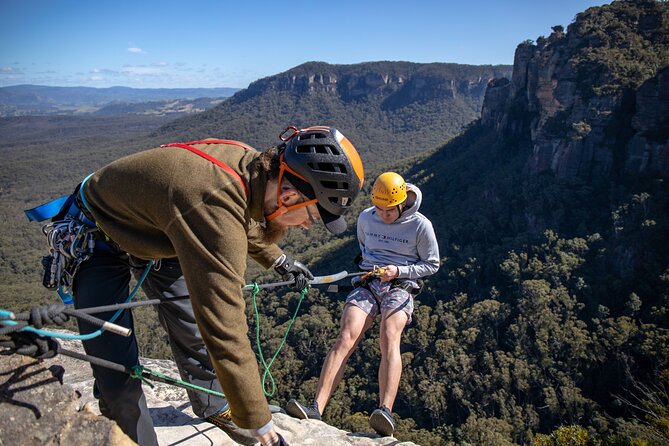
This tour walks a line between flexibility and responsibility. On one hand, it says it operates in all weather conditions. On the other hand, it also says the experience requires good weather, and if it’s canceled due to poor weather you’ll be offered a different date or a full refund.
So how should you plan?
- Treat your booked time as weather-dependent.
- Keep the rest of your day flexible if you can.
- Dress for the day you get, not the day you hoped for.
- If you’re the type who gets easily discouraged by changes, this is still manageable, just expect that Mother Nature can pull the curtain.
When weather affects safety outdoors, operators won’t pretend it’s business as usual. It’s better to plan for a date swap than to force a stiff schedule.
Should you book this half-day abseiling in the Blue Mountains?
If you want a Blue Mountains experience that’s physical, scenic, and guided, I’d say it’s a strong pick. The real reason is the way the tour teaches you—5 metres first, then 15 metres, then the 30-metre overhanging finale. That pacing helps you handle fear with technique instead of luck.
It’s also a good value if you like set-and-forget planning. The price includes gear, park fees, and transport, plus instruction from a qualified team. And with a 97% recommendation rate and a 4.9 average rating, the pattern is clear: people finish the half day feeling like they got what they paid for.
Skip it only if you know you can’t handle the physical side or you’re uncomfortable outdoors in varying conditions. Also think twice if you’re expecting hotel-level convenience. There’s no hotel pickup/drop-off, and the tour starts at 207 Katoomba St, so you’ll need to make your own way there.
FAQ
FAQ
How long is the half-day abseiling tour?
It runs for about 3 hours 30 minutes.
Where does the tour start and end?
It starts at 207 Katoomba St, Katoomba NSW 2780, and it ends back at the same meeting point.
How much does it cost per person?
The price is $150.62 per person.
Is transport included?
Yes. Transport from the operator’s office to the abseiling location is included.
Is food or drinks included?
No. Food and drinks are not included.
What equipment is provided?
You’ll be provided with ropes, a harness, and a helmet, plus all technical and safety equipment.
Do I need to have done abseiling before?
No. The tour starts with a 5-metre abseil to help beginners learn the technique and returning participants get back in the swing.
What fitness level do I need?
You should have a moderate physical fitness level.
Does it run in bad weather?
The tour operates in all weather conditions, but it also says the experience requires good weather. If it’s canceled due to poor weather, you’ll be offered a different date or a full refund.
How many people are in the group?
The tour has a maximum of 16 travelers.
What is the cancellation policy?
You can cancel for a full refund up to 24 hours in advance. If you cancel less than 24 hours before the start time, it won’t be refunded.