REVIEW · CORAL BAY
Humpback Whale Safari
Book on Viator →Operated by Coral Bay Ecotours · Bookable on Viator
Morning whales near Ningaloo feel unreal. This full-day humpback whale safari runs out of Coral Bay and focuses on the migration that passes the Ningaloo Reef each year. I like that you can choose your comfort level—watch from the boat, or go in the water if the trained guide judges it safe. I also like that the day doesn’t stop at whale time: you get lunch, snacks, a glass of sparkling wine, plus a photography package to help you bring the moment home.
The one thing to keep in mind is that this is still Mother Nature. Whale behavior and day-of conditions affect what you’ll see, and swimming depends on the guide’s safety call, weather, and the whales’ choices. If the water isn’t suitable or the whales are busy, your interaction might be limited to watching from the boat.
In This Review
- Key highlights I think you’ll care about
- Coral Bay morning start: lining up for Ningaloo whales
- Watching from the boat vs going in: how the swimming actually works
- How long you’ll be out there and what the day feels like
- Ningaloo Reef migration context: why timing (and season) matters
- The included photo package: getting keepsakes without constant phone duty
- Price and what’s included: is $466 good value?
- Weather, safety rules, and why you should plan like a local
- Who should book this humpback safari (and who might skip it)
- Should you book this Coral Bay humpback whale safari?
- FAQ
- FAQ
- When is humpback whale season for this Coral Bay experience?
- How long is the tour?
- What’s included in the price?
- Can I swim with the humpback whales?
- What’s the group size?
- What happens if weather is poor or the minimum number of travelers isn’t met?
Key highlights I think you’ll care about
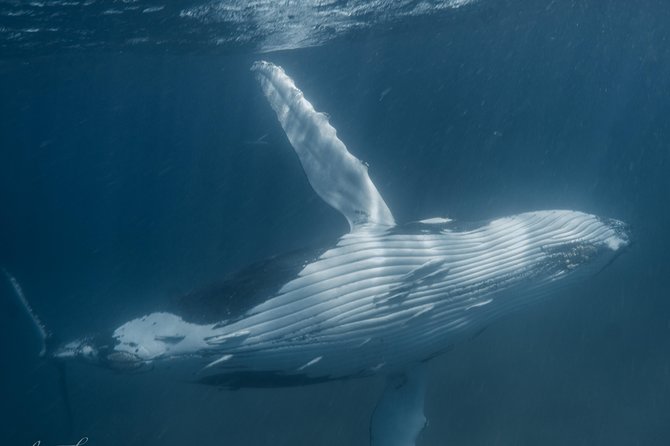
- Optional whale swimming (14 swimming spots): Not everyone goes in, but if conditions are right, you may get that close-up moment.
- A real “full-day” format (~8 hours): You’re out early and you’ll spend the day actively searching for the whales.
- Photo package included: Someone else handles part of the capturing so you can focus on the encounter.
- Food + celebratory drink included: Lunch, snacks, and a glass of sparkling wine keep the day easy to manage.
- Small group size (max 14 travelers): More attention, less chaos when it’s time to suit up and get ready.
Coral Bay morning start: lining up for Ningaloo whales
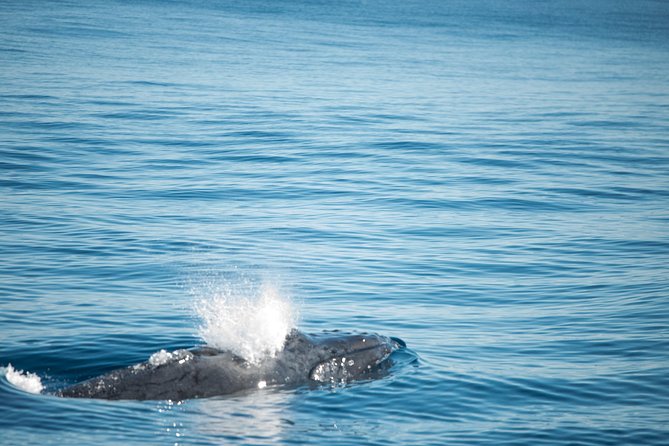
This safari begins early—around 7:30am—at the Coral Bay EcoTours meeting spot at People’s Shopping Village, 4 Robinson St, Coral Bay WA 6701. That start time matters. Whale watching is all about timing, and the morning can set the tone for a great day on the water.
The vibe here is practical: you’re not just “waiting for whales.” You’re going out during the migration window—late June through mid October—when it’s estimated that about 30,000 humpbacks pass Ningaloo Reef. Sometimes they rest, shelter, and play in the calm waters around Coral Bay, which is exactly why this part of Western Australia is such a draw.
Also, you should plan for an active day. The tour calls for moderate physical fitness, which mostly makes sense when you consider that you may be asked to move around the boat and, if you’re swimming, get set up quickly and safely.
A few more Coral Bay tours and experiences worth a look

Watching from the boat vs going in: how the swimming actually works
Here’s the key decision point of the day: stay on the boat and enjoy the whales from the waterline, or participate in possible in-water interaction if the trained guide approves it.
If you stay onboard, you’ll still be in the action. Humpbacks can be curious, and they may approach. Even when they don’t, the views can be incredible because you’re watching them as they migrate past the reef. This option is especially good if you want whale time but prefer not to deal with getting in and out of the water.
If you want to swim, know what “possible” means here. The guide only lets swimmers enter when it’s safe, and the entry can be from the side or in front of the whales’ path depending on how the moment unfolds. There are 14 swimming spots available per tour, so not everyone who wants to swim will necessarily get it.
Once you’re in, it’s not a controlled attraction. Interactions are defined by being within the exclusive contact zone—and after that, it’s up to the whales. They might come closer. They might simply pass by. That’s not a problem; it’s the whole point. This is a respectful wildlife interaction, not a guarantee.
One more practical note: if the whales are very active that day, swimming can become harder to coordinate. The tour can’t force a perfect moment out of the ocean, so your best plan is to be flexible. Even when swimming doesn’t work out, you’re still doing a serious whale safari with a full day on the water.
How long you’ll be out there and what the day feels like
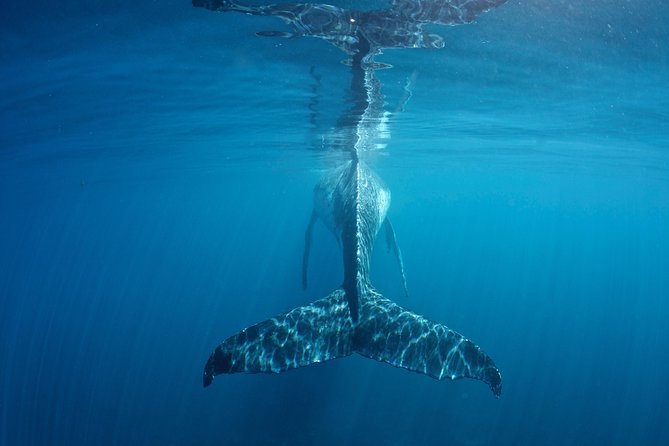
This is listed as about 8 hours, and that’s accurate to how it plays. You’re leaving early, spending time locating and observing, and then moving between the boat and any optional swim moments. You’ll want to treat it like a proper day trip, not a quick outing.
The pacing also benefits you. Whale activity can be unpredictable, so long tours give you more chances to find the right area. When humpbacks are nearby—resting, sheltering, or playing—the day can feel electric. When they’re farther out or changing their pattern, it becomes more about patience and steady searching.
What helps keep that rhythm comfortable is the included food setup. You get lunch, snacks, and a glass of sparkling wine. That’s a nice perk because it removes the temptation to hunt for meals on your own. For an all-day experience where weather and animal behavior can shift timing, having food already handled is a real value.
Ningaloo Reef migration context: why timing (and season) matters
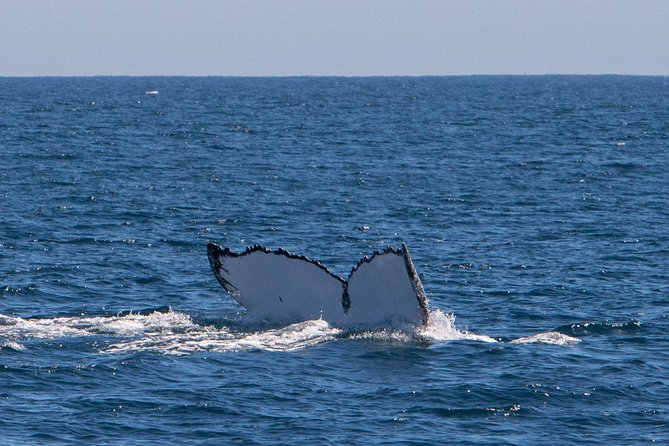
This tour is built around a specific yearly window. Humpback whales migrate past the Ningaloo Reef between June and October, with the Coral Bay season starting at the end of June and running to about mid October.
Why do you care about this? Because the whales aren’t there year-round in the same way. The migration window affects your odds more than almost anything else, and the tour’s schedule is designed around that reality. If you’re traveling outside that period, you’re more likely to be on the wrong side of timing.
The other context piece is that this is animal behavior, not a schedule you can demand. The tour information is clear: nothing is guaranteed. Every effort is made to give you an amazing day, but whales choose where they go. That mindset keeps the experience fun instead of frustrating. When whales do show up near the calm waters, you get that rare mix of scale and closeness that makes this area special.
The included photo package: getting keepsakes without constant phone duty
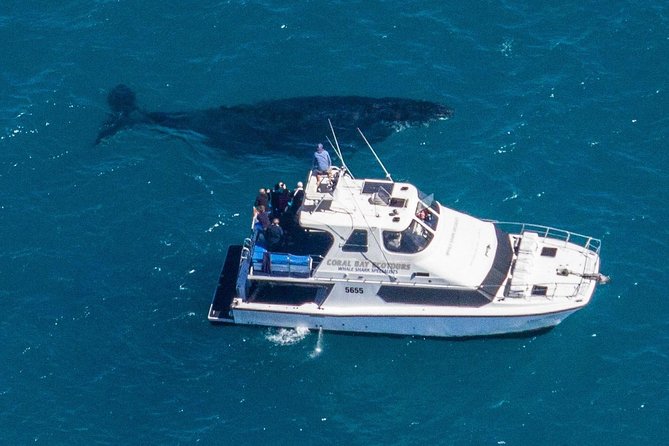
I really appreciate when a whale tour includes a photography package, because it changes how you experience the day. With your attention split between spotting whales, staying safe, and staying balanced on a moving boat, it’s easy to end up with a pile of shaky photos.
A dedicated package helps you get images that actually capture the story of the day. And since this is a long day with potentially shifting conditions, it’s smart to have that support baked in.
Practical tip: even with a photo package, bring your own camera or phone if you can. You’ll still want quick personal shots if whales pop up unexpectedly. But let the package handle the “main event” photos so you aren’t constantly switching modes.



Price and what’s included: is $466 good value?
At $466, this isn’t a cheap thrill ride. But it is expensive in a way that makes sense for what you get: a full-day boat-based whale safari built around a migration window, plus meals, a drink, and a photography package.
Here’s how I’d think about the value:
- You’re paying for the time on the water and the effort to find whales during their seasonal migration.
- You’re also getting food and snacks, which matters because it keeps you comfortable for the whole day.
- The photography package adds value by reducing how much you rely on luck (and camera steadiness) for good shots.
- The optional in-water experience is limited to 14 swimmers and depends on safety and conditions, which keeps expectations realistic—but it’s also the “big reason” many people book.
If your goal is only to watch from a distance, you might still find it worthwhile because the season and location are ideal for whale encounters. If your goal is to swim, the value becomes more obvious since the day is structured to look for those opportunities when it’s safe.
Weather, safety rules, and why you should plan like a local
This kind of tour runs on weather and water conditions. The experience requires good weather, and the activity can be canceled if conditions aren’t right, with an alternate date or a refund offered.
Safety decisions are central to everything:
- The trained guide controls whether swimming is possible.
- Swimmers enter only when it’s judged safe and at a safe distance from the animals.
- Interactions are defined by the exclusive contact zone.
That might sound strict, but it’s what makes it a respectful wildlife experience. If you’re tempted to think of this as a guaranteed swimming appointment, don’t. Instead, treat it as a guided “best chance” for close-up whale time, with onboard watching as the solid backup plan.
If you’re going, dress for early morning wind and water time. Bring what you need to stay comfortable during a long stretch on the ocean. And keep an open mind: whales steer the day.
Who should book this humpback safari (and who might skip it)
You’ll likely love this tour if you:
- Want a full-day whale experience focused on humpbacks around Ningaloo Reef.
- Like wildlife watching, but also enjoy the idea of a possible in-water interaction.
- Appreciate having meals and a drink handled during a long outing.
- Prefer smaller-group attention (this tour limits the group to 14 travelers).
You might think twice if you:
- Get easily frustrated by uncertainty. Whale sightings and swimming opportunities vary by day.
- Have trouble with the physical demands implied by “moderate physical fitness,” especially if you plan to swim.
If you’re the type who can enjoy the process—being out there, scanning the water, then celebrating when the whales appear—this is a great match.
Should you book this Coral Bay humpback whale safari?
I’d book it if you’re traveling in the right season and you want a guided experience that’s built for real whale encounters, not a quick drive-by. The value feels strongest when you want the whole package: full-day time on the water, lunch and snacks, a glass of sparkling wine, and a photography package that helps you leave with real keepsakes.
Don’t book it expecting a guaranteed swim. The tour is clear that nature sets the terms, and swimming depends on conditions and the guide’s safety call. If you’re okay with that—and you’re excited to watch humpbacks during their migration—this is one of the more satisfying ways to spend a day in Coral Bay.
FAQ
FAQ
When is humpback whale season for this Coral Bay experience?
Humpback whale season in Coral Bay starts at the end of June and runs through to mid October.
How long is the tour?
The tour runs for about 8 hours.
What’s included in the price?
Lunch, snacks, and a glass of sparkling wine are included, along with a photography package. You also receive a mobile ticket.
Can I swim with the humpback whales?
Swimming is possible if the trained guide deems it safe and if conditions allow. There are 14 swimming spots available per tour, and in-water interaction is defined as being within the exclusive contact zone.
What’s the group size?
The tour has a maximum of 14 travelers.
What happens if weather is poor or the minimum number of travelers isn’t met?
If the experience is canceled due to poor weather, you’ll be offered a different date or a full refund. If it’s canceled because the minimum number of travelers isn’t met, you’ll also be offered a different date/experience or a full refund.