REVIEW · KAKADU
Kakadu National Park Wildlife & Ubirr Rock Art Tour from Darwin
Book on Viator →Operated by Wildlife Tours Australia · Bookable on Viator
Crocodiles and 20,000-year-old art in one day. This Darwin day trip lines up Ubirr rock art with a real chance to spot saltwater crocodiles, plus a wetland stop at Fogg Dam. Guides like Rick and Tim bring the stories to life as you move from place to place.
I also like the practical pacing for a long outing: Cahills Crossing gives you a safe croc-viewing platform, and Bowali Visitor Centre adds an Indigenous art break in the middle of the day. The main drawback is the time on the road and a mini-coach that can feel snug, so plan for a long day and bring what you’ll need to stay comfortable.
In This Review
- Key highlights at a glance
- Kakadu in One Long Day: The Big-Value Reality Check
- The Early Depart From Darwin: Pickup, Timing, and What to Expect
- Fogg Dam Conservation Reserve: Wetlands, Birds, and a Quick Nature Reset
- Adelaide River Crocodiles Option: Cruise vs Birding Detour
- Corroboree Park Tavern and Lunch Storage: Eat Smart for a Long Day
- Welcome Stops in Kakadu: Signage Photos, Jabiru, and Bowali Art
- Kakadu National Park Time: World Heritage Scenery and Guided Interpretation
- Cahills Crossing: Saltwater Crocodiles, Safe Viewing, Big Emotion
- Ubirr Rock Art and the Climb: Where the Day Becomes Real
- Guides Make the Whole Day: Names You Might Hear, Stories You’ll Remember
- Price and Logistics: What $168.55 Really Buys
- Practical Tips for a Comfortable Kakadu Day Trip
- Should You Book This Kakadu Day Tour?
- FAQ
- What time does the tour start in Darwin?
- How long is the Kakadu Wildlife & Ubirr Rock Art Tour?
- Where is the meeting point?
- Is entry to Kakadu National Park included in the price?
- Do you visit Ubirr Rock and see rock art?
- Is the Jumping Crocodile Cruise included?
- Is lunch included?
- How many people are in the group and is the coach air-conditioned?
- Is the tour suitable for kids and what fitness level do I need?
Key highlights at a glance
- Ubirr rock art and 360° views with an included walk and climb
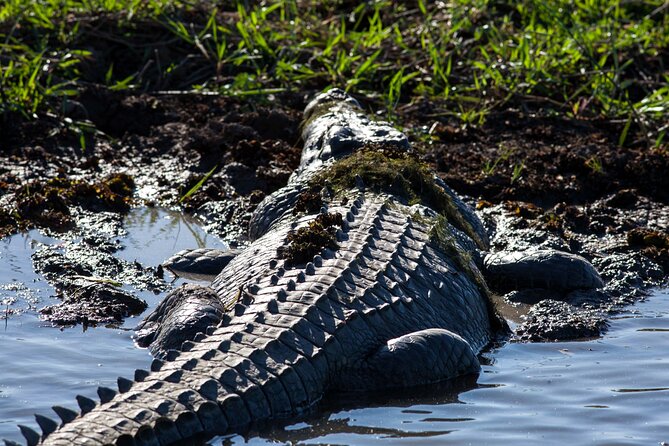
- Cahills Crossing croc spotting from a viewing platform in Kakadu
- Small group size (max 21) on an air-conditioned mini-coach
- Optional 1-hour Jumping Crocodile Cruise on the Adelaide River
- Strong guide storytelling (you may get Rick, Tim, Darrell, Boggy, Dani, or Aaron)
Kakadu in One Long Day: The Big-Value Reality Check
This tour is designed for a specific kind of trip: you’re based in Darwin, you don’t have a week to slowly work through Kakadu, and you still want the highlights. You get a mix of wildlife viewing and Indigenous cultural sites in a single, guided day that runs about 12 hours.
The value is in what’s included: transport from Darwin, park commentary, and Kakadu National Park entry fee (entry fee only). It’s not the kind of trip where you’re wandering alone or figuring things out. You’re following a plan with stops that are famous for a reason.
The trade-off is stamina. Even with frequent breaks, it’s a full day with time spent riding out and back. If you want a calmer pace, or you hate being in a seat for hours, you’ll feel that pinch.
You can also read our reviews of more tours and experiences in Kakadu.
The Early Depart From Darwin: Pickup, Timing, and What to Expect
You start in Darwin City at Leea Darwin64, Cavenagh St with a 7:30am departure. The day is set up so you’re out of town early, then returning around 7:30pm (give or take with road and stopping time).
You’re on a comfortable air-conditioned mini-coach, and the group is capped at 21 people, which usually helps keep the day personal rather than chaotic. That said, a few people note the bus can feel crammed for an all-day ride, so if you’re tall or you like space, dress and pack with that in mind.
Since the tour operates in all weather conditions, bring layers. The Top End can shift fast, and you’ll be out in the open at several stops.
Fogg Dam Conservation Reserve: Wetlands, Birds, and a Quick Nature Reset
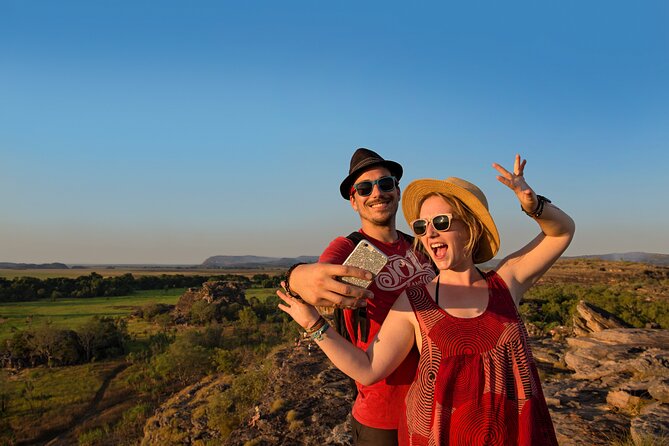
Before you reach Kakadu, you get a first nature hit at Fogg Dam Conservation Reserve. You spend about an hour around the conservation centre and observation decks, which is a great “wake-up” for the day’s theme: wildlife and water.
This stop is especially good if you’re a bird person. Even if you don’t know species names, the guide commentary helps you connect what you’re seeing with why it matters in the wetland ecosystem.
It’s also a useful break from the road. You’ll get your legs moving without committing to a long hike.
Adelaide River Crocodiles Option: Cruise vs Birding Detour
One of the most talked-about choices on this tour is the optional 1-hour Jumping Crocodile Cruise on the Adelaide River (about an hour, admission not included). If you add it, you’ll trade some time for a closer, more action-focused crocodile experience.
If you skip the cruise, you don’t lose the day—you stay with your guide for an alternate nature stop, often more bird-focused depending on conditions.
My practical advice: choose based on what you want to photograph. If you’re chasing dramatic moments and you want the classic crocodile spectacle, go for the cruise. If you prefer quieter wildlife watching and want to spend more time on Kakadu-style habitat, skip it and let the guide work the wetlands angle.
Corroboree Park Tavern and Lunch Storage: Eat Smart for a Long Day
The tour includes a short refresh stop at Corroboree Park Tavern (about 30 minutes). Lunch is not included, but this is where things get practical: you can buy food there, and the team stores your lunch in an esky so it’s still fresh later.
Plan for limited food options once you’re on the move. If you know you’ll want something specific, it’s smart to bring snacks and drinks, or buy what you need during the stop and keep it chilled. A couple of people also note you can stock up on the way out and store it in provided storage.
Either way, don’t assume you’ll have lots of chances for cafes. This is a “pack or plan” kind of day.
Welcome Stops in Kakadu: Signage Photos, Jabiru, and Bowali Art
Once you enter Kakadu proper, there’s time for quick context stops before the heavier highlights. You’ll get a photo opportunity at the Welcome to Kakadu National Park signage on Arnhem Hwy.
Then you’ll spend time in Jabiru, the gateway town inside Kakadu (about 30 minutes). It’s a short pause, but it helps you reset mentally before the day’s bigger walking and viewpoint time.
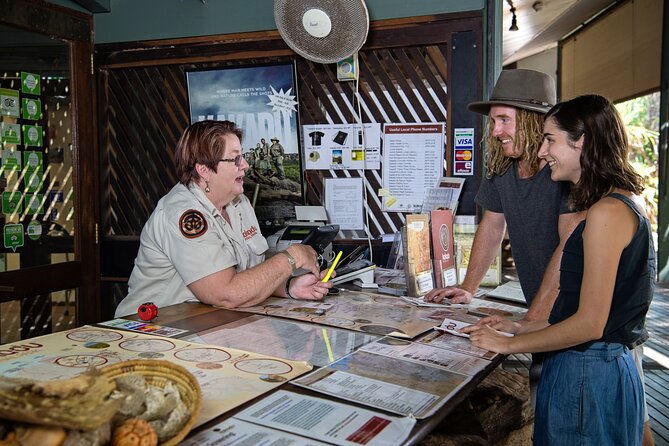
After that, you hit Bowali Visitor Centre (around 30 minutes). This is your Indigenous art and interpretation break, with local artwork on display and time that’s specifically set aside for lunch time at your own expense. If you want the rock art sites to make more sense, this kind of stop helps you frame what you’re about to see at Ubirr.
Kakadu National Park Time: World Heritage Scenery and Guided Interpretation
You get a couple of hours spent exploring Kakadu with the guide (about 2 hours). This is where the day starts to feel less like “a drive-through checklist” and more like you’re actually learning the place.
Kakadu is a World Heritage-listed national park, and the guide commentary matters. You’re not just looking at scenery—you’re hearing why certain areas are important, what kinds of animals you might spot, and how the water and seasons shape daily life in the region.
Even if you don’t catch every animal, you’ll usually get enough wildlife sightings to keep things interesting. The mini-coach also gives you a chance to keep moving without long gaps.
Cahills Crossing: Saltwater Crocodiles, Safe Viewing, Big Emotion
The most famous wildlife stop on the day is Cahills Crossing. You’ll be at the crocodile viewing platform (about an hour) where you can spot saltwater crocodiles in their natural habitat.
This is one of those experiences that hits differently in real life. From the safety of the platform, you’re close enough to feel the scale, but far enough that you’re not doing anything risky. The guide will point out what to look for, and you’ll likely get a few moments where everyone’s camera comes up at once.
If you’re doing the optional cruise, it can still be worth visiting Cahills Crossing because it gives you the bigger picture: crocs living with the landscape, not only staged for a show.
Ubirr Rock Art and the Climb: Where the Day Becomes Real
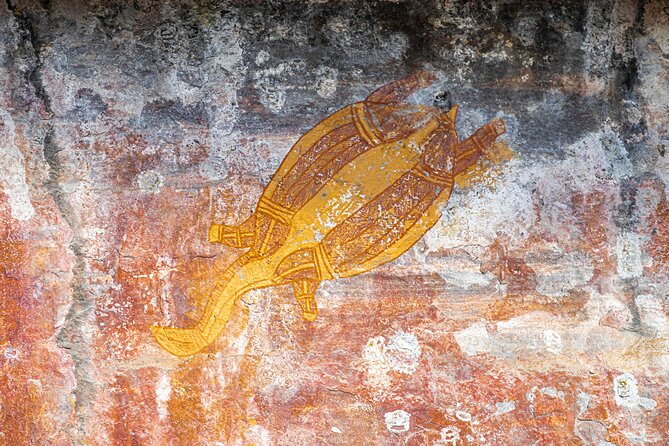
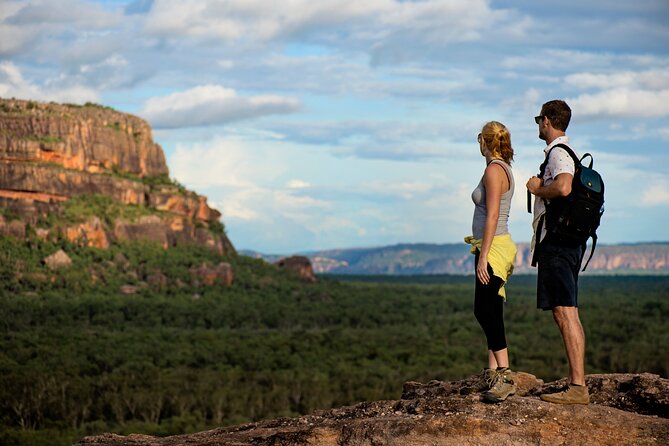
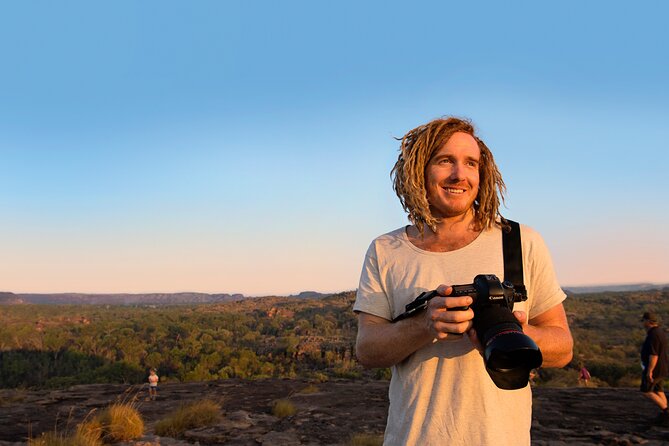
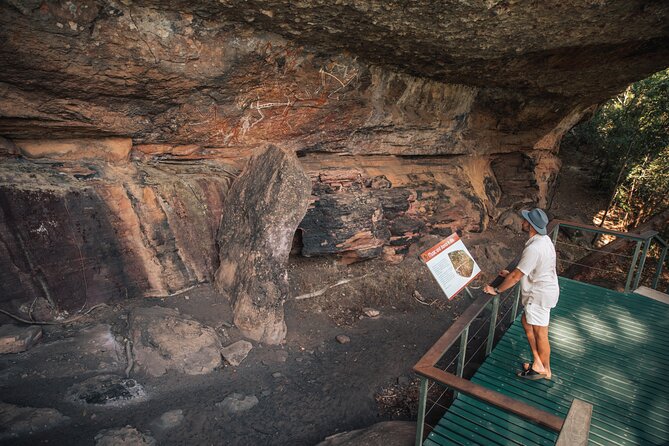
If Ubirr is the reason you booked, you’re going to understand why when you’re there. You’ll spend about an hour at Ubirr, with time for the Aboriginal rock art and the viewpoint walk that includes a climb to higher ground for panoramic views.
This stop is often described as breathtaking, and it’s easy to see why. You’re standing among important Aboriginal art that’s thousands of years old, and the elevated view helps you connect the art to the country around it.
A few practical notes:
- Wear hiking shoes. The walk involves steps over uneven ground, and some people find the climb a bit like a rocky scramble.
- It’s a group walk, so you’ll be navigating with others. Go slow if you need to.
- If you’re traveling with older adults or anyone who doesn’t do well on uneven footing, tell the guide early. People mention guides being supportive and careful about getting everyone involved, but you still want to set expectations.
The 360° views from the top are the payoff. It’s the moment where the long day starts to make sense, even if you were tempted to nap on the way out.
Guides Make the Whole Day: Names You Might Hear, Stories You’ll Remember
This is a tour where the guide changes everything. The best days are the ones where the driver keeps the schedule moving, answers questions clearly, and ties each stop into a bigger story.
In the real world, you may ride with different guide/driver combinations. Names that come up include Rick, Tim, Darrell, Boggy, Bogdan, Dani, and Aaron. The common thread is how they handle three things:
- Safety and pacing at the walking and viewpoints
- Indigenous culture context around the rock art and the places you’re visiting
- Wildlife spotting tips, so you’re not just driving past animals hoping for luck
If you like learning, this is where you’ll feel the money at work. If you prefer quiet, you might still enjoy it, but you’ll want to be okay with commentary throughout the ride.
Price and Logistics: What $168.55 Really Buys
At $168.55 per person, you’re paying for a full-day guided drive from Darwin with included elements that add up.
What you get included:
- Kakadu entry fee (entry fee only)
- Outback driver guide and comprehensive tour commentary
- Air-conditioned mini-coach transport
- Select pickup and drop-off within Darwin City
- Wildlife sightings throughout the day
- Ubirr time with rock art (time is scheduled and included)
What costs extra:
- Food and drinks across the day
- The Jumping Crocodile Cruise is an optional upgrade (admission ticket not included)
So is it good value? If you would otherwise pay for separate transport and skip the guided interpretation, this pricing is usually fair. You’re essentially buying a structured day that compresses the biggest Kakadu hits into one schedule.
Practical Tips for a Comfortable Kakadu Day Trip
Do these and you’ll feel better when the long drive starts wearing on you.
- Bring a small daypack with water and snacks. Food options are limited until the scheduled stops, and you’ll be happier if you’re not hungry in the late afternoon.
- Wear hiking shoes. The Ubirr walk is the part where footwear matters most.
- Dress for changing conditions. The tour runs in all weather, and you’ll do better with light layers.
- Plan for heat. It can get hot in the Top End, and your comfort depends on pacing, shade, and your own stamina.
- Expect a packed schedule. Even when stops are well timed, you’re moving through Kakadu rather than lingering.
Also, this is a mobile-ticket tour and confirmation is received at booking time, so make sure your phone battery is charged.
Should You Book This Kakadu Day Tour?
Book it if:
- You’re short on time in Darwin but want the big Kakadu highlights
- You care about rock art, not just animal spotting
- You like having a guide handle logistics so you can focus on the moments that matter
Skip it (or consider another format) if:
- You want a slow, unstructured trip with lots of downtime
- You struggle with uneven walking or long sitting periods in a compact vehicle
- You’d rather spend money on an overnight in Kakadu to spread the experience out
If you’re the kind of traveler who can handle a long day for a strong payoff, this tour is a smart way to get real Kakadu in one go—especially for Ubirr and the crocodile viewing moments.
FAQ
What time does the tour start in Darwin?
The tour departs at 7:30am from the meeting point in Darwin City.
How long is the Kakadu Wildlife & Ubirr Rock Art Tour?
It runs about 12 hours, with a return to Darwin around 19:30pm.
Where is the meeting point?
You meet at Leea Darwin64, Cavenagh St, Darwin City NT 0800, Australia.
Is entry to Kakadu National Park included in the price?
Yes. Kakadu National Park entry fee is included (entry fee only).
Do you visit Ubirr Rock and see rock art?
Yes. Ubirr is included in the schedule with about 1 hour of time at the rock art site.
Is the Jumping Crocodile Cruise included?
It’s optional. The 1-hour Jumping Crocodile Cruise on the Adelaide River can be added, but admission is not included.
Is lunch included?
No. All food and drinks are not included, though lunch can be purchased at the Corroboree Park Tavern stop and stored in an esky.
How many people are in the group and is the coach air-conditioned?
The tour has a maximum of 21 travelers, and you travel in a comfortable air-conditioned mini-coach.
Is the tour suitable for kids and what fitness level do I need?
Children must be accompanied by an adult, and it’s not suitable for children aged 5 and under. You should have a moderate physical fitness level, and hiking shoes are recommended.