REVIEW · KAKADU
Yellow Water Cruise – Kakadu
Book on Viator →Operated by Kakadu Tourism GCL Pty Ltd · Bookable on Viator
If you love wildlife cruises, this one is hard to beat. Yellow Water Billabong is the star of Kakadu National Park, and a guided cruise here turns a postcard wetland into something you can actually watch unfold, from birds skimming the water to crocodiles cruising the edges. The light changes through the day, so the same stretch of billabong can feel totally different on a morning run versus a sunset departure, and the Indigenous-owned team adds context as you go.
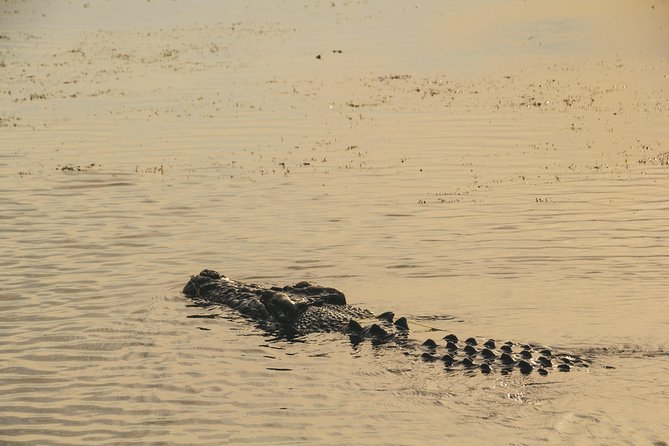
I especially like the wildlife viewing—this is the kind of place where you’re scanning lily-filled water, bird-filled banks, and sometimes crocodiles close enough to really register their size. I also like that the cruise is driven by live commentary from guides such as Dennis, Jess, Sarah, and Glen/Gecko, who keep the trip moving at a good pace and answer the questions that pop up the moment you spot something floating or calling.
One thing to keep in mind: crocodile sightings aren’t guaranteed. In wet-season conditions, the water spreads out and crocodiles can be harder to spot on every cruise, so you may see lots of birds and beautiful wetlands even if crocs are quieter than you hoped.
In This Review
- Key things to know before you board Yellow Water
- Yellow Water Billabong in Kakadu: what makes it special
- Cooinda Lodge start: how the cruise day actually runs
- Indigenous-owned guiding and live commentary that keeps you engaged
- Wildlife spotting: your best odds for crocs, eagles, and birds
- A tip for crocodile expectations in different seasons
- Sunrise vs sunset: choosing the right departure time
- 1.5 hours vs 2 hours: what extra time actually buys you
- Price and value: what $75.31 gets you
- Practical ways to make the cruise smoother
- Who should book this Yellow Water cruise
- Should you book? My straight answer
- FAQ
- What’s the meeting point for the Yellow Water Cruise in Kakadu?
- How long is the cruise?
- What’s included in the ticket price?
- Do I need to bring food or drinks?
- Will I definitely see crocodiles?
- Is the tour refundable if I cancel?
Key things to know before you board Yellow Water
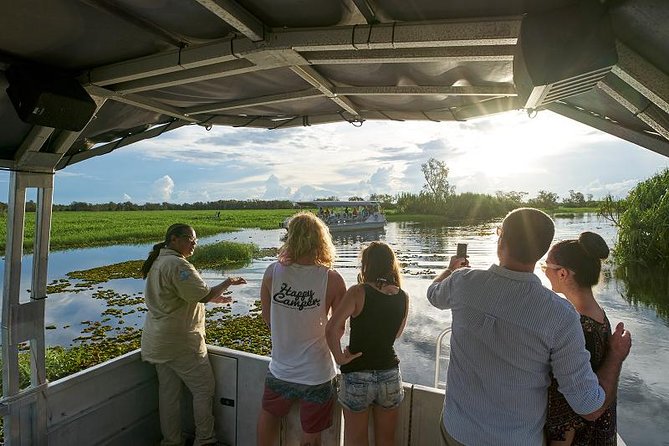
- Yellow Water Billabong is famous for changing wildlife with the light, so pick your departure time based on what you want most.
- Live narration on board means you’re not just drifting past animals—you’re learning what you’re looking at as you see it.
- Crocodiles and big birds are the headline, but you’ll also spot ducks, geese, eagles, and other wetland life depending on conditions.
- Cooinda Lodge is your launch point, and the cruise returns you to the same meeting area.
- Cruises run about 1.5 to 2 hours (option-dependent), so you can choose based on how much time you have in Kakadu.
- Environmental conditions matter, so your best approach is to arrive ready for nature, not a guaranteed checklist.
Yellow Water Billabong in Kakadu: what makes it special
Yellow Water Billabong sits in one of the most important wetland systems in Kakadu National Park. The waterway is connected to the South Alligator River system, and the billabong sits at the end of Jim Jim Creek. In plain terms: you’re cruising a living network of water channels, not just a still pond.
This matters because wetland wildlife behaves differently than it does on dry land. Birds use the shallow edges. Crocodiles often feel safer near cover. Lilies and reeds change what you can see at any moment. And because the light keeps shifting, the whole experience tends to evolve. One stretch might look calm and empty, then a minute later you’ll catch motion on the surface or a new bird popping out along the bank.
The cruise experience also helps you appreciate the UNESCO connection. Kakadu’s wetlands are part of why this area is internationally protected, and Yellow Water is one of the most iconic places to witness it in action.
You can also read our reviews of more tours and experiences in Kakadu.
Cooinda Lodge start: how the cruise day actually runs
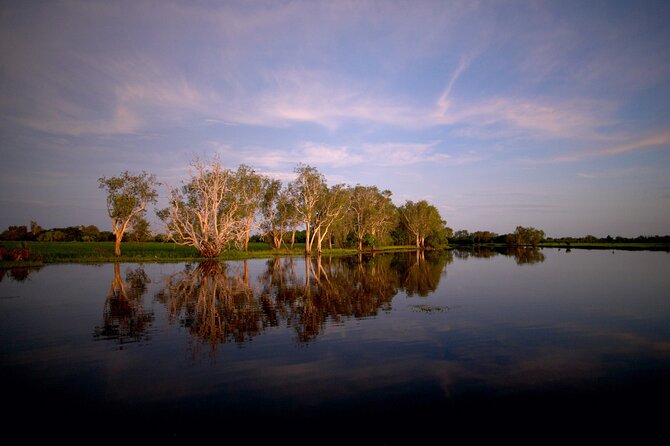
Your meeting point is Cooinda Lodge Kakadu on Old Cooinda Rd (Cooinda NT 0822). The good news is that the tour is straightforward: you start at that location and end back there, with no hotel pickup included. If you’re basing yourself around Cooinda, that’s a big convenience win.
In terms of time, you’re looking at about 1 hour 30 minutes to 2 hours depending on which option you select. Many people like the cruise length because it fits cleanly into a Kakadu day. You don’t need to build a long hike around it, and you’re still getting a substantial chunk of time out on the water.
Boat comfort comes up often in feedback. People describe boats as comfortable and spacious with good viewing angles. And because the operation can run up to a maximum of 200 travelers, it’s still worth choosing a seat where you can see both banks and the water surface. If you’re sensitive to audio, one practical tip from experience: sit where you can clearly hear the guide, since some parts of the boat can be harder to hear than others.
Indigenous-owned guiding and live commentary that keeps you engaged
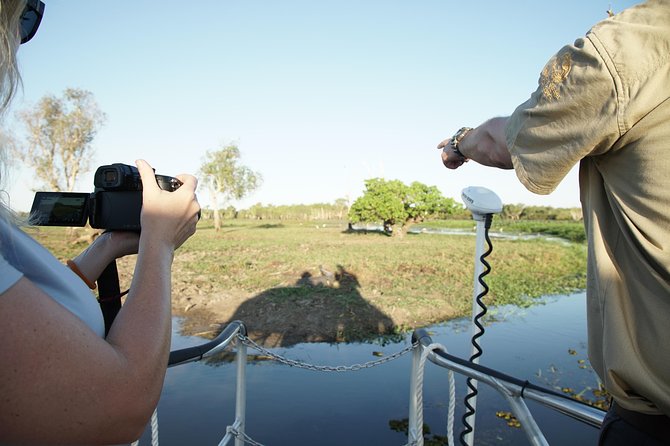
This isn’t a silent drift. The cruise is guided by a local team and includes live commentary on board, which is where a simple wildlife sighting becomes a real understanding of the ecosystem.
Guides like Dennis, Jess, Sarah, Glen, and Gecko are repeatedly mentioned, and the pattern is consistent: they mix facts with humor and keep moving at the right pace. One person highlights a funny, professional guide. Another talks about not having the guide talk nonstop, with time to look and photograph wildlife. That balance is key. In a place like Yellow Water, the best moments often arrive fast—when a bird lands, when a crocodile breaks the surface, when lilies shift with the boat.
You’ll also get Indigenous cultural context tied to the land. Some feedback specifically calls out Dreamtime stories and a better grasp of how traditional caretakers view the environment. Even if you know little before you arrive, this kind of storytelling helps you connect what you’re seeing to the longer human relationship with the wetlands.
Wildlife spotting: your best odds for crocs, eagles, and birds
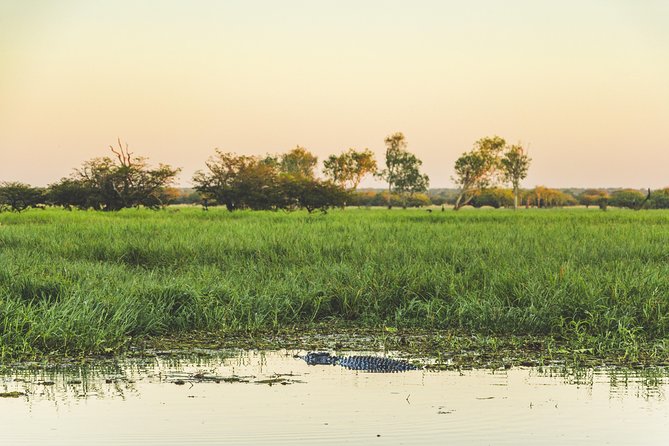
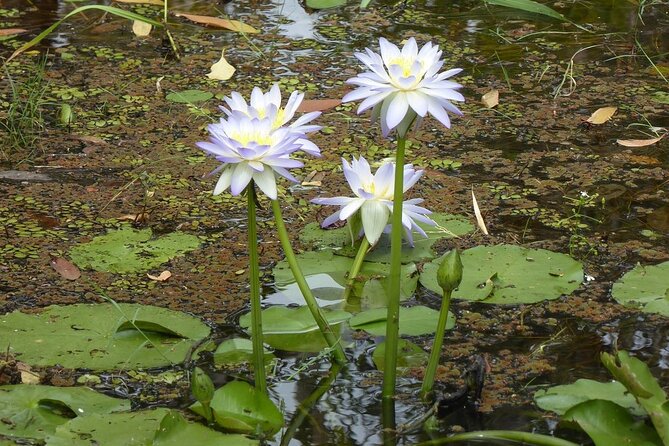
The cruise is built around spotting wildlife, and the headline animals are clear: crocodiles and birds like eagles, ducks, and geese. You’re also in a wetland full of other life—plants, lilies, and assorted bird species that show up along the banks and float in the billabong.
Here’s the practical reality: wildlife visibility depends on time of day and water conditions. Crocodiles can be partly hidden by lilies and reeds, and the water can change what’s visible from the boat. That’s why guided commentary matters. A good guide isn’t just naming species—they’re helping you read the water like a map.
What you can look for:
- Crocodiles near edges, where water meets vegetation
- Birds perched along banks or moving low over the surface
- Lilies and thick plant areas, which can hide animals but also attract birds
- Big silhouettes and sudden surface movement, which often signals an animal just under view
People also report seeing sea buffalo and other large animals in addition to crocs and birds. Horses show up in some accounts too. You’re not going to get one guaranteed animal, but the variety is part of what makes this feel like a living place.
A tip for crocodile expectations in different seasons
One important consideration: if you’re cruising during wet-season conditions, crocodiles may not be as easy to spot on every departure. As more water is spread out across the system, crocodiles aren’t forced into the same tight viewing channels. In dry season conditions, sightings tend to be more frequent. So if crocodiles are your top goal, plan around drier timing when you can, but also remember you’ll still be in one of Australia’s most bird-rich wetlands.
Sunrise vs sunset: choosing the right departure time
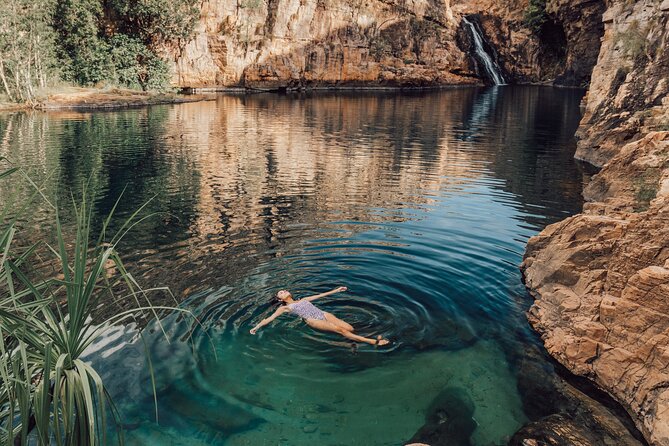
Yellow Water is not one mood. The wildlife and the visuals change as the day changes, and you’ll feel that shift immediately once you’re out on the water.
A lot of people love morning cruises because it’s often cooler. One review calls out a sunrise departure as a great early start that isn’t too hot. The morning light can also make birds easier to spot, especially when they’re actively moving and feeding along the calmer water.
Sunset cruises are a different type of magic. People repeatedly mention golden-hour views over the water, with lots of birds and crocodiles. If you want that end-of-day glow and the chance to see wildlife during the transition into evening, sunset is the time to target. One account even ties the experience to an incredible sunset moment visible from the boat.
If you’re trying to decide between them, here’s the simple way to think about it:
- Choose sunrise if you like cooler temperatures and active birds at the start of the day.
- Choose sunset if you want the moodiest light and a memorable finish on the billabong.
1.5 hours vs 2 hours: what extra time actually buys you
You can select a shorter or longer cruise, typically 1.5 hours or 2 hours. That may sound like a small difference, but on a wildlife cruise it can be noticeable.
With the longer option, you have more chances to:
- catch animals as they surface or move along the edges
- enjoy repeated viewing spots instead of rushing through the best moments
- slow down for photos when the guide points out something good
With the shorter option, you’re still getting the guided ride and commentary, and it’s a solid fit if you want to keep your Kakadu day flexible. If you’re tight on time, the shorter cruise helps you add Kakadu without turning your day into a full logistics puzzle.
Price and value: what $75.31 gets you
At $75.31 per person, this is one of those experiences that can feel like real value because key things are included. You get the cruise ticket, a local guide, and live commentary. You’re paying for the boat time plus the interpretation that helps you notice things you might otherwise miss.
What’s not included is also clear, and it matters:
- Food and drinks are not included.
- Hotel pickup and drop-off are not included, so you’ll need your own transport to the meeting point.
- Transportation to and from the area is on you.
So the value equation depends on where you’re staying. If you’re already positioned near Cooinda Lodge, the price starts looking even better. If you’re coming from far away in Kakadu, you’ll need to factor in your own transport time and cost.
Also, your purchase is supported by a mobile ticket, which is handy when you’re moving around a remote region and don’t want to track paper confirmations.
Practical ways to make the cruise smoother
Yellow Water is easy to do, and the “how” is mostly about preparation and mindset.
Bring your camera. The recommendation to get it out during the cruise makes sense because the wetlands are full of visual moments: birds taking off, lily mats, and the occasional close view of crocodiles.
Sound and sightlines matter, too. If you can, pick a seat where you can both see the water and hear the guide. One practical complaint in feedback is that the guide can be hard to hear from the front in some situations, so don’t assume every seat is equal.
Finally, go in with the right expectations. This is nature, and wildlife timing is real. If you treat it like a checklist where every crocodile has to show up, you’ll stress yourself out. If you treat it like a guided window into a functioning ecosystem, you’ll leave happy even when the billabong chooses a quieter day for crocs.
Who should book this Yellow Water cruise
This is a great fit if you:
- want a low-effort Kakadu experience with big wildlife payoff
- prefer learning on board through live commentary instead of reading afterward
- love birds and reptiles and don’t want the challenge of hiking in remote conditions
- are traveling as a family, since the cruise format is described as accessible for most people
It’s also a strong first Kakadu stop. Many people treat Yellow Water as an opening act because it delivers exactly what most visitors want: wetlands, wildlife, and memorable scenery without needing a long day of transport.
The main “don’t” is for people who need certainty. If you’re arriving in wet-season conditions and crocs are your only goal, plan for the possibility that croc sightings may be less frequent than you hoped. You’ll still be out in a spectacular UNESCO wetland, just with a wildlife mix that can shift.
Should you book? My straight answer
Yes, you should book this Yellow Water Cruise if you want an easy, high-value way to experience Kakadu National Park wetlands from the water. The combination of guided spotting, live Indigenous-owned storytelling, and serious wildlife opportunities makes it one of the most satisfying ways to spend a couple hours in Cooinda.
Book it especially if:
- you’re flexible and happy to focus on birds, plants, and the overall billabong scene
- you want a sunrise or sunset experience with strong atmosphere
- you like learning what you’re seeing as you see it
Skip it only if you’re booking under conditions where wildlife timing is likely to be unpredictable for crocs and you’d be disappointed by that. Otherwise, this cruise delivers exactly the kind of Kakadu moment that turns a trip into a memory: still water, moving birds, and the unmistakable presence of crocodiles when the billabong decides to show off.
FAQ
What’s the meeting point for the Yellow Water Cruise in Kakadu?
The cruise meets at Cooinda Lodge Kakadu, Old Cooinda Rd, Kakadu NT 0822. The activity ends back at the meeting point.
How long is the cruise?
The cruise is approximately 1 hour 30 minutes to 2 hours, depending on the option you choose.
What’s included in the ticket price?
Your ticket includes the cruise, a local guide, and live commentary on board. Food and drinks are not included.
Do I need to bring food or drinks?
Yes. Food and drinks are not included, so you’ll need to plan for your own refreshments if you want them.
Will I definitely see crocodiles?
Crocodiles are a main target, but sightings depend on environmental conditions. During wet-season conditions, crocodiles can be harder to see on every cruise.
Is the tour refundable if I cancel?
This experience is non-refundable and cannot be changed for any reason. If the tour is canceled due to poor weather, you’ll be offered a different date or a full refund, and if a minimum number of travelers isn’t met, you’ll be offered an alternative date/experience or a full refund.