REVIEW · SYDNEY
Pennant Hills: Junior Tree Ropes Course
Book on GetYourGuide →Operated by Treetops Adventure - The Hills · Bookable on GetYourGuide
A treetop course for little kids can sound scary. What makes this one workable is junior design plus real safety gear and close onsite supervision. You get the thrill of high ropes, swings, and ziplines without turning the day into a stress-fest.
I especially like that the Junior levels are built for ages 3 to 7. That means the challenges are scaled for small bodies, so kids can feel capable instead of just overwhelmed. I also like the variety: you can choose from five junior courses, with a mix of high-ropes obstacles, swinging elements, and zipline time.
One consideration: for junior participants, parents or guardians must stay onsite to supervise from the ground. If you were hoping to drop kids off and grab coffee across the street, this isn’t that kind of activity.
In This Review
- Key things to know before you go
- Junior tree ropes in the right age range (and why that matters)
- Arriving at Treetops Adventure The Hills: your check-in flow
- Choosing between five junior courses (and not forcing the issue)
- High ropes, swings, and the real feeling of being up there
- Ziplines that feel smooth, not scary
- Safety equipment and onsite supervision: the non-negotiables
- Timing: what 150 minutes feels like with little adventurers
- Price and value: is $26 worth 150 minutes up in the trees?
- Who should book this junior tree ropes course (and who should look elsewhere)
- What the experience feels like in real family moments
- Should you book the Pennant Hills Junior Tree Ropes Course?
- FAQ
- What age is the Junior Tree Ropes Course for?
- How long is the experience?
- Where do we check in?
- Do parents have to stay onsite?
- What activities are included?
- What should we wear?
Key things to know before you go
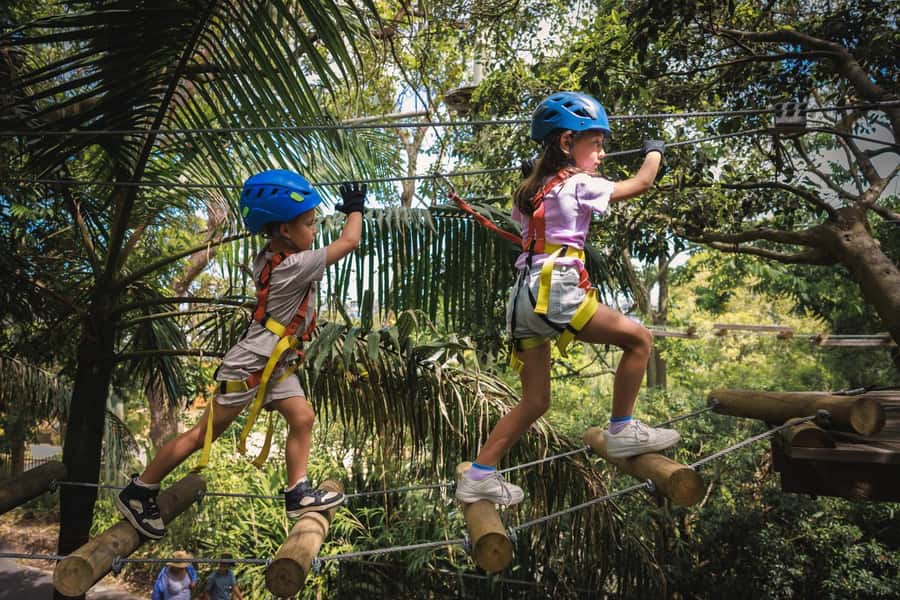
- Ages 3–7 junior focus: the course setup is for small kids, not adults pretending to be tough.
- Five junior courses to choose from: you can match the activity to your child’s comfort level.
- High ropes, swings, and ziplines: it’s not just one element, so the day stays fun.
- Safety equipment is included: you arrive knowing gear support is part of the deal.
- Small group size (up to 10): fewer people means more attention while you’re getting set up.
- Instructor language is English: helpful if you prefer clear guidance without guessing.
Junior tree ropes in the right age range (and why that matters)
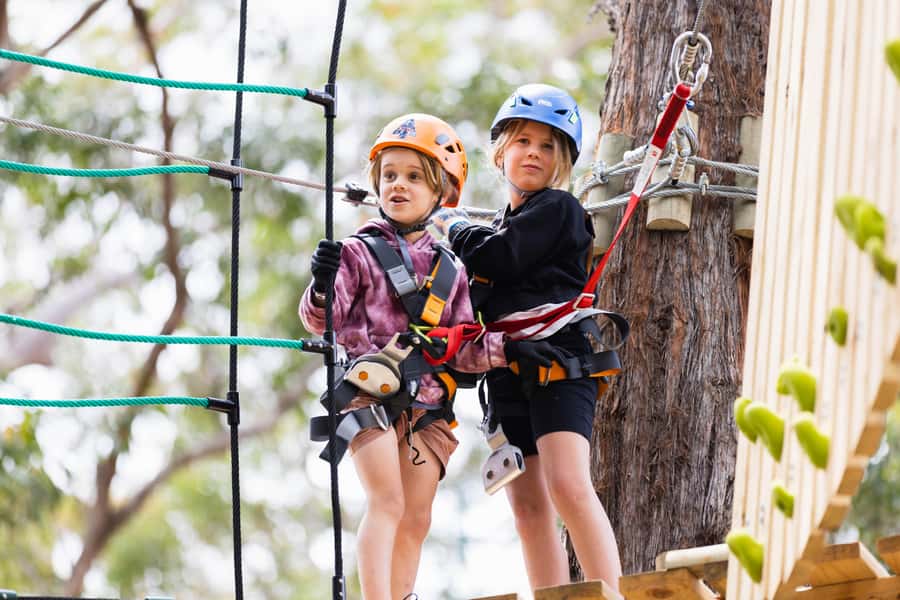
This is a treetop adventure set up specifically for kids aged 3 to 7. That age detail is the difference between a fun family challenge and a day that feels like work. You’re not just renting a harness and hoping for the best. The junior levels are designed as an intro to aerial obstacles in a controlled, exciting way.
For Iookers-on, there’s something reassuring too. Parents don’t have to hover in panic mode, but you do have to stay onsite and supervise from the ground. That keeps the tone balanced: adventurous for kids, steady for grown-ups.
The other big win is pacing. With junior courses, the emphasis is on engagement and achievable wins—like getting through a set of obstacles, then earning a zipline ride. Kids get motion, challenge, and a sense of progress, without the course turning into a stamina test.
You can also read our reviews of more tours and experiences in Sydney.



Arriving at Treetops Adventure The Hills: your check-in flow
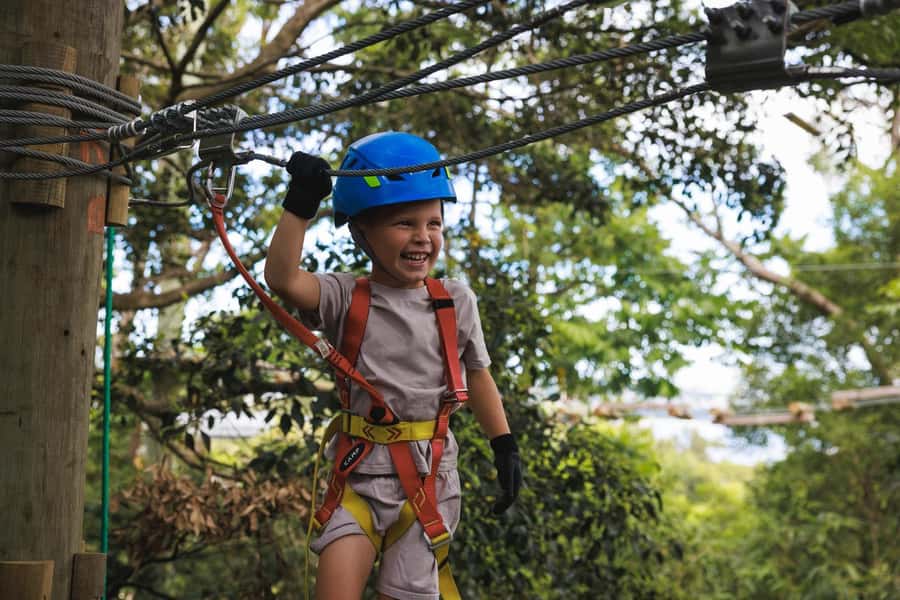
You’ll head to the Treetops Adventure The Hills reception for check-in. Plan to arrive 15 minutes early. That buffer matters because everyone is getting geared up and sorted before anyone gets clipped in and heads up.
From there, the staff guide the process for junior participants using the onsite setup and safety equipment provided. You’re not on your own trying to figure out ropes and knots with a stopwatch. The experience runs with an English-speaking instructor, which helps if your child needs clear direction in simple terms.
If you’re a parent, this is also when you should do your best “ground role” planning. Once your kid is up in the trees, your job is to supervise from below. That means staying alert, staying close, and being ready to help with encouragement at the moments they need it most.
Choosing between five junior courses (and not forcing the issue)
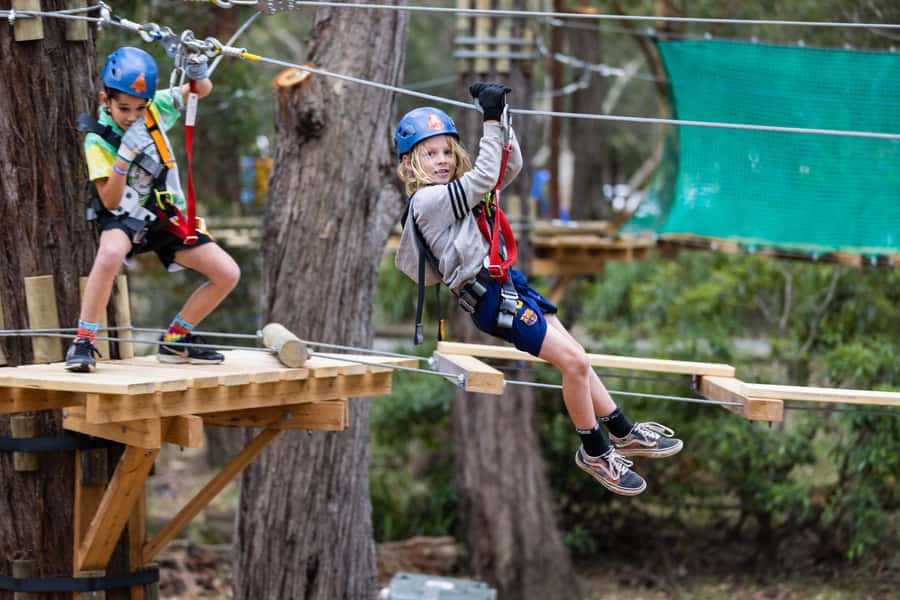
One of the best parts of this experience is the option of five junior courses. More choice is only helpful if it’s used to match your child’s comfort level, not to create decision pressure.
Here’s the practical way to think about it: if your child is cautious, you’ll want to start with a course that feels like a step up, not a leap. If your child is already the type to climb everything at home, you might be able to handle a more challenging route right away. The point is to keep the day feeling positive.
The day’s activities revolve around three big formats:
- High ropes where kids navigate at height
- Swings that add a fun, moving rhythm
- Ziplines that trade effort for speed and views
Because those elements change through the courses, the experience avoids the “same obstacle all day” problem. Kids get variety, and that helps mood stay up even if one section feels intimidating.
High ropes, swings, and the real feeling of being up there
The core thrills here are the high ropes and swings, which teach kids how to move through an aerial course step by step. For ages 3–7, the design goal is clear: make it challenging enough to feel like an adventure, but guided enough that kids can participate without a meltdown.
Swings bring a different kind of excitement than climbing. Instead of just gripping and stepping, kids get that feeling of momentum. That’s often what turns a hesitant child into an engaged one—motion can feel like play, even when it’s still part of the obstacle setup.
High ropes can be a confidence builder. The way it typically works best is when kids feel they can take the next safe step. Your encouragement matters here. Simple support from the ground, plus staff guidance, helps kids keep moving rather than freezing.
A small but important note: this is not listed as suitable for children under 3. That age boundary exists for a reason, and it’s worth respecting. A junior course is designed for a specific size, attention span, and safety system match.
Ziplines that feel smooth, not scary
Ziplines are a standout part of the experience. The description emphasizes that kids glide along and get a good look at the natural surroundings. Even when your child is nervous about the ropes, a zipline can feel like a fun payoff: less effort, more momentum.
What I like about this setup is the emotional balance. Climbing and swinging ask kids to work through obstacles. Then the zipline offers a change of pace, where the reward arrives as motion rather than a long endurance stretch.
From a parent perspective, ziplines also tend to provide quick “yes” moments. Kids experience speed in a controlled way, and it often becomes the part they remember most. If you’re choosing a course, it’s worth thinking about your child’s reaction to the idea of flying along a line. Some kids love it immediately. Others need a little time and encouragement first.
- Blue Mountains Small-Group Tour from Sydney with Scenic World,Sydney Zoo & Ferry
★ 5.0 · 3,709 reviews

Safety equipment and onsite supervision: the non-negotiables
Safety equipment is included, which is exactly what you want for a high-adventure activity with young kids. Harnesses and protective gear are a huge part of why junior treetop courses can work at all.
Parents also need to know the supervision rule. For junior levels, parents or guardians must remain onsite and actively supervise from the ground. That’s a clear responsibility split: the kids get to do the aerial challenge, and you stay close enough to monitor and support.
This requirement also changes the day’s vibe in a good way. Instead of feeling like you dropped your child off at a playground, you’re part of the experience. You’ll be there right when kids start, right when they finish, and in the moments between where encouragement matters.
It also helps to set expectations before you arrive. Talk to your child about what you’ll do from the ground: cheer, watch, and support if they hesitate. That reduces surprises and helps them feel secure enough to participate.
Timing: what 150 minutes feels like with little adventurers
The experience runs for 150 minutes, and you’ll check starting times based on availability. For a junior adventure, 150 minutes is long enough for multiple course segments, but short enough that kids aren’t stuck waiting around for hours.
The timing matters because your child will likely have a few different energy phases: excited at check-in, focused once they’re geared up, then possibly tired or curious as the day goes on. Keeping that in mind helps you pack small patience and plan for “small breaks” in the ground experience.
Also, arrive early. The 15-minute early arrival recommendation isn’t just a courtesy; it gives time for staff to organize gear and set expectations so kids don’t feel rushed right before they go up.
If your child is prone to getting restless in long activity windows, this format can still work because it includes multiple elements—high ropes, swings, and ziplines—so the day has internal variety.
Price and value: is $26 worth 150 minutes up in the trees?
At $26 per person for a 150-minute junior treetop course, the value is strongest when you look at what’s included. You’re paying for safety equipment, supervised junior levels for ages 3 to 7, and a full mix of aerial elements: high ropes, swings, and ziplines.
A big part of the cost is staff support and the safety system. You’re not just buying access to a structure; you’re buying guided participation at height. That’s where the price starts to make sense, especially for families wanting a real challenge rather than a simple playground.
Meals and beverages aren’t included, and transportation isn’t included either. That’s normal for active attractions, but it’s worth planning so you don’t end up buying overpriced snacks on the spot.
The small group size—limited to 10 participants—also adds value. Fewer people means more manageable flow and more staff attention during the setup and transitions.
Who should book this junior tree ropes course (and who should look elsewhere)
This is a great fit if you’re traveling with kids in the 3 to 7 range who are curious, energetic, and ready to try something hands-on at height. It’s also a solid choice if you want a family activity where your role is active but not physically exhausting—you supervise from the ground while kids do the climbing and gliding.
It’s less suitable if your child is under 3, or if your family isn’t comfortable with the requirement that parents or guardians stay onsite during junior participation.
For kids 8+, the guidance is to look at the other Hills Tree Ropes Course rather than relying on the junior setup. In practice, that means you’ll get a course matching age and capability, instead of forcing a mismatch.
What the experience feels like in real family moments
Even without getting too dramatic, this type of activity tends to create strong reactions. One family story that stood out praised how the experience felt stimulating and how friendly the staff were. Another note highlighted that a 6-year-old granddaughter loved it.
That combination matters: young kids don’t just need equipment and ropes. They need a supportive atmosphere with clear guidance, and they need to feel like the staff are keeping things under control. When staff are friendly and the course is age-appropriate, kids are more likely to attempt the next section instead of hesitating and shutting down.
I also think this activity works because it’s not all on the kid’s shoulders. The format includes supervision and safety equipment, so the day becomes a team effort: kids do the challenge, parents provide encouragement and oversight, and staff manage the system.
Should you book the Pennant Hills Junior Tree Ropes Course?
Book it if you’re bringing a child aged 3–7 and you want a genuine introduction to aerial adventure with safety gear included and junior courses designed for small adventurers. The mix of high ropes, swings, and ziplines keeps the day interesting, and the choice of five junior courses helps you match the route to your kid’s comfort level.
Skip booking if you’re hoping to leave kids under supervision and disappear. This one requires you to stay onsite for junior participants. Also skip it if your child is under 3, since it’s not listed as suitable.
If you want a family outing that feels like real progress—climb, swing, glide, finish—this is a strong pick for the right age group.
FAQ
What age is the Junior Tree Ropes Course for?
The Junior levels are designed for children aged 3 to 7. Children under 3 are not suitable, and for kids 8+ you should look at the other Hills Tree Ropes course.
How long is the experience?
The duration is 150 minutes, with starting times based on availability.
Where do we check in?
You should head to the Treetops Adventure The Hills reception for check-in.
Do parents have to stay onsite?
Yes. For children doing the junior levels, parents or guardians must remain onsite and supervise from the ground.
What activities are included?
You can expect high ropes, swings, and ziplines as part of the junior courses.
What should we wear?
Wear comfortable clothing and closed-toe shoes. You’ll also be provided with safety equipment.
More Tour Reviews in Sydney
- Blue Mountains Small-Group Tour from Sydney with Scenic World,Sydney Zoo & Ferry
★ 5.0 · 3,709 reviews