REVIEW · KANGAROO ISLAND
Small Group Kangaroo Island Tour – Best of KI in 2 Days
Book on Viator →Operated by Kangaroo Island Hire a Guide · Bookable on Viator
Kangaroo Island goes wildlife-first in two days. What makes this tour click is the small group size and the way you travel by comfortable 4-wheel drive while an expert guide helps you actually find animals. I especially like the planned “wildlife beats” with real time at the best viewing points, plus the inclusion of national park fees and select transfers. One thing to keep in mind: some roads can be rough, so you’ll want decent mobility and a bit of patience on bumpy track days.
This is the kind of trip where guide personality matters. From past experiences with this operator, guides such as Nikki (a professional nature photographer with a conservation-minded approach), Luca (serious pros energy and great animal-finding), and Kate (passionate and great with questions) are a big reason people rate this so highly. The tight max group of eight also means you’re not just one face in a crowd.
Now, here’s my practical caution: it’s not a walk-everywhere day trip. You should be comfortable with moderate walking and spending time outdoors in all weather, since the tour runs in every condition. If walking is a challenge for you, this one may feel like too much.
In This Review
- Key Points You’ll Feel Fast on This Tour
- Kangaroo Island, But Smarter: How a 2-Day Plan Actually Helps
- Small Group (Up to 8) and Real Guide Power
- 4WD Transport on KI: Comfort, Timing, and the Dirt-Road Reality
- Day One: Seal Bay Sea Lions Up Close (and a Short Walk That Matters)
- Duck Lagoon: Parrots and the Best Kind of Slow Watching
- Stokes Bay in the Evening: Kangaroos, Wallabies, and a Rock Tunnel
- Emu Bay After Lunch: Beach Time With Dolphin Possibility
- Day Two: Vivonne Bay for Water Time and Rock Pool Snorkeling
- Flinders Chase National Park: A Long Stop for Real Nature Time
- Remarkable Rocks: 500 Million Years, and Why Lichen Matters
- Cape du Couedic Lighthouse: Local Stone, 1906–1909 Detail
- Admiral’s Arch: The Rock Bridge That Looks Like It Shouldn’t Exist
- What’s Included, What’s Not, and How to Budget Cleanly
- Price and Value: Is $573.79 Worth It?
- Tips to Make Your Two Days Feel Easy
- Should You Book This Kangaroo Island Best of KI Tour?
- FAQ
- How many people are in the small group?
- Is hotel pickup and drop-off included?
- What meals are included on the tour?
- Are national park fees included?
- Does the tour include wildlife viewing time?
- Is cancellation free if plans change?
Key Points You’ll Feel Fast on This Tour
- Max 8 passengers means more time with your guide and less rushing at stops.
- 4WD travel helps you reach the island’s wildlife spots without juggling rental logistics.
- Seal Bay Conservation Park brings you close to sea lions on the beach, not just a distant look.
- Flinders Chase National Park is built into your Day 2 for big scenery and iconic rock formations.
- Meals and water included (morning + afternoon tea, and lunches) makes the schedule easier to handle.
- Luggage is limited to one small bag per traveler, so pack light.
Kangaroo Island, But Smarter: How a 2-Day Plan Actually Helps
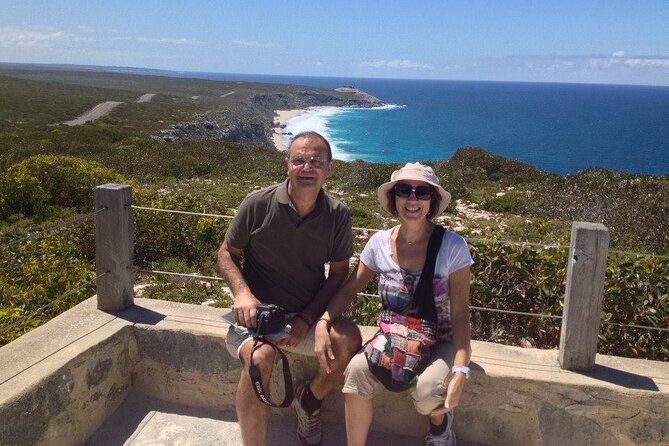
Kangaroo Island is famous for animals, but there’s a catch: wildlife doesn’t always pose on cue. The value of this tour is that it treats spotting wildlife like a skill, not a hope. You’re in a small group, using a guide who knows where and when to look, and moving around by 4WD so you’re not wasting time.
Two days is also the sweet spot. Too short, and you feel like you only hit the highlights from the car window. Too long, and you start repeating yourself. Here, the pacing is built around key nature stops, with enough time at each place that you can slow down, scan carefully, and get photos that look like you actually earned them.
The itinerary is designed with a “creature rhythm.” Day 1 leans into coastal and evening wildlife moments. Day 2 shifts toward Flinders Chase and the geological icons. That matters because animals often show up differently at different times, and the guide can steer you toward what’s most likely that day.
A few more Kangaroo Island tours and experiences worth a look
Small Group (Up to 8) and Real Guide Power
I like tours where the guide does more than read facts off a brochure. This one leans hard on guide-led spotting. The tour description calls out that Australian wildlife is unique but difficult to spot without an expert, and the tour is built around that problem.
The best part is how the guide role shows up in the day. You’re not just going from one checkbox to another. You’re getting help locating wildlife, then staying long enough to actually see behavior, not just shapes.
The reviews you provided back that up in a very specific way. People highlight guides like Nikki, Luca, and Kate for finding animals, picking strong viewing spots, and answering questions with real enthusiasm. Nikki is noted as a nature photographer, which often means she understands light and timing for better sightings and better photos. Luca is praised for knowing where animals are and keeping each day feeling unique, not recycled. Kate is described as passionate and willing to share knowledge and field questions in a friendly way.
4WD Transport on KI: Comfort, Timing, and the Dirt-Road Reality
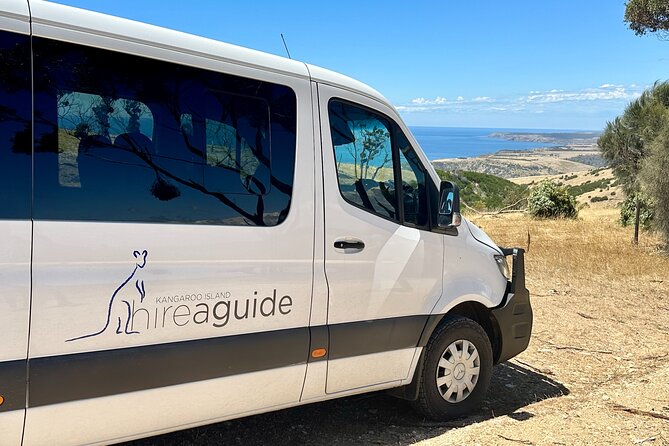
This tour uses a comfortable 4-wheel drive vehicle, and that’s not just a style point. Kangaroo Island travel can involve more than flat highway driving. You want the vehicle that can reach the places most people skip.
At the same time, there’s an honest consideration: some roads can be rough. In one review snippet you shared, the trip included both sealed roads and “bone-jarring dirt roads,” with the guide explaining it was linked to drought conditions. You should plan for a bit of jolting, and that means:
- Wear shoes that handle uneven ground around stops.
- Consider motion sickness support if you’re sensitive.
- Give yourself grace on timing. On island dirt tracks, speed is never just about distance.
The good news is the tour length is tight enough that you’re not stuck commuting all day. The 4WD format is what keeps the day moving while still getting you out at the right places.
Day One: Seal Bay Sea Lions Up Close (and a Short Walk That Matters)
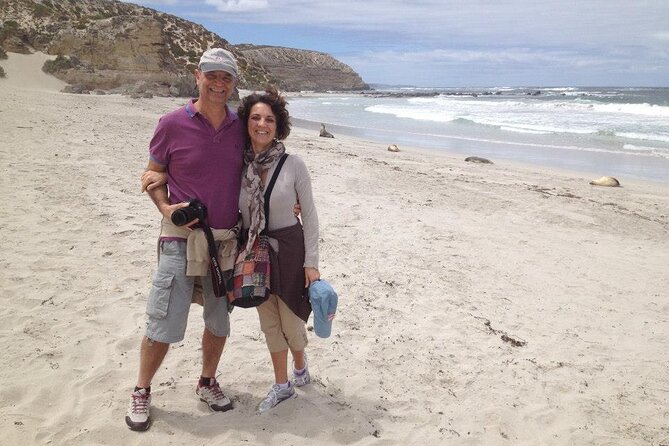
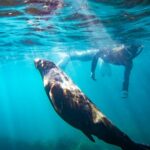
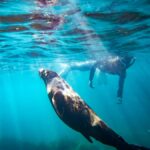
Day 1 opens at Seal Bay Conservation Park, one of the island’s most iconic wildlife experiences. This isn’t a “stand behind a fence and hope” situation. You admire sea lions resting on the beach, and the guide takes you to the beach area close to them, just a few meters away.
Why this stop works:
- It’s tactile wildlife viewing. You’re hearing and seeing the animals in context.
- Timing matters with animals on shore, and your guide controls the pacing.
- The visit time is short enough to keep energy high for later stops, but long enough to scan and settle in.
You’ll have about 45 minutes here, and admission is included.
Tip for your photos: sea lions can shift quickly, and light on the beach can change. If you’re someone who likes to photograph, this stop is where you can get your best “real behavior” shots, not just a portrait.
Duck Lagoon: Parrots and the Best Kind of Slow Watching
Next comes Duck Lagoon, where you focus on birds—especially parrots. You’ll spend about 30 minutes here, and admission is included. The stop specifically calls out species like Crimson Rosella and Rainbow Lorikeet.
This is the kind of place where the guide’s value shows up in small ways. Instead of you wandering and missing what’s active, you’re guided to the right vantage and the right tempo. Parrots can be noisy and unpredictable, so it helps to be where the action is likely to happen.
If you enjoy birdwatching, this stop is a highlight because it’s not only about getting a glimpse. You’re given time to notice movement, calling, and feeding behavior.

Stokes Bay in the Evening: Kangaroos, Wallabies, and a Rock Tunnel
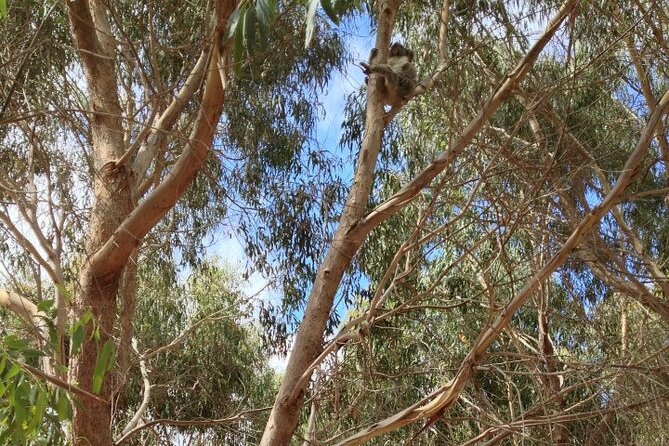
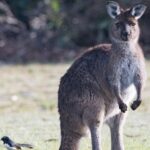
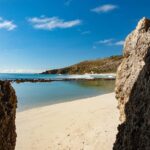
Later on Day 1 you head to Stokes Bay, timed for evening. You can spot kangaroos and wallabies grazing, plus the bay is known for a tunnel between rocks that leads to the beach.
The schedule gives you about 45 minutes. Admission there is free, which matters for your budget, but the real reason to care is that evening can be when wildlife is most active and visible.
A couple of practical points:
- Evening viewing often means dim light, so bring a camera that handles lower light, or keep your phone settings realistic.
- Wear footwear you trust on uneven sand and rocks around lookout areas.
This is one of those stops where your reward comes from patience. Stay calm, scan slowly, and don’t rush toward the first animal you see. Wildlife loves to reward the patient.
Emu Bay After Lunch: Beach Time With Dolphin Possibility
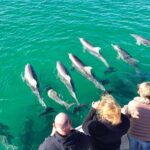
After lunch, you visit Emu Bay for about 30 minutes. Admission is free. This is a beautiful and safer swimming option on the island, and it’s also a place where dolphins may show close to shore.
Even if you don’t swim, Emu Bay is a nice reset. It breaks up the wildlife-spotting intensity with scenery time and a chance to breathe.
If you’re traveling with swimmers, keep this in mind: “safest swimming location” doesn’t mean “no risk,” but it does signal that the tour thinks of this as a practical beach stop, not a random stop for photos only.
Day Two: Vivonne Bay for Water Time and Rock Pool Snorkeling
Day 2 starts with Vivonne Bay, about 30 minutes, and admission is free. This stop includes the Harriet River, plus the Vivonne Bay Jetty. The tour notes that you can snorkel rock pools, surf, or fish from the jetty or beach.
This is a stop built for flexibility. If you want to get in the water, this is your moment. If you’re not a snorkel person, you can still enjoy the shoreline and the structure of the jetty for a slower beach walk.
One cautious note: you’re in all-weather conditions, and sea conditions can change. If you snorkel, only do it when conditions feel safe.
Flinders Chase National Park: A Long Stop for Real Nature Time
After Vivonne Bay, you spend about 4 hours in Flinders Chase National Park, with admission included. This is the heart of Day 2, and it’s where the tour expands from individual wildlife moments into bigger natural areas.
Four hours in a national park is a meaningful chunk. It gives you time for the iconic viewpoints without feeling like everything is a quick drive-by. It also increases your odds of spotting animals, since you’re in a protected area with lots of habitat.
Wear layers. National parks can shift from bright to breezy fast, and the tour runs in all weather conditions, so dressing for change helps you stay comfortable.
Remarkable Rocks: 500 Million Years, and Why Lichen Matters
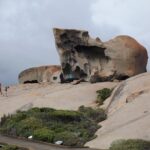
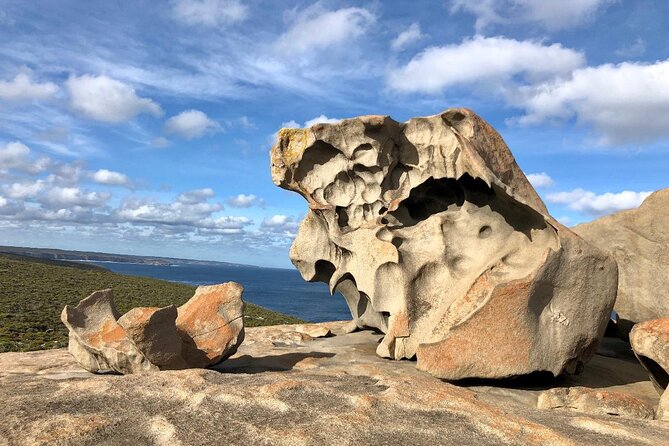
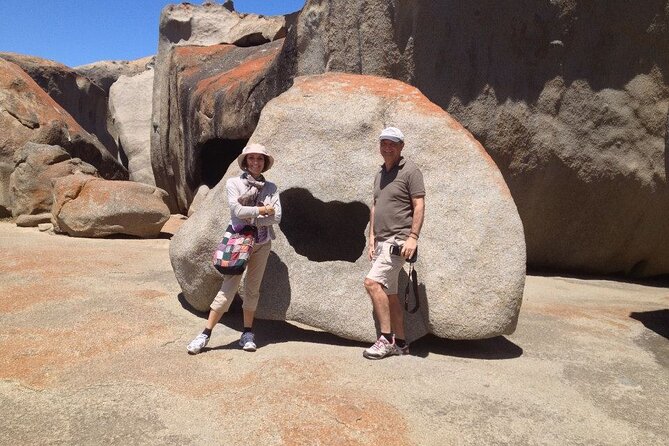
Next up: Remarkable Rocks, about 45 minutes, with admission included. These are shaped over some 500 million years by wind, sea spray, and rain. The tour description also calls out the golden-orange lichen covering parts of the rocks.
This stop is worth slowing down for, even if you’ve seen rock formations before. The lichen adds texture and color, which means photos don’t have to look flat and gray. It’s one of those places where you can spend longer than planned if the light is good.
This is also a great stop to practice a traveler habit I love: look from multiple angles. Up close, these rocks have shapes you won’t catch from the first viewpoint.
Cape du Couedic Lighthouse: Local Stone, 1906–1909 Detail
Then you visit Cape du Couedic Lighthouse for about 20 minutes, with admission included. The lighthouse was constructed between 1906 and 1909. The description notes a tower built from 2,000 pieces of local stone, plus three four-room cottages for the head keeper and assistants.
That specific construction detail matters because it turns the lighthouse from a simple photo stop into a real sense of place. You’re not just visiting an object. You’re seeing how people built in a harsh, remote environment.
Even if you’re not into architecture, a lighthouse stop gives the day balance: wildlife and rocks are emotionally heavy. Lighthouses are calm. They’re about orientation, distance, and weather.
Admiral’s Arch: The Rock Bridge That Looks Like It Shouldn’t Exist
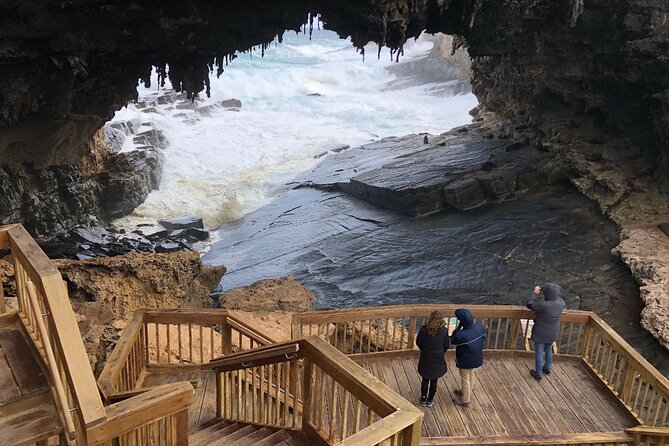
Finally, Admirals Arch comes into view near the Cape du Couedic Lighthouse area. You get about 45 minutes, admission included. The tour describes it as a distinctive rock bridge formed after thousands of years of erosion.
This stop is a classic “pause and stare” moment. The shape is dramatic even without any explanation, but it’s the erosion story that makes it feel real. After years of wind and sea action, the arch became something you can walk around in your head.
If you like photos, this is where you can experiment with angles again. The arch changes how light hits nearby rock surfaces, and that can make even a quick camera session look special.
What’s Included, What’s Not, and How to Budget Cleanly
This tour includes:
- National park fees
- Transport via 4WD vehicle
- Morning and afternoon tea
- Water
- Hotel pickup and drop-off (select hotels only)
- Lunch (2)
It also includes a mobile ticket, which is convenient.
What’s not included:
- Souvenir photos (available to purchase)
- Your hotel
- Transfer from/to the island
That last point is key for value. This tour can cover a lot inside Kangaroo Island, but it won’t solve your bigger travel logistics. You still need to get to the island and stay there. If you’re doing a broader South Australia trip, plan your ferry and lodging so you’re not scrambling the day of pickup.
Also, there’s a luggage limit: each traveler can bring a maximum of one small luggage item. If you plan to bring more, you’ll need to ask the operator in advance, since excess luggage rules can be strict.
Price and Value: Is $573.79 Worth It?
The price is $573.79 per person for a roughly two-day tour. That’s not pocket-change. So here’s how I think about value with a trip like this.
You’re paying for three things that are hard to DIY efficiently:
- Guided wildlife-finding: spotting animals is the experience. The guide is central, not optional.
- Transport and access: 4WD helps you reach places without renting a vehicle and learning island road realities.
- Included park fees and meals: national park fees and lunches add up when you do this alone.
If you were renting a car and paying each park separately, you could spend similar money on logistics alone, especially for a two-day hit of multiple stops. And if you don’t have local experience, your “time spent looking” could be worse than your “time spent driving.”
Where it might not be worth it:
- If you’re an extremely independent traveler who enjoys long drives and doesn’t care about guided wildlife finding.
- If your mobility is limited. This tour assumes moderate fitness and isn’t recommended if you have difficulty walking.
Tips to Make Your Two Days Feel Easy
A few practical moves will pay off fast:
- Dress for all weather conditions. KI weather can swing. Bring layers.
- Bring a camera strap you trust. You’ll be moving and stopping frequently.
- Expect bumpy road moments. Pack motion-sickness support if needed.
- Pack light because of the one small luggage limit.
- Comfortable shoes matter more than you think, especially around beaches, rocks, and viewing spots.
If you’re traveling with kids, the tour data says children must be accompanied by an adult. Also, the small-group size usually helps families because you’re not lost in a mass group, but the walking still needs to fit the child’s comfort level.
Should You Book This Kangaroo Island Best of KI Tour?
I’d book this tour if you want the best chance of seeing Kangaroo Island wildlife without the stress of DIY planning. The small group cap of eight, the 4WD vehicle, and the inclusion of national park fees and meals make it feel like a practical “I’m here, now show me the goods” style trip.
I’d pause before booking if you’re very sensitive to rough roads or you struggle with walking. This isn’t marketed as a low-effort experience, and the tour runs outdoors in all conditions.
If you’re the kind of traveler who values guides who can find animals and explain what you’re seeing, this one is strong. Based on what you shared about guides like Nikki, Luca, and Kate, you’re likely to get a genuinely engaged nature person, not a script reader. And on Kangaroo Island, that can be the difference between seeing wildlife and only hearing about it.
FAQ
How many people are in the small group?
The tour has a maximum of 8 travelers. Smaller groups are part of the appeal.
Is hotel pickup and drop-off included?
Hotel pickup and drop-off are included for selected hotels. Transfer from and to the island itself is not included.
What meals are included on the tour?
Morning and afternoon tea are included, plus water. Lunch is included twice during the two days.
Are national park fees included?
Yes. National park fees are included in the tour price, which helps simplify budgeting.
Does the tour include wildlife viewing time?
Yes. The tour is designed around wildlife spotting, including chances to see animals such as kangaroos and koalas, and specific wildlife stops like sea lions at Seal Bay.
Is cancellation free if plans change?
Yes, you can cancel for a full refund up to 24 hours before the experience’s start time. If you cancel less than 24 hours before, the amount paid is not refunded.