REVIEW · SYDNEY
Sydney Queer Walking Tour
Book on Viator →Operated by Queer Sydney Walking Tour · Bookable on Viator
Mardi Gras has roots in plain sight. This two-hour queer walking tour links street-level landmarks to the stories that shaped Sydney’s LGBTQ community, from colonial-era traces to the big changes that hit the mainstream. I especially love how it covers Mardi Gras as a turning point, and how the guide weaves in the broader social context—fairness, equality, media, protest, and the HIV epidemic—so it feels real, not like a history lecture.
You should know it’s mostly a walk, with stops that include backstreets, so you’ll want comfortable shoes and a bit of stamina. The good news: the pace is built for conversation, and it stays focused on what you’re looking at.
If you like tours that make a city feel personal, this one fits. You meet in the morning near the Law Courts and finish at Taylor Square, right by the action that people still connect to today. The group is capped at 12, which keeps the whole thing from feeling crowded.
In This Review
- Key highlights before you go
- Why This Sydney Queer Walk Works in Two Hours
- Meeting at Law Courts Library (and ending near Taylor Square)
- Stop 1: Archibald Memorial Fountain and the idea of hidden queer threads
- Stop 2: Emden Gun at Whitlam Square and how the 1970s changed the conversation
- Stop 3: Darlinghurst backstreets, Green Park, and facing the HIV epidemic years
- Stop 4: Kinselas Hotel area at Taylor Square and the first Mardi Gras, June 1978
- What the guide style feels like (and why it matters)
- Price and value: is $53.79 worth it?
- Who should book this tour (and who might prefer a different style)
- A quick practical checklist for your day
- Should you book Sydney Queer Walking Tour?
- FAQ
- What is the duration of the Sydney Queer Walking Tour?
- How much does the Sydney Queer Walking Tour cost?
- Where do I meet for the tour?
- Where does the tour end?
- What time does the tour start?
- Is there a mobile ticket?
- How many people are in a group?
- Are service animals allowed?
- Is it easy to reach with public transportation?
- Is there free cancellation?
Key highlights before you go
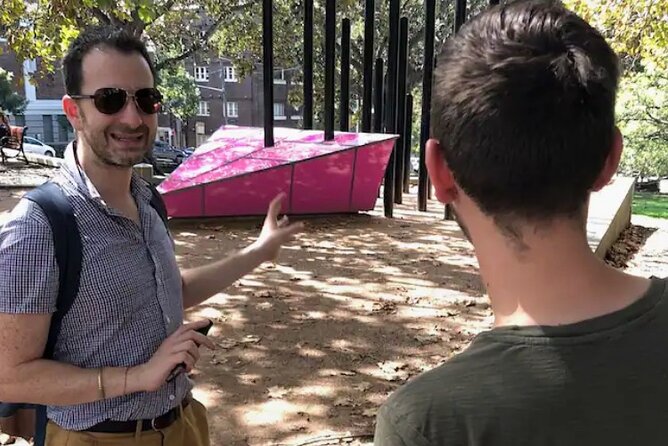
- Small group size (max 12) keeps the discussion human, not rushed.
- Mardi Gras history in the exact June 1978 setting adds weight to the parade story.
- Darlinghurst backstreet walk puts the HIV-era themes into a neighborhood context.
- Coffee/tea stop opportunity gives you a breather while the tour connects the next topic.
- Mobile ticket makes entry simple on the day.
Why This Sydney Queer Walk Works in Two Hours
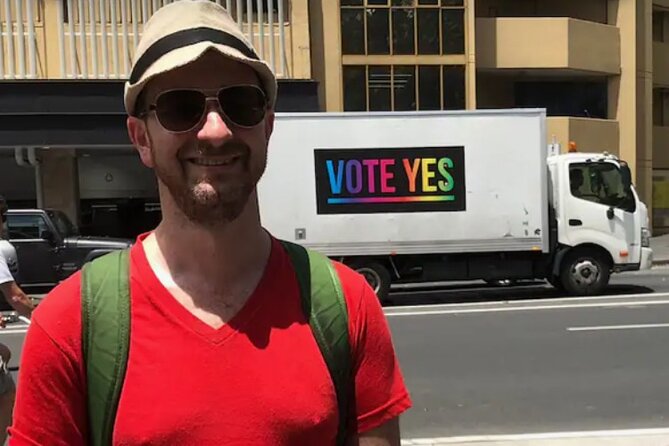
This tour is built around the idea that queer history is often tucked out of sight. Instead of trying to cover everything, it guides you through a sequence of places where the story is supposed to be felt: where people pushed for change, where public attention shifted, and where community resilience showed up during hard years.
I like that it starts broad—queer histories over time—then brings you back to Sydney’s streets. That way, you get context without losing the plot. The guide also keeps it grounded in what you’re seeing, which helps these themes land.
And yes, the Mardi Gras thread matters. You don’t just hear about the parade as an event. You hear about why the first one in 1978 mattered, how protest and partying went together for decades, and how the HIV epidemic affected the community’s public life. That’s the difference between learning facts and understanding why people remember.
You can also read our reviews of more walking tours in Sydney

Meeting at Law Courts Library (and ending near Taylor Square)
You’ll start at Law Courts Library, 184 Phillip St, Sydney NSW 2000, with the tour beginning at 9:30 am. Expect a straightforward start: find the group, get your bearings, then head out on foot.
You’ll finish at Sydney Sustainable Markets, Taylor Square, Oxford Street at the intersection with Bourke Street in Darlinghurst. That end location is smart. You land right in the part of Sydney people associate with queer nightlife and culture, so the tour’s final stop doesn’t feel like an abrupt landing.
If you’re thinking about the rest of your day, I’d plan something nearby after the walk. You’ll have a much better sense of why these streets matter when you’re standing there, not just scanning photos later.
Stop 1: Archibald Memorial Fountain and the idea of hidden queer threads
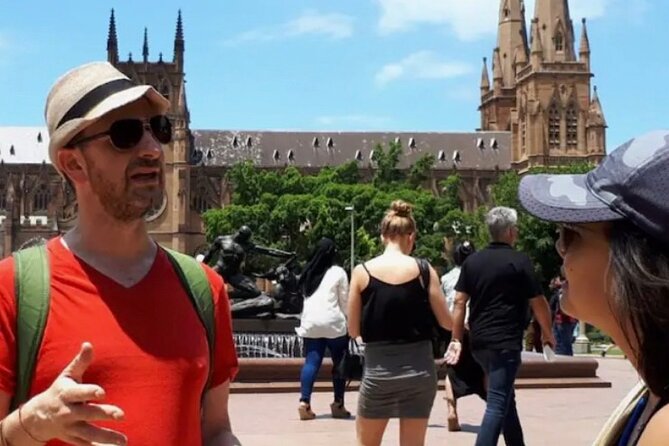
The tour begins at Archibald Memorial Fountain, and the start point is more than convenient—it’s symbolic. You’ll get the sense that queer history can be present in a city without being obvious to the casual passerby.
From here, the story reaches back across time. You’ll hear about what’s known of Indigenous Australia’s view on diverse sexual orientation and gender, then move through the circumstances and stories of queer forebears during the colonial period and into the early 20th century. The goal isn’t to pretend everything is documented. It’s to show how history can survive through fragments, memory, and the traces people left in public space.
I also like how this first stop avoids doing “everything at once.” It sets the frame: queer life existed, queer people shaped society, and visibility has always been uneven.
What to watch for here: Take a minute to look around before the guide starts speaking. The fountain is a clear reference point, so when the tour talks about what’s visible versus what’s hidden, you’ll be able to track the idea fast.
Stop 2: Emden Gun at Whitlam Square and how the 1970s changed the conversation
Next you’ll head to Whitlam Square, where you’ll look at the Emden Gun. This is where the tour shifts toward a period when gay rights claims started pushing harder for fairness and equality—especially from the 1970s onward.
The Emden Gun stop also brings in an important angle: the role of the media. Instead of treating media as background noise, the tour looks at how coverage and public attention affected what people could say, demand, and defend. That matters, because rights movements don’t just need laws—they need visibility, pressure, and an audience.
If you like social context, this is one of the best stops to pay attention to. You’ll start connecting the dots between earlier eras and the 1970s moment when change began bursting into the mainstream.
Potential drawback to keep in mind: this section is concept-heavy. If you prefer pure street-to-street stories with minimal discussion, you might want to stay mentally engaged and jot down any names or terms the guide repeats so they stick.
Stop 3: Darlinghurst backstreets, Green Park, and facing the HIV epidemic years
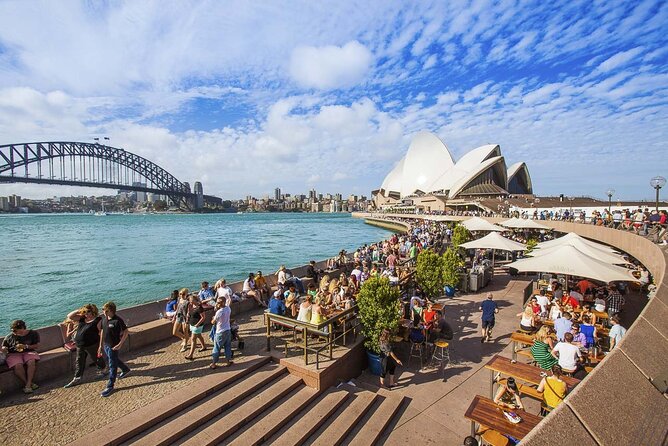
From Whitlam Square, you’ll wind through the backstreets of Darlinghurst, a neighborhood that fits the tour’s themes well. The tour then heads to Green Park, with a coffee/tea stop opportunity along the way at a local café.
This is one of the most practical-feeling parts of the tour. You’re walking through the kind of streets where everyday life happens—then the guide brings you to the period of social upheaval reforms from the 1970s onward and how the community dealt with the HIV epidemic.
You don’t get this as distant history. You get it tied to place, and that makes the message easier to hold. HIV-era experiences shaped public visibility, activism, fear, stigma, and solidarity. Hearing those themes while you’re moving through the neighborhood helps the story stop being abstract.
How to make the most of it: Use the café break to reset your focus. Then come back ready to listen for how the guide connects activism, public life, and community survival. This stop is where the tour’s tone may turn heavier, so a short pause helps.
- Blue Mountains Small-Group Tour from Sydney with Scenic World,Sydney Zoo & Ferry
★ 5.0 · 3,709 reviews





Stop 4: Kinselas Hotel area at Taylor Square and the first Mardi Gras, June 1978
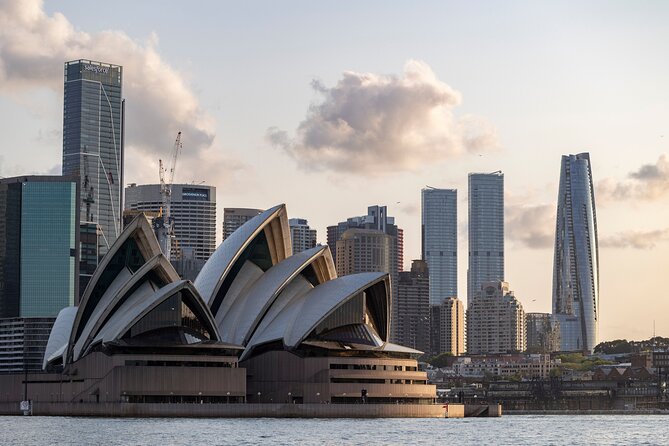
The tour ends at Taylor Square, and the final storytelling stop is at the Kinselas Hotel area. This is where the “why do people still care?” question gets answered.
You’ll discuss what happened in June 1978 at the first Mardi Gras at that spot, and why that moment still calls to Queer Sydney today. The point isn’t just that a parade started. It’s that the first Mardi Gras showed something the community wanted the world to acknowledge: that queer people were here, organized, and ready to be seen on their own terms.
From there, the guide brings you into the broader arc—how Mardi Gras became tied to protest, partying, and the ongoing fight for dignity through the decades that followed. That blend can be easy to oversimplify if you only view Mardi Gras as a party. This tour treats it as a cultural event with political weight.
The payoff: Because you’re finishing near the same kind of area people still associate with queer culture, you’ll feel the continuity. The city hasn’t just changed around the parade; the parade story has kept shaping how people understand the city.
What the guide style feels like (and why it matters)
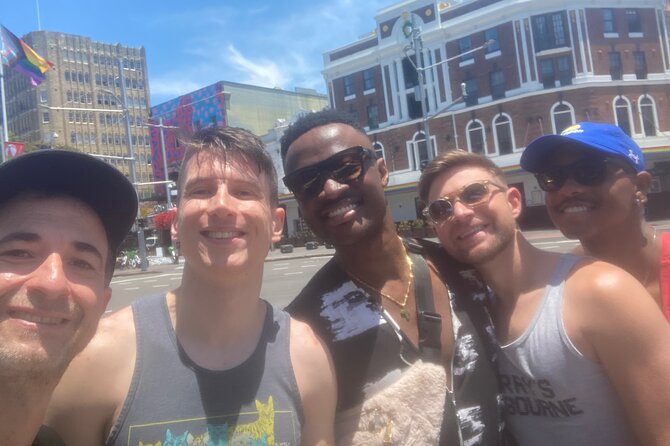
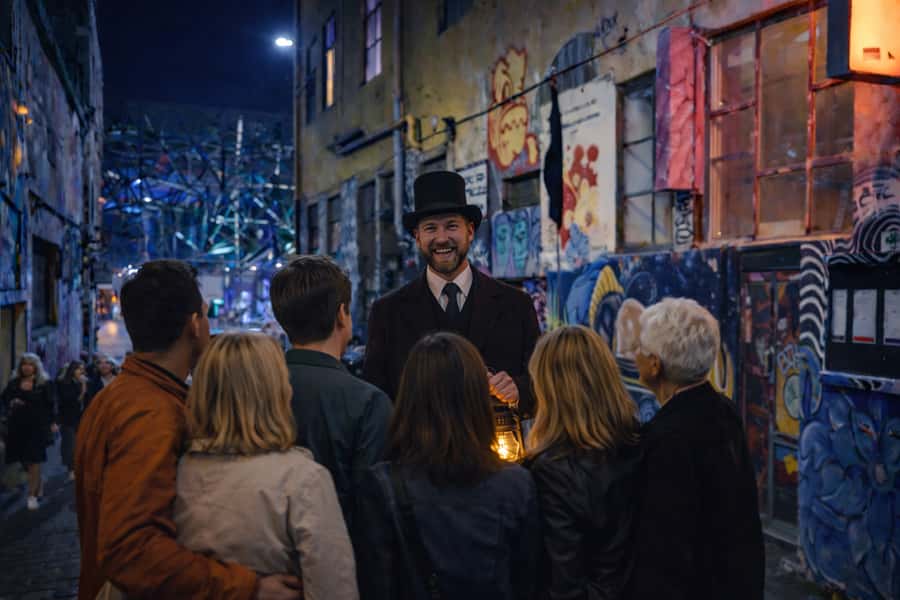
The overall feel of the tour depends heavily on the guide’s voice and pacing, especially because the topics range from colonial-era context to HIV-era realities. In this case, the guide—Michael—is described as so on top of the material that the tour stays engaging the whole way through.
That matters for you because the subject can easily turn into a slideshow. Instead, you’ll likely find yourself following along with the street references, the historical timeline, and the “why this matters” explanations at the same time.
Also, the small group limit (max 12) helps. With fewer people, it’s easier for the guide to respond to questions and keep the discussion from feeling generic.
Price and value: is $53.79 worth it?
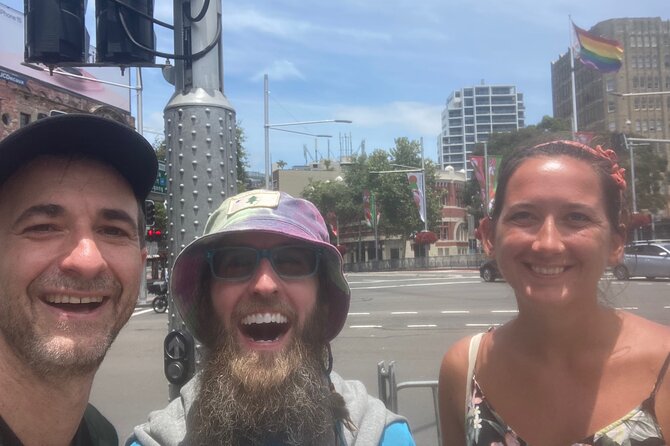
At $53.79 per person for about 2 hours, this sits in the mid-range for guided walking tours. What makes it feel fair is the mix of value types:
- You get a structured, guided route through multiple key sites rather than a self-guided wander.
- The stops are described with admission ticket free, so you’re not paying extra to access the locations.
- The content is focused: queer histories across time, with clear emphasis on the reforms from the 1970s onward, Mardi Gras 1978, and the HIV epidemic.
- The group size is capped at 12, which increases your odds of a lively, not chaotic experience.
In plain terms: you’re paying for someone to connect the dots between places and themes you could walk past without understanding. If you want a simple “see these buildings” walk, this may not feel like your best match. If you want meaning attached to the streets, the price makes sense.
Who should book this tour (and who might prefer a different style)
This is a great fit if you:
- Want queer history tied to real, specific Sydney locations.
- Like tours that use context and social change, not just anecdotes.
- Are curious about how Mardi Gras evolved from the first 1978 event into a public symbol.
- Enjoy learning how media and activism shaped what became mainstream.
You might think twice if you:
- Dislike walking tours with ongoing discussion.
- Prefer strictly light, party-only content. This tour does include heavy subject matter connected to the HIV epidemic.
- Want a long, slow deep-dive through one era. This is a timeline route across eras, focused on key moments.
A quick practical checklist for your day
To get the best experience, I’d show up with:
- Comfortable shoes (Darlinghurst backstreets can add up).
- A water bottle for the walk.
- A phone charged enough to keep your mobile ticket ready.
- A loose plan for after the tour, since you finish at Taylor Square and you’ll likely want to keep exploring nearby.
If you’re the type who likes to take notes, bring a small notebook. The guide may cover a lot of turning points, and a few quick notes help you remember names and themes without turning the tour into homework.
Should you book Sydney Queer Walking Tour?
If you want Sydney with context—real stories attached to real corners—I’d book this. The strongest reasons are the tight format and the focused arc: queer histories across time, then a clear emphasis on the 1970s reforms, Mardi Gras starting in June 1978, and how the community navigated the HIV epidemic. Ending at Taylor Square also gives the story a natural place to land.
If your ideal day is mostly sightseeing with minimal discussion, this could feel a bit too talk-driven. But if you like learning while you walk, and you want a guide who keeps things moving from stop to stop, this is one of the best ways to understand why these streets still matter.
FAQ
What is the duration of the Sydney Queer Walking Tour?
The tour lasts about 2 hours.
How much does the Sydney Queer Walking Tour cost?
It costs $53.79 per person.
Where do I meet for the tour?
You meet at Law Courts Library, 184 Phillip St, Sydney NSW 2000.
Where does the tour end?
The tour ends at Sydney Sustainable Markets, Taylor Square, Oxford Street at the intersection with Bourke Street (Darlinghurst).
What time does the tour start?
The start time is 9:30 am.
Is there a mobile ticket?
Yes, the tour uses a mobile ticket.
How many people are in a group?
The tour has a maximum of 12 travelers.
Are service animals allowed?
Yes, service animals are allowed.
Is it easy to reach with public transportation?
The tour is near public transportation.
Is there free cancellation?
Yes. You can cancel up to 24 hours in advance for a full refund.



More Walking Tours in Sydney


More Tours in Sydney
- Blue Mountains Small-Group Tour from Sydney with Scenic World,Sydney Zoo & Ferry
★ 5.0 · 3,709 reviews

More Tour Reviews in Sydney
- Blue Mountains Small-Group Tour from Sydney with Scenic World,Sydney Zoo & Ferry
★ 5.0 · 3,709 reviews