Two days in Kakadu moves fast. This private trip packs the best mix of wetland wildlife, crocodile country, and major Indigenous rock art sites into a tight timetable, with plenty of time outside (and time to cool off). I like that it’s not just drive-by scenery—it’s built around real places you can feel in your legs and your senses.
I especially loved the balance of Ubirr and Nourlangie Rock for cultural learning, alongside the big nature hits like Fogg Dam’s birds and the swim-friendly water features around Kakadu. The guide, Mattia, is a standout: the way he reads your group and keeps the long day moving makes the whole itinerary feel worth every early start.
The main thing to consider is pace and weather. You’ll start early (6:30am), you’ll be in the car a fair bit, and the plan is weather dependent—so if you’re not up for moderate walking and heat, adjust your expectations.
In This Review
- Key highlights worth planning for
- Two days in Kakadu: what this private route really delivers
- Getting to the action: Darwin pickup, a 6:30am start, and air-conditioning
- Day 1: from Fogg Dam wetlands to Kakadu’s rock art
- Fogg Dam Conservation Reserve: quick, bird-heavy start
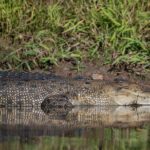
- Adelaide River: crocodiles and Top End energy
- Welcome sign and into Kakadu: get your bearings fast
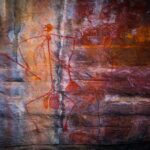
- Ubirr: rock art, scale, and guided context
- Cahills Crossing: the crossing you don’t ignore
- Nourlangie Rock (Burrungkuy): rock shelters and Indigenous presence
- Adelaide River to Cahills Crossing: crocodiles, safety, and timing
- Day 2: Jim Jim Falls and Maguk (Barramundi Gorge) in full
- Jim Jim Falls: a long, do-it-right waterfall visit
- Barramundi Gorge (Maguk): plunge pools and swimming time
- Yellow Water Cruises: what it is and when to swap it in
- Why the guide (Mattia) changes everything
- Price and value: what $2,223.45 per group buys you
- Who this tour suits (and who should reconsider)
- Practical tips: what to bring for Kakadu’s heat and water
- Should you book NT TOP ADVENTURES 2 Days Kakadu?
- FAQ
- FAQ
- What time does the 2-day Kakadu tour start?
- Is this a private tour or a shared group tour?
- Does the tour include pickup from Darwin?
- Are admission fees included?
- Is dinner included?
- What fitness level do I need?
- Is Yellow Water Cruises included?
Key highlights worth planning for
- Rock art at Ubirr and Nourlangie: two of Kakadu’s most important Indigenous cultural stops in a single, guided run
- Fogg Dam birdlife and wetland views: a quick, early-window taste of Kakadu’s water country
- Adelaide River crocodile region: a classic Top End stop to see the salty local stars
- Jim Jim Falls (big time): a long visit that gives you room to enjoy the falls properly
- Maguk (Barramundi Gorge) water pools: the itinerary includes time suited to swimming
- Private, guided, adaptable: your guide can shift the feel of the day based on you
Two days in Kakadu: what this private route really delivers
Kakadu is huge, and two days can feel like trying to sip an ocean. That’s why I like this style of tour: it’s designed for focused “best of” stops with real interpretation, not random checkboxes. You start early, you travel efficiently, and you hit the places that shape how Kakadu is understood—wetlands, rocky country, and major Indigenous sites.
This trip is also explicitly private, which matters more than it sounds. With just your group, the guide can slow down when you want questions answered, and keep momentum when you’re eager to get moving. The tone from the experience is very much guided-adventure: you’ll be out of the vehicle, watching, listening, and walking.
The other big “why” is that Kakadu’s identity is a mix of land and living culture. The itinerary places Indigenous cultural sites front and center on Day 1, rather than treating them as a quick photo stop between viewpoints. If you care about understanding what you’re seeing—not just snapping it—this kind of order makes the whole park click faster.
You can also read our reviews of more tours and experiences in Darwin.
Getting to the action: Darwin pickup, a 6:30am start, and air-conditioning
You’re not left to figure out logistics. Pickup is offered, and you travel in an air-conditioned vehicle, which is a real comfort win in the Top End heat. The start time is set for 6:30am, so plan on an early wake-up day. Even if you’re “on holiday,” Kakadu days start like work days—just the fun kind.
Because it’s a private arrangement, it’s also easier to manage your own timing with the driver/guide. You won’t be hunting for seats with strangers or waiting on multiple parties. That said, it is still an active outdoors itinerary, so bring a mindset for long days and frequent transitions: car to viewpoint, walk to shelter, cool-down breaks, and repeat.
Also note what’s not included: dinner isn’t included, and accommodation is your job. You’ll want to have your Darwin stay sorted ahead of time so you’re rested and ready for that early start.
Day 1: from Fogg Dam wetlands to Kakadu’s rock art
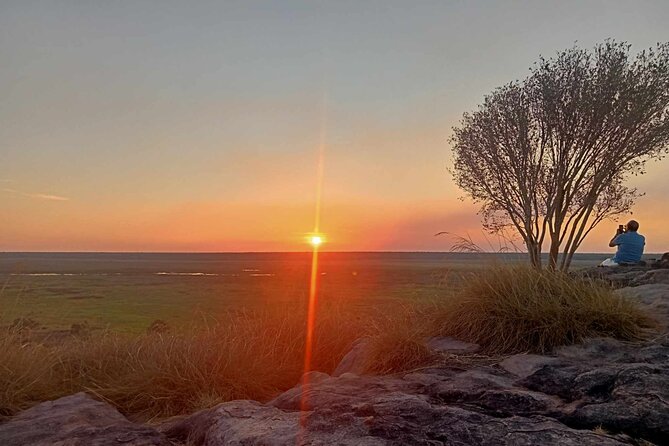
Day 1 is built like a story with three moods: wetlands, crocodile country, then Indigenous cultural landscapes.
Fogg Dam Conservation Reserve: quick, bird-heavy start
You begin at Fogg Dam Conservation Reserve, about 70 kilometers east of Darwin. The stop is about 30 minutes, but it’s the kind of short window that can still pay off—because wetlands often reward early light and calm conditions. Expect a biodiversity-focused setting and birdwatching opportunities, which is a great way to “tune your eyes” before the bigger Kakadu sites.
Even with a limited time block, this is a smart opener. It gets you thinking about water movement, seasons, and the way Kakadu turns green (or golden, or dry) depending on the weather.
Adelaide River: crocodiles and Top End energy
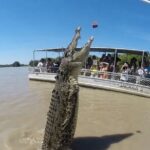
Next up is Adelaide River for a 1-hour stop. This is the classic crocodile corridor where “salty cruises” are a popular way to see crocodiles in their element. In this itinerary, the admission for the stop is free, which is nice, but the real value is the regional context.
If you’ve never been this close to crocodile country, it helps to see how central it is to the whole Darwin-Kakadu area. It’s also a visual reminder that Kakadu’s “water fun” is always paired with respect for wildlife.
Welcome sign and into Kakadu: get your bearings fast
You then stop at the Kakadu National Park Welcome Sign for about 10 minutes. It’s short, but I appreciate it on day-one tours: it’s a clean mental marker that you’re officially in the park, not just driving through it. It also sets up the next parts of the day with context from the guide.
Ubirr: rock art, scale, and guided context
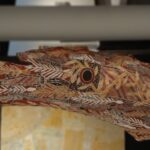
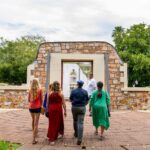
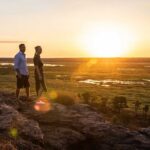
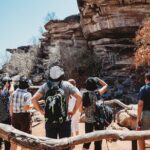
The cultural center of gravity on Day 1 is Ubirr, with a 1.5-hour visit. This is one of Kakadu’s key Indigenous cultural areas, known for both its historical significance and its natural viewpoints.
Here’s what I take from an itinerary like this: Ubirr works best when you’re not rushing. A longer guided block gives you time to orient yourself to the rock shelters, understand what you’re looking at, and connect the stories to the place. If you care about meaning, not just photo angles, you’ll feel the difference when you’re not hurried.
Cahills Crossing: the crossing you don’t ignore
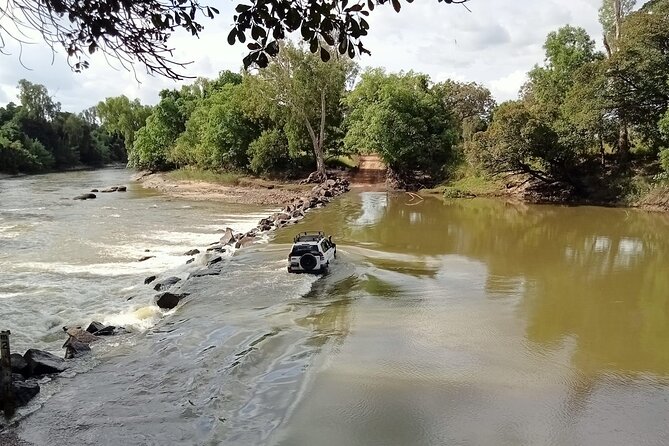
You also include Cahills Crossing (about 30 minutes). This is described as a potentially dangerous river crossing, spanning the East Alligator River. Even if you don’t personally get into the water or do anything besides observe, this stop is important because it shows the reality of Kakadu travel: sometimes the land dictates the route.
From a practical standpoint, this is also a “weather check” moment. River conditions can affect how you experience the area, and the guide’s decisions here are part of why the tour stays safe.
Nourlangie Rock (Burrungkuy): rock shelters and Indigenous presence
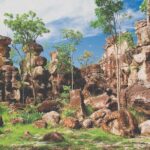
Day 1 ends at Nourlangie Rock (also known as Burrungkuy) for another 1.5-hour stop. The rock shelters here have been inhabited by Aboriginal people for a long time, and the site is famous for its cultural significance in Kakadu.
This is one of those stops where the guided time matters. Without context, rock art and shelters can feel like background. With a good interpreter, they turn into a map of relationships: land, memory, and survival. If you want Kakadu to feel like a living culture, Nourlangie is part of what makes that happen.
Adelaide River to Cahills Crossing: crocodiles, safety, and timing
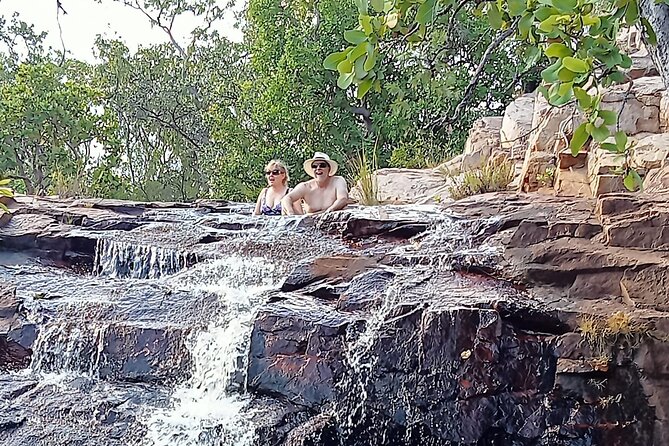
The stretch between Adelaide River and Cahills Crossing is where your day starts mixing adrenaline with caution.
Adelaide River puts you in the right region for crocodile awareness, while Cahills Crossing reminds you that the park is not a theme park. It’s working country, shaped by water flow and seasonal conditions. The itinerary’s structure supports that reality: short stays where observation is the focus, then longer cultural time where you’re walking and looking.
You’ll also want to keep a simple travel mindset here: if the guide suggests adjustments based on conditions, go with it. The crossing being described as potentially dangerous isn’t there to scare you—it’s there because Kakadu is sometimes water-first, road-second.
Day 2: Jim Jim Falls and Maguk (Barramundi Gorge) in full
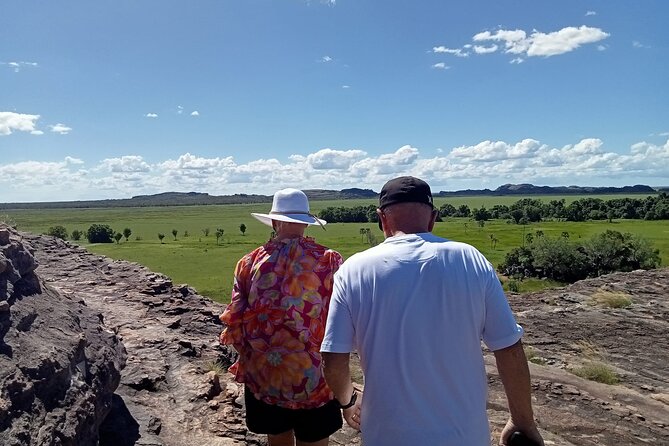
Day 2 is the classic waterfall day, with Jim Jim Falls taking the lead and Maguk (Barramundi Gorge) as the next major payoff.
Jim Jim Falls: a long, do-it-right waterfall visit
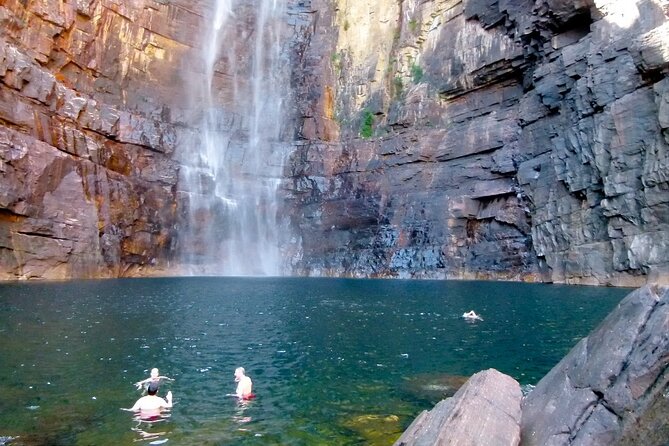
You spend about 4 hours at Jim Jim Falls, and that’s significant. The falls cascade over a sheer cliff face into a plunge pool. The description notes seasonal flow (especially in wetter times), which matters because the falls can look very different depending on when you go.
A 4-hour block isn’t only for photos. It’s enough time to approach at a comfortable pace, take in the view from different angles, and enjoy the area without treating it like a 20-minute stop. If you’re the kind of person who likes to linger, you’ll appreciate how this time block supports that.
Barramundi Gorge (Maguk): plunge pools and swimming time
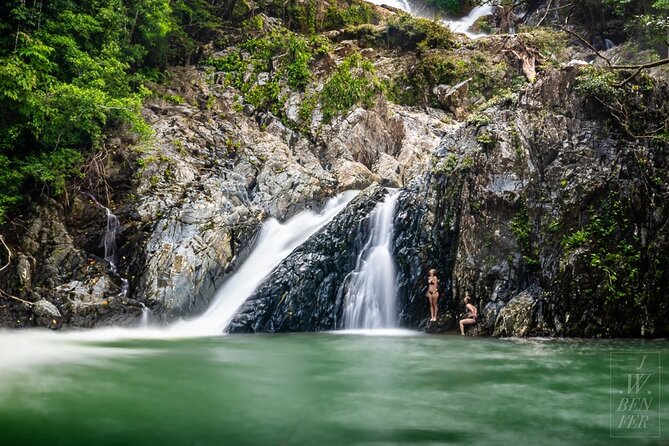
After Jim Jim Falls, you head to Barramundi Gorge (Maguk) for 3 hours. This stop is famous for crystal-clear plunge pools and a setting that’s suited to swimming—assuming conditions and your comfort level.
Even if you don’t swim, Maguk is still worth it for the visuals and the feel of place. The tour is clearly built for that “hot day, cold water” Top End rhythm, and it’s one of the itinerary’s most practical ways to cool off after walking.
Yellow Water Cruises: what it is and when to swap it in
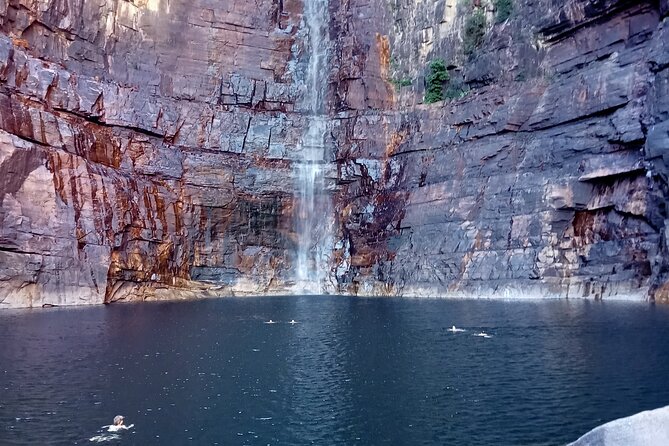
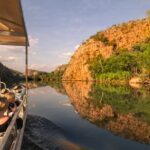
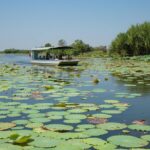
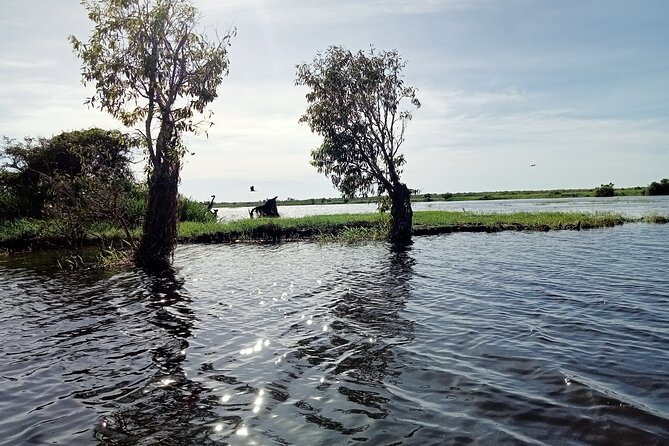
On Day 2, you have an optional stop called Yellow Water Cruises, listed as an option to Jim Jim Falls. The reason it’s called Yellow Water is that the water often takes on a golden hue from tannins leaching from surrounding vegetation.
The key point for your decision: Yellow Water is a different vibe than waterfalls. If you want more time on calm water, wildlife observation tends to be the focus of this kind of cruise. If you’re chasing the big dramatic drops, prioritize Jim Jim Falls and then fit Maguk as planned.
This “option” is one of those smart tour design touches. It lets your day match your interests—though it also means your final plan depends on how the guide structures timing.
Why the guide (Mattia) changes everything
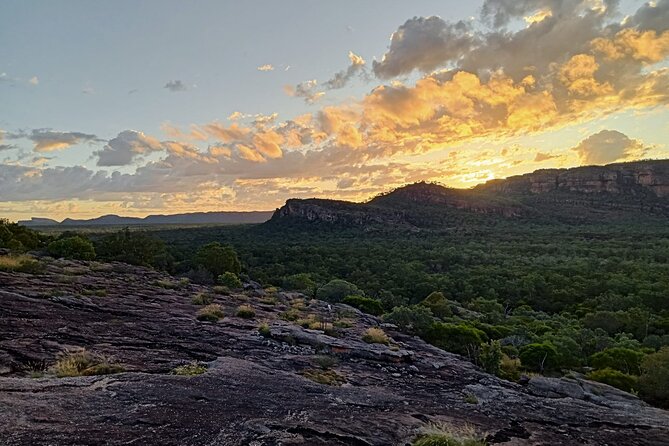
This tour is guided by mature, experienced tour guides, and the standout name you’ll hear is Mattia. Multiple comments highlight his attention and his ability to adapt to different people. That adaptability isn’t fluff. In a place like Kakadu, it’s what turns a list of stops into a coherent experience.
A good guide also helps the long drives not feel like dead time. People talk about how he animated the journeys across the Northern Territory, which is exactly what you want when you’re spending hours traveling between far-flung park areas.
There’s also a strong theme of personalized planning. You’re not treated like a passenger. You’re treated like part of the day, with the itinerary shaped around what you want to see and how you’re coping with weather and energy.
One more real-world detail: a couple of people mention extra program places like Litchfield being added on top of the Kakadu focus. I can’t guarantee every departure has the same additions, but it signals that the guide doesn’t run on autopilot.
Price and value: what $2,223.45 per group buys you
Let’s talk money plainly. The price is listed as $2,223.45 per group. That’s private-tour pricing, and in the Top End, privacy and time are expensive.
Here’s the value logic that makes this easier to justify:
- You get a private guide instead of sharing interpretation with a crowd.
- Admission fees are included for many of the major stops (not all). For example, Fogg Dam, Ubirr, Cahills Crossing, Nourlangie, Jim Jim Falls, and Maguk are included. Adelaide River and the Welcome Sign are free.
- You’re in an air-conditioned vehicle, which matters for comfort on early-start days.
- Pickup and a prepared route reduce decision fatigue. You don’t have to map out days, timing, or how to string park experiences together.
The trade-off is that it’s not a cheap per-person bargain if you compare it to joining a bus tour. But for a private 2-day Kakadu plan—especially with cultural sites, waterfalls, and guided context—the price feels more like you’re buying time, care, and coordination.
Who this tour suits (and who should reconsider)
This is best for people who want:
- A guided cultural experience, with time at Ubirr and Nourlangie
- Iconic nature hits in a short window: Jim Jim Falls and Maguk
- A private setting where the guide can adjust pacing for your group
- Moderate physical activity with hikes and lookout walking (the tour asks for moderate physical fitness)
It may be less ideal if you:
- Hate early mornings and long drive days
- Need fully relaxed, low-walking sightseeing
- Are traveling on a tight schedule where weather changes would leave you stuck
Practical tips: what to bring for Kakadu’s heat and water
The itinerary includes swimming opportunity at Maguk, and water-focused experiences like Yellow Water cruises (optional). So pack like you’re doing a mix of hikes and water time.
I’d bring:
- Swimwear and a quick-dry towel (if you plan to use Maguk’s water time)
- Sunscreen, a hat, and water you can access easily during the day
- Sturdy shoes for walking and viewpoints (especially with moderate fitness required)
- Light layers for morning-to-afternoon temperature shifts
- A dry bag or waterproof phone protection for water stops
Also, the tour is stated to require good weather. That means the day is stable when conditions are right, and the planning may shift if weather is poor. The good news is you’re not left guessing—you’ll be offered a different date or a full refund if the experience can’t run due to weather.
Should you book NT TOP ADVENTURES 2 Days Kakadu?
If you’re trying to do Kakadu in a way that feels purposeful, I’d book it—especially if you care about the cultural side as much as the waterfalls. The itinerary is strong because it’s ordered for understanding: wetlands first, then Indigenous cultural sites, then the big waterfall-and-swim day.
I’d also book if you like the idea of a guide who can keep things moving and personalize the tone. The Mattia factor comes through clearly: people mention his knowledge, attention, and adaptability, and that matters because Kakadu rewards the kind of travel that slows your thinking down even when your schedule is tight.
But if you’re traveling for a super-low-energy day, or you struggle with early starts and moderate walking, you might prefer either a longer stay (so you can spread out Kakadu) or a slower-style tour.
FAQ
FAQ
What time does the 2-day Kakadu tour start?
The start time is 6:30am.
Is this a private tour or a shared group tour?
It’s a private tour, and only your group participates.
Does the tour include pickup from Darwin?
Yes, pickup is offered, and you travel in an air-conditioned vehicle.
Are admission fees included?
Admission fees are included for several stops listed in the itinerary, while some stops are free (like the Adelaide River stop and the Kakadu Welcome Sign).
Is dinner included?
No, dinner is not included.
What fitness level do I need?
You should have a moderate physical fitness level.
Is Yellow Water Cruises included?
Yellow Water Cruises is optional. It’s listed as an option to Jim Jim Falls.